Embodied Intelligence has achieved tangible results at the most grueling construction sites.
In the past few years, the embodied intelligence industry seemed to only have bustling stages and exhibition halls as its most active scenarios.
Humanoid robots have learned to run, dance, and somersault, and can even complete a set of smooth martial arts movements. The capital market has also shown no lack of enthusiasm, with financing amounts, valuations and technological breakthroughs repeatedly setting new records.
However, behind the bustling scene, one question has never been answered clearly enough: how exactly can these increasingly smart robots improve productivity? Which groups of workers should they replace first?
Public figures and scholars including Bai Yansong and Li Kongyue have actually been discussing this issue publicly all the time. In their view, robots should first be deployed to places that humans cannot access, then places that humans are unwilling to go to, and finally places that humans do not need to go to.
The R&D direction should first target posts with life-threatening risks such as no-man zones, deep mine workings, and high-rise building fire rescue, to replace humans in life-or-death scenarios, instead of clustering in low-threshold scenarios like delivering food and towels in hotels and snatching jobs from ordinary workers first.
In fact, such practices have already taken place in the heavy industry sector.
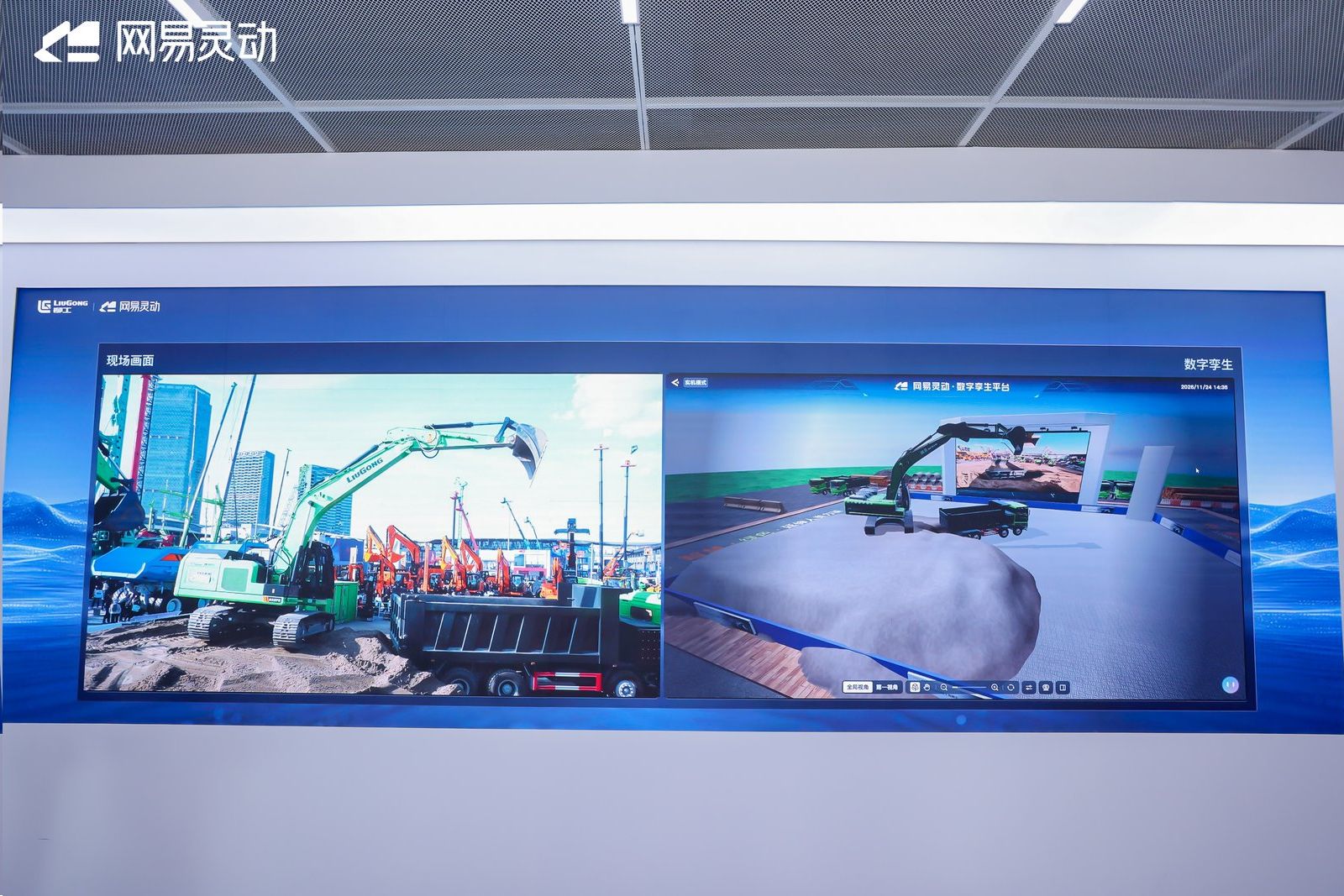
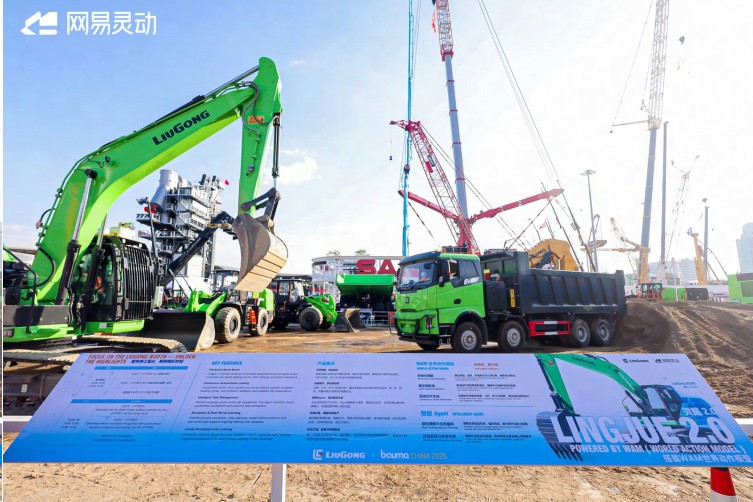
On November 24, at the 2026 Bauma China Construction Machinery Exhibition held in Shanghai, NetEase's embodied intelligence brand NetEase Lingdong reached a strategic cooperation with construction machinery giant LiuGong, planning to promote the mass production and global expansion of AI-native excavators.
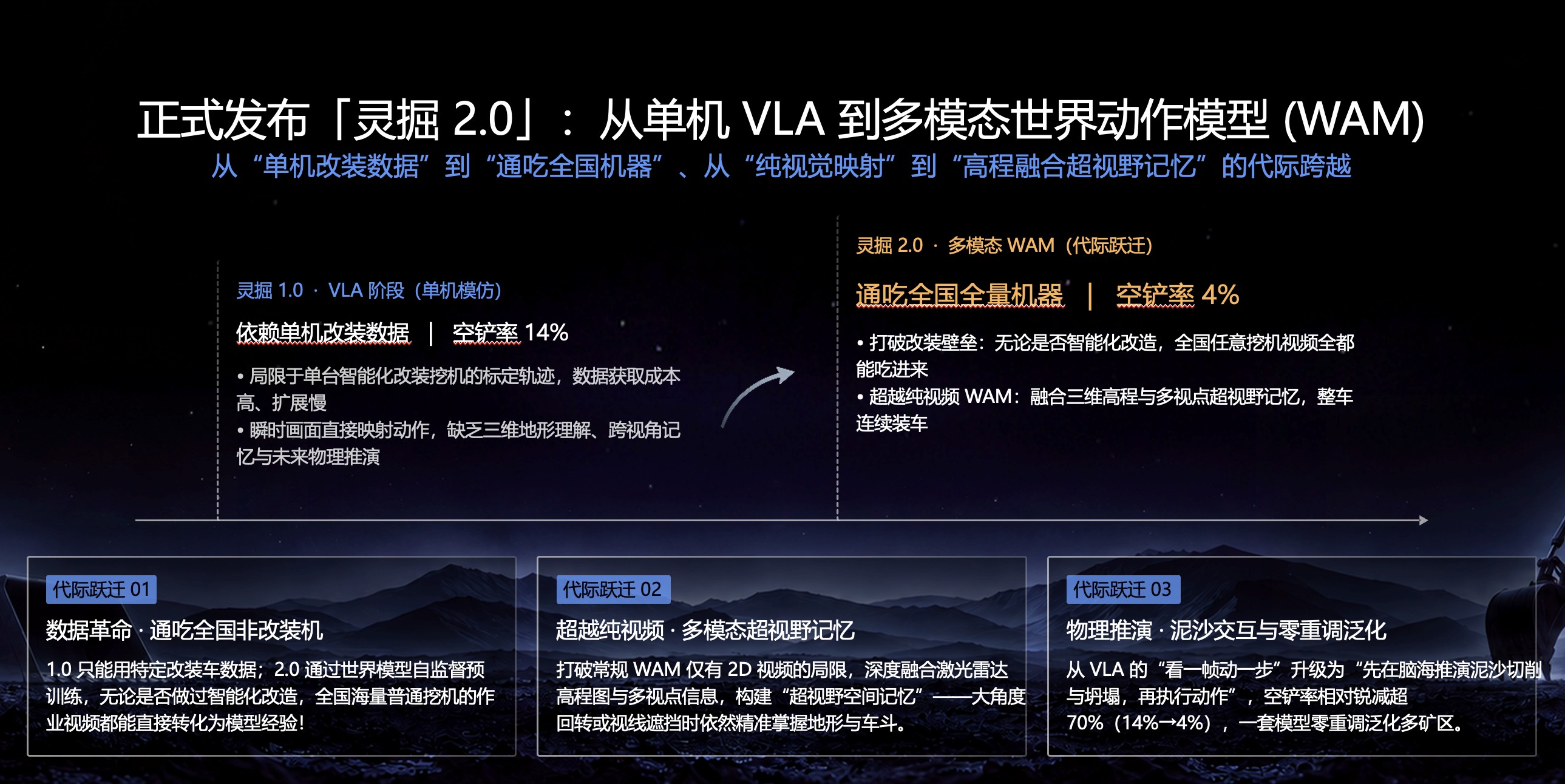
At the exhibition site, an excavator equipped with an AI system completed the automatic loading operation. Meanwhile, NetEase Lingdong also released the construction machinery world model "Lingjue 2.0", which enables machines to shift from executing actions according to preset instructions to understanding the environment, predicting results and completing tasks independently.
What is more noteworthy is the changes taking place outside the exhibition halls.
According to NetEase Lingdong, its embodied intelligence solutions have achieved normalized operation in more than 100 projects across over a dozen provinces in China, covering multiple production scenarios such as mines, ports and power plants. In some core scenarios, AI has been able to take on more than 85% of the operation tasks.
This means that while the industry is still discussing what robots can do in the future, part of the embodied intelligence solutions have already been integrated into real production processes and obtained paid orders from customers.
To a certain extent, this reveals a different path for the industrialization of embodied intelligence: robots do not necessarily need to look like humans, nor do they need to have omnipotent general capabilities to create social and commercial value.
Then, as the technology competition shifts to commercial realization, why is the "ChatGPT moment" of embodied intelligence likely to first appear in the heavy industry scenarios that seem far less "sexy"?
The first group of paying customers comes from the toughest construction sites
In some open-pit mines in Inner Mongolia, the winter temperature can drop below minus 30 degrees Celsius. For excavator drivers, this is not a suitable place to work for a long time. Dust, noise, severe cold, as well as falling rocks and slope collapses that may occur at any time, all make this job quite risky. Similar dilemmas also exist in ports, nuclear power plants, power plants and large-scale infrastructure projects.
These scenarios share a common feature: harsh working environments, repetitive operation tasks, and extremely high requirements for production continuity and safety.
In the past, enterprises mainly solved these problems by improving mechanical performance and increasing staffing. However, as labor costs rise and work safety requirements increase, the limitations of traditional methods are emerging.
This also explains why when the embodied intelligence industry is still struggling to find killer application scenarios, some of the most traditional industrial scenarios have taken the lead in investing real money. For these enterprises, purchasing embodied intelligence solutions is a production and operation decision with calculable input and return.
If an unmanned loader can undertake repetitive operations in high-risk environments, reduce the time personnel are exposed to dangerous areas, and increase the effective working hours of equipment, the value it creates is not just saving the salaries of several drivers, but also covering multiple aspects such as safety management, production organization and operational efficiency.
Moreover, in scenarios such as mines, ports and construction sites, the demand for construction machinery has long existed. Intelligence does not require creating a new type of work, but completing the existing work in another way. Therefore, intelligent mechanical equipment has relatively clear customers, operation tasks and procurement budgets from the very beginning. What determines whether customers will pay for it is only whether it can solve the problems in existing production.
The commercialization progress of NetEase Lingdong also provides an observation sample.
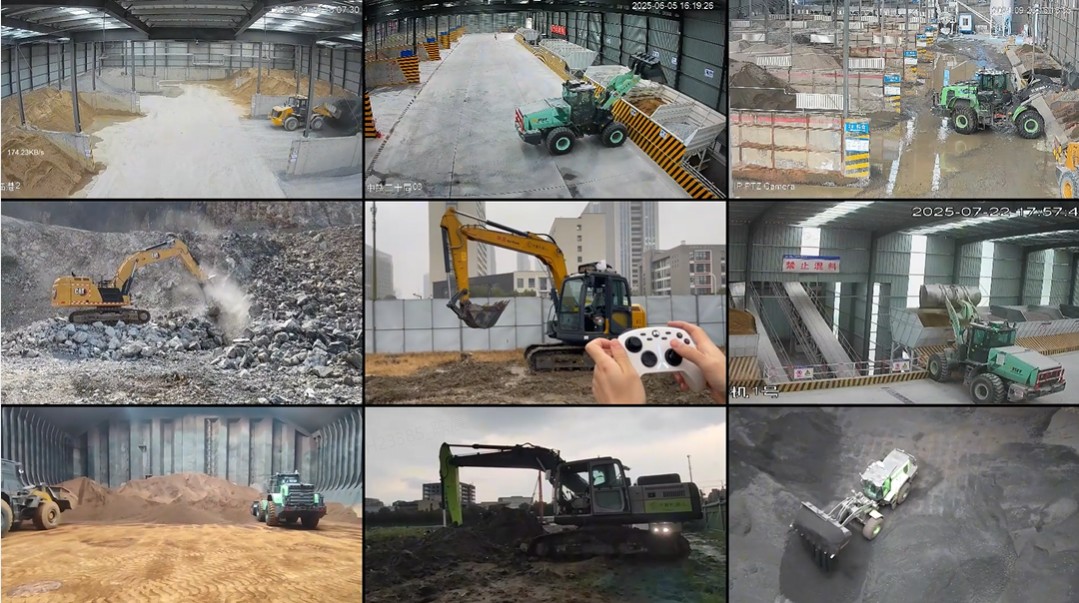
It is reported that its customers for more than 100 operation projects cover large central enterprises and industry leaders such as China Energy Investment Corporation, China Railway 24th Bureau Group, Hubei Xingfa Group, a mine in eastern Inner Mongolia, and Guangzhou Port. Yang Xinwei, the person in charge of NetEase Lingdong, also said in an interview with 36Kr that almost all existing projects have formal contracts and commercial orders, and some customers have made repeated purchases.
He also mentioned a diffusion method with distinct industry characteristics: after one section of a highway adopts the unmanned operation solution, other sections will follow up; some large-scale engineering projects will promote the relevant solutions to more sites after completing the deployment at the first site.
For industrial customers, this kind of procurement behavior is more convincing than a technical demonstration at an exhibition. Because engineering projects will not easily change their production processes just because a certain technology looks advanced enough. Being able to enter the formal procurement system at least indicates that the relevant solutions have met the actual requirements in some specific scenarios.
Of course, finding customers willing to pay is only the first step of commercialization. Whether an expensive and complex intelligent solution can be turned into a production tool that can be quickly replicated across different construction sites determines the upper limit of this business.
To cross this threshold, embodied intelligence needs to solve not only the problem of market demand, but also a more fundamental technical problem: how to make machines no longer rely on fixed rules set by humans, but understand the environment, judge changes and complete work independently just like skilled workers.
From one single machine to the entire construction site
If real production demands make construction machinery one of the most promising fields for the first commercialization of embodied intelligence, then another capability that determines how large this business can grow is generalization.
Long before the rise of large AI models, some equipment was already able to complete work such as driving along fixed routes and handling materials according to preset procedures, but this type of technology had an obvious limitation: the environment must be sufficiently controllable.
For example, an automated forklift can complete cargo handling according to the position of standardized pallets, but the situations an excavator faces are far more complex: the soil, rock and material structures in different mines are different, and even for the same material pile, the shape of the remaining materials will change after each scoop. Once encountering large rocks, collapse of the material pile, or personnel suddenly breaking into the operation area, the original operation rules will fail, and even cause unnecessary losses.
Yang Xinwei gave an example: if an excavator digs into an immovable stone and continues to exert force, it may lift the equipment itself; if the excavation causes the material pile to collapse, it may also endanger the platform where the equipment is located.
These are all situations that traditional rule-based automation cannot exhaustively cover.
What is more complex is that construction machinery not only needs to move in the environment, but also must directly change the environment, and continuously interact physically with materials such as soil, sand and coal. In addition, construction machinery generally adopts hydraulic drive, whose nonlinear characteristics further increase the difficulty of precise control.
This is also the reason why NetEase Lingdong released the construction machinery world model Lingjue 2.0. Different from traditional automation that relies on preset rules, the world model tries to make the equipment understand the surrounding environment before executing actions, predict the possible changes brought by the actions, and then independently plan the next operation.
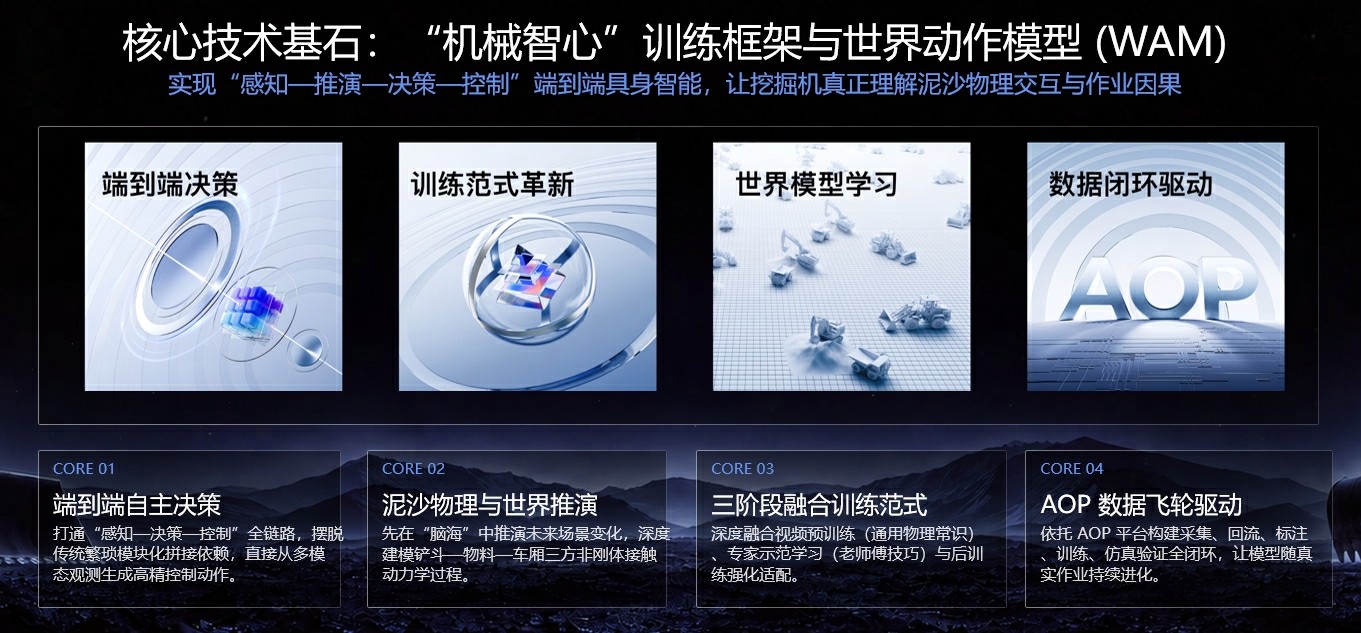
But for physical AI, model capability is only the starting point. What is really scarce is the training ground that allows the model to continuously learn, verify and iterate.
A training ground that can be used for physical AI requires at least three basic capabilities: a sufficiently accurate physics engine to restore the stress, friction and sliding of materials; a large-scale enough digital twin that covers the terrain, materials and equipment of different construction sites; a sufficiently stable training pipeline to support a large number of tests and adjustments after failures.
The key is that none of the three can be obtained through a single round of financing, and they can only be accumulated through massive scenario debugging and long-term practice.
This has led to an interesting situation in the physical AI industry: different types of players often only master part of the capabilities.
Robot companies are good at hardware and motion control, but the accuracy of physical simulation still requires long-term construction; multimodal large model manufacturers are good at semantic understanding and image generation, which does not mean they can accurately calculate mechanics, friction and material deformation; traditional original equipment manufacturers are familiar with equipment and working conditions, but breaking down complex operations into trainable and reusable intelligent skills has never been their main work in the past.
The players that seem closest to this capability are engine and simulation companies. They have engine technology and industrial customers, but they still face a problem: lack of real operation data and equipment delivery capabilities. After all, the most costly data in the training ground comes from the actions and results of equipment under real working conditions, which can only be obtained from construction sites, not generated out of thin air in the virtual environment.
Therefore, game companies like NetEase have found a relatively special position.
In 2017, NetEase established the Fuxi AI Lab, which has long studied technologies such as reinforcement learning, imitation learning and computer vision. It originally mainly served game scenarios, but now it has the opportunity to be migrated to physical AI training.
Because from the perspective of technical principles, agents in games share certain commonalities with embodied intelligence for construction machinery: both need to perceive the environment, formulate strategies, and continuously adjust behaviors according to action feedback.
However, the successful experience in games cannot be directly equated with the operation capability in real construction sites. The virtual world can be reset, but real construction sites do not have so many opportunities for trial and error. Therefore, NetEase Lingdong also needs to combine these technical accumulations with real production data, which is another value of its more than 100 normalized operation projects at the technical level.
After the equipment enters the real construction site, it not only undertakes production tasks, but also can provide the model with real feedback of environment, actions and operation results under the premise of compliant data collection and usage. The experience accumulated under different regions, different equipment and different material conditions can be used to continuously improve the model.
In other words, NetEase Fuxi's long-accumulated AI training technology provides the foundation for model learning; NetEase Lingdong's continuous operation in real construction sites provides the conditions for verifying and iterating the model. The combination of these two capabilities makes it possible for intelligent solutions to no longer be limited to a single piece of equipment or a single construction site.
At present, NetEase Lingdong is advancing two product lines of excavators and loaders at the same time. According to its technical solution, the two types of equipment can share the basic model, but the tasks undertaken by the two product lines are different: excavators have complex working conditions and high operation accuracy requirements, which mainly verify the technical upper limit of the model in complex physical interactions; part of the operation tasks of loaders are relatively standardized, which can enter more scenarios such as ports, power plants and mixing stations, and are more suitable for testing the replication efficiency of the technology.
This is where the real commercial value of cross-device generalization lies.
If every time a new type of equipment is added or a new construction site is entered, a new set of models needs to be retrained and a large number of operation rules need to be redeveloped, then embodied intelligence is still a highly customized business that relies heavily on engineers.
On the contrary, if the previously accumulated experience in environment understanding, operation strategy and exception handling can be reused by new equipment, enterprises will have the opportunity to reduce repeated training and on-site debugging, shorten the deployment cycle, and lower the delivery cost of new projects.
After all, humanoid robots want one body to do all things, while the construction machinery track aims to develop one "brain" to control all equipment. Only when environment understanding and operation strategies are no longer bound to a single machine or a single scenario, can embodied intelligence evolve from individual customized projects to mass-producible productivity tools.
Embodied intelligence needs to be re-examined
As technology begins to enter real production scenarios, the industry's criteria for measuring value are also changing. The capital market no longer only focuses on demonstration videos and model parameters, but on whether the solutions can be delivered at scale, whether there is real revenue, and whether they can achieve sustainable profitability.
In the past two years, domestic and foreign unmanned mining truck enterprises including IDRIVERPLUS, InDrive.ai and Bo Lei Technology have successively completed financing, gone public and advanced their capital market processes. The same is true for overseas markets. In October 2026, American construction machinery autonomous driving company Bedrock Robotics announced the completion of a $600 million Series C financing, with a valuation reaching $4.1 billion.
It is worth noting that Bedrock Robotics' main business is not even participating in manufacturing brand new machines, but installing autonomous operation systems for existing heavy equipment such as excavators. Behind this is not only the progress of AI technology, but more importantly, such enterprises have been integrated into the actual production process with relatively clear business models.
Some overseas investors even believe that the unmanned transformation of construction machinery is the most realistic landing scenario for physical AI: humanoid and quadruped robots are also interacting with the physical world, but as means of production, excavators and loaders interact with the physical world more directly.
However, unmanned mining trucks are only part of the intelligent transformation of heavy equipment. Mining trucks are mainly responsible for transportation tasks in mining areas, while excavators and loaders directly participate in production links such as excavation, loading and cabin cleaning, and their application scenarios can extend to more fields such as ports, power plants, infrastructure and mixing stations.
This also means that the potential market for construction machinery embodied intelligence is not limited to mines. In addition, the huge existing equipment stock also provides the market foundation for intelligent transformation.
According to relevant statistics from the China Construction Machinery Association, the total number of major construction machinery products in China has exceeded 8.6 million units in 2023, including about 1.91 million to 2.069 million hydraulic excavators and about 866,000 to 938,000 loaders.
It should be noted that this demand is being further strengthened