ByteDance joins the fray, and another robotics player is sprinting towards its IPO.
In 2026, the embodied robotics track has exploded in popularity.
Financing for humanoid robot enterprises is accelerating, industrial scenario verification is continuously advancing, and market attention to core components is also rising. Segmented fields such as dexterous hands, joint modules, and precision actuators are becoming key links in the competition of the robot industrial chain.
Recently, Dahua Robotics Technology Co., Ltd. has completed the listing guidance filing with the Shenzhen Securities Regulatory Bureau, officially launching the preparation work for its A-share IPO.
Founded in 2016, Dahua Robotics has been deeply engaged in the field of robot precision actuators for nearly a decade. Its products have accumulated a relatively mature customer base in the field of industrial automation, and have also begun to enter the application scenarios of the humanoid robot industrial chain.
Public data shows that the cumulative product shipment volume of Dahua Robotics has exceeded 300,000 sets, with about 100,000 sets shipped in 2025. Institutions including ByteDance, IDG Capital, Qiming Venture Partners, and Legend Capital have successively joined its shareholder roster.
At present, Dahua has formed a business system based on industrial electric grippers and precision motion control products, and dexterous hands have become its important layout for the embodied intelligence industry.
This robotics enterprise founded nearly a decade ago is exactly standing at a new industrial window period.
I
For the robotics industry, technology and timing are both indispensable.
In 2016, Sun Jie and several researchers from King's College London decided to start a business. Their initial target was not the electric gripper that has now become a popular product in the robotics industry, but dexterous hands with higher technical difficulty.
This team has a strong academic background. Sun Jie graduated from Tsinghua University with a bachelor's degree, later obtained a doctorate from King's College London, and engaged in post-doctoral research. In 2011, he won the championship of the US ASME Dexterous Hand Grasping Competition with his dexterous hand grasping technology. Another co-founder Zhang Xinsheng also has a doctorate in robotics from King's College London, and has long studied dexterous hand design and motor drive technology.
The team's research is closely related to the metamorphic mechanism theory proposed by Jiansheng Dai, Fellow of the Royal Academy of Engineering of the UK. The so-called metamorphic mechanism means that the mechanical structure can change its configuration and degrees of freedom during movement, so that the same set of mechanisms can adapt to different actions and tasks. This is also an important technical foundation for Dahua's early dexterous hand R&D.
At the beginning of the business, the team was full of confidence in this technology.
In 2017, Dahua launched its first three-finger metamorphic dexterous hand DH-3, which was already able to grab plates, bowls, cups on the table, and even a thin pen.
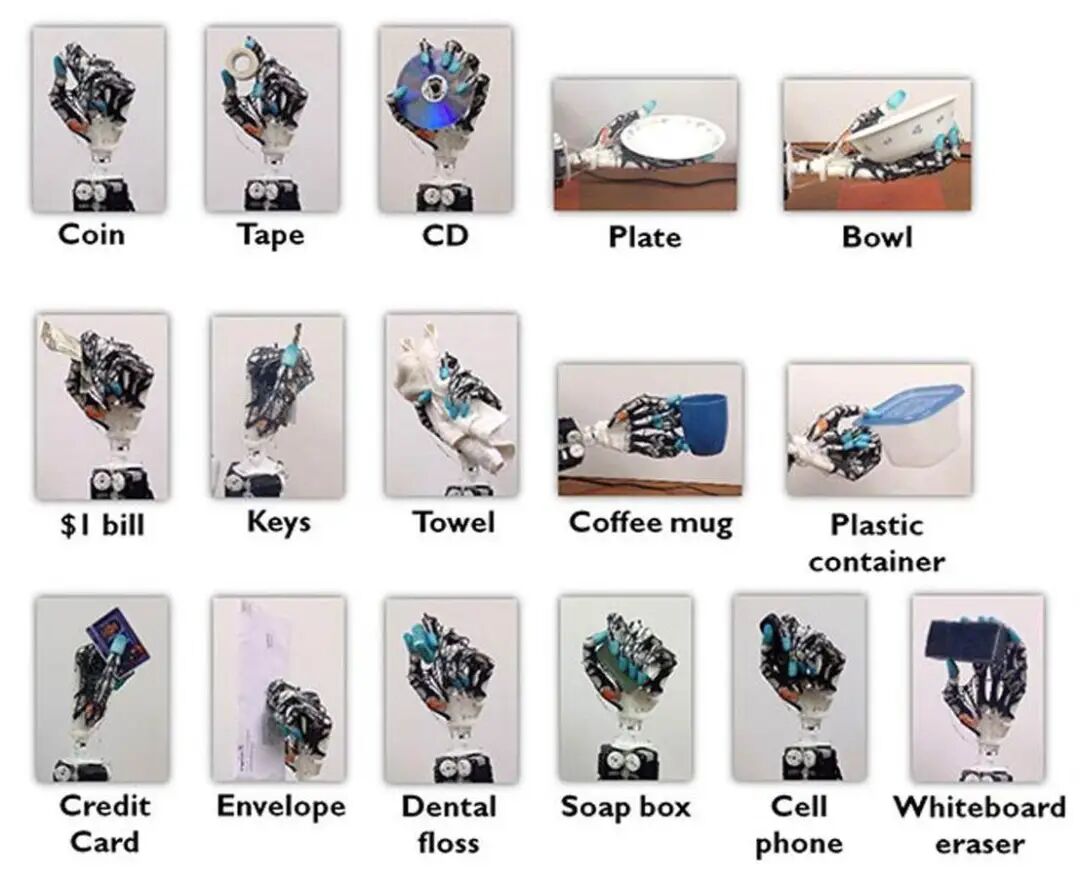
The demonstration effect was quite amazing, but when it actually entered the industrial production line, customers considered a completely different set of accounts.
At that time, robots on industrial production lines were mainly responsible for repetitive tasks such as handling, loading and unloading, and assembly. When manufacturing enterprises purchase equipment, the first considerations are efficiency, stability and cost. Although dexterous hands can complete more complex grasping actions, their high cost and limited application demand make it difficult for industrial customers to see clear input-output value.
In 2017, in order to survive, Dahua decided to adjust its commercialization direction: continue R&D on dexterous hands, but the company must find a product that customers are willing to pay for and can be delivered in batches.
Industrial electric grippers became the new entry point.
Compared with traditional pneumatic grippers, electric grippers do not require additional air sources, and can also adjust the grasping position, speed and force through programs. Facing production scenarios with many product models and frequent line changes such as 3C electronics and new energy manufacturing, this flexibility has practical value.
From 2017 to 2018, Dahua launched the AG-95L collaborative electric gripper. In 2019, the company became the first Chinese collaborative electric gripper brand certified by Universal Robots under the UR+ program. In the same year, according to the company's disclosure, its market share in the domestic collaborative robot electric gripper field rose to the first place.
This certification allowed Dahua's products to enter the application ecosystem of Universal Robots, lowering the threshold for overseas customers to purchase, integrate and adapt, and also became an important step for the company to expand the market.
Subsequently, orders began to grow.
In 2020, an enterprise in Apple's industrial chain purchased more than 500 sets of electric grippers at one time; in 2021, Dahua completed the delivery of 7,000 sets of electric grippers project for a new energy enterprise. A South Korean enterprise also issued a supply license for its precision force control electric gripper PGE series.
Behind the growth of orders is that Dahua has gradually found the products that industrial customers really need.
In 2022, the company launched the MCE series of micro force control electric cylinders and the VLAR series of voice coil actuators, and took the lead in formulating the "Technical Specification for Parallel Electric Grippers". In 2023, the Dongguan manufacturing center was put into construction, with an publicly disclosed annual production capacity of 100,000 units.
After the industrial business gradually scaled up, Dahua did not give up its original dexterous hand R&D.
In 2024, the company launched humanoid dexterous hands, and continued to expand overseas markets such as Southeast Asia and North America. In 2025, Dahua continued to improve the product layout of humanoid dexterous hands, and related businesses began to get more industrial attention.
In 2026, Dahua's products appeared in multiple robot application scenarios.
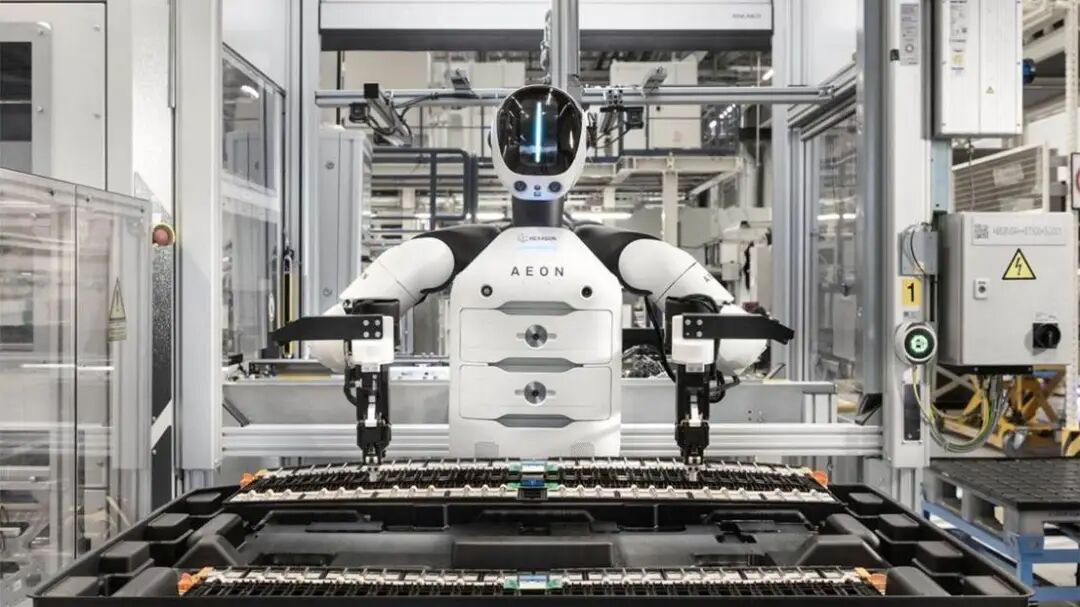
In March, Hexagon AEON humanoid robot entered BMW's Leipzig plant in Germany to carry out production pilot, equipped with Dahua AG series electric grippers; in May, the Greek local humanoid robot MARK One was equipped with Dahua DH-5-6 five-finger dexterous hand, completing the loading demonstration of boxed materials on the coffee production line; in June, Agibot carried out 64-hour continuous production verification at Longcheer Technology's Nanchang factory, still using Dahua PGC series electric grippers.
II
In Dahua's current product system, industrial electric grippers still occupy the main position. This is also the basic business disk formed by the company after years of market accumulation.
After nearly ten years of development, Dahua has formed a relatively complete electric gripper product matrix, including PGE industrial thin parallel electric gripper, PGIA industrial parallel electric gripper, AG joint adaptive electric gripper, PGC collaborative parallel electric gripper, as well as RGI and RGD rotary electric gripper series.
The market opportunity for electric grippers comes from the limitations of traditional pneumatic grippers in refined production. Pneumatic grippers have simple structures and cost advantages in standard processes, but they are relatively inflexible when facing workpieces of different sizes, fragile materials, and requiring precise control of clamping force. Electric grippers are driven by servo motors, which can programmatically adjust the grasping position, force and speed, and are more suitable for flexible production needs.
For example, in the semiconductor field, Dahua PGE series electric grippers are applied to chip handling of wafer sorters. Aiming at the risk of falling that traditional vacuum suction cups may have when the vacuum degree is insufficient, Dahua uses the PGE-2-12 electric gripper to complete chip grasping through force control and position control.
In the new energy field, PGC series electric grippers are applied to the automatic production lines of SAIC-GM and Agibot, undertaking the task of loading and unloading power battery cells. Since the surface of the cell is prone to scratches and indentations, the gripper must not only ensure stable handling, but also control the clamping force to reduce damage to the cell.
For industrial customers, it is not difficult to purchase a gripper. The difficulty is to make it adapt to the process requirements of different production lines and maintain stability during long-term operation. Through multi-series products, control system adaptation and customized development, Dahua is striving for this kind of continuous industrial customer demand.
At the technical level, Dahua summarizes its core capabilities as direct drive force feedback, precision control and integrated integration. The product data disclosed by the company shows that the maximum repeated positioning accuracy of its electric grippers can reach ±0.02mm, and the maximum force control accuracy can reach 0.1N. The drive-control integrated design integrates the control module inside the product, and supports multiple communication protocols and adaptation of mainstream robot brands at the same time, reducing the difficulty of customer deployment and debugging.
In addition, different products can share part of the core component supply chain, centralized procurement helps to control costs, and customization for customers' specific processes has also become an important way for Dahua to win orders.
After the industrial business gradually scaled up, Dahua is also re-layouting dexterous hands.
In 2025, the company launched three-finger and five-finger dexterous hand products, and established cooperation with more than 20 robot ontology enterprises such as UBTECH, Agibot, and Galaxy Universal. According to the 2025 China dexterous hand enterprise shipment list sorted out by GGII and China Commercial Industry Research Institute, Dahua entered the top five in the industry in terms of shipment volume, but the list did not disclose the specific ranking.
However, the market maturity of dexterous hands is still limited.
According to the "2026 China Dexterous Hand Industry Development White Paper" released by MIR Rui Industrial, among the application scenarios of dexterous hands in 2025, scientific research, education and data collection together accounted for 74.4%, and industrial scenarios only accounted for 3.5. There are still not many dexterous hand products that actually enter industrial production lines and undertake long-term stable operations.
The force control, drive and reliability technologies accumulated by Dahua in the field of industrial grippers provide a foundation for dexterous hand R&D, but five-finger dexterous hands involve more degrees of freedom and more complex transmission structures, and the difficulty of R&D and mass production is also higher. At present, Dahua's two-finger electric grippers are still the product category with the largest shipment volume, and whether dexterous hands can form stable bulk orders and revenue contribution remains to be tested by the market.
III
At present, Dahua's products have covered more than 60 countries and regions around the world, with more than 5,000 end customers. The customers displayed on the official website include manufacturing enterprises such as FAW-Volkswagen, Toyota, Samsung, Foxconn, Lens Technology, Huawei, BYD, and Bosch.
While the business is growing, the company's production management efficiency is also improving.
In October 2026, the digital transformation case of Dahua disclosed by industrial software service provider Digiwin Smart Internet shows that Dahua's revenue increased by 53%, the on-time order delivery rate increased by 23.6%, the production first-pass yield increased by 22%, and the daily plan achievement rate reached 87.6%.
In terms of inventory management, Dahua's inventory turnover days were shortened from 89 days to 72 days, the total inventory amount dropped from 17 million yuan to 15 million yuan, and the inventory accuracy exceeded 98%.
However, the case did not clearly disclose the statistical cycle and comparison base period of revenue growth, but the improvement of order delivery, production efficiency and inventory management indicators at least reflects that Dahua is strengthening its large-scale operation capability.
Apart from business development, capital continues to flow in.
Dahua's early investors include Renzhi Capital, Jiangxing Industrial, Mubo Investment and Feitu Venture Capital. In 2022, ByteDance and IDG Capital joined the shareholder roster, and IDG later participated in the 2023 financing. In 2024, institutions including Qiming Venture Partners, Legend Capital, Shenzhen Smart City Industrial Investment, and Qiande Fund participated in the Series C and C+ rounds of financing; in February 2025, Legend Capital continued to participate in the Series D round.
At present, Dahua's shareholder lineup is no longer limited to early financial investment institutions. The industrial capital background brought by ByteDance, the continuous participation of institutions such as IDG Capital and Qiming Venture Partners, as well as the local state-owned capital power behind Shenzhen Smart City Industrial Investment, make the company's financing process have a certain color of industrial capital.
In terms of industrial cooperation, Dahua is also looking for mass production outlets for its dexterous hand business.
In December 2025, Ningbo Huaxiang Qiyuan, a subsidiary of listed company Ningbo Huaxiang, signed a strategic cooperation agreement with Dahua to carry out R&D, manufacturing and sales around dexterous hands for general-purpose humanoid robots. Dahua is responsible for product design, development verification and servo electric cylinder modules, while Ningbo Huaxiang Qiyuan is responsible for solution confirmation, mass production assembly and customer sales.
According to the guidance filing information, Sun Jie directly holds 12.64% of the company's shares, and controls 27.05% of the voting rights in total through the employee stock ownership platform, and is still the controlling shareholder of the company. According to the currently disclosed guidance arrangement, the company plans to submit the guidance acceptance application in May 2027.
However, when approaching the IPO threshold, Dahua Robotics still faces many operational challenges.
For precision motion control enterprises, product reliability is directly related to the stable operation of customers' production lines. In the after-sales Q&A on Dahua's official website, a user raised the problem that the nominal maximum clamping force of PGE50 is 50N, but the actual holding force is 36N. The company explained that the clamping force will be affected by factors such as running speed and friction, and there are certain individual differences between different devices.
Another user reported that the PGC-140 made abnormal noise after clamping the workpiece for about 30 seconds, and the company explained that the internal brake started according to the software control logic, which was not a device failure.
In September 2026, Dahua publicly recruited quality engineers, whose job responsibilities involve customer complaints, failure rate, repair rate and process yield, reflecting that the company has incorporated quality management and production process control into a dedicated post system.
In terms of justice, as of November 20, 2026, third-party platforms show that Dahua has 4 court announcements and 1 filing information. However, the specific cause of action and case results have not been found yet, and the actual impact of related matters remains to be verified.
Dahua's official website disclosed that the compound annual growth rate in the past five years has reached 120%, but for an enterprise preparing for IPO sprint, shipment scale and growth rate are only one aspect, and what really determines the enterprise value is still revenue, profit and cash flow.
Ten years ago, the dexterous hand that Sun Jie's team initially wanted to make failed to meet mature market demand, so they had to temporarily turn to industrial electric grippers.
Now, with the embodied intelligence industry heating up, dexterous hands have once again become a popular direction in the robot industrial chain. The market opportunity that they failed to wait for in the past seems to have finally arrived.
But this time, what Dahua Robotics needs to prove is no longer just the technical judgment of the past, but real tangible commercial value.
This article is from the WeChat official account "Investor", author: Wenwen, published with authorization from 36Kr.