At the height of the AI boom, the most profitable thing was a piece of cloth.
Where there is computing power, there is a fiercely competitive arena.
However, no matter how the Iron Throne in Silicon Valley changes hands like a trivial game, no matter how grand the cloud narrative is, the world's fastest computing power is still locked in an ancient industrial chain, and is woven day and night by the most traditional manufacturing processes of human beings.
Warping, weaving, desizing.
In today's booming artificial intelligence era, the most profitable product is a type of cloth.
Four years ago, a roll of 7628 type electronic fiberglass cloth once fell to 3.3 yuan per meter. By November 2026, the quotation for the same cloth has reached 14.6 yuan per meter, with an increase of about 342%.
In other words, people have to pay more than four times the cost to get the same product today.
While GPU, which is considered the most profitable product in people's impression, has a much milder price increase within their respective observable windows compared with cloth: during NVIDIA's earnings call in November 2026, it was disclosed that the renewal price of some Hopper GPUs reached up to 2 times the original contracted price, and the rental price of B300 has risen by over 60% since its launch.
Under the whole sky, the most precious thing is the chip. But the "most profitable" one is the cloth. The reason is that in the spectrum of manufacturing industry, the cloth is holding the hardware lifeblood of chips:
How far high-frequency signals can travel depends on the dielectric properties of this cloth; how stably advanced packaging can operate relies on the coefficient of thermal expansion of this cloth. Electronic fiberglass cloth also determines whether an AI cabinet worth 7.8 million US dollars can be qualified for delivery.
Materials determine performance.
Two Industrial Chains
The diameter of glass filament directly affects the performance of electronic fiberglass cloth.
China's first glass filament was born in the area around Xingfu Road not far from Wukang Building, a popular internet-famous site in Shanghai.
Xingfu Road starts from Fahuazhen Road in the south and ends at Pingwu Road in the north, with a total length of no more than 609 meters. Before the founding of the People's Republic of China, Shanghai technician Cheng Weimin pulled out China's first glass fiber filament here, sowing the first technical seed for the huge Chinese electronic fiberglass cloth industry in the future.
Electronic fiberglass cloth, namely "electronic grade fiberglass cloth", is the cloth woven from electronic grade fiberglass yarn. Its source is the extremely fine fiber filaments drawn after melting glass raw materials.
The importance of electronic fiberglass cloth to AI lies in: chips determine the upper limit of computing power, and electronic fiberglass cloth determines whether this upper limit can be realized.
There are two industrial chains here, one is how electronic fiberglass cloth becomes the hardcore foundation of AI👇
Electronic fiberglass cloth accounts for about 20% of the cost of copper clad laminates and is the core reinforcing substrate.
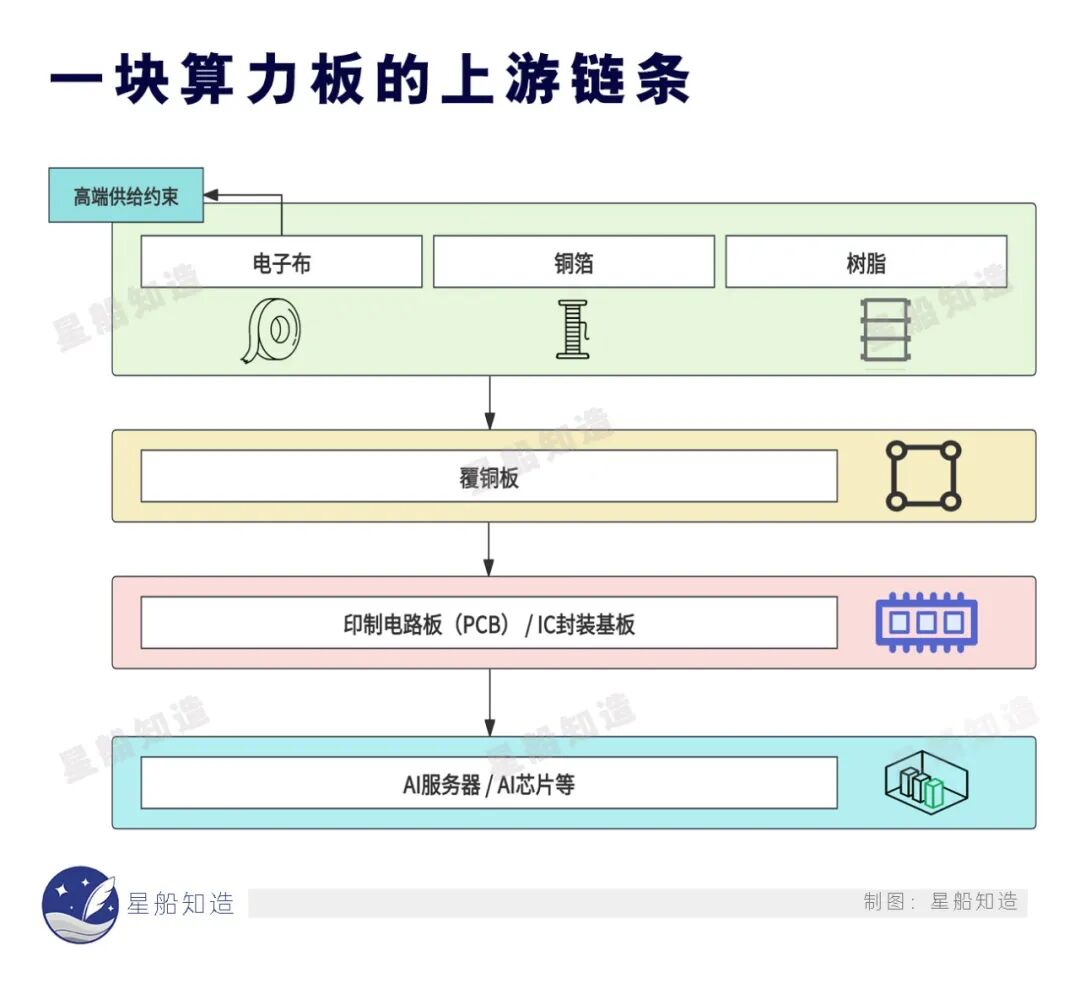
The other is the industrial chain of electronic fiberglass cloth itself:
Mineral raw materials → electronic yarn → weaving treatment → electronic fiberglass cloth.
The upstream of electronic fiberglass cloth is mineral raw materials and electronic yarn. Electronic yarn, namely "electronic grade fiberglass yarn", is the ultra-fine glass filaments twisted into yarn.
The middle stream is to process electronic yarn through warping, weaving, desizing, surface treatment and other processes to make electronic grade fiberglass cloth (electronic fiberglass cloth).
Finally, it enters the downstream copper clad laminates and PCBs. PCBs are then used in AI servers, high-speed switches, optical modules, packaging substrates, consumer electronics, automotive electronics and other scenarios.
You can imagine the electronic fiberglass cloth as a precast reinforced concrete slab, and the fiberglass filaments are the steel reinforcement skeleton inside. The thicker the glass filament, the heavier and rougher the precast slab will be — which will seriously affect the heat dissipation conduction of downstream chips; the finer the glass filament, the lighter and flatter the slab will be — which can support extremely fine circuit processing.
The iteration progress of China's glass filaments and electronic fiberglass cloth is as follows:
Before the founding of the People's Republic of China, Cheng Weimin pulled out China's first fiberglass filament — with a diameter of 25 microns;
In 1956, Cheng Weimin, together with his wife and workers, used a clay crucible to pull out fiberglass filaments with a diameter of 6 microns;
In 1998, the high-spirited Mao Jiaming came to Shanghai. Many years later, the company he worked for — Honghe Technology — successfully realized mass production of 9 microns ultra-thin electronic fiberglass cloth in 2021.
In 2023, the 4 microns ultra-fine yarn from Huangshi Honghe achieved large-scale mass production, providing core raw material support for extremely thin electronic fiberglass cloth.
Today, Honghe Technology is the core manufacturer in Chinese mainland with leading mass production capacity in high-end electronic fiberglass cloth fields such as extremely thin cloth, ultra-thin cloth and Low-CTE T-cloth. Under the background that Nittobo's capacity expansion pace is limited and the supply of high-end electronic fiberglass cloth is tight, Honghe Technology has become an important domestic incremental supplier to meet the global demand for AI servers and advanced packaging T-cloth.
"Extremely thin cloth" and "Low CTE cloth" are rigid-demand skeletons that determine whether AI computing power can be stacked at high density and transmitted at high speed.
No matter how grand the narrative of artificial intelligence is, it still cannot get rid of the basic laws of manufacturing industry.
The headquarters and R&D center of Honghe Technology are located in Pudong, while the core raw material "electronic grade fiberglass ultra-fine yarn" is produced by its wholly-owned subsidiary Huangshi Honghe in Huangshi, Hubei Province.
The finest electronic yarn of Honghe Technology can reach 3 microns, with a weight of only 0.77 grams per kilometer, which is recognized as the finest electronic yarn in the world;
The minimum thickness of electronic fiberglass cloth is 8 microns, with a weight of 7 grams per square meter, making it the thinnest electronic fiberglass cloth in the world.
Its high-end products have entered the supply chain of leading GPU and CPU manufacturers.
The status of electronic fiberglass cloth in the AI industrial chain is being reflected in financial data.
Why is cloth more profitable than PCB manufacturers?
From the perspective of Starship Intelligence Manufacturing, today's global AI computing power base is woven.
The high price of GPU is structural.
NVIDIA's total revenue in Q1 FY2027 (as of April 26, 2026) was 81.6 billion US dollars, of which data center revenue was 75.2 billion, accounting for more than 90% of total revenue. The management stated that the Blackwell series GPUs are operating at full capacity, and the cloud vendors' on-hand computing power orders have increased from about 2 trillion US dollars to about 2.5 trillion US dollars — GPU is still the core component with the highest value in AI servers.
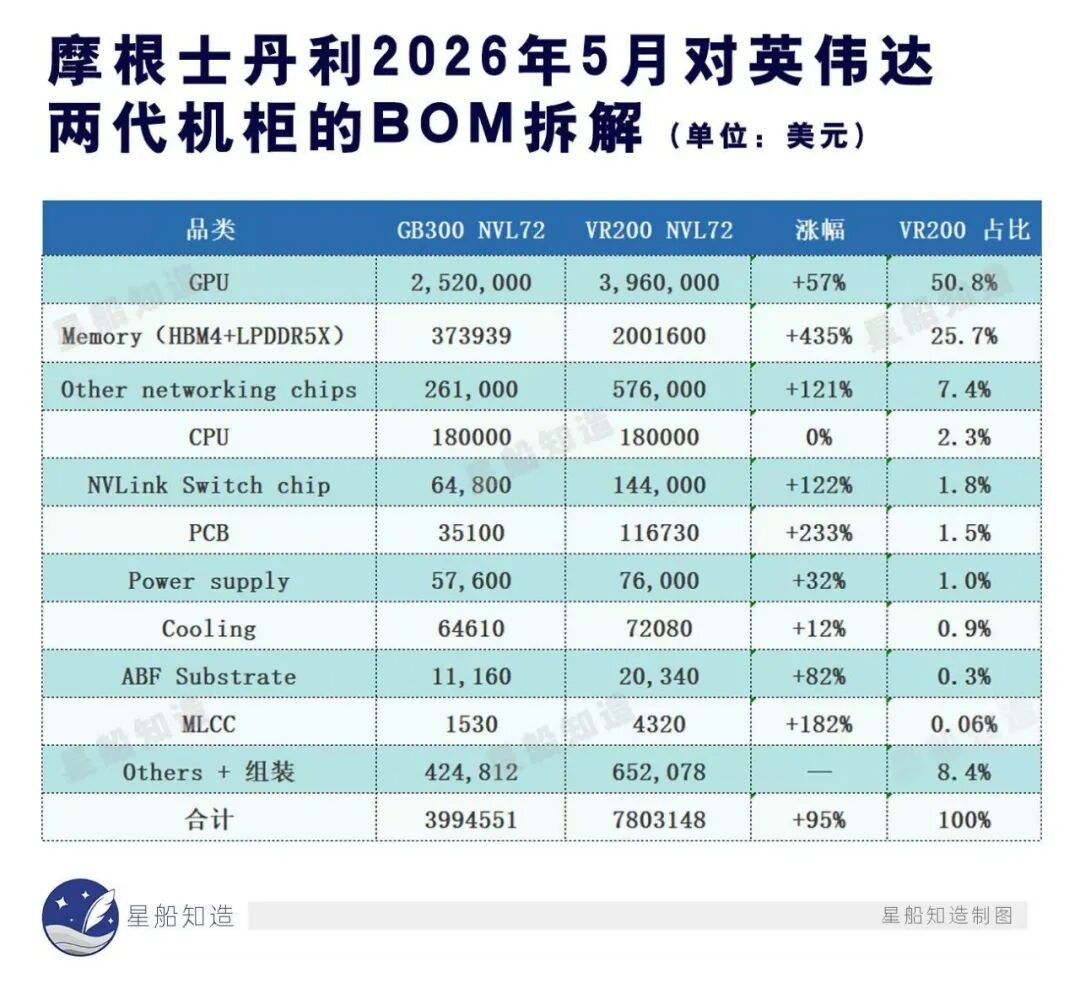
A single cabinet of GPU is priced at 3.96 million US dollars, nearly twice that of the second largest item (storage at 2 million US dollars) and 34 times that of PCB (116,700 US dollars).
But in the dimension of "price increase": in 2026, the multi-year renewal lease price of NVIDIA Hopper architecture GPUs reached up to 2 times the original price, and the lease price of Blackwell B300 increased by more than 60% compared with the time of launch; the retail price of consumer-grade RTX 5090 was speculated from the suggested 1999 US dollars to more than 50,000 US dollars —
The price increase of GPU is not small, but when compared with the price increase of electronic fiberglass cloth, it pales in comparison.
The price increase of GPU is more reflected in the system-level price, tight supply and rising computing power lease price. The price increase of electronic fiberglass cloth is the result of the supply curve being pulled sharply upward — leading to a continuous and sharp surge in spot prices priced by the meter.
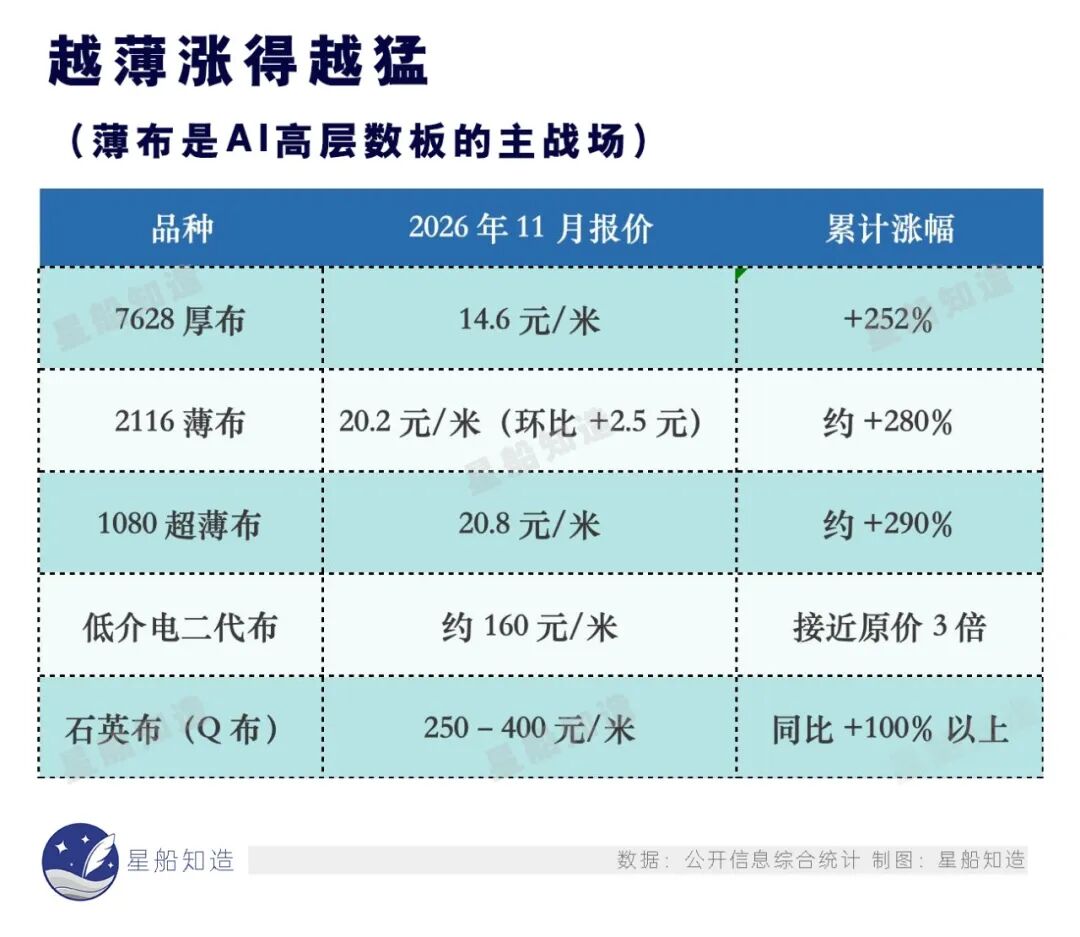
In the table above, the statistical interval for "thick cloth" is from around September 2025 to November 2026; the statistical interval for "thin cloth" is from Q4 2025 to November 2026; the base period for "low dielectric second-generation cloth" is the beginning of 2026; the price increase of quartz cloth is the rolling increase within 2026. The statistical intervals of price increase are not unified.
But overall, the "thinner" the cloth, the sharper the price increase. This is because the emergence of the AI revolution does not make electronic fiberglass cloth used more, but changes the specification requirements for electronic fiberglass cloth.
Before the AI boom, electronic fiberglass cloth was an inconspicuous upstream material.
Its terminals are relatively scattered — it forms copper clad laminates, which are then processed into PCBs, and finally enter terminals such as consumer electronics and automotive electronics.
In other words, the prosperity of electronic fiberglass cloth is tied to the replacement cycle of mobile phones, PCs and home appliances, which follows the typical logic of cyclical products.
For example, mobile phone shipments basically peaked after 2017, and the electronic fiberglass cloth industry also experienced a long period of sluggish prices from 2021 to 2024 (the "7628" thick cloth mentioned above once fell to 3.3-4 yuan per meter), and Honghe Technology was still making losses in 2023.
Counterpoint data shows that after global smartphone shipments reached a high of 1.566 billion units in 2017, there was a decline for three consecutive years, and it dropped to 1.331 billion units in 2020, almost returning to the level of 2014.
During this period, electronic fiberglass cloth was mainly ordinary E-glass cloth (such as 7628 model) (thick cloth), with slow technical iteration, and the core of competition was cost and scale.
The market space for high-end Low-Dk and Low CTE cloth (thin cloth) was very narrow. The global high-end supply was long dominated by Japan's Nittobo, but the demand side was not urgent enough to be non-negotiable.
Overall, Japan's Nittobo and Asahi Kasei took the lead, while Taiwan Glass, Taishan Fiberglass, China Jushi, Honghe Technology and Sinoma Science & Technology (Taishan Fiberglass) followed, and the pattern has remained stable for many years.
In this long cycle without "computing power", data center servers are large consumers of PCBs, but ordinary electronic fiberglass cloth can meet the requirements — electronic fiberglass cloth seemed insignificant in the whole machine industry.
Image source: unsplash
After the AI computing power boom, electronic fiberglass cloth has risen sharply in status.
Materials determine performance.
In AI hardware, electronic fiberglass cloth determines whether a chip can run at its upper limit of computing power.
The number of PCB layers in traditional servers is 8 to 14 layers. But for AI servers, this number jumps to 20 to 40 layers, and the orthogonal backplanes of some NVIDIA flagship models reach up to 78 layers. Each layer needs electronic fiberglass cloth as a skeleton, so the amount of electronic fiberglass cloth used in a single AI server reaches 3 to 5 times that of a traditional server. The doubling of layers and the surge in consumption mean that every performance defect of electronic fiberglass cloth will be amplified to the scale of the entire system.
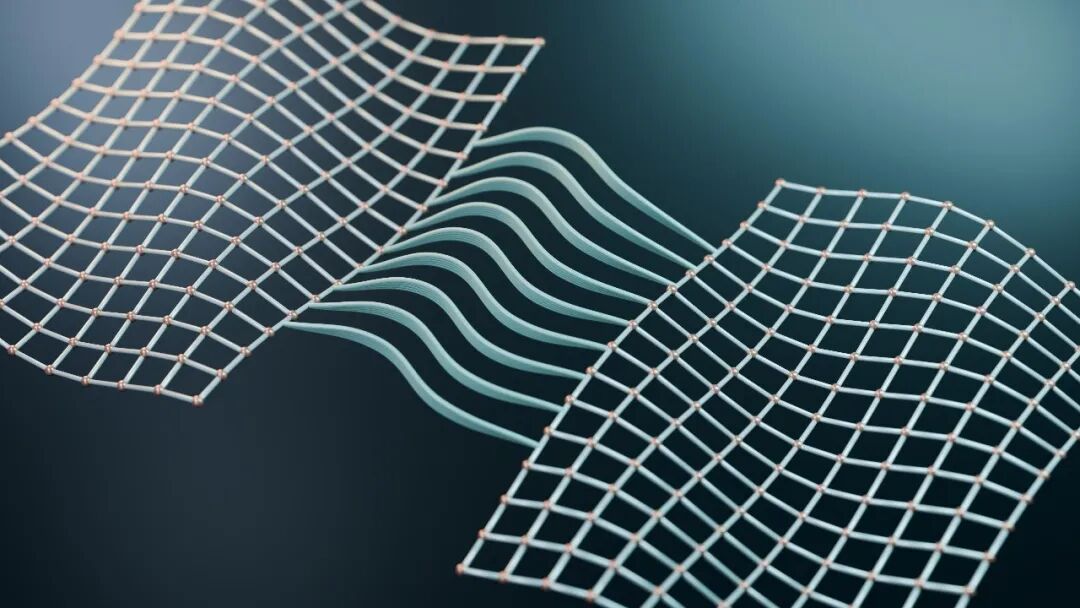
Image source: pexels
On the one hand, the internal transmission rate of AI servers has reached 112Gbps or even 224Gbps, and the signal loss in PCB must be minimized to the extreme.
Low-Dk cloth (thin cloth) has therefore become a rigid demand — the thinner the cloth, the faster the signal travels.
On the other hand, the core function of Low CTE cloth (low thermal expansion cloth, including T-cloth) is to "pull" the thermal expansion of the substrate to a level matching that of the silicon chip, so as to prevent packaging warpage and solder joint fracture. As advanced packaging processes expand, Low CTE cloth has changed from a "niche material" to a key bottleneck in advanced packaging.
In other words, after the AI boom, the demand for electronic fiberglass cloth has suddenly narrowed down to "only those few high-specification cloths are qualified".
Computing power GPUs bring growing demand for low-dielectric electronic fiberglass cloth:
The consumption of low-dielectric electronic fiberglass cloth will increase from about 68.57 million meters in 2025 to 140 million meters in 2026, and is expected to approach 240 million meters in 2027. The demand growth rate of Low CTE cloth is steeper: 6.7 million meters in 2025, 18 million meters in 2026, and is expected to exceed 33.6 million meters in 2027.
