Jia Yueting is developing robots, and education has become the breakthrough point for commercialization.
While humanoid robot enterprises are still exploring how to enter factories, shopping malls and thousands of households, Jia Yueting's robots have already started to enter public schools in the United States.
On November 23, Jia Yueting, founder of Faraday Future (FF), disclosed that FFR, its robot business arm, has made new progress in the U.S. education market and become a robot supplier for public school districts. More than 1,000 schools in the relevant school districts can directly procure FFR robots and education solutions.
On the 24th, FFR further announced that it has made cooperative progress with three public school districts in California, and two of them have completed the first batch of robot procurement. Affected by the relevant news, FFR's share price rose by 45.71% on November 23.
Crossing from new energy vehicles to embodied intelligence, Jia Yueting has set his sights on the education market. In China, enterprises such as Unitree Robotics, Agibot, and UBTECH are also accelerating their layout of campus scenarios.
From selling robots to selling courses, building laboratories and training teachers, education is becoming a key market for the early commercialization of the embodied intelligence industry.
PART.01 Jia Yueting's robots have been sold to schools in the United States
In February 2026, Faraday Future officially entered the robot market. In the following months, FF continued to expand its robot product matrix and extended its business to education and scientific research, industrial logistics, security inspection, commercial services and other fields.
In October this year, FFR completed the acquisition of FF's robot business and became an independent listed platform for robot business. According to the unaudited third-quarter 2026 performance disclosed by FFR, by the end of October, the cumulative sales and shipment of its robots reached 1,168 units, of which 351 units were sold and shipped in October alone, hitting a new monthly high. In the first three quarters of this year, the acquired robot business generated unaudited revenue of approximately USD 2.3 million, with a gross margin of approximately 26%.
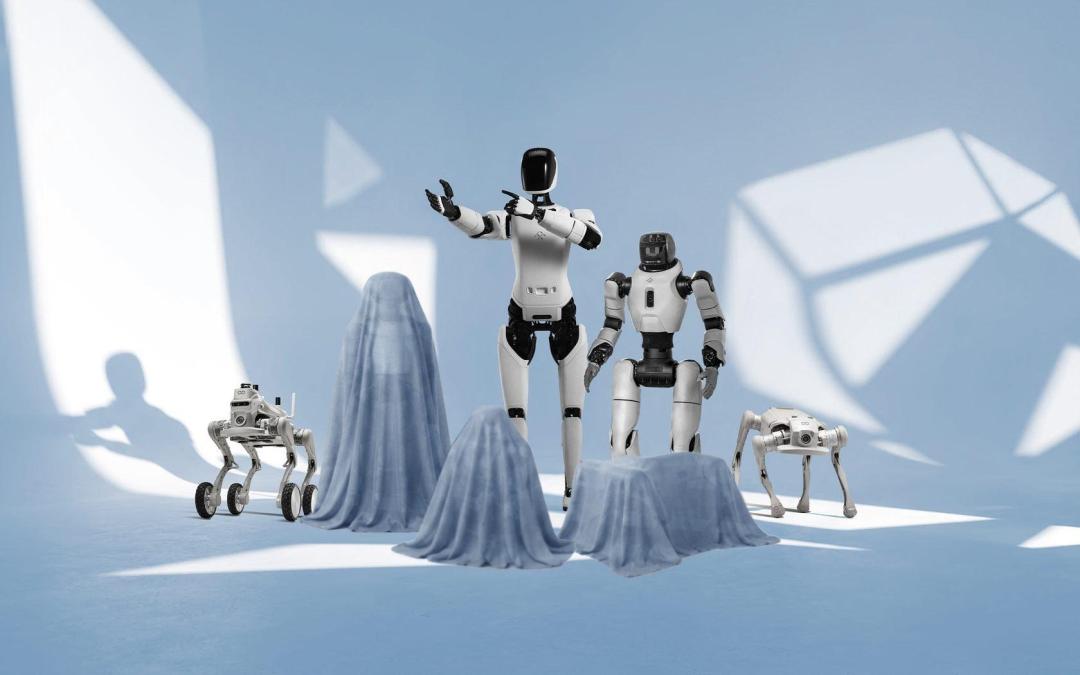
FF embodied intelligent education robot product matrix
Among many application scenarios, education has become one of the fields where FFR has achieved actual sales progress. According to the company's latest announcement, a public school district in California has included FFR in its procurement platform, and its subordinate vocational education center has taken the lead in procuring robots such as FX Navi and Aegis EDU.
At the same time, FFR has signed a memorandum of understanding on strategic education cooperation framework with another public school district in California, which has purchased products such as Master Mini and Aegis EDU. In addition, FFR has also reached a framework cooperation agreement with a public school district in the Los Angeles area.
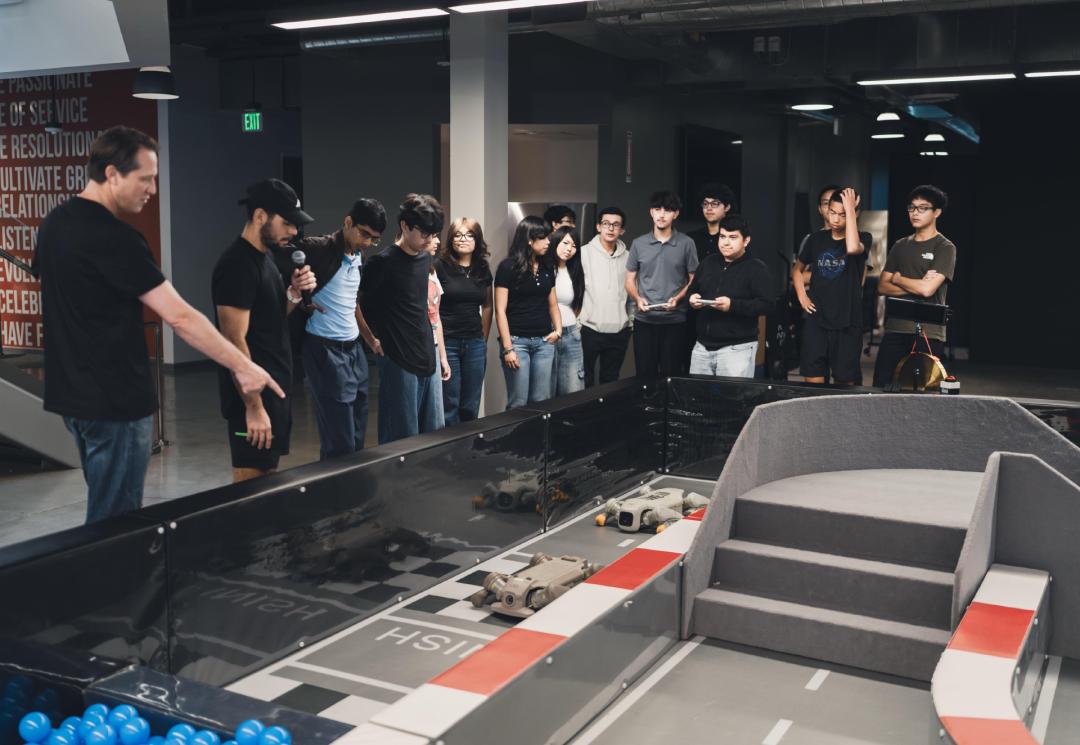
FF Nexus Academy embodied intelligent robot summer course
The relevant cooperation not only covers K-12 basic education, but also involves adult education, vocational and technical education, course development, innovation laboratory construction and teacher training. Starting from California, FFR plans to further promote robot education solutions to New York State, Pennsylvania, Florida and Texas, and has proposed a 100-city robot education program.
Outside the United States, FFR is also actively expanding the Middle East market. Recently, the company held a product launch event in Dubai, where six robots made their first concentrated local appearance, demonstrating five application scenarios including education, security inspection, entertainment, medical care and interactive sports.
In FFR's education business layout, a noteworthy detail is its product pricing. In October this year, FFR and FF jointly released FF Nova Mini, a small humanoid robot for embodied intelligence enlightenment education, priced at USD 299, and its supporting Physical AI Spark education course is priced at USD 499.
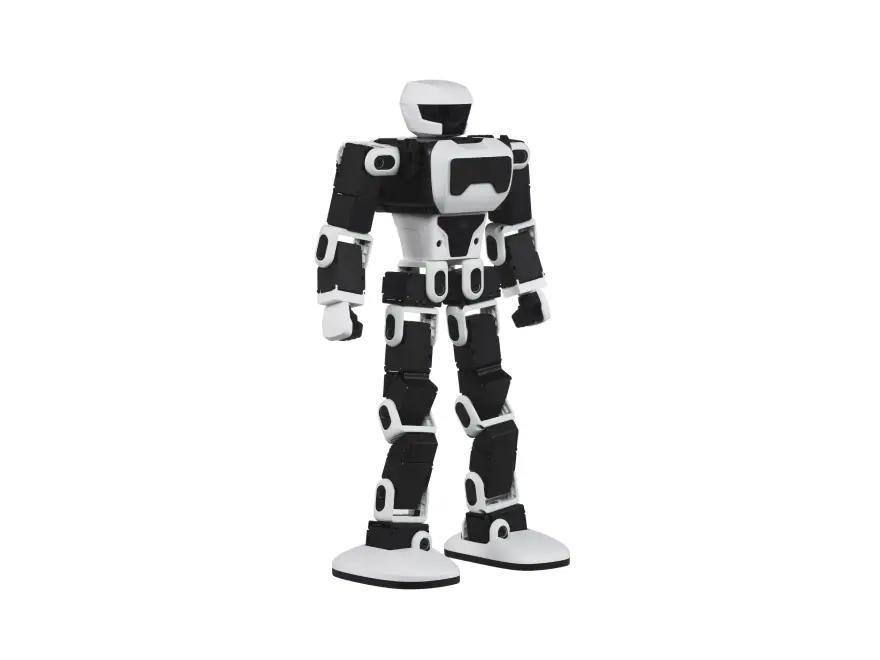
FF Nova Mini education humanoid robot priced at USD 299
According to the introduction on its official website, this 8-week course is carried out in the form of small-class teaching, allowing students to learn knowledge related to robots and artificial intelligence through hands-on operation.
The marked price of a set of education courses is higher than that of the robot hardware itself. This also reflects FFR's commercialization idea in the education field: lower the usage threshold with relatively low-cost hardware, and expand revenue sources through courses, software, teacher training and continuous services.
However, FFR has not yet disclosed the specific procurement amount of relevant school districts. The fact that more than 1,000 schools have obtained procurement qualifications does not mean that these schools have generated actual orders. Further market verification is still required from procurement access to large-scale sales.
PART.02 More than Jia Yueting, robot enterprises are laying out the education sector one after another
It is not only Jia Yueting who regards education as a commercialization landing scenario. From the business layout of domestic embodied intelligence enterprises, education and scientific research have become an important source of revenue for some robot enterprises, and the market is gradually extending from universities and scientific research institutes to primary and secondary schools and vocational colleges.
Unitree Robotics is a typical case. According to the listing application related documents previously disclosed by Unitree Robotics, in 2023, all its humanoid robot revenue came from the scientific research and education field. In the first three quarters of 2025, although this proportion dropped to 73.60%, scientific research and education is still the largest revenue source for its humanoid robots.
This year, Unitree Robotics has further expanded its education business to the basic education stage. At the end of October, Unitree Robotics and Digua Robot announced that they have reached strategic cooperation, and took education as the first landing scenario for the cooperation between the two sides.
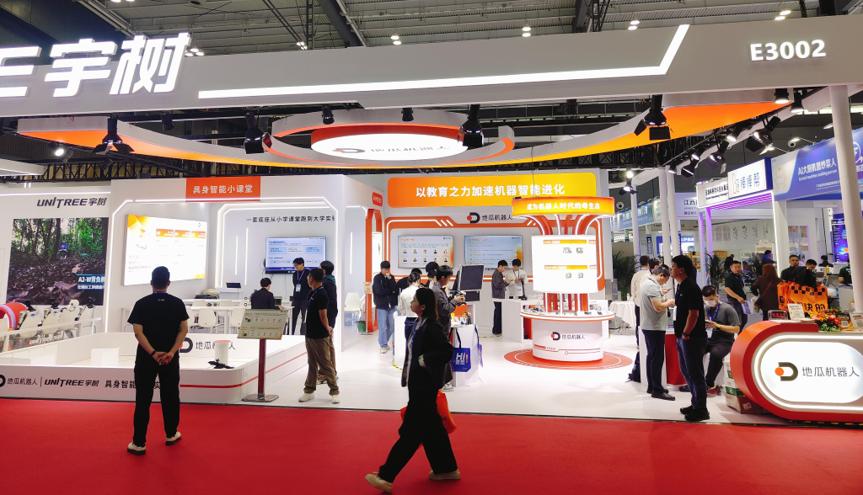
Unitree Robotics and Digua Robot jointly demonstrate embodied intelligent education solutions at Changsha Education Equipment Exhibition
The embodied intelligent education solution jointly launched by the two sides takes Unitree Go2 quadruped robot, R1 humanoid robot and other products as hardware carriers, supporting 15 course themes and 180 courses, covering primary school, junior high school and senior high school stages, and providing teaching materials, competition projects and teaching environment construction solutions at the same time. Students can learn knowledge such as robot motion control, environment perception and intelligent decision-making through practical tasks such as robot transportation and dual-robot relay.
Agibot has set its sights on talent cultivation in universities. In September this year, the Department of Electronic Engineering of Tsinghua University reached a three-year teaching cooperation with Agibot to jointly build an embodied intelligent teaching laboratory, and jointly develop the undergraduate experimental course "Comprehensive System Experiment of Embodied Intelligence". In the teaching trial operation of this spring semester, 8 undergraduates were divided into 4 groups and completed the complete practical process from simulation modeling, teleoperation data collection to model training and real machine deployment.
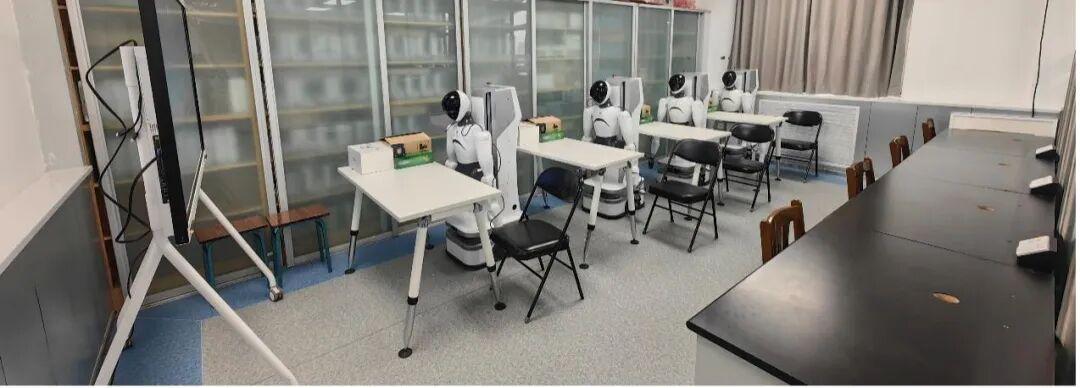
Embodied intelligent teaching laboratory jointly built by the Department of Electronic Engineering of Tsinghua University and Agibot
As a robot enterprise that laid out the education market earlier, UBTECH has also generated actual revenue in this field. In the first half of 2026, in UBTECH's full-size embodied intelligent humanoid robot business, the education sector contributed revenue of RMB 21.247 million; in other intelligent robot products and solution businesses, the education sector contributed revenue of RMB 96.726 million. The total of the two items is close to RMB 118 million.
In addition to robot enterprises penetrating into the education market, education enterprises are also entering the robot industry in reverse. In July this year, Chuanzhi Education released embodied intelligent talent cultivation solutions and six layered teaching robot hardware, built a course system around robot development, motion control, multimodal large model and other directions, and cooperated with enterprises such as Agibot, UniTree, and RealMan to carry out co-construction of courses.
On the one hand, robot enterprises are starting to do education, and on the other hand, education enterprises are starting to make robots. The business boundaries between the two sides are changing. Robot enterprises are no longer satisfied with providing teaching equipment, and education enterprises are no longer limited to software programming and theoretical teaching. The combination of hardware equipment, course content and industrial practice is becoming a new competition direction.
PART.03 Why has education become a breakthrough for robot commercialization?
In the past few years, the embodied intelligence industry has attracted a large number of capital and entrepreneurs, but how to find application scenarios that can truly generate revenue has always been the core problem faced by the industry. Compared with scenarios such as industrial production and home services, education has some characteristics suitable for the early commercialization of robots.
First of all, education demand has a high degree of adaptation to the current technical capabilities of robots. In industrial production, robots need to meet requirements such as precision, efficiency, stability and long-term continuous operation. After entering the home, robots also need to face complex environments, items and personalized demands.
In some education scenarios, robots do not need to perform complex tasks completely autonomously. Students programming, controlling and debugging robots to understand the operating principle of artificial intelligence is itself a teaching goal. Even in scientific research and training scenarios, the technical problems that robots have not yet solved can also become topics for students to carry out research and learning.
Secondly, the education market is forming new procurement demands. In April 2026, five departments including the Ministry of Education issued the "Artificial Intelligence + Education Action Plan", putting forward tasks such as strengthening the cultivation of artificial intelligence talents, promoting the construction of course resources, and deepening the integration of industry and education. The "Catalogue of Undergraduate Majors in Ordinary Institutions of Higher Learning (2026)" released in the same month officially added the undergraduate major of "embodied intelligence".
From artificial intelligence general education in primary and secondary schools, to skill training in vocational colleges, to the construction of embodied intelligence majors in universities, different education stages are forming differentiated demands for robot products and services. For robot enterprises, these demands not only mean hardware sales opportunities, but also incremental markets such as course development, laboratory construction and talent cultivation.
More importantly, education is expected to help robot enterprises establish a sustainable revenue model beyond hardware. Simply selling robot equipment, revenue mainly depends on product sales volume. But after entering the education scenario, enterprises can provide services such as course resources, teaching software, teacher training, event operation, equipment maintenance and technical upgrades around the same device.
From FF's launch of the USD 499 education course, to Unitree Robotics' development of 180 embodied intelligence courses, to Agibot's joint construction of laboratories with universities, the commercial exploration of enterprises has gradually gone beyond the hardware itself.
Education also has another industrial value, that is, to establish a developer and talent ecosystem in advance. When students start to contact the robot products, development platforms and technical systems of a certain enterprise at the learning stage, after they enter scientific research institutions or the front line of the industry in the future, they may also become developers, users and even procurement decision-makers of related technologies. This model is somewhat similar to the logic of computer, software and cloud computing enterprises laying out the university education market in the past.
Of course, the education market is not without thresholds. Robot equipment prices, campus safety, teacher capabilities, course adaptation and subsequent operation and maintenance will all affect whether products can truly enter daily teaching. If schools purchase robots only for exhibitions, visits and short-term experiences, equipment utilization rate and subsequent procurement demands will be restricted. How to turn robots from display equipment into regular teaching tools is a problem that enterprises need to solve next.
For the education industry, the changes brought by the new round of embodied intelligence wave may not just be an additional type of education hardware. In the past, educational robots were mainly focused on programming enlightenment, STEAM education and science and innovation competitions; now, robot perception, motion control, model training and actual scenario deployment are becoming new teaching contents.
From "educational robots" to "robot education", a market covering hardware, courses, teachers, practical training and integration of industry and education is taking shape. Jia Yueting's sale of robots to American schools is just a microcosm of this industrial trend. As more and more robot enterprises enter the education market, whether education enterprises can give full play to their advantages in course R&D, teaching services and channel resources will also become a commercial opportunity worthy of attention in the next stage.
This article is from the WeChat official account "Duojing" (ID: DJEDUINNO), written by Guanye, published with authorization from 36Kr.