After Black Myth: Wukong, the business of China's domestic standalone games has only just started.
After the release of Black Myth, domestic Chinese games have once again stood out proudly on the overseas market.
On November 11, at the Golden Joystick Awards ceremony held in the UK, the domestic game Phantom Blade Zero not only successfully got shortlisted, but also claimed the honor of the second place;
This award is widely regarded as the "Oscar" of the gaming industry.
Under the fierce competition of well-known blockbuster titles such as Resident Evil and Red Desert this year, Phantom Blade Zero, the new face in the domestic single-player game sector, has successfully carved out its own unique path.
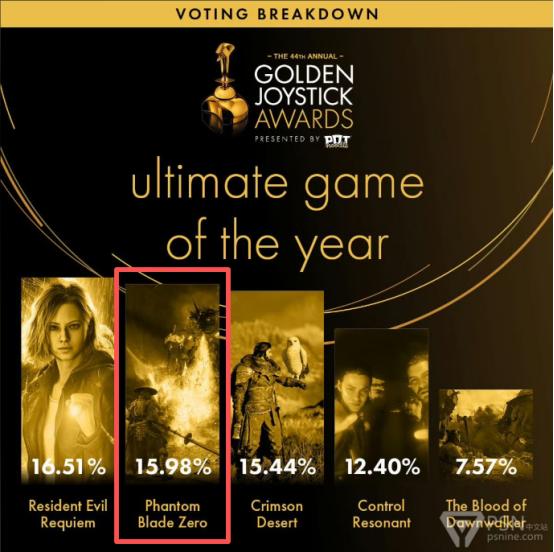
From the timeline perspective, Phantom Blade Zero was released on October 29, and the Game of the Year voting closed the very next day, leaving only about 40 hours of actual voting window for global players. Even under such constraints, it still secured a 16% vote share, only 1 percentage point behind the champion Resident Evil 9: Requiem, which is already an extraordinary achievement.
If the launch of Black Myth: Wukong two years ago proved that domestic Chinese single-player games have the strength to compete on the global stage, Phantom Blade Zero further demonstrates that such strength is not a fleeting miracle, but has become a steadily growing industrial force.
Up to now, the development of domestic Chinese single-player games in the past two years has been extremely vigorous. The blockbuster domestic single-player titles launched one after another in this period include: Wuchang: Fallen Feathers, Lost Soul Aside and more, covering a wider range of themes from Chinese supernatural folklore to fantasy action.
In fact, the author sincerely believes that single-player games, especially those high-production, high-technical-threshold 3A single-player titles, are far more than just entertainment products to kill time.
To a certain extent, they also represent the strong cultural output of a country after its rise in economy and technology.
Looking back at the past, Call of Duty, despite carrying a distinct American mainstream ideology flavor, still managed to win over a generation of young FPS game fans with its classic action scenes and exciting level designs.
Meanwhile, the line "Nothing is true, everything is permitted" from Assassin's Creed, as well as Ezio's white robe and hidden blade, have also become well-recognized cultural symbols widely discussed by numerous players.
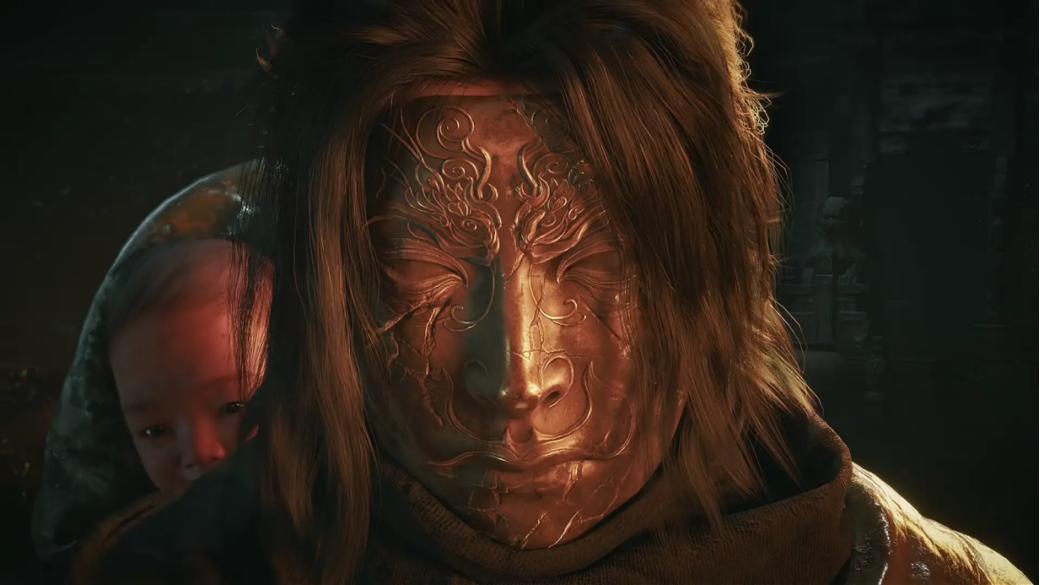
After the world has seen far too many game works with European, American and Japanese themes, China has finally made the world truly feel the shock of Chinese culture through the medium of single-player games.
But the question is: Why are domestic Chinese single-player games emerging in clusters during this specific period? Why is this breakout happening exactly among paid buy-to-play single-player titles?
The Dawn Year of Domestic Chinese Single-Player Games
If we need to draw a watershed for the development of domestic Chinese single-player games, this dividing line roughly falls around 2020.
This is because looking back at 2020, you will notice an interesting phenomenon: China's per capita GDP just crossed the 10,000 USD threshold that year, and in August of the same year, Game Science released its first trailer for Black Myth: Wukong.
This synchronization seems to be a coincidence on the surface, but it essentially represents an economic inevitability behind it.
The signal of per capita GDP exceeding 10,000 USD means that a society will shift from "seeking survival" to "pursuing development", and the overall social demand will also gradually change from purchasing tangible physical "products" to purchasing services.
If you make a comparison, you will find that the rise of single-player games in Europe, America and Japan also roughly follows this rule.
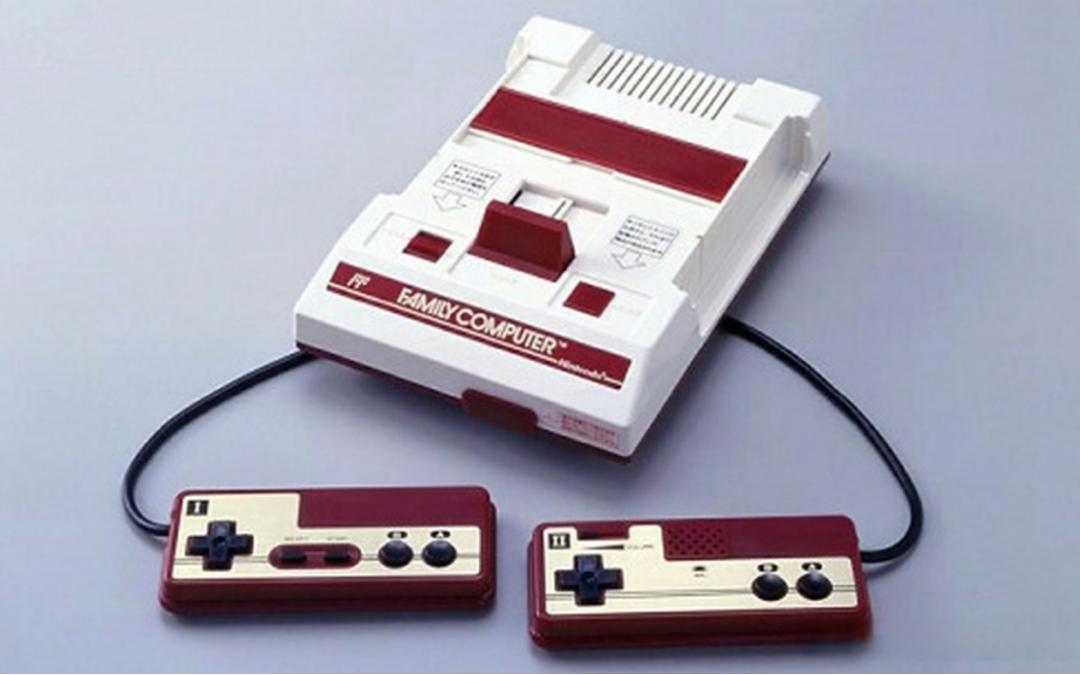
For example: Japan's per capita GDP exceeded 10,000 USD in 1981, Nintendo launched the Family Computer (Famicom) in 1983, and Super Mario Bros. was released in 1985, when video games began to enter thousands of households.
Some people may ask: Even if material life gets better and people naturally have higher spiritual pursuits, didn't China already have mobile games and online games before?
The main reason is that the marginal revenue of industries like mobile games and online games had already diminished by then, and the industry had excess capital that needed new outlets.
For example, around 2020, Genshin Impact had already raised the content arms race to the threshold of "100 million USD R&D plus 200 million USD annual content update" — the marginal revenue of the mobile game cash cow started to decline, and the overflowing capital had to find new exit points.
From the consumer perspective, there are two other critical factors for domestic single-player games to form a real industry:
First, the maturity of digital payment infrastructure such as WeChat Pay and Alipay in China;
Second, the huge scale of Chinese players has given domestic single-player games the confidence of a solid domestic base.
Starting with the payment aspect, many veteran players who actually experienced the "pre-WeChat era" will definitely have deep memories of the period from 2000 to the early 2010s.
One of the reasons is that at that time, the threshold to pay or top up for your favorite game was extremely high and extremely difficult!
The author still remembers that back then, if you wanted to buy a game point card, you had to go to newsstands one by one to ask. One of the author's friends, Lao Zhou, around 2000, was playing an old online game called Decisive Battle and needed to top up with a point card. There were no places selling point cards in his small city back then, so his first point card was specially brought back for him by his father, who took a detour to Zhongguancun on a business trip to Beijing.
Later, you no longer needed to go to Zhongguancun, because you could also order through game magazines, but every time you placed an order, you still had to go to the post office specially to send money to the seller before the goods could be delivered.
Compared with the current experience of scanning a code to pay on Steam, the difference in experience is simply worlds apart.
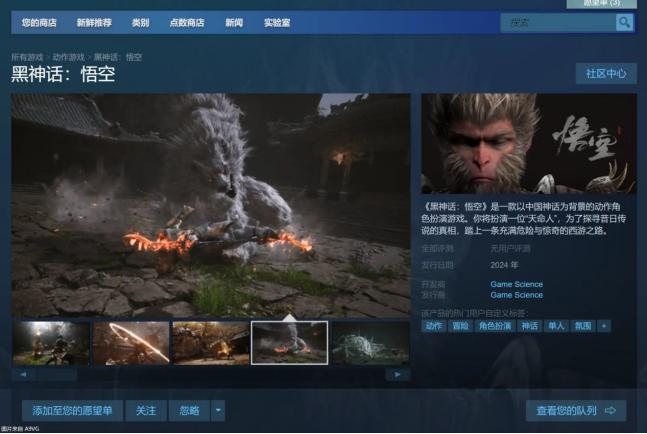
After payment became convenient, many players who originally "wanted to pay but had no access" quickly converted into supporters of genuine copies.
With the payment threshold lowered, as Steam entered China in 2015 and the "online game-style" single-player title PlayerUnknown's Battlegrounds became a huge hit rapidly, the domestic group of people who understand single-player games and are willing to pay for them began to grow gradually.
However, higher per capita GDP and paying players do not necessarily mean that game manufacturers will definitely make single-player games. What truly gave Game Science and Leyou Technology (Lingyoufang) the confidence is the huge scale of domestic players.
Looking at hit titles alone, Poland's CD Projekt Red has made The Witcher series and Cyberpunk 2077, and South Korea's Shift Up has also developed Nikke and Stellar Blade. These small countries have tiny domestic markets, so they bet entirely on their games becoming global blockbusters and achieving huge sales, and they did win the bet.
But the problem is: this model of betting entirely on the global market is naturally a "one-off deal". Champion studios are often tightly tied to one or two IPs. Without domestic demand to spread risks, the industry cannot allow teams to conduct systematic trial and error.
To this day, Poland's 2025 industry report shows that about 97% of its domestic games are sold overseas; while in South Korea, mobile games accounted for 59% of the game market in 2024, and console games only accounted for 5%, with the industry focus still remaining on mobile games.
It can be seen that the champion model leaves several isolated peaks, while the wave model leaves a vast plateau, and the plateau is the soil that nurtures supplier networks, mid-level teams, and talent systems that support the growth of the industry.
The Strong Foundation Grown from Outsourcing
Speaking of the industrial soil, we need to sort out carefully: on the supply side, after nearly 20 years of making mobile games and online games, why can Chinese teams produce blockbuster titles like Black Myth and Phantom Blade Zero as soon as they make a move.
Frankly speaking, in this aspect, the development of China's game industry, to a certain extent, has a very similar industrial evolution history to the development of China's manufacturing industry: both started from the bottom links, and accumulated various industrial technologies through outsourcing work.
The skills accumulated from doing tough and tiring jobs in low-end links and outsourcing projects have become the technical foundation for today's domestic Chinese single-player blockbusters.
Take Black Myth: Wukong as an example, its motion capture supplier is exactly an enterprise that grew up from the online game and mobile game industry chain.
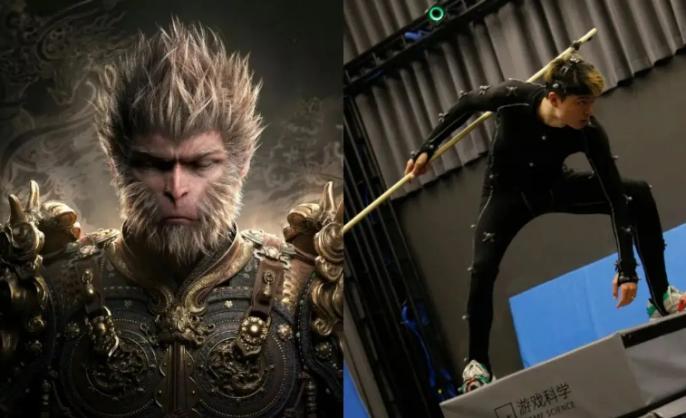
Around 2017, the domestic battle royale game boom drove a large number of motion capture demands. Later, these suppliers and teams cooperated with enterprises including Tencent, NetEase, and Shengqu Games, and participated in the motion production of Black Myth: Wukong.
One of these suppliers, Shanghai Descendant Studio, has previously participated in projects including Peacekeeper Elite, Moonlight Blade, Justice Online, Naraka: Bladepoint and more.
Phantom Blade Zero used motion capture from Zhenjia Class and Qingtong Optical Motion Capture when scanning villages and towns. All these pipelines and suppliers were accumulated during the mobile game and online game era.
Similarly, Liang Qiwei, the producer of Phantom Blade Zero, also explicitly mentioned that China already has a large number of outsourcing companies that provide animation, 3D modeling and concept art services for European, American and Japanese games.
A typical example is the studios established by Ubisoft in China, such as the Shanghai studio founded in 1996 and the Chengdu studio founded in 2008.
These studios are responsible for the production of various subdivided links of the Assassin's Creed series, for example, the two main areas and the base "The Shadow's Reach" in Assassin's Creed: Shadows, as well as interactive contents such as meditation and animal sketching.
Frankly speaking, these links seem to be trivial "odd jobs" individually with not very high technical ceilings, but the combination of these technologies in 3D scenes, art and motion capture has formed the complete set of industrialized technology and talent foundation for China's later single-player game industry.
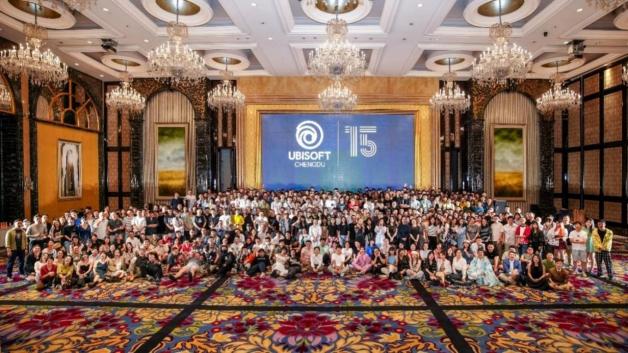
Group photo for Ubisoft Chengdu's 15th anniversary
At the level of production relations, the "industrialized organization skills" accumulated in the mobile game and online game era also laid the foundation for China's later 3A blockbuster titles;
Because the production of a 3A blockbuster is usually supported by a huge team with complex division of labor and numerous external suppliers; take the recently released Grand Theft Auto VI as an example, its production team has nearly 5,000 people.
From scriptwriting, programming, art, to motion capture, sound production and quality testing, all work is split into specialized teams, and the production management department coordinates the progress of all parties.
In this aspect, before developing Phantom Blade, Leyou Technology (Lingyoufang) had already gained rich experience through years of operation in the mobile game era.
According to Liang Qiwei's recollection in November this year, when the mobile version of Phantom Blade was first launched in 2014, the team only had about 20 people.
In the following years, as profits increased and the team scale kept expanding, he had to start learning the necessary skills for managing a large team: team management, project schedule control, distribution cooperation and so on.
It is exactly these experiences that finally made Leyou Technology a professional development team capable of managing large-scale projects and complex division of labor.
To put it bluntly, China's game outsourcing business, as well as the online game and mobile game industries, not only trained a group of artists who know how to make games, more importantly, they created a large-scale, long-term, continuously updated content order pool.
These demands have allowed a number of professional production companies to survive, expand their scale, refine their division of labor, and finally form the productive forces that can be mobilized by domestic 3A game projects.
The Derivative Businesses Born from Single-Player Games
Although Black Myth: Wukong and Phantom Blade Zero have achieved full success for China's single-player game industry with their impressive strength, a truly healthy and sustainable industry cannot rely solely on "hit titles" to drive growth.
After all, buy-to-play single-player games are one-time transactions. Compared with mobile games and online games, players usually only need to pay once.
Therefore, to judge whether a country's single-player game industry has resilience, we should not only look at the quality of individual works, but also look at what additional derivative businesses the entire industry has developed around these games.
Only in this way can the entire industry avoid the risk of "being unable to sustain itself with only one single pillar".
First of all, the largest derivative business: traffic and product premium brought by IP licensing;
In this aspect, Black Myth: Wukong can be regarded as a model example.
Around the launch of Black Myth: Wukong, it has already cooperated with many consumer brands. For example, Luckin Coffee launched the "Black Myth Cloud Americano" and limited-edition peripheral products, while Lenovo also launched co-branded computers, laptops and other products.
Similarly, around the launch of Phantom Blade Zero, multiple brands also launched co-branding activities;
For example, Haidilao launched "Phantom Realm Real Kung Fu" and "Phantom Realm Killing Intent Noodles".
Other similar examples include: 8BitDo launched a co-branded controller for Black Myth: Wukong, extending players' love for the IP into consumption of game hardware.
Another unique, most Chinese-characteristic business is the cultural tourism industry driven by games;