The world's wealthiest female athlete has established a new VC.
In 2019, shortly after launching her own firm Serena Ventures, Serena Williams appeared on the cover of Forbes. The tennis legend expressed her determination to explore more work beyond commercial endorsements. Over the previous five years, she had quietly invested in 34 startups. "I want to be involved, dig deep into the roots of the business. I want to be the brand itself, not just the face of it," she said.
Seven years later, she has invested in more than 100 companies, but she believes she can go even further.
On November 16, the 45-year-old Williams will announce the launch of Starfire Ventures in partnership with seasoned venture capitalist Beth Ferreira. The New York-headquartered investment firm has a target fundraising size of $200 million.
Serena Ventures initially relied solely on Williams' personal capital, and did not raise a $111 million fund until 2022. This time, she and Ferreira did not disclose the amount of committed capital that has been finalized so far, nor the amount of capital they have contributed themselves, but said they plan to invest in 20 to 25 startups, mainly targeting companies at the seed and Series A stages, covering industries such as healthcare, financial services and artificial intelligence. The investment amount for a single project ranges from $1 million to $10 million, with an average of about $5 million, far higher than the low six-figure investment amount that was common in Serena Ventures' past. Such investment can give Starfire Ventures greater say in the development decisions of the invested enterprises.
Beyond making money, Williams and Ferreira also want to fundamentally change who exactly makes investment decisions.
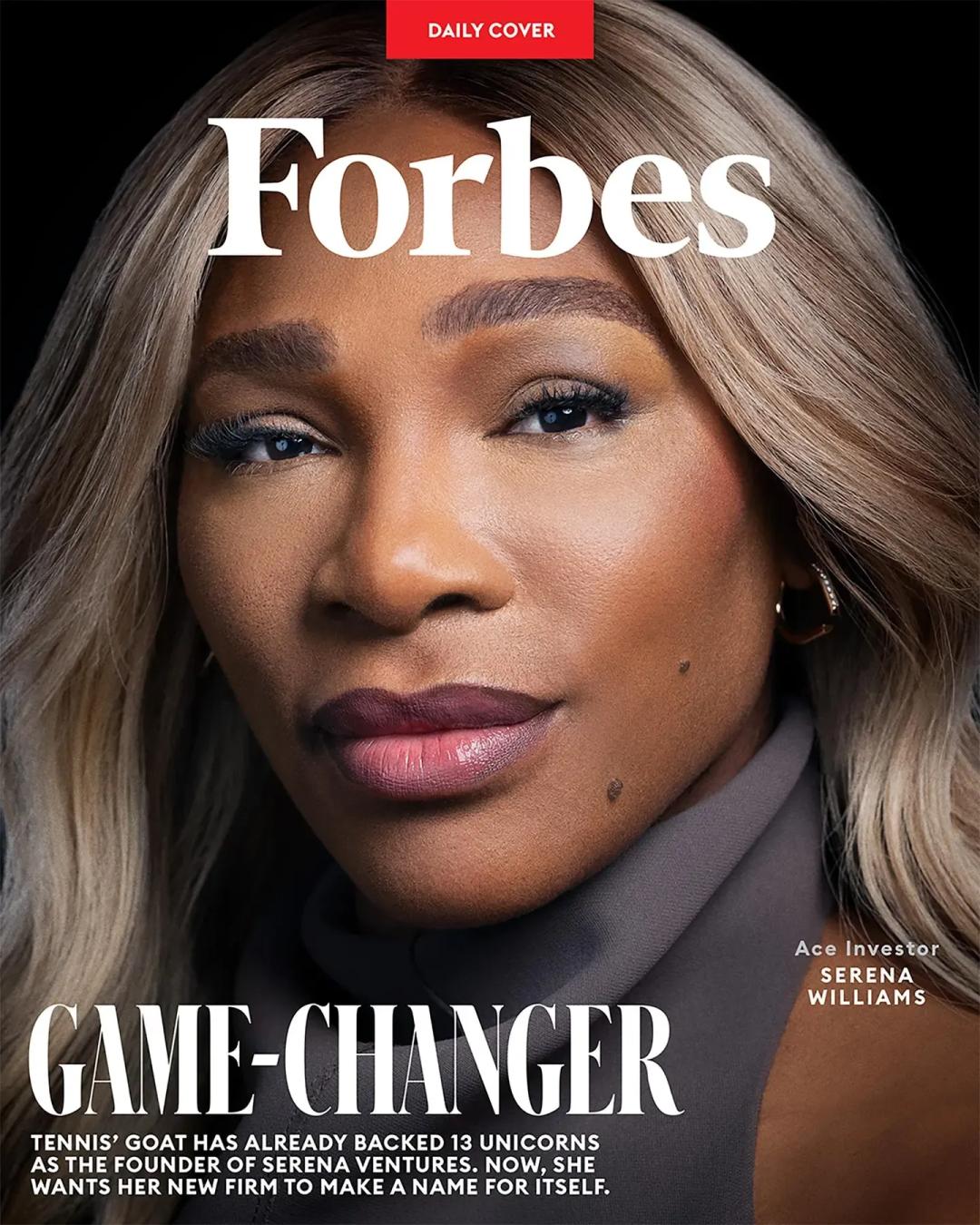
Image source: JAMEL TOPPIN FOR FORBES
01
"We have to have women writing checks for women," Williams said.
According to Pitchbook, only 1% of U.S. venture capital funds flowed to companies with no male founders last year, a fact she is fully aware of. "We also need women writing checks for men. Our mission is to invest in companies that transform our daily lives."
Williams did not start focusing on this point recently. 13 of the companies she backed have reached a $1 billion valuation, including Andela, Esusu, Lovable and Mercury. About 80% of the founders supported by Serena Ventures' first fund come from underrepresented groups.
But Williams now believes that to achieve her grand ambitions, she needs to build a firm that does not bear her name and can survive for a long time after she steps away.
"I want its significance and achievements to far exceed myself," she said.
Of course, with the achievements she has already made, this is a very high standard. Williams is a tennis prodigy. She learned to play tennis on public courts in Compton, California with her father and sister Venus when she was young. In 1995, at the age of 14, she turned professional, and later grew into a black superstar in this white-dominated sport. Before retiring in 2022, she won 23 Grand Slam singles titles and four Olympic gold medals, setting an Open Era record.
In June, she returned to the court to compete in Wimbledon singles and four WTA Tour doubles matches. Forbes estimated her net worth at $400 million at the time, making her the richest woman in the world who got rich mainly as an athlete. Williams also ranks third on Forbes' 2026 list of highest-earning tennis players, with an estimated income of $40.1 million in the past 12 months and pre-tax career earnings of more than $600 million.
It is Ferreira who helped Williams balance her tennis and venture capital careers at the same time. The two met around 2015 through their investment in MasterClass. Ferreira launched a $50 million fund at WME Ventures and served as managing director of FirstMark Capital. FirstMark Capital was once the largest shareholder of AI insurance claims platform EvolutionIQ, which was acquired for $730 million in January 2025. She was also an early executive at Etsy, and later served as chief operating officer of another e-commerce company Fab. She told Forbes in 2016 that when she left Fab, "the company was already on the decline".
Ferreira eventually became an advisor to Serena Ventures, and it took Williams nearly two years to convince her to join full-time. Ferreira finally joined the firm as a general partner in 2024, and now serves as a general partner of Starfire Ventures.
"Starfire gives us the opportunity to communicate to the society what exactly we are investing in, and let people know Serena from a different perspective," Ferreira said. "She fully fulfills the duties of a general partner: attending investment meetings, communicating with founders, and helping them build connections."
02
The U.S. venture capital industry is now dominated by several institutions.
According to PitchBook data, in the first half of 2026, Andreessen Horowitz, Thrive Capital and Founders Fund raised nearly half of the U.S. venture capital committed capital. In such an industry environment, network resources are one of Starfire's important selling points. As the two founders said, with Ferreira's practical experience in operating enterprises and Williams' reputation, Starfire can not only provide financial support, but also connect invested enterprises with resources that institutions of the same scale can rarely provide.
Williams, who serves as managing partner, said: "We are a small firm, but we operate in a way that is no less than large firms. Our secret is to help the invested companies get on the development track faster through precise referrals."
They also believe that differentiated perspectives will help them discover opportunities that other investors may overlook, such as the women's healthcare field. For example, Williams invested in Midi Health through Serena Ventures, which provides treatment for women going through menopause and other midlife health issues. In February this year, Midi raised $100 million in a financing round, and the company's valuation exceeded $1 billion.
"We attach great importance to healthcare — as an athlete, health is the foundation of everything," Williams said. She specifically mentioned women's healthcare: "This field has been ignored for too long, so we are willing to support entrepreneurs who step forward and pay attention to women's medical health needs, and become their partners on the entrepreneurial journey."
In contrast, artificial intelligence is definitely the most sought-after investment field. According to Pitchbook data, 86% of the total U.S. venture capital transaction amount in the first half of 2026 flowed to this track. Ferreira said that she and Williams have contacted more than 30 companies developing AI assistants, but they are very cautious when deciding to inject capital. They especially favor enterprises that use AI to create products and services, rather than startups that build underlying technologies.
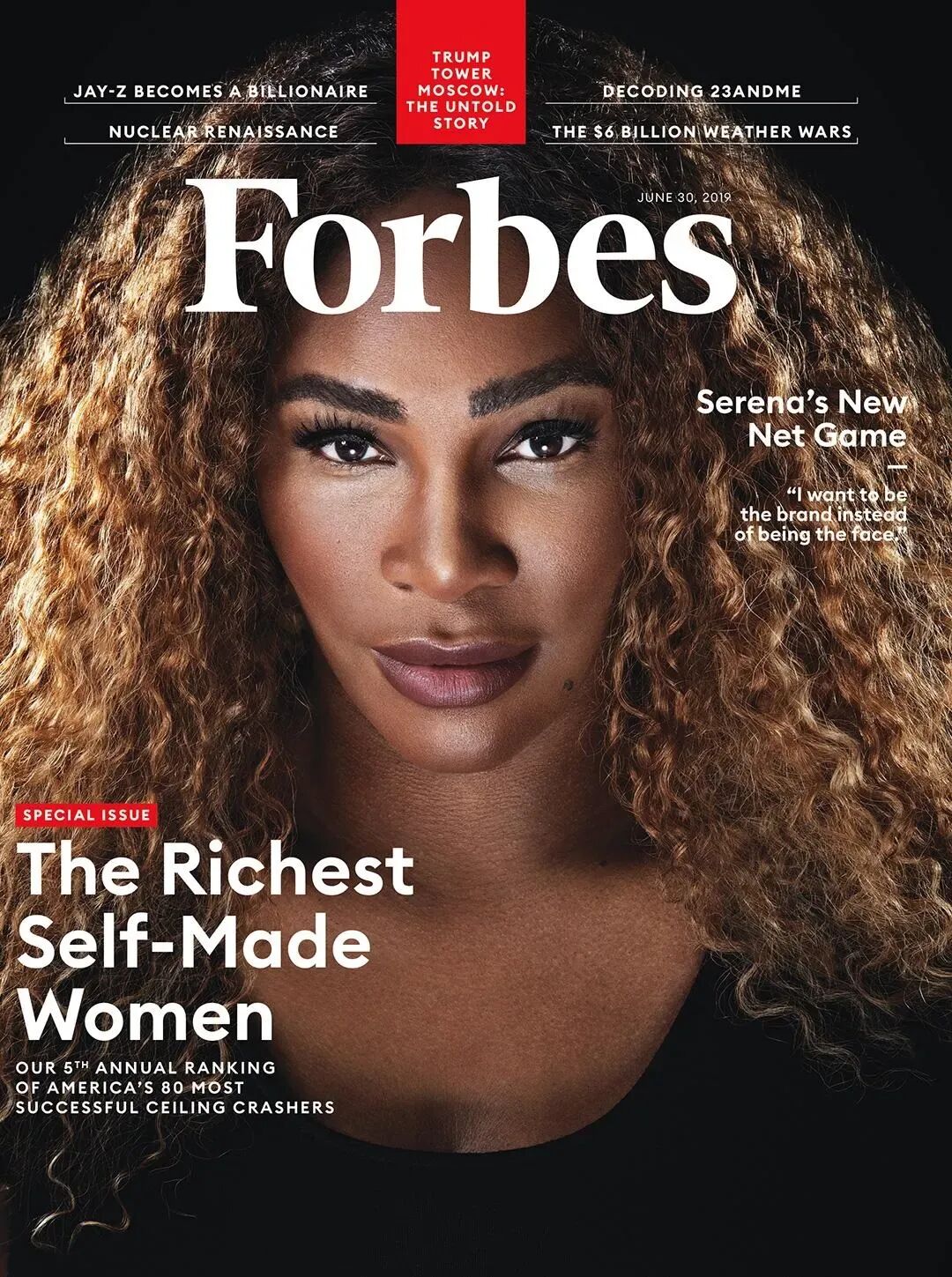
In 2019, shortly after founding her own firm Serena Ventures, Williams appeared on the cover of Forbes. Image source: LEVON BISS FOR FORBES
Starfire's first investment went to Town. This case offers a glimpse into Williams and Ferreira's investment preferences, and why entrepreneurs are willing to accept them as their shareholders. Before contacting Town's founder for investment matters, the two had already been using the company's AI assistant. In October this year, Starfire Ventures participated in Town's $108 million financing round, and the company's post-investment valuation was $1 billion.
For Jean-Denis Greze, co-founder and CEO of Town, their appeal lies in that as investors, they understand that starting a startup will inevitably encounter setbacks, and they know how to overcome setbacks and get out of difficulties.
"Beth and Serena are both people who are used to taking risks and are used to the fact that things don't always go smoothly, but they always find a way out in the end," he said. "I want to talk to people who have gone through tough times and ask them how they got through it. When I really need to, I can send them a message for help without any hesitation, which feels really good."
Williams believes that this personal connection is attractive to investors, but she is also aware that she has had a broader impact — "My entire career has actually been inspiring others," she said. She believes that if Starfire succeeds, it will have a ripple effect, encouraging more women to start investment firms and ultimately determine the flow of the industry's investable capital.
"This is an opportunity to shape and change the traditional face of venture capital," Williams said. "We need some powerful and influential women to join in, create something refreshing, and break all kinds of boundaries."
This article is from the WeChat official account "Forbes" (ID: forbes_china), author: Forbes, published with authorization from 36Kr.