Reconstruct Data Foundation, Accelerate Intelligent Implementation: 2026 China Data and Storage Summit Successfully Held in Beijing
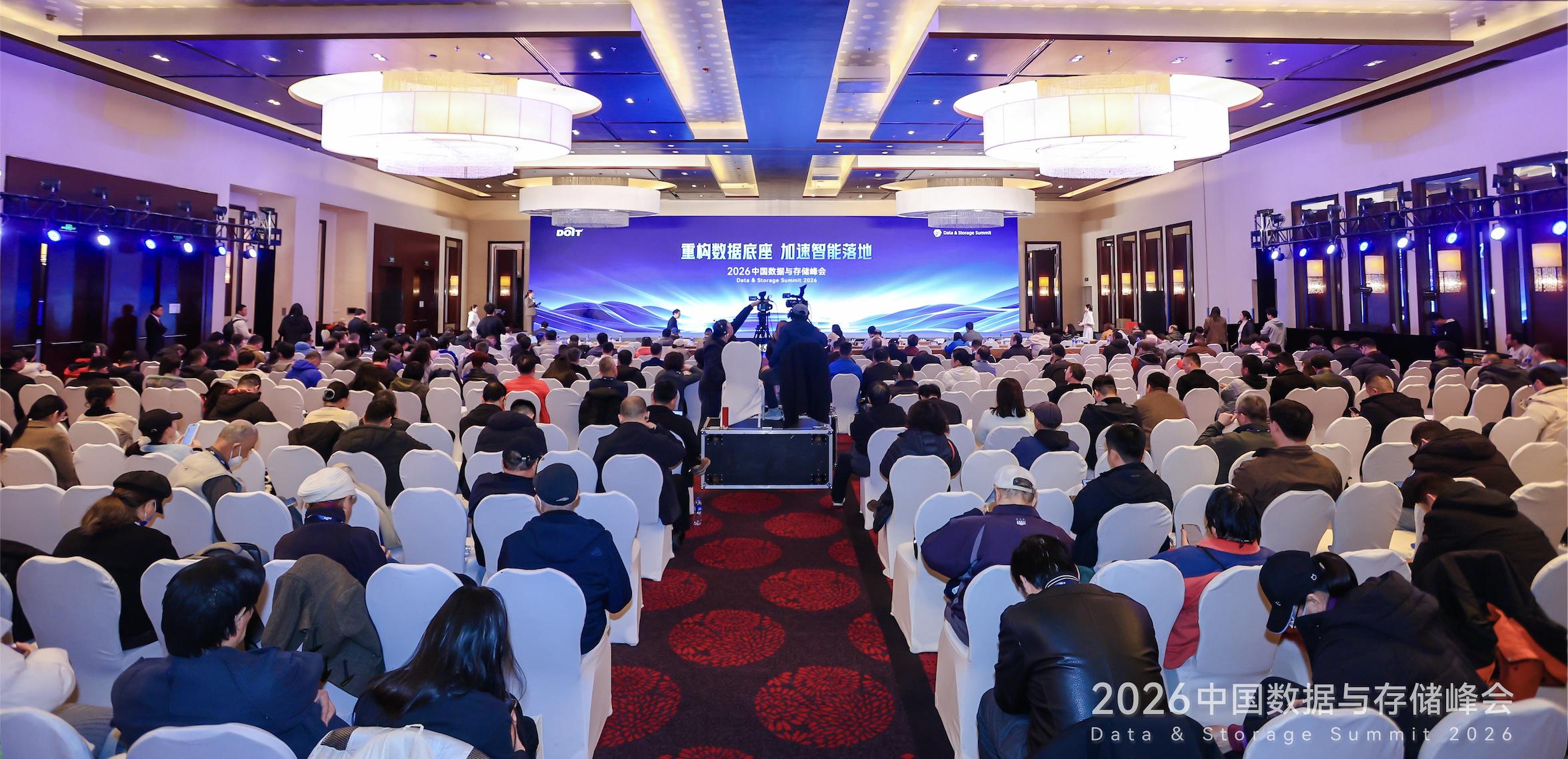
On November 25, 2026, the "2026 China Data and Storage Summit" hosted by DOIT Media was held at Renaissance Beijing Capital Hotel.
With the theme of "Reconstructing Data Foundation, Accelerating Intelligent Implementation", this summit gathered representatives from enterprises including Inspur Data, New H3C, China Telecom Cloud, Western Digital, Unis Flash Core, HPE, Sugon, WEKA, Si-Silicon Technology, SanDisk, Unisoc Memory, MacroSan Technology, Biwin Storage, DapuStor, Turearth Technology, Hikvision Storage, Lenovo NetApp, ZOHO China, and FUJIFILM, as well as experts from well-known universities, intelligent computing centers, industry users and investment research institutions. They carried out in-depth discussions on storage architecture, industrial pattern, technical path and ecological collaboration for the development of AI from training to inference, and from single interaction to continuous operation of intelligent agents.
In September this year, "advanced storage capacity" was incorporated into the "15th Five-Year Plan" for the development of the information and communication industry and the electronic information manufacturing industry of the Ministry of Industry and Information Technology, and domestic breakthroughs have been continuously made in fields such as DRAM, NAND, enterprise-level SSD and storage systems. At the beginning of this month, IDC predicted in its *Global Quarterly AI Infrastructure Tracking Report* that global AI infrastructure spending will reach 521 billion US dollars in 2026, while AI-related storage spending in the same period will be only 2.5 billion US dollars, accounting for only 2% of the total capital expenditure. This gap has become a key variable restricting the output of intelligent computing systems. The industry is not only facing historic opportunities, but also the challenge of leaping from "scale expansion" to "system foundation building".
Reconstructing Data Foundation: Storage Evolves from Basic Component to Strategic Asset
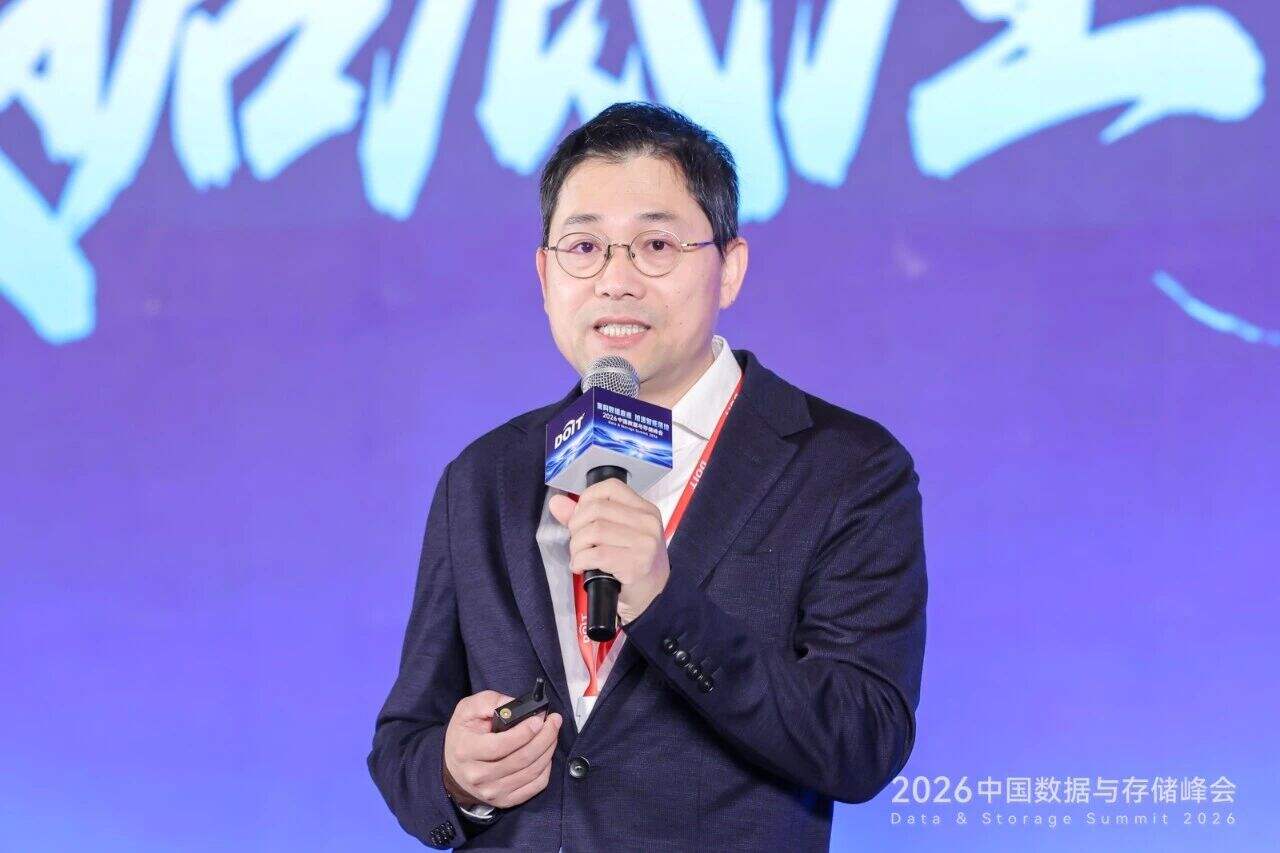
Zheng Xinwu, Founder and CEO of DOIT Media
Zheng Xinwu, Founder and CEO of DOIT Media, pointed out in his opening speech that artificial intelligence is evolving from model training to large-scale inference, and from single interaction to continuous operation of intelligent agents; the demand of AI for data is not only the growth of data scale, but also requires data to be efficiently accessible, rapidly flowing, accurately understood, and form knowledge and memory during continuous operation.
"In the past, we paid more attention to the capacity, performance and cost of storage; in the AI era, storage not only needs to meet the storage demand of massive data, but also support the efficient flow of data among training, inference and applications, and meet the needs of new scenarios such as RAG, long context, vector retrieval and intelligent agents. When the industry shifts from "valuing computing while neglecting storage" to "attaching equal importance to computing and storage, and strengthening computing with storage", storage has also been upgraded from a general component of the data center to a key data infrastructure supporting AI intelligent agent applications," Zheng Xinwu said.
This is exactly the significance of the summit's proposition of "Reconstructing Data Foundation, Accelerating Intelligent Implementation". The so-called "reconstructing data foundation" means to re-examine the capacity, performance, architecture and ecology of storage supported by advanced storage capacity; and "accelerating intelligent implementation" means to make data truly transformed into knowledge, capability and productivity with the empowerment of AI.
From the perspective of industrial development, the storage market is undergoing new structural changes. On the one hand, the construction of AI infrastructure continues to drive the demand for high-end products such as HBM, DDR5 and enterprise-level SSD; on the other hand, the expansion of inference scale and the growth of data volume are also promoting the accelerated development of large-capacity storage, tiered storage and data management technologies. At the same time, industry competition is evolving from a single device to collaborative innovation of chips, systems, software and ecology.
Eight Keynote Speeches and Four Parallel Forums: From Media to Intelligent Agents, From Devices to Applications
The eight speeches at the main forum form a complete technical route covering system architecture, media innovation and academic research.
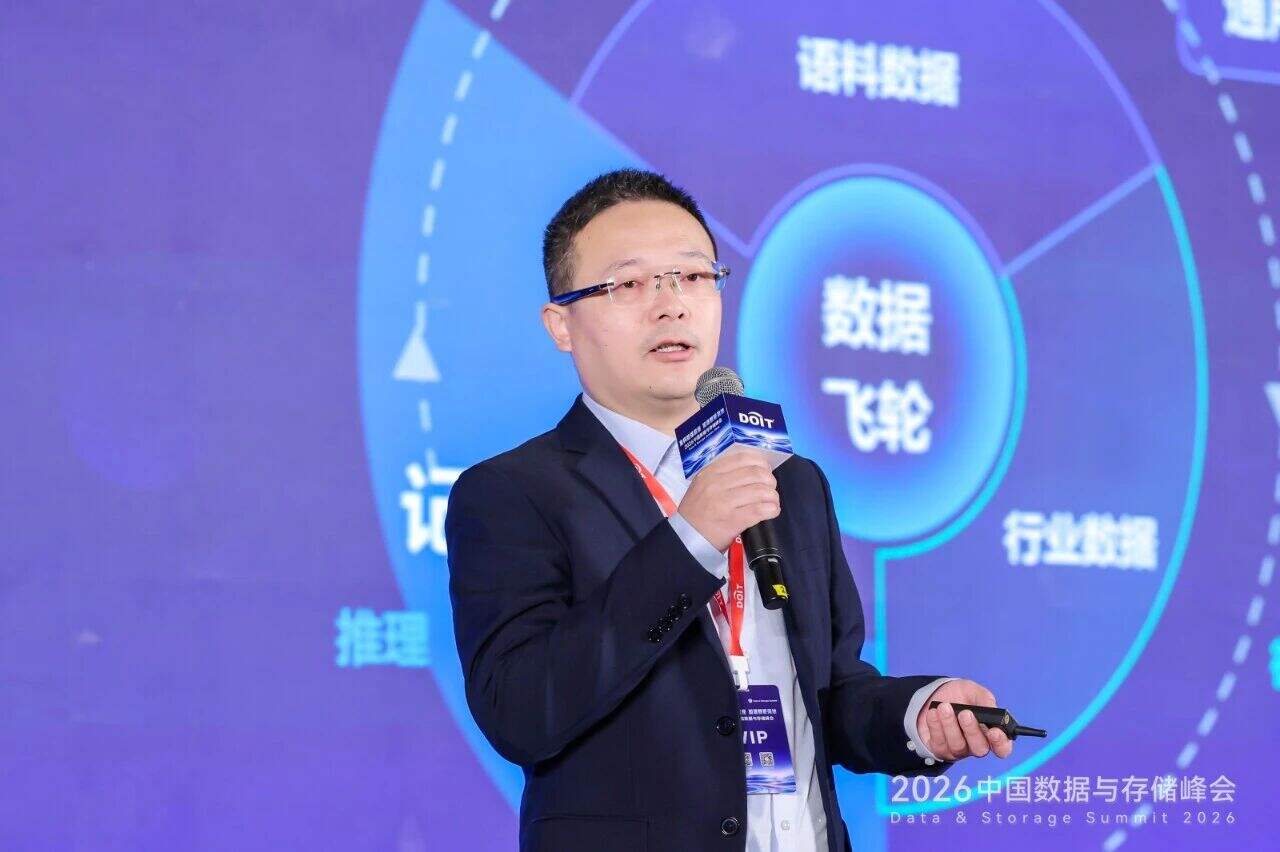
Liu Ximeng, General Manager of AI Storage Product Department of Inspur Data
Liu Ximeng, General Manager of AI Storage Product Department of Inspur Data, delivered a speech titled "Data Activates Intelligence". He believes that in the AI era, data is divided into corpus data, industry data and memory data, and the iteration of the three forms a flywheel effect of data and intelligence. The AI operating system InDataAIOS released by Inspur Data solves three major problems of data silos, low GPU utilization and inference hallucination through global weaving, converged storage and storage-side native RAG, and KV Cache acceleration, realizing the collaboration of storage and computing and strengthening computing with storage.
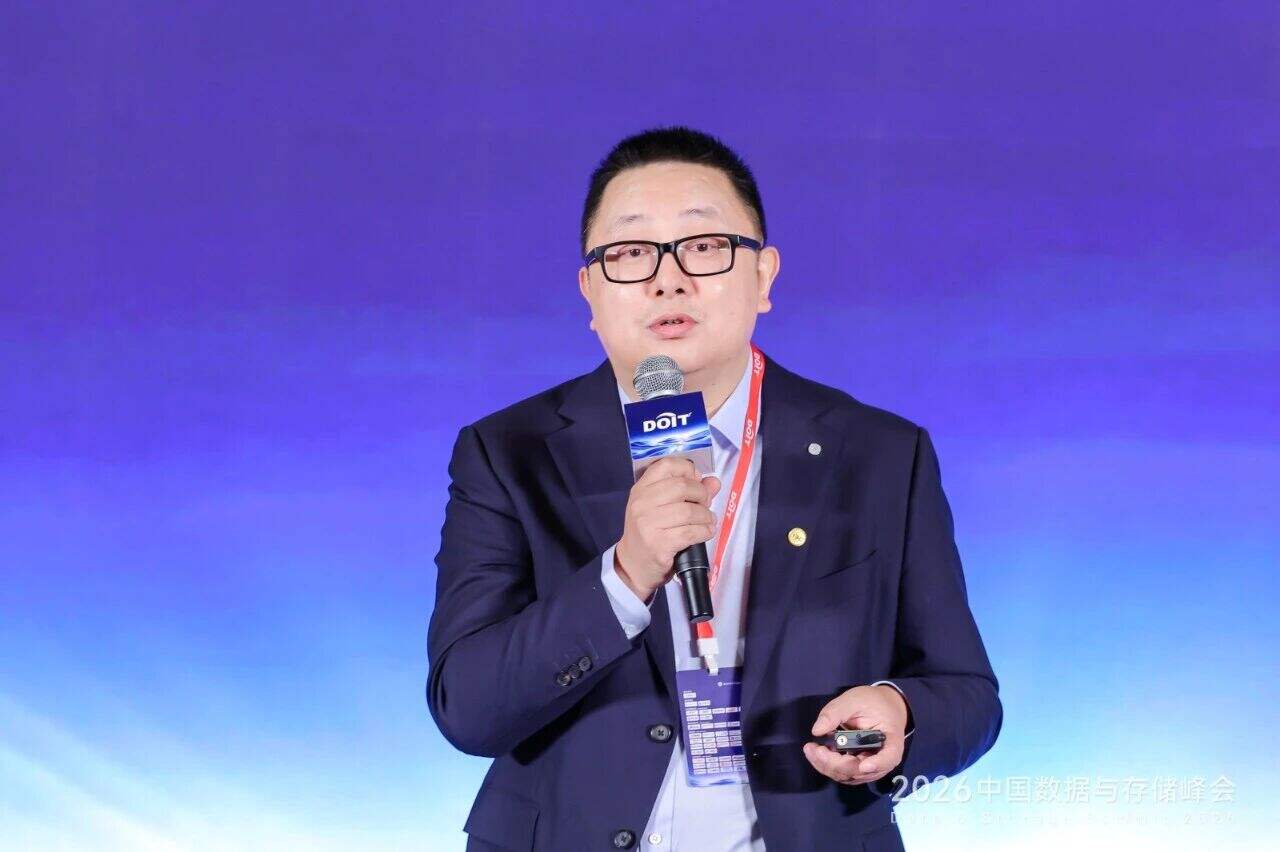
Cao Zhen, Director of Storage Product Department of New H3C Group
"Computing power determines the speed of AI, and storage capacity determines the height of AI". In his speech "Breaking Through the Inference Performance Wall", Cao Zhen, Director of Storage Product Department of New H3C Group, introduced the reconstructed distributed storage "Aoqing" launched by New H3C, which uses 3.5-layer storage to replace local disks, connects the KV Cache layer with external storage to realize end-to-end cache delivery, and continues to invest in NVMe over Fabric and DPU hardware channels.
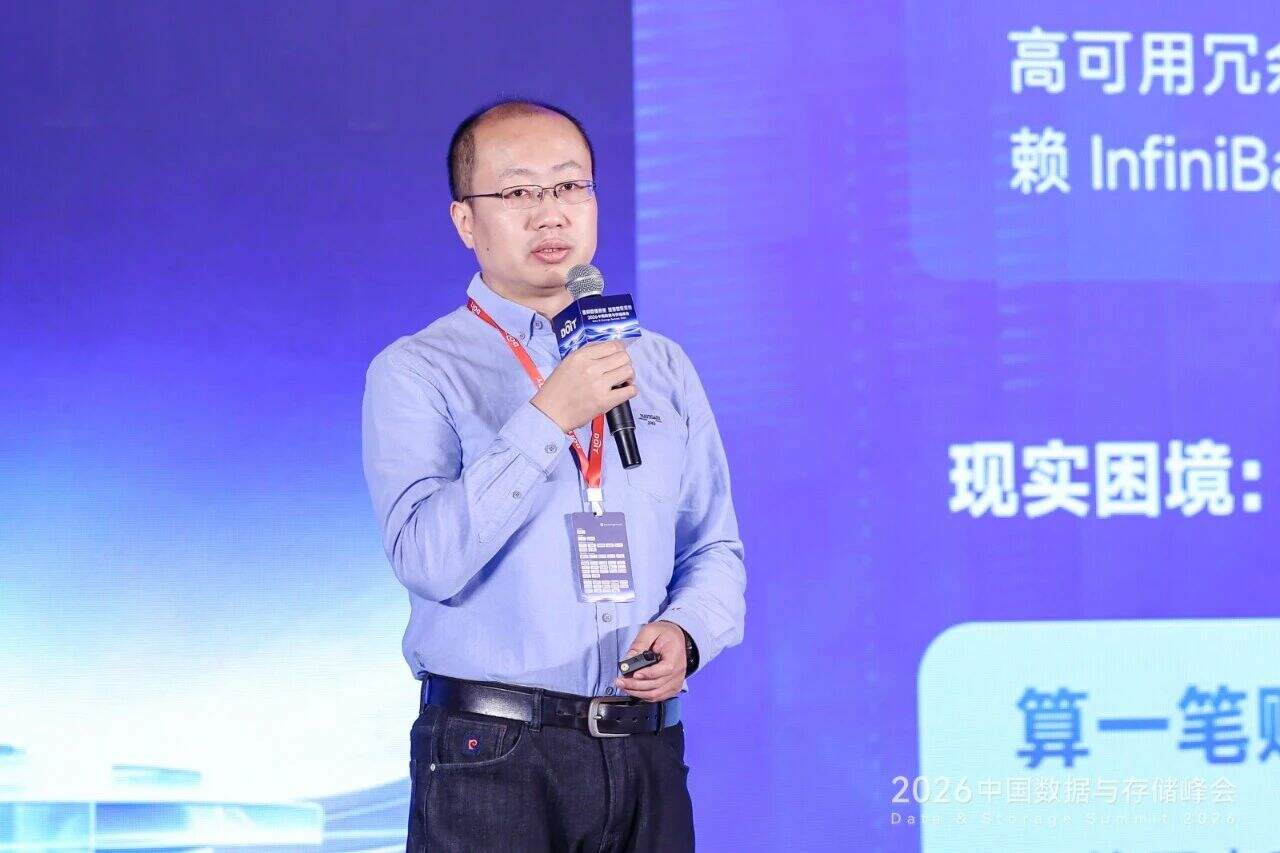
Wu Zhimin, Director of Storage Product Line of China Telecom Cloud
Wu Zhimin, Director of Storage Product Line of China Telecom Cloud, pointed out that storage has evolved from a foundation for storing data to the first key variable that determines the utilization rate of computing power. China Telecom Cloud HBlock adopts the data affinity architecture to "let data move closer to computing". Through zero network stack penetration extreme speed path, multi-factor intelligent scheduling algorithm and multi-level adaptive cache, it achieves large IO bandwidth up to 80% of local disk, and small IOPS is more than 5 times higher than traditional TCP. It has built a high-performance storage cluster with standard Ethernet, deployed more than 100 sets of clusters and revitalized nearly 200P of storage resources.
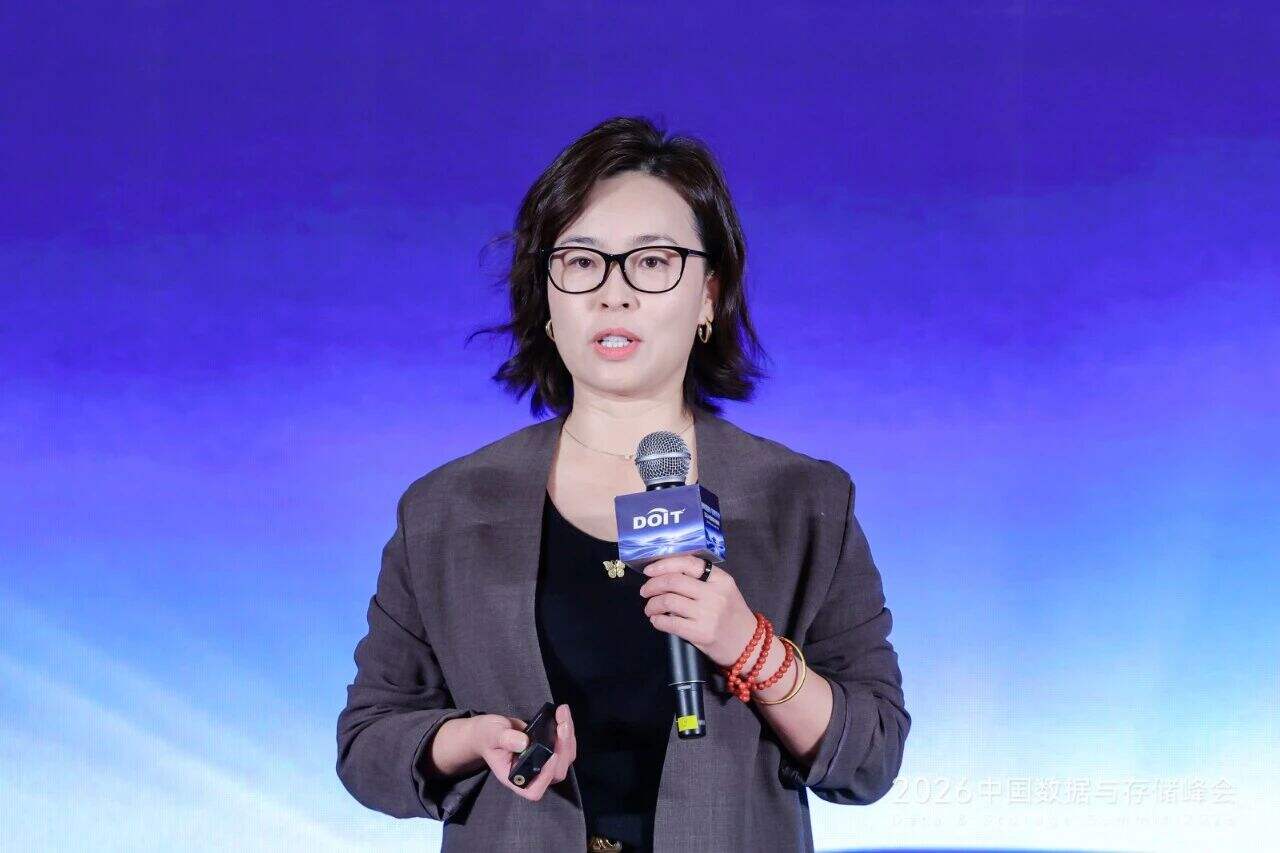
Wen Fang, Senior Sales Director of Western Digital
In the view of Wen Fang, Senior Sales Director of Western Digital, AI has moved from the laboratory to daily life, and data is an accumulated process that accumulates more as it is used more; the amount of inference data exceeds the training data for the first time, marking that the model has entered the stage of large-scale use. In the AI era, storage is divided into finer layers, and it is necessary to avoid mismatch caused by single selection based on performance or cost. In her speech titled "Steadily Promote AI Large-scale Implementation", Wen Fang emphasized that HDD has not been reduced. With the support of new technologies, it can expand upward to KV Cache storage from the third layer and store larger capacity data downward, and will steadily promote product implementation in terms of capacity, performance and energy consumption.
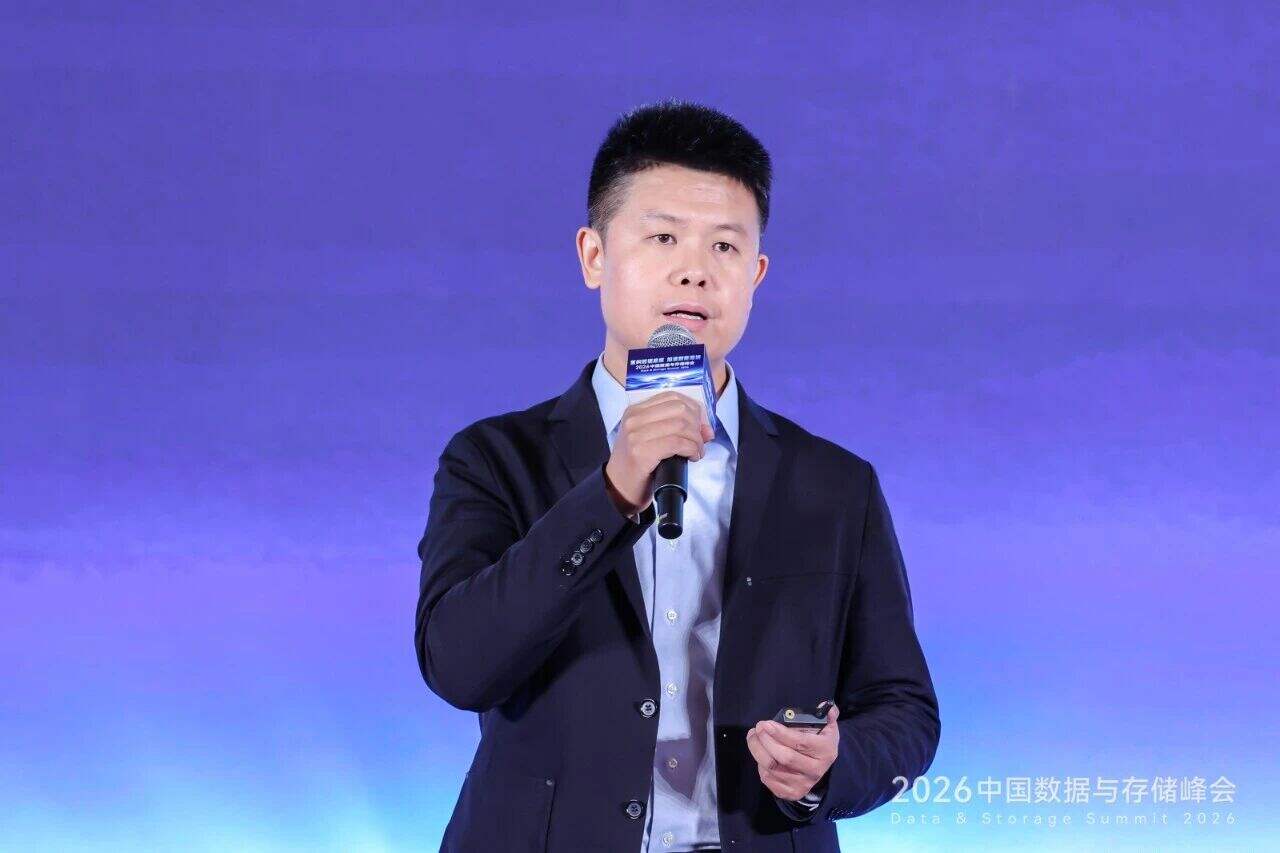
Dong Meng, General Manager of Unis Flash Technology (Chengdu) Co., Ltd.
Dong Meng, General Manager of Unis Flash Technology (Chengdu) Co., Ltd., said that embracing artificial intelligence is a blessing for practitioners in the technology era. In his speech titled "Unbounded Computing Power, Storage Capacity Determines Victory", he analyzed that after the model training is completed and enters the inference stage, KV Cache becomes the bottleneck, while HBM is too expensive, and the countermeasure is flash memory with super large capacity and super high performance. The company has laid out two tracks of cloud enterprise-level solid-state drives and in-vehicle terminal embedded flash memory. Its PCIe5.0 solution won the bid for China Mobile's centralized procurement in June this year, will provide PCIe6.0 products with doubled performance up to 28G per second in the first quarter of next year, and will release UFS3.1 automotive-grade products by the end of next year.
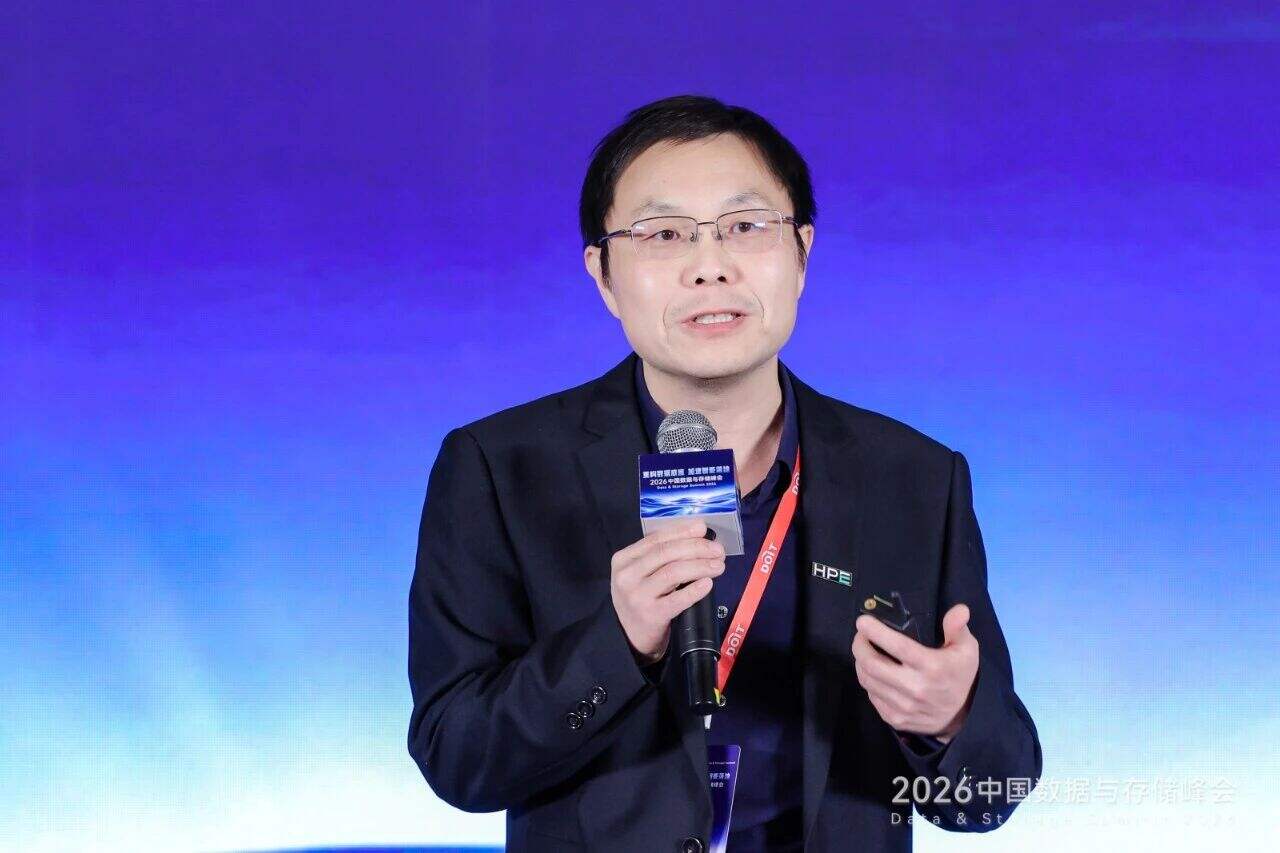
Qian Yun, Chief Technology Officer of Storage for HPE China
"Three major trends, the AI gold rush, network resilience becoming a rigid demand, and the great virtualization reset, are redefining enterprise storage; storage should not only store data, but also become a unified, intelligent, efficient, safe and reliable data storage platform". Qian Yun, Chief Technology Officer of Storage for HPE China, explained the architecture idea of "empowering all business scenarios and releasing new value of data" by introducing the HPE Alletra MP platform based on the global decoupling architecture, which realizes the advantages of software and hardware decoupling, bullet control decoupling, and global sharing of everything.
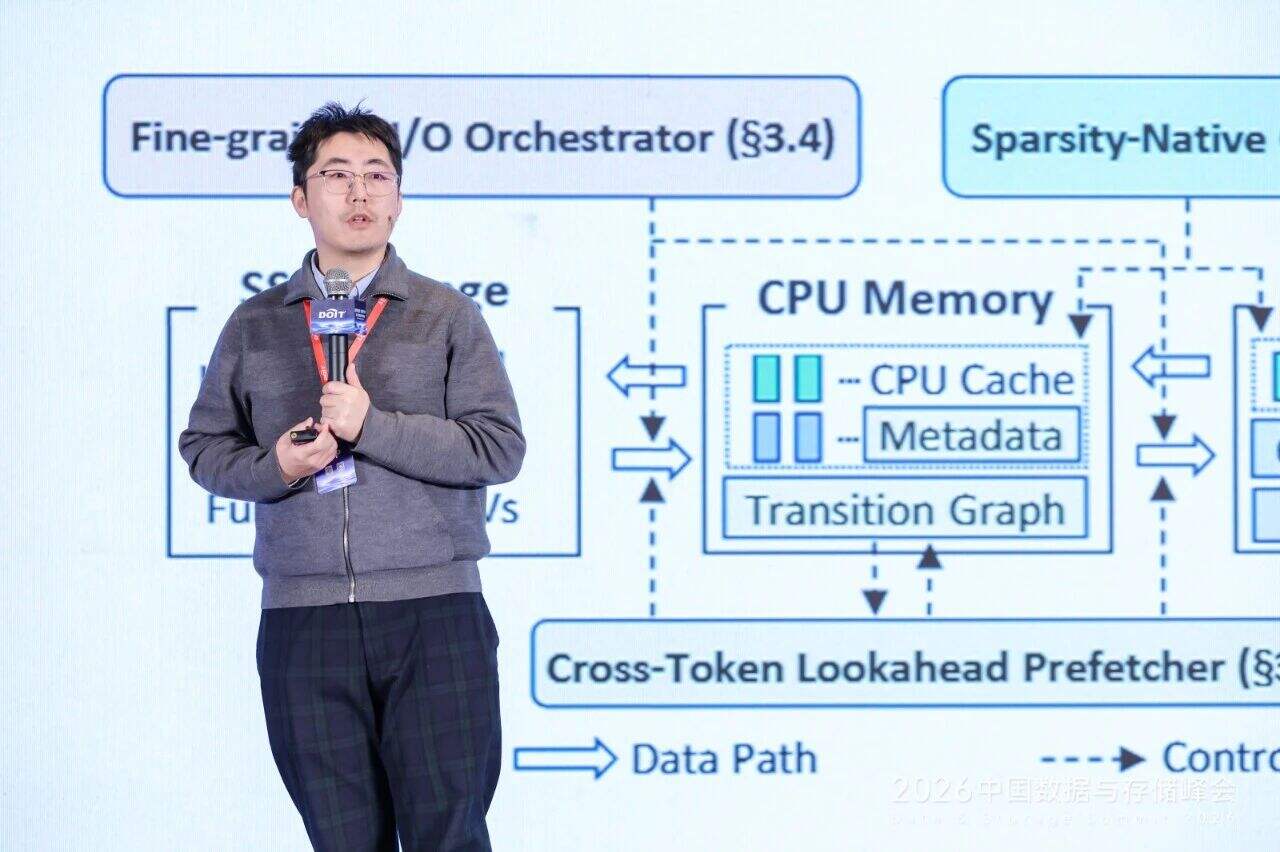
Lu Youyou, Tenured Associate Professor of Tsinghua University, Distinguished Young Scholar of National Natural Science Foundation of China
Lu Youyou, Tenured Associate Professor of Tsinghua University, Distinguished Young Scholar of National Natural Science Foundation of China, sorted out the key problems and directions of AI-oriented storage systems in his speech titled "Research on Storage Systems in the Intelligent Era". He believes that in the AI era, storage is still the performance bottleneck of the whole system. The core of KV Cache management is cache plus file system, and efforts should be made to optimize the software design. He suggested that vector storage for approximate retrieval should be effectively combined with the system, and the key of context management in the intelligent agent era is to make "the sandbox and the file system a unified whole".
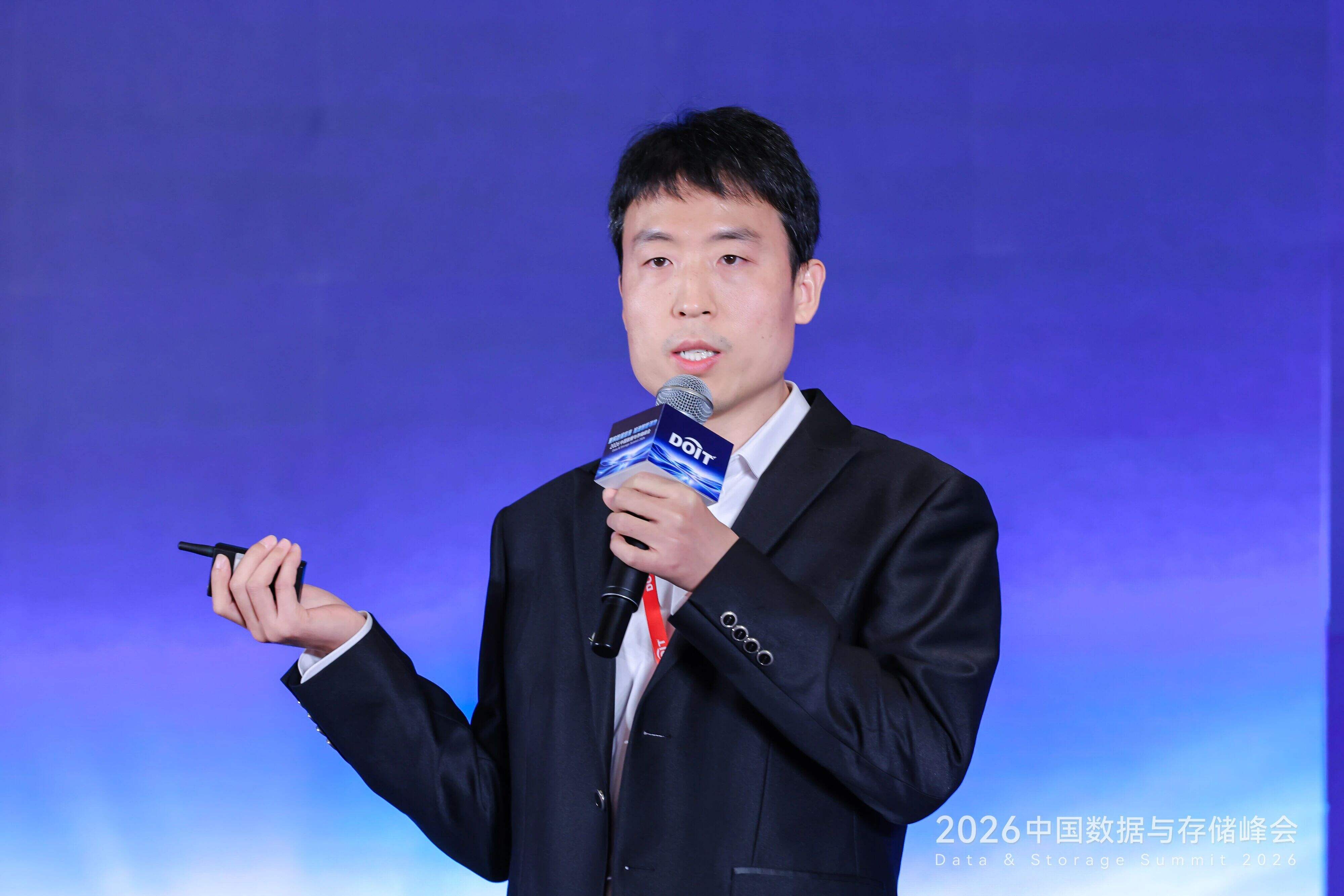
Guo Zhaobin, General Manager of Centralized Storage Product Department of Sugon
Guo Zhaobin, General Manager of Centralized Storage Product Department of Sugon, pointed out in his speech titled "Native Multi-Protocol, Build a Solid Data Foundation for the AI Era" that AI data continues to grow, and enterprises face new challenges in using data. In addition to performance requirements, there are also higher core demands for reliability and security. Based on FlashNexus NAS3.0 native protocol convergence, Sugon integrates SAN, NAS and KV parallel architecture on a set of all-flash array storage, directly meets the direct demand of KV large model inference for KV Cache, and carries out direct protocol output, bringing the benefits of immediately visible resource release and extremely simple unification.
In the afternoon, four parallel forums were held simultaneously, and nearly 30 guests shared wonderful topics.
The forum "AI Data Infrastructure and Storage System Innovation" is oriented to large model training, inference and intelligent agent scenarios. Guests from WEKA, Inspur Data, Si-Silicon Technology, Alibaba Cloud, IBM and Pliops discussed how storage systems can improve GPU utilization, optimize data supply efficiency, and verify the actual value of AI storage through benchmark discussion and user practice.
The forum "Intelligent Data Application and Agent Innovation Practice" gathered technical experts from leading enterprises in the industry such as PingCAP, Tencent Cloud, Kingsoft Cloud, Dameng Data, Suzhou Lingfeng Zhike, and Juli Dimension, to conduct in-depth sharing and communication around the core directions of data value release, AI productivity transformation, and cutting-edge technology scenario implementation.
In the forum "New Storage Technology and Architecture Evolution for AI", representatives from six enterprises including HontoVision, Sandisk, Unisoc Memory, Yiyao Technology, Baidu Intelligent Cloud and Yiyuan Technology focused on new storage technologies, storage-computing collaboration and system architecture innovation in the AI era, and discussed how new storage and computing technologies can adapt to the application requirements such as large model inference and intelligent agents, so as to improve computing efficiency and energy efficiency performance.
The forum "High-speed Data Interconnection and System Innovation" gathered technical experts from enterprises and communities such as Lingqu Open Community, Hygon Information, New H3C, Arm, and NiuCore Semiconductor, focusing on the directions of high-speed interconnection, memory pooling, super node architecture and Agentic AI infrastructure, to discuss the data transmission bottleneck, cluster expansion and resource utilization efficiency in large-scale AI computing and data-intensive applications.
Panoramic Map, Annual Ranking, Top 10 Cases: Providing Coordinates for Industrial Development
Industry competition is evolving from a single device to collaborative innovation of chips, systems, software and ecology.
When computing power is no longer the only bottleneck, how can data become a sustainably supplied production factor? The *2026 AI Storage Panoramic Map* released on the day of the summit gives the answer.