Are China's middle class consumers who want to buy big-name brands at low prices being "strategically ignored" by TJX, the US discount retail giant?
20% off CK apparel, 30% off Ralph Lauren shirts, 50% off Gucci scarves... In August this year, TJX, the largest "soft discount big-name retailer" in the United States, announced that it will accelerate its global store expansion, targeting a total of 7,500 existing and new stores (compared to more than 5,000 currently), with a focus on expanding in Europe, North America and Australia, but China, where the discount economy is currently gaining momentum, is not included in its plan for the time being.
One of the analyzed reasons is that competition in China's e-commerce sector is too fierce, and Chinese consumers have become numb to the "non-stop daily discounts".
Taylor Swift also loves to come here for "dumpster diving"
Whether on China's Xiaohongshu or overseas social media, T.J. Maxx, the most well-known soft discount retail store under the TJX Group, is a popular shopping check-in spot.
It is full of overstock or remaining new products of light luxury handbags, apparel and home brands. It is said that TJX is also the largest clearance base for overstock of Ralph Lauren, which is currently known as one of the "three treasures of the middle class" in China, and the other two "treasures" are Arc'teryx and Lululemon.
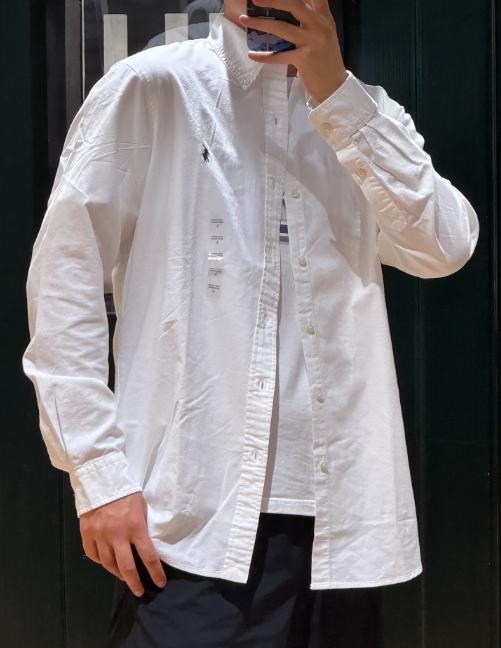
Photo | TJX, known as the clearance base for Ralph Lauren
This place is called "happy hometown" by the middle class, who refer to the process of hunting for bargains here as "dumpster diving", and call the discounted products they buy here "American specialties".
There are no complicated full-reduction rules, no loose and exquisite displays, only simple low discount prices. Even Taylor Swift often comes here to shop.
The first T.J. Maxx store was founded in 1977 in Massachusetts, USA, with its first head being a professional buyer.
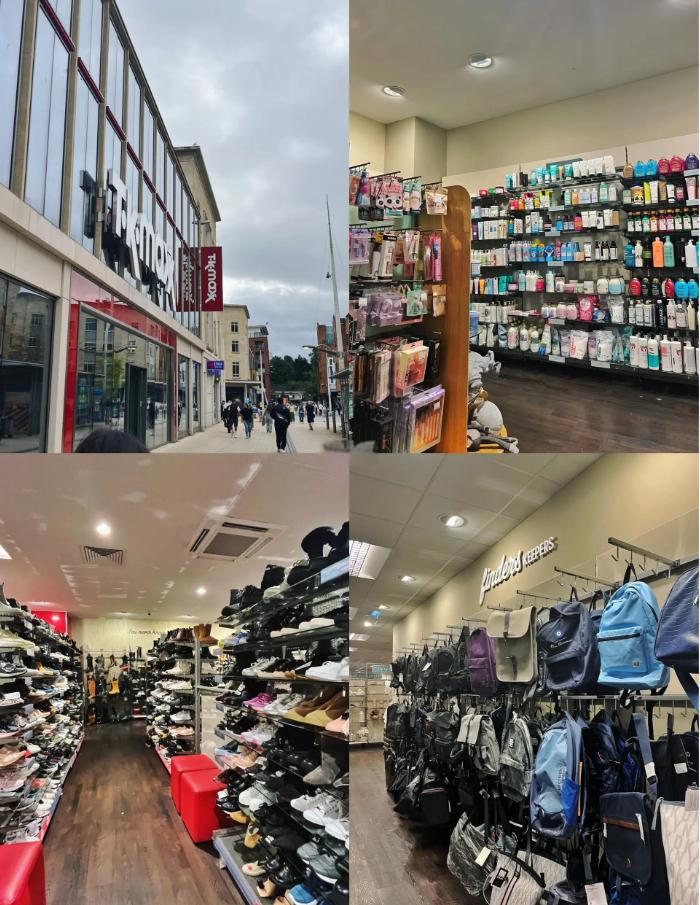
As a big-brand discount store, it is different from the "Outlets" that Chinese consumers are more familiar with.
Outlets are dominated by brands in terms of supply and pricing, and are an official brand clearance channel. But even if the clothes are the same style as the full-price versions, the materials are sometimes slightly inferior, following a low-cost and people-friendly route.
T.J. Maxx is an independent retailer, whose professional buyers buy out the overstock of big brands. TJX holds the pricing power and earns the price difference, which is a soft discount model. Most importantly, the clothes are genuine big-brand products, not low-cost versions.
The decoration cost of its stores is only 30%-50% of that of an ordinary department store, the advertising expenditure is less than 1/4 of that of a department store, and the extremely low procurement cost further enhances its price competitiveness.
In addition, another major feature of the shopping experience here is known as "treasure-hunting shopping".
The shelves of TJX are described by the middle class as a constantly updated blind box.
You may buy light luxury bags such as Coach, Michael Kors and Kate Spade here today, but the shelves may be completely changed tomorrow, with a set of low-cost cast iron pans on display.
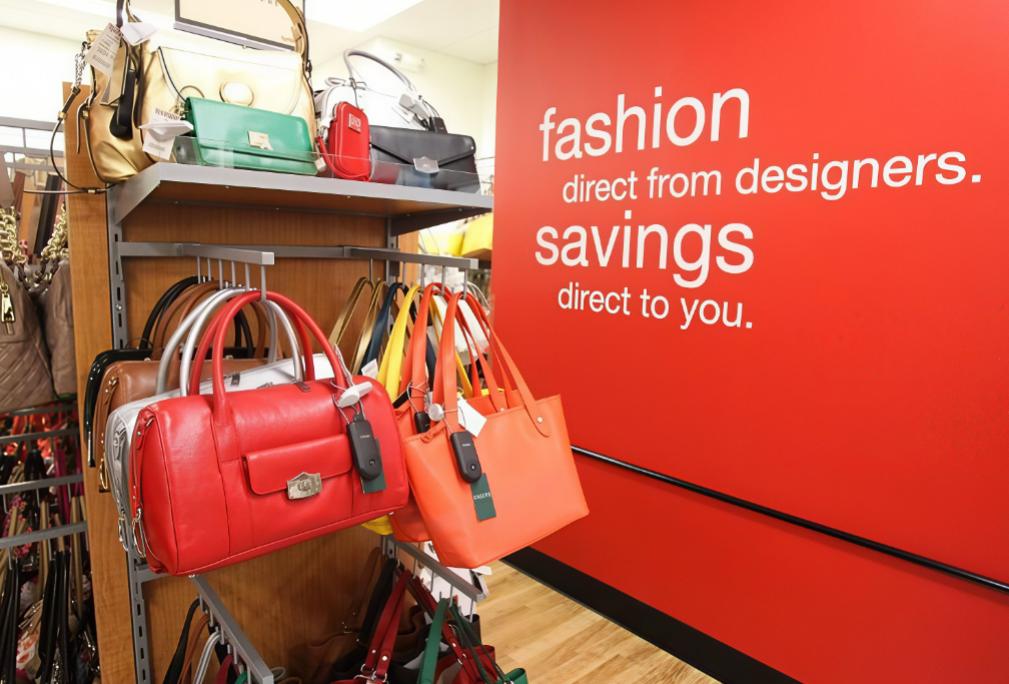
This is caused by the company's procurement model of "opportunistic purchasing". No big brand is its stable supplier, but in order to sell goods for profit, brands are generally willing to sell their goods to discount stores like TJX, which are jokingly called "goods receivers".
This "unstable procurement" has later been turned into a "treasure-hunting" consumption experience for consumers, becoming a highlight of the brand.
Over the past few decades, TJX has maintained continuous revenue growth in most years, with only one revenue decline in the 2020 pandemic fiscal year, after which it entered an upward cycle again, growing from more than 40 billion US dollars to more than 60 billion US dollars.
It verifies a saying that in the United States with widening income gaps, in an era when ordinary people around the world are tightening their belts on consumption, there is still no lack of profitable opportunities.
Why is TJX still not interested in the Chinese market
The annual revenue of TJX Group in fiscal year 2025 reached 56.4 billion US dollars, slightly lower than Pinduoduo's annual e-commerce revenue of 61.7 billion US dollars, and it is also called the "benchmark counterpart" of China's VIPSHOP by the media.
Many Chinese tourists visiting the United States will check in at TJX, and there are many highly liked shopping sharing posts on Xiaohongshu.
In August this year, TJX announced that it will accelerate its global store expansion. At present, it has more than 5,200 stores around the world, of which more than 4,200 are located in the United States. The new plan is to bring the total number of existing and new stores to 7,500, while the original plan was to reach 7,000 stores.
North America, Europe and Australia are its key expansion regions, but China is not on the list.
China has hundreds of millions of middle-class consumers and is ushering in a consumption window for the "discount economy", with consumption philosophy shifting from "buying expensive products" to "pursuing rationality". Many people wonder why China is not included in TJX's global store expansion plan.
Industry observers have analyzed three major thresholds for its entry into the Chinese market.
The first threshold is that domestic consumers have been accustomed to online shopping and prefer the "goods find people" model.
More and more Chinese consumers are reluctant to "walk around for shopping" offline, and prefer to "hunt for treasures online". Accurate algorithm recommendations, live-streaming sales, and content platform recommendation guides make the more efficient "goods find people" model replace the traditional retail "people find goods" model.
Even if customers see a discounted overcoat in a physical store, they will naturally take a photo to search for the same style and compare prices across channels.
The sense of surprise brought by discovering low-priced goods on site, which TJX relies on, can easily be weakened by the casual price comparison behavior in China.
The second threshold is that brands already have a large number of channel options to dispose of their overstock.
In China, unsold clothes can be sent to official outlets, sold through e-commerce flagship stores during promotional events, or appear in the "welfare flash sale" sessions of live streamers.
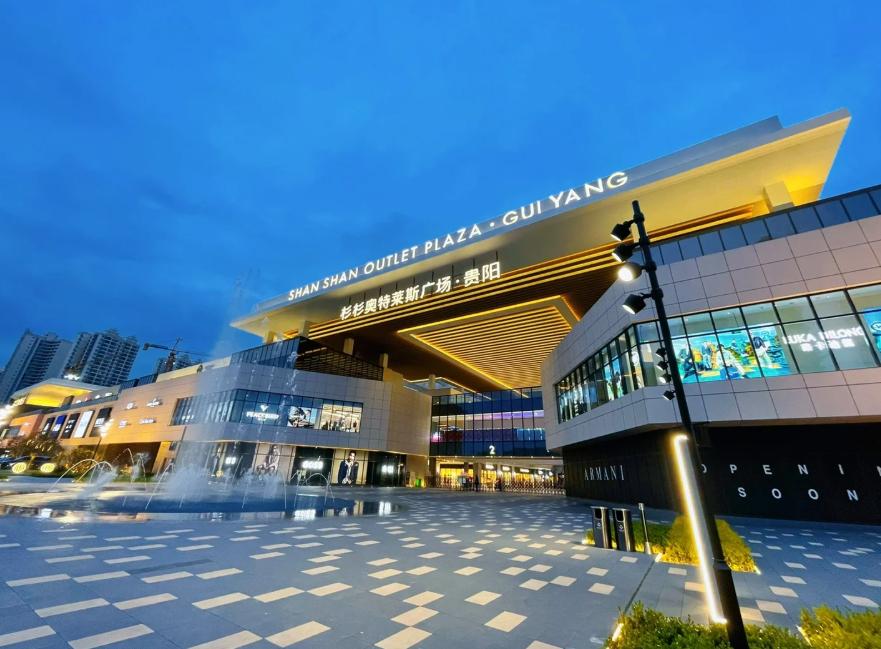
Photo | There are too many overstock sales channels in China
New content e-commerce platforms such as Xiaohongshu are also encouraging creators to transform into "fashion buyers". They do not need to "work" for retail giants like TJX, and can select products, acquire customers and make sales more freely. Offline "dumpster diving" has turned into online live-streaming "snatching bargains and grabbing benefits".
Different channels cover different customer groups, and Chinese consumers have long been trained in countless ways to snap up bargains. The attribute of TJX's discount stores is far less scarce in China than in Europe and the United States.
The third threshold is the mature domestic apparel and home manufacturing industry.
Chinese consumers can easily find unbranded tag-free products shipped directly from factories of various big brands. It is very difficult for TJX to grab high-quality goods at the source in China, as a long queue of competitors has already formed.
TJX's non-entry into China is more like a commercial trade-off, a "tactical neglect". Its strengths in buyer procurement, extremely high sales per square meter and the surprise of bargain hunting all face more fierce competition in China.
However, Chinese netizens' expectations for TJX also reflect the unmet consumption demand — that is, no counterfeit products.
At present, this field is still mixed with good and bad products in China, and there is a lack of a large brand channel to regulate the market and provide credibility endorsement.
China's "discount economy" is seeing explosive growth
China is embracing more discount retail formats that are entering the daily life of ordinary people, and this field is becoming a current market hotspot.
In the supermarket retail sector, various hard discount supermarkets have become a new rapidly growing category.
The most prominent representative is Sam's Club, which has some hard discount operation elements. It plans to increase the number of stores in China from 63 in 2025 to 73 by the end of 2026. Aldi China has also reached 131 stores.
Local hard discount supermarkets are also expanding rapidly across the country. Super Box Discount (NB) under Freshippo has nearly 700 stores nationwide, and Meituan's Happy Monkey, which was launched just over a year ago, has opened about 109 stores.
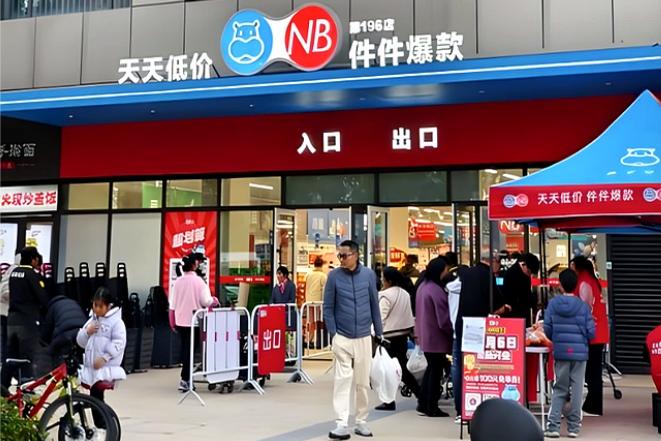
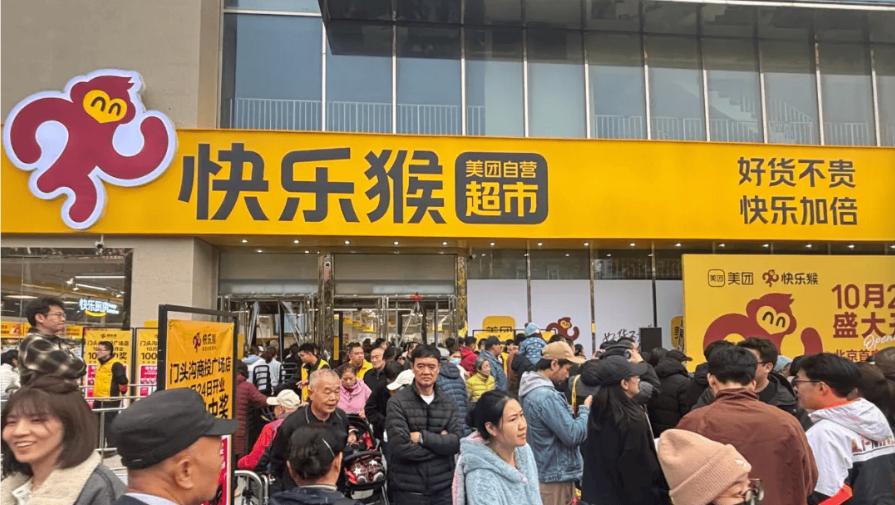
Photo | "Hard discount" is becoming popular in domestic supermarkets
The so-called "hard discount" means that retailers directly source products from original factories for production and procurement, attach their own labels, and reduce intermediate costs to achieve lower terminal prices.
The department store and apparel sectors are also thriving. According to the *2025-2026 China Outlet Industry Development Report* released by the Chinese Chain Store & Franchise Association, there are about 265 operating outlet projects across China in 2025, with a sales scale of about 248 billion yuan, a year-on-year increase of 3.8%. There will be about 20 new and renovated outlet projects in 2026.
Online VIPSHOP continues to serve consumers who want to balance brand and price through brand flash sales. Although its growth has been somewhat weak in recent years, it is mainly due to fierce competition from peers.
However, in contrast to the popular "hard discount" in China, the development of "soft discount" is relatively weak, and no giant at the level of TJX has been born so far.
At present, there are offline apparel overstock collection stores in China such as BIGOFFS and Huipincang, whose models are closest to T.J.Maxx, but their scale is relatively small, and their procurement adopts a mixed model, including buyer buyout, as well as partial consignment and joint operation.
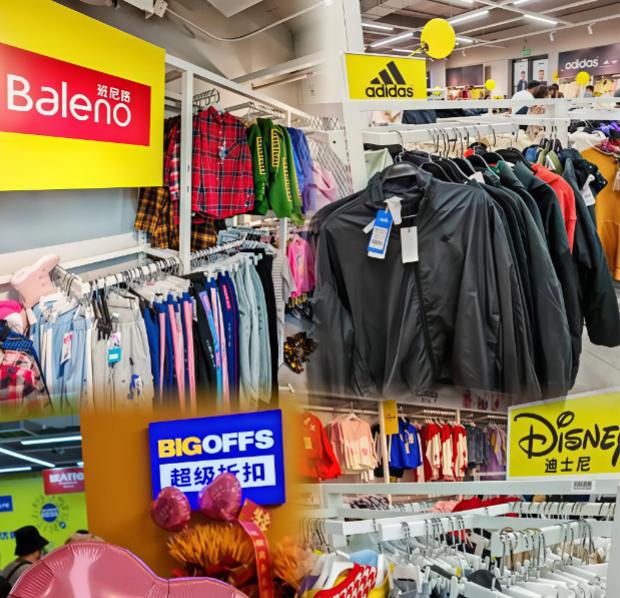
HotMaxx and HiGo, although adopting self-procurement, mainly focus on snack and daily chemical overstock, with a high proportion of near-expiry products, and their apparel categories are weak.
Shanglie, which focuses on limited-time flash sales of light luxury designer brands, has a very small scale. There are also platform flash sale channels such as Taobao Outlet and JD Flash Purchase online, but most of them are brand consignment, and few buy out overstock.
Different from TJX, they generally face the problems of insufficient supply of high-quality overstock and brands' unwillingness to release their goods, making it difficult to achieve long-term and stable expansion.
Influential public figure Hu Xijin said that he hopes people can go shopping in malls on weekends. If more commercial entities like TJX can be born in China, it may increase the attractiveness of offline multi-scenario consumption.
At present, in addition to TJX, there are also soft discount stores such as Ross Stores (more than 2,200 stores) and Burlington (more than 1,200 stores) in the United States. They act as a buffer for Americans who want to control their expenditure while maintaining a so-called decent life.
For China's middle class, it can only be said that it is not that Chinese people do not love to hunt for bargains, but that the distribution method of overstock is fundamentally different from that in the United States.
This article is from the WeChat Official Account "Muhe Business and Finance", written by He Wengu, and authorized for release by 36Kr.