All Chinese game developers share a long-cherished dream of developing farming simulation games.
There is a type of game designed to let players experience an alternative life.
In these games, people till the land, go fishing, and decorate their houses, with no competition, seasons, rankings, not to mention the concept of winning or losing. This genre is called "life simulation", and its most popular subcategory is widely known as "farming simulation".
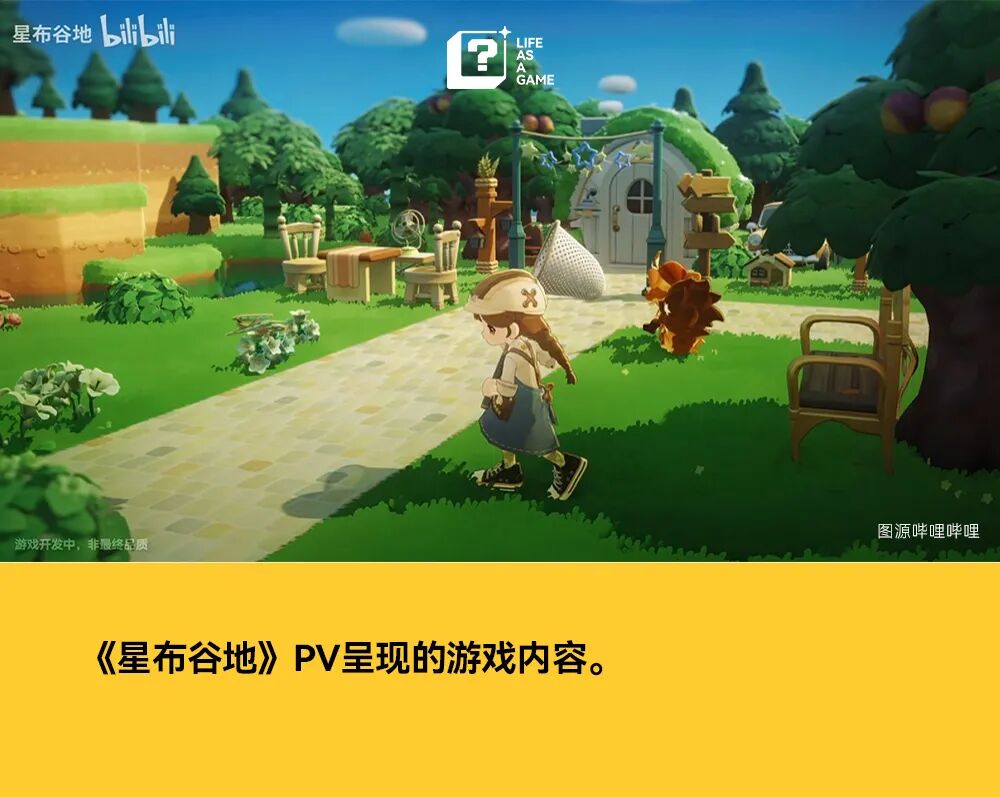
Now, multiple leading Chinese game manufacturers are flocking to this category at the same time, including Tencent, NetEase, and miHoYo. For recent releases, miHoYo's *Star Valley* that focuses on interstellar life is on the slate; for earlier announced projects, there is NetEase's *Wondrous Journey of Mountains and Seas* first revealed in 2024.
Prior to this wave of large-scale game project launches by major manufacturers, quite a number of teams in the industry had already entered the track earlier, such as Pop Mart's trial game work *Dream Home*, Taomee's childhood nostalgia title *Mole Manor Mobile Game*, X.D. Network's *Heartbeat Town*, and Qutang Network's *Mimimimha*... However, among this list, it seems that only *Heartbeat Town* has achieved fairly good results in overseas markets, and the rest of the games cannot be regarded as particularly successful.
The track records of these underperformers prove to some extent that this track is not as "lucrative" as the outside world imagines. So why are Chinese game manufacturers still rushing to bet big on the farming simulation business?
Appealing Super Genre
The most direct reason why manufacturers are collectively targeting the farming simulation category is its proven profit-generating potential.
However, the teams that have validated this track in the past are not Chinese game teams, but overseas companies that have made huge profits from buy-to-play games.
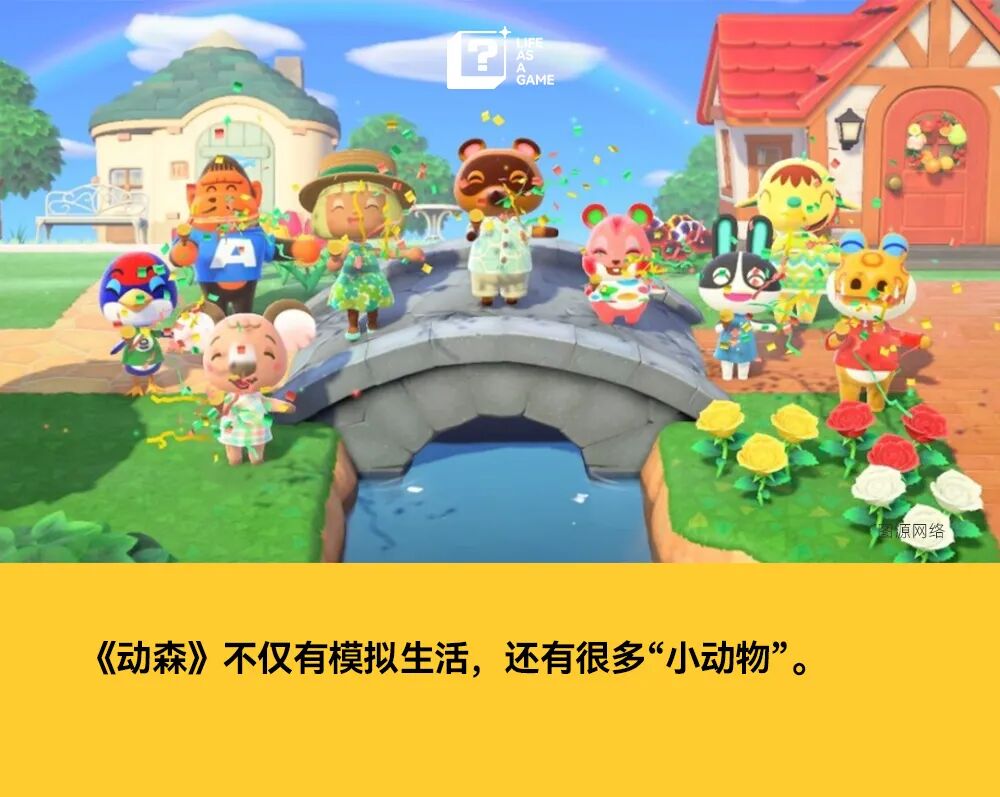
The most well-known and successful work in this field is none other than Nintendo's first-party game *Animal Crossing: New Horizons* (hereinafter referred to as *ACNH*). As of June this year, *ACNH* has sold more than 50 million copies. Estimated at a unit price of 60 US dollars, the total expenditure of consumers exceeds 3 billion US dollars.
What does this figure mean? Even calculated based on the long-term operation model of mobile games, the average annual revenue of *ACNH* since its release has reached 500 million US dollars (about 3.35 billion RMB), which is enough to secure a place in the list of the highest-grossing mobile games in China.
Moreover, apart from products backed by large companies and large platforms like *ACNH*, the farming simulation track has also produced super hits with "grassroots" backgrounds. For example, *Stardew Valley* developed by an independent developer has also achieved total platform sales of over 50 million copies. Although its pricing is relatively low, the huge sales volume is more than enough for its developer ConcernedApe to achieve financial freedom directly.
These cases prove two points to the industry. First, the track has sufficient room for imagination, large enough to spawn products with annual revenue of tens of billions of RMB; second, its development threshold is low enough that even one or two people can create a world-class hit.
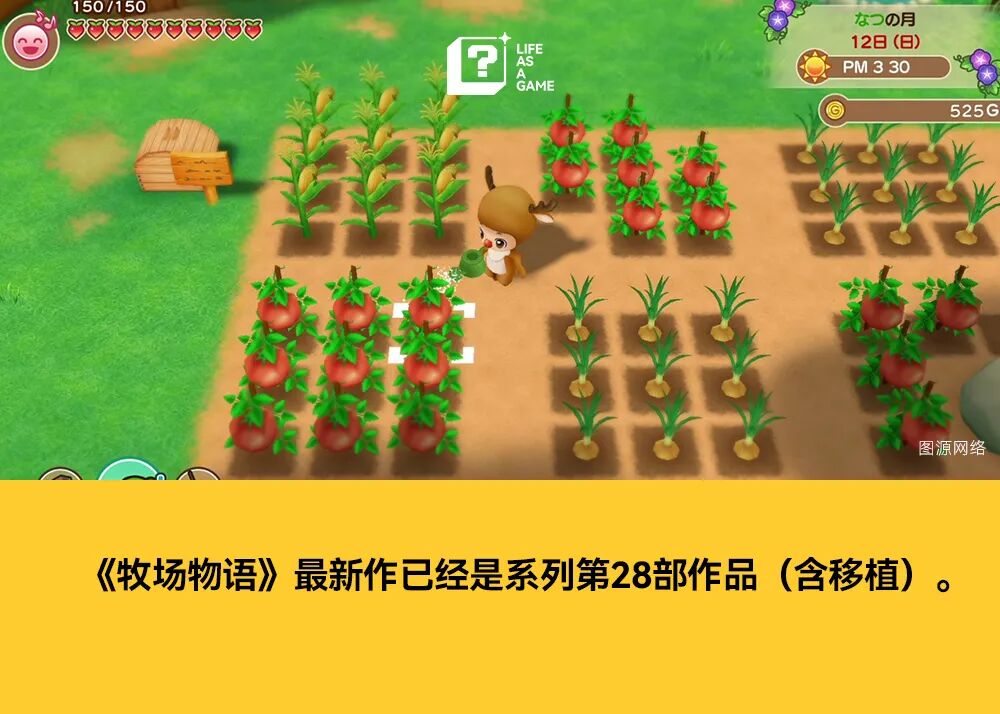
Combining these two points, Chinese game manufacturers can hardly resist the temptation. Not to mention the long-term prospects of this category are also very attractive, with a large number of well-known long-running IPs, such as *Story of Seasons*, *Rune Factory*, *Dragon Quest Builders*, and so on.
The only problem lies in how to carry out the long-term service-oriented transformation of this category?
After all, only by transforming buy-to-play games into F2P (Free-to-Play) games can players be encouraged to keep paying. The latter is not only the product direction that Chinese manufacturers are better at, but also the direction that the capital market is more optimistic about at this stage.
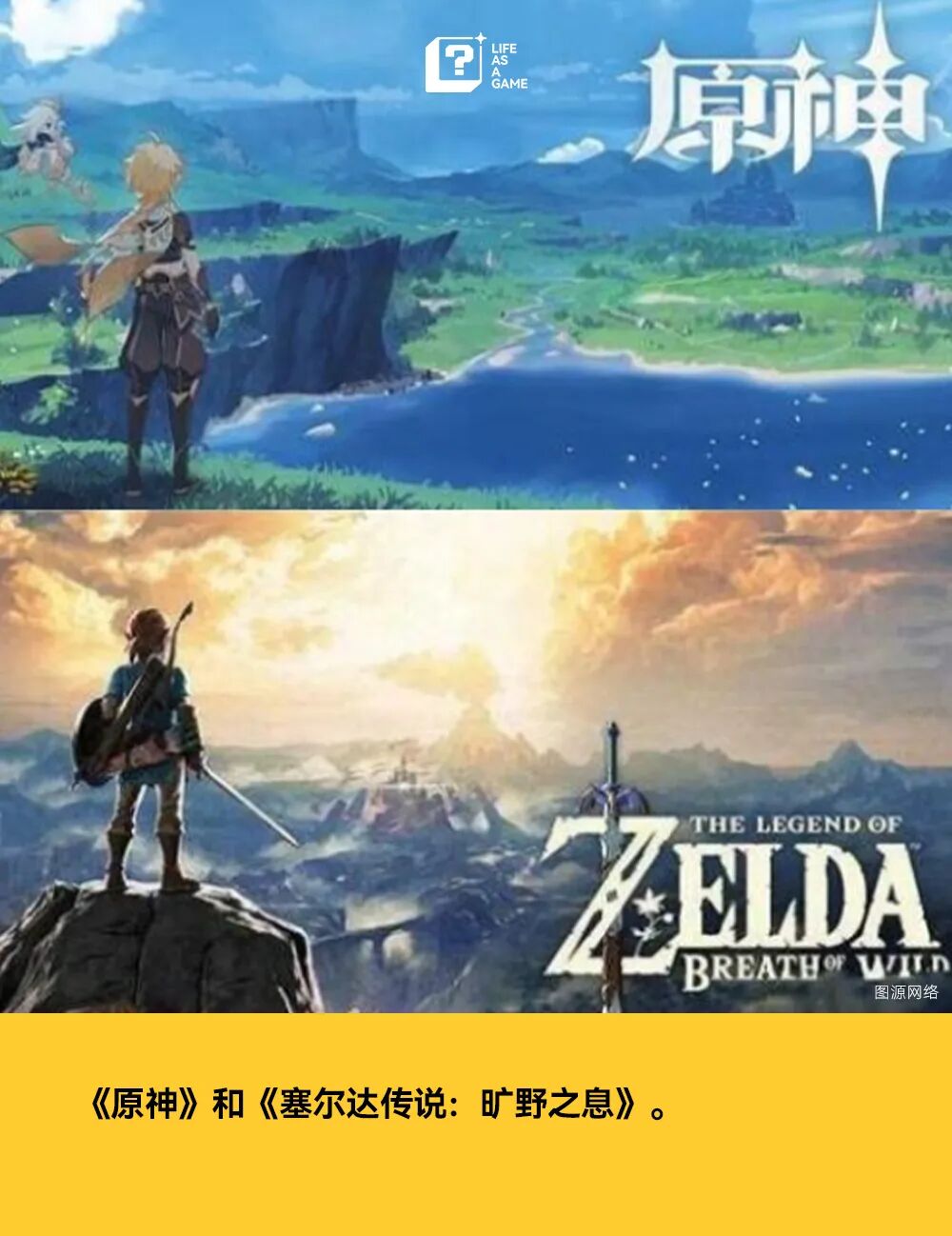
In fact, local manufacturers have successfully transformed multiple gameplay categories that were once dominated by buy-to-play works before. For example, *The Legend of Zelda: Breath of the Wild* (hereinafter referred to as *BotW*) and *Genshin Impact* are both positioned as open-world exploration titles and represent extremely high standards in their respective fields, but the former is a one-time buy-to-play work, while the latter adopts a long-term service operation model.
In comparison, the commercial ceiling of the buy-to-play model is significantly much lower. By 2026, the cumulative sales of *BotW* and *The Legend of Zelda: Tears of the Kingdom* have reached 57 million copies. Even estimated based on the highest standard, consumer expenditure on the two titles does not exceed 4 billion US dollars. According to estimates from data agency Niko Partners, the total cross-platform revenue of *Genshin Impact* since its launch has exceeded 10 billion US dollars, which clearly demonstrates the commercial potential of transforming buy-to-play games to the F2P model.
*Genshin Impact* compared to *BotW* is just like *Eggy Party* compared to *Fall Guys*, *Arena Breakout* compared to *Escape from Tarkov*, *Delta Action* compared to *Battlefield* and *Call of Duty*... Under the framework of validated categories, many transformed F2P games have achieved commercial performance no less than that of large-scale buy-to-play hits.
With the help of mature long-term operation strategies, the life cycle of these excellent local works seems to never end. Their development costs are shared by the huge user base, and the revenue is realized in layers according to the willingness to pay of different players.
Nowadays, Chinese game manufacturers have set their sights on life simulation, a track with low threshold and considerable room for imagination. Compared with *Genshin Impact* or *Delta Action*, the development cost of farming simulation games is not very high. But the results show that most of the life simulation games that have been launched on the market have ended in failure, many projects of major manufacturers have gone through multiple rounds of testing but have not been released for a long time, and manufacturers are adopting a very cautious attitude.
The difficulty of transforming this category seems to be greater than we imagined.
The Unsolvable Core Contradiction
The list of failed life simulation mobile games includes quite a number of heavyweight participants.
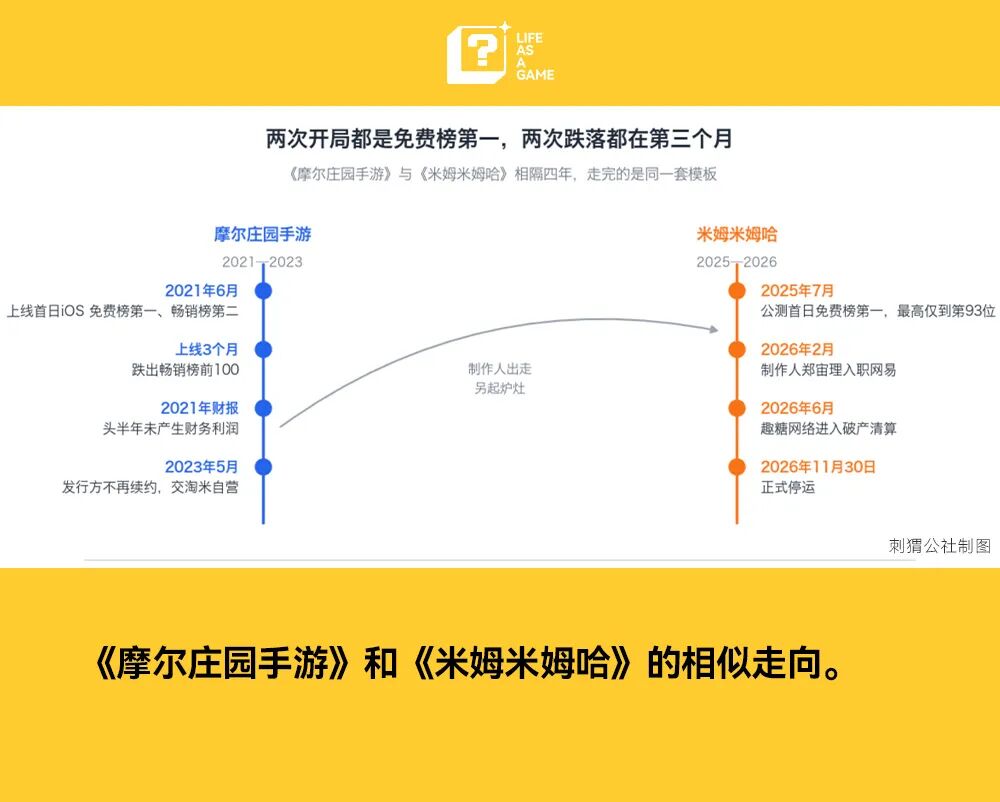
The most well-known one is *Mole Manor Mobile Game* launched in June 2021. When it was released, relying on the IP audience accumulated more than ten years ago, the game once reached No.1 on the App Store free game list and No.2 on the best-selling list. However, the game dropped out of the top 100 of the best-selling list only 3 months after its launch. The publisher G-Bits clearly stated in its financial report that the game did not generate financial profits in the first half year after its release. In May 2023, *Mole Manor Mobile Game* was handed over to Taomee for self-operation due to operational difficulties, and the publisher did not renew the contract.
After Zheng Zhouli, the producer of *Mole Manor Mobile Game*, left the company to start his own business, he founded Qutang Network and developed another life simulation game *Mimimimha*. However, *Mimimimha* without IP foundation had an even more dismal fate. The game only peaked at No.93 on the App Store best-selling game list. In June 2026, Qutang Network entered bankruptcy liquidation procedures, and in August, the game *Mimimimha* announced that it would soon cease operations.
Some players always think that long-term service games are nothing more than "selling skins" and "selling numerical stats", but the real situation is far more complicated than that. The so-called "selling skins" or "selling numerical stats" can work because game manufacturers have built a complete system through operation strategies. But for life simulation games, this system is exactly very difficult to function effectively.
For example, *Genshin Impact* sells a wide variety of characters, but specific characters are not necessary for clearing the game. Out of their "love" for the characters, players will try their best to obtain the characters and contribute revenue to the game. The reason why players fall in love with the characters is that the game itself has exquisite plot content and excellent character design.
But obviously, *Genshin Impact* can do this because it belongs to the RPG genre in a broad sense, which has the basic space to shape characters. In contrast, life simulation games naturally lack this kind of logical basic condition.

On the other hand, competitive games are relatively restrained in "numerical payment" out of the need for fairness, so they generally choose "skin payment". At this time, the reason why players are willing to pay for skins is that skins are constantly seen during game matching and matches. The more times the skin is seen in the arena, square, and broadcast, the more valuable it feels.
As for the traditional "numerical payment" model, the most common scenario at present is in MMORPG products. If players want to clear dungeons and improve their rankings, they must recharge to buy better props and equipment to increase their combat power.
But no matter we talk about "skin payment" or "numerical payment", these payment logics are hardly valid in the context of the life simulation track.
You know, the biggest feature and greatest charm of farming simulation games is their relaxing and leisurely gaming experience. The output in the game is private: the fish tank is only seen by the player themselves, and only the player themselves cares about the layout of the farm. This type of game has no auditorium, and players have no pressure to outperform others. Since there is no such pressure, players naturally have no reason to pay for becoming stronger or looking better.
Therefore, in order to find a reason for users to spend money, many new-generation farming simulation games will launch daily activities, social gameplay and ranking systems more frequently, which on the contrary destroys the selling points that originally retained players.
*Mole Manor Mobile Game* was once widely criticized for this point. An old player commented like this: "When I played the web version before, I could spend the whole day fishing in the manor, decorating the house, and chatting with friends; now in the mobile game, I log in every day to do tasks, claim rewards, and rush for rankings, which feels like going to work."
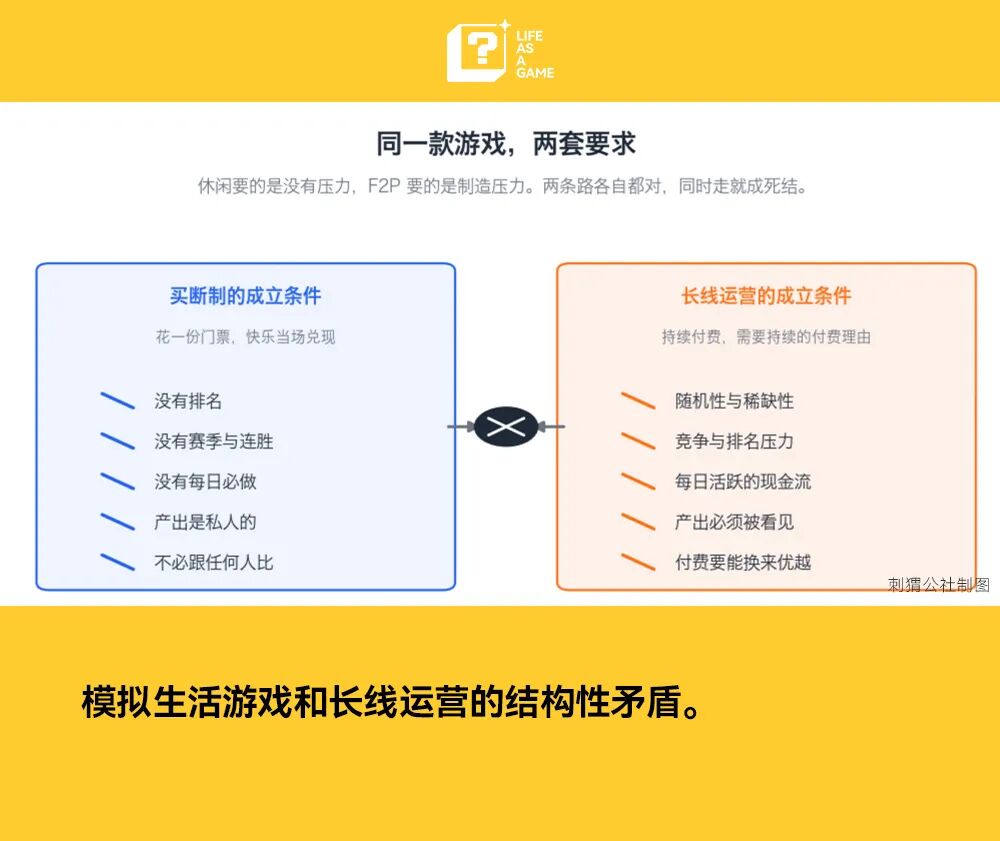
To be casual, you need to create a relaxing, leisurely and stress-free atmosphere; to implement F2P, you must create pressure, competition and comparison, so that players have the motivation to keep paying. These two lines of thinking are both feasible in their respective fields, but if life simulation products want to operate as long-term F2P titles, they have to "have it both ways", which will inevitably end up forming an unsolvable knot.
New Ideas for Challengers
So is this problem really unsolvable?
Specifically, common activities in life simulation games such as fishing, farming, mining, and building houses can hardly insert "numerical payment" without destroying the genre-specific experience. The only place where developers can make efforts is actually "skin payment".
However, life simulation games naturally lack display space: no matter how beautiful the furniture, fishing rods and houses are, they can only be decorated for the player to see. If you force social interaction and create rankings, the outcome will probably be no different from games like *Mole Manor Mobile Game*.
But this does not mean that "selling skins" is absolutely not feasible. The key point is that manufacturers need to create a smooth reason for players to "show" themselves. To address this point, a number of local projects have begun to try different solutions.
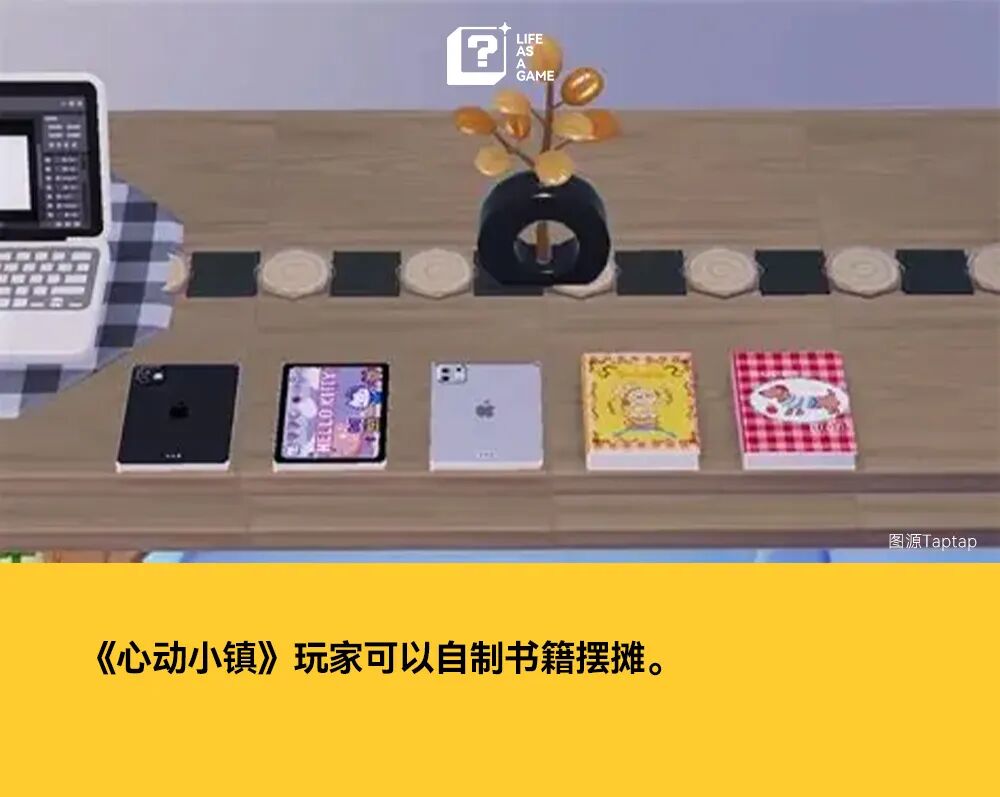
For example, the relatively successful domestic work *Heartbeat Town* allows players to write books, make clothes, make furniture, and set up stalls to sell their works through the DIY system, thus smoothly opening up space for users to show themselves.
In the game, players can produce content by themselves and "publish" it. The more their published works are purchased, the more times they are seen. As a result, players' creations have display space, and they have the motivation to dress themselves up better.
In addition, *Heartbeat Town* has also achieved greater success in overseas markets through refined overseas operation methods. It is not limited to the fiercely competitive domestic market, but actively goes global to find incremental users who are willing to pay for its "aesthetic" gameplay. According to data from Sensor Tower, the highest monthly overseas revenue of this project reached 22.58 million US dollars.
In fact, other players in the current track have also seen the contradictions inside the category clearly, and are trying to bypass them.
For example, NetEase's *Sunny Days in Star Draw* focuses on "farming during the day and having parties at night", using the gameplay splicing idea to make up for shortcomings: on the one hand, it uses farming gameplay to attract more users, on the other hand, it uses high-frequency party mode to boost user activity and payment.
