36Kr Exclusive | The founder studied under the "Father of Quantum Internet", a quantum computing enterprise has secured more than 100 million RMB in angel round financing from investors including Lenovo Star.
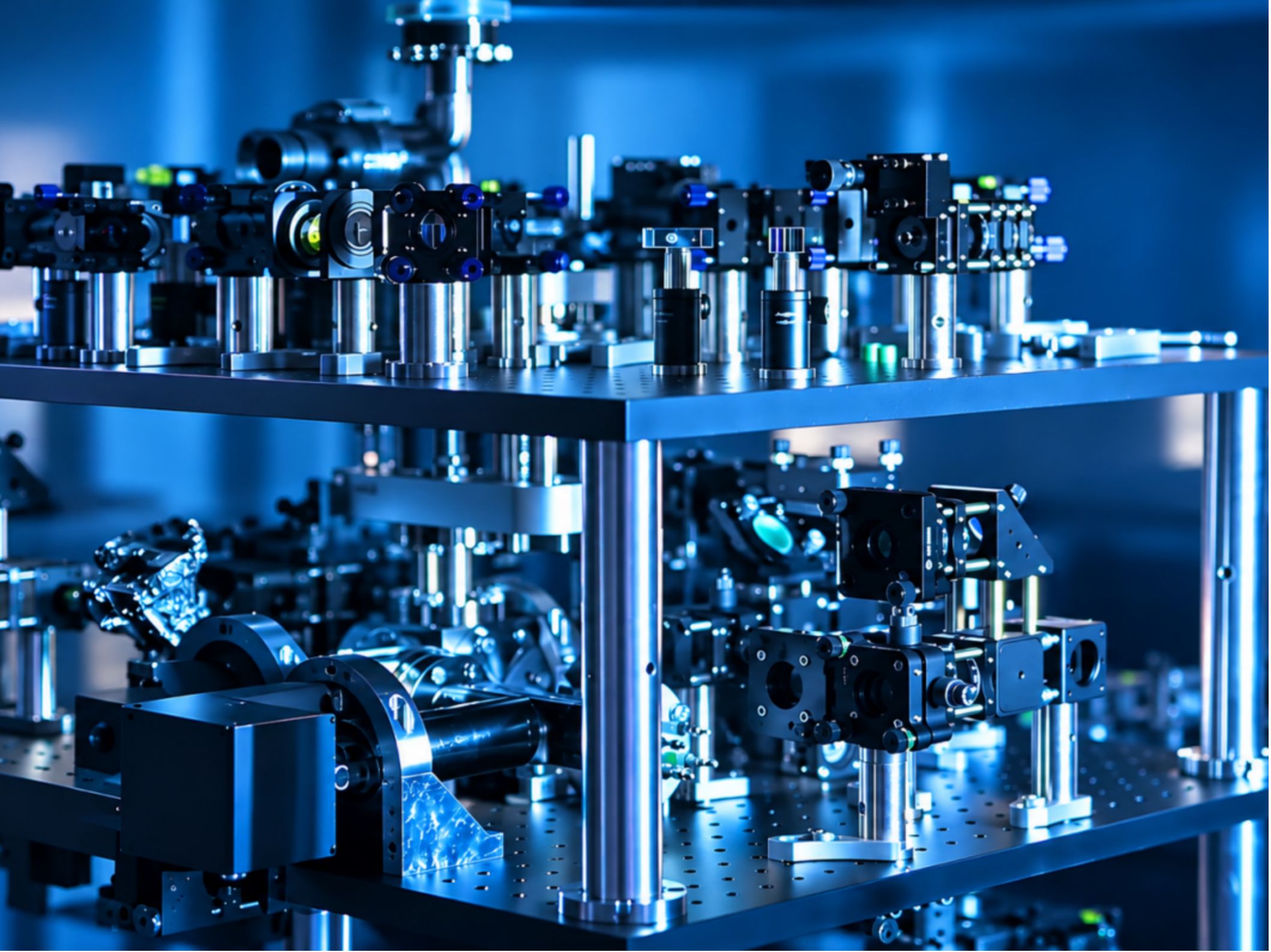
Source / the company
This article is about 3600 words, with an estimated reading time of 9 minutes
Author | OU Xue
Editor | YUAN Silai
36Kr has learned recently that neutral-atom quantum computing enterprise AtomLight (Shanghai) Quantum Technology Co., Ltd. (hereinafter referred to as "AtomLight") announced the completion of an angel round financing of over 100 million yuan. This round of financing is jointly led by Legend Star and Shanghai Future Industry Fund, with joint investment from institutions including Beijing Zhongguancun Capital, Jinyu Maowu, Jiaming Haochun, Silicon Harbor Huike and others. The funds will be mainly used for the technical iteration of neutral-atom quantum processor (QPU) and photonic quantum interconnection (QLink), the productization of all-in-one quantum computing machines, and the construction of the core team.
AtomLight was founded in Shanghai in April 2026, positioned as "the builder of quantum computing power clusters". The company has created a unique distributed quantum computing architecture of "neutral-atom QPU + photonic quantum interconnection QLink", which benchmarks the "chiplet + interconnection" mode of AI computing power clusters, providing a brand-new technical path to break through the upper limit of physical qubit scale of a single quantum computer.
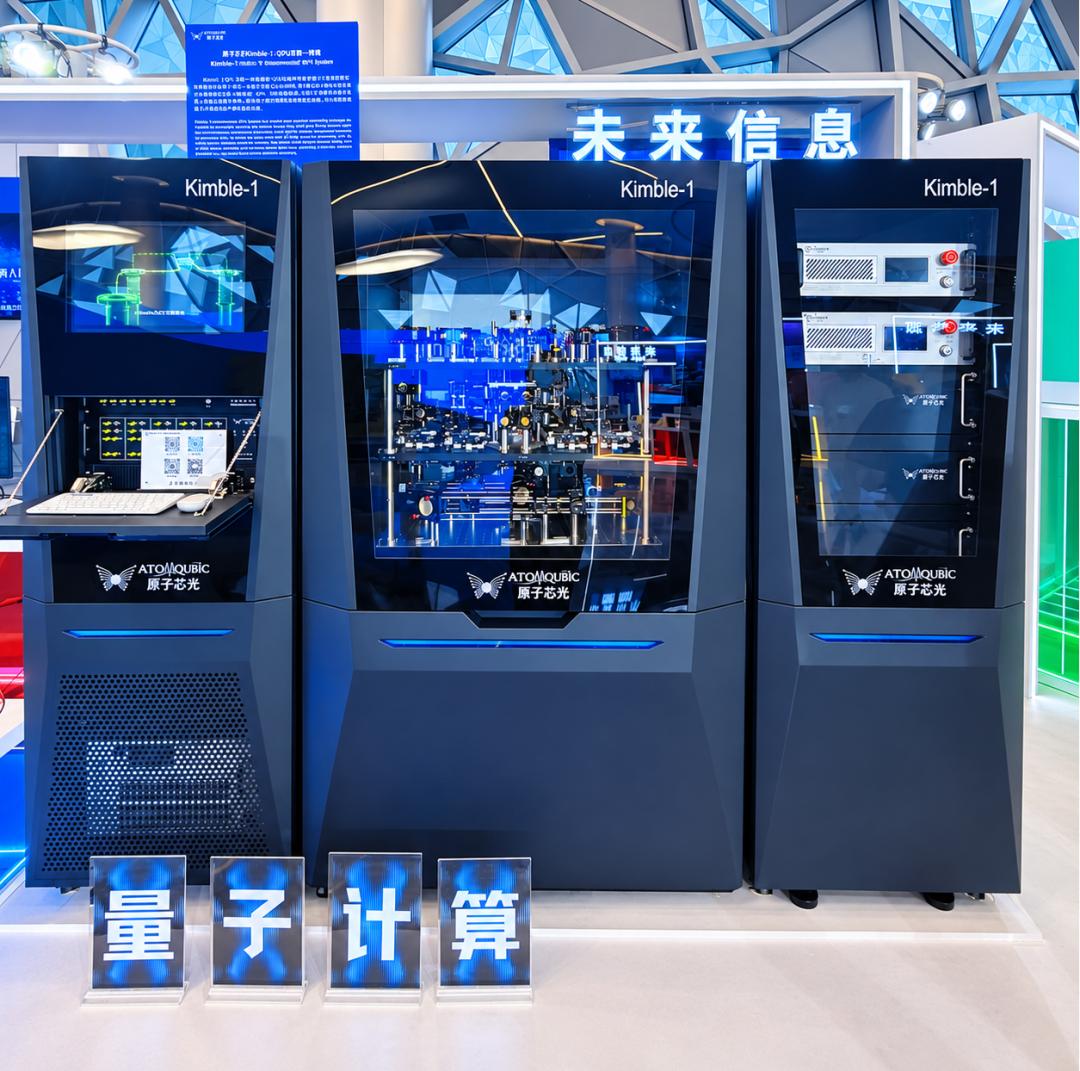
The complete Kimble-1 prototype of the company was exhibited at the Pujiang Innovation Forum (Source / the company)
At present, most domestic quantum computing companies focus on improving the qubit scale of a single QPU, but LUAN Xingsheng, founder of AtomLight, judges that the final form of quantum computing will be similar to AI computing power clusters, which connect multiple QPUs through optical interconnection to build a scalable large-scale distributed quantum computing system.
"Limited by underlying physical principles and material constraints such as laser power and field of view of the objective lens, the upper limit of the scale of a single QPU is about 100,000 physical qubits, while running large-scale quantum algorithms with practical value may require millions or even tens of millions of physical qubits." LUAN Xingsheng told 36Kr. His judgment is that the single-machine expansion path will eventually reach the physical limit, and the distributed quantum cluster is the feasible solution for large-scale quantum computing power.
The underlying logic of this idea comes from LUAN Xingsheng's previous cross-cutting experience in quantum hardware, AI computing architecture and strategic consulting. He holds a doctorate in applied physics from the California Institute of Technology, studied under H. Jeff Kimble, a member of the U.S. National Academy of Sciences and the father of the quantum internet, and was the last doctoral student supervised by him. During his doctoral studies, he mainly focused on the system integration of neutral atom arrays and photonic chips. After graduation, he successively served as a project manager at McKinsey, a core member of the Greater China high-tech business, and an AI technology strategy expert at ByteDance, responsible for the strategic planning of AI chips and computing architecture. These experiences enabled him to rethink the realization path of large-scale quantum computing from multiple perspectives of quantum devices, computing architecture and industrial implementation.
"In the past, the idea of doing quantum computing was to make a single QPU bigger and better, but sometimes it is impossible to have the best of both worlds. Why can't we construct a large-scale computing power cluster in the way of "chiplet + interconnection" just like current AI computing?" said LUAN Xingsheng, "Quantum computing should also adopt the same idea."
Accordingly, he put forward a clear technical route: neutral-atom QPU undertakes quantum computing, and photonic quantum interconnection QLink realizes the interconnection between QPUs.
The advantages of the neutral-atom platform lie in strong scalability, identical qubits and long coherence time, which is currently regarded by the industry as one of the most potential quantum computing routes for large-scale development. However, neutral-atom systems also face engineering challenges such as complex optical paths and huge vacuum systems, and the number of qubits that a single device can accommodate has an upper limit eventually. Photons are natural "flying qubits", which can maintain quantum information at normal temperature and pressure, are suitable for long-distance transmission and interconnection of quantum information, and are compatible with mature CMOS processes for optical chips. But the interaction between photons is weak, so they are not suitable for direct calculation.
"Let atoms do what they are good at — calculation and storage; let photons do what they are good at — interconnection. That's the idea of our architecture." said LUAN Xingsheng.
Around this architecture, AtomLight has built two core technical barriers: one is the preparation and high-fidelity manipulation of large-scale neutral atom arrays, and the other is QLink, a quantum interconnection interface based on photonic chips. QLink realizes the coherent mapping between atomic qubits and photons through the cavity QED interface, so as to connect multiple QPUs and complete cross-node quantum state transmission and entanglement distribution.
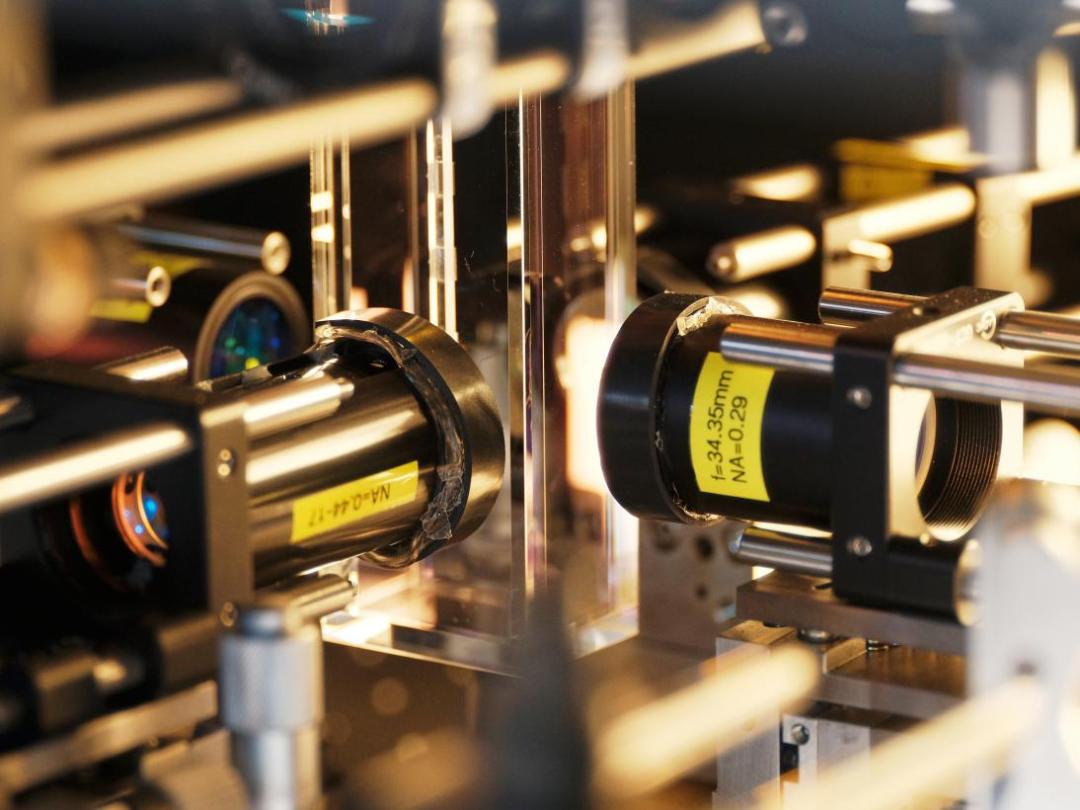
Detail drawing of Kimble-1 (Source / the company)
Next, AtomLight's technology roadmap is also equally clear: the company plans to complete the distributed quantum computing demonstration between two QPU arrays by the end of 2027. If it is successfully realized, it is expected to be the world's first on the neutral-atom platform. By 2030, the goal is to realize the interconnection of 10 QPU nodes, land valuable quantum computing use cases, and complete the closed loop of quantum computing commercialization.
LUAN Xingsheng said that the company hopes to achieve break-even between 2030 and 2031. "Before we carry out any business, we will ask: what is the ROI? When can we stop burning money? Quantum computing is a long run, but even a long run needs supply stations."
The following is an excerpt of the dialogue between 36Kr and LUAN Xingsheng, founder of AtomLight (edited):
36Kr: What is AtomLight's planned commercialization route?
LUAN Xingsheng: Our commercialization idea is divided into three layers. The first layer is the delivery of complete quantum computing machines. According to my standard, a device can be called a product only if it can achieve "half a year of maintenance-free operation". At present, neutral-atom quantum computing devices in the industry generally need maintenance once a week or every two weeks, which is far from stable product delivery. We hope to launch a complete quantum computing machine with 3000 physical qubits, two-qubit gate fidelity exceeding the error correction threshold, and capable of half a year of maintenance-free operation by the end of 2027.
The second layer is "generating revenue along the way". In the process of developing the complete machine, we leverage the technical accumulation of the Caltech laboratory in the ultra-high vacuum bonding technology of photonic chips, develop photonic chip atomic devices packaged in ultra-high vacuum, and self-develop productizable sensor modules such as integrated quantum sensors and atomic clocks, to expand the application scope of atomic sensor devices for large-scale industries, aerospace surveying and mapping, navigation and other application scenarios. This can not only generate revenue in advance, but also continuously verify and iterate technology through the usage feedback of real customers.
The third layer is post-quantum cryptography migration. Our team has senior background in McKinsey who has been engaged in strategic consulting for financial digital transformation for nearly ten years. We believe that post-quantum cryptography migration is not a simple "algorithm replacement", but a systematic project that requires overall analysis and design, and phased iterative implementation, just like financial digital transformation. Therefore, we do not intend to only sell encryption devices, but hope to design and implement end-to-end post-quantum cryptography migration solutions in the form of digital transformation projects. This is the cash flow business of the company.
36Kr: The headquarters is located in Shanghai, but the R&D base is located in Shanxi. How do you coordinate the two locations?
LUAN Xingsheng: On the one hand, our core technology is rooted in the cutting-edge research of the Caltech Quantum Optics Laboratory; on the other hand, we follow the business idea of "where the customers are, the company should be there". Our target customers, such as large AI manufacturers, financial institutions, pharmaceutical companies, etc., are mostly concentrated in Shanghai and surrounding areas. Only in Shanghai can we develop products around customer needs, instead of working behind closed doors in the laboratory.
The State Key Laboratory of Quantum Optics and Quantum Optics Devices of Shanxi University has 40 years of accumulation in quantum optics, and is an important scientific research force in this field in China. I myself also serve as a researcher of this laboratory. At present, the Shanxi side undertakes basic research and technical exploration; in the future, Shanghai will continue to serve as the core window for industrial customers, focus on engineering and productization, and promote the commercial implementation of technology.
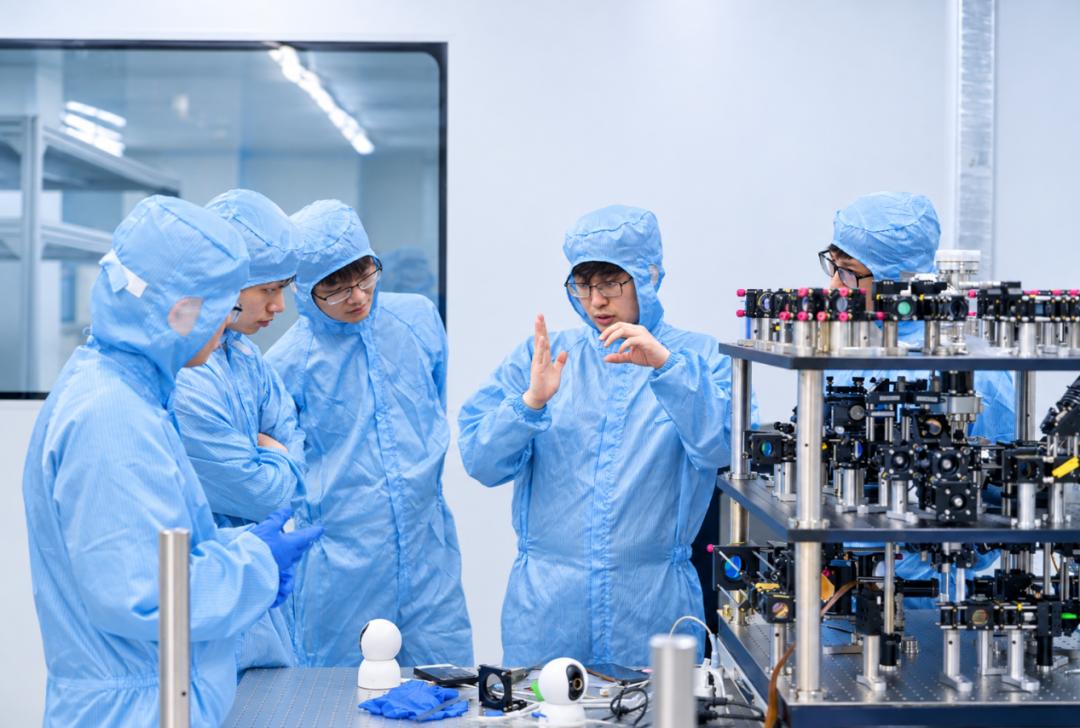
LUAN Xingsheng leads the experiment (Source / the company)
36Kr: The neutral-atom track has been very hot in recent years. AtomLight did not start the earliest, how do you catch up?
LUAN Xingsheng: The first is technology. We inherit the technical route of the Caltech Quantum Optics Laboratory. As one of the earliest laboratories in the world to carry out quantum state regulation of atoms and photons, the laboratory has 40 years of accumulation in quantum computing, communication and measurement. On the neutral atom array, since 2015, the laboratory has cooperated with the group of Cindy Regal, a pioneer in optical tweezer array experiments, realized a 1000-scale optical tweezer array in 2017, and completed the world's earliest experimental verification of the integration of optical tweezer atom array and photonic chip in 2020. My supervisor, Professor Jeff Kimble, has been deeply engaged in cavity QED since the 1980s, successively realized precise manipulation of single atoms, created the integration direction of neutral atoms and photonic chips, and put forward the concept and implementation scheme of quantum internet in 2008.
There is also the architecture-level thinking and industrialization team. We are not only making a better QPU, but also designing "a scalable system" to build a large-scale quantum computing power cluster through quantum interconnection. The core members of the team come from top universities at home and abroad, spanning multiple fields such as quantum computing, optoelectronic engineering, semiconductors, and industrial operation. There are many people in the quantum computing circle who understand physics, but very few people who have actually run through the mass production of hardware, which is our key differentiation.
Investors' views:
Legend Star said: Quantum computing is an important direction for the evolution of next-generation computing power, and it is also a cutting-edge technology field that Legend Star has paid attention to for a long time. The breakthrough of the computing power industry not only relies on single-point technology, but also tests the system engineering and productization capabilities. Focusing on neutral-atom quantum computing and on-chip cavity QED photonic quantum interconnection, AtomLight has opened up the system capabilities from core devices, QPU, quantum interconnection to the complete machine, and takes the all-in-one quantum computing machine as the core product form to continuously promote the transformation of technical achievements into product implementation.
The team has both cutting-edge scientific research accumulation and industrial practical experience, and has strong capabilities in hardware engineering and product definition. It is a rare "scientific research + engineering" compound team among early-stage hard technology projects. As an angel institution focusing on early-stage technology investment, Legend Star will rely on the profound accumulation of Legend Holdings in the computing power industry, hardware supply chain and entrepreneurial ecosystem, continue to support enterprises to promote technical iteration and product implementation, and accompany quantum computing from technical prototypes to large-scale industrial applications.
Shanghai Future Industry Fund said: Quantum computing is an important frontier of the new round of scientific and technological revolution and industrial transformation, and it is also a key layout direction for Shanghai's future industries. The fund continues to pay attention to the field of quantum technology, and focuses on deploying cutting-edge technology routes with original innovation capabilities and long-term industrial value. Neutral-atom quantum computing has unique advantages in the construction of large-scale qubit arrays, coherence time and system scalability. AtomLight builds a differentiated technology system around "neutral-atom QPU + photonic quantum interconnection QLink", explores the distributed quantum computing architecture, has built a neutral-atom quantum computing prototype verification platform, and continues to promote the R&D of key technologies such as photonic quantum interconnection, showing good potential for technological innovation. In the future, the fund will give full play to the advantages of long-term capital and industrial ecological resources, continue to empower in talent cultivation, scientific research resource docking, industrial coordination and capital resource linking, support enterprises to carry out key technology research and industrialization exploration, help accelerate the transformation of quantum technology innovation achievements, and inject new momentum into Shanghai's quantum technology innovation and future industrial development.
Beijing Zhongguancun Capital said: Quantum computing belongs to the long-cycle, high-barrier hard technology track. The investment focuses on the long-term feasibility of the technical route, as well as the potential of the team to transform scientific research achievements into engineering capabilities and product capabilities. AtomLight is deeply engaged in neutral-atom quantum computing, builds a differentiated technology system relying on on-chip cavity QED photonic quantum interconnection, and takes the all-in-one quantum computing machine as the core product form to continuously promote the evolution of technical prototypes to engineered products.
The team has both cutting-edge scientific research capabilities and strong engineering and industrialization capabilities, forming a complete capability chain from scientific research tackling, system integration to product implementation. Zhongguancun Capital adheres to the principle of investing in early-stage, small and hard technology projects, and accompanies the growth of enterprises with continuous patient capital. In the future, we will rely on our own industrial ecology to continuously provide support in team building, industrial chain coordination and subsequent financing, and help accelerate the industrialization process of neutral-atom quantum computing.