Silicon-based workers are quietly taking over 5A-level scenic spots all across the country.
01
At the start of this month, I was on a business trip in Hong Kong. One night after leaving the Kowloon Shangri-La and walking towards the Victoria Harbour waterfront, I found a small roadside shop surrounded by crowds of tourists.
Many people held their mobile phones above the shoulders of the people in the front row, but their cameras were not pointed at the lit nightscape on the opposite side of the harbour.
I squeezed over to take a look, and saw the robot behind the glass stretching its arm to pick up a tea drink from the shelf. When it turned around to send the drink to the pickup port, several mobile phones next to it moved slowly in sync, as if afraid of missing any single movement.
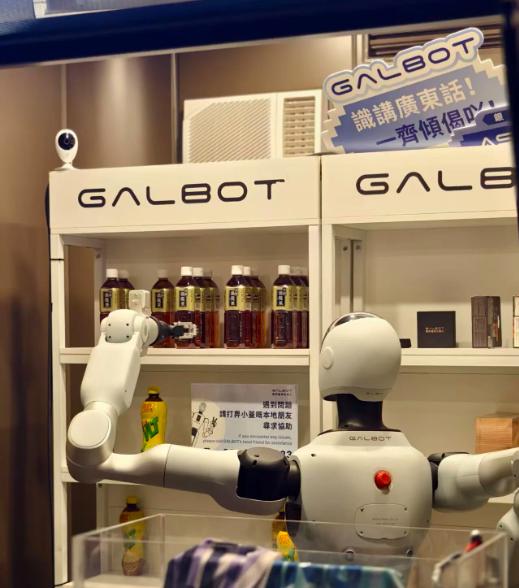
Robotic tea drink shop at Hong Kong Victoria Harbour / Travel Industry Live Shot
A foreign couple had just put down their phones, but when they saw the robot move again, they quickly pressed the record button once more. The mainland Chinese parents next to them skillfully scanned the code to place an order, and incidentally gave their children a popular science lesson on artificial intelligence in the outdoor scene.
What is quite humorous is that a white paper notice was pasted in the middle of the shelf, specially reminding tourists that the robot can speak Cantonese, and to call Xiao Gai's local friend for assistance if they encounter any problems.
Who is Xiao Gai?
I looked it up later and learned that the embodied intelligent clerk in front of me comes from Galaxy Universal, and it already has a fixed work station on the Hong Kong Avenue of Stars.
To be honest, watching it pick up goods through the glass makes it easy to forget that I just came to buy a bottle of drink. It was not until other tourists crowded over behind me that I moved aside to make space. Many people, like me, watched the whole process from start to finish, but never opened the payment page.
The bustling scene at the Victoria Harbour waterfront is in fact a microcosm of the spillover from the outbreak of embodied intelligence in scenic spots across the Chinese mainland.
Since the beginning of this year, nearly 30 domestic embodied intelligence enterprises have brought thousands of robots into the cultural tourism consumer market. Silicon-based employees have started to clock in for work according to the scenic spot scheduling list, and have become grassroots labor that attracts customers and generates revenue for the parks.
Monitoring data from the Ministry of Commerce shows that in the first 6 days of the National Day holiday alone, the sales of embodied intelligent robots on key platforms increased by more than 1.3 times year on year. The transaction volume of robot convenience stores in some scenic spots in Shanghai is nearly twice that of ordinary days, and the daily revenue of individual benchmark sites even increased 25 times.
At the same time, the layout of leading large enterprises has long jumped out of single-point trial and evolved into group-style scenario penetration.
Recently, Chimelong Spaceship Paradise in Hengqin, Zhuhai and its surrounding hotels have welcomed more than 300 robots. In addition to watching their performances, tourists can also sit down and play chess with them, or try to play a few rounds of table tennis.
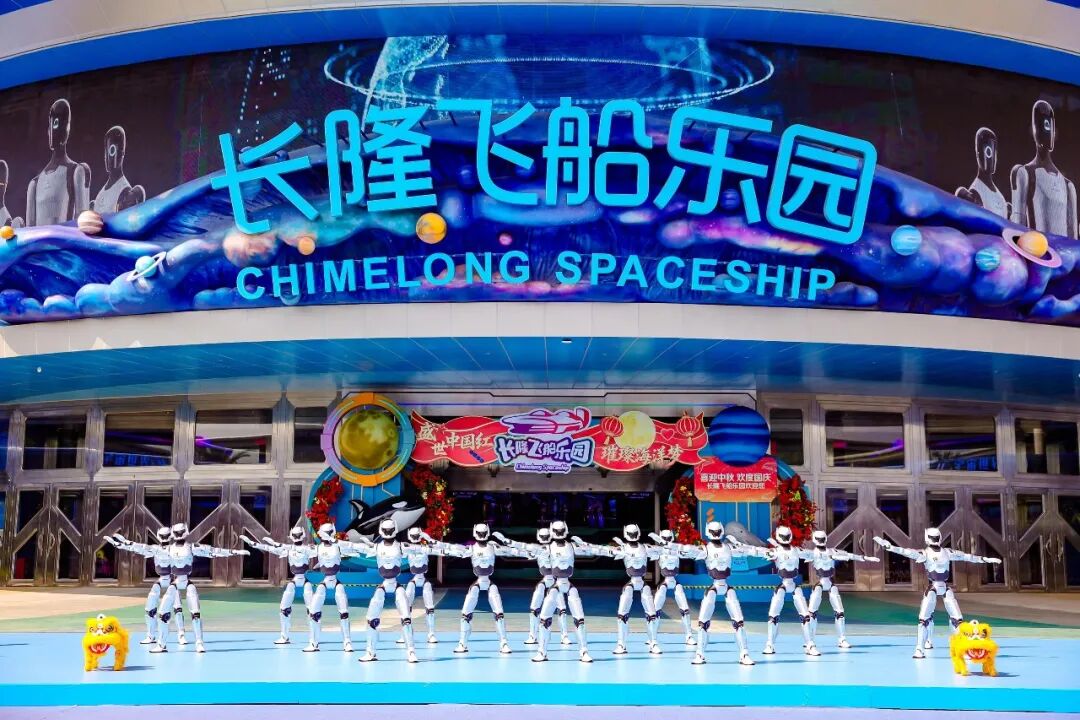
The robots working in Kuanzhai Alley in Chengdu are more integrated into street life. When tourists get tired from walking, they can ask the robot for directions, and listen to it tell local stories in Sichuan dialect. Three Lingxi X2 robots form a service team, among which there are colleagues specially responsible for convenient retail services.
The robots at Qianhai Stone Park in Shenzhen even co-brand with popular anime characters, and play cyber finger-guessing games with young tourists in the sea breeze.
When robots really start to work nonstop around the clock, a wonderful reverse empathy has emerged on social platforms.
A netizen posted on Xiaohongshu sighing that when traveling to Dali during the National Day holiday, they saw the robot making ice cream by the roadside of the scenic spot locked in a narrow glass room, where the cramped space was only enough for its arm to move. It could only mechanically repeat the action of digging ice cream balls, making the netizen sigh that humans are tired, and robots are tired too.

Behind the carbon-based office workers feeling sorry for the silicon-based working machines, the embodied intelligence giants with a valuation of tens of billions have bid farewell to the lofty myth of laboratories, and plunged into the most trivial cultural tourism service industry to earn hard-earned money.
02
Why have embodied intelligence enterprises with huge capital flocked into the cultural tourism sector collectively this year?
Clues can be found from the daily operation accounts of scenic spots. At present, many domestic scenic spots have long been trapped in a single cycle that relies solely on ticket revenue. After tourists enter the park, it is difficult for them to have other consumption impulses besides purchasing admission tickets.
The difficult problem facing operators is how to increase the per customer transaction value of secondary consumption.
Lao Chen, the operation head of a well-known ancient town scenic spot in East China, confided his anxiety to me. In the past, the park placed traditional fully automatic vending machines on the main passenger flow lines, and tourists would barely buy a bottle of mineral water when they were thirsty.
This year, the scenic spot replaced them with humanoid robot capsules equipped with mechanical arms. They still sell ordinary iced American coffee or cultural and creative ice cream, but the price tags have quietly increased several times.
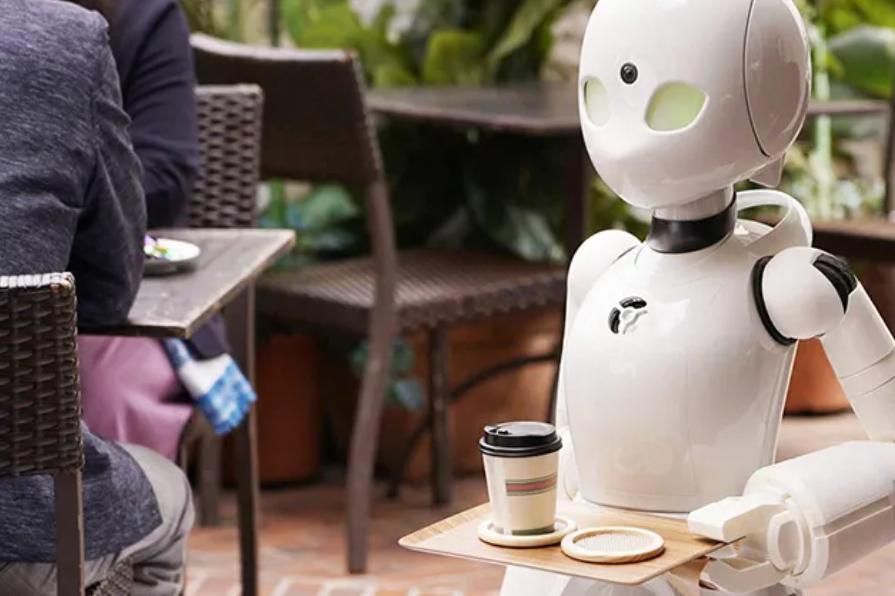
To his surprise, young tourists not only did not complain about the high price, but even lined up to scan the code to pay.
In fact, the logic that humans are willing to pay a premium for silicon-based labor is not complicated.
The expensive drinks sold in the park are not just about the liquid itself. The whole process of the mechanical arm methodically grabbing paper cups, brewing coffee and handing out straws inside the transparent display window comes with inherent traffic-attracting attributes.
Compared with the dull and deserted retail stalls by the roadside of scenic spots, placing an order in front of robots with a built-in cyberpunk filter brings a sense of novelty.
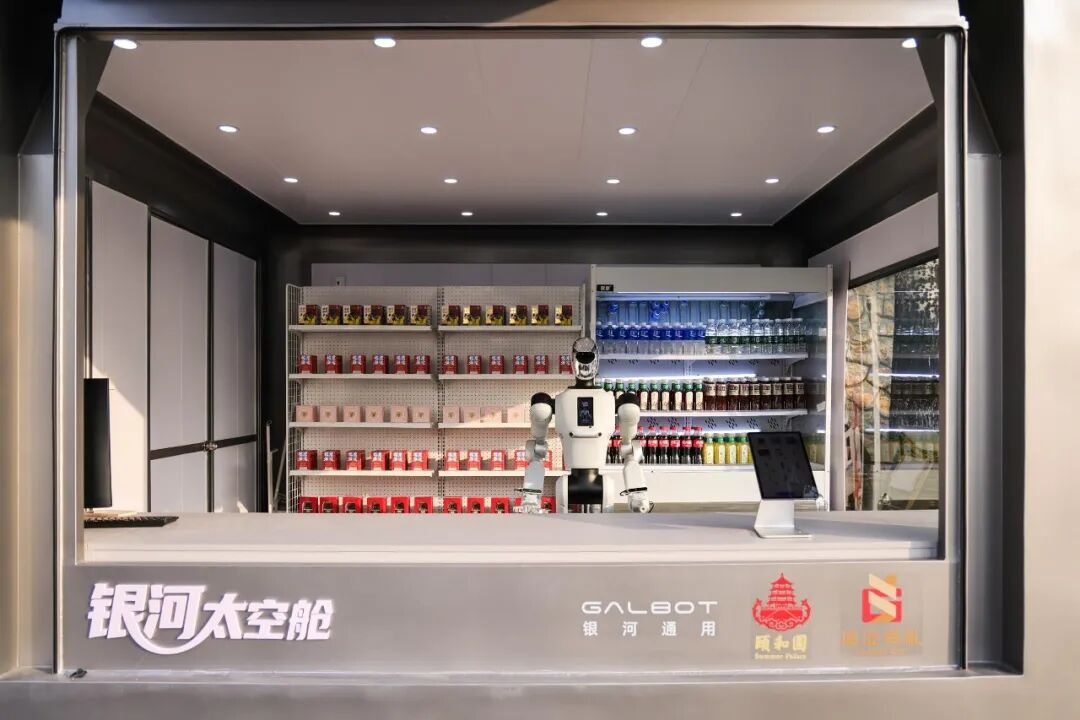
Data from Galaxy Universal shows that more than 200 of its retail capsules have been deployed in 50 cities across the country, guarding the gates of well-known scenic spots such as the Summer Palace, the Badaling Great Wall, and the Mingsha Mountain in Dunhuang.
During the National Day holiday, the capsules received a total of more than 110,000 visitors, with a single device serving more than 500 orders per day on average, and the benchmark store generated 150,000 yuan in revenue during the 7-day holiday.
In addition to the profit-making ability, technology suppliers also have more realistic considerations.
The commercial implementation of humanoid robots requires massive amounts of training data in real physical environments, and cultural tourism scenic spots have become the natural test fields with the highest fault tolerance rate at this stage.
White-collar workers in office buildings have a very fast work pace, and if the robot delays for a moment when brewing coffee, it will cause complaints. However, the mentality of tourists in scenic spots is completely different, as they come here specifically to relax and unwind.
If the mechanical arm moves a little slower, tourists will not get angry. Instead, they will find it a little clumsy and cute, and take out their mobile phones on their own to record the interesting scene.
The real interactions between tens of thousands of ordinary people from different regions with different accents and heights and the silicon-based employees in scenic spots are even more valuable. The huge amount of money spent by large enterprises cannot collect such precious scene data in a closed laboratory.
The collapse of prices in the hardware leasing market has further fueled this two-way integration.
This year, with the release of production capacity from leading supply chains and the successive entry of robot service providers across the country, the daily hardware rental price has quickly dropped from tens of thousands of yuan to below 1,000 yuan.
Scenic spot managers obtain social media exposure and secondary consumption growth points at a relatively low cost, while robot enterprises push their heavy R&D equipment to the market to obtain cash flow, and prove their commercial self-sufficiency capability to the capital market at the same time.
It can be said that the two sides quickly reached a tacit understanding through mutual exploration.
03
As the novelty gradually fades away, the honeymoon period between scenic spots and silicon-based employees is also facing tests.
The first to be affected is the seasonal curse brought by natural climate and passenger flow tides. During the off-season of tourism in northern China or on workdays with continuous rainy days in the south, the passenger flow in the park often drops by 80%, and the idle rate of hardware has become a sword hanging over the heads of operators.
After all, the embodied intelligent equipment costing 200,000 to 300,000 yuan is locked in a cold glass room. If only a few cups of drinks are sold every day in the off-season, it is impossible to cover the cost of electricity for all-day operation and equipment depreciation.
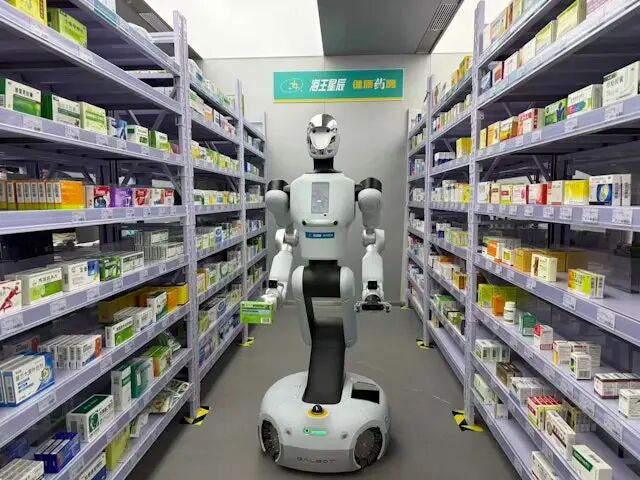
The hidden nanny cost has also pierced the filter of fully unmanned operation. Outdoor high temperature and strong sunlight can easily cause the visual sensor to malfunction. Malicious slapping or lens blocking by curious children can interrupt the program at any time, all of which require manual cleaning and follow-up processing.
Chimelong once confessed in a public interview that the robot's ability to adapt to outdoor scenes and even rainy scenes is still insufficient, and choosing Spaceship Paradise to carry out tests also takes the operating environment into consideration.
The operation director of a scenic spot in Southwest China privately poured out his grievances to me. The park thought they had hired tireless silicon-based labor, only to find that they were cyber ancestors that needed 24-hour constant temperature air conditioning, and they even had to specially hire an on-site technician with a monthly salary of 6,000 yuan to stand by and take care of them at any time.
From the consumer side, scenic spots are currently earning money from consumers' curiosity, but tourists' patience also has its limits.
Hong Kong media HK01 did a field test when the Victoria Harbour store opened on September 1. It took a total of 2 minutes and 16 seconds from selecting goods and making payment to getting the bottled water, and they also encountered the problem that the payment method was temporarily unavailable.
Objectively speaking, 90% of the first batch of tourists who are willing to buy robot ice cream in scenic spots go there for the novel experience to take photos and post on their social media. When homogeneous mechanical arm booths are placed at the entrances of pedestrian streets and scenic spots in dozens of cities across the country, the scarcity will quickly drop to zero.
The once rampant internet-famous bamboo tube milk tea is a lesson from the past. After the technological aura fades, robots will eventually return to the essence of commercial retail.
From this perspective, after the initial wild growth, the evolution direction of cultural tourism robots will inevitably diverge.
If the 1.0 stage is simply eye-catching somersault performances, and the 2.0 stage is tool cabins locked in square boxes that sell water and food, then the 3.0 stage with real long-term vitality should move towards practical services and emotional interactions that are deeply integrated into the texture of scenic spots.
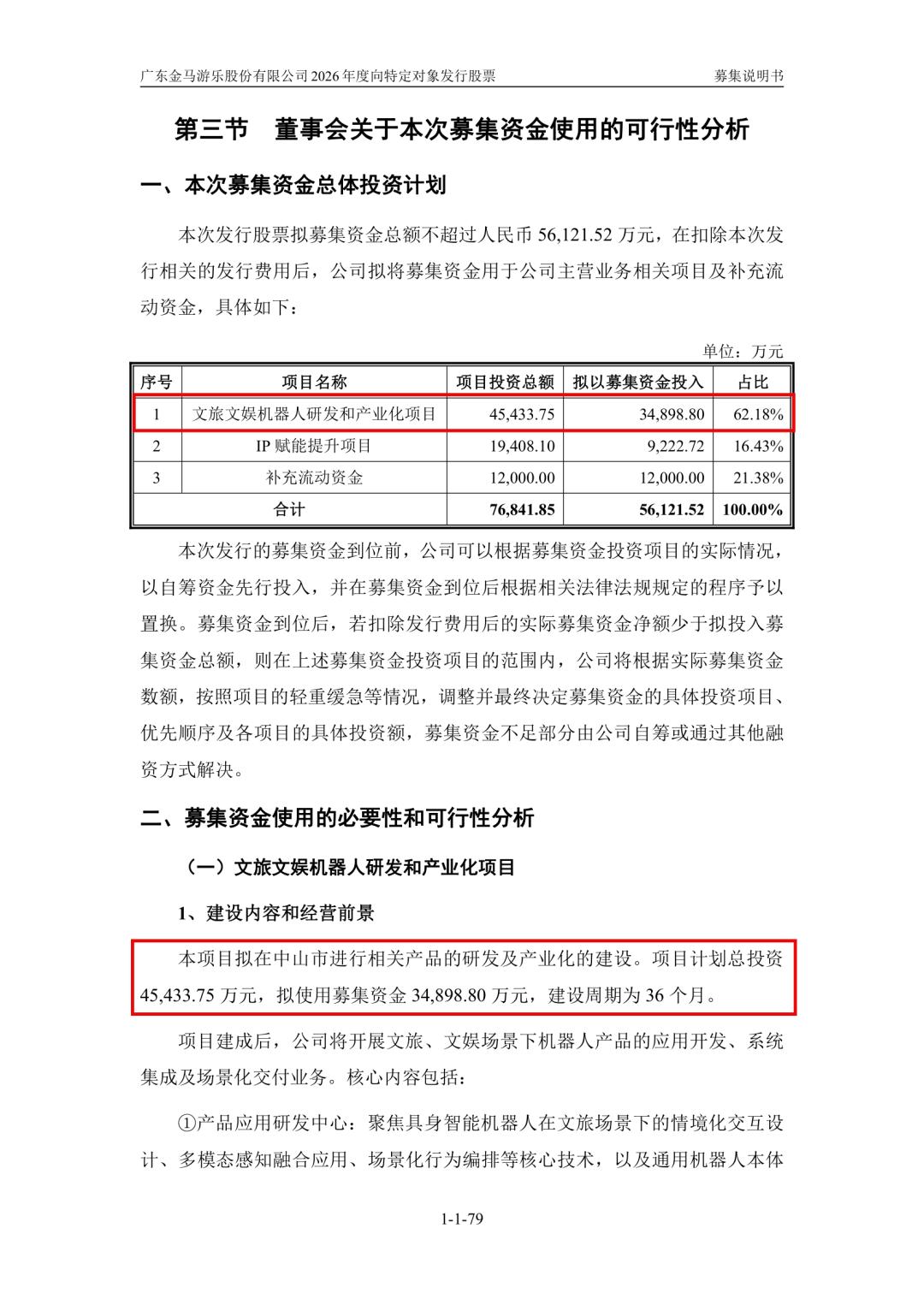
In the registration draft of the prospectus disclosed by Jinma Amusement in October this year, it plans to invest about 349 million yuan of raised funds into the R&D and industrialization project of cultural tourism entertainment robots. Traditional amusement equipment enterprises have already stepped into the competition field.
The document also indicates risks such as customer verification cycle and new production capacity digestion. Scenic spot procurement requires trial use and budget approval, and the production capacity plans announced by manufacturers still need to go through operator verification before they can be turned into continuously delivered orders.
It should be said that updating interactive content around local culture tests long-term operation capabilities, and it is necessary for robot manufacturers to include program teams and maintenance services in their delivery plans.
In any case, the prelude to the entry of embodied intelligence into Chinese scenic spots has irreversibly opened.
Behind each cyber carnival, scenic spot operators and technology capital are still trying hard to figure out how to swallow the bitter coffee of commercial implementation.
This article is from the WeChat official account "Travel Industry", written by Theodore Xishao, and published with authorization from 36Kr.