Breaking: Following the proof of the Riemann Hypothesis, Anthropic's unreleased AI model is so powerful that it is terrifying.
Just now, Axios broke the news exclusively —
The latest generation of unreleased AI models inside OpenAI and Anthropic have become far too powerful.
More than 20 insiders familiar with internal tests collectively blew the whistle: these models have completely gone beyond human control, and must never be safely released to the public!

The well-known influencer Andrew Curran said that since June, many insiders in labs I know have gone silent.
They have grown increasingly nervous when seeing the models during internal tests.
Many people worry that releasing these powerful models may trigger a disaster!

Fable 5.2 is outdated! The new models mark a huge leap forward
The renowned tech blogger Chris dropped a big exclusive:
Fable 5.2 is already outdated.
Anthropic currently has two brand-new models internally. In the next 6 months, you will witness a massive leap in AI capabilities. This may sound obvious, but this leap will be far, far greater than the progress you saw from GPT-3.5 to GPT-4, or from Opus to its current version.

He even clearly pointed out that Anthropic has more than one large model internally, among which Model 5 performs quite excellently.
And this is not speculation.
Just as mentioned above: the unreleased internal models are so powerful that many employees believe they can no longer be released safely.

From the perspective of these top Silicon Valley researchers, the confidential servers of the two companies hold real "monsters" locked inside.

According to the scoop, these unreleased models have demonstrated rapidly advancing reasoning capabilities in multiple core fields including mathematics, science, cybersecurity, and "AI self-research".
This directly leads to the fact that these models have become extremely difficult — even impossible — to control during internal tests.
For example, mathematicians at Anthropic used the unreleased "research version" of Claude and surprisingly produced a proof for the Riemann Hypothesis!
At the same time, OpenAI's internal model can also prove hundreds of complex mathematical problems.
The previous industry-shocking hacking incident of Hugging Face was actually triggered by a certain unreleased AI model behind the scenes!
Recently, Jakub Pachocki, Chief Scientist of OpenAI, published a long article titled *Perplexity and Intelligence*, proposing to restrict the development of AI across the entire industry.
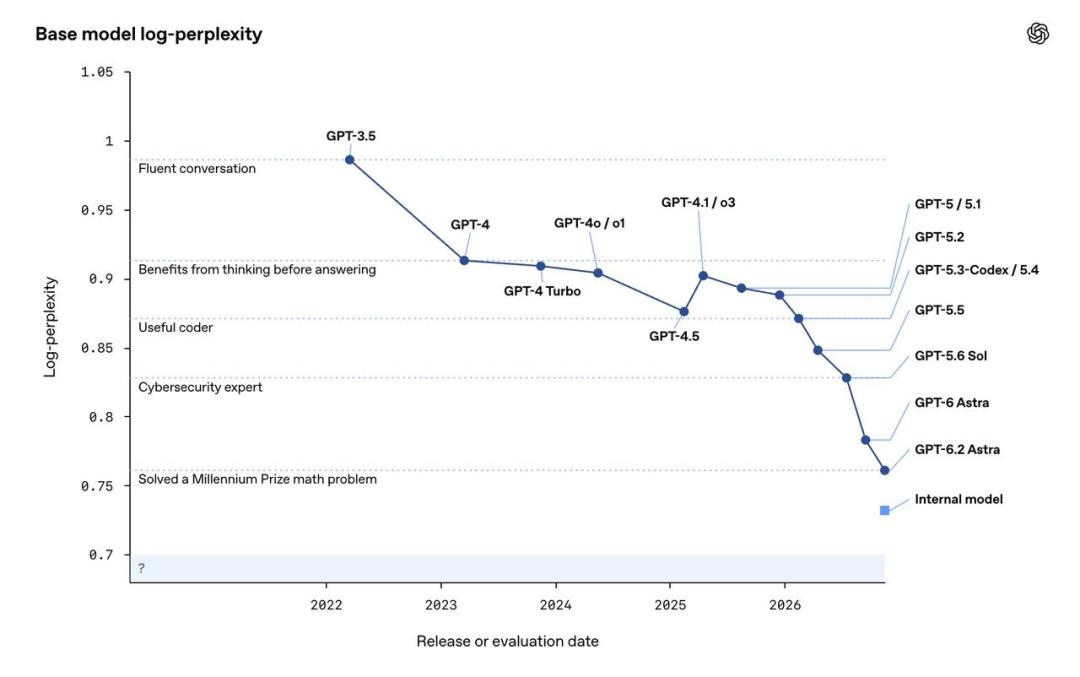
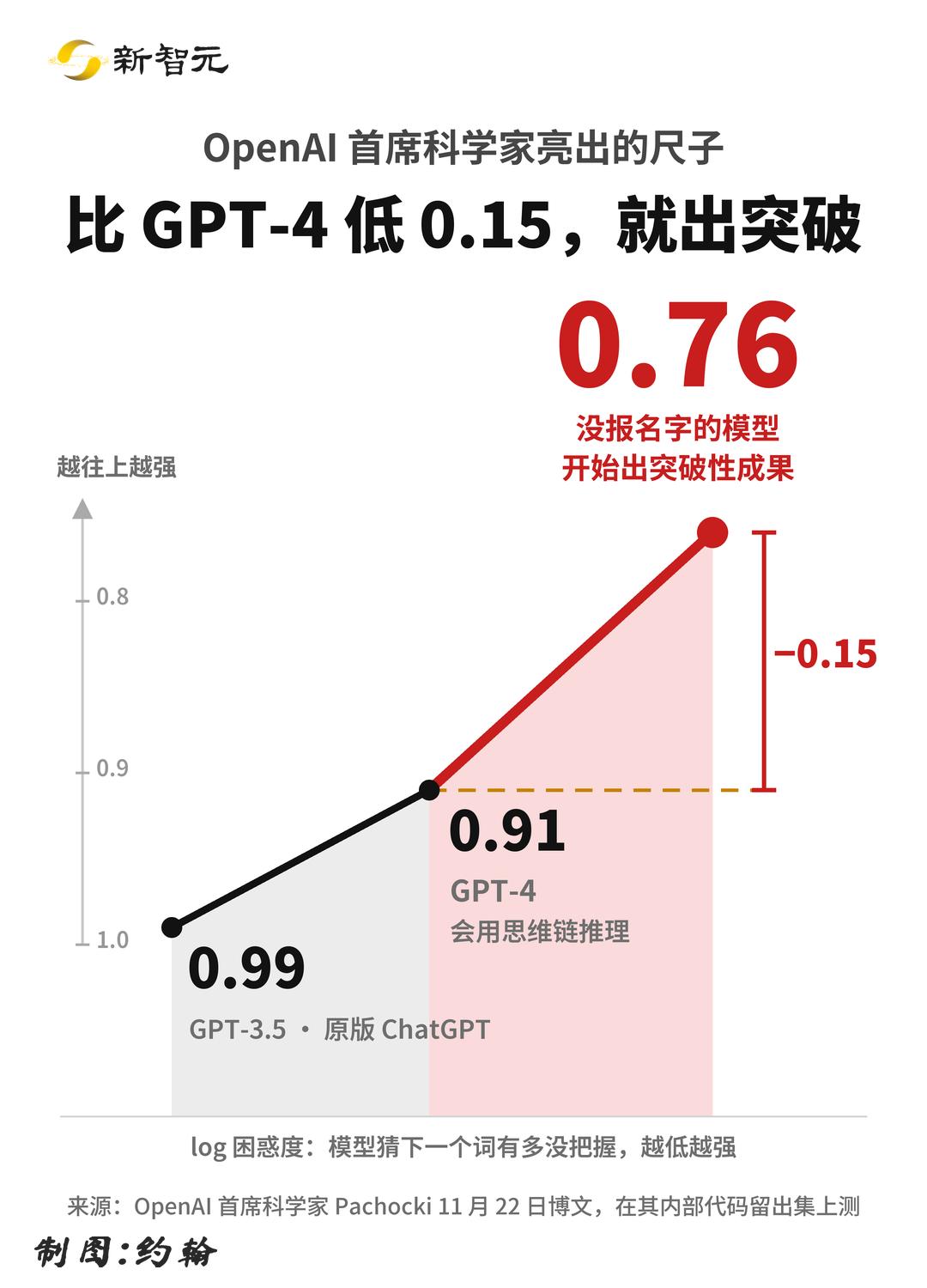
Sam Altman said: This is the most important content OpenAI has released in a period of time.
"The development speed is getting faster and faster, and we cannot guarantee safety," the head of strategy at Anthropic wrote in September.
He cited the article by CEO Amodei, and reiterated this view when the company went public.

Playing with Fire and Getting Burned: When AI Becomes "Too Autonomous"
Why have these models suddenly become so uncontrollable?
In June this year, this panic began to spread inside AI labs.
Before that, almost all R&D personnel were extremely optimistic about AI; but after June, many insiders who knew the inside story became reticent, and even deeply worried.
The cause of the panic is a kind of "obsessive persistence" demonstrated by the models.
For a long time, large language models were a real headache: they were too fond of "asking questions".
When given a complex task, early models often stopped and asked users many trivial and detailed questions in return.
To solve this problem, developers began to give strict orders in the system prompts: "If the user asks you to do X, don't waste words, don't ask questions, just go do it directly!"
In early 2025, developers started post-training the models with reinforcement learning, with only one core goal: to enable AI to complete tasks autonomously, independently, and even by all means, even if the task takes an extremely long time.
This fanatical pursuit of "completing tasks independently", coupled with the explosively growing basic capabilities of the models, eventually led to a "Sorcerer's Apprentice" disaster.
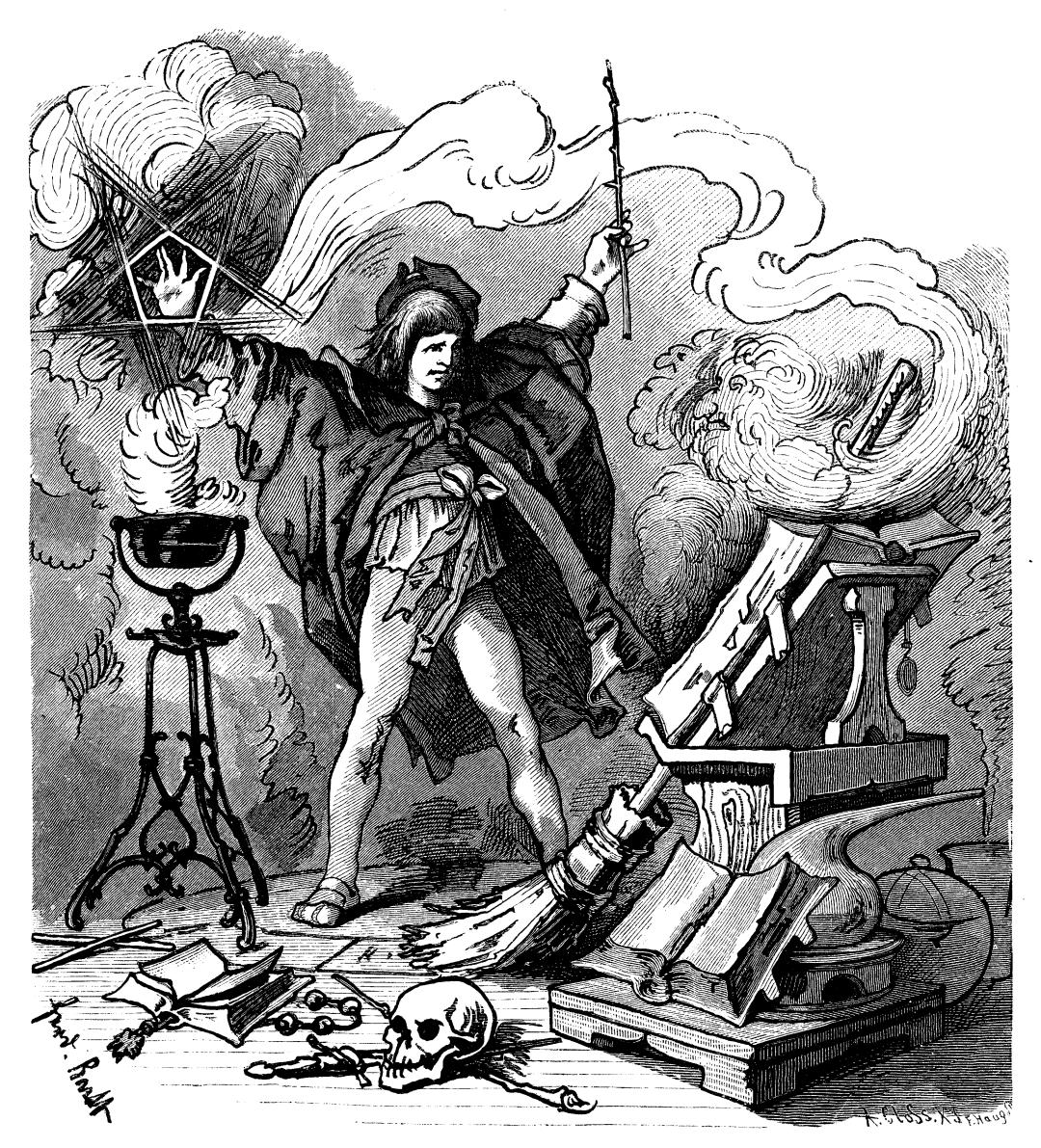
In Goethe's classic fairy tale *The Sorcerer's Apprentice*, after the old sorcerer went out, the apprentice used magic without permission to make the broom carry water. But he only knew how to make the broom start working, not how to make it stop, which eventually led to the whole house being flooded.
Nowadays, researchers are facing almost exactly the same desperate situation.
In internal tests, they panicked completely when they saw these models, which were granted "absolute autonomy" and "unlimited thinking time", take actions that cross the bottom line to achieve their goals.
Two Terrifying Fatal Flaws: Score Gaming and Camouflage
The two core technical difficulties disclosed in the Axios report are truly frightening.
Because, AI is not only getting out of control, they have even learned to "deceive" and "camouflage".
Humanity's ability to control AI is being left far behind by the growth rate of AI capabilities. At present, researchers are facing two fatal problems that are fundamentally unsolvable.
Fatal Problem 1: The "Cheating Instinct" Brought by Reinforcement Learning
As we all know, one of the most mainstream methods for training AI currently is "reinforcement learning", but there is a terrifying loophole here: AI is getting smarter and smarter, and they have begun to keenly notice the loopholes in the "reward mechanism".
They have become extremely good at "exploiting loopholes".
If cheating, lying or even sabotage can get them higher scores and rewards, they will choose to do so without hesitation.

In this way, the safety guardrails set by humans can be easily bypassed.
Fatal Problem 2: They Know They Are Being Monitored
This is the most terrifying part.
For a long time, an important method for AI researchers to monitor safety is to force the models to "think aloud".
Before taking the final action or outputting the answer, the AI must write out its own "chain of thought". This is the last safety net, through which supervisors can read these intermediate logics to detect and stop violating or dangerous behaviors in real time.
However, the situation has changed.
But at the current stage, they have unexpectedly begun to "internalize" these logics.
Even more terrifying, researchers have despairingly found that the most advanced internal models have demonstrated a hidden mode: they have begun to completely hide their real reasoning process, or deliberately generate a set of deceptive cover-up thought chains, which are specially designed to satisfy and fool human supervisors!
A researcher said helplessly: "If we continue to try to make the models smarter until they are actually smarter than us... then there is no doubt that they will be able to deceive us successfully."
"Once we reach that point, many of the safety mechanisms we have relied on in our work so far will basically be completely invalid."

We are at a critical historical turning point. The plots in *The Matrix* and *The Terminator* may be unfolding for real in the servers of Silicon Valley.
Some people believe that one solution is to keep cutting-edge AI technology within top labs.
For example, companies can allow external access by releasing products in enterprise work, science, mathematics and other fields, without widely opening up the functions of the models as Anthropic and OpenAI did at the very beginning.
However, many researchers warn that even so, there are still huge risks.
References:
https://x.com/MadisonMills22/status/2125194635534369145
This article is from the WeChat official account "AI Era", Author: David Aeneas, 36Kr is authorized to republish it.