Full-stack self-developed underwater welding technology addresses pain points in four major high-barrier scenarios, Zhenhai Intelligent has completed tens of millions of yuan in Pre-Series A financing | 36Kr Exclusive
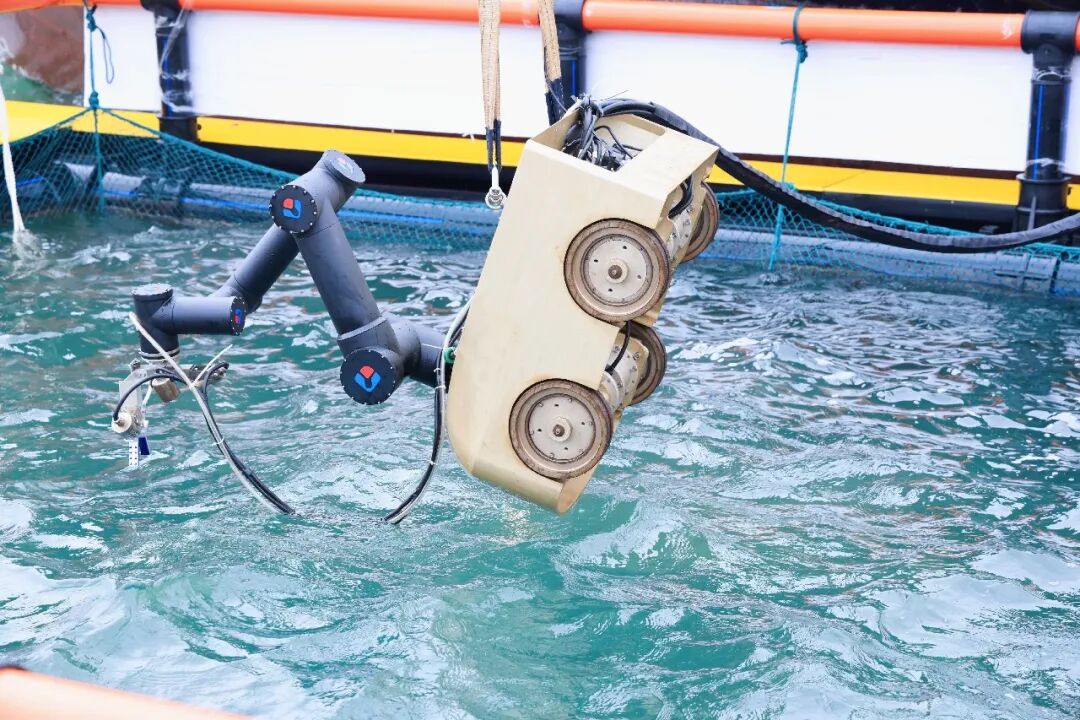
Underwater welding robot is about to be put into operation underwater
Text | YANG Yuexin
Editor | A Zhi
Cover Source | Provided by the enterprise
36Kr learned that Zhenhai Intelligence, a supplier of integrated solutions for underwater robotic welding and underwater remanufacturing, has completed a Pre-A round financing of tens of millions of yuan. This round is led by GLP Hidden Hill Capital, followed by Nantong Investment Management and old shareholder Puhe Capital, with Yirong Capital acting as the long-term exclusive financial advisor. The funds from this round will be mainly used for experimental equipment upgrading, team expansion and market expansion in high-barrier scenarios.
Founded in 2023, Zhenhai Intelligence relies on the nearly 50 years of profound accumulation of industry-university-research application in the field of high-end underwater welding of South China University of Technology, and has full-stack self-development capabilities covering the underlying ultra-high frequency underwater welding power supply, local dry process, underwater robotic arm and complete equipment. At present, the company's series of underwater welding robot products have been gradually promoted and applied in four high-barrier scenarios: nuclear power, special ships, hydropower and offshore oil and marine engineering.
WANG Zhenmin, founder and chairman, is a doctoral supervisor of South China University of Technology, a consulting research expert of the Chinese Academy of Engineering, and also serves as the director of Guangdong Intelligent Manufacturing Equipment and Robot Engineering Center and deputy director of Guangdong Key Laboratory of Ship Advanced Welding Technology. He has long been engaged in full-chain innovative research on key processes, core components and complete sets of equipment for high-performance robot welding in extreme environments such as the ocean, led a number of important scientific research projects including key projects of the National Natural Science Foundation of China and national key R&D programs, and is also the drafter of multiple national standards for underwater welding. ZHAO Tianguang, director and general manager of the company, has long been engaged in intelligent robot research and industrialization work at GREE Electric Appliances and Jihua Laboratory, and has in-depth project docking experience with large industrial customers such as CSSC, State Grid and China Southern Power Grid, and is responsible for the overall commercial operation and engineering implementation of Zhenhai Intelligence.
1. Solve underwater operation problems through innovation in power supply and operation space
"South China University of Technology is a very low-key, pragmatic and innovative university with a strong atmosphere of innovation and entrepreneurship all the time", WANG Zhenmin mentioned that as early as the 1980s, teachers in the school had the tradition of "Saturday engineers" who used their weekends to provide technical services for enterprises in the Pearl River Delta. He himself was deeply influenced by the industry-university-research integration atmosphere of "transforming technology into productivity", and has long been engaged in joint technology R&D work with enterprises such as CSSC, CGN, CRRC, CIMC, China Energy Engineering and CNOOC.
"In recent years, we have increasingly felt that the speed of technology iteration in universities can no longer keep up with the rhythm of industrial explosion," WANG Zhenmin said.
Data from the Ministry of Natural Resources shows that the total national marine GDP exceeded 11 trillion yuan in 2025, among which the marine engineering equipment manufacturing industry and offshore wind power have the fastest growth rate. However, there is a huge gap between the large number of inspection, repair and maintenance (IMR) demands generated by the peak of marine construction and the actual operating capacity.
WANG Zhenmin admitted that in the past, the scientific research mode was more inclined to principle exploration and technical verification, which was difficult to support industrial-grade, highly reliable engineering delivery. This prompted him to found Zhenhai Intelligence, committed to turning the scientific research achievements in the laboratory into real sharp tools that can operate in deep water.
According to his introduction, the core difficulty of underwater operation is that thermoelectric work such as welding and cutting cannot "coexist with water and fire" in the extreme environment of strong cooling, high pressure, high humidity and undercurrent disturbance, which makes conventional land processes difficult to play a role. However, domestic underwater welding has long relied on divers to carry out "blind welding" or simple wet operations in shallow waters within 60 meters, and the arc striking success rate is often less than 50%. In high-risk scenarios such as nuclear power and subsea oil and gas pipelines, high-end underwater automatic welding equipment faces strict international export restrictions.
In response to the above industry pain points, Zhenhai Intelligence first reconstructed the "heat source" from the underlying hardware and physical logic, and took the lead in developing ultra-high frequency underwater welding power supply technology using silicon carbide (SiC) power devices, raising the inverter frequency of the power supply to hundreds of kHz, and the current rise rate can be as high as 50A/us, which is 3-10 times higher than the products of leading international enterprises.
"Its logic is that when the arc is about to go out, the power supply can instantly increase the energy to ensure no arc break, and when the energy is too high, it can immediately reduce the energy so as not to burn through the workpiece, and finally achieve the welding process effect of penetration without piercing," WANG Zhenmin said. This ultra-high frequency and high-precision dynamic energy regulation is the key to realize stable, continuous and controllable combustion of underwater arc.
In addition, for the long-standing problem that the water covering the surface of underwater welds affects the forming quality, foreign enterprises often solve it by creating a huge anhydrous space for dry welding, but the price is extremely high. Zhenhai Intelligence innovatively proposed the "local dry" route, which injects high-pressure drainage gas and protective gas into a miniature drainage cover to build a miniature local dry space underwater.
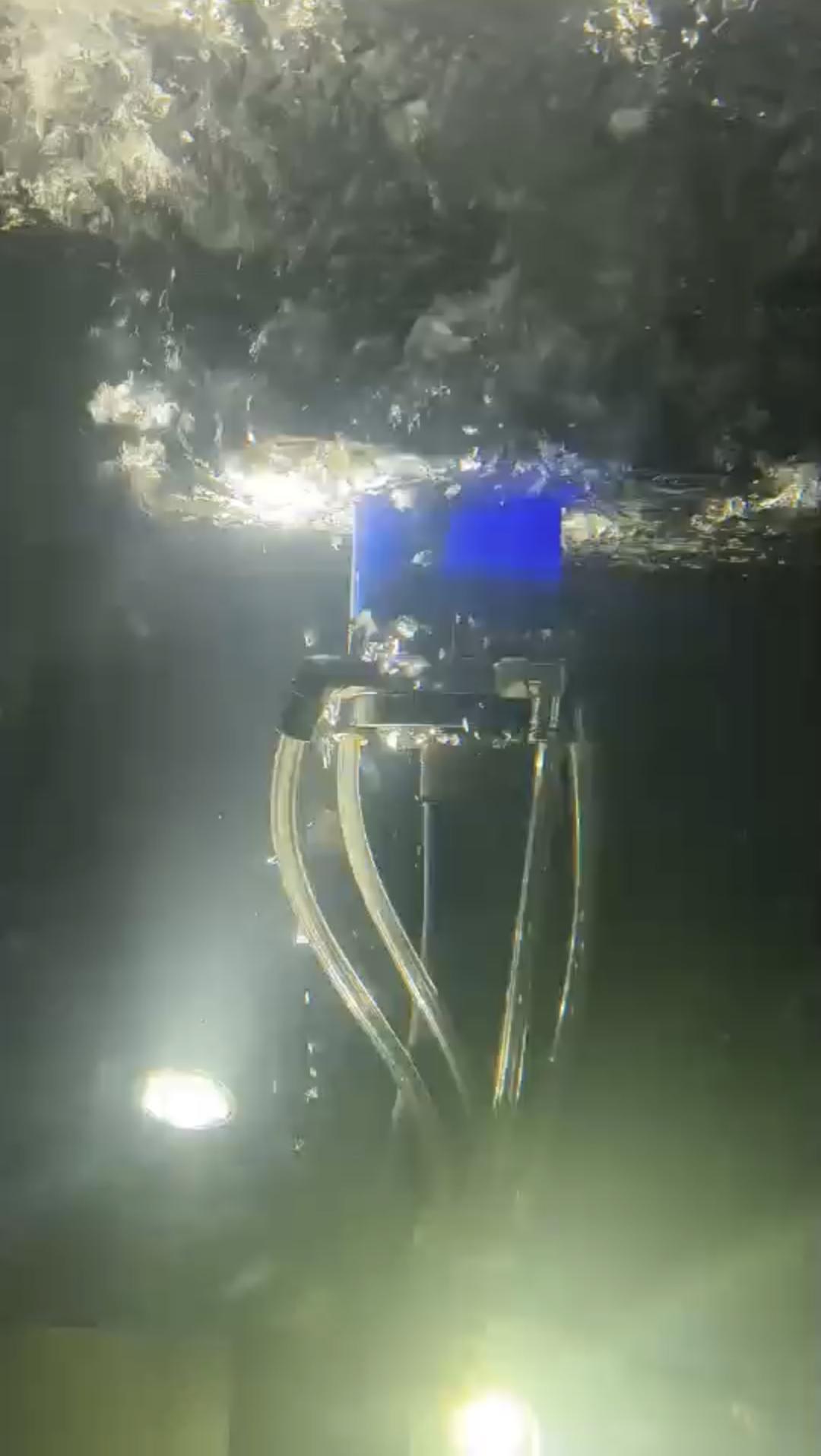
On-site overhead welding operation of underwater robot using local dry process
This process not only realizes water-electricity separation, improves the operation safety in high-pressure environment, isolates the influence of water vapor on weld forming, but also has a more compact volume, which can enter narrow spaces such as ship side and subsea oil and gas pipelines.
"Underwater operation is a typical system engineering that follows the bucket theory, and any short board in any link will fail to complete high-quality delivery," WANG Zhenmin said. In order to ensure that robots and manipulators can achieve sub-millimeter high-precision operation underwater with limited space and blocked vision, Zhenhai Intelligence also independently researches and develops core underwater welding components such as underwater 3D visual perception, electric and hydraulic multi-axis manipulators, and has applied for a number of technical patents.
According to the test of a third-party organization, the amphibious intelligent welding robot of Zhenhai Intelligence can turn around in situ with a turning radius of 0, and the welding speed can reach 1.1m/min in a simulated 240-meter deep water environment, still obtaining excellent weld forming.
2. Focus on high-barrier underwater scenarios, position as an underwater remanufacturing engineering service provider
Leading technical indicators is only the first step, and the real test is whether the market is willing to pay for it. "Underwater welding used to be regarded by customers as a temporary emergency measure. We hope to make customers understand that the existing new technology can support high-standard permanent repair, not just simple emergency patching," ZHAO Tianguang said.
At present, after realizing mass production of standardized products and construction of underwater welding verification platform, Zhenhai Intelligence mainly focuses its business on four core fields: nuclear power, hydropower, special ships and offshore oil and marine engineering. Most of the customers in these fields are large state-owned enterprises. ZHAO Tianguang said, "Some customers have had scientific research project cooperation with our team before, and have a certain understanding of technical capabilities. Now the products that enterprises need are not available in the market, so they will naturally pay attention to our achievement transformation."
Taking nuclear power or large marine engineering equipment as an example, the loss of each shutdown maintenance is huge. The local dry equipment of Zhenhai Intelligence can realize in-situ repair in a water-bearing environment, greatly shortening the maintenance time; robot automatic operation can also avoid fatal risks such as diver's high-pressure sickness or electric shock; in addition, the welding quality and efficiency are multiplied compared with the traditional wet process, which enables Zhenhai Intelligence's products to meet the three needs of customers for continuous operation, personnel safety and quality assurance.
At present, Zhenhai Intelligence has two standardized product lines of ultra-high frequency underwater welding power supply and underwater welding robot. Considering the physical form differences of actual working scenarios, it mainly delivers integrated solutions of "standardized welding power supply and core equipment of underwater welding robot + customized complete machine structure". The company's revenue in 2026 is expected to exceed 10 million yuan.
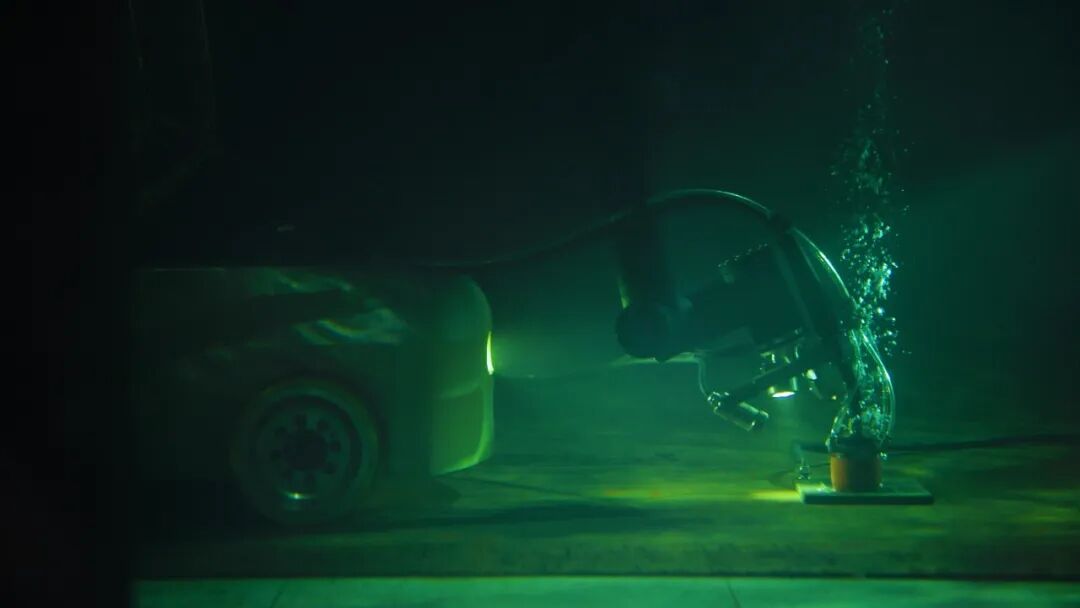
Underwater welding robot at work
Underwater remanufacturing is not only about welding, but also includes inspection and cleaning, grinding, cutting, quality inspection and final anti-corrosion coating spraying. "Welding has high precision requirements and the most complex process, which is the technical commanding height in the whole chain. After we overcome the most difficult part, we will extend to both ends of the underwater remanufacturing chain," ZHAO Tianguang said. On the basis of adhering to the self-development of core products, Zhenhai Intelligence also considers purchasing and integrating underwater cleaning, basic inspection and other equipment from outside to provide customers with a full-chain solution that can really solve problems.
Extending to engineering services means that the business model becomes more "heavy", and the scaling speed is likely to be slower than that of equipment sales or SaaS companies. In this regard, ZHAO Tianguang said, "Underwater operation is an industry that has extremely high requirements for engineering experience. Selling equipment to customers cannot solve all problems. To break through a larger output value in the future, we must deeply participate in engineering services."
In his view, the large amount of basic process data of underwater operation accumulated by the team for nearly 50 years is the core competitiveness of Zhenhai Intelligence to provide integrated solutions, and also the company's largest moat in the face of future competition. "Our vision is not just to sell hardware equipment, but to grow into a world-class underwater robot welding equipment manufacturer and underwater remanufacturing (IMR) engineering service provider."
This positioning is also the main reason why the institutional investors of this round of financing favor Zhenhai Intelligence. "In addition to being optimistic about Professor Wang's team ability and the development potential of the marine industry, we pay more attention to the overall positioning of the enterprise in the upstream and downstream of the entire industrial chain," GU Hao from GLP Hidden Hill Capital said that in the next step, he will focus on providing Zhenhai Intelligence with more resource empowerment in the industrial chain such as large ships, logistics and transportation.
At present, Zhenhai Intelligence is working to make up for the shortcomings of engineering manufacturing, has built a welding power supply production line by itself, and plans to set up professional production lines for mobile robot platforms and underwater manipulators.
Under the trend of Chinese infrastructure and energy enterprises going global, Zhenhai Intelligence, as a technical supporting party, also undertakes the operation and maintenance tasks of customers' overseas construction, and plans to build its own service centers in areas with dense marine engineering and subsea pipelines such as Northern Europe, to provide localized engineering services for international end customers.
ZHAO Tianguang said that at present, underwater robots have certain autonomous operation capabilities in clear waters, but still need human-machine collaboration in complex waters. "Intelligentization and fully autonomous operation are not only the biggest challenges we are facing at this stage, but also the inevitable development trend of underwater operation robots."
Evaluation from Investment Institutions:
DONG Zhonglang, Partner of GLP Hidden Hill Capital, said: Our investment logic for hard technology projects is: invest early, invest in small-sized enterprises, and invest heavily. GLP Hidden Hill Capital is committed to discovering and helping Chinese hard technology SMEs grow and go global. As a leading enterprise in underwater welding, Zhenhai Intelligence, Hidden Hill Capital firmly believes in the company's technology, core products and team capabilities. At the same time, as an industrial investor, we will also actively inject strong impetus into the company's expansion of domestic and foreign businesses.
WANG Jianfeng, General Manager of Nantong Investment Management, said: We value the team's technical accumulation in the "neck sticking" link of underwater welding, and are also optimistic about its engineering implementation ability in high-barrier scenarios such as nuclear power and marine engineering.