Clients who are blindly superstitious about AI are driving lawyers crazy.
Recently, the news of a lawyer's sudden death has drawn widespread public attention, pushing the impact of AI on the legal industry to the forefront of public discourse. Lawyer Huang Qin passed away, but the discussion on the tug-of-war between AI and human beings is far from over.
Some parties would rather trust legal opinions generated by AI, which may contain hallucinations, fabricated content or already repealed laws and regulations, and question lawyers' professional judgments based on these flawed outputs. Lawyers have to make extra explanations, take on remedial responsibilities, and also suffer the internal friction of not being trusted. Technology is supposed to reduce anxiety, but due to certain stubborn misuses, all the pressure is passed to the end of the decision-making chain and the people responsible for the cases.
"You come here every day, I'm exhausted dealing with your case, and you don't trust me at all, which breaks my heart."
After uttering these words, 48-year-old lawyer Huang Qin collapsed and never woke up again.
On November 13, Hubei Maple Leaf Law Firm released an obituary: 48-year-old lawyer Huang Qin from the firm passed away after full rescue efforts failed, as she collapsed while communicating with Duan, the recipient of legal aid, due to continuous high-pressure overwork and extreme exhaustion.
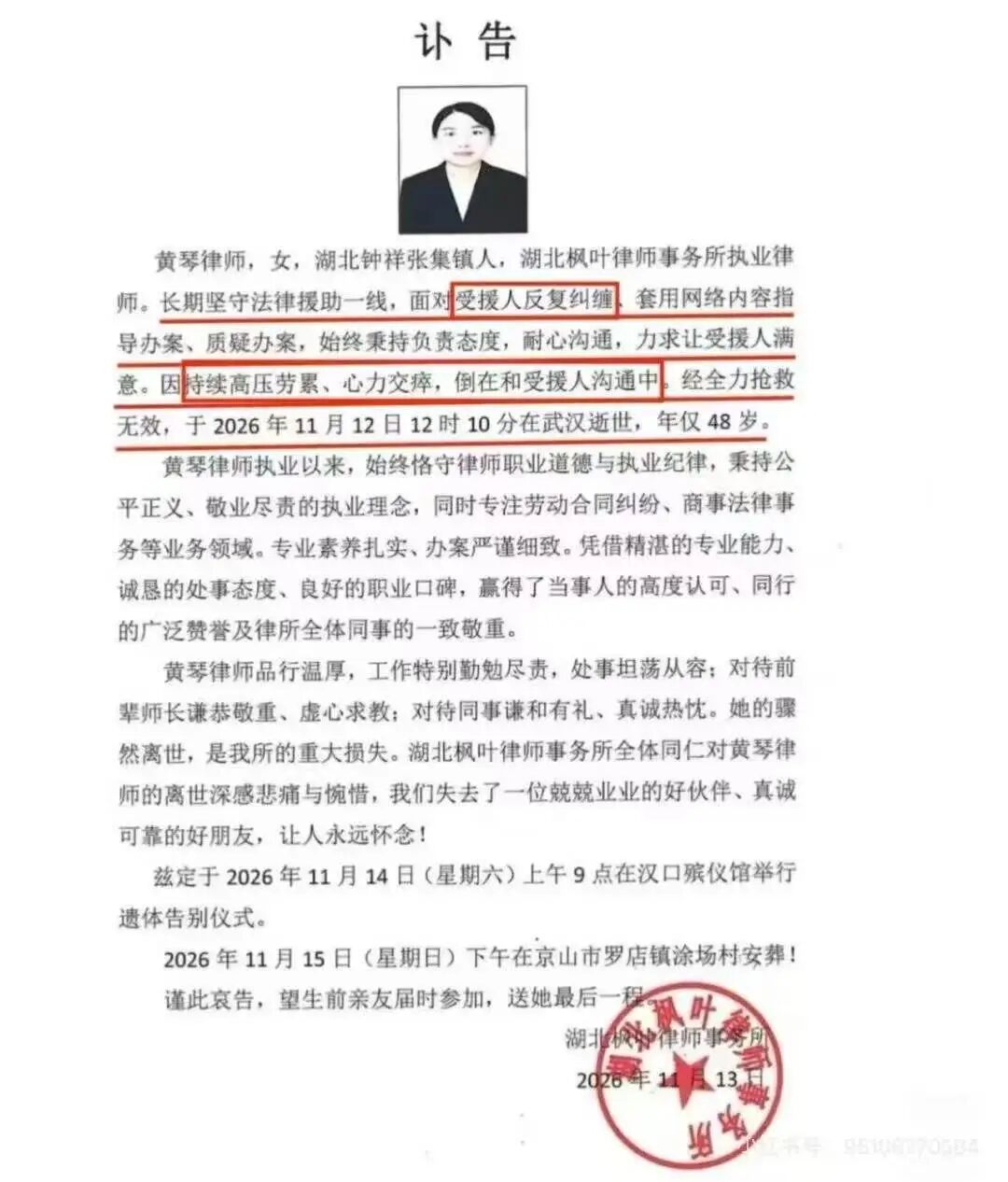
According to other lawyers in the firm and the obituary, during the case handling process, Duan insisted on asking AI for legal advice and demanded that Huang Qin handle the case strictly in accordance with the opinions provided by AI, repeatedly pestering her over the course of three to four months that the case was delayed.
In the eyes of her colleagues, Huang Qin was conscientious and responsible at work, "never complaining no matter how troublesome the matter was". From Huang Qin's chat records, they learned that Duan would still send text messages and call her at 9 p.m., causing great disturbance to her work and life.
"AI says this judge's ruling is wrong"
Since around 2025, lawyer Lin Liming from Beijing Yingke (Dongguan) Law Firm has clearly noticed that more and more parties come to consult with AI-generated legal suggestions. Once when handling a dispute for a corporate client, the other party sent a complaint letter with obvious AI traces, which even cited non-existent laws.
Lin Liming once handled a complicated divorce case. The case had gone to court and was under mediation for a month, and the two parties had basically reached a mediation agreement; the judge stated that one of the properties in the couple's joint assets would not be processed, as it was mortgaged as security for a third party's loan.
At this point, the party suddenly refused to confirm the mediation, claiming to have doubts. After nearly two weeks of repeated communication, Lin Liming finally learned that the party had consulted AI, which stated that the judge's decision not to handle the property was wrong, so the party suspected that Lin Liming's handling of the case was also problematic.

Searching for "suing with AI" on social media will show both content about avoiding pitfalls and relevant tutorials. (Figure/Screenshot from Xiaohongshu)
Lin Liming realized that the party had been misled by AI. After learning about the specific situation and doubts, he accurately input the objective facts of the case into AI, and the answer given by AI was completely consistent with his legal judgment. He sent the screenshot of this accurate query and the AI response that matched his judgment to the party, who then finally put aside doubts and confirmed the mediation, but nearly a month had been wasted, consuming a large amount of energy from the lawyer, the mediator and the judge.
Lin Liming stated that when the case is complicated, if the party does not describe the full picture of the case completely when asking questions to AI, they will inevitably get wrong answers; even if the description is complete, complex cases are more prone to AI hallucinations, and it is not uncommon for AI to fabricate false laws and cases. This may lead the parties to misunderstand and question lawyers, which not only affects lawyers' work and the protection of the parties' rights and interests, but also affects the judicial resource allocation of court mediation and trial systems.
Based on his experience, excessive reliance on AI by the parties may lead to a trust crisis between the parties and lawyers. Mediation that originally only takes 1 to 2 weeks to complete may be extended to 1 to 2 months. In terms of trial strategies, the parties may also interfere with lawyers' legal opinions based on AI suggestions, deviating from practical judicial practice experience.

More and more people will consult AI for legal advice. (Figure/@Lawyer Xiao Cao)
Before the emergence of AI, he also encountered problematic cases, such as cases with incomplete evidence, and cases where the court failed to ascertain the facts. Evidence correction and court oversight are external contradictions that can be resolved through objective evidence and logical reasoning; parties misled by AI create internal contradictions that touch the very foundation of the entire agency relationship.
Lin Liming believes that parties who over-trust AI and use it to question lawyers' competence will significantly consume lawyers' physical and mental energy. He described that lawyers and parties should be comrades-in-arms fighting in the same trench. Once the party is misled, the lawyer has to face the cold doubts from their supposed comrade while "fighting the external battle", which may make it impossible to move forward.
AI that blindly caters to parties makes lawyers more exhausted
"In my entire career, I have never said such harsh words to a party."
Even after a period of time, when recalling this mentally draining case, lawyer Xie He from Guangzhou Luoya Law Firm still feels extremely tired.
The party in this case wanted the public security organ to file a case against her husband, which required a legal document. After signing the agency contract, the party repeatedly modified the document with AI and demanded that Xie He follow the modifications; Xie He failed to explain the problem, and finally modified the document according to the other party's request.
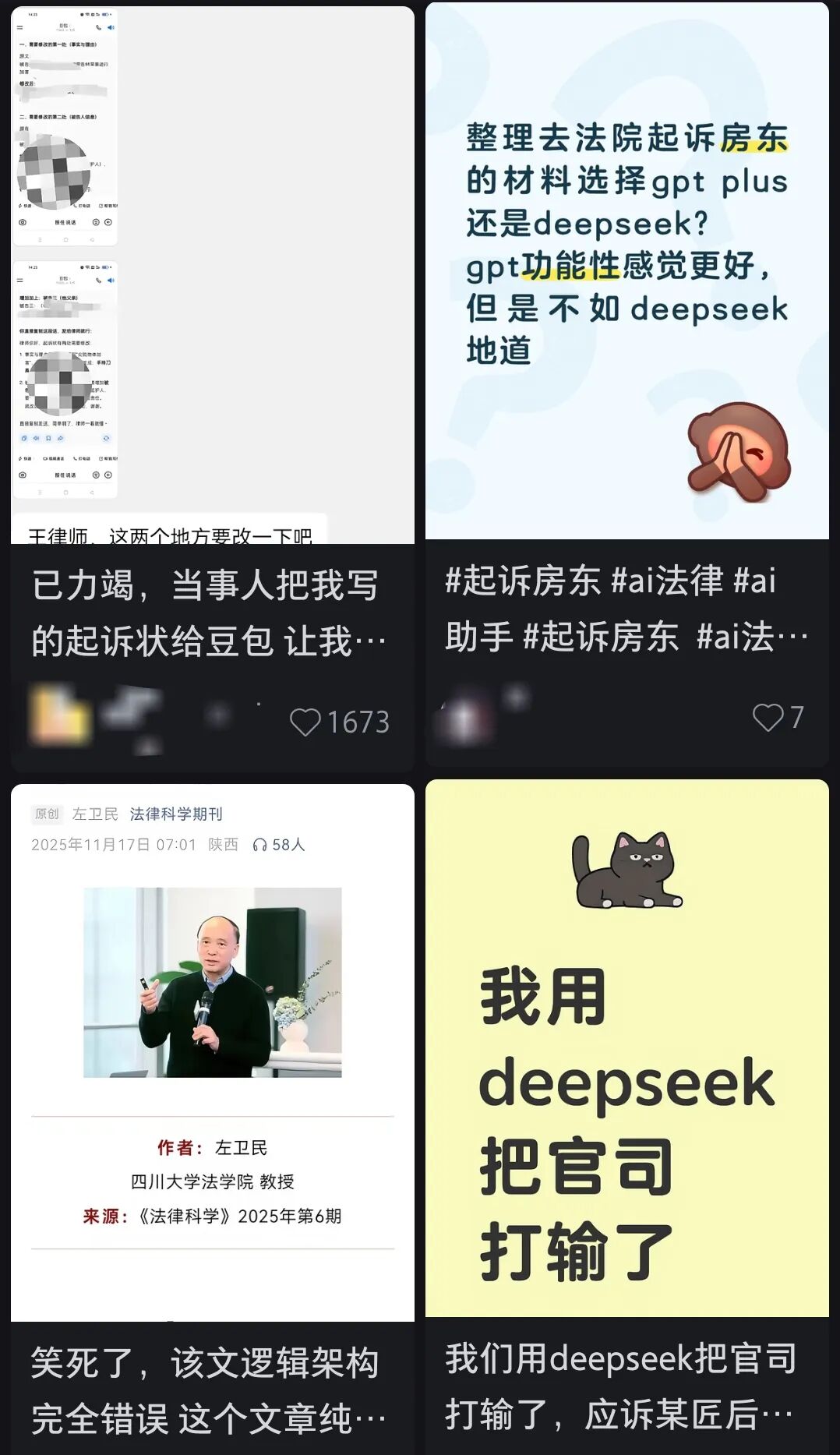
More and more AI tools are being introduced into real litigation. But some lawyers believe that AI tends to cater to users when answering questions. (Figure/Screenshot from Xiaohongshu)
Xie He read the conversation between the party and AI, and found that many expressions in it were unprofessional, emotional, and irrelevant to the case, which might not only affect the lawyer's judgment, but also make the document less concise and blur the focus: "Others will immediately think it is unprofessional, and even if the content is really reasonable, they may not want to read it carefully."
AI suggestions may also bring practice risks to lawyers. Xie He said that if the party insists on following AI's statements but the lawyer does not comply, in case of losing the lawsuit, the party will most likely question, "I asked you to add that part but you didn't, what if we could have won if you did?"
(Figure/Nothing But the Truth)
These situations are still within her tolerance range. Until the party directly sent the legal document written by Xie He to AI for rewriting, Xie He could not hold back and sent a long paragraph to the other party: This AI-generated material was adapted from her ideas and output without her consent. If there is any problem with the final judgment, it is not AI but the lawyer who will bear the liability for fault compensation and disciplinary sanctions for professional conduct.
Xie He recently received a consultation for an administrative lawsuit where a citizen sues the government. This client initially relied entirely on AI, and even did not hire a lawyer during the first instance, but asked AI in advance how to prepare for the court hearing. However, AI only lists the elements of legal provisions, and does not know which specific trial link to emphasize the focus of disputes in practice. The trial process it described is greatly different from the actual situation, leading the client to miss the opportunity of the first instance in vain.
(Figure/A Guilty Storm)
Xie He feels that she is a bit like the factory female workers who first saw the Jenny Spinning Machine, witnessing AI gradually changing people's perception of "suing in court".
She told New Weekly that this client who tried to use AI to handle the first instance case found her through the lawyer recommendation function in the AI software. AI does help lawyers save time in document processing and case retrieval, but sometimes it makes lawyers spend extra effort to explain, forcing them to bear higher communication costs and more emotional labor.
Therefore, it is still hard for her to draw a conclusion on whether the development of technology has increased the burden on lawyers or also brought opportunities.
The more responsible you are, the more mentally exhausted you get
Xie He said that most of the people engaged in legal aid work are young lawyers with passion and ideals. They choose to join the legal aid lawyer pool in the early stage of their practice. Although the remuneration is not high, they can get relatively stable case sources and accumulate experience and popularity.
When there is a case, the judicial bureau will randomly assign a lawyer to take charge of it, which is exactly the situation Huang Qin encountered. According to Article 46 of the Legal Aid Law of the People's Republic of China: "After accepting the assignment, legal aid personnel shall not refuse, delay or terminate the provision of legal aid services without justifiable reasons."
During the interview, both Lin Liming and Xie He mentioned that the situation where parties use AI to guide lawyers mostly occurs in free legal aid cases and cases with small subject amounts. Xie He analyzed that this may be because legal aid lawyers are randomly assigned rather than selected by the parties themselves, so the parties may naturally not trust the random, free lawyers as much, assuming that the lawyers may not stay professional and responsible in such cases.
If before the emergence of AI, the parties' distrust was not easy to show, then after the emergence of AI, this distrust has found a way to be expressed and amplified.
AI can create information illusions and dependency in people, especially for those who lack professional knowledge and judgment. Many seemingly reliable but actually flawed answers cannot be identified by parties who have not received systematic legal training and practical experience, but they use these answers to doubt the attitude and professionalism of the cooperating lawyers, making many originally clear case details hard to explain.
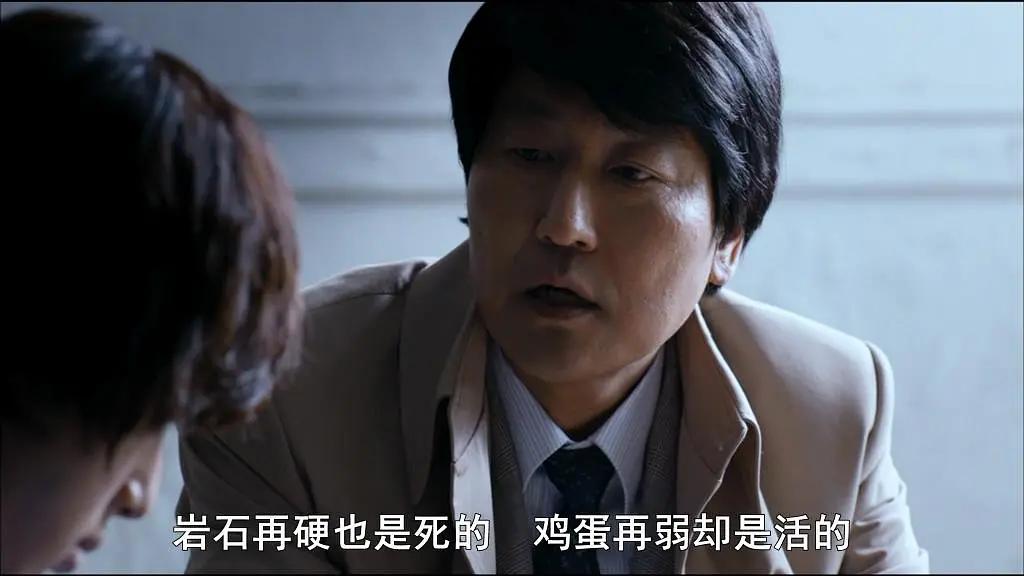
(Figure/The Attorney)
Xie He recalled her lawyer friends who are engaged in legal aid, and most of them are conscientious and responsible, which does not conform to the prejudice that "free service means irresponsible". She believes that one of the normal states of a lawyer's profession is to deal with all kinds of parties. When encountering parties with excessive self-awareness and lack of trust in lawyers, lawyers either choose to compromise first and then make adjustments, or show a more strong attitude during case handling.
However, when the party relied on the legal advice given by AI, forcing Huang Qin to take on extra emotional labor, Huang Qin did not firmly refuse, but wanted to respect the party's opinions while instinctively trying to protect the party's legitimate rights and interests. All the pressure finally fell on her alone, but none of this had to happen.
"Responsible lawyers will suffer this kind of loss. If you meet an irresponsible one, they would have ignored all these problems long ago." When Lin Liming thinks of this deceased colleague, he still feels very sorry.
(At the request of the interviewee, Xie He is a pseudonym)
This article is from the WeChat Official Account "New Weekly" (ID: new-weekly), written by Zhang Wenxi, edited by Zhan Tengyu, and published with authorization from 36Kr.