"FSD is the real-life version of GTA" —— Elon Musk
A few years ago, there was a type of GTA-style car filming video that went extremely viral.
In those videos, car owners would fix a panoramic camera to a long pole, which was then connected to the rear of the car via a bracket. The footage captured in this way would show a third-person perspective, exactly the same as what you see in racing games or GTA.
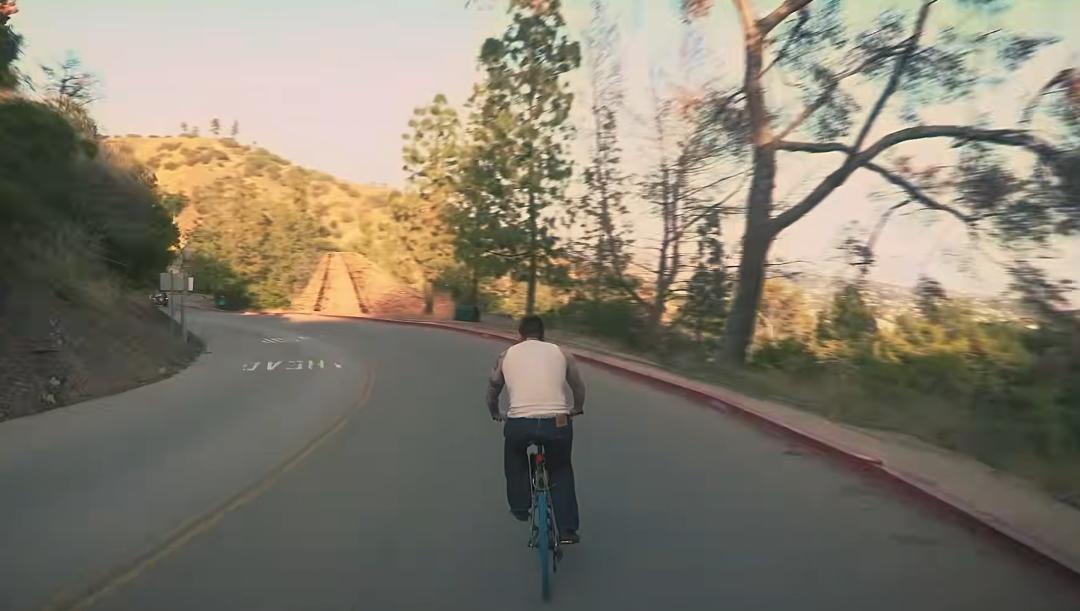
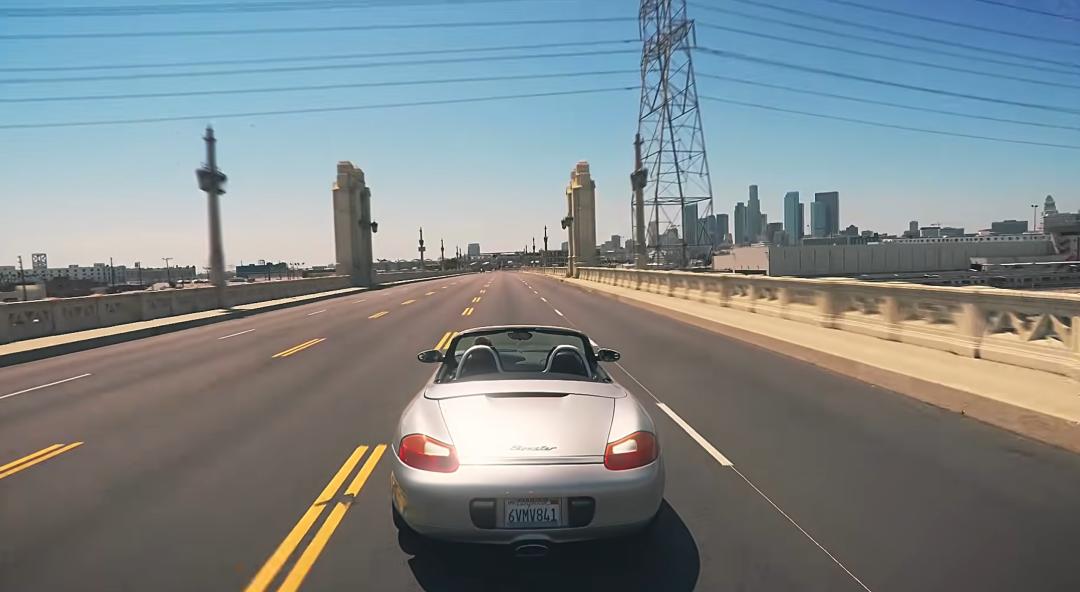
Today, several years later, you no longer need those cameras and brackets to achieve a similar effect. All you need is a relatively new Tesla, and update the FSD intelligent driving system to the latest V15 version.
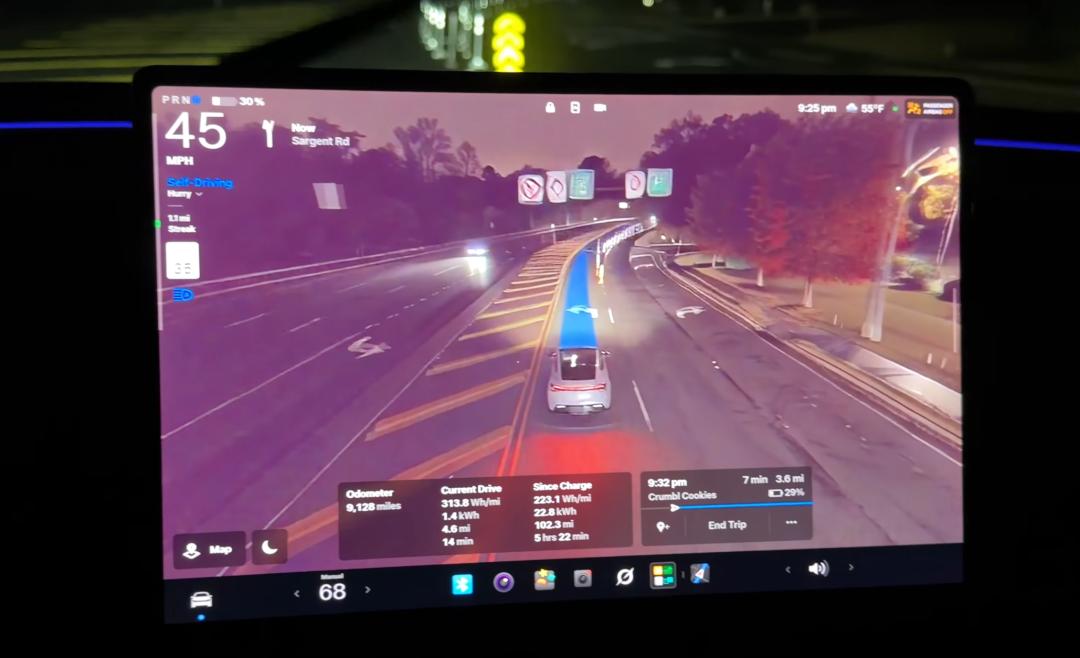
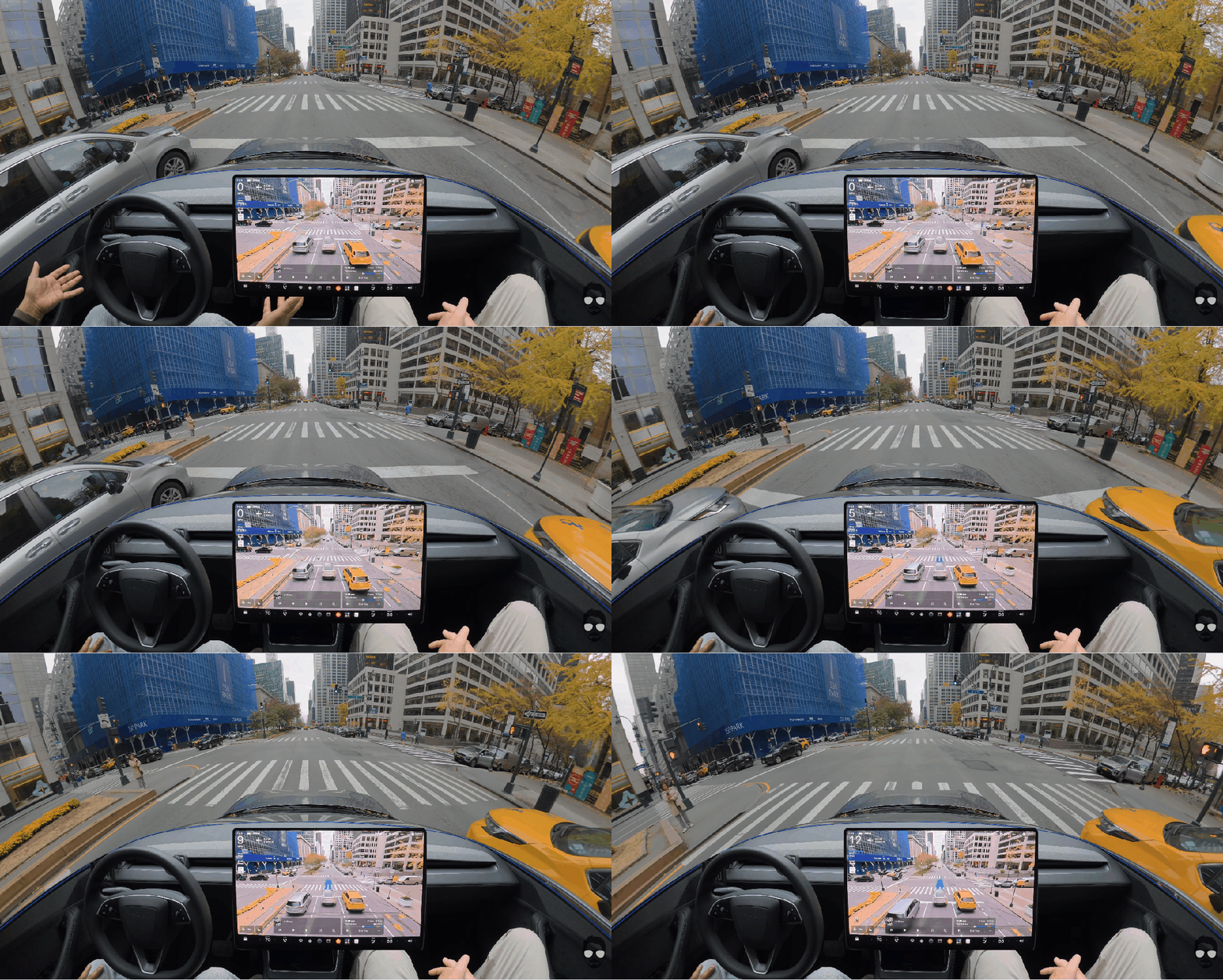
After that, you can get footage like this on your car infotainment screen.
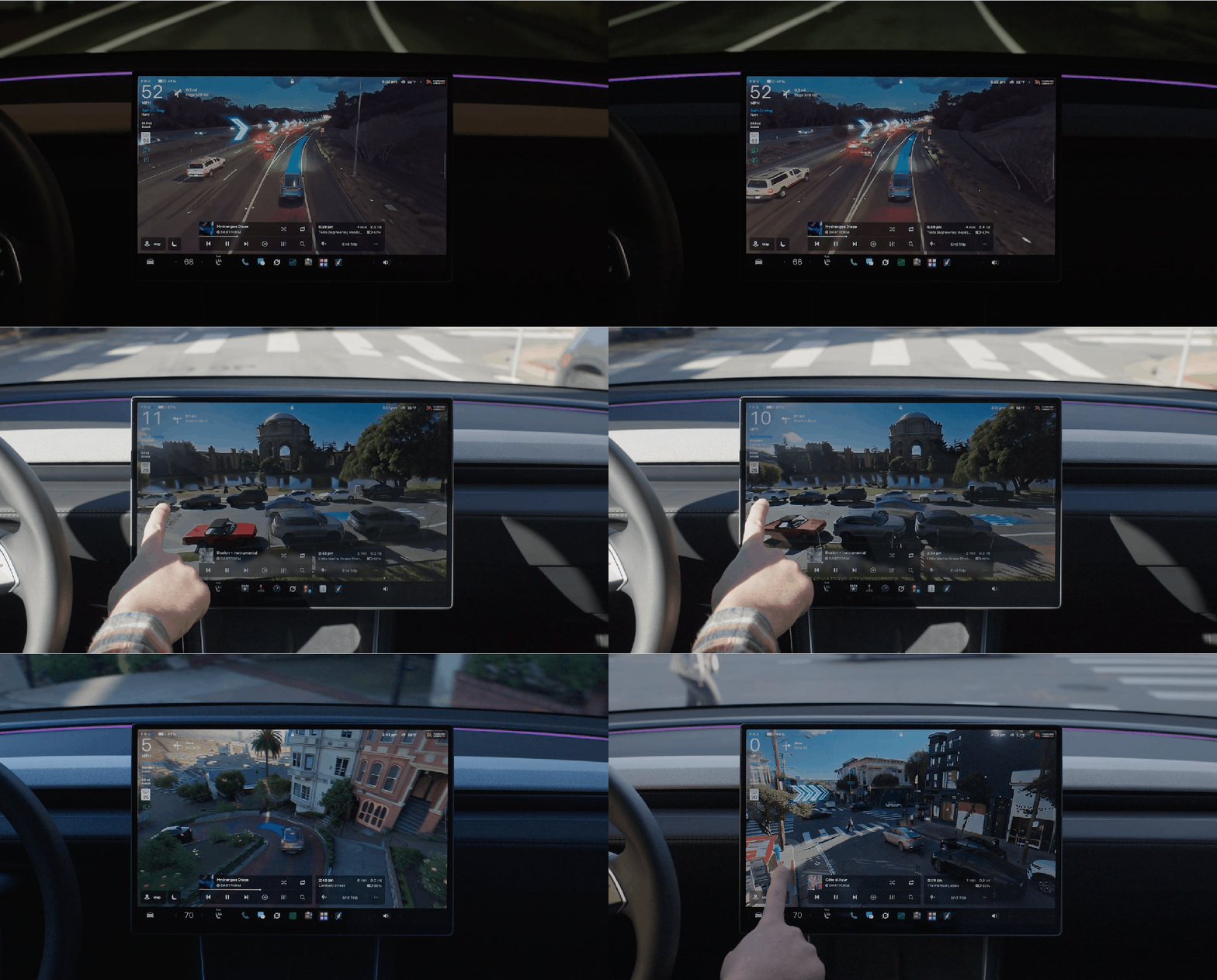
Yes, you read that right. In the V15 version of FSD, as long as the user activates intelligent driving, this feature called Reality View will automatically turn on, displaying the real-world environment around the vehicle in real time.
Compared with the previous intelligent driving SR interface that was entirely made up of white and gray mockups, this Reality View not only restores the color, lighting and material of the real environment relatively accurately, but also reflects various changes in the surrounding environment in real time.
You can see the movements of pedestrians, vehicles, and even pets.
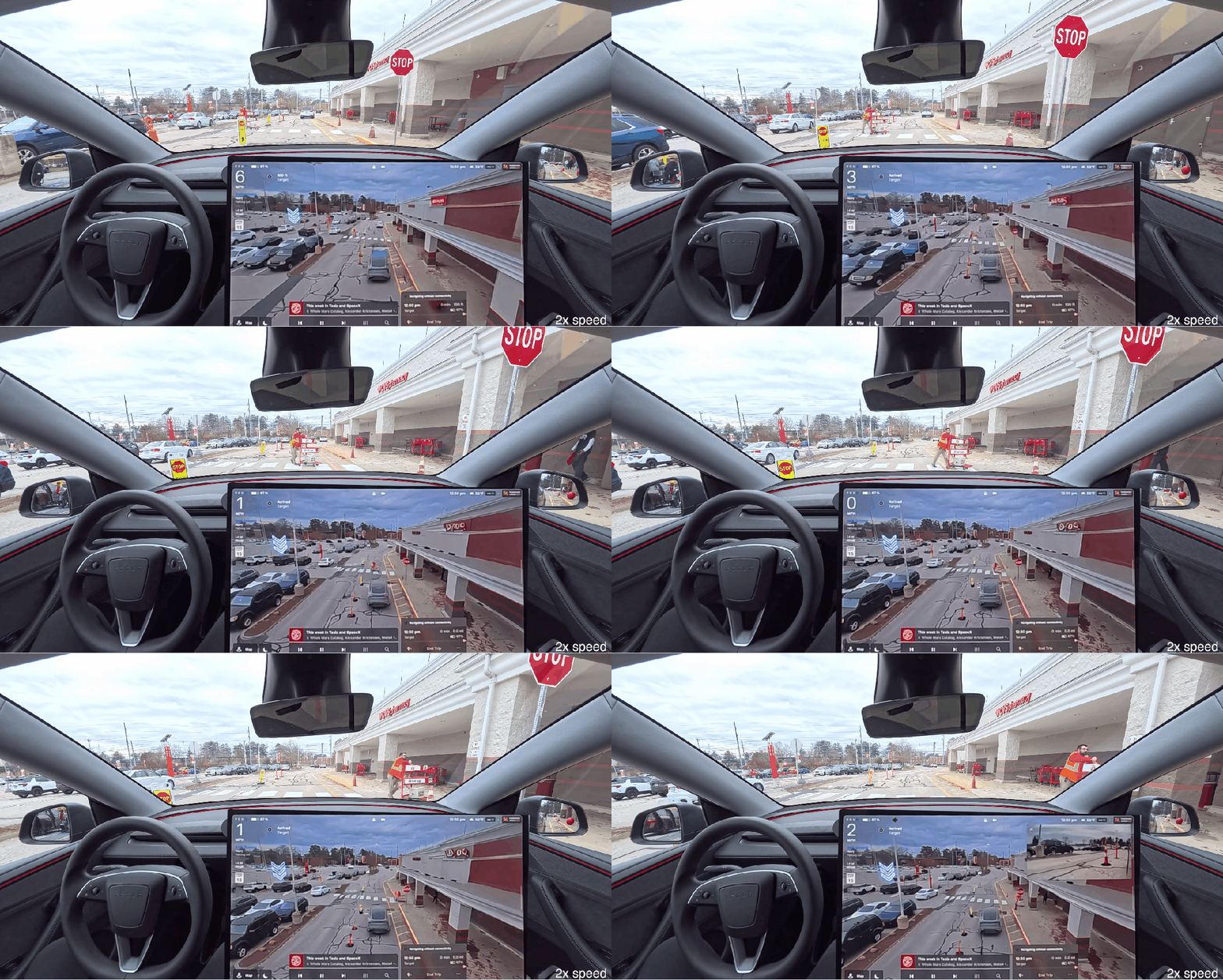
In addition to real-time monitoring, this Reality View also actively makes some optimizations to the surrounding environment.
For example, when there is little light at night, its screen will turn a very eerie purple. Although it looks a bit spooky, the details in the dark areas of the environment are indeed clearly visible.
Some car owners also reported that they turned on FSD in heavy fog, but the footage in Reality View removed the thick fog, making the view extremely clear and transparent.
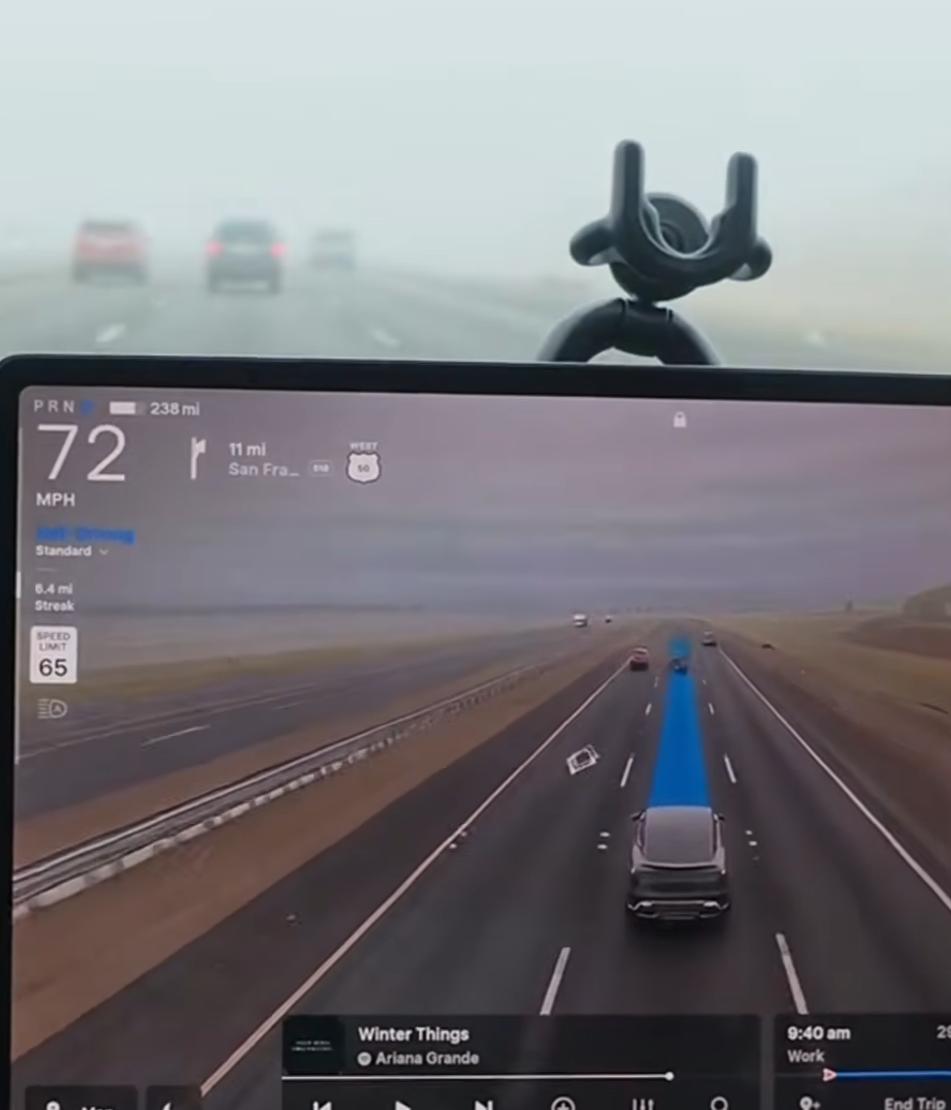
Besides, the perspective of Reality View is not fixed, and it can still be freely rotated, zoomed in and out just like the traditional SR interface.
At first glance, even Elon Musk himself said that it feels a bit like the third-person omniscient perspective in GTA.
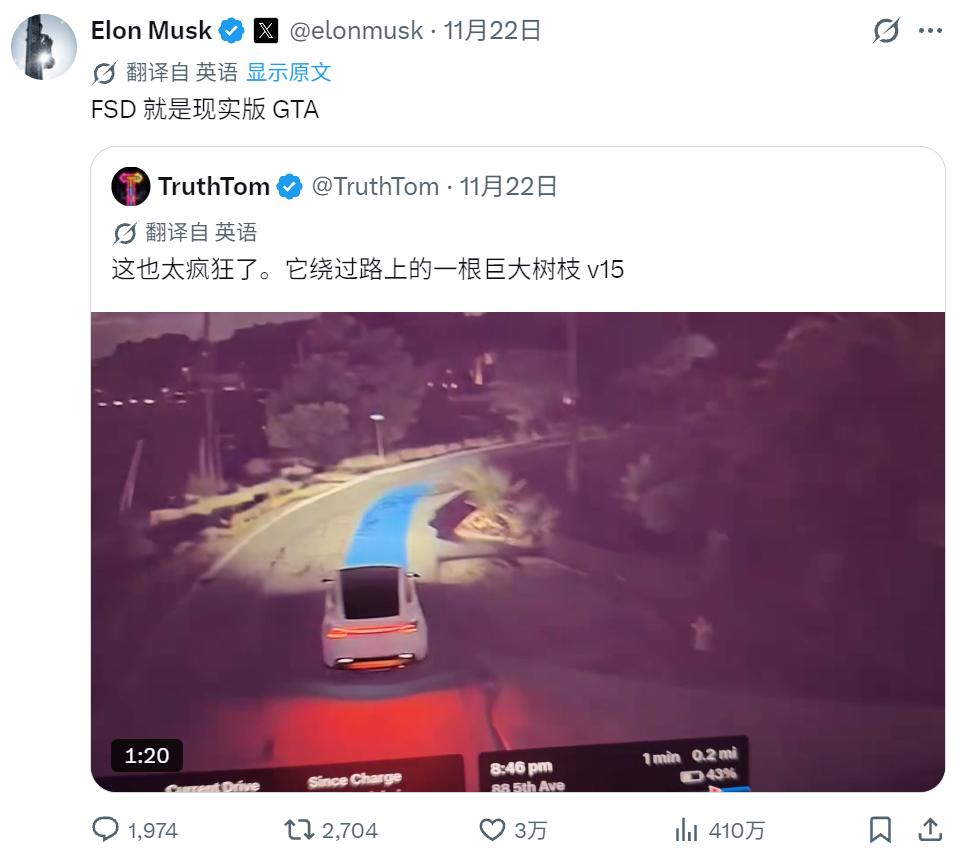
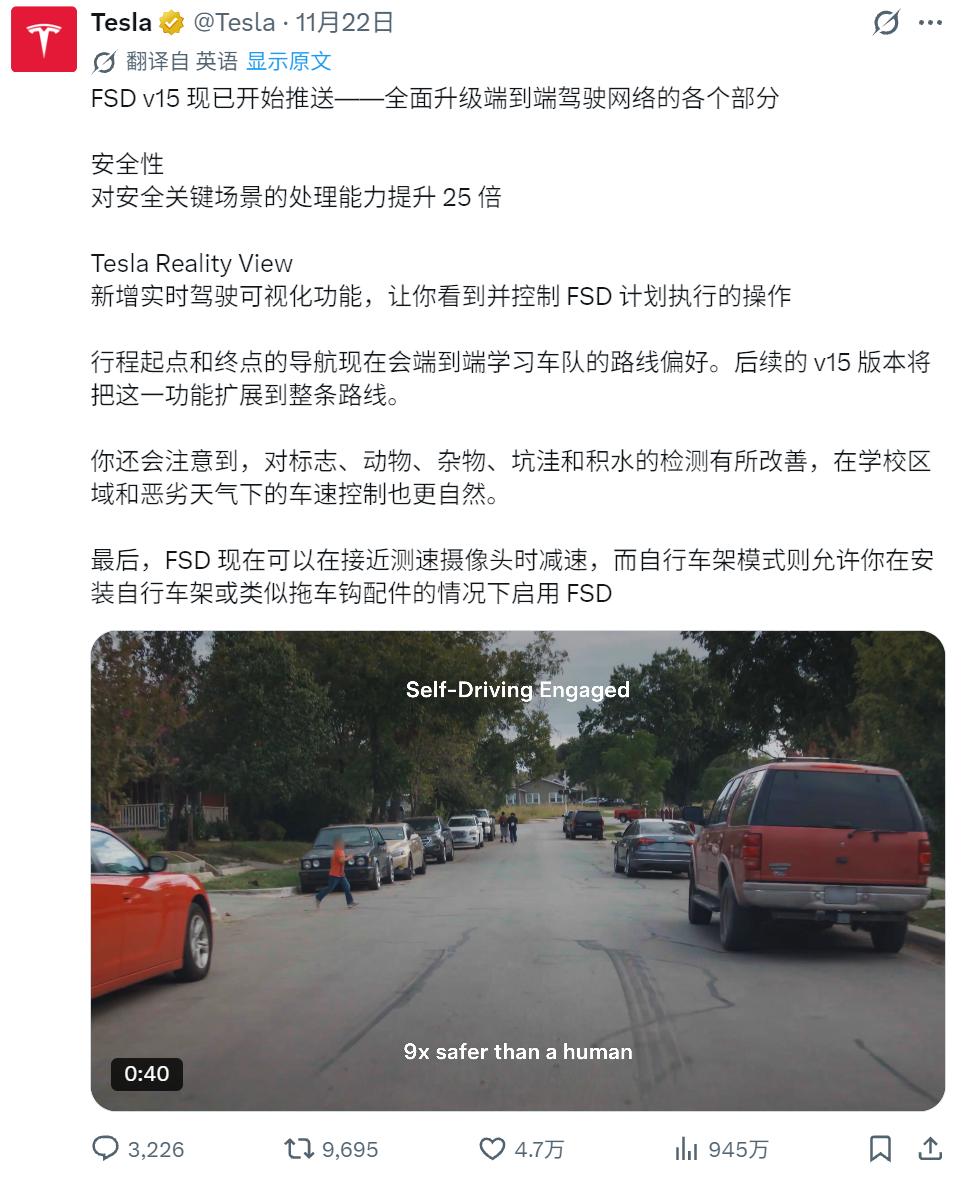
The most interesting part is that the visuals are so cool that even though Tesla claims FSD V15 has greatly improved safety and efficiency compared to V14, most car owners who have received the update are still exclaiming in amazement at the Reality View.
Faced with this brand new feature, we usually answer two questions: first, how it is implemented, and second, what it is used for.
But this time is an exception, I decided to talk about its use first.
To sum up in one sentence, from the perspective of car owners, Reality View is completely useless except for its emotional value.
This is not what I said, it was posted by Elon Musk on his social media account. He said that the only two uses of Reality View are that it looks really cool, and that people can directly select the parking space they need on the screen.
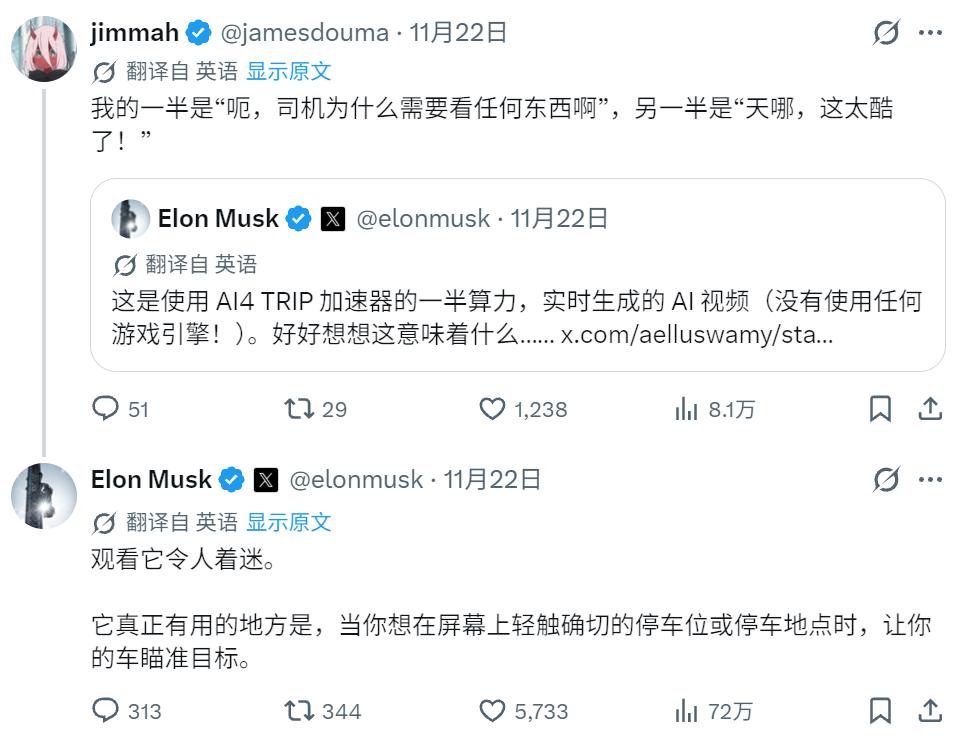
That's it, nothing more.
In my opinion, this thing even has some side effects. For assisted driving systems like FSD, drivers need to keep observing the road surface when the function is activated. With a screen full of such rich details placed on the center console, will drivers focus on the road or on the screen?
Besides, current parking assist systems can already select parking spaces from a long distance even without the GTA-style perspective. Selecting a parking space on the mockup interface is clearer and more accurate than selecting it in the real environment view, so the GTA-style perspective is not a must-have feature.
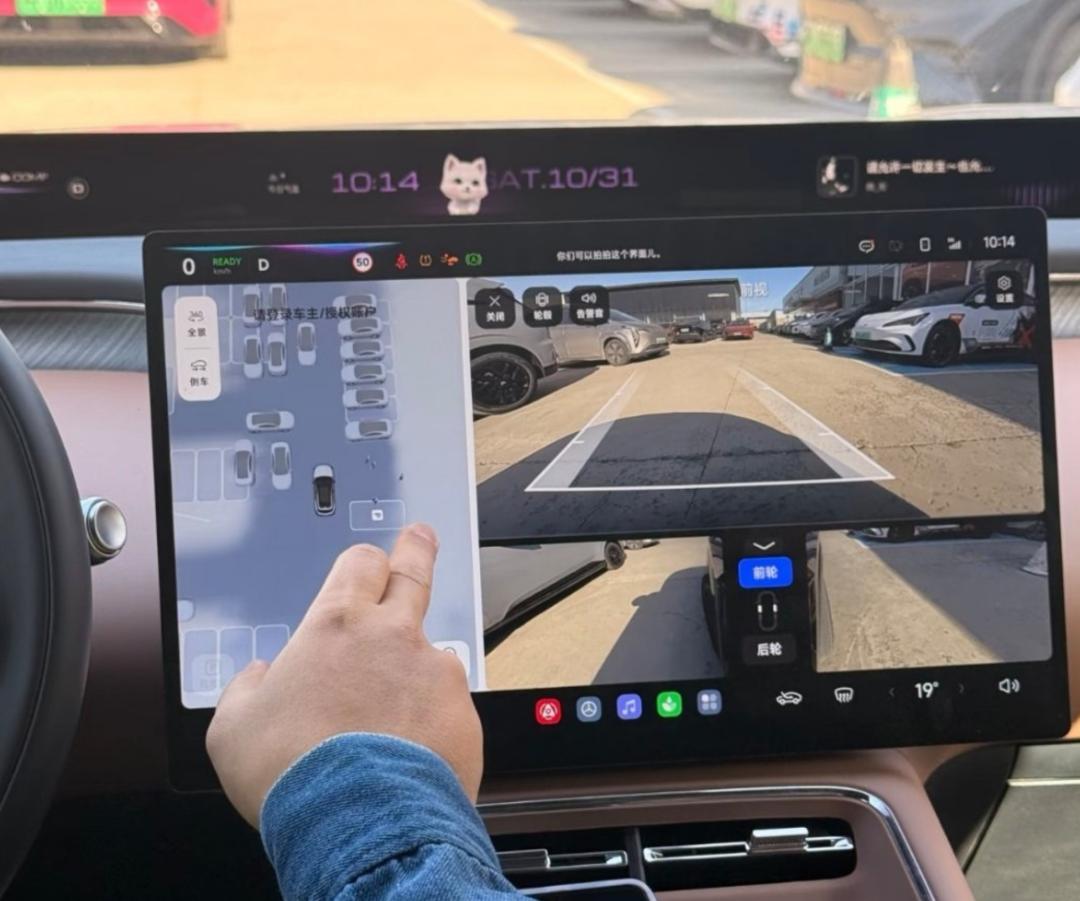
The only explanation I can think of for Tesla to develop Reality View is that it is showing off its technical capabilities.
Because compared to the benefits Reality View brings to users, the implementation principle behind it is far more complicated, and at present, probably only Tesla is willing to put in the effort to make it happen.
Some viewers may wonder: Is it that difficult to implement Reality View? Isn't it just like the 360° surround view system, which stitches together the footage from several cameras on the car?
But everyone who has used the 360° surround view system knows that due to the nature of wide-angle lenses, the stitching areas of footage from different positions will not only produce blind spots and distortion, but also distant objects can hardly appear clearly on the screen.
It is impossible to achieve the effect of Reality View, which is free of distortion and has rich details both near and far.
So what is its secret? You can find out by zooming in on the image.
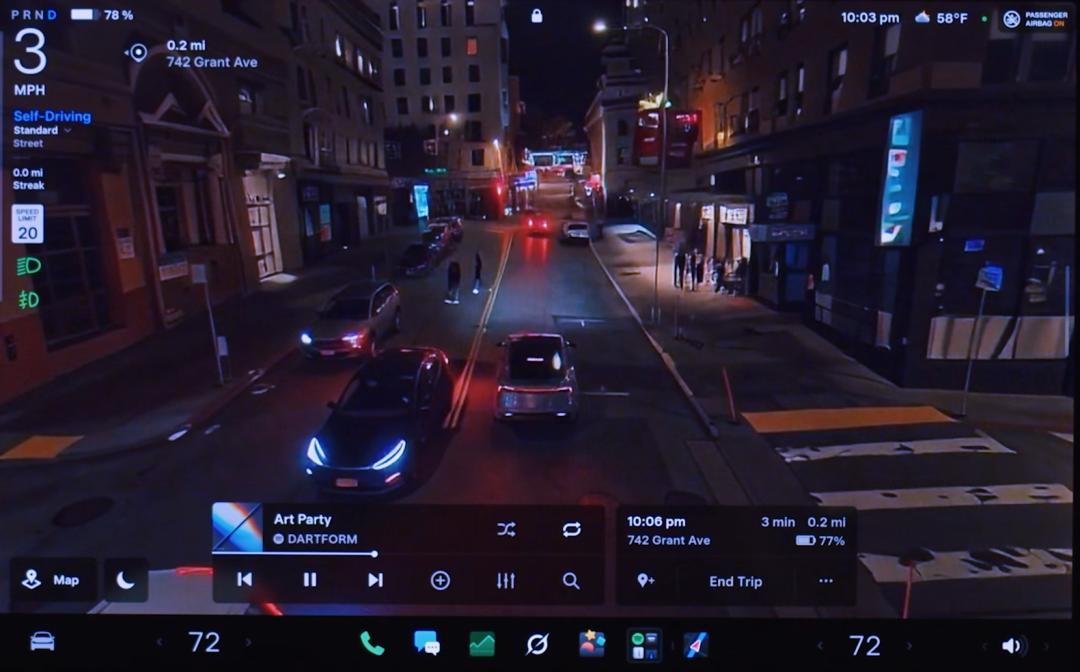
Although it looks full of rich details, when we zoom in at close range, we can find that the features of various objects in Reality View are actually somewhat distorted.
Friends who often browse AI-generated film and television works must have subconsciously asked this question:
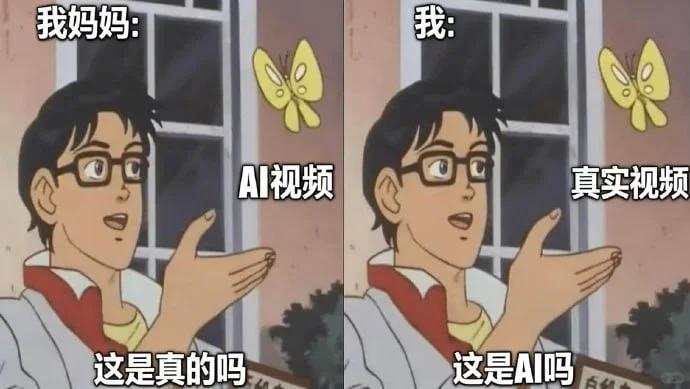
Yes, it is definitely generated by AI.
None of the pixels in the image people see in Reality View are directly captured by the cameras. It is an AI-generated video footage produced in real time by a dedicated video generation model.
In the comment section of a tweet, Elon Musk roughly introduced the underlying logic behind the implementation of the Reality View feature.
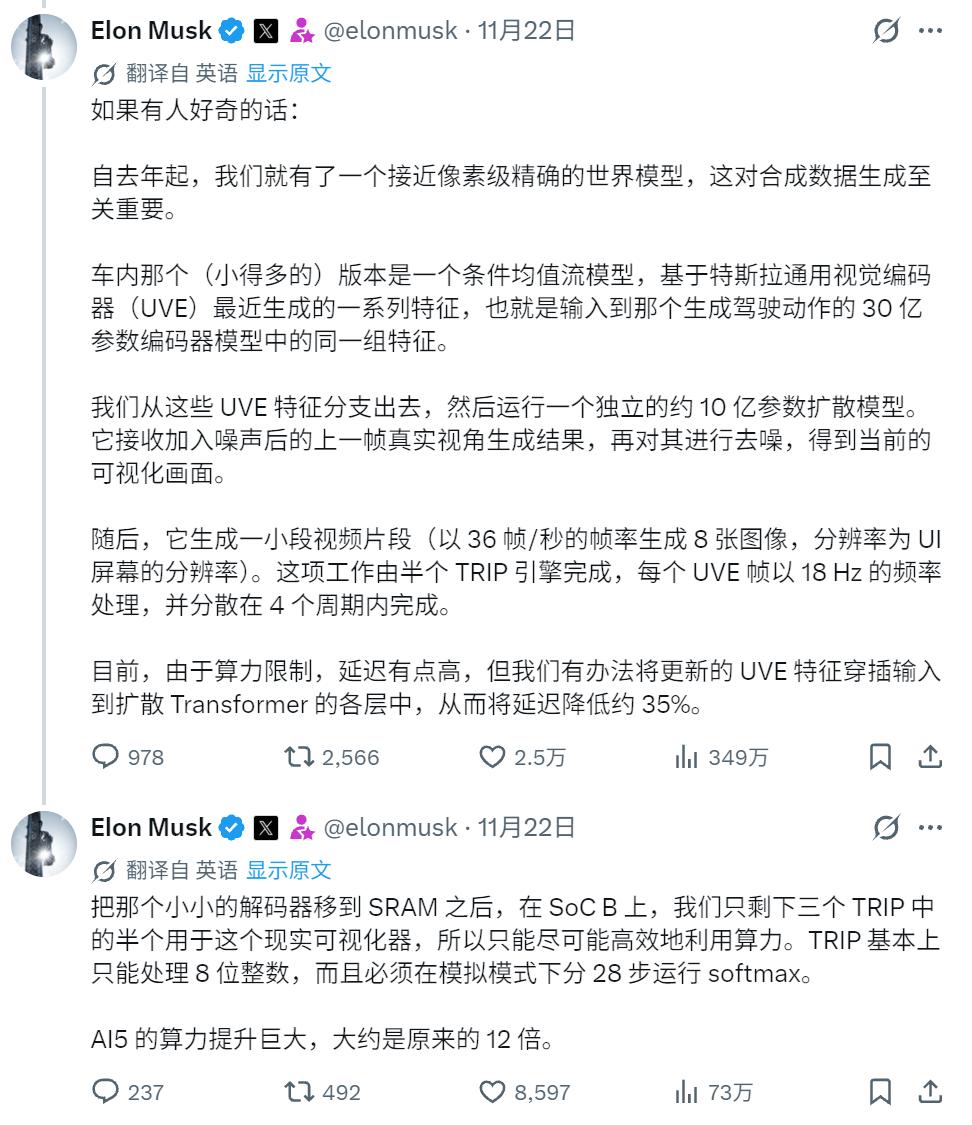
In short, Tesla vehicles updated to the V15 version of FSD are equipped with two AI models with different functions.
One is a 3-billion-parameter vehicle control model responsible for controlling the vehicle, and the other is a 1-billion-parameter video model responsible for generating the environment footage for the car infotainment system.
After the cameras on the car capture the environment footage, the original video information is first sent to an encoder called UVE (Universal Vision Encoder) to extract features.
This thing works like a translator, which can translate countless original video pixels into languages that AI models can understand, such as object contours, motion states, and position relationships with roads, and then send the information to the vehicle control model and the video model respectively.
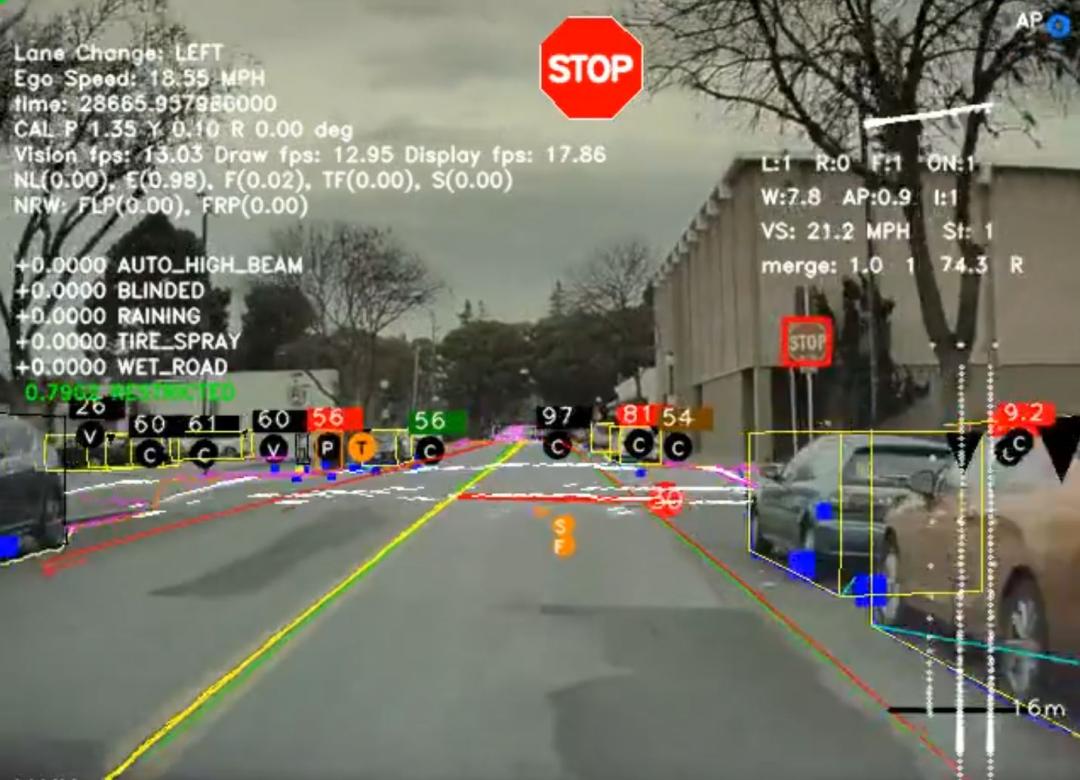
The former, after receiving the information, outputs vehicle control commands such as acceleration, deceleration and steering, while the latter outputs the environment footage that people see on the center console screen.
So in short, Tesla's Reality View is essentially an AI video generated in real time by the on-board video model after it receives a bunch of "prompts" that describe what the surrounding environment should look like.
To achieve this effect, there are obviously two difficulties: one is how to generate coherent AI video so quickly and smoothly, and the other is how to ensure that other functions in the car infotainment system do not lag while running high-intensity AI generation.
Elon Musk also briefly introduced these two problems in his tweet replies. To achieve real-time generation, Tesla uses a video model called Conditional Mean-Flow.
The image generation process has fewer logical steps and runs faster than the multi-round denoising logic of traditional diffusion models.
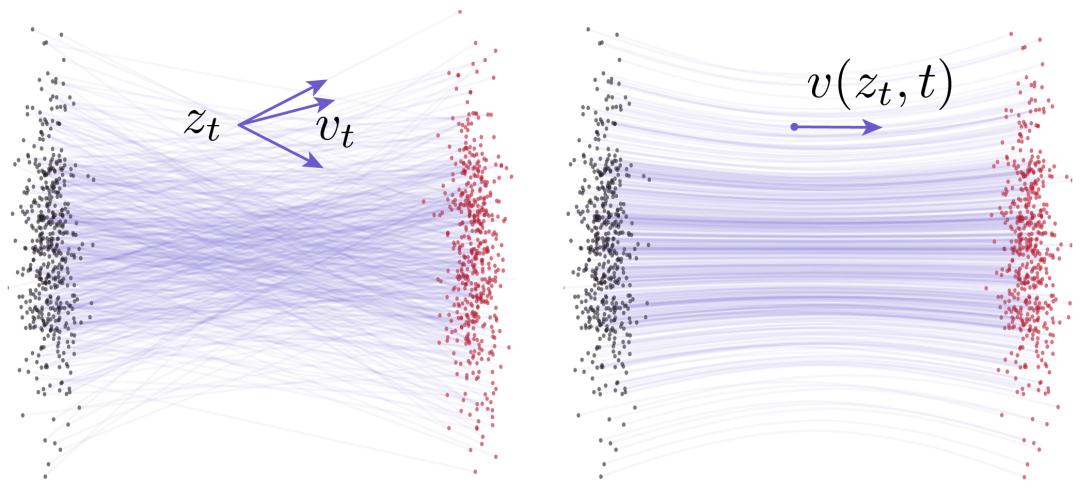
At the same time, each segment of the generated footage is used as a reference for the next segment (the original statement is: the model adds noise to the already generated video of the previous segment, and then performs denoising according to the new UVE visual features to get the current frame), instead of generating each frame from scratch.
This not only reduces the time for image generation, but also ensures the relative coherence of object shapes in the footage.
Of course, there are also some clever design tricks.
Although it is stated that the actual frame rate of Reality View is 36 frames per second, the model does not actually generate 1 frame every 1/36 second, but generates 8 frames every 0.222 seconds.
This is like a painter who used to receive one new request to draw one new painting every day, but now receives one request per week and needs to draw 8 paintings. The time planning is more flexible, and the painting processes of several paintings can cooperate with each other to improve efficiency.
This of course reduces the difficulty of real-time calculation, but because additional scheduling programs are required, this design will also cause a nearly visible delay between the car infotainment screen and the real-world scene.
Everyone can notice the difference in the start time.
To further reduce the system's computing pressure and increase speed, Tesla also placed some small decoders directly in the high-speed storage SRAM inside the chip, so that their working weights and part of the data are kept directly on the chip, which reduces the time spent reading data from external memory.
Plus various detailed adaptations, according to Elon Musk's introduction, generating the Reality View footage actually only uses half of the three TRIP units in Tesla's on-board SoC B chip, which does not occupy many resources, so it will not affect the smoothness of other systems.
Of course, there is a price to pay for the high speed.
The first is the aforementioned screen delay. The second is that due to the UVE information compression and the relatively small model parameters, the details of the footage on the car infotainment screen are not actually very fine. It only restores the lighting, materials and general contours of objects in the real scene, and texts are basically