Have private labels become the main battlefield for supermarkets and hypermarkets?
Private Labels Become the Decisive Factor in Competition
"Now when I go shopping in the supermarket, I will subconsciously glance at the private label section first" "For the same type of milk, the supermarket's own brand is 3 yuan cheaper, and its ingredients are cleaner" — on social platforms, more and more consumers are expressing their genuine recognition of private labels.
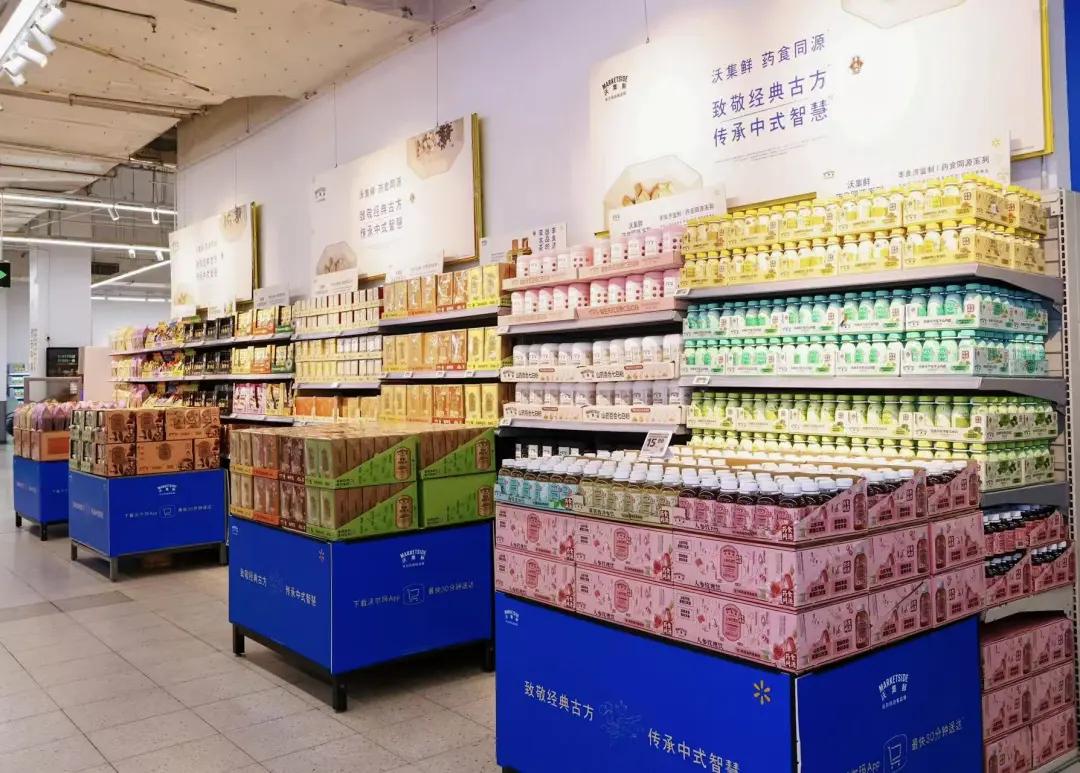
Pushing the shopping cart into the supermarket, consumers will find that the most prominent position at the entrance, as well as high-frequency repurchase areas such as bakery and fresh food sections, are almost fully occupied by private labels.
Against the backdrop that the sales growth rate of supermarket private labels continues to lead the overall market, leading players have regarded private labels as strategic sharp tools for capturing user mindshare, improving supply chain efficiency and building differentiated moats. A large number of players including Walmart, Hema, Pang Donglai, ALDI and Yonghui are accelerating the construction of their own private label territories along their respective unique paths.
Nowadays, private labels are no longer just a "high gross margin card" in the hands of retailers, but the strategic core for them to grasp pricing power, define commodity standards, and establish deep emotional connections with consumers.
Domestic Private Labels: The Critical Period of "Quality Breakthrough"
If the past few years were the "trial period" for private labels, then 2025 and 2026 are undoubtedly the watershed of "intensive cultivation".
Previously, 9 departments including the Ministry of Commerce jointly issued the Opinions on Accelerating the Innovative Development of the Retail Industry, which clearly proposed to strive to basically form a modern retail system with reasonable layout, high-quality supply, diverse formats, smart convenience and orderly competition by 2030. In the section of "Improving Commodity Quality", the Opinions clearly states: "Promote retail business entities to strengthen procurement quality control and traceability, strictly select suppliers, encourage the development of private labels, and promote the quality self-commitment system".
At present, the development of domestic private labels has entered a qualitative change threshold centered on quality and value.
From the consumer side, the NielsenIQ Supermarket Private Label Insight report points out that 56% of Chinese consumers are willing to increase their purchases of private labels in the future, which is higher than the global average. At present, the average price of Chinese private labels is 16% lower than that of manufacturer brands. The price advantage has become the entry ticket for private labels to enter the market, and it is also the main strategy to drive growth through low prices at present.
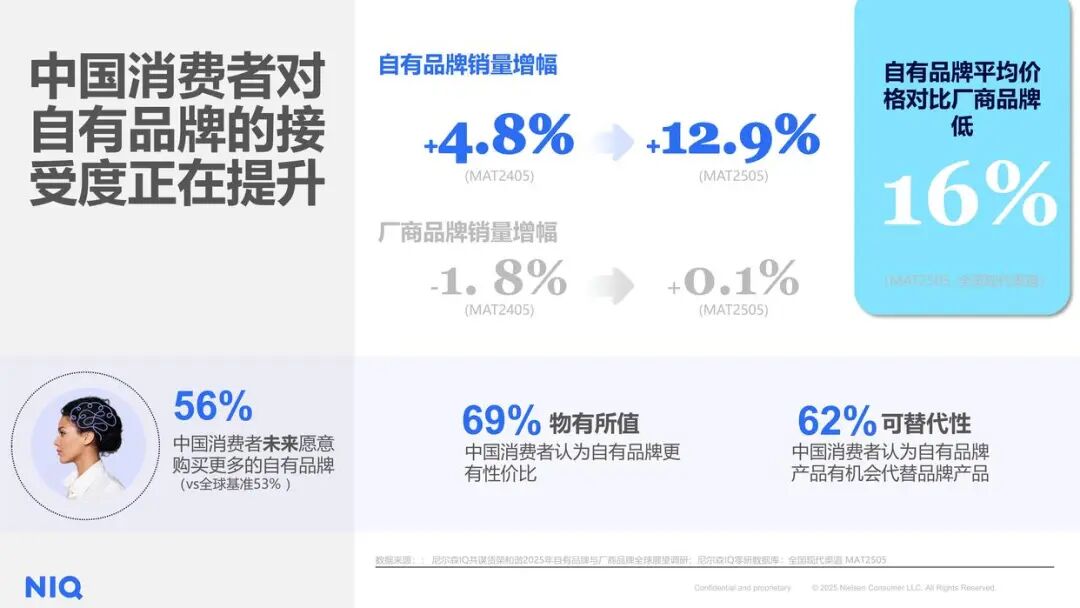
Source: NielsenIQ Supermarket Private Label Insight
From the perspective of retailers, according to the 2026 China Private Label Development Report jointly released by the China Chain Store & Franchise Association and Boston Consulting Group, China's supermarket private labels have entered a window period of rapid development, and the penetration rate is expected to rise from the current about 8% to 20%-30% in the next five years.
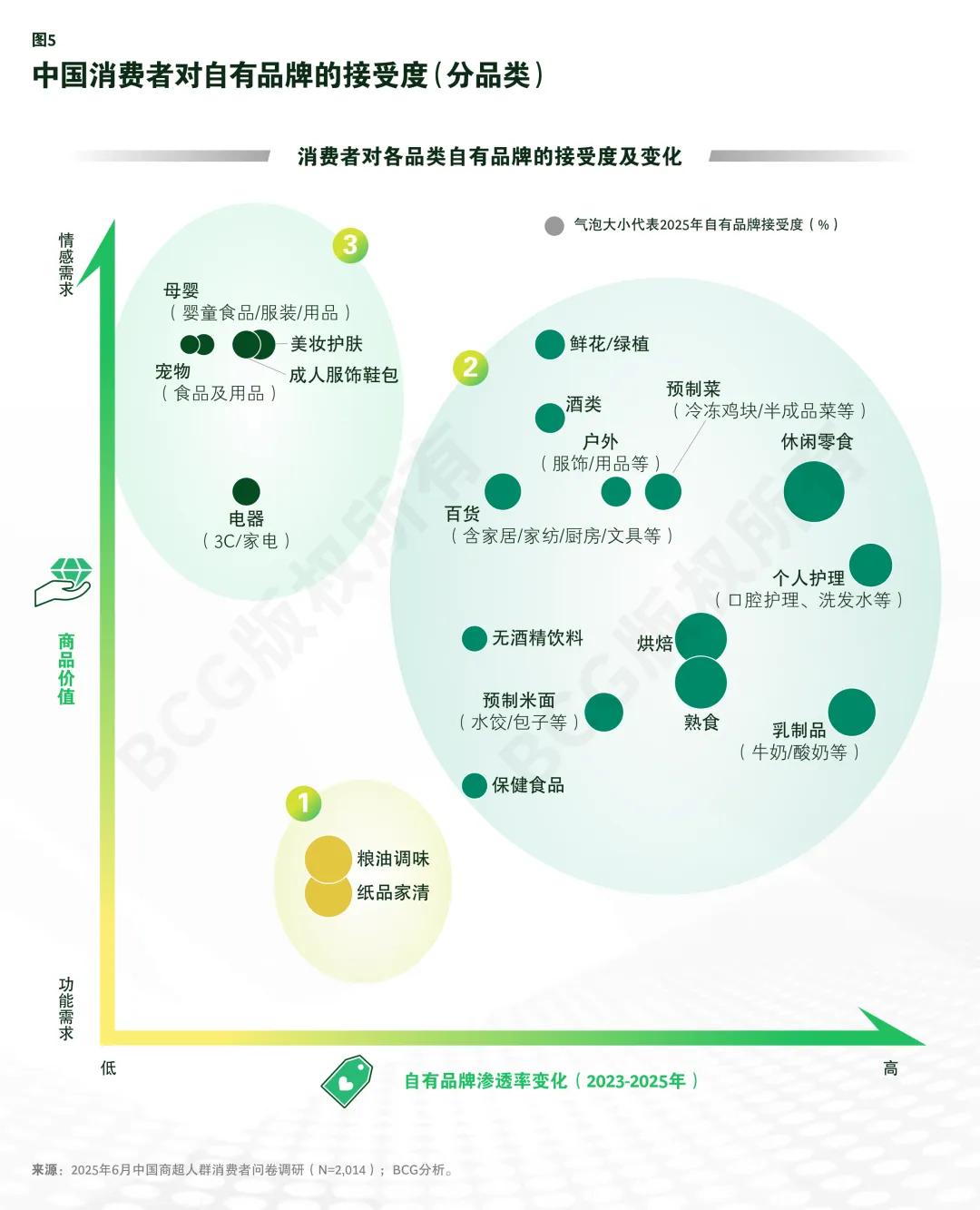
Leading retail enterprises have listed private labels as the "primary strategic investment direction". According to the China Private Label Development Research Report (2025-2026), at the supplier level, the supply amount of private labels for 80% of enterprises continues to grow, large and medium-sized manufacturers have become the main force of development, private label SKUs account for 20% of the total SKUs of suppliers, new products account for 50%, and 9% of SKUs contribute 80% of the supply amount.
In addition, the proportion of OEM/ODM orders that provide customized and exclusive formulas for retailers has increased significantly. This shows that the relationship between retailers and factories is moving from "OEM procurement" to "in-depth co-creation".
"Retail Business Review" believes that focusing on private labels is no longer just a tactical choice for retailers, but a core strategic starting point for them to seek breakthroughs in structural growth and build long-term differentiated competitive advantages. Its strategic value is specifically reflected in the following three dimensions:
First, create extreme cost-effectiveness. By extending deeply to the upstream supply chain, retailers can compress intermediate links and reduce procurement costs, so as to ensure their own considerable gross profit margin while transferring more value to end consumers. This balance ability of "low cost - high quality" is the fundamental difference between private labels and the premium logic of traditional brands.
Second, forge differentiated product strength and build irreproducible competitive barriers. The core mission of private labels is not to simply replicate best-selling products on the market, but to develop products with unique selling points, exclusive formulas or limited attributes based on in-depth insight into target customer groups. In this way, retailers can effectively get rid of passive dependence on homogeneous circulating brands and occupy an irreplaceable position in category mindshare.
Third, drive active product innovation and realize role upgrading from channel operators to brand operators. When retailers begin to take the lead in product definition, R&D design and quality standards, their identity changes from the passive "shelf renter" to the active "product manager".
These changes are not only the upgrading of profit model, but also enable retailers to directly establish trust links with consumers at the brand level, thus taking the initiative in the second half of the retail industry competition.
Leading Supermarkets Are Making Efforts on Private Labels
We observe that the private label competition in 2026 has become white-hot.
For example, Walmart builds private labels with "Great Value" as the core. Last November, Walmart announced the brand refresh and upgrade of "Great Value", taking "Simple for Fresh, Great Value" as the new concept, covering core categories such as fresh food and food, and jointly achieving huge popularity on Xiaohongshu. For example, Great Value 4.0 pure milk is priced at 9.9 yuan per liter, and the HPP series juice is directly marked with "0 added white granulated sugar" and "five ingredients" on the package, so customers can make decisions at a glance at the ingredient list.
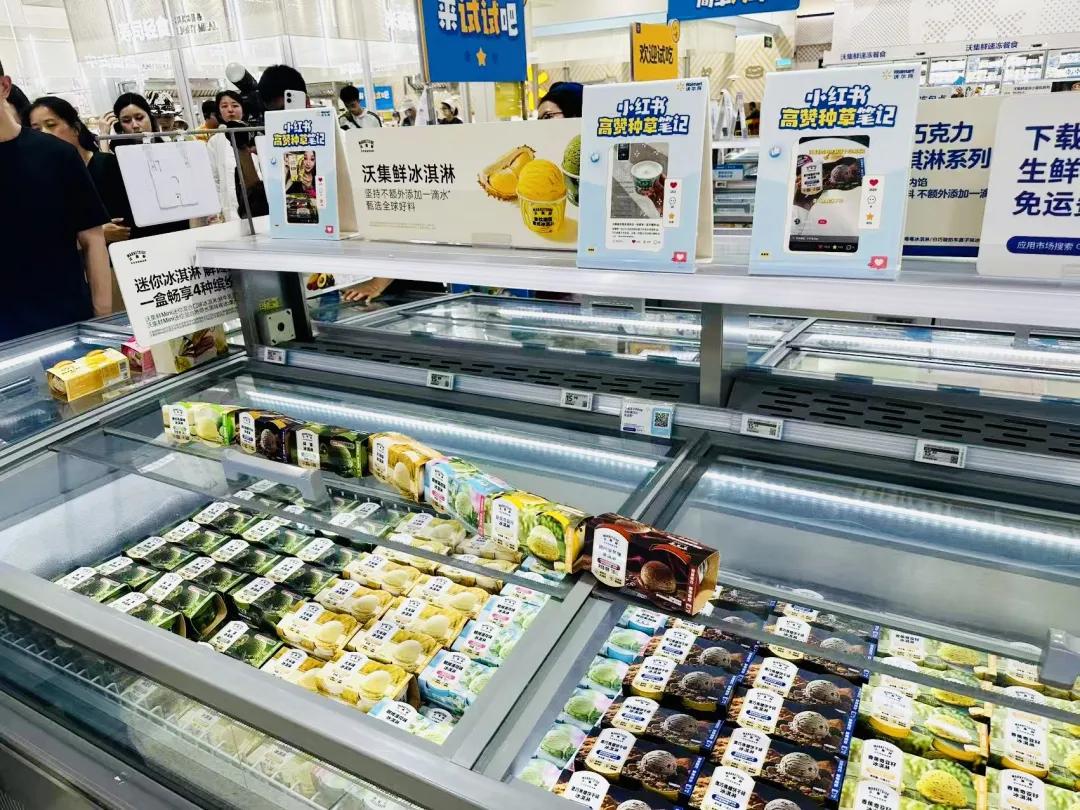
Great Value also connects seasonal themes and festival innovations into a complete product line, making shopping full of surprises instead of remaining unchanged. It continuously launches new products following different seasonal consumption seasons, and has polished a replicable product development path of "eating in season" from matcha season, grape season to osmanthus season. From the "homology of medicine and food" series cooperated with time-honored brands, to exotic single products such as boletus luridus beef flavor potato chips and stewed pigeon with gastrodia elata flavor potato chips that young people tease as "the R&D team went crazy", the brand has been pushed to the hot spots of social platforms for many times.
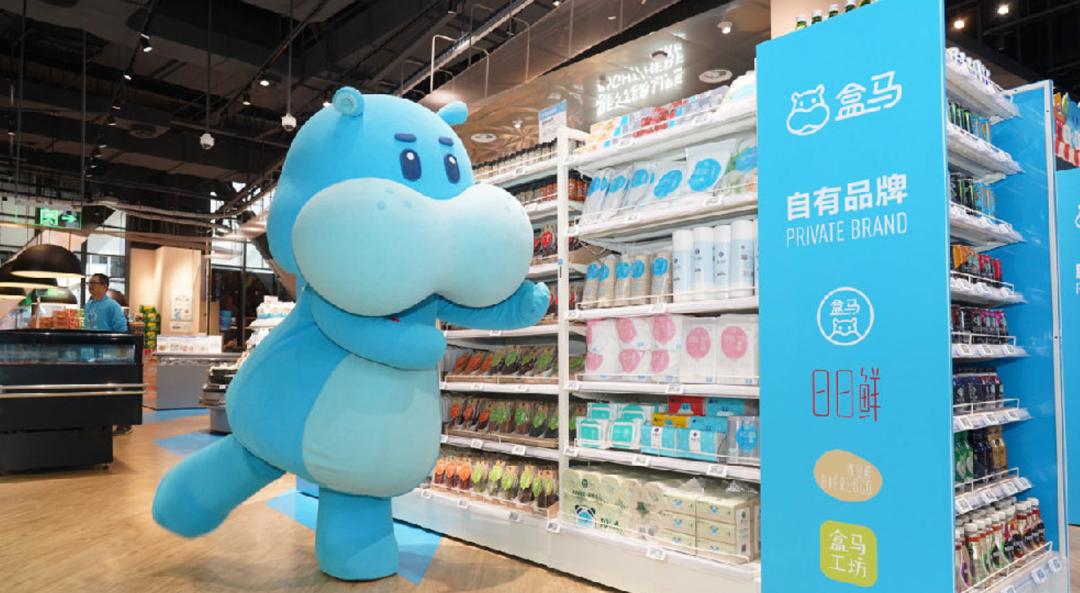
Hema also regards private label building as its core growth engine, and has formed a matrix layout represented by "Daily Fresh" and "Hema Workshop", which accurately covers all scenarios of daily diet. In 2025, its private label sales accounted for 35%, and there are many single products with annual sales exceeding 100 million yuan. Among them, the sales of the core brand "Hema MAX" exceeded 15 billion yuan, accounting for more than 20%, with a gross profit margin of over 40%.
It is worth noting that the sales proportion of private label products of Hema's hard discount format "Super Hema Bargain NB" even reaches 60%, which further highlights its differentiated capability in the extreme cost-effectiveness track.
Yonghui Superstores also regards private labels as the key to breaking the situation. In the first three quarters of 2026, Yonghui Superstores' attributable net profit was 170 million yuan, turning losses into profits. Its private label matrix including Yonghui Custom, Quality Yonghui, YH Bakery and Yonghui Farm achieved sales of 4.089 billion yuan, accounting for 10.94% of total sales, of which Yonghui Custom and Quality Yonghui contributed 3.048 billion yuan and 1.014 billion yuan respectively.
Yonghui Custom series has produced three 100-million-yuan-level single products: eggs, salmon and Goodfarmer fragrant waxy bananas, with more than 1000 private label products launched in total.
Previously, She Xianping, Vice President and Chief Product Officer of Yonghui Superstores, set the goal that the proportion of private label products will exceed 20% in 2026, and move towards 30%-40% in the medium and long term.
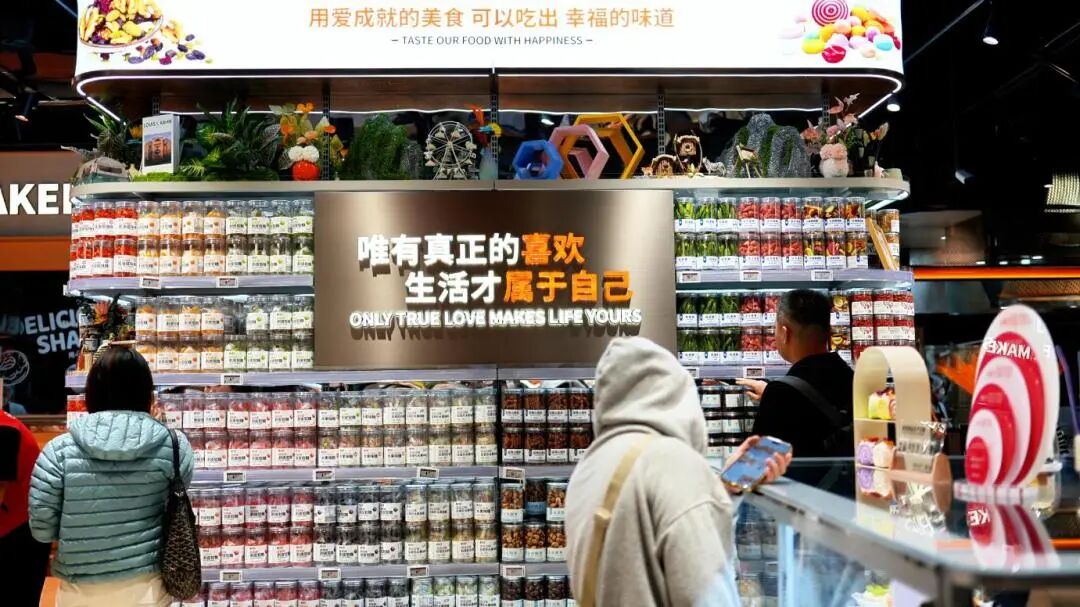
Of course, as a representative of hard discount, ALDI's private label construction is more prominent, with 90% of its products being private labels. Through in-depth localized R&D and direct procurement mode, the price difference of some categories reaches 50%, successfully building a price barrier. For example, its 9.9-yuan 52-degree pure grain solid-state fermented Baijiu was sold out as soon as it was launched, which confirmed the competitiveness of the "high quality and low price" model.
On the whole, leading retailers are completing a key identity transformation through private labels — transforming from passive "channel parties" to active "product innovators".
"The key to winning this private label competition is that players with strong product development capabilities, accurate localized adaptation and efficient supply chain integration will gain key advantages in the second half of retail," industry insiders said.
Where Is the Competitiveness of Private Labels?
When supermarkets are all increasing their efforts on private labels, the key to winning the competition does not lie in "having them", but in "doing them better". We believe that the future competition is about whether solid barriers can be built in the following dimensions.
First, the "flexible co-creation" capability of the supply chain. The success of private labels is inseparable from deep binding and collaborative innovation with upstream suppliers. This is no longer simple "OEM production", but full-link co-creation from R&D, design to production. For example, Hema's matcha season products achieved a year-on-year increase of 300% in bakery category one month after launch — none of these are "finding a factory to stick a label", but full-link co-creation from origin standards to process parameters.
Second, data-based "precise product selection" and "scenario innovation". Private labels must be built on profound consumer insight, rather than making decisions by feeling. Successful private labels often can fill the "blind spots" of big brands or create new scenarios.
For example, the penetration rate of "Clean Label" in prepackaged food continues to increase. On social platforms such as Xiaohongshu, "Clean Label" has become a focus of products. Great Value quickly transformed "clean ingredient list" into specific products. In the past year, its product iteration speed is visible to the naked eye: from the "small green bottle" milk with clean ingredients, to HPP apple juice, HPP watermelon juice, and various snacks that detonated social media.
Third, the "product manager" thinking of rapid iteration. In the fast-paced consumer market, private labels must have the ability of "small steps, fast trial and error". Compared with the development cycle of traditional brands that often takes half a year, retailers should use stores as "test fields" to realize monthly new product launch and elimination. For example, the procurement team of Hema Workshop specifically searches for characteristic products and suppliers within 300 kilometers of stores. The whole cycle from discovering raw materials to development and launch is no more than 3 months, making the repurchase rate of new products much higher than the industry average.
Fourth, the quality closed loop from "channel trust" to "brand trust". The essence of private labels is trust economy, and quality consistency is the cornerstone of building consumer trust. Leading enterprises transform channel trust into brand trust by establishing a quality system higher than industry standards. ALDI builds a full-link quality control closed loop of "raw material selection - production monitoring - terminal testing"; Pang Donglai breaks consumers' price doubts through transparency by publicizing the cost structure of commodities (for example, the gross profit margin of down jackets is 0.3%).
"The private label competition ultimately tests not who has a lower price, but who can 'understand' consumers better and respond with 'sincere' products," industry insiders said.
"Retail Business Review" believes that the future of private labels requires retailers to abandon short-term price war thinking, and instead invest in long-term brand building, supply chain polishing and user relationship operation. Only in this way can it truly become a growth engine that can go through cycles.
This article is from the WeChat Official Account "Retail Business Review" (ID: lssync), author: Retail Business Review, published with authorization by 36Kr.