Ququ the Great Lady Conquers AI
In June 2026, the World Artificial Intelligence Conference was held in Shanghai, with more than 1,100 enterprises, 9 Turing Award and Nobel Prize winners in attendance, marking the largest scale in the event's history.
At the summit forums, CEOs and top experts in formal suits discussed topics ranging from chip computing power to security supervision. When talking about visions, all their remarks were far-sighted and full of concern for the fate of humanity; but when checking financial reports, very few of them actually made any profit.
Deep in the innovation exhibition area on the B1 floor of the venue, a tall woman in a white sequined dress was surrounded by crowds at her booth, introducing her company's latest work: the emotional counseling AI "Beauty's Tips".

If you have been immersed in the popular buzzword "Big Outcome" in 2026, you should get to know the mother of the Big Outcome theory — the McKinsey of relationship sector, relationship scientist, famous emotional content creator Big Lady Ququ.
Ququ, whose real name is Le Chuanqu, graduated from Wuhan University and participated in the 2011 "Super Girl" talent show. After returning from studying in the United States, she entered the self-media industry, worked as an uploader in the Bilibili singing section for 7 months without any progress, and was very distressed.
When the drama "Nothing But Thirty" was a hit, a rant video she released accidentally went viral on Douyin, and Ququ had a thorough epiphany: singing cannot save the Chinese people. Since then, she has fully transformed into a content creator focusing on "women's growth", and developed a widely spread grand emotional theory.
After her account was banned, Ququ made a comeback, remaining active with various alternate accounts and heavy filters. "Beauty's Tips" is the intelligent avatar launched by Ququ following the AI wave, which claims to have accumulated a case library of more than 100,000 previous real-person consultations, covering 99% of all emotional problems encountered by Chinese-speaking women.
The APP offers 3 free question opportunities per month, and the membership costs 199 yuan per month for 1000 Q&A sessions. It has accumulated more than 50,000 users within two months of launch [1], with total order amount reaching more than 3 million yuan. With a 20% paid conversion rate, it can be said to outperform OpenAI, beat Anthropic, make Zhipu AI tremble, and leave Liang Wenfeng in tears.
As far as I'm concerned, the ultimate answer to AI commercialization is Big Lady Ququ.
Free Riding Is Justice
The core of the AI commercialization dilemma is the fundamental contradiction between the people's growing demand for free access and the high cost of computing power.
Traditional Internet companies welcome free users. Every splash screen and feed stream promotion can convert cold traffic into warm advertising revenue. The more users there are, the more the infrastructure cost can be averaged out by scale.
But AI cannot copy this model. First of all, it does not leave much space for traffic to be converted into advertising revenue. In October this year, someone analyzed the traffic and conversion data of 1898 online stores, and found that the return on investment of ChatGPT paid advertisements is less than one sixth of that of Google search ads [2].
It makes perfect sense. When traveling, being recommended "locally popular restaurants" by Yuanbao is barely bearable. But being recommended a psychological test "Guess what your past life was" after pouring out your trauma from your original family, anyone will fly into a rage.
On the other hand, AI has very weak marginal effect. Each call by users will generate inference cost, and the growth of scale is strongly correlated with infrastructure investment. Every time a low-quality AI short video is generated, one H200 GPU emits a wail in the data center in Ulanqab.
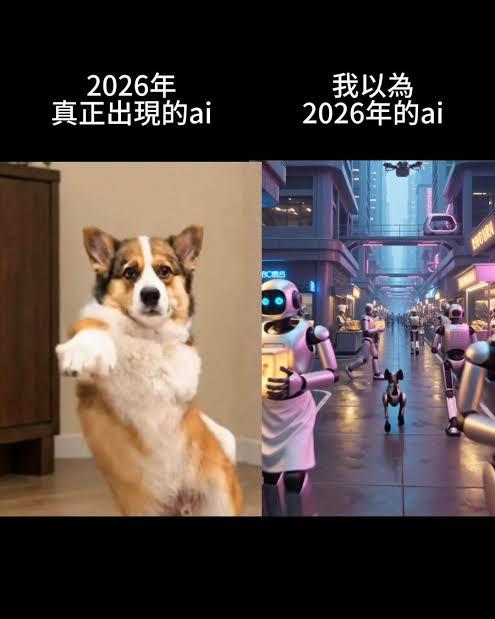
This month OpenAI disclosed to investors that free ChatGPT users account for an astonishing 91.5% of weekly active users [3]. OpenAI's model inference cost in 2025 reached 8.4 billion US dollars, a year-on-year increase of about 3 times [4]. Free users alone consumed 3.9 billion US dollars, accounting for 46.4% of the total cost.
In the first three quarters of this year, Anthropic's revenue quarter-on-quarter growth rate dropped from 132% to 47%, while the computing power expenditure quarter-on-quarter growth rate rose from 15% to 77%. The new computing power expenditure corresponding to every 100 US dollars of revenue rose from 16 US dollars to 80 US dollars.
Earlier, Zhang Peng from Zhipu AI said "more users don't make much difference", and later Liang Wenfeng complained that C-end users "can't be driven away". Users who have developed the habit of free services in the previous era are nothing but negative assets stuck on the soles of AI companies' feet.
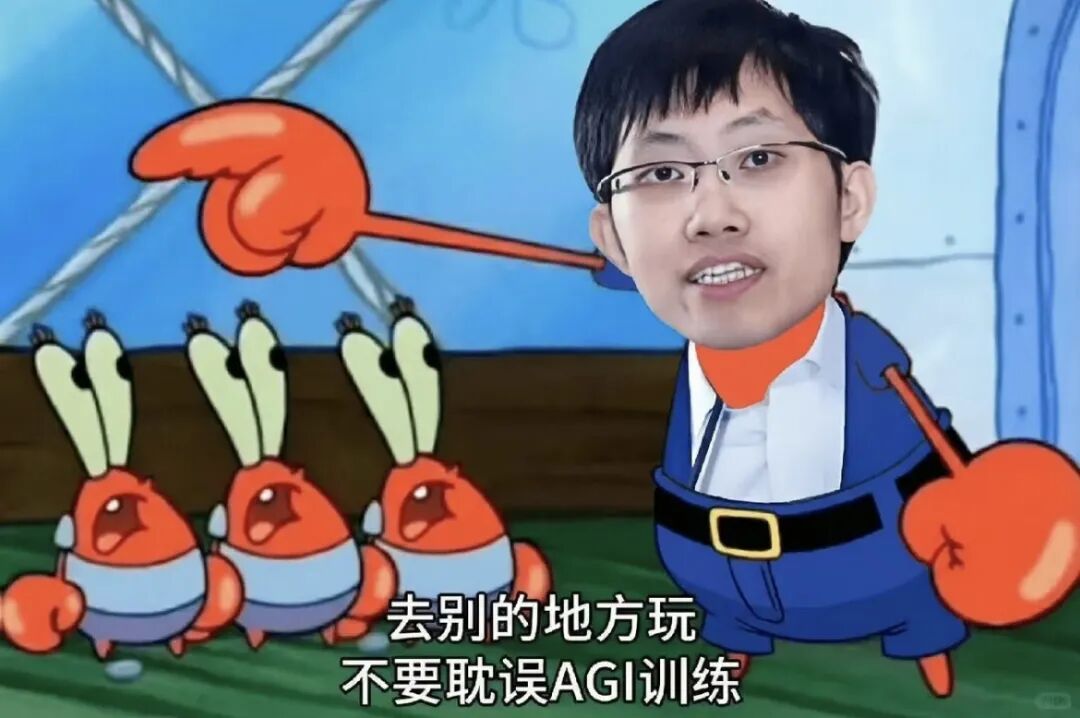
The annoying free riders are already torturing enough, and even the paying users have no loyalty at all.
Harvard Business School published a paper in October 2026, studying the paid subscription behavior of OpenAI, Anthropic, Google and xAI through 114 billion transaction data.
As of April 2026, only about 2.9% of American consumers have subscribed to at least one paid service of the four companies. The retention rate one year after the first subscription is only 20% to 45%, in contrast, old platforms like Netflix and Spotify have a retention rate of 70% [5].
Worse still, for every 10% increase in AI subscription price, demand is expected to drop by about 46%. You burn all your cash flow to get SOTA models, but if you can't cut down the price, even the most respected leader will be reduced to a nobody in no time.
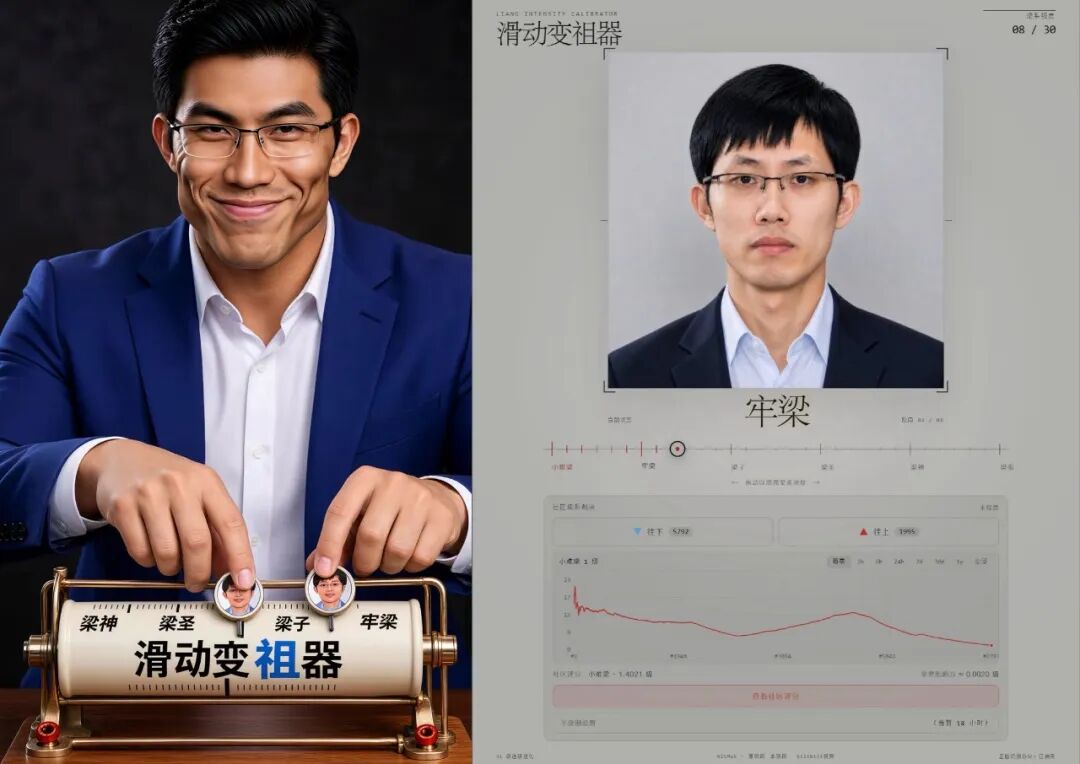
What? You also want to narrow losses, you also want a trillion dollar market cap? No matter what you say, when you reset the usage quota today you are the cyber benefactor, when you raise the package price tomorrow you are the eternal sinner. We are talking about you, Tibo.
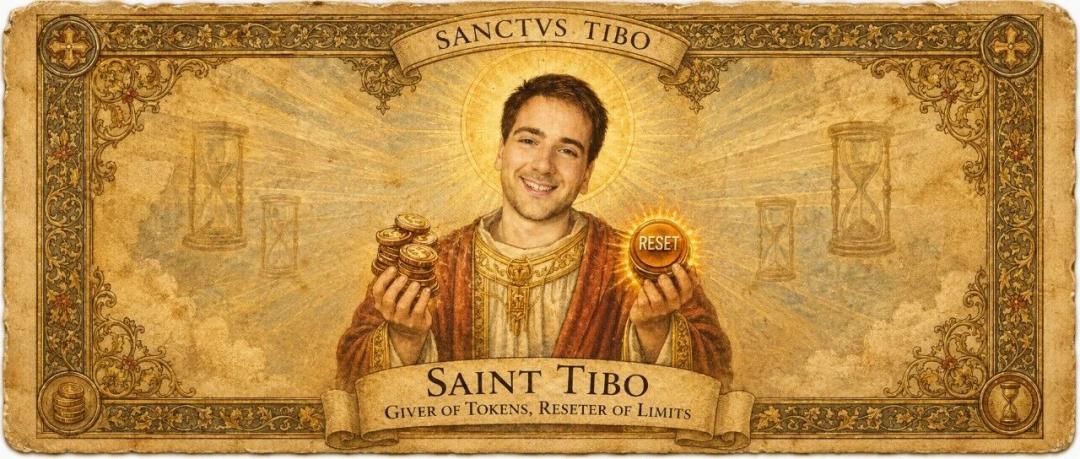
The collapse of the circular financing game of passing the parcel will not affect ordinary people, and ordinary people will always have their loyal soy milk buns in the end.
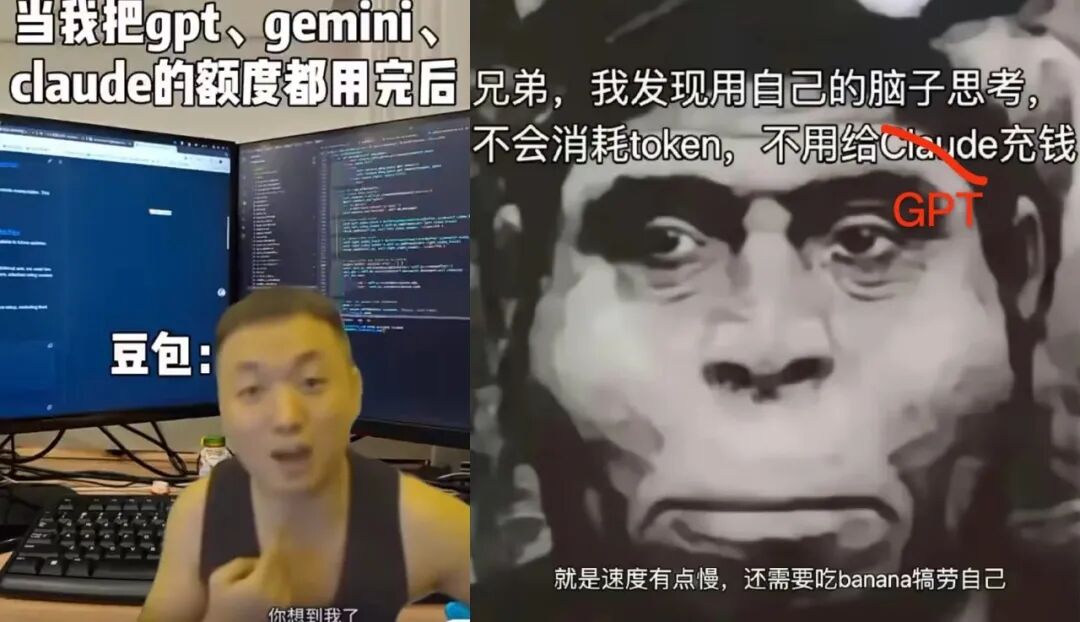
Books bring you great fortune, but paying for knowledge has never conformed to the spirit of the Internet. The business keeps growing bigger, while the valuation gets lower and lower, which is the common dilemma of today's AI startups.
No one could have imagined that the person who finally saw through the secret would be an emotional content creator.
Pay to Get Stronger
To understand Ququ's great success, you must first learn her grand theory.
The core idea of Qu's theory can be summed up in one word: value exchange.
The essence of all relationships in the world is exchange, and marriage and love are nothing more than a realistic mutual satisfaction of needs. Deep love and hatred are just illusions of the weak. A real strong person should give up illusions, and use extreme egoistic thinking to avoid possible risks in the game of dating and marriage.
I buy you a luxury riverside apartment, you give birth to three sons for me; I enjoy your admiration for me, you enjoy the connections I bring you. It is not taken for granted that men spend money, and women's devotion also needs to focus on return on investment. The end of the universe is Party A and Party B, everything is for my use, everything empowers me.

Ququ's hit course "Precious Relationships"
Under the nose of platform censorship, Ququ has developed a set of precise euphemisms: "Pair matching" = blind date, "Half past ten" = sexual life, "Besieged city" = marriage, "Happiness certificate" = divorce certificate, "Blue ball / Pink ball" = giving birth to a son / daughter, "Big shot" = wealthy sponsor, "Big apple" = government official, "Da Bliu" = ten thousand yuan.
As for "Big Outcome", there is a lot of ambiguous room for interpretation. It can refer to an average-looking pretty girl who enters the "besieged city" of marriage with a big shot through pair matching; it can refer to a full-time housewife who outwits her cheating husband, gets a son and changes the name on the property certificate to her own; it can also refer to a mistress who finally leaves the toxic big apple, and gets 2 million yuan to go home and heal.
This set of values is full of social Darwinism flavor, and its scientific nature is highly questionable. But Ququ is well aware of the stubborn problem-solving mindset of East Asians: we cannot stand a life without problem-solving formulas.
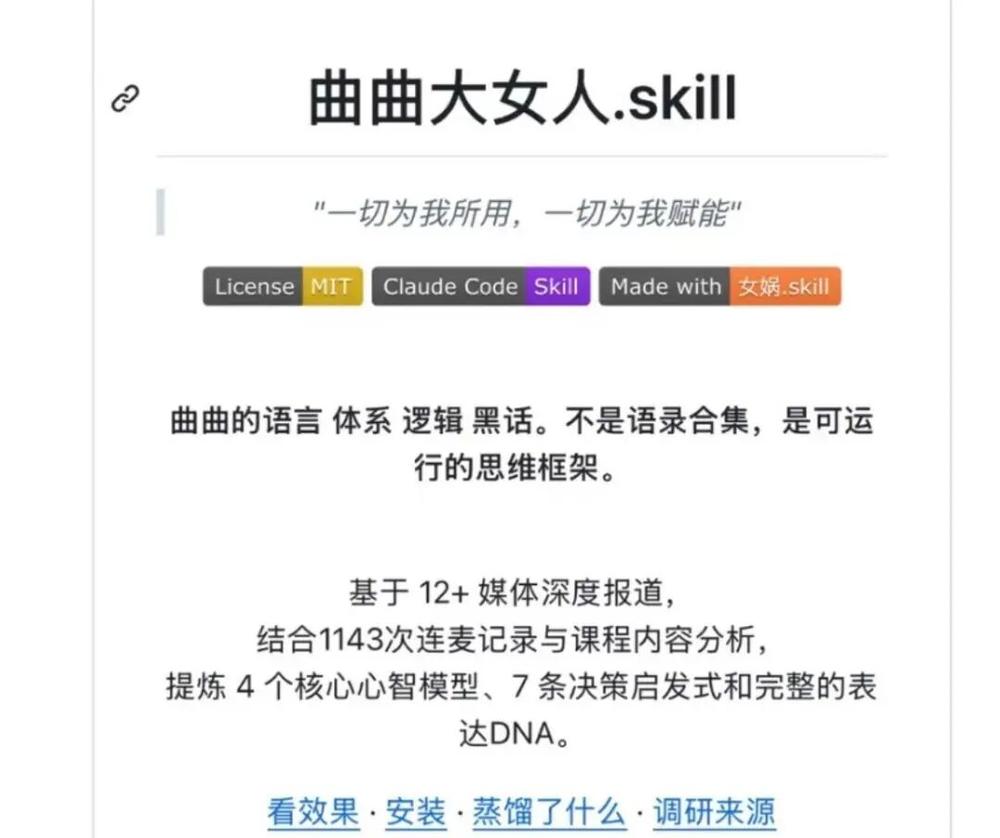
After Ququ was banned, a popular Skill appeared on Github, claiming to have distilled all of Ququ's content
In Ququ's grand theory, the second you reply to a WeChat message means you don't love someone anymore, the standard is very subjective; how much the property certificate and holiday red envelopes are worth, the fact is very objective. Where the money is, the love is. Intimate relationships are packaged as a discipline that can improve the winning rate through learning and calculating returns.
Other AI companies need to develop products first, find demands, and finally educate users to pay. But Ququ hits the target from the very beginning: don't talk to me about right or wrong, I just want to make sure you end up earning.
The call of human instinct brings uncontrollable willingness to pay.
Some netizens counted that in 2025, Ququ charged 1000 yuan for 15-minute consultation, the recorded course "Precious Relationships" was sold for 3580 yuan, and there were offline training camps priced at tens of thousands of yuan. She made hundreds of millions of yuan in one year.

What's more brilliant is that this set of theory is tailor-made for AI training. Ququ has a set of highly self-consistent values, analysis frameworks and exclusive jargon. The AI only needs to learn to ask questions and analyze according to these rules, then it can provide thought-provoking life guidance.
The general-purpose AI born in a hundreds of billions level data center gathers countless top intelligent brains, uses up the corpus accumulated by human beings for thousands of years, and consumes hundreds of millions of kilowatt hours of electricity and tens of thousands of tons of water, but when you say you are heartbroken from a breakup and want to die, it only says it will hold you steady, right here, without judgment, without jumping to conclusions.

But after learning hundreds of thousands of consultation cases, Ququ AI can firmly tell you that men can be divided into four quadrants according to the value they provide and the cost they demand:
"Bole Man" (top-tier man) who is willing to give money and resources, "Emperor Man" (high-value man) who owns a large amount of wealth and resources, "Business Man" (low-value man) who gives nothing but empty promises, and "Chicken Rib Man" (low-value man) who is too stingy to spend a penny.
Your goal should be to take low-value men as springboards, connect to high-value men through them, and finally capture top-tier men. Today's failure is tomorrow's success.

Everyone knows small workshops put in huge efforts, but their products really work.
Ordinary office workers paying for a regular AI membership are more or less with the careful calculation of working people. To write code and make PPT, they pay 20