Collective strategic shift after the food delivery war: Meituan, Alibaba and JD plunge into the "canteen operation" sector
After the takeaway war, internet platforms have collectively shifted to a new direction.
Recently, a store named "Jiwa Canteen" has appeared in four districts of Shenzhen, namely Qinghu, Dalang, Bantian and Minzhi. It is mainly focused on takeaway, selling affordable fast food such as braised flavor rice and roast duck rice, as well as new-style tea drinks and other categories. Some stores have placed several simple tables and chairs at the entrance for dine-in.
As a new business launched by Taobao Flash Purchase, "Jiwa Canteen" is currently being tested on a small scale.
Not only Alibaba, half a year ago, Chu Zheng, head of Meituan Raccoon Canteen, clearly stated at the industry conference in May that it plans to open about 200 stores this year. At present, Jingdong 7FRESH Mini Kitchen has not only launched takeaway stores on Meituan synchronously, but also opened offline stores in some business districts in Beijing.
Although the three major manufacturers have different entry modes, they all cover the main category of affordable simple meals. Taking Jiwa Canteen as an example, a Longjiang braised pork knuckle rice set meal only costs 16.9 yuan. The takeaway kitchen built by internet platforms is only an entry point, and its essence is to reconstruct and expand the takeaway supply system.
Three modes to enter the track, targeting affordable fast food for office workers
On this track, Meituan and Jingdong made layouts earlier.
Raccoon Canteen launched a pilot project on December 24, 2024, and announced publicly in July 2025 that it would invest in the construction of 1,200 stores nationwide within three years. However, in terms of expansion speed, it is still in the climbing period of the 100-store level up to now. This year, Chu Zheng, head of Raccoon Canteen, publicly stated that the 2026 goal is to open about 200 stores.
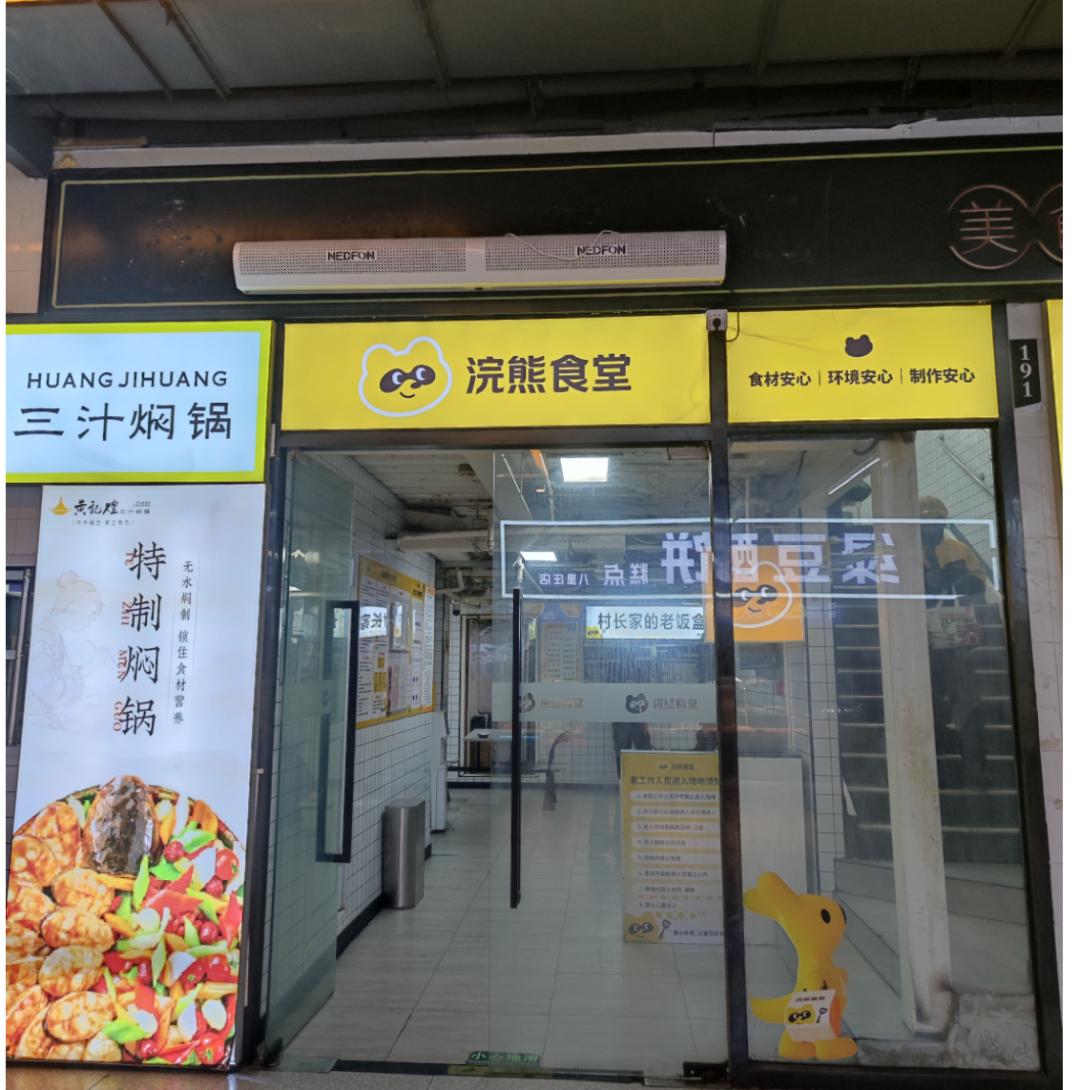
Caption: Raccoon Canteen in Beijing, photographed by Tech Planet
An employee of Raccoon Canteen told Tech Planet that the venues are divided into two modes: direct operation and agency. More than 80% of the Beijing market is currently responsible for agents for site selection, decoration and construction, but the operation is still under the control of Meituan.
The above employee introduced that the rent for merchants to settle in Raccoon Canteen is not cheaper than that of ordinary food stalls. This is because the operating cost of Raccoon Canteen is usually higher than that of the food court, Meituan may not always get the venue at a low price, and it also has to bear additional costs such as store managers. For merchants, they can get more traffic support. After settling in, in addition to their own takeaway stores, there is an additional unified store entry with the "Raccoon Canteen" tag. The page mainly displays set meals, and the merchant name is weakened.
In the initial stage, Raccoon Canteen was mainly settled by chain brands such as Quanjude, Laoxiangji and Yunhaiyao. However, judging from the newly opened Raccoon Canteens in Beijing recently, the composition of settled merchants is more diverse than in the early stage. Most of the current Raccoon Canteen stores are small and medium-sized merchants. The stores are divided into upper and lower floors, the stalls have a unified decoration style, and sell porridge and pancakes, fried noodles, rice served with gravy and many other categories.
In addition to turning scattered stalls into "collective stores", the delivery efficiency has also been improved: users can order multiple foods across different stalls in Raccoon Canteen, and the riders will pick up all the orders uniformly and deliver them in combination.
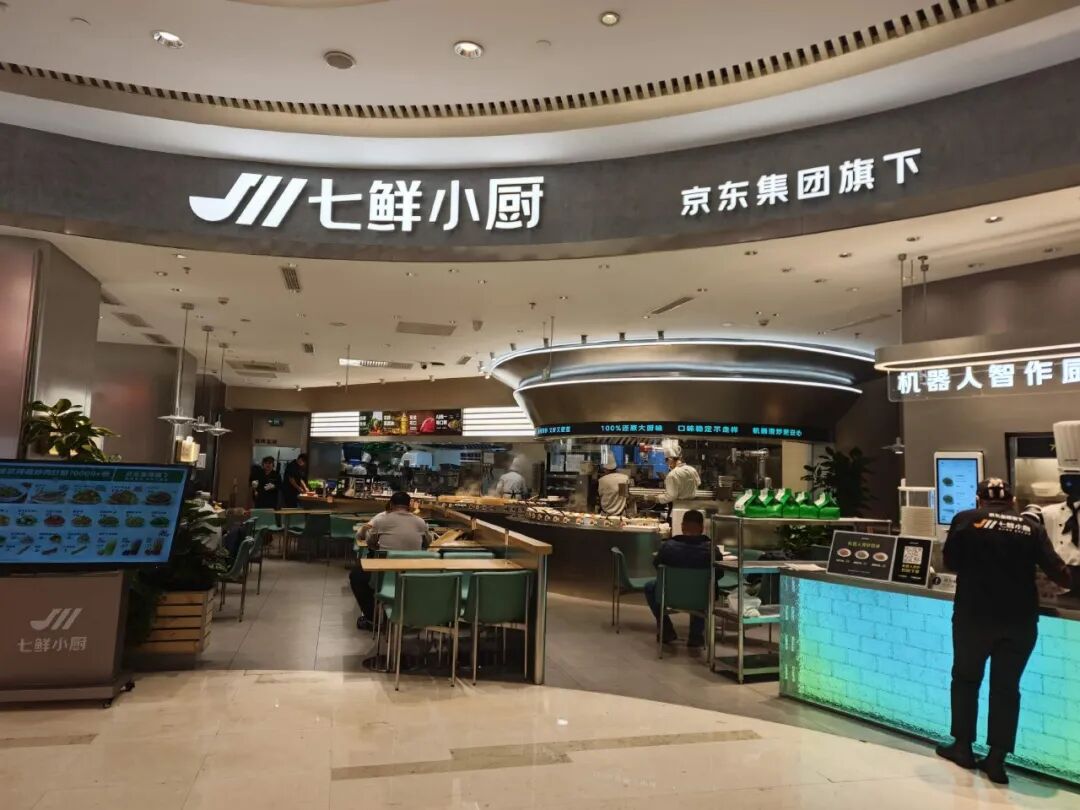
Caption: Offline store of Jingdong 7FRESH Mini Kitchen in Beijing, photographed by Tech Planet
Almost at the same time as Raccoon Canteen was launched, in July 2025, the Jingdong 7FRESH Mini Kitchen brand was officially launched, positioned as a "joint venture high-quality catering production platform". The first store was located in Changbao Building, Dongcheng District, Beijing, adopting the "takeaway + self-pickup" mode with no dine-in service.
The set goal is also more aggressive. In the same period, Jingdong announced that it would invest 1 billion yuan in cash to recruit 1000 dish partners, and set a goal of 10,000 stores in three years. When launching the national partner recruitment in December 2025, Jingdong also set a goal of covering all first-tier and second-tier cities by the end of 2026.
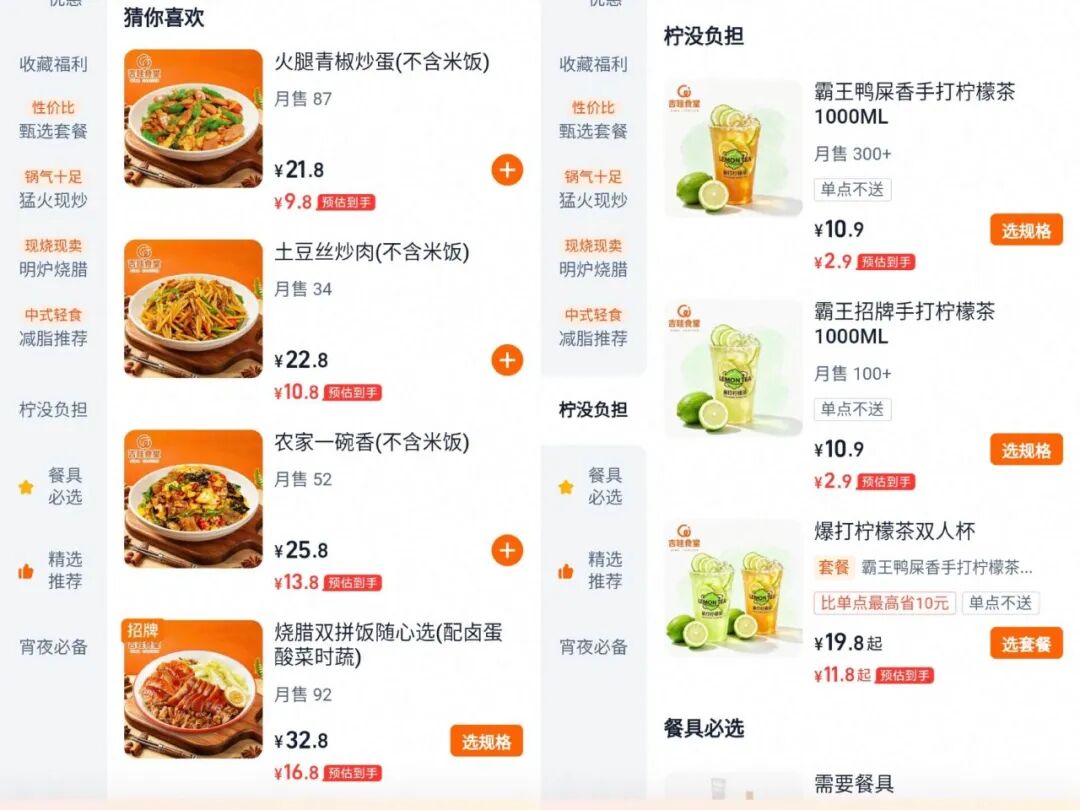
Caption: Takeaway page of Jiwa Canteen
In contrast, Jiwa Canteen entered the market the latest, and is still in small-scale trial operation at present, with a total of 7 stores in Shenzhen. A merchant who has contact with this project told Tech Planet that he was invited to settle in by the Taobao Flash Purchase manager, and large-scale franchise has not been officially opened yet.
It can also be queried from the public trademark information of the China National Intellectual Property Administration that Lazas Network Technology (Shanghai) Co., Ltd., the operating entity of Taobao Flash Purchase, submitted 4 trademark registration applications for "Jiwa Canteen" on October 14, 2026.
On the whole, the three models are different: Jingdong's model is the heaviest, Meituan's is in the middle, and Taobao Flash Purchase's is the lightest. Meituan builds a centralized shared kitchen, where merchants can move in with their bags. The platform is responsible for infrastructure construction and food safety, and does not interfere with dish operation; Jingdong's model is the heaviest. The platform deeply controls the links such as ingredient procurement and cold chain transportation, and even provides equipment and cooking robots. Operating partners provide venues and are responsible for localized operation, and dish partners participate in dish research and development; Taobao Flash Purchase adopts brand authorization, the platform outputs traffic and standards, and grants merchants the right to use the "Jiwa Canteen" brand, and merchants are responsible for their own profits and losses.
But the common point is that no matter which mode is adopted, the current focus is on affordable fast food with rigid demand, high frequency and price sensitivity. On the takeaway platform, Jingdong 7FRESH Mini Kitchen is priced at 25 to 35 yuan, and the price after coupons is 15 to 20 yuan; the customer unit price of Meituan Raccoon Canteen after coupons ranges from 17 to 30 yuan; Jiwa Canteen mainly sells braised flavor rice, roast duck rice and home-cooked dishes, with unit price of dishes at 10 to 20 yuan and set meals at 15 to 25 yuan.
The category of affordable fast food has already produced many chain brands with thousands of stores. According to the data of Zhaimen Canyan, the per capita consumption of Country Style Cooking is 21.9 yuan, that of Mr. Rice is 23.2 yuan, and that of Laoxiangji is 24.6 yuan. The proportion of takeaway of the three brands is rising rapidly. The takeaway revenue of Laoxiangji in the first 8 months of 2025 has reached 58.1%, the highest among the three. Takeaway platforms enter this market from different modes. After superimposing platform coupons, the actual payment price is lower than the in-store price of chain fast food.
Collective shift after the takeaway war
HSBC research report estimates that Alibaba's instant retail lost 87 billion yuan from the second quarter of 2025 to the first quarter of 2026. Meituan and Jingdong lost about 44 billion yuan and 42 billion yuan respectively in the past year due to the takeaway war.
For platforms, after the dividend of the subsidy war fades, the industry has shifted from incremental growth to stock game. Platforms need new starting points to lock in high-frequency rigid-demand users, and at the same time build a controllable supply system to get rid of dependence on scattered merchants.
In the past, catering merchants and platforms repeatedly played games around commission, traffic and promotion. The reason why platforms collectively expand takeaway supply is that takeaway platforms are not willing to only act as intermediaries for transaction matching, and they enter the supply side from their respective advantageous fields. Now, Jingdong extends the supply chain to the back kitchen, Meituan builds infrastructure into a platform, and Taobao Flash Purchase first leases out its "brand sign".
This is also in line with the consistent style of Taobao Flash Purchase. Just like the Taobao convenience stores that laid out instant retail earlier, the platform provides the brand and the merchants are responsible for operation. Although it entered the market late, the light mode gives it space to catch up. The disadvantage is that the platform's direct control over stores may be limited.
From the perspective of delivery price, the kitchen business of the three platforms has a minimum order threshold of 20 yuan within 3 kilometers, and all support self-pickup. A consumer of Jiwa Canteen said that if the distance is close, self-pickup at the store is cheaper, and a rice served with gravy with two meat dishes and one vegetarian dish only costs 8.7 yuan.
Raccoon Canteen not only replaces the scattered affordable fast food on the platform with controllable and standardized supply on the supply side, but also optimizes the delivery side. Takeaway is a business that relies on regional density. When orders are concentrated in the same business district, riders can complete more deliveries within a limited distance, and the per-order fulfillment cost is easier to reduce.
In April this year, a research report released by JPMorgan Chase calculated that the lower limit of the comprehensive per-order fulfillment cost of Meituan Takeaway is about 6.3-6.5 yuan, and the cost of similar competing products in the industry is generally 0.3-0.5 yuan higher. The gap is mainly related to order density and delivery efficiency. Jingdong Takeaway has a higher proportion of full-time riders, heavier compliance costs, and higher per-order rider cost.
Another general background is that in April 2026, seven platforms were fined and confiscated 3.597 billion yuan due to the "ghost takeaway" series of cases, involving more than 67,000 ghost stores. This is the largest amount of fine since the implementation of the Food Safety Law. This means that platforms can no longer shirk their responsibilities as intermediary matchmakers as they did in the past, and must assume the responsibility of supervising settled merchants.
From the offline store of Raccoon Canteen, we can see that each stall is equipped with two cameras, and the back kitchen picture is displayed in real time on the screen at the entrance and the home page of Meituan Takeaway merchants. In addition, the store manager inspects the store at least four times a day, and the cleaning actions are recorded in the "Food Safety Diary", which users can click to view directly.
However, the collective challenges also exist. The site selection of Raccoon Canteen is highly dependent on the consumption power of the business district, and the cost for merchants to settle in is also higher, so the promotion speed is not fast. The platform has set up the stage, but it is more difficult to make merchants stay and make money than to rent out the stalls. The offline store mode of Jingdong 7FRESH Mini Kitchen has higher cost, and its expansion is also restricted by whether the single-store profit model can work. The light mode of Jiwa Canteen seems to have low trial and error cost, but the expansion rhythm is highly dependent on whether partner merchants can make money. If merchants are not profitable, brand authorization cannot be widely promoted.
A catering merchant told Tech Planet that taking Raccoon Canteen as an example, the monthly rent of a 15-square-meter food court stall in Beijing is generally between 4000 and 7000 yuan, but the monthly rent of a 15-square-meter stall of Raccoon Canteen in the same area is about 7000 yuan, which is at the upper-middle level. Compared with the takeaway entry of Raccoon Canteen, the orders are mainly concentrated in the merchant's own takeaway store, and the former only accounts for about 20%.
The boundary of takeaway supply is still expanding
In addition to the affordable fast food track, platforms have also tried every means this year to bring more chain catering merchants that mainly focus on dine-in into the takeaway system.
Meituan has always been a player that deepens both the supply and fulfillment ends. As early as the end of 2024, Meituan took the lead in creating the brand satellite store mode in the industry. Different from traditional dine-in stores that also do takeaway, satellite stores cut off the dine-in area, do not need to be located on the street, and usually have an area of only 20 to 50 square meters, with rent and decoration costs about 60% lower than that of dine-in stores.
Taking Hunan cuisine brand Nonggenji as an example, its satellite stores have covered 19 provinces with more than 300 stores, and the back kitchen mainly uses robots to produce meals uniformly. At the peak of the controversy over pre-made takeaway dishes, the words "no pre-made dishes used" printed on the packaging bag once made its orders surge.
In October this year, Meituan officially announced at the Takeaway Industry Conference that it plans to build the first batch of 1000 super kitchens with full-course brands in the next year. The first batch of partners includes Guangzhou Restaurant, Laoxiangji, Yang Guofu Malatang, Manling Porridge Shop and so on.
If the satellite store has run through the light mode of "specialized in takeaway, no dine-in", the super kitchen is an upgraded version on this basis. A catering service provider introduced to Tech Planet that this is a "front store with back takeaway kitchen" mode built with chain catering brands. A series of costs such as rent will be higher. In order to attract large chain catering brands to settle in, the platform leaves bargaining space for technical service fees, and the actual rate of chain brands will be lower.
Meituan's role on the supply side has also changed from providing traffic and subsidies to providing systems, operation routes and production scheduling.
Tech Planet saw from Guangzhou Restaurant that the dish categories of its super kitchen stores are completely different from those of normal takeaway stores. The former mainly focuses on affordable fast food, healthy light food, porridge, noodles and other categories. The price of a stir-fried dish after coupon is between 15 yuan and 20 yuan, and the back kitchen adopts the robot mode. The latter has categories with a customer unit price of about 50 yuan, which is similar to the offline dine-in categories.
In addition to affordable fast food, also in the high customer unit price takeaway sector, Taobao Flash Purchase's high-end home catering project "Family Feast" launched a gray test in Beijing this year, covering more than 50 stores. Taking Chaoshangchao as an example, a 1088-yuan meal for 4 people is suitable for 4 to 6 people. In contrast, the per capita dine-in price of this brand is 800 to 1500 yuan.
In this year when the takeaway war has calmed down, the platforms have also adjusted their personnel and changed their leaders. Guo Qing, head of Jingdong's local life business, left his job for personal reasons. The official announcement simultaneously stated that the takeaway business has entered the 2.0 stage with "supply chain innovation" as the core, and the new management team is composed of talents who have long been deeply engaged in the supply chain field.
This supply-side reform is still ongoing, and takeaway platforms have collectively entered a new battlefield.