While the pet business boasts a market size of 300 billion yuan, listed companies are making ever-growing losses in their operations.
Everyone is talking about consumption downgrade, but if you look at how young people spend money on their pets, you may no longer hold this view.
During the just-concluded Double 11, Tmall data shows that consumers snapped up a total of 43.62 million bags of cat food, among which a certain type of baked cat food sold 4.32 million jin. Some people calculated that this amount is enough for one cat to eat for 90,000 years.
According to Accenture's report, 82% of Generation Z have started saving money and cut down on unnecessary consumption. However, this group of people never hesitate to spend on their pets. They may hesitate for a long time before buying a piece of clothing for themselves, but place orders for cat food, cat litter and canned pet food immediately. The tighter their budget is, the more the money spent on cats becomes a rigid demand for them.
Looking at the entire pet market, institutions predict that its scale will exceed 300 billion yuan in 2026. The money young people spend on their pets covers everything from pet food to vaccines, physical examinations, insurance and pet funeral services, with no expense spared. While young people spend freely, the third-quarter financial reports of several listed pet companies are getting worse one after another. Although their revenue has increased, their profits have dropped sharply.
So the money taken out of young people's pockets has not gone into the financial reports of pet companies, where on earth has it gone?
Young people who are thrifty with themselves are extremely generous to their pets
"Xiao Bao" in Shanghai once kept an account for his kitten: 168 yuan for cat food, 87 yuan for cat litter, 70 yuan for canned food, 35 yuan for pet medical insurance, which adds up to a fixed 390 yuan per month, not including the toys he occasionally buys on impulse.
This is not an isolated case. Data shows that a cat in a household pet family costs an average of 2085 yuan per year, of which staple food accounts for more than one third. The main group of pet owners are young people aged 26 to 35, who are also the group with the tightest wallets and the loudest voices shouting "consumption downgrade".
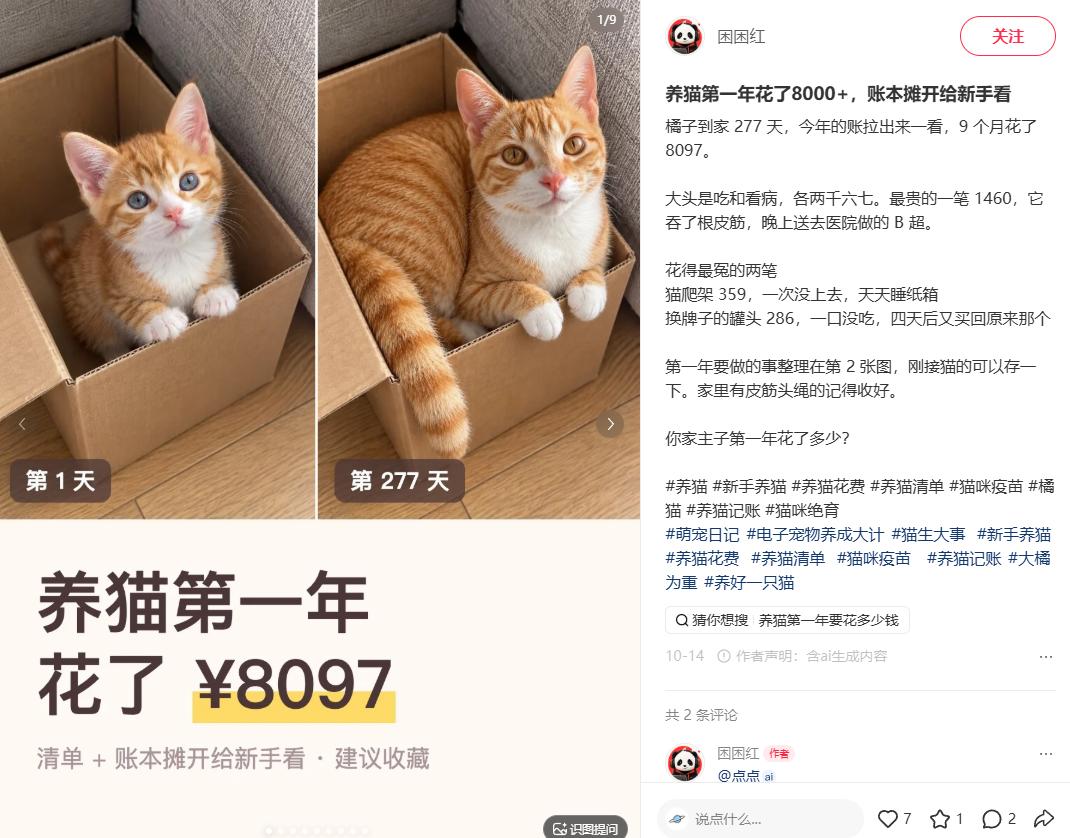
Yet they never skimp on spending for their pets. The Shanghai Consumer Council once conducted an evaluation of 40 types of cat food, and surveyed a large number of cat owners in the process. 70% of the respondents said they spend 1000 to 1800 yuan on cat food alone every year. Some people have calculated that keeping a cat drives more than 140 consumer categories a year: staple food, snacks, cat litter, deworming products, toys, cat nests, pet strollers. You need to take your cat to the pet hospital when it gets sick, apply for a beauty card after its bath, find a pet foster care service when you go out for a long trip, and arrange a pet funeral at the end of its life. It can be said that pet keeping is almost never a one-time deal, but a long-term continuous expense.
Xiao Zhang is a young single resident in Changsha. He has kept 4 dogs in three years. "Only the first one was bought by myself. The next two were left to me by my friends who moved far away and couldn't take them with them, and the last one was a stray dog I picked up." He also feels distressed about the money spent on pets: "I have no choice, I can't abandon them. I can only try to reduce expenses: I don't buy big brands of staple food, and I wash the dogs at home by myself. But I still can't avoid spending nearly 2000 yuan a month. Especially in summer, the weather in Changsha is extremely hot, so even when I go to work, the air conditioner at home runs 24 hours a day. I didn't even have such good treatment when I was a child."
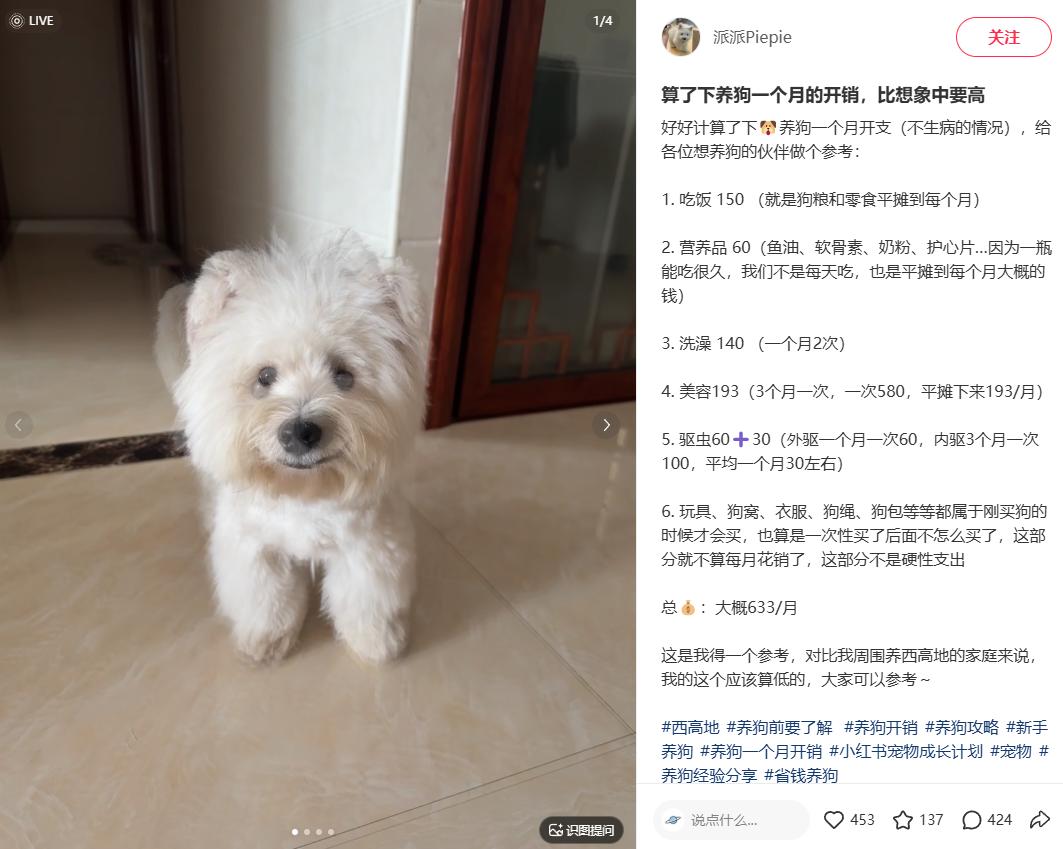
Such willingness to spend is also spreading to new product categories. The market size of pet insurance has increased by 28% this year, with medical insurance taking the largest share; automatic feeders and smart litter boxes have become "must-buy items" for many pet owners. The cats and dogs adopted during the pet-keeping boom from 2016 to 2019 are gradually getting old, leading to growing demand for treating chronic diseases, joint problems and regular physical examinations. The time span of spending on pets is far longer than expected. Many people thought keeping pets was a one-time consumption, but never expected that the long-term investment would be far more expensive.
The market is so huge, why can't brands make profits?
Seeing such a huge market, most people's first reaction is that pet brands must be making huge profits, right? But the fact is completely the opposite.
Not long ago, 6 listed pet food companies released their third-quarter financial reports. Their total operating revenue rose by 13% to 15.769 billion yuan, but their net profit plunged by 52% to only 574 million yuan. Looking at the 6 brands separately, all of them saw revenue growth but no profit growth. The largest player, Fankes Pet, had a net profit margin of only 1.45% in the third quarter, which means that for every 100 yuan of cat food sold, only 1.4 yuan ends up in its own pocket.
This situation does not only occur in the pet food sector. Several listed pet product companies are also facing the same problem. For example, Tianyuan Pet recorded a revenue of 2.487 billion yuan in the first three quarters, up 7.05% year on year, but its net profit fell by 48.49% year on year, with the net profit margin dropping to only 1.17%.
Puleke, which focuses on pet medical products, saw its revenue fall by 10.32% year on year in the first three quarters, and its net profit drop by 49.38%.
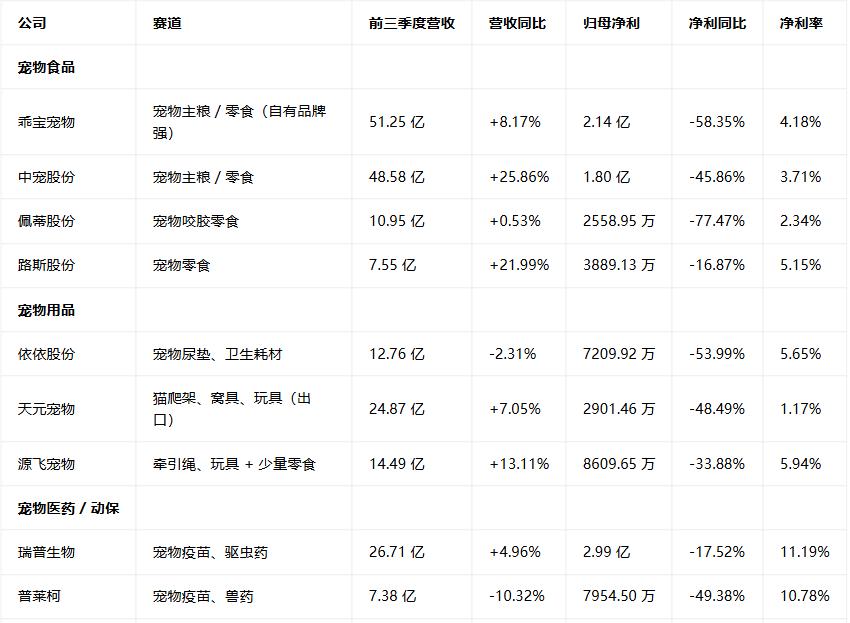
Third-party institutions predict that the entire pet market will exceed 330 billion yuan in 2026. Young people spend money on their pets covering everything from pet food to vaccines, physical examinations, insurance and funeral services, with no expense spared. However, few players in this track have actually made real profits.
So young people have spent their money, but brands cannot make profits. Where has the money gone? Each party has its own difficulties.
Pet food and product companies are trapped between rising costs and marketing expenses. Fankes Pet's revenue in the first three quarters of this year was 387 million yuan higher than that of the same period last year, but its cost increased by 408 million yuan. The price of white feather chicken, the main raw material of cat food, rose by 1.7% this year, which ate up a large part of their profit. The same goes for pet product manufacturers: Tianyuan Pet directly pointed out in its quarterly report that "the rise in raw material prices has also led to higher costs".
Then there is the traffic cost occupied by marketing. Nowadays, every bag of pet food sold has to go through layers of links including live streamers, platforms and paid traffic delivery. Fankes Pet's sales expenses in the first three quarters reached 1.241 billion yuan, up 20% year on year; Zhonghong Pet's sales expenses hit 667 million yuan, up 44%; even Yiyi, which makes pet pee pads, mentioned in its third-quarter report that "the publicity expenses for self-owned brands have increased", and a large part of the sales revenue is divided up in this way.
Of course, there is also cutthroat competition in the industry. Domestic pet food brands keep undercutting each other on prices: you launch trial packs, I offer discounts for new customers. If old brands don't follow suit, they will fall behind, but if they do, their profits will be further squeezed. When price competition can't go further, they turn to product category competition. Fresh pet food and baked pet food have become increasingly popular in the past two years, and many pet owners buy them for freshness and health. New categories sound high-end, but behind them are huge investments in R&D, production lines and traffic delivery. The competition is fierce, but there is not much profit left in the end.
In addition, many brands' export business accounts for a large proportion of their revenue, so they inevitably suffer from "increased exchange gains and losses caused by RMB appreciation". But the most fatal factor is cross-border entry, which has disrupted many tracks. Is the pet track next in line?
Cross-border players pour into the pet food market
There is a saying: "The one that defeats you may not be your peer, but very likely a cross-border entrant."
Just like decades ago, in the camera industry, Canon, Nikon and Sony competed with each other for decades, but in the end it was not any camera manufacturer that killed the point-and-shoot camera market, but smartphones. The same thing happened to instant noodles: Master Kong and Uni-President fought for 30 years, but it was not each other that made instant noodles less popular, but the rising takeout, Luosifen and self-heating hot pot in recent years.
Back to the pet track, several listed companies are still competing fiercely on prices, while outsiders who make milk powder, sell dairy products and produce snacks have already queued up to enter the market.
Yili was one of the earliest entrants. It established its subsidiary Kang Yijia in 2021 with a registered capital of 120 million yuan, and carried out multiple capital increases afterwards; it launched its pet brand "Yibao" in 2023. It applies the standards for making infant formula to pet food: it screens strains from the intestines of healthy dogs and cats to develop probiotics specially for pets; later it launched a goat milk sandwich kitten food with 70% fresh meat and goat milk powder, focusing on "lactoferrin supplementation". Young people raise their cats as their own children, so Yili makes pet food following the logic of raising children.
In the same track, leading cheese brand Milkland also launched its pet brand "Aojue". Relying on its mature cheese fermentation technology, it specially develops low-lactose pet cheese wet food targeting picky eaters and elderly cats and dogs, and transfers its R&D capability of human cheese to pet snacks.
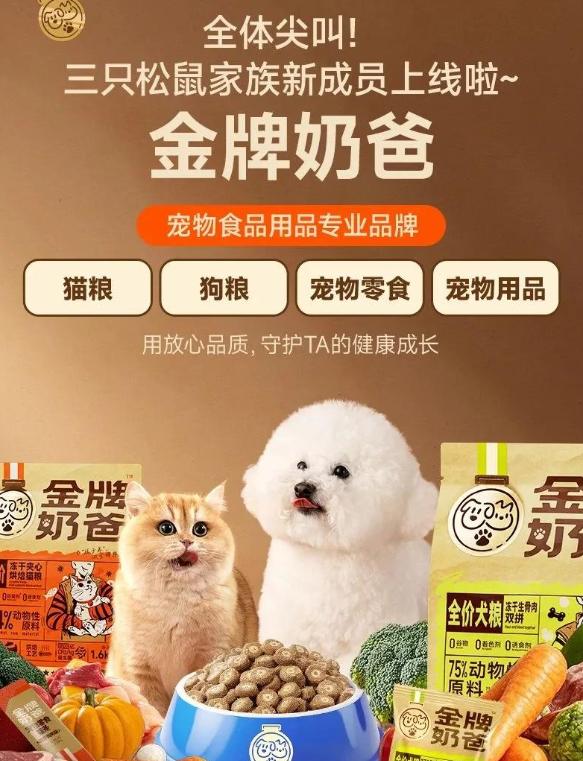
Leading casual snack brand Three Squirrels established an independent subsidiary to incubate its pet brand "Golden Daddy", launching baked cat food, staple food lunch boxes and freeze-dried snacks. It reuses the snack industry's supply chain, e-commerce traffic delivery and quality control system, and competes head-on with professional pet food brands on Douyin and Tmall. Want Want Group chose to make a strategic investment in the emerging pet brand Maoxingqiu, injecting its food R&D, industrialized production and channel resources into the pet track to enter the market indirectly.
Large meat product manufacturers entered the market with inherent raw material advantages. Jinluo launched a pet food project with an annual output of 200,000 tons, relying on its slaughtering capacity for live pigs and white feather chickens to directly supply fresh meat raw materials needed for pet food. Shuanghui led the investment in pet food company Zhongyu Pet Food. Wen's Holding took control of pet brands Black Nose and Cat Doctor. Sunner and Delis also cooperated to build factories to produce freeze-dried pet food. With their own meat sources, they naturally have more room for maneuver on raw material costs than pure pet food companies.
Even Moutai has set its sights on this track. Relying on distiller's grains from liquor brewing, it is laying out pet food made from black soldier fly insect protein, using brewing by-products as new protein raw materials, so that pets can also eat "sauce-flavored pet food".
On the one hand, young people regard their pets as emotional sustenance and are willing to keep paying for them; on the other hand, rising raw material prices, high traffic costs, cutthroat competition among peers, and continuous influx of cross-border players are constantly squeezing the profit space of original brands. As a result, the strong market demand has not been translated into corresponding profits.
Conclusion
Consumption downgrade is not a one-size-fits-all choice. Young people are willing to cut their own expenses, but keep paying for the emotional value brought by pets. The pet market is growing larger and larger, but the era when you can make money easily by lying down with the industry dividend has long gone. While demand is growing, supply is also expanding rapidly. The money flows to the raw material end, the platform traffic end, and the continuous influx of cross-border giants. For veteran players in the pet industry, the market is bustling, but making profits is getting more and more difficult.