The "trial period" is over, and Apple has started charging for its AI services.
Smartphones once devoured countless devices with the All-in-One design, but AI has begun to challenge its central position.
Intelligent Agent entities are granted higher permissions. Imagine the OS¹ in the movie *Her*: under the new paradigm, mobile phones may evolve from containers for Apps to new carriers for "intelligent" agents.
This is not only a product evolution, but also a benefit restructuring involving manufacturers, platforms and users.
ifanr will continuously document the AI transformation of smartphones. This article is the 4th issue of the "AG&I" column, exploring the relationship between "AI phones" and us — Agents & I.
Recently, Apple revealed a charging plan to set a "daily usage limit" for Siri AI in its latest beta system.
Apple, which has always been extremely precise in service commercialization, has finally broken through this unspoken restriction by itself.
Two years ago, when mobile phone manufacturers were shouting in unison that "the first year of AI phones is coming", almost no one expected that the first commercially viable outcome would not be any disruptive interaction revolution, but the unified payment codes launched by all mobile phone manufacturers.
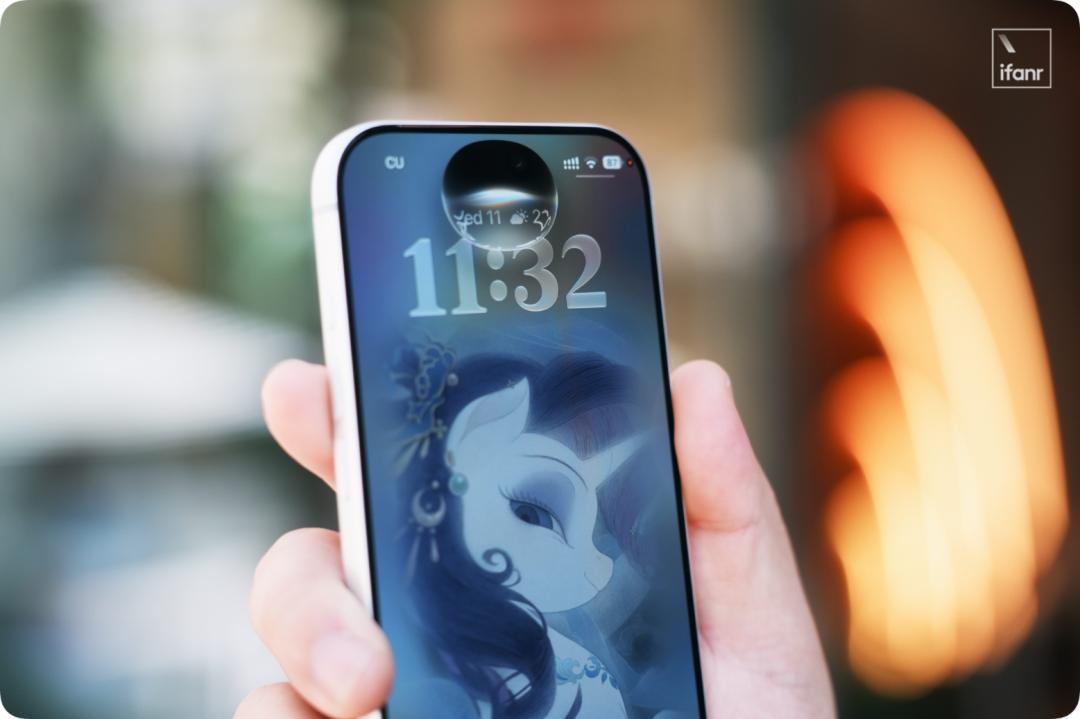
Putting the AI bill into iCloud
In the second developer beta of iOS 27.3 released on November 16, Apple has revealed this charging plan: setting a daily quota for cloud AI computing power.
Specifically, basic device-side instructions such as setting alarms and timers remain completely free, but once you use heavy functions that call Apple's "Private Cloud Compute", sorry, usage limits will be applied.
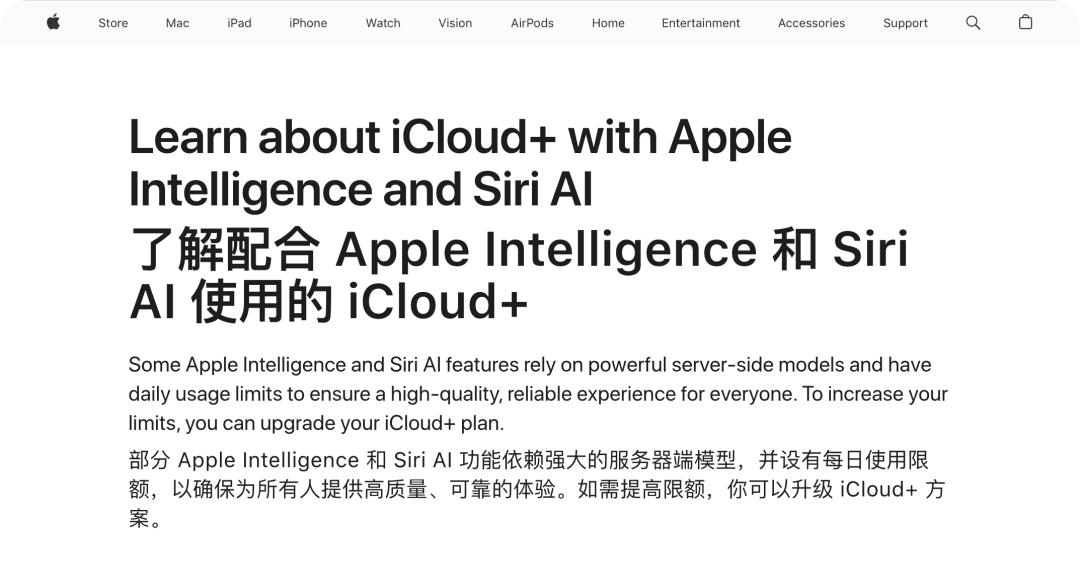
This includes Siri AI that requires multi-step complex reasoning, object elimination and spatial reconstruction in Photos, Image Playground, as well as shortcuts and third-party Apps that call large cloud models such as AFM 3 Cloud.
What is special is that Apple does not use a universal Token balance pool, but sets separate limits by function category — different categories such as Siri, image generation, and shortcuts each have their own independent usage caps.
Apple's set of rules does not ask for money from the very beginning.
Each Apple device you own has its own independent free basic quota every day; when the free quota of a single device is exhausted, the system will then consume the additional quota provided by iCloud+. If you enable "Family Sharing", all family members will share this same additional quota pool on a first-come, first-served basis, until it is fully used up.
If the daily basic free quota is used up, you can either wait for it to reset at midnight the next day, or pay to upgrade your iCloud+ plan.
Users can only upgrade to iCloud+ tiers of 200GB or higher to unlock 2x to 20x quota bonuses (the 50GB entry tier at $0.99 per month offers no bonus at all). Once a certain type of function reaches its daily limit, the system will pop up a notification reminding you to upgrade your plan —
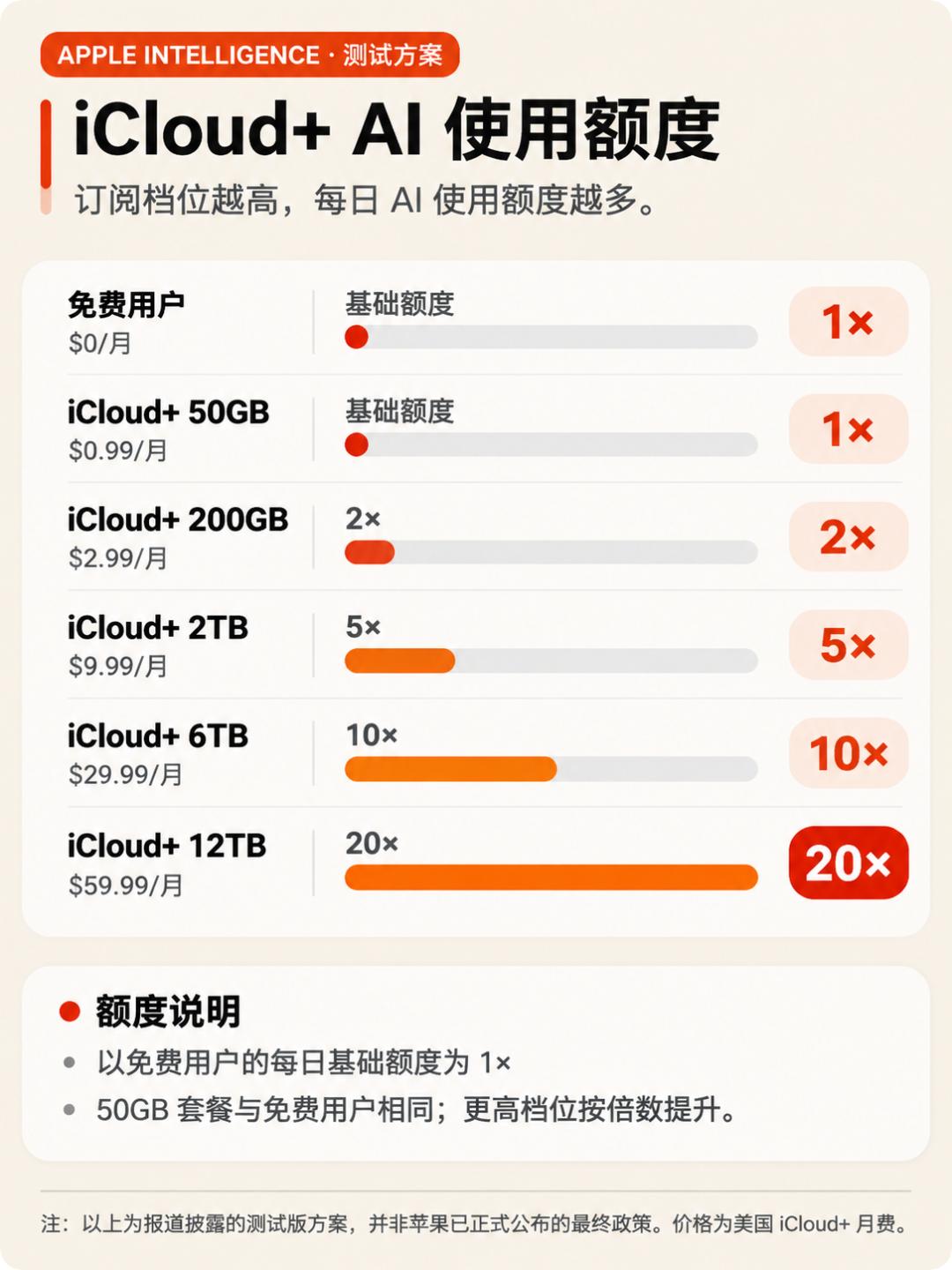
It should be noted that this is not a temporary top-up package that you buy for a day for a few dollars, but a direct change to your original monthly subscription tier. Unless you manually downgrade later, it will automatically renew at the new price next month.
Rumors that Apple will charge for AI functions have long been brewing, and the logic behind it is very simple —
Back at WWDC 2024, when Apple first presented the grand vision of Apple Intelligence, its core selling point was "device-side processing first" — which could not only take privacy protection into account, but also reduce dependence on cloud computing power. Apple even explicitly stated at the conference that Apple Intelligence would be provided to users for free.
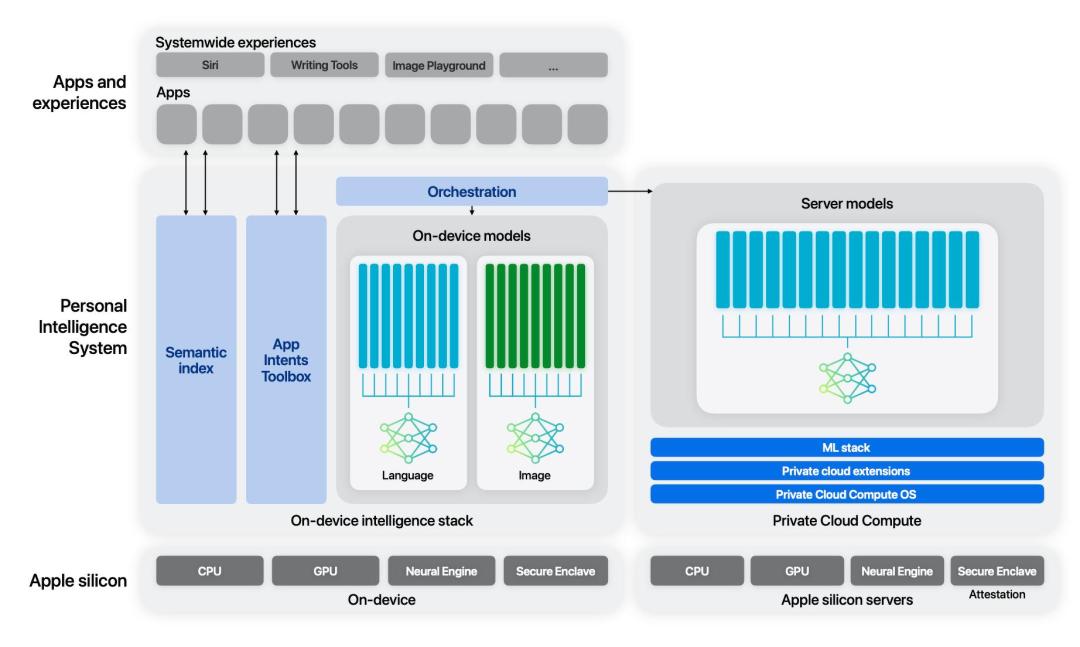
But in 2026, as Siri moves toward a real Agent experience, Apple's reliance on this architecture is also changing. The most direct manifestation is that Apple has even specially launched AFM 3 Cloud Pro, which is responsible for handling more complex Agent tool invocation and reasoning tasks.
If the local hardware cannot run the tasks, the cloud will burn money, and every round of reasoning is backed by server electricity bills and computing power costs. From this perspective, it is completely foreseeable that Apple will start charging.
However, instead of launching a separate high-priced "AI membership" to directly irritate users, hiding the computing power quota in the iCloud+ subscription is undoubtedly a more covert commercialization method.
How do AI phones charge for services?
Apple's calculation is actually a portrayal of the entire mobile phone industry at the end of 2026 — mainstream domestic Chinese manufacturers have also gradually started charging for AI computing power through various methods such as points and usage quota.
Hearing that the built-in AI functions of mobile phones are starting to set limits and charge, many people's first reaction is probably that they are going to be "harvested as leeks" again. But we believe that this is not a bad thing — it can even be said that when manufacturers decide to make charging transparent, users will feel more at ease when using the services.
From the call of "the first year of AI phones" in 2024 to the first half of 2026, all manufacturers have been using "completely free" services for market education.
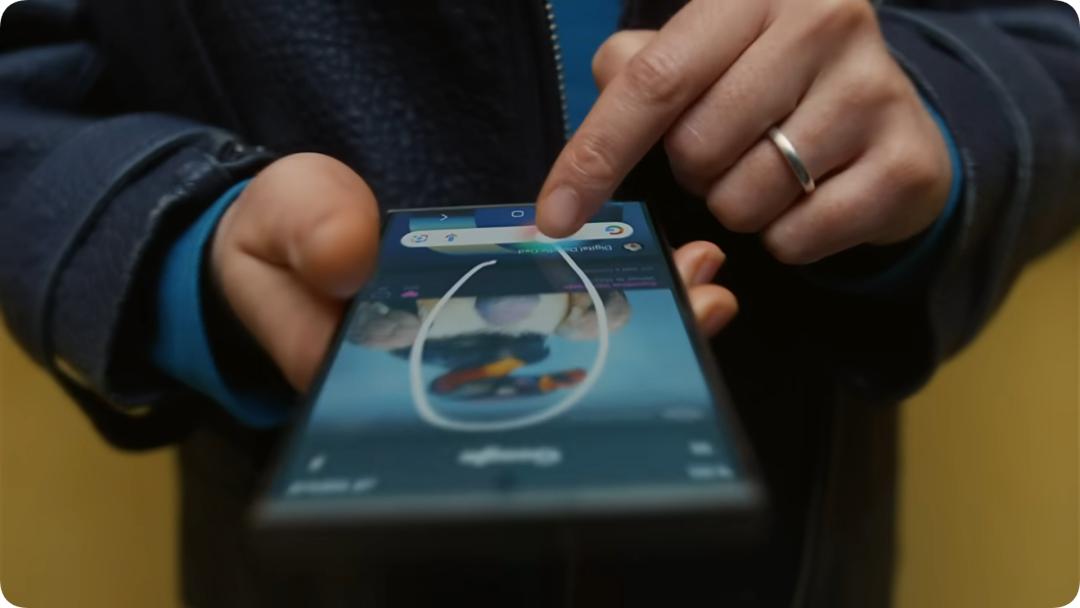
The reason for this approach is essentially that the industry is still in the promotion and subsidy period of expanding market share. Before the commercial closed loop is fully established, every complex instruction sent by users and every cloud-generated expanded image consumes real server and power costs.
But free does not mean that the overhead disappears out of thin air, it is only temporarily covered by the manufacturers.
In order to control the expanding computing power bills, manufacturers will inevitably make trade-offs in service supply: limit the daily number of calls, shorten the context length, or dispatch models of different specifications according to the complexity of tasks. These actions are essentially looking for a balance between experience and cost within a limited budget.
In other words, the free model does not solve the cost problem of AI, it only hides this cost behind the product experience — the "free AI" that users get is always a service constrained by cost.
By the end of 2026, the public's awareness of AI has changed. After two years of high-frequency popularization, ordinary users may still have misgivings about "paying subscription fees after buying hardware", but they have at least stepped out of the inertial cognition of the traditional Internet that "software has zero marginal cost".
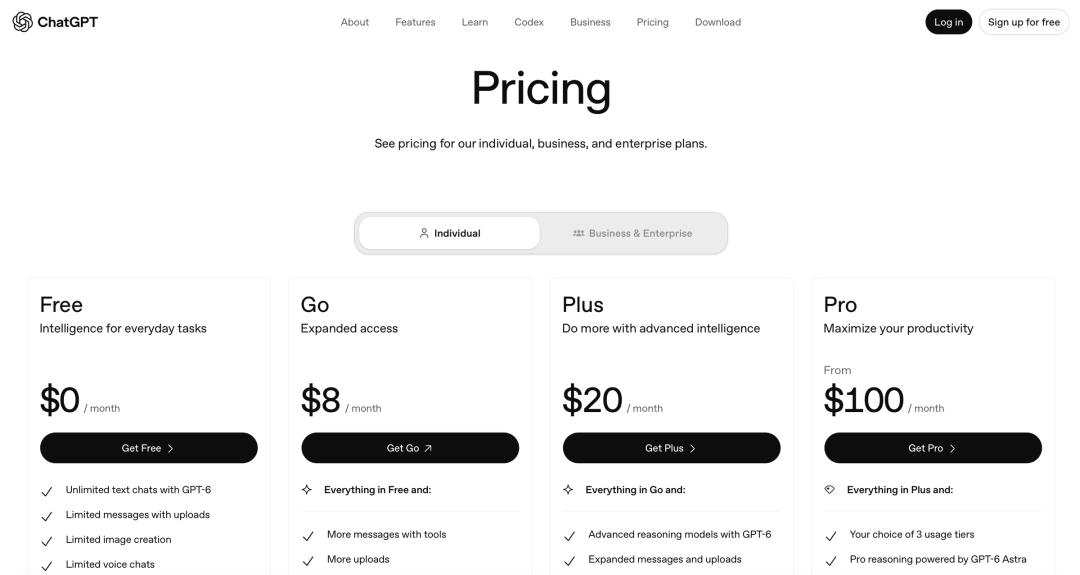
Whether it is the repeated reminders of the "deep thinking limit" from various manufacturers in the early stage, or the popular science about end-cloud computing power that users have heard a lot of in recent years, the fact that "smarter reasoning consumes servers and electricity" has gradually changed from common sense within the industry to public expectation.
Of course, understanding the cost does not mean being willing to pay. The real change is that the industry has finally returned the right of choice to the market: for daily light demands, the free version is basically sufficient; once complex tasks, higher quotas or more stable outputs are involved, paying becomes a reasonable choice.
When AI evolves from a novelty function to a high-frequency rigid demand, the infinite subsidy model is obviously unsustainable; and users' awareness of computing power costs has finally laid the foundation for the "charging" issue to be discussed openly and seriously.
At the end of the day, AI is essentially a business of "paying for results".
Instead of long-term enduring the "basic version" where your hands are tied by computing power in seemingly free rules, it is better to cross this threshold and use reasonable payment to exchange for a stable and reliable delivery result — for both manufacturers and users, this may be a healthier business cycle.
Although "charging for AI" has become a consensus, the billing method on mobile phones is still in the stage where every manufacturer is exploring by trial and error.
If we look at the more mature PC side first, the AI charging model has been basically clear:
The first one is the most common "ChatGPT-style" monthly subscription — pay monthly, get sufficient usage quota within a fixed cycle. Once the upper limit is reached, you can either pay more to upgrade, or wait patiently for the quota to reset.
The second one is the familiar "Token purchase" model for developers and heavy users — priced according to the actual computing power consumption of input and output, pay for what you use, and the bill is accurate to the smallest unit.
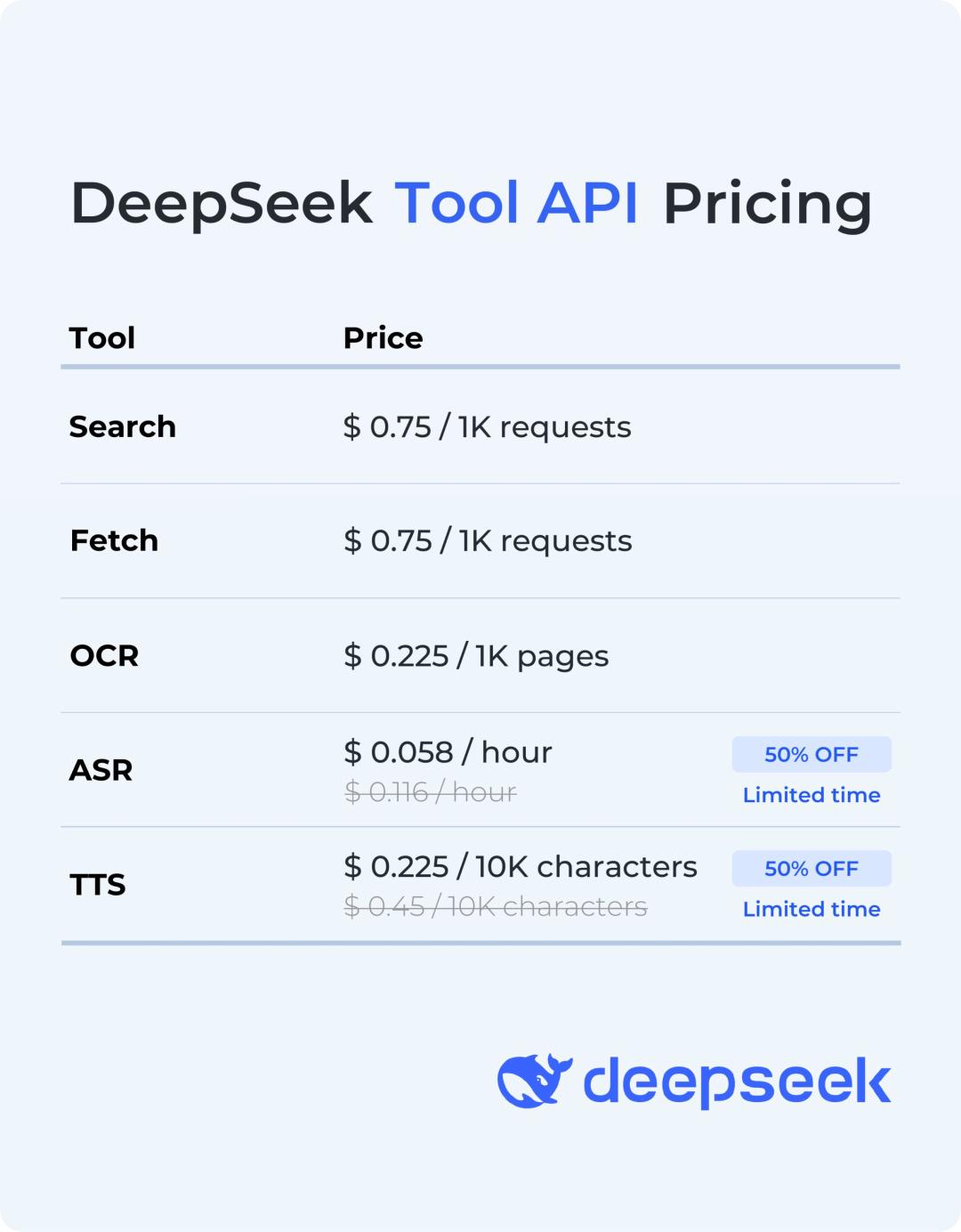
The third one is rather special, which is the "point system" used by WorkBuddy. Its logic is to let users recharge and exchange for points first. Every time the user asks AI to perform a task, the background will deduct the corresponding number of points according to the actual computing power called — to put it bluntly, the abstract underlying computing power is packaged into more intuitive "points".
Interestingly, if we look back at the various AI payment plans launched by current mobile phone manufacturers, we will find that many manufacturers' ideas are exactly the same as WorkBuddy's.
For example, the newly launched Xiaoyi AI membership of Huawei, in addition to basic capabilities, Huawei has built a point system for high-level AI capabilities, which is provided as a subscription together with cloud storage. Users can get 200 points for free every month to experience high-level functions, and the paid plans start from 49 yuan/month (1000 points), up to 499 yuan/month which offers 15000 points and 2TB of cloud space.

In Xiaomi's Super Xiaoai 2.0, the fast mode is free and does not consume points; points are only consumed when you switch to the expert mode to perform complex tasks and content generation.
Xiaomi provides 1000 free points for each account every month, and the paid plans adopt tiered pricing, with the continuous monthly subscription preferential prices of 19 yuan, 39 yuan and 99 yuan respectively, corresponding to 4000, 10000 and 34000 points.
Even looking at manufacturers that have not officially launched paid subscriptions, whether it is the basic call frequency, or specific AI functions such as image generation and image editing, for example, Xiaomi's "Legendary Moment" or OPPO's AI Photo Editor, more or less every manufacturer has a daily number of calls or usage limits in the background.
From this trend, it is only a matter of time for every manufacturer to move from "free with limited quota" to "paid for expanded capacity".
At present, it is still hard for us to assert which billing model is better, but if we compare all these plans together, we will find a very interesting observation:
Compared with the more "meticulous" calculation method on the PC side, mobile phone manufacturers are all consciously avoiding specific Token numbers, and instead adopt points, usage counts, or even quota pools that hide the specific number of times like Apple does.
There is a saying in consumer behavior research called the Taxi-meter Effect — when users need to calculate the cost for each use separately, they will more easily perceive the cost of a single consumption, thus inhibiting their willingness to use and reducing the experience.
Displaying the specific Token consumption will make people can't help staring at the calculation cost of each operation; while replacing it with points or quota pools, users' attention will shift to "how much available resources I have left", which imperceptibly changes the way people perceive the cost of AI.
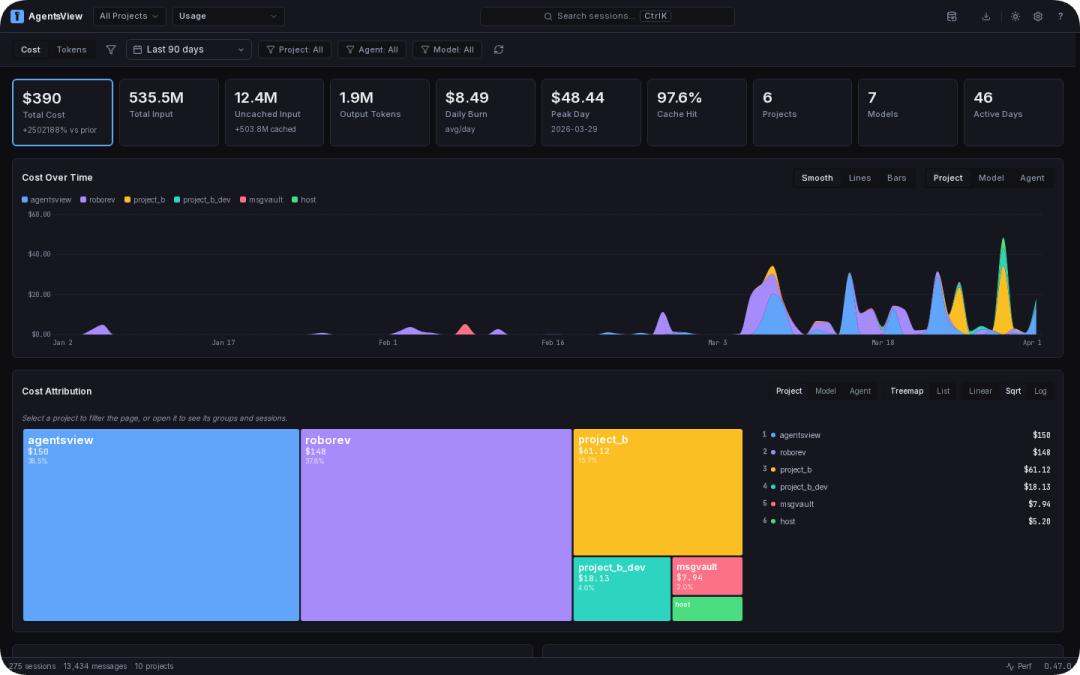
Compared with the in-depth office work that often takes dozens of minutes in front of a computer, many AI demands on mobile phones are often scattered and fragmented — it may just be casually removing a passerby in a photo, or asking the voice assistant to summarize several unread messages.
If every time you trigger such a light operation, the corner of the screen pops up "This consumption: 3,200 Tokens" as accurately as a taxi meter, it will make users unconsciously calculate the cost before every tap.
From this perspective, packaging the underlying computing power into points or quota pools weakens the psychological friction of users during daily scattered use — this appropriate ambiguity may be the right solution for mobile AI.
Will AI phones become easier to use after charging for AI services?
In the final analysis, the reason why AI phones are hesitant about "how to charge" is that the