The Next China Remains China: A Century of Accumulation, McKinsey's Over 40 Years of In-depth Cultivation in China
With a century-long heritage, McKinsey has been deeply rooted in China for over 40 years.
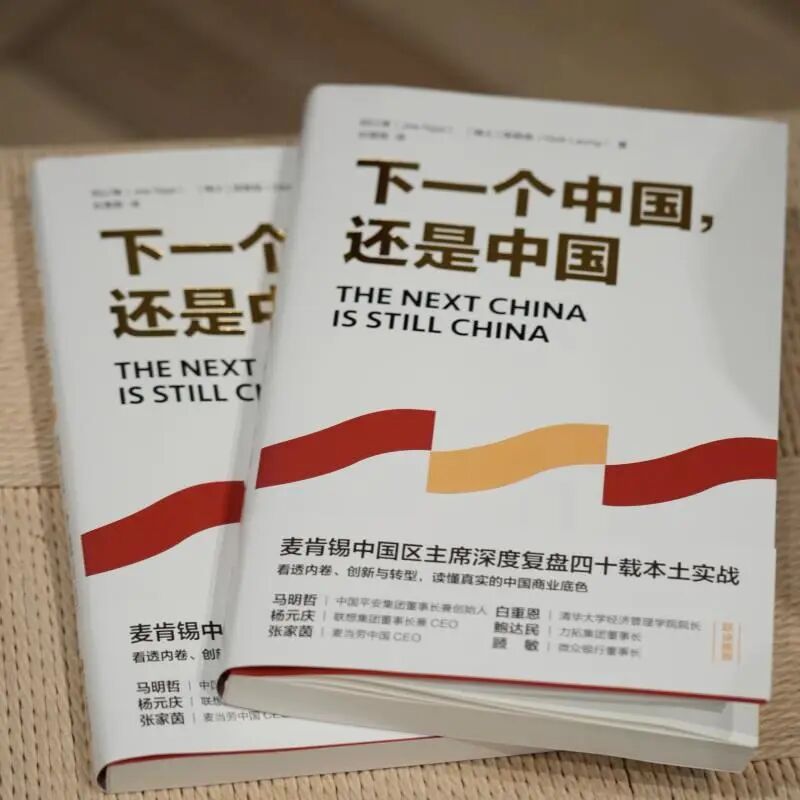
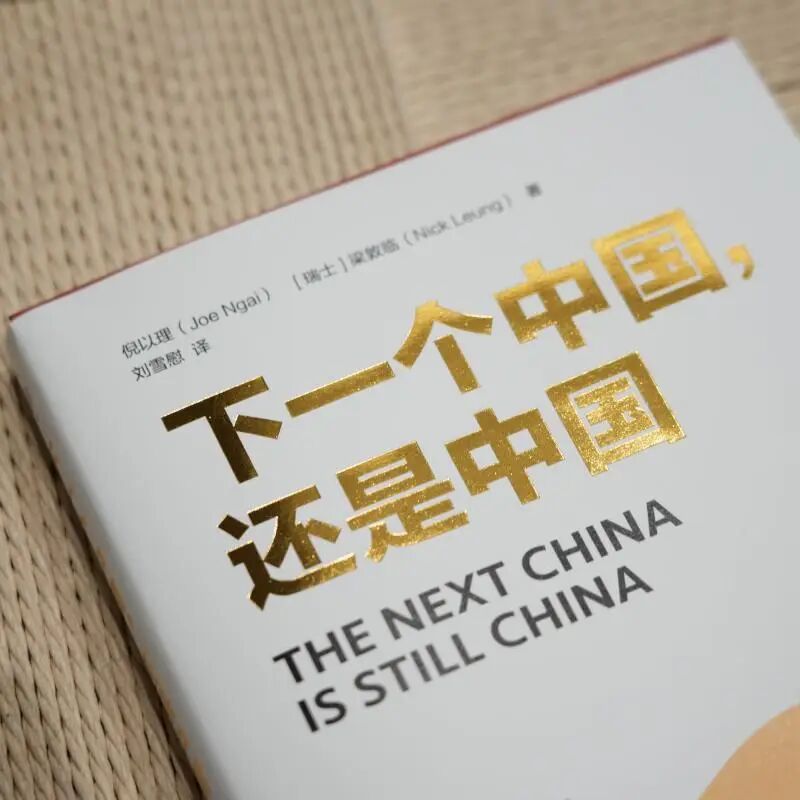
Joe Ngai, Chairman of McKinsey Greater China, and Nick Leung, who previously led McKinsey's China region for 12 years, have co-authored the book The Next China Is Still China, which is now officially on sale, with the limited signed edition launched simultaneously.
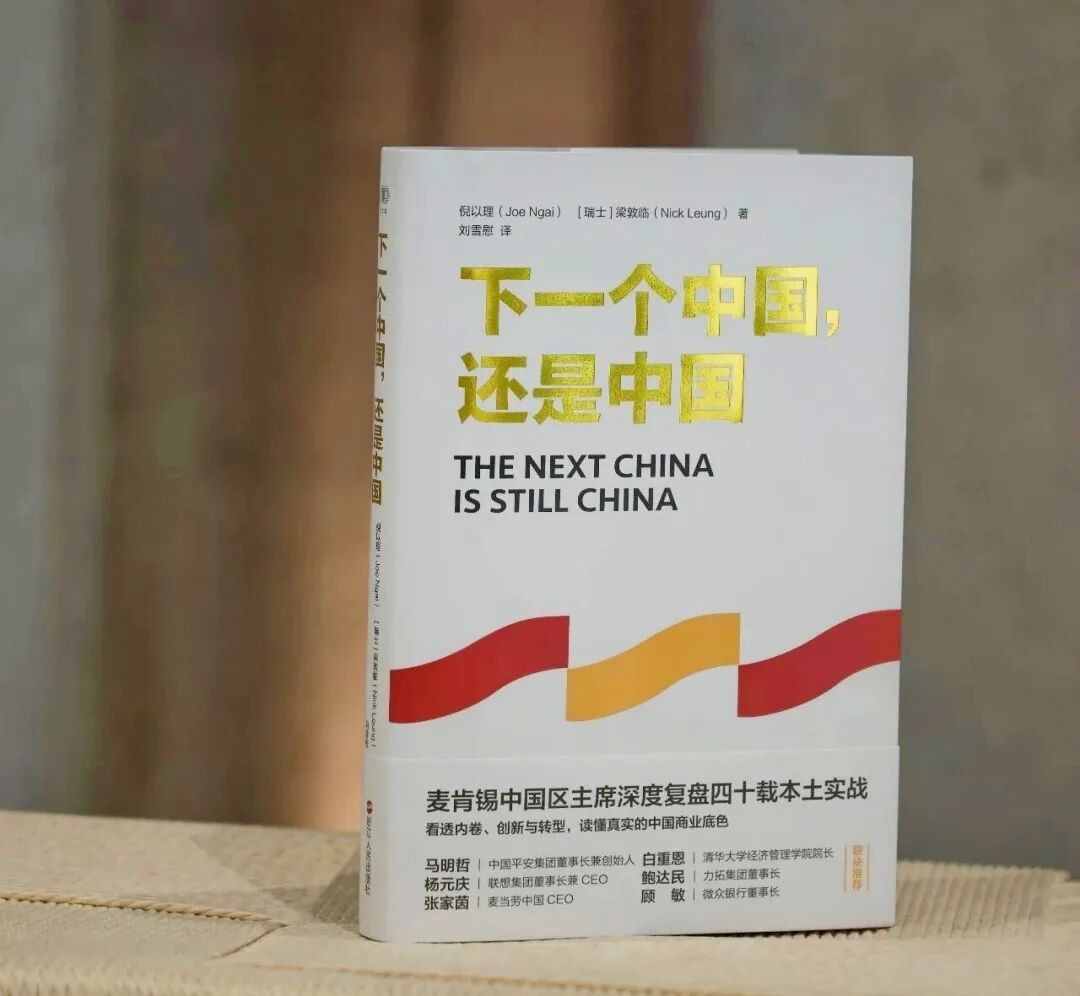
Drawing on McKinsey's more than 40 years of frontline consulting experience in the Chinese market, and integrating practical insights from global business leaders of Ping An, Lenovo, McDonald's, Hong Kong Exchanges and Clearing, Harvard Business School and other institutions, this book puts forward a core thesis: The next China is still China.
This is a market research and practical operation guide for enterprise managers and investors. It helps readers break away from fragmented public opinion misunderstandings, objectively face up to practical challenges such as involution, debt, and demographic transition, and understand the resilience, current situation and future of Chinese business.
Excerpted from the prologue of *The Next China Is Still China*
Text by | Joe Ngai [Switzerland] Nick Leung
In January 2023, the World Economic Forum in Davos, Switzerland was held as scheduled. At this annual closed-door event gathering global political and business leaders, dozens of CEOs and executives of large global enterprises deeply engaged in the Asian market gathered at a private dinner, with only one theme for the night: China.
The dinner was hosted by McKinsey & Company, and was personally presided over by Joe Ngai, Chairman of McKinsey Greater China and one of the authors of this book. Over the past few years, he has presided over dozens of similar dialogues, but that night, an indescribable subtle atmosphere permeated the air. The business leaders present were all pioneers who had heavily invested in China over the past two decades and reaped fruitful results riding the wave of China's rise. The business territories they manage have a total of tens of thousands of employees under their banner, supply chains spanning dozens of provinces in China, and their brands are resounding all over the world from Shanghai to London and then to Abu Dhabi. This time, for the first time in everyone's memory, the dialogue did not talk about growth targets or market expansion. Everyone was asking: Is their China market strategy still effective? Questions came one after another, all focusing on the topic of the discussion that night — "Unprecedented Headwinds". It was a storm intertwined with economic uncertainty, geopolitical tensions and drastic technological changes: When will the downward cycle of China's real estate market hit the bottom? Should the board of directors be anxious about the weak consumer confidence? Should we expand our business in India as a hedge against the Chinese market?
Behind each question lies the same sense of trepidation: Is China, as the global growth engine and the cornerstone that has supported countless glories of development, really coming to an end? When the figures of the guests disappeared into the vast white snow, a reporter was still lingering in the corridor, and he asked Joe Ngai a question that had been raised repeatedly in the boardroom: "If all this is the reality right now, where are the future opportunities?" Then a question naturally followed: "Who will be the next China?"
This is by no means an empty philosophical speculation, but the most practical business consideration. Which country, or which countries working together, can take over from China and become the next global engine for growth, profitability and scale expansion? During that week in Davos, the "China + 1" strategy dominated almost all private conversations. As China faced multiple tests of geopolitical tensions, overcapacity, low confidence in consumption and investment, and technological transformation, it had become an urgent priority for enterprises to find alternatives outside China for layout at that time.
When Joe Ngai was responding to inquiries from all parties in Davos, Nick Leung, the other author of this book and Joe Ngai's predecessor, the former Chairman of McKinsey Greater China, was in Shenzhen, half a planet away. This city built with glass and steel is the heart of China's manufacturing ecosystem. He was hosting a procurement seminar for a multinational client at that time. This company has a deep and solid foundation in China — it has a dense supplier network, a highly specialized mold cluster, production lines tailored for speed and precision, and an industrial workforce that can be flexibly increased or decreased by the hour, all of which have brought significant competitive advantages to this company. Given the great stakes of this matter, the company's global CEO also came to the scene in person to discuss countermeasures.
The instruction from the headquarters was clear and unambiguous: find growth locations outside China. The reason was that they believed that the costs here were rising steadily, policy risks were becoming more and more unpredictable, and the enterprise urgently needed an alternative solution without delay. Nick Leung and his team spent months stress-testing various scenarios repeatedly, but every alternative path led to the same conclusion: "No place can perfectly replace China, we can only settle for the second-best option." If other countries are chosen, the so-called promises of stability and efficiency are very fragile. Continually rising wages and raw material costs will eat up all potential gains; the frictions of "friendshoring" one after another — logistics blockages, lagging infrastructure, uneven quality control, and lack of understanding of local institutional environments and operational practices — are superimposed on each other. In the end, the CEO spoke the minds of everyone present: "We are suddenly realizing how much we have taken China's complete industrial ecosystem for granted."
Around the world, no other country can match such a top-tier supply chain system with such a huge consumer market so perfectly. In China, enterprises can launch new products at lightning speed, adjust strategies in real time according to the pulse of the market, and continuously iterate and upgrade in practice — which means continuous polishing and improvement in repeated tests and practices. All of this takes place in a digitally connected, highly competitive market, where innovation is never an option, but a prerequisite for survival. So is it any wonder that such an industrial ecosystem with scale, speed and depth is hard to find a second one across the globe?
Against this backdrop, a perception began to emerge. In Davos, executives asked Joe Ngai "Who is the next China"; in Shenzhen, Nick Leung faced clients and found that there was no one-size-fits-all answer to their questions. In dozens of similar dialogues, whether in boardrooms, industry forums or corporate seminars around the world, the same reality has been repeatedly confirmed: companies that go to great lengths to find alternative solutions often struggle to find the answers they really want. This is not because the macro pressures facing China have eased, but because everything China has is almost impossible to replicate anywhere else in the world.
Six weeks after the Davos talks, on a flight flying over the South China Sea, we finally condensed this perception into that seemingly simple but meaningful conclusion: The next China is still China.
Joe Ngai posted this sentence on the LinkedIn platform. He thought it would only cause a few ripples, but unexpectedly it caused a huge stir and sparked global heated discussions. This sentence was not mentioned for the first time; every time China's development encountered setbacks and a certain industry fell into a downturn before, someone would bring it up. But this time, it triggered a completely different response. This sentence was cited more than 28,000 times by Chinese and foreign media such as China Daily, CNBC, Bloomberg and others. In the following months, clients of multinational giants and local Chinese enterprises invited McKinsey's consultants to bring this perspective to their board meetings and investor conferences. The CEO of a consumer goods company invited us to analyze for the board of directors whether the headline news of "sluggish consumption" was true; a private equity founder asked us to analyze which sectors in China still have investment value at his limited partner investor conference; an entrepreneur asked for advice over lunch on how to restructure the company to achieve overseas growth.
From then to today, we have always strived for precise wording and been prudent with every word. China's economic growth rate is indeed slowing down, its economic development has entered a mature stage, market competition is becoming white-hot, corporate debt remains high, and consumer confidence is insufficient, which cannot reverse the drag on the economy caused by the continued sluggish real estate market. Today's China is no longer what it was in 2010, and it is even very different from what it was in 2019. This is an important adjustment. Compared with the skyrocketing growth of the past 20 years, the current contrast really sounds like the sudden sound of slamming on the brakes, harsh and unexpected.
But cold data tells a more resilient truth: even if China's economy only maintains an annual growth rate of 2%, the new economic aggregate in the next 10 years will be equivalent to the total economic volume of India today; if it can reach the 5% growth rate of the past few years, the new total will be comparable to the sum of the current economic size of India, Japan and Indonesia. Today, China is already the world's second largest economy, the largest economy calculated by Purchasing Power Parity (PPP), and the largest trading partner of more than 120 countries — a figure far exceeding any other single economy, and contributing about 30% of global economic growth.
No matter how many light boats form a fleet, they cannot match the overwhelming momentum of a giant oil tanker. From the perspective of the essence of economic growth, China has long surpassed the simple stage of quantitative growth, and is playing an increasingly important role at the quality level, with its shaping power over future global technology, business models and industrial patterns increasing day by day. Among the 18 high-growth "tracks" identified by McKinsey as the future global value engines, Chinese enterprises are in leading positions to varying degrees in 16 of them (from artificial intelligence software, cloud computing infrastructure, to electric vehicles, e-commerce, consumer internet).
We are not saying that competition will become easier when you are in "the next China" — on the contrary, competition will only become more intense. The threshold for success has been greatly raised, and the development outcomes of enterprises will show a more disparate differentiation. Only those who are willing to fundamentally rethink the logic of competition can go steadily and far. This shift towards "the next China" is both macro — shifting from hard manufacturing to service industry and intellectual property creation, and micro, where enterprises urgently need to cultivate brand new core capabilities: the ability of cross-border operation, the ability to build and defend global territory and brands, the ability to manage large-scale intellectual property, and the ability to deeply integrate artificial intelligence and robotics into the texture of business. For Chinese enterprises, this means sailing out to sea to extend their global reach, and improving the maturity of organizational operation; for multinational enterprises, it means jumping out of the simple mindset of "selling goods to China", and instead stepping into China's innovation ecosystem in person to seek in-depth cooperation and co-construction. For both sides, as long as they keep up with the pace of the times and continuously adapt to changes, the returns are still considerable.
We never believe that there is a one-size-fits-all ready-made solution in the world. You may regard this book as a nautical chart, which condenses our decades of practical experience deeply rooted in China. On this chart, we have outlined both the constant currents with relatively stable direction and speed, and marked the hidden risk reefs. The development forces we describe will exist for a long time, but the tactics, timing and execution of enterprises must change with the situation.
May you embark on this journey of riding the wind and breaking the waves with us. As we will tell in the book, learning how to compete and win in the Chinese market will give you the confidence to win anywhere in the world.
The next China is still China. The real key is: does it belong to you?
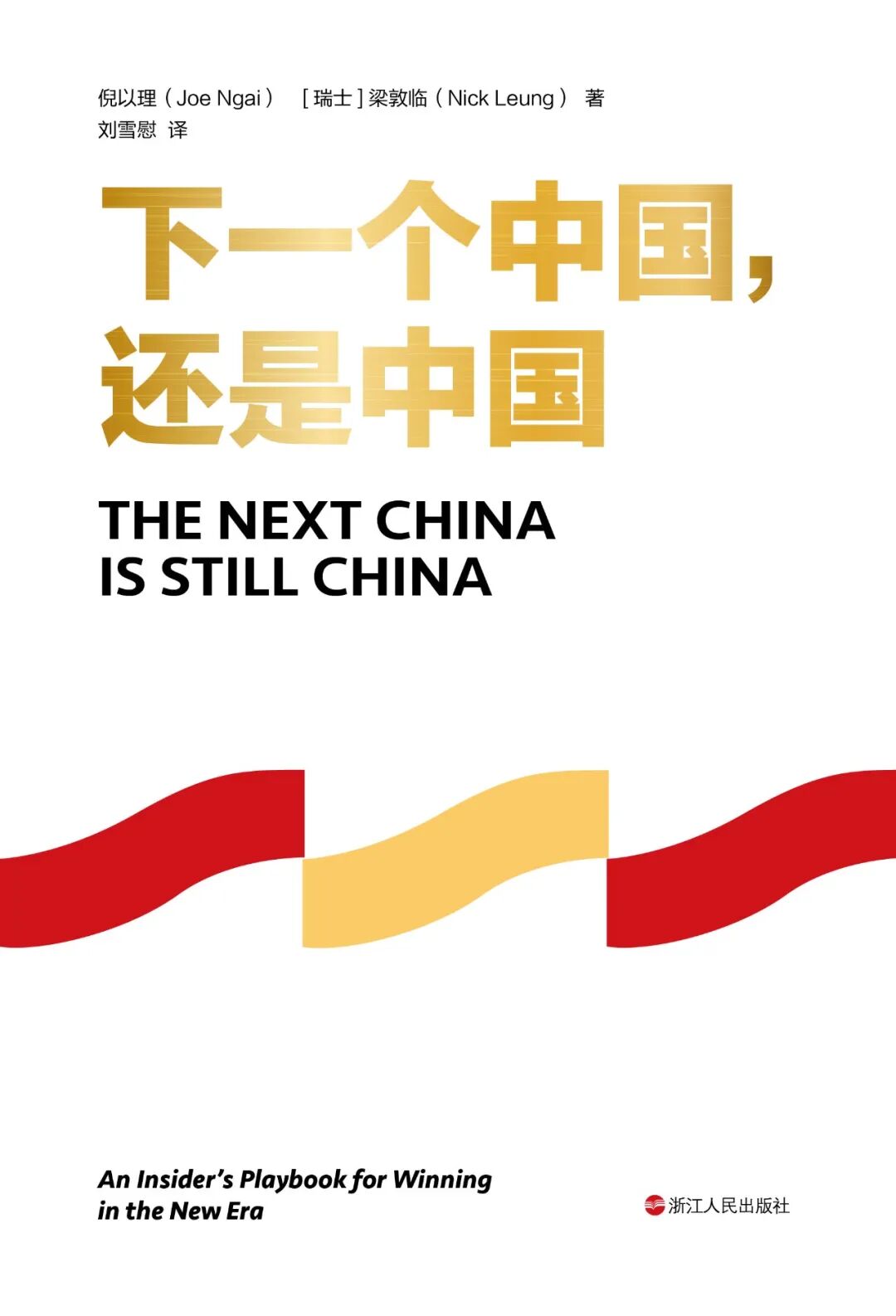
Authors: Joe Ngai [Switzerland] Nick Leung
Translator: Liu Xuewei
Publication Date: November 2026
Content Introduction
Drawing on McKinsey's 40 years of frontline consulting experience deeply rooted in the Chinese market, and combining practical insights from global government and business leaders including Ping An, Lenovo, McDonald's, Hong Kong Exchanges and Clearing, and Harvard Business School, this book puts forward the core thesis: The next China is still China.
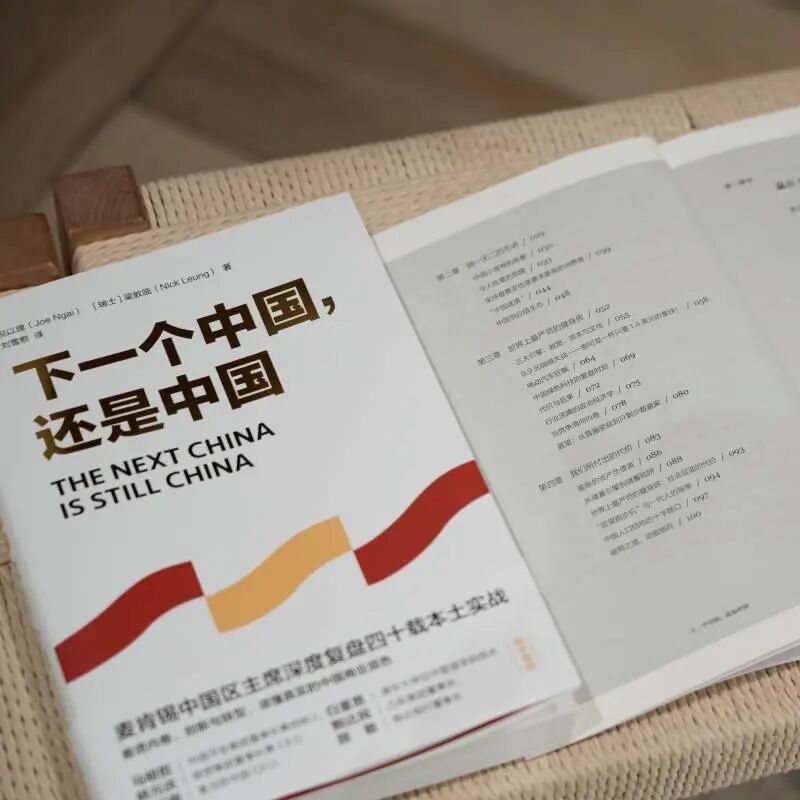
The whole book is divided into three sections, and conducts analysis based on a large number of real cases of Chinese and foreign enterprises. The first part reviews the rise of Chinese business, and analyzes unique advantages such as the super-large market, complete supply chain, rapid iteration and fierce competition. The second part focuses on the new stage of economic transformation, abandons the old model of extensive expansion, and provides practical operation plans, pointing out development paths for multinational enterprises and local enterprises respectively, emphasizing three core strategies: delegating power to local teams, deeply cultivating segmented tracks, and independent innovation. The third part predicts the long-term industrial trends, and interprets key changes such as the going global of domestic Chinese IP, characteristic AI, robotics, globalization of Chinese enterprises, and intergenerational inheritance of entrepreneurs.
This is a market research and practical operation guide for enterprise managers and investors.
Joe Ngai
Senior Global Managing Partner of McKinsey, Chairman of McKinsey Greater China, leading the Beijing, Chengdu, Hong Kong, Shanghai, Shenzhen and Taipei offices. He has helped many Chinese and multinational enterprises complete major transformations, and provided strategic consulting for many top business leaders. As a frequently invited guest of international media such as CNBC and Bloomberg, Joe Ngai was awarded the title of "2023-2026 Forbes China Top 100 Most Influential Chinese", and was named "2022 Multinational Enterprise CEO of the Year" by Jiemian News. He holds a Bachelor of Arts in Economics, Master of Business Administration and Juris Doctor degree from Harvard University.
[Switzerland] Nick Leung
Senior Global Managing Partner of McKinsey, member of McKinsey Global Board of Directors, and also the core head of McKinsey Global Institute (the company's independent research institute), leading research in the fields of macroeconomics, global trade and geopolitics. Since he was stationed in Asia in 1997, Nick Leung served as Chairman of McKinsey Greater China for 12 years, during which the region experienced its fastest growth stage. He holds a bachelor's degree and a master's degree from the London School of Economics and Political Science.
Liu Xuewei, member of Shanghai Translators Association, former deputy editor-in-chief of *Business Review*. She once worked for China Europe International Business School and the Chinese version of *Harvard Business Review*. She is the author of *The Great Competition*, translated Peter Drucker's work *Managing for Results*, and translated nearly 40 films and TV works such as *Harry Potter*. The co-translated work *Jurassic Park 2* won the "Best Dubbed Film Award" at the 4th China Huabiao Film Awards.
This article is from the WeChat Official Account "Zhejiang People's Publishing House", and is released with authorization from 36Kr.