Is the "winter" for AI consumer hardware just around the corner?
As Shenzhen once again steps into the global spotlight, in this "Capital of Hardware", a dazzling array of tech products have taken center stage, especially AI hardware.
The humanoid robot "Aibao" makes coffee and ice cream in the smart tea break zone, while "Coconut Kid" delivers candies and drinking water to visitors in the lounge area. In the image service special zone, Insta360 and DJI, the two most popular booths, are constantly crowded with people; outside the venue, Unitree's humanoid robots perform martial arts collectively, Neolithic's unmanned delivery vehicles travel through the streets, and Apollo Go's autonomous vehicles provide scheduled test rides to serve guests and local citizens.
On the first floor of Shenzhen Bay Culture Square, INNO100 has even directly become a viral check-in spot. The store displays more than 1,100 products from over 100 innovative brands, including AI voice recording pods, smart glasses, exoskeleton robots, AI pets and other well-received items.
However, over the past two years, for popular tracks such as AI glasses, AI companion toys, and desktop AI hardware, exhibitions have been held one after another with back-to-back product launches. Looking back, there are very few products that have truly stood out and can be called hits. On the contrary, in Huaqiang North, low-cost AI products everywhere attract a large number of consumers to try out new things.
In addition, an obvious feeling is that this year's AI consumer hardware is increasingly lacking freshness.
The vision is grand, but the market is still very small. This is exactly the current status of the entire AI consumer hardware industry. Amid the alternation of boom and bust, capital has taken the lead in reacting, which is not good news for entrepreneurs.
01. Financing is cooling down
Last year, in the AI consumer hardware sector, investors were still very enthusiastic. Wang Shiyuan, who resigned from Anker Innovations and founded Suisheng Technology in August 2025, secured angel round financing in just three months; and in October 2025, Ethereal Light Realm, the entrepreneurial project led by Ma Ji, former vice president of Xiaomi Group, completed a $27 million (about 190 million RMB) angel round of financing.
There is also Xingen Zhiying, a new company founded by Pan Yuyang, former product manager of ByteDance's Kouzi team, which focuses on AI wearable hardware and also quickly completed its first round of financing.
The entire VC circle has even set off a boom in tracking the "DJI alumni network". People who left DJI have instantly become highly sought-after targets in the investment circle. Investors are scrambling to offer them money, and even went to DJI's headquarters to queue up to poach talents. It is understood that teams with only one or two former DJI employees can also obtain high financing in the name of "DJI alumni" even without mature products or clear mass production plans, and some teams have claimed a valuation of hundreds of millions of US dollars in their first round of financing.
This year, the noisy capital feast has gradually calmed down, and more and more investors no longer pay for empty stories, or even leave the market directly.
According to public data from AIWatch and incomplete statistics by media, after excluding tech giants and enterprises that have not yet achieved product delivery, 63 AI consumer hardware startup companies were screened out. In 2025, 27 of these 63 enterprises obtained financing; by 2026, as of November 11, only 15 enterprises obtained financing, a 44% decrease compared to the whole of last year.
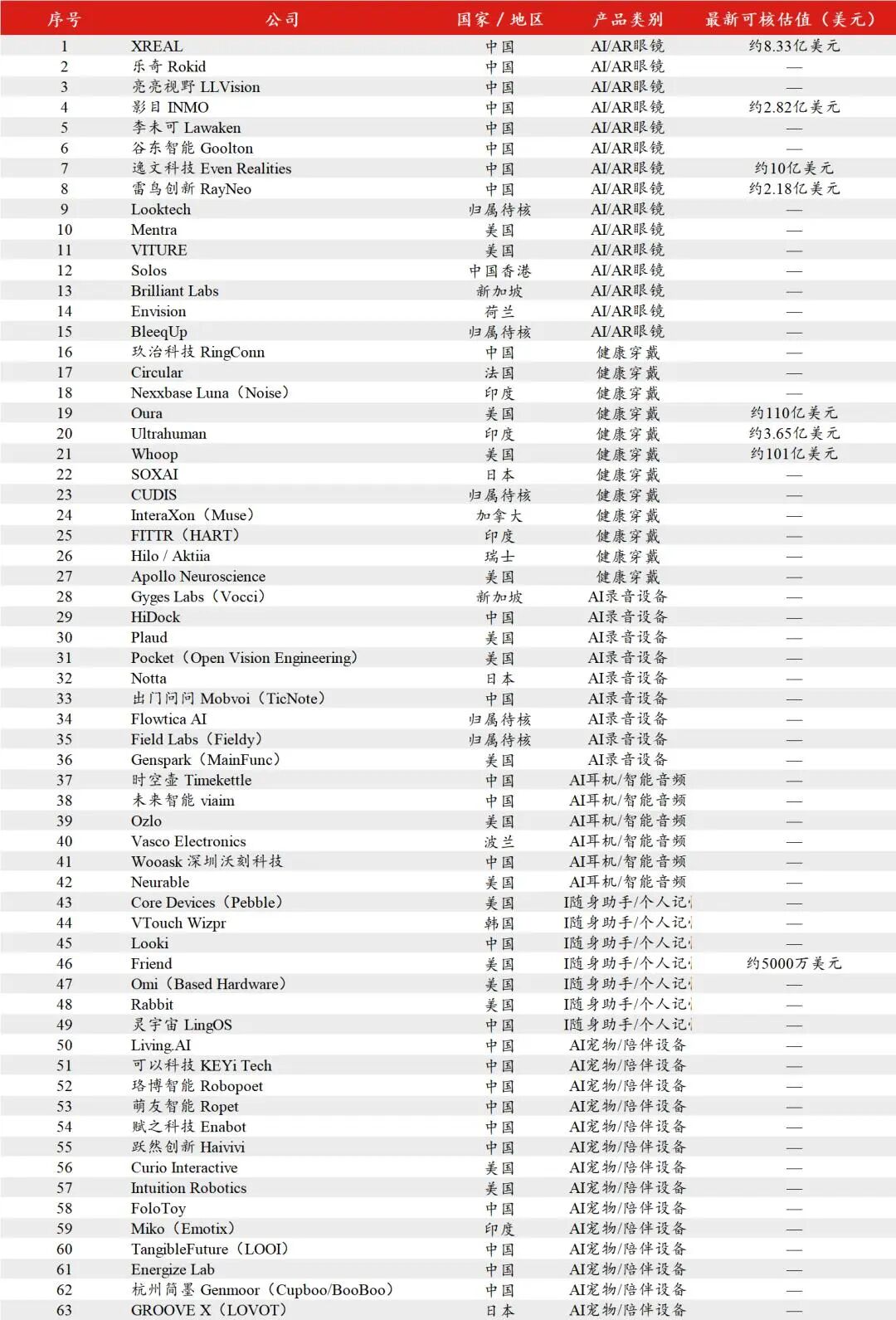
Among them, the number of AI glass enterprises that obtained financing dropped from 9 to 5, and the number of AI companion enterprises plummeted from 7 to only 2.
More specifically, taking the AI toy track as an example, 2025 was regarded by the industry as the "first year of AI toys", and hot money poured in subsequently. Education, companionship and entertainment have become high-frequency vertical scenarios for AI toy product implementation. According to data from IT Juzi, the number of domestic financing events in the AI toy track rose from 3 in 2023 and 14 in 2024 to 19 in 2025. The statistical caliber of Lei Bao is broader, with 33 events in 2025, a year-on-year surge of 83%.
The pace of financing has slowed down significantly this year. According to statistics from Huaan Securities, in the first 7 months of this year, there were only 13 financing events in the domestic AI toy market.
"I have decided to withdraw from the AI hardware track and turn to look at traditional tracks such as beauty care," an investor admitted. Over the past year, he has seen story after story in the AI hardware field that was instantly pushed up by capital, creating a huge valuation bubble. Another vice president of an investment firm also said that many AI hardware products are "looking for nails with a hammer" instead of deriving products and technologies from actual demand. He believes that future innovation will be more vertical and segmented, with very limited market space.
"Outsiders see a bustling scene; insiders see flat sales", this sentence directly points out the contradiction between the financing market and the consumer market. In other words, the current performance of AI hardware in the consumer market cannot support the imagination brought by capital boost, and most companies are only sustained by external financing. Once the capital market cools down, what awaits them may be a cruel winter.
02. The iPhone moment cannot be achieved in the short term
At the very beginning, the reason why AI consumer hardware was favored by capital and saw surging valuations came from the grand narrative that AI redefines personal computing devices. The story of creating new species that subvert smartphones undoubtedly made the entire consumer electronics industry extremely excited. However, once the products hit the market, the fantasy was instantly shattered, and the path of creating a new product category from scratch was proven to be a failure.
Then entrepreneurs began to embed AI into existing mature hardware categories, from wearable devices to toys and almost all traditional hardware categories. New expectations also emerged in the market: will these hardware products driven by AI technology also produce qualitative changes similar to smartphones and bring disruptive development to the industry? As a result, the product launches are filled with a dazzling array of products, each promising "experience subversion".
But has the "iPhone moment" arrived? Unfortunately, it has not happened yet.
The problem is not that AI technology is not mature enough. On the contrary, the upgrading speed of more underlying capabilities of hardware products such as battery, power consumption, heat dissipation and response speed cannot keep up with the iteration of AI technology.
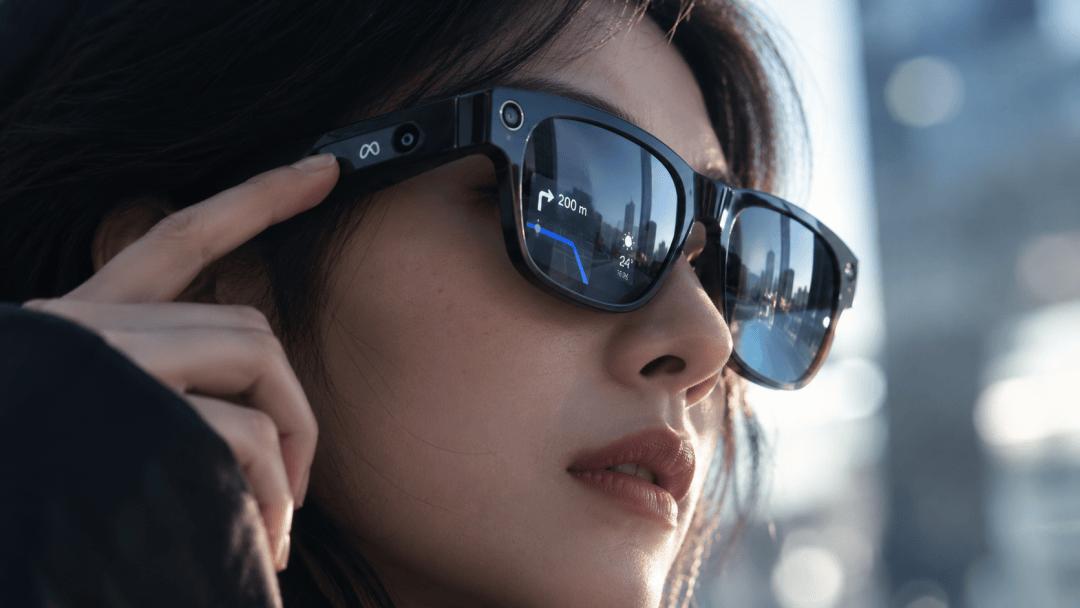
Take AI glasses as an example. With large models embedded, they can recognize complex scenarios and will become smarter in the future. But when you integrate all these functions into a pair of glasses weighing dozens of grams to experience multiple functions or even perform tasks, battery, heat dissipation, wireless communication and local computing power immediately become constraints. Many capabilities can be completed through the cloud, but once continuous shooting, real-time recognition and voice interaction are required, it is very difficult to control power consumption and response speed.
Take the battery as an example. Under current technical conditions, the energy density of lithium batteries has only increased by 30% in ten years, while the demand for computing power has increased by 100 times, and the battery capacity that can be accommodated inside the lightweight body is extremely limited.
Of course, in the future, end-side computing power will increase, batteries will improve, and sensors will become cheaper, which creates conditions for the integration of AI technology and existing hardware categories. However, innovating on the basis of existing hardware categories itself greatly limits the imagination of products. Because it can only "add" features around the most core basic functions, even if some pain points are solved, it can only bring micro-innovation at most, and cannot subvert the original product form or experience.
This is actually the kind of intelligence that users can accept, not innovation for the sake of innovation.
In the hardware field, the "iPhone moment" has not come for a long time, or in other words, the node of qualitative change cannot be achieved in the short term. Another reason that many people may ignore is the cost problem. The profit margin of many hardware terminals is inherently low, and enterprises lack sufficient funds for R&D and the courage to break the old and establish the new when carrying out AI transformation on these hardware products.
For example, for traditional home appliances, in the past two years, whether it is air conditioners, washing machines or small home appliances, AI functions have undoubtedly been placed in the position of core selling points. But after consumers experience them, they find that they are just old wine in new bottles, and many so-called AI functions are not appearing for the first time. Through financial reports, we can find that even for leading home appliance brands, the net profit margin is only about 6%, which greatly compresses R&D investment, resulting in a consistently low proportion of R&D cost, which is no exception in the AI era.
What's more, current hard costs such as hardware and computing power are still at a high level, which brings greater financial pressure. Even giants dare not easily "place big bets".
03. The "chill" of consumer hardware will sooner or later be transmitted to the upstream
In recent days, AI is experiencing huge shocks in the capital market. First, the global AI hardware sector experienced a rare simultaneous decline, and then US tech stocks fell into a bear market. This round of plunge shows that the market's enthusiasm for AI is rapidly turning into deep anxiety. Investors worry that large-scale spending and large-scale borrowing by tech giants to invest in chips and data centers may not bring expected returns.
This concern may also be explained by the current status of AI consumer terminals.
In the AI industry, the upstream "shovel sellers" have reaped huge profits, and the technology layer centered on large models is also booming, but the B-end and C-end consumer markets are relatively sluggish, especially consumer hardware, which seems lively but actually has mediocre market response. The large contrast between the hot and cold parts means that if this imbalance lasts too long, the huge consumer market will not be able to support the upgrading and progress of technology, making it impossible for huge investments to obtain considerable returns from real consumption scenarios.
In the long run, no matter how advanced the technology is, the imagination it brings will be shattered, and no matter how high the valuation is, it will be brought back to reality.
In fact, the current growth of the AI track is indeed more limited to the internal cycle of capital expenditure among large manufacturers — you buy my servers, I use your large models, and valuations are mutually boosted, but not much money is earned from the real consumer market.
This is especially true in the field of embodied intelligence. Enterprises sell robots to data centers, and the revenue is included in corporate operating income; data centers recruit employees and use the purchased robots to collect data; enterprises then spend money to buy back the data for model training. Through this mutual transaction to inflate book revenue, the valuations of many robot enterprises have soared, but in fact, not many people are actually paying for the products.
The consumer hardware market has always been a core area where new technologies are implemented and huge commercial returns are generated. Over the past decade, the prosperity of the mobile Internet was based on the hardware of smartphones, and Apple has long occupied the top position among global tech companies relying on the iPhone. However, in the current AI industry, consumer hardware for the C-end is the least profitable segment.
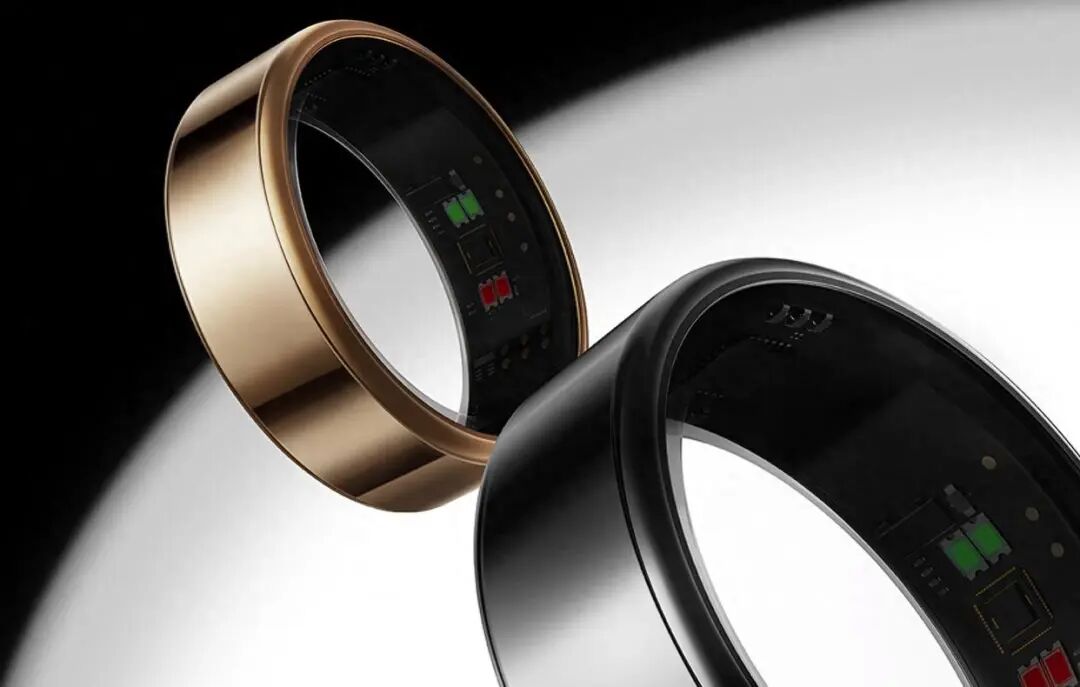
Looking at enterprises that have achieved scale such as Oura and Plaud, smart ring manufacturer Oura achieved revenue of 1.215 billion US dollars in the first three quarters of fiscal year 2026, a year-on-year increase of 74%, and AI voice recorder manufacturer Plaud achieved revenue of 250 million US dollars in 2025. In contrast, the revenue of leading large model providers has long crossed the 10 billion US dollar level. For example, Anthropic's revenue in the first nine months of 2026 has reached 33.242 billion US dollars.
The capabilities of large models are improving rapidly, but hardware products obviously cannot keep up with this pace. Even the market does not have a sufficiently clear answer to what the popular smart terminals in the future will look like for the time being. This greatly limits a development path for technology to be transformed into commercial value.
In the current AI wave, anxiety is spreading, and the shift of consumer terminals from boom to bust can also be regarded as a footnote of this sentiment.
In the next stage, AI consumer hardware will probably go through a long dormant period.
This article is from the WeChat official account "Silicon Carbon Variable", author: Wen Ning, published with authorization from 36Kr.