"The Ugly Fox" has gone massively viral, are Chinese-style supernatural tales becoming the new traffic code for AI short dramas?
Fox spirit face transformation, old mansion ghost tales, ghost wedding taboos... Since the start of this year, Chinese-style supernatural and Chinese-style horror content has been quietly undergoing a renaissance in AI-generated short dramas and manhua dramas.
In November, the AI hyper-realistic short drama Ugly Fox, adapted from Strange Tales from a Chinese Studio, unexpectedly went viral. It not only exceeded 50 million views and 2 million likes for a single episode, but also sparked heated discussions across the entire network, landing on Weibo's trending search list. The line in the drama "Once a person's heart grows cold, their face will change accordingly" became a popular meme on social platforms, beauty bloggers competed to imitate the looks in the show, and platforms even launched exclusive face transformation special effects.
This is not a random wave of popularity brought by a single work. The AI supernatural short drama Not a Monster had already exceeded 100 million views and accumulated more than 5 million likes with only three episodes released. On Douyin, the total views of the topic #ChineseStyleHorror have exceeded 8.4 billion, and related content has long amassed a very broad audience base, with AI driving this category to a collective boom.
This round of creative boom is not a simple copy of classical stories: some creators pick lesser-known chapters from Strange Tales from a Chinese Studio, some transform folk taboos such as ghost weddings, face beautification rituals before weddings, and house guarding customs into slightly scary narratives, while others use monster and ghost stories to reflect prejudices and human relationships in real life.
From fox spirit tales and folk taboos to real-world fables, AI has brought these classical themes that have been dormant for many years back into the public view, activating deep-seated cultural memories and emotional resonance in the Chinese people.
Chinese supernatural tales that were squeezed out by Xianxia dramas are "resurrected" in AI short dramas
Chinese-style supernatural tales already have a deep existing audience base. From the classic Hong Kong film A Chinese Ghost Story, to the 1987 TV adaptation of Strange Tales from a Chinese Studio, and then to the Painted Skin series that earned hundreds of millions of box office after 2000, the narrative technique of describing the ways of the world and human emotions through supernatural otherworldly beings has long proven its vitality in the film and television market.
After that, as ancient costume fantasy narratives gradually shifted to Xianxia and Xuanhuan themes, Chinese-style supernatural tales quietly withdrew from mainstream film and television. Although the audience's interest in Chinese-style horror and folk ghost stories has not disappeared, this type of content has long lacked opportunities to enter the mass market due to factors such as theme expression limits and commercial development expectations.
In this wave of AI creation boom, Chinese-style supernatural tales first regained activity in AI manhua dramas by drawing on the art style of Shanghai Animation Film Studio. Ink wash painting, meticulous brushwork and opera character designs provide a mature visual template, which not only fits the classical temperament of Strange Tales from a Chinese Studio, but also allows early creators to avoid building a visual system from scratch.
The animation form itself allows exaggerated and stylized expression, so the distortion generated by AI is not that obtrusive. Classical texts such as Strange Tales from a Chinese Studio also provide ready-made characters, plots and story structures, which are suitable for being adapted into single episodes or short series. A large number of creators thus began to look for materials from classical texts and use AI to transform them into new visual expressions.
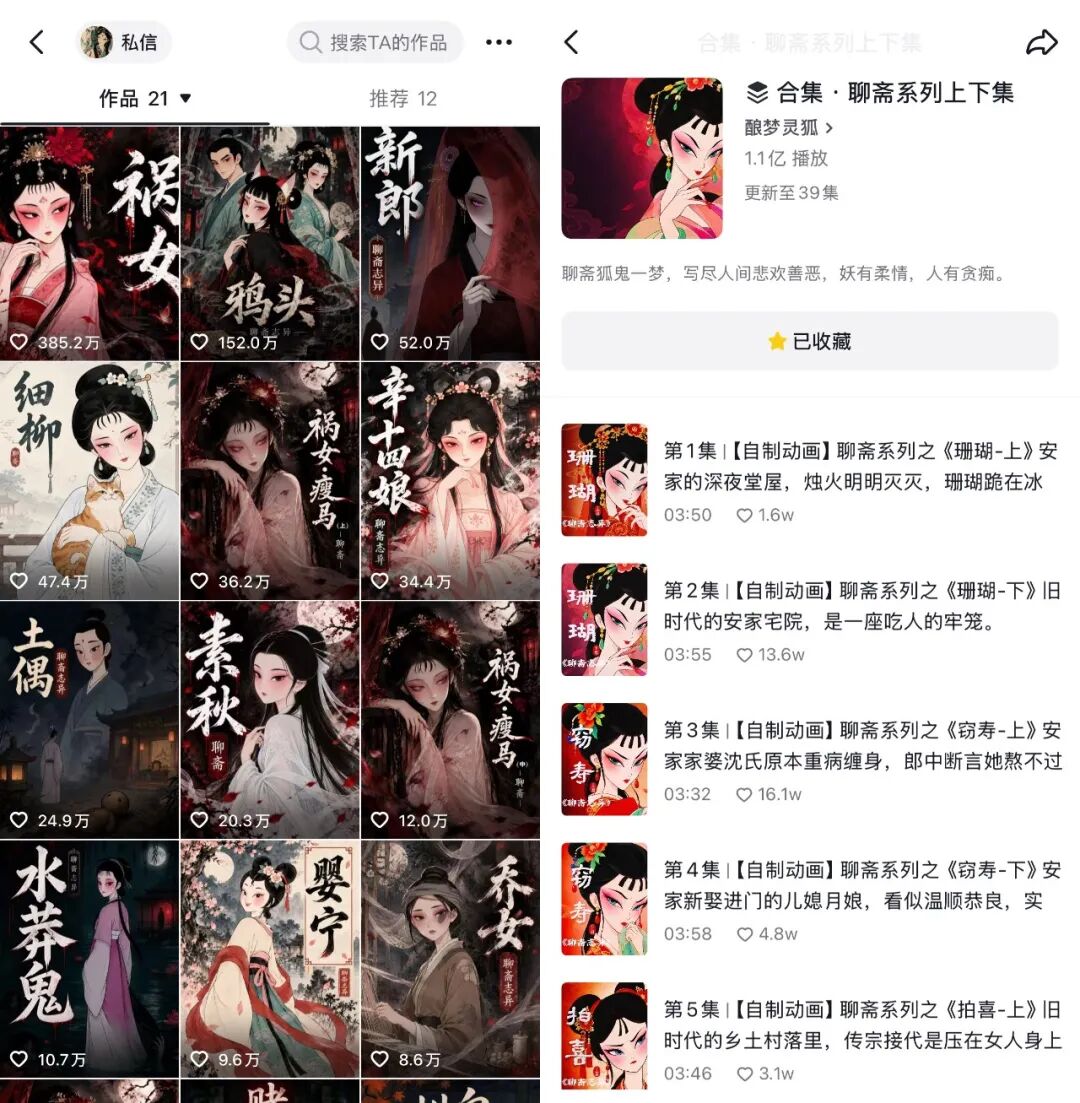
Among them, the account "Ancient Scroll and Dim Lamp" has gained more than 8.3 million likes with more than 20 episodes of works such as Unlucky Girl and Yatou, with the highest single episode likes reaching 3.85 million. The Strange Tales from a Chinese Studio series by the account "Dream Weaving Spirit Fox" has also exceeded 110 million total views, and more creators are continuously bringing lesser-known chapters from Strange Tales from a Chinese Studio to mobile phone screens, with multiple works exceeding one million views.
With the continuous improvement of AI video capabilities, the adaptation of Strange Tales from a Chinese Studio has also extended from AI manhua dramas to hyper-realistic short dramas, and Ugly Fox, which became popular in November, has become the most representative breakout work among them.
There were already multiple manhua drama versions of Ugly Fox before, but its creator Night Dreamer did not follow the common image of a beautiful fox spirit, but started from the setting of the fox girl's ugly appearance in the original work, and redesigned the character.
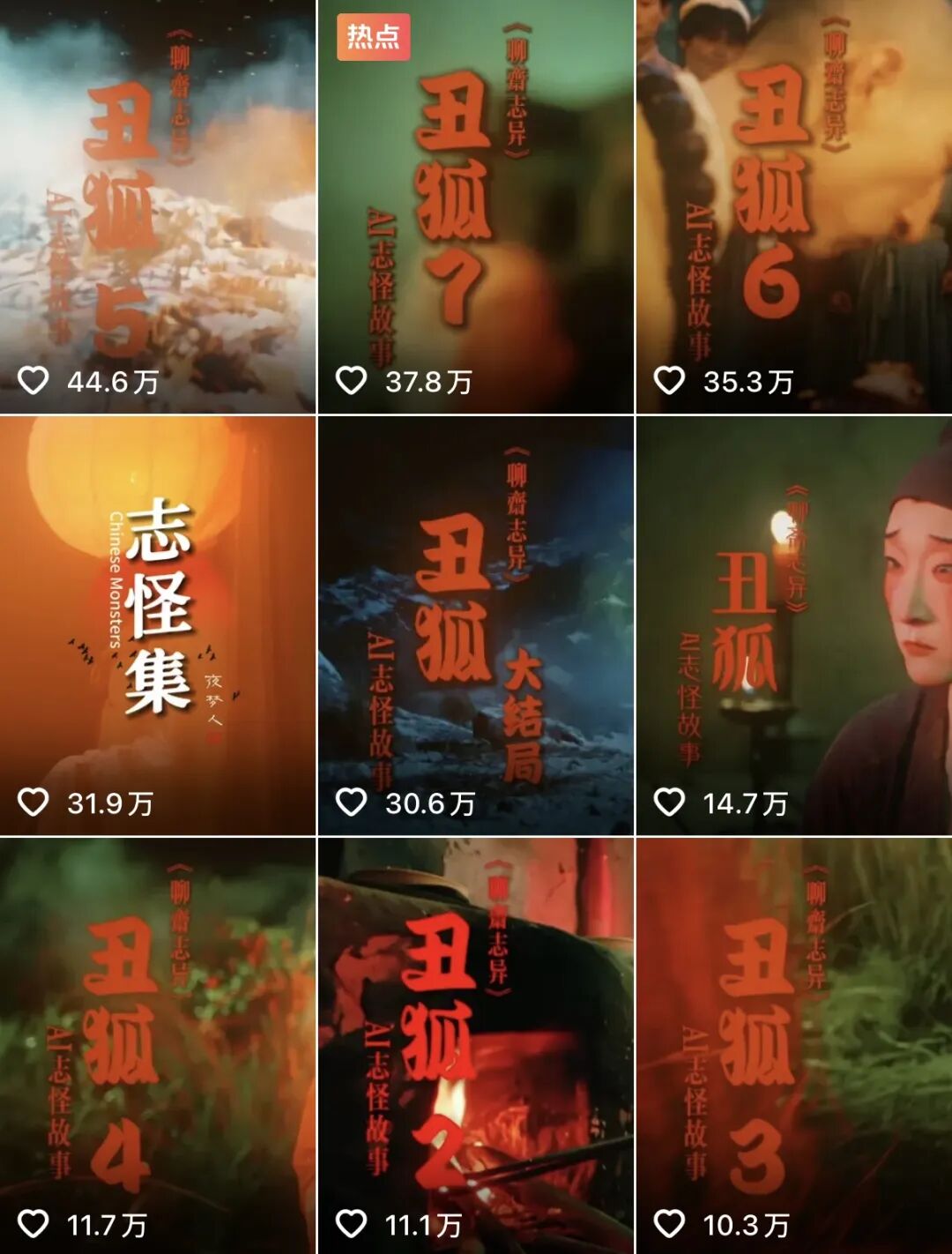
The initial version also used the image of a beautiful woman with minor flaws. It was not until he re-read the original work and saw the line "her clothes are gorgeous but her face is dark and ugly" that Night Dreamer decided to overturn and redo the work, deliberately stretching and distorting the character's facial contours. In AI short dramas full of beauty filter templates, this face that does not conform to conventional aesthetics has instead become the most distinctive memorable feature.
Night Dreamer also drew on the dark tone lighting and film grain texture of the old Hong Kong film A Chinese Ghost Story, paired with rough dubbing that simulates old-fashioned televisions, making the work get rid of the delicate internet celebrity style common in current AI short dramas.
But what keeps the audience watching Ugly Fox is obviously not just a scary face. In the story, the fox girl treats people with kindness again and again, but is repeatedly taken advantage of, and even imprisoned as a cash cow. Her originally beautiful appearance gradually distorts as she gets hurt again and again. Many audiences see themselves who have been consumed for a long time from the story, and some people sigh that "watching the ugly fox is like seeing the old self who gave my whole heart to others".
The reason why the line "It turns out that once a person's heart grows cold, their face will change accordingly" became a popular meme is that it expresses this unspeakable emotion very directly. Misplaced sincerity, calculations in relationships, and exhaustion after long-term dedication are all condensed into a face that gradually becomes ugly.
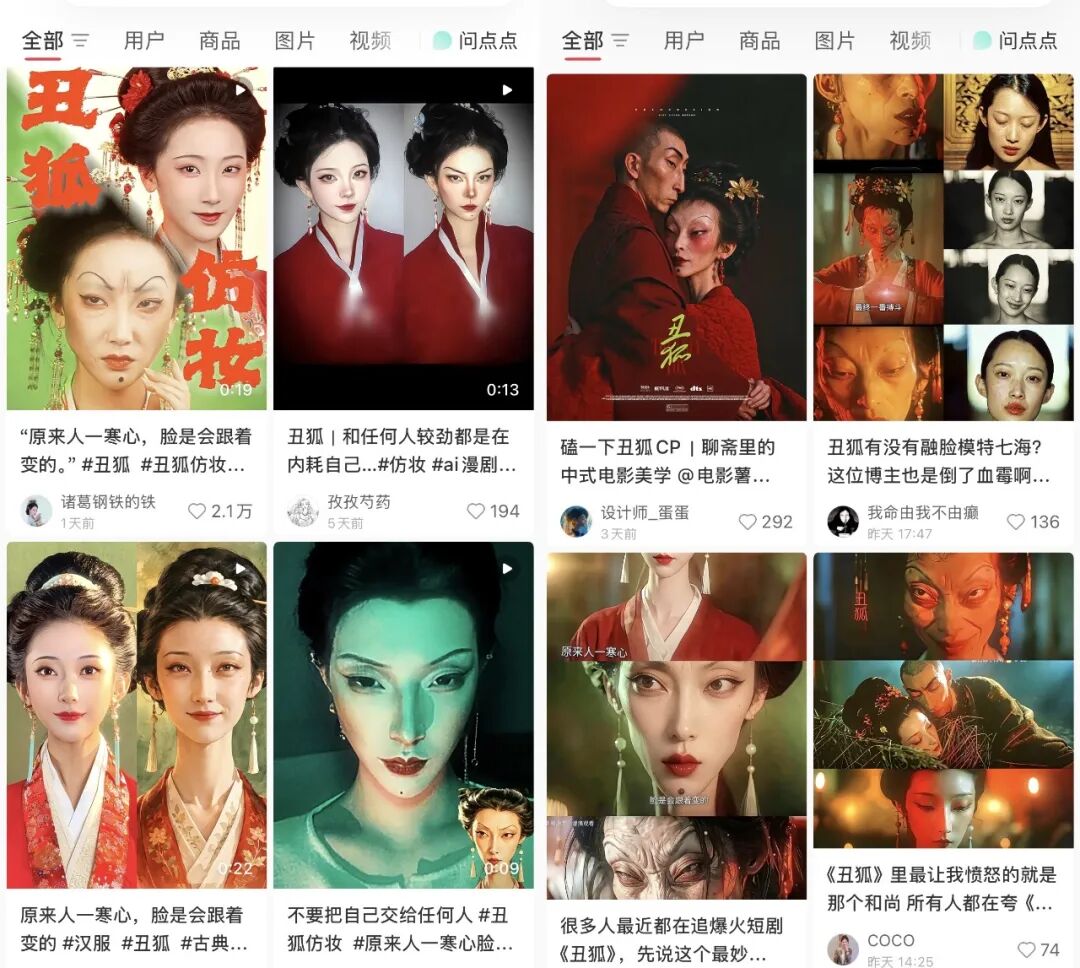
The audience imitates the ugly fox makeup, forwards the lines, and what they discuss is no longer just a fox spirit story, but also their own grievances and feelings in real relationships.
Audience feedback has also begun to affect subsequent creations. Since the character relationship in the first two episodes was too depressing, the creator added a monk in the subsequent story, bringing the possibility of compassion and redemption to this story full of betrayal and calculation. The ending where the monk sacrifices to seal the obsessed beast and the ugly fox finally regains her beautiful appearance also made many audiences cry. Different interpretations and debates around the ending also kept the discussion popularity of the work fermenting.
8.4 billion topic views, Chinese-style horror makes a collective comeback with AI
The breakout popularity of Ugly Fox shows that classic stories can still be told in new ways. But the creation of AI supernatural tales does not stop at adapting ancient books. The traditional supernatural narrative technique of describing human relationships through strange anecdotes has also been brought into original stories by creators: some put contemporary social issues into a fictional ancient world, while others look for new horror materials from local customs and folk taboos.
One notable work is Not a Monster by the creator "No Pickled Mustard". This unit drama with a single episode cost of more than 10,000 yuan and ten days of polishing has exceeded 100 million views with only the first three episodes released, accumulated more than 5 million likes, and the author's account has grown from a thousand followers to 500,000 followers.
The charm of traditional supernatural tales never lies only in drawing ghosts and monsters. Behind seemingly absurd anecdotes, there are often observations of the real society, the warmth and coldness of human relationships, and the good and evil of human nature. Not a Monster continues this vein, and the core setting of the work has been clearly stated in its title: "It is not a monster, it is a human being". What is really worth being alert to in the story is often not the monster, but the human heart.
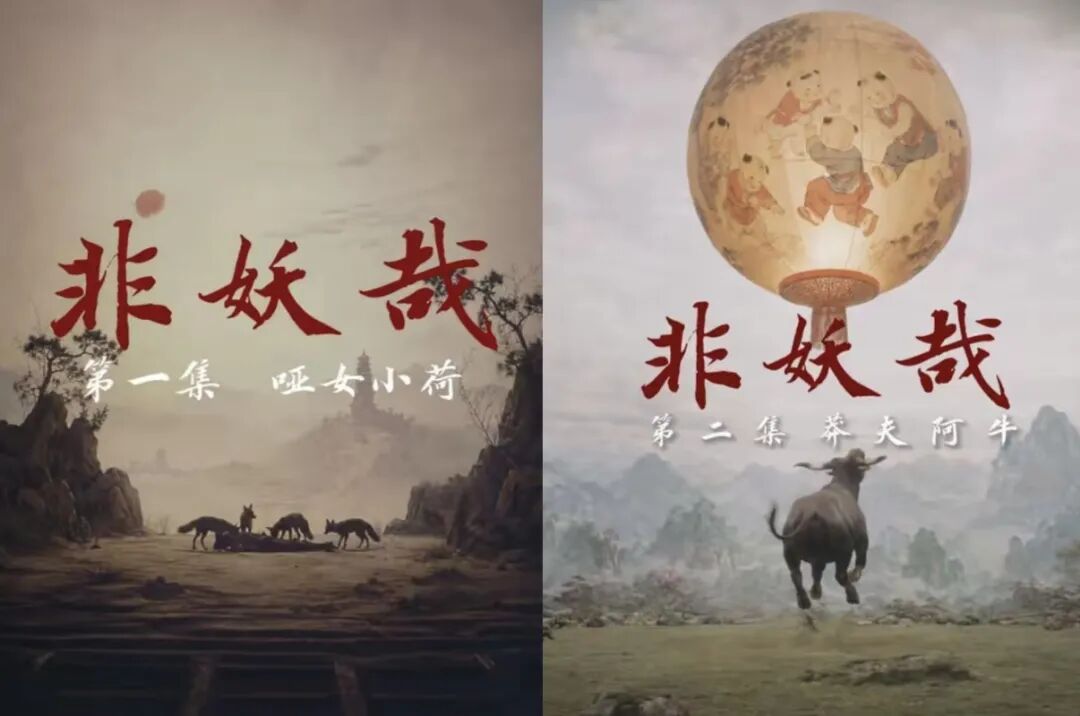
The Mute Girl Xiaohe tells the story of a female entertainer who was killed by a scholar, and then was slandered, with rumors gradually pushing her to the target of public criticism; The Rough Man Aniu uses the image of a Goddess of Fertility wearing iron shackles to reveal the tragic situation of abducted women being imprisoned and forced to give birth.
Subsequent stories also involve topics such as the spiritual manipulation of cults on ordinary people and group blind conformity. Using the supernatural narrative shell, the work discusses how rumors hurt people, how the weak lose the opportunity to express themselves, and how ordinary people participate in harm under the coercion of the group.
The creator also specially studied the line drafts of the old 1980s version of Strange Tales from a Chinese Studio and traditional mother-of-pearl inlaid furniture, creating an atmosphere with dark and simple pictures and restrained shots. The fictional classical world leaves space for the expression of real-world issues, and the characters thus have more complexity.
If Not a Monster uses the supernatural shell to reflect the ways of the world and human hearts, then another group of works turn their attention back to folk memory itself. Customs and taboos such as ghost weddings, pre-wedding face beautification rituals, and house guarding are not only story materials, but also important sources of Chinese-style slightly scary atmosphere. Creators draw inspiration from local legends and old life, giving those long-spread folk stories new video expression.
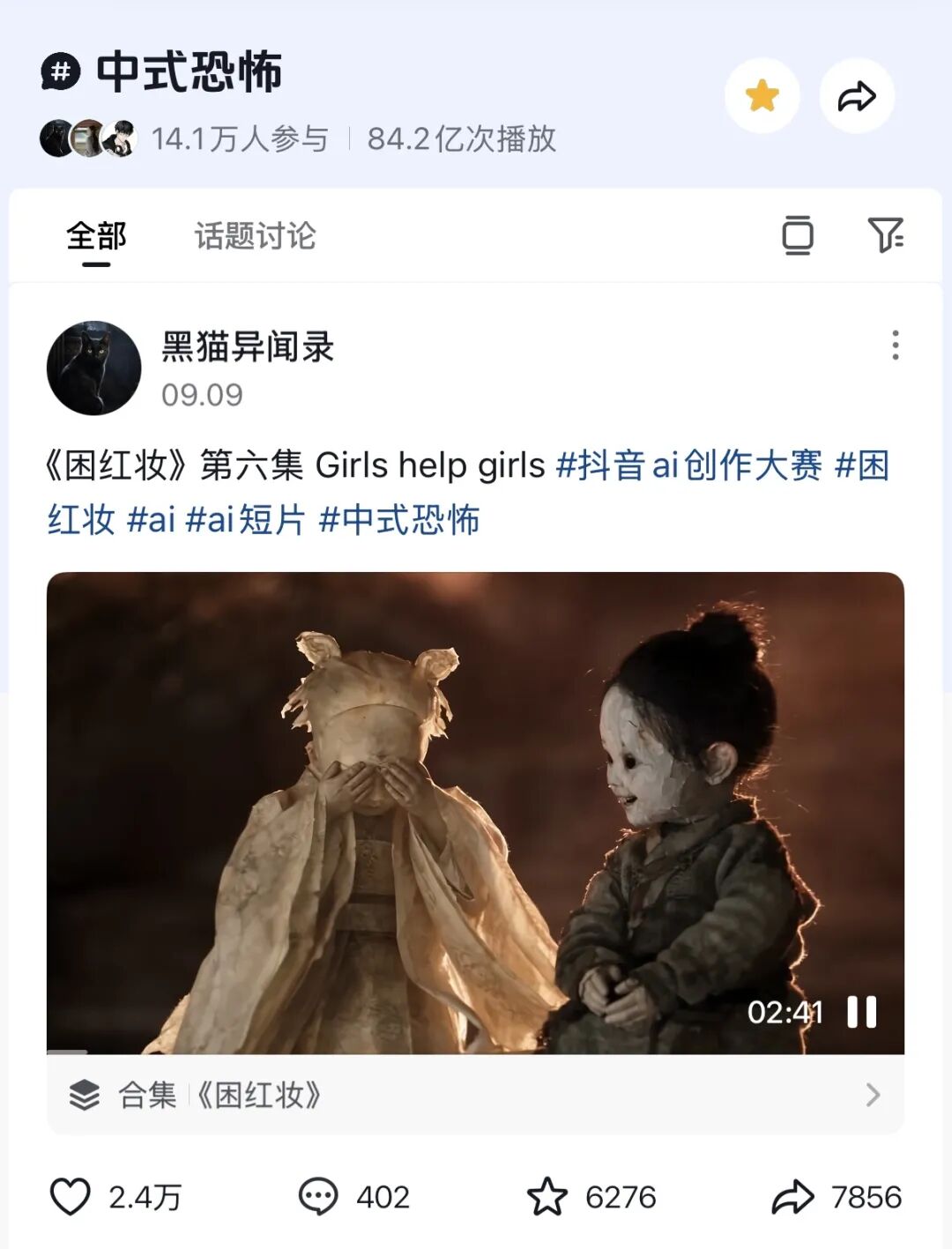
On Douyin, the cumulative views of the #ChineseStyleHorror topic have reached 8.4 billion. Under the topic, Chinese-style horror AI short dramas such as Trapped in Bridal Makeup, Yin Case Records and Life Stealing are emerging in clusters, and this content has developed from a niche aesthetic style to a recognizable content type on short video and short drama platforms.
The Chinese-style slightly horror collection The Bird Embroidered on the Screen can be called a representative work among them. Although it only has three episodes, its views have approached 40 million. The three stories start from child-seeking, old family books and traditional pre-wedding face beautification customs respectively, hiding the fate of abandoned, hurt and disciplined women in the old era in folk details.
The work does not rely on bloody scenes to create stimulation, but makes those seemingly ordinary family rules and life customs gradually reveal their cruel side. The most discussed episode Not Envious of Sheep activates the deep collective fear of "human being treated as livestock" that is engraved in the bones of the Chinese people.
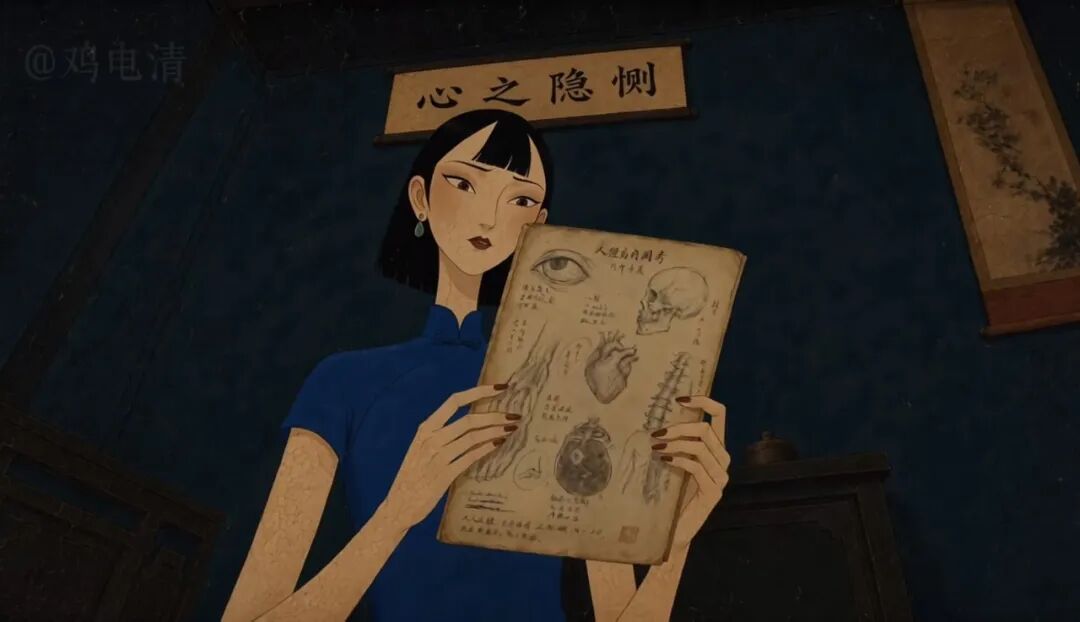
Similar creations also include The Mountain Demon of Taiping Village, Seven Days in the Ancestral House, The Craft Door's Anti-ghost Records and so on. The former tells the story of a mountain demon that can imitate human voices and pretend to be relatives, while the latter two find thriller inspiration from ancestral house rules, intangible cultural heritage shadow puppetry and folk beliefs respectively. Creators are constantly looking for new story materials from old customs, historical allusions and folk legends, making the creative themes of Chinese-style slight horror more and more abundant.
This type of work has a common feature: fear often does not come from the sudden appearance of ghosts, but is hidden in the life experiences familiar to the Chinese people. Weddings and funerals, ancestral halls, paper-made sacrificial offerings, these things that originally have clear folk meanings, once connected with certain taboos and unknown rules, may become sources of fear.
This is also the most recognizable feature of Chinese-style horror. It is rooted in traditional folk beliefs and collective memory, and makes fear slowly seep into the audience's psychology through anomalies in familiar scenes, the blurring of the boundary between the living and the dead, and hints of taboos and karma.
From the scrutiny of human hearts to the re-interpretation of folk taboos, AI supernatural tales are gradually moving beyond classic adaptations and trying more original content. Ancient anecdotes, historical pain points and folk life memories have thus become new story sources in the short video era.
Make two episodes first to see feedback, AI gives niche themes trial and error opportunities
Apart from the recovery of themes, this round of Chinese supernatural and Chinese-style horror boom also shows the changes AI has brought to content development methods.
AI short dramas reduce the video development cost of niche themes. Ugly Fox was originally planned to produce only two episodes, and continued to update after a large number of viewers urged for more in the comment section; Not a Monster also first opened up the market with two unit stories. Their breakout process shows that creators can start making from one story, a group of characters or even a short story, observe audience feedback through the platform, and then decide on subsequent investment.
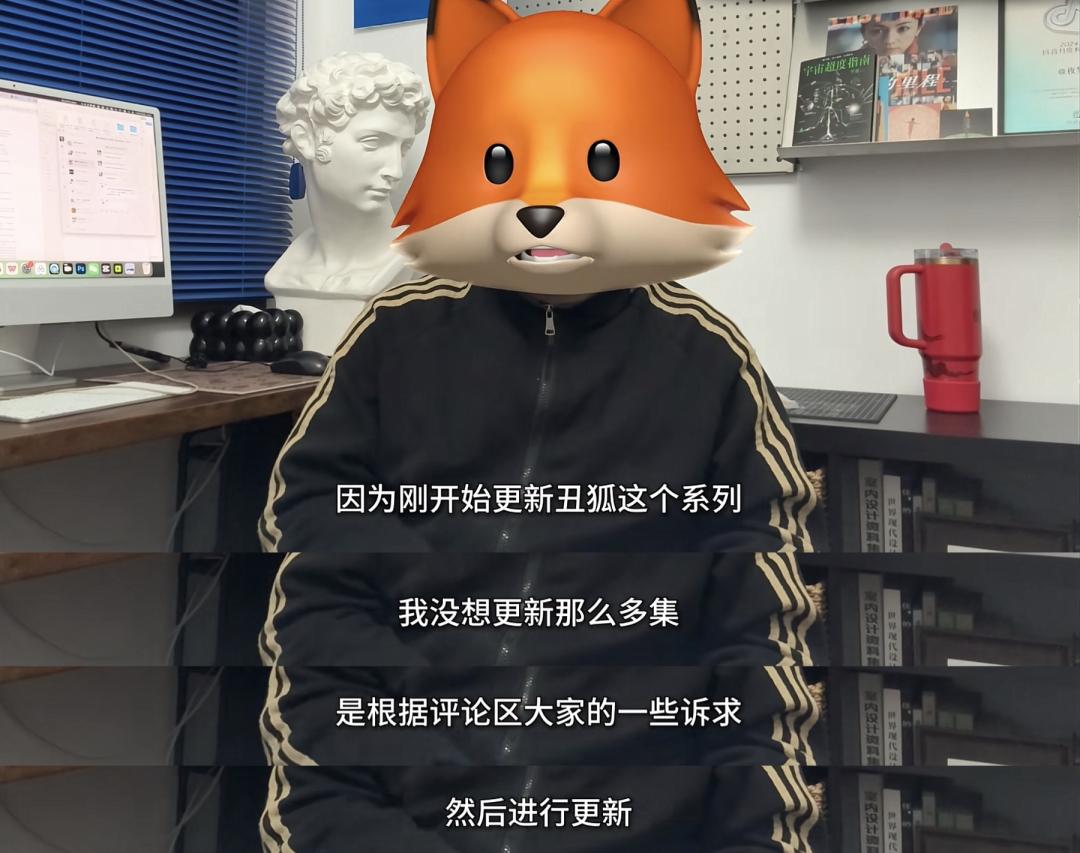
This change also fits the content structure of supernatural tales themselves. Strange Tales from a Chinese Studio is originally composed of a large number of independent stories, and local legends and folk taboos often have relatively complete single narratives. They can be adapted independently, or extended into a series around a certain worldview, providing rich materials and multiple development paths for short drama creation.
Niche themes that were difficult to develop on a large scale in the past now have the opportunity to find their own audiences through more small-scale works. Creators do not have to cater to the largest common denominator from the very beginning, and can continue to create around specific aesthetics and interest circles. The richness of film and television content may increase starting from these corners that were not easy to be seen in the past.
Of course, low-cost trial does not