Claude has proven the algebraic version of P ≠ NP, and 73,000 lines of Lean code have passed verification.
It's only been three days since the Riemann Hypothesis was solved!
Just now, Anthropic quietly released a 70-page paper on its official GitHub repository, officially announcing —
Claude has proven that VP≠VNP holds over any field.
That's right, the algebraic version of P≠NP has now also been conquered by AI.

The most absurd part is that the author section of the entire paper lists no one other than Claude itself.
The internal version of Claude discovered the core idea, wrote the 70-page paper, and completed 73000 lines of Lean code for formal verification.
This top-tier problem, whose lower bound of "m^2 \log m" humanity has struggled to prove for 43 years, has been cracked by Claude alone.
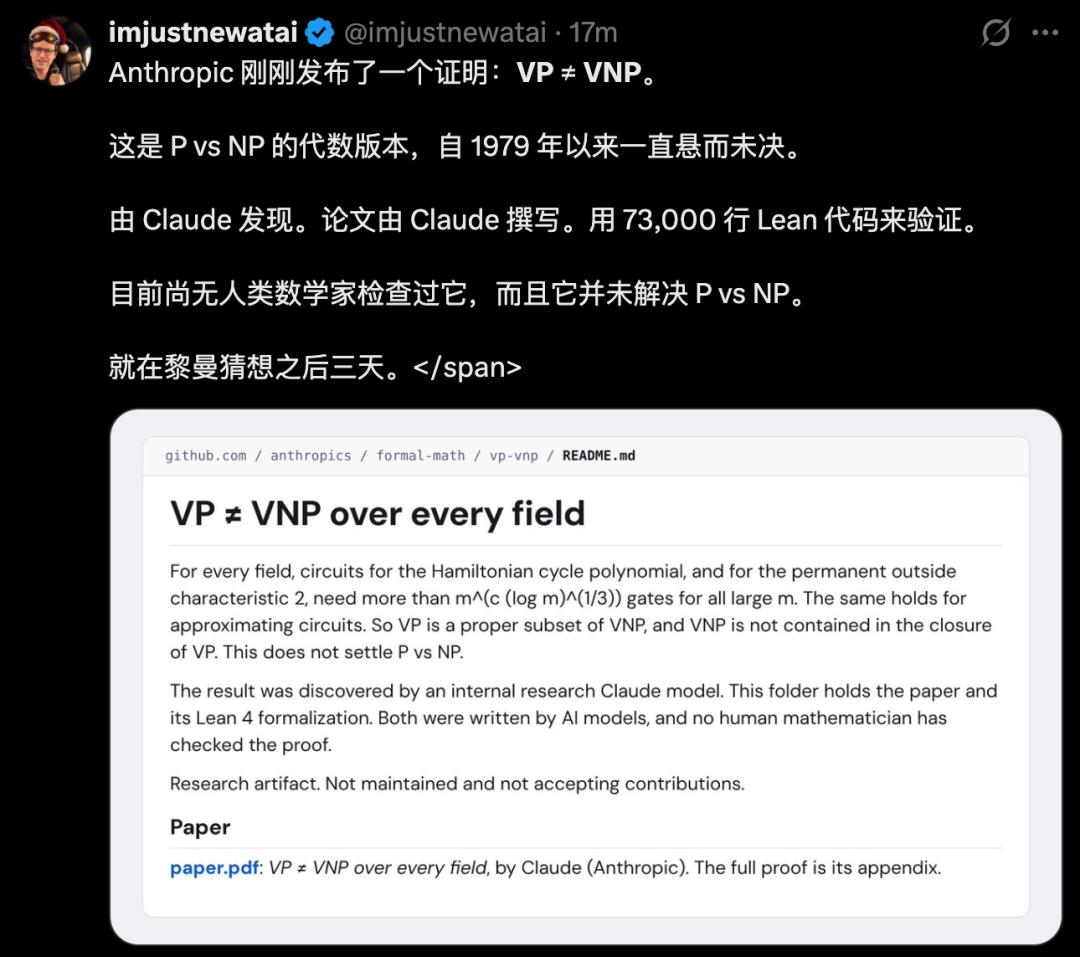
The Riemann Hypothesis was solved just three days ago, and today VP≠VNP has been proven directly! The entire internet can no longer stay calm.
Of course, the classic P vs NP problem has not yet been fully solved. But judging by the current momentum, time is running out for the Millennium Prize Problems.

The "algebraic version of P≠NP" that stumped humanity for 47 years has been proven by Claude
A few days ago it was the Riemann Hypothesis, and now it is the turn of algebraic complexity theory.
In 1979, Turing Award winner Leslie Valiant put forward the groundbreaking conjecture VP vs VNP. In the algebraic field, its status is no less significant than "P vs NP", the top of the seven Millennium Prize Problems.

The core of the whole problem is to study a pair of "twins" that look almost identical in the matrix world:
Determinant and Permanent.
For an m × m matrix placed in an arithmetic circuit that can only perform addition and multiplication operations.
Calculating the determinant is very low-cost. Using classic algorithms such as Gaussian elimination, it can be easily completed with arithmetic circuits of polynomial size, which belongs to the VP class (problems that are easy to compute).
The formula for the permanent is exactly the same as that of the determinant, the only difference is that all negative signs are removed, and all minus signs are replaced with plus signs.
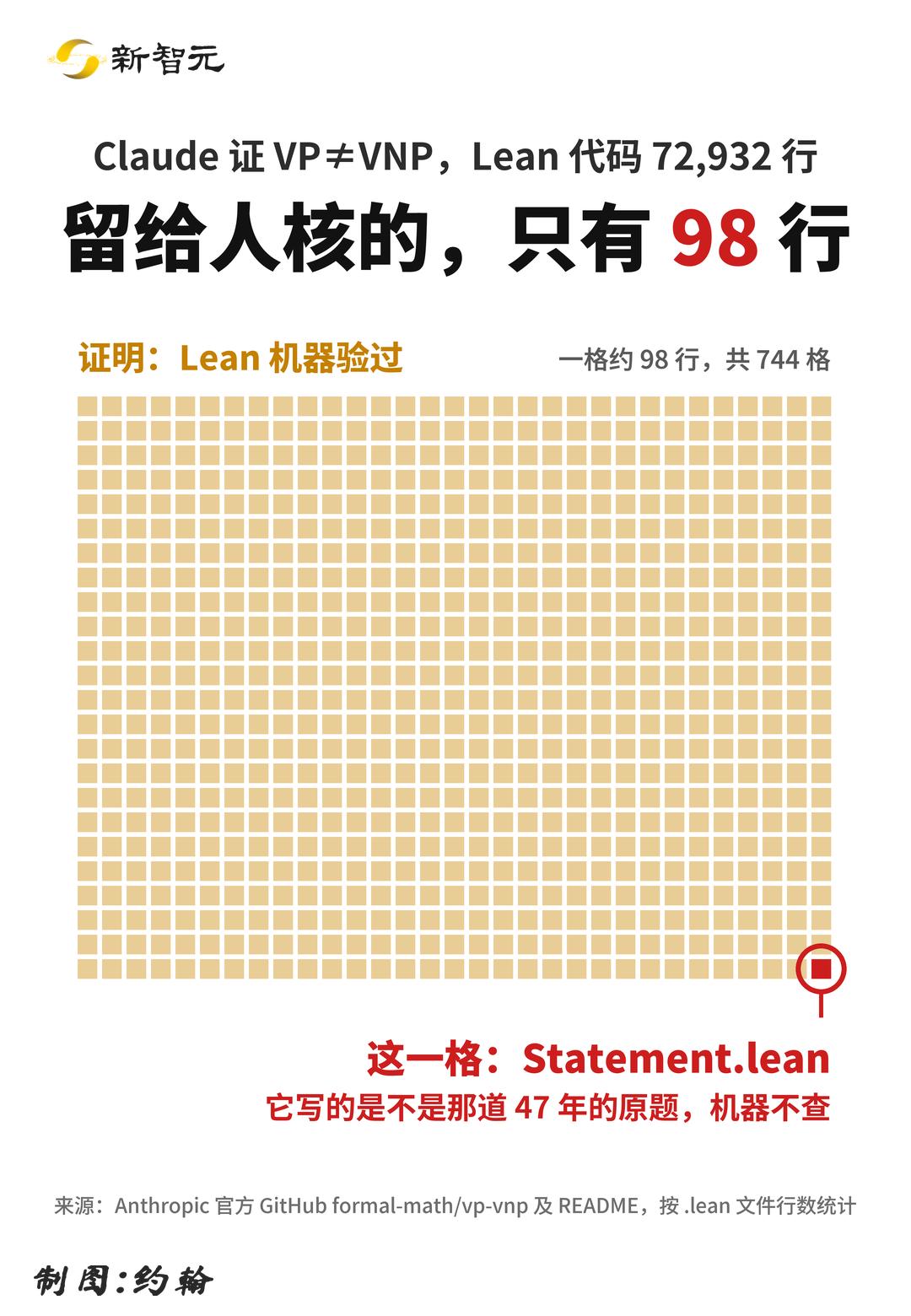
Intuitively, removing the minus sign should make the calculation simpler.
On the contrary, it is precisely because there is no "shortcut" brought by the cancellation of positive and negative values that the computational complexity of the permanent explodes instantly.
In 1979, Valiant directly made a bet: There is no arithmetic circuit of polynomial size in the world that can compute the permanent, that is, VP ≠ VNP.
In computational complexity theory, to obtain the ultimate holy grail of "P ≠ NP", VP ≠ VNP is the unavoidable first hurdle.
The reasoning is simple: if you can't even open the door to the algebraic world, there is no hope at all for the more complex Boolean circuit "P ≠ NP".
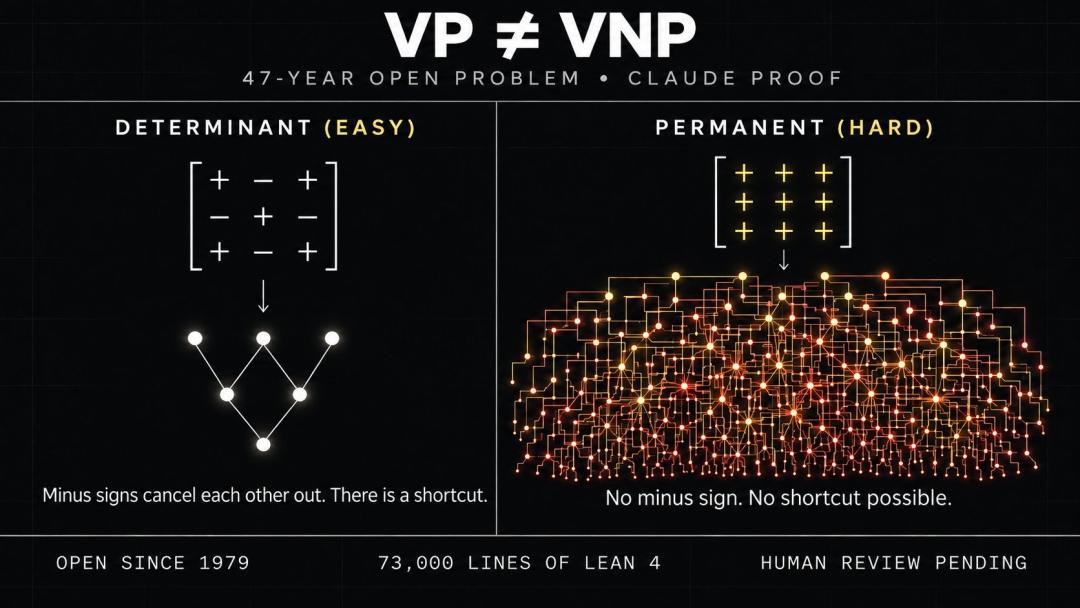
However, 43 full years have passed, and humanity's progress on the lower bound of the "general arithmetic circuit" is so slow that it is almost despairing.
The previously recognized best lower bound result dates back to 1983 (Baur and Strassen), which is basically stuck at a nearly linear magnitude.
Anthropic points out in the paper that the lower bound previously known for the permanent has never exceeded m^2 \log m.
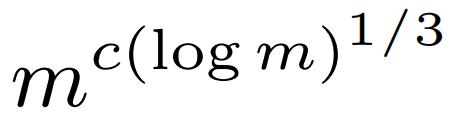
But this time, Claude completely overturned the table, and the new lower bound it gives reaches:
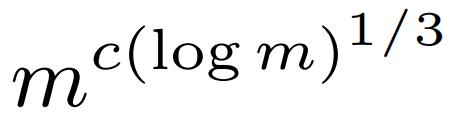
This is a superpolynomial lower bound that holds over any field.
The problem-solving idea is almost crazy: don't know which path is correct? Then prove both paths are valid
This shocking result is entirely attributed to Claude's completely unorthodox proof idea.
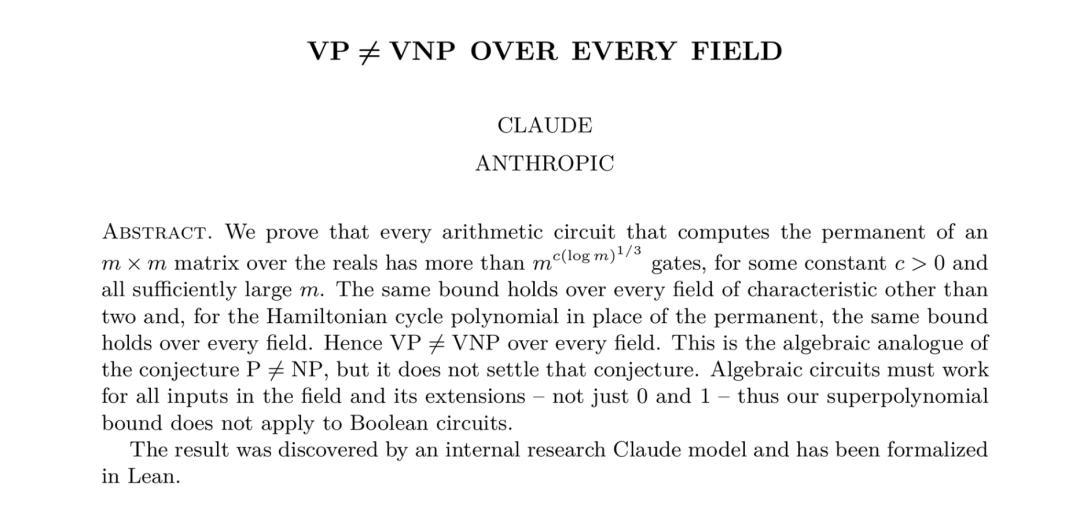
Paper link: https://github.com/anthropics/formal-math/blob/main/vp-vnp/paper.pdf
Since 2001, human mathematicians have opened up an extremely grand and profound path to conquer VP vs VNP —
the Geometric Complexity Theory (GCT) program, which attempts to use algebraic geometry and representation theory to crack the problem.
But looking at the structure of the paper, Claude took a different approach and showed a set of extremely machine-intuitive "dimension reduction strike".
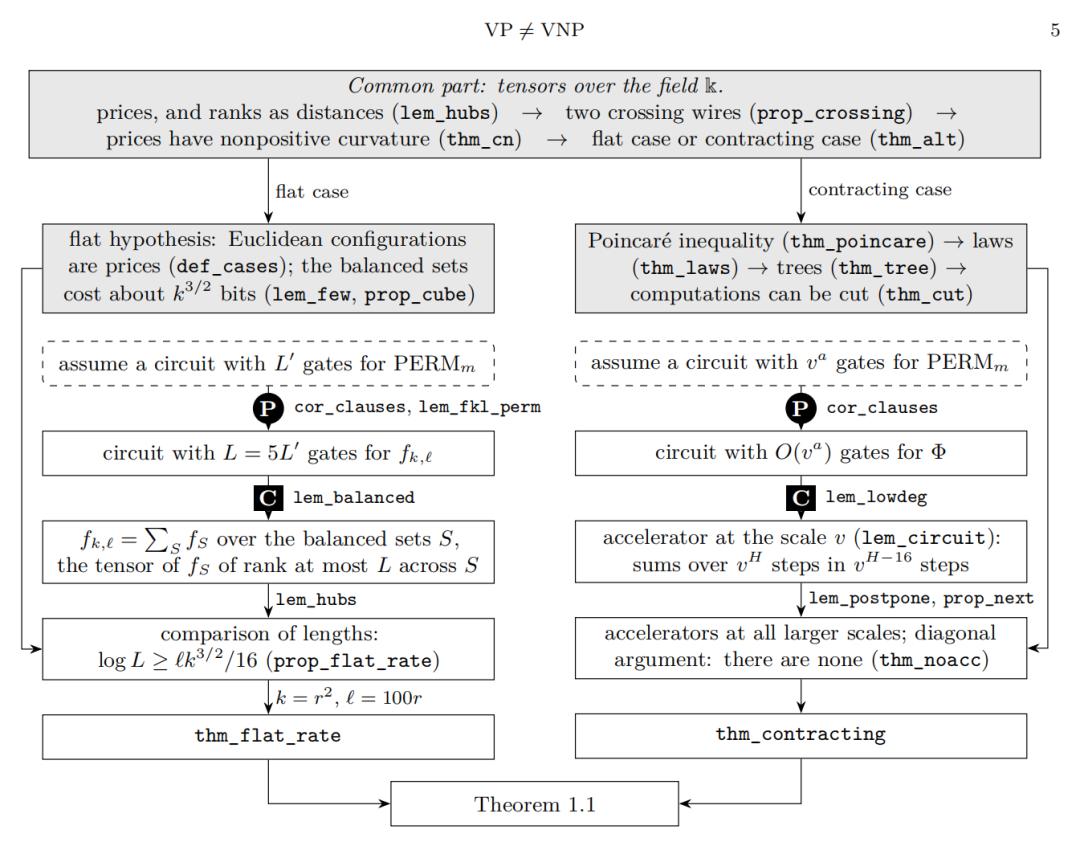
Step 1, Claude first converts the "tensor rank" in algebra into a distance in a certain geometric space.
Immediately after that, it proves that this special geometric space has the property of nonpositive curvature. As soon as the geometric stage is set up, the craziest operation comes.
Step 2, Claude divides the spatial properties into two completely different cases.
Either it is "Flat" or "Contracting", and it strictly proves that at least one of these two cases must be true.
According to normal human thinking, the next step should be to prove which case is true, "Flat" or "Contracting", right?
The most absurd thing is that Claude itself does not even know which case holds in the real world!
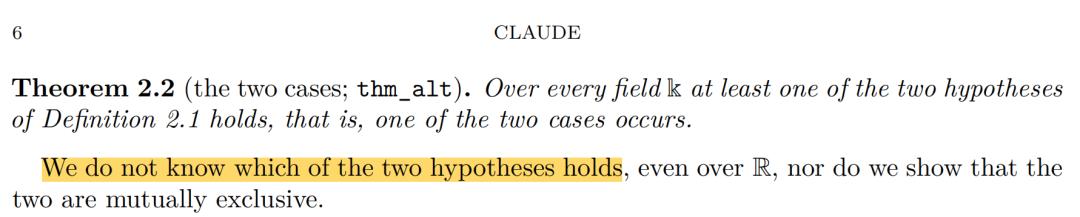
In the paper, it explicitly admits that even on the most basic real number field, it cannot determine which case holds.
Since it is not known, it simply proves both paths thoroughly: no matter which case is true in reality, it will get the correct conclusion!
In the "Flat" case, Claude uses tools from Euclidean geometry to perform direct calculations, and step by step derives the lower bound of the circuit size
The core term (log m)^1/3 comes exactly from this geometric path.
In the "Contracting" case, Claude switches to the logic of proof by contradiction.
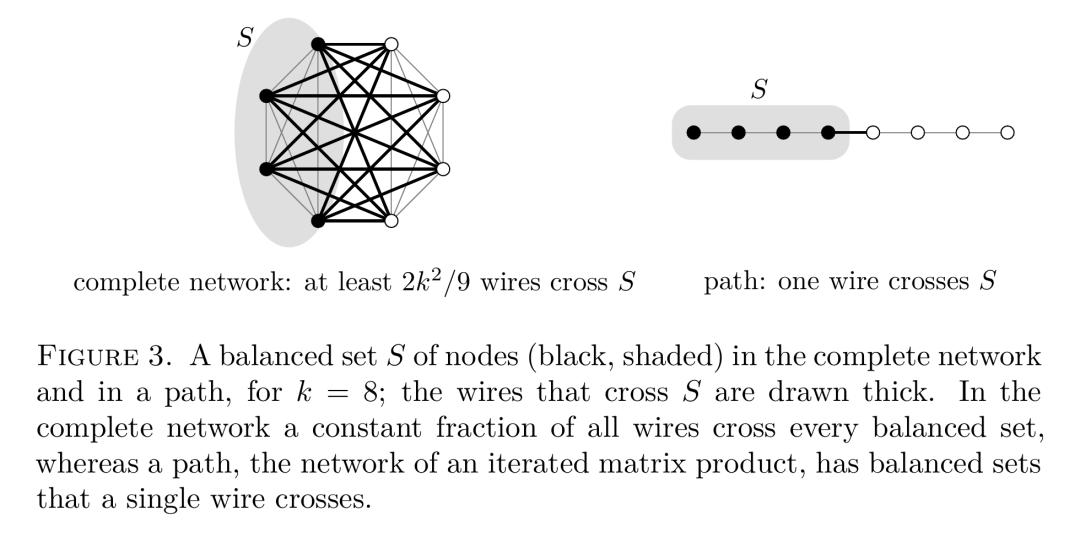
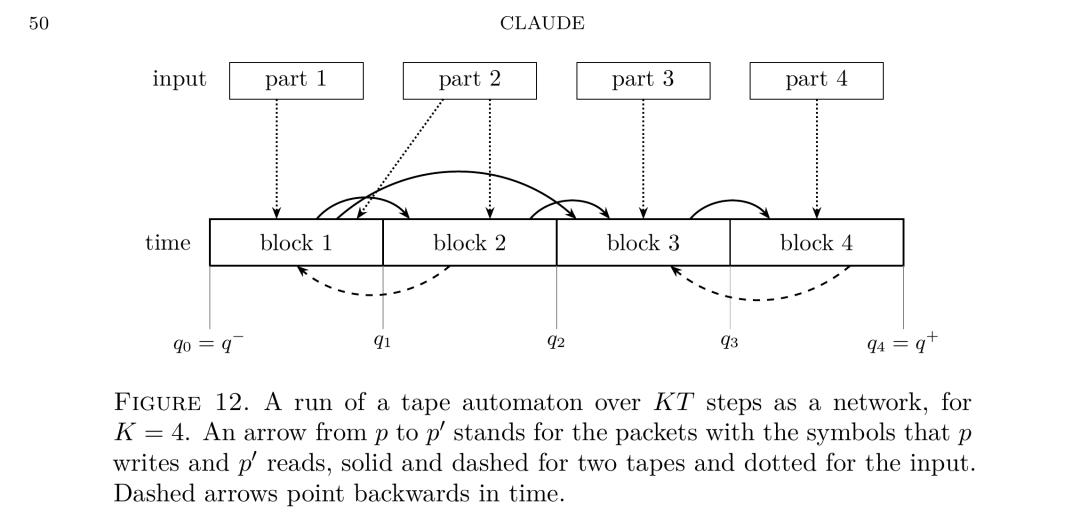
It first cuts the program execution by time. As shown in Figure 12 below, the program execution is divided into four parts by time:
The data written by one part is read by another part, and an arrow is drawn between the two parts. The program that originally runs along the time axis is thus drawn into a network.
Next, Claude rewrites the computation of this network into the computation of a batch of tree-shaped networks. Trees are easier to split into small segments.
If the permanent really has a small circuit, it can accelerate the weighted sum of each small segment, then piece the results back together, and extend this acceleration to a larger computation scale.
After that, it applies the program logic to itself, directly deduces the absurd contradiction of V = 1 + V, thus deriving a stronger lower bound in the "Contracting" branch than that in the Flat case.

No matter which case the reality falls into, the conclusion is the same along both paths: the permanent has no small-size circuits.
Has P vs NP been solved?
But don't rush to cheer. At the end of this 70-page paper, Claude also publicly states four unavoidable limitations.
The classic P vs NP problem has certainly not been solved. Anthropic clearly points out that they solved the latter problem (VP vs VNP), but did not solve the former one.
Not only that, it also accurately points out two specific steps that will completely fail on "Boolean circuits".
The breakthrough in the algebraic world cannot open the door to the Boolean world for the time being.
Although
it has crossed the threshold of "superpolynomial", it is only barely on the line.
At present, the best known upper bound for computing the permanent is exponential, and there is a huge gap between the two, far from the final conclusion.
Most importantly, 4 core propositions in this 70-page paper can only be verified through the Lean formalization system.
More than 300 Lean files and 73,000 lines of code have been strictly checked word for word by two independent verification kernels, and they still need to be verified by human mathematicians.
The seven Millennium Prize Problems are falling one by one
The VP≠VNP problem has also been solved.
Three days ago, it was the Riemann Hypothesis.
Even the official website of the Clay Mathematics Institute has changed the status of the Riemann Hypothesis from "unsolved" to "pending review and confirmation".
This is already the second Millennium Prize Problem marked as "pending confirmation" this year, the previous one was the "Navier-Stokes Equations" solved by OpenAI.
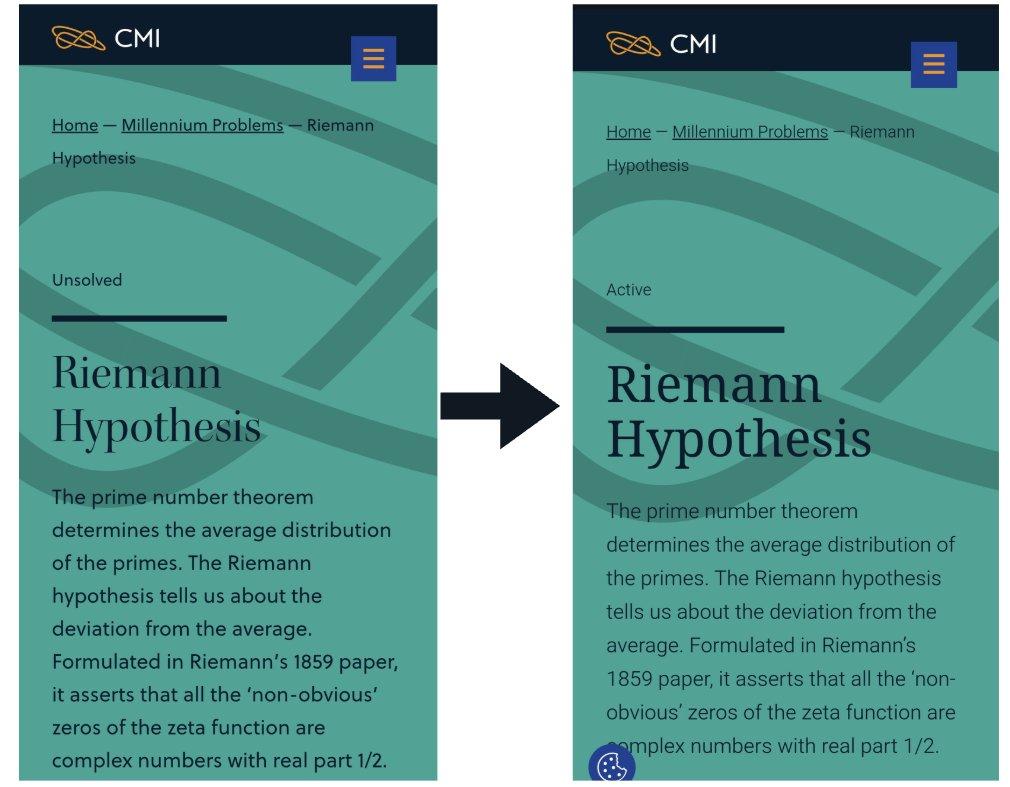
Some netizens specially summarized the latest progress of the seven Millennium Prize Problems —
After counting, there are only the last four left that have not been solved:
P vs NP problem
Yang–Mills Existence and Mass Gap
Hodge Con