What are the benefits of becoming a shareholder of DeepSeek?
CATL and Geely have appeared on the list of investors of Deepseek.
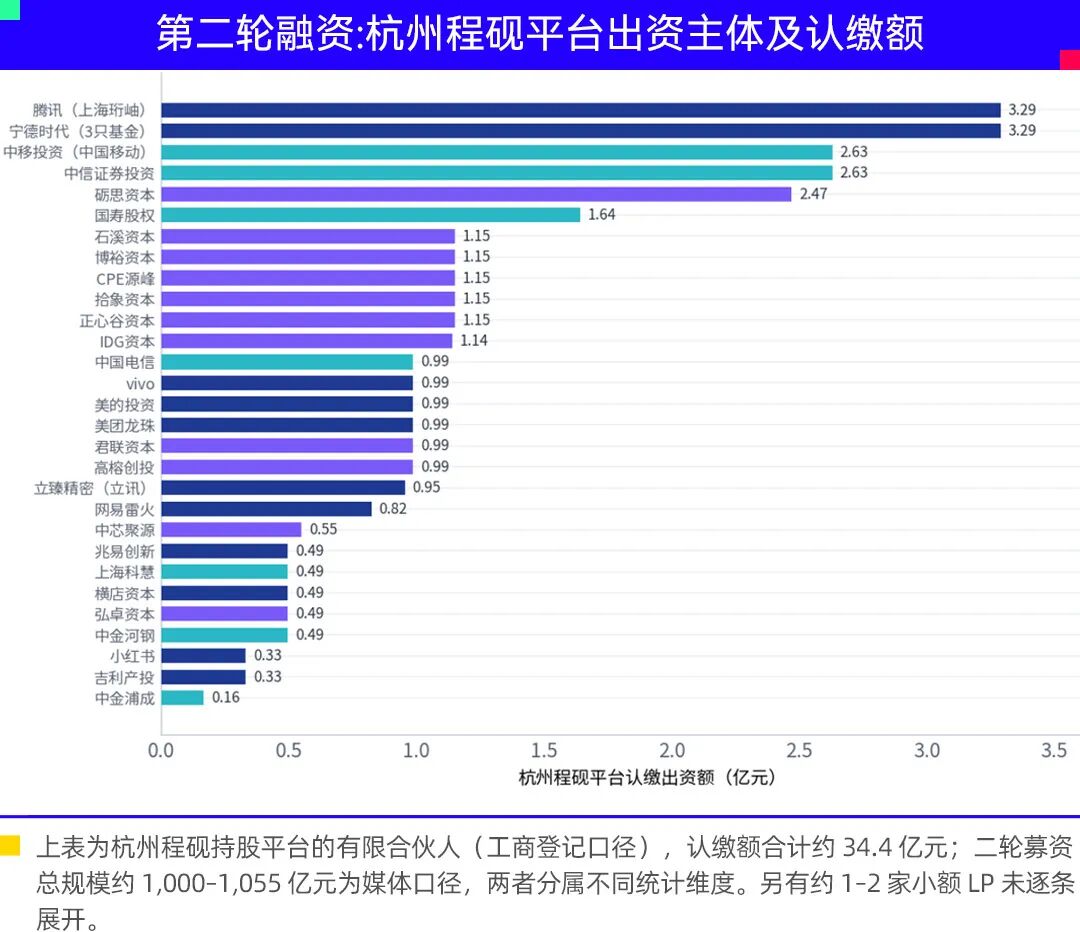
According to the information disclosure of *Sci-Tech Innovation Board Daily* on November 19, among the new partners of Hangzhou Chengyan, the shareholding platform of DeepSeek, are the funds related to CATL and Zhejiang Geely Industrial Investment Holding Co., Ltd.
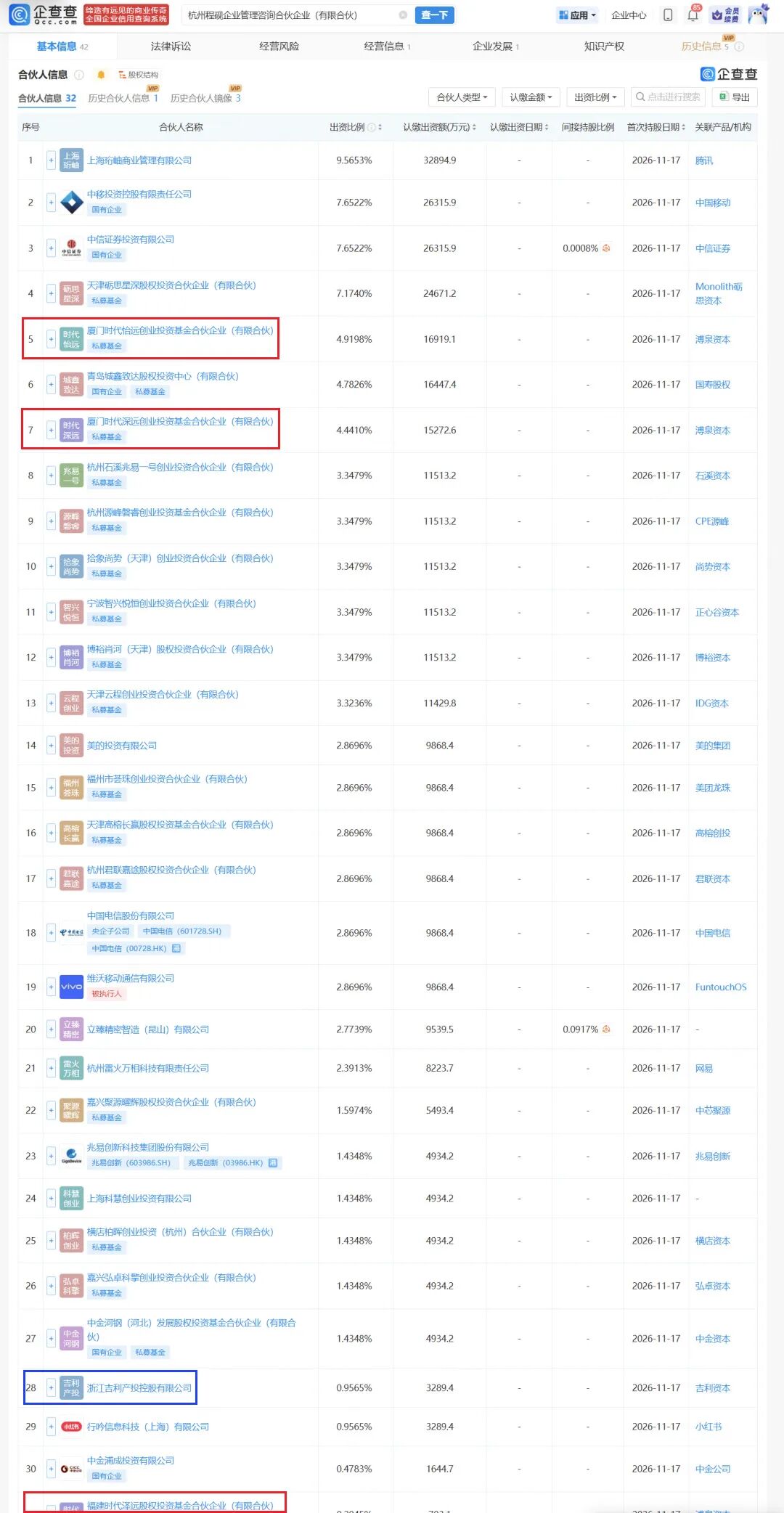
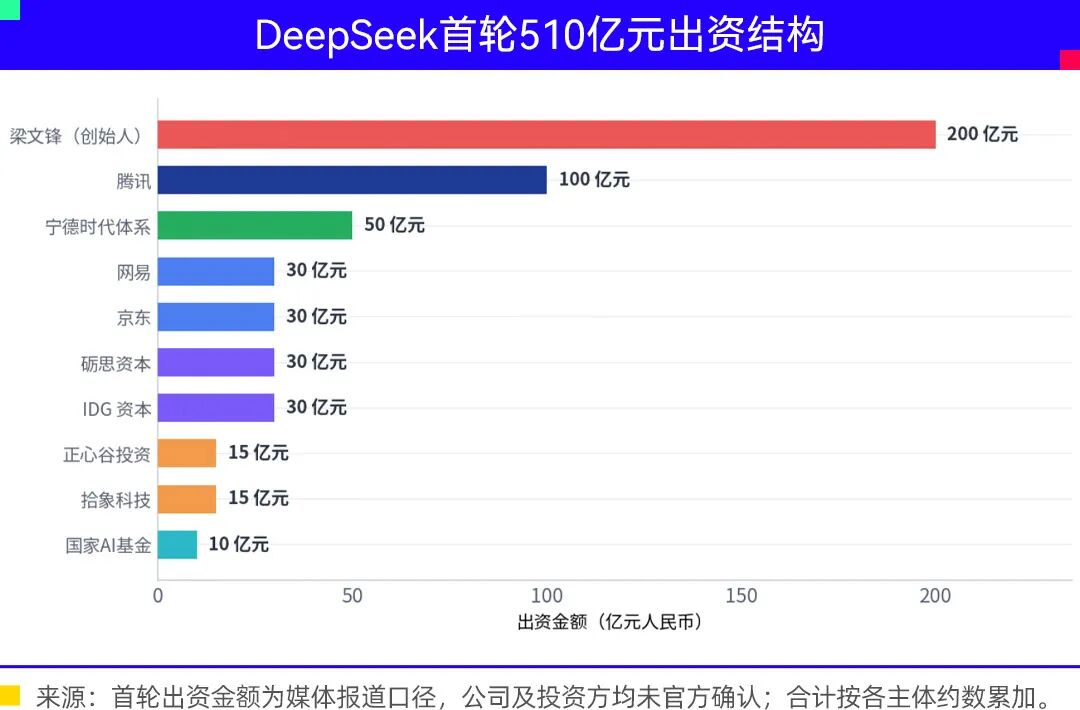
Including the first round of financing, according to previous media disclosures, a large number of industrial capitals including CATL, Tencent, NetEase, JD, Geely, Midea, Meituan, Xiaohongshu, SMIC and GigaDevice have participated in the investment.
It is no exaggeration to say that every enterprise on the list will receive envious looks from the entire Chinese business and investment communities.
Large enterprises from various industries including automotive, battery, communication, internet and chips have gathered together, making this case go beyond the business, investment and financing stories of the large model company itself, and it is more like a kind of long-term layout for the future.
Entities like CATL and Geely have products, customers and engineering systems in their respective professional fields, and cannot bring similar industrial discourse power (including capital discourse power) into DeepSeek, but they obviously do not care about this.
As is known to all, DeepSeek is an open-source model, and using this large model does not require you to become a shareholder of its parent company in the first place. Since you can access the model by purchasing services, why would you invest a sum of capital that needs to take risks and wait for exit? Capital appreciation is not the full answer to this question. The benefits of becoming a DeepSeek shareholder are hidden in the long-term development logic and process of the large model company.
Entry
If you break down DeepSeek's "large enterprise shareholders", you can get more information with analytical value.
According to the disclosure of *Sci-Tech Innovation Board Daily*, the funds related to CATL participate in Hangzhou Chengyan through three funds: Xiamen Shidai Yiyuan, Xiamen Shidai Shenyuan, and Fujian Shidai Zeyuan, while Geely participates through Zhejiang Geely Industrial Investment. This involves multiple levels of funds, investment entities and model companies, which cannot be directly equivalent to the respective shareholdings of the listed CATL and the listed Geely Automobile in DeepSeek.
The fund announcement of CATL can better illustrate the situation: Ningbo Wending holds 19.4175% of the subscribed capital in Yiyuan Fund, and Mindong Shidai holds 10.2041% in Shenyuan Fund; Zeyuan Fund also has multiple contributors. These are the proportions at the fund level at the time of their respective announcements, and cannot all be attributed to the listed CATL itself.
At the level of governance rights, DeepSeek has set a very clear boundary. Liang Wenfeng adopted a method that is not uncommon in itself, but very rare for these investor shareholders with special identities, firmly locking the possibility of investors participating in the company's operation and management decisions, it is basically impossible for any investor, whether it is Tencent or Geely, to interfere in the operation of this company.
If there is no shortage of capital and the premise is not to control the model company, what will be the key driving force for industrial capital to invest in DeepSeek?
Building a self-developed model and holding equity in a model enterprise are two completely different types of investment. Automotive companies need to understand the cockpit and vehicles, and battery companies need to master materials and manufacturing; fully integrating general model R&D into one's own organization means building a new set of talent, computing power and research decision-making systems, with almost no upper limit on cost.
Cooperation at the equity level allows you to share the growth opportunities of the enterprise while keeping the focus on your main business.
From DeepSeek's perspective, the involvement of industrial capital may also be more meaningful than the capital itself. Enterprises that actually operate automotive, battery or communication businesses know what results customers are willing to pay for, and also know which seemingly reasonable solutions do not work on site. This knowledge can shorten the process for technology to find practical industrial applications, but it will become operating resources only after actual industrial landing projects are formed in the future.
Therefore, DeepSeek and industrial investors may reach a compromise: the model company retains the autonomy of research direction, and large enterprises provide industrial demand and engineering experience, and each invests in the part they are good at.
This independence may even protect the investment value. If a certain car enterprise can influence the product route of the model company, obviously other car enterprises will reassess the access risk. For minority shareholders, less control does not necessarily only bring costs, but may also bring more independent development of the invested enterprise and larger market space.
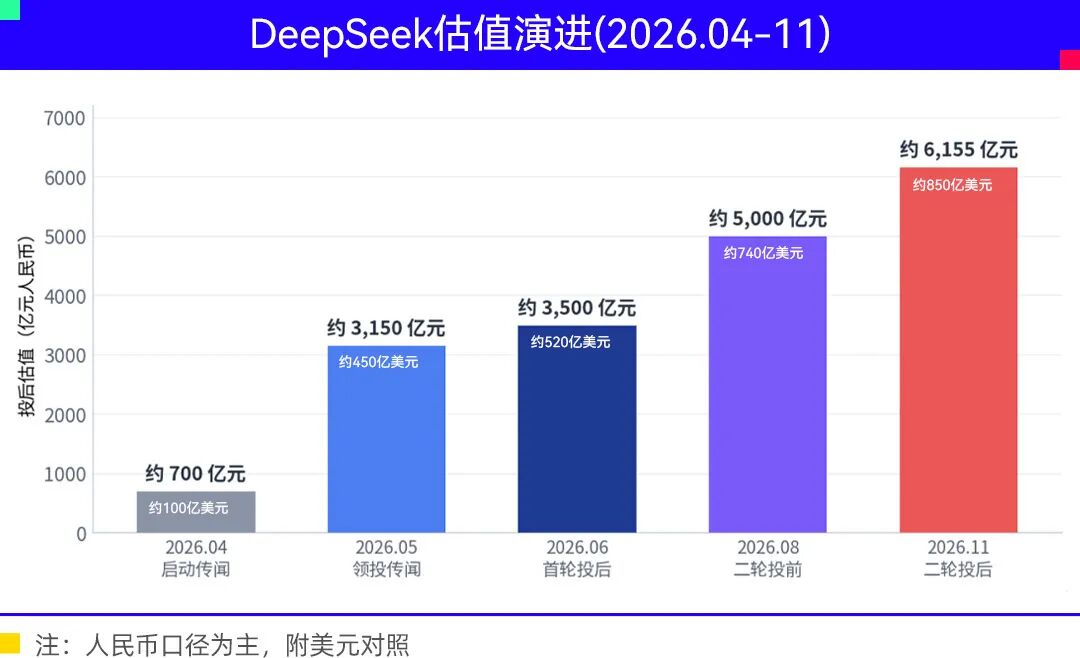
Of course, beyond cooperation, pure optimism about valuation growth is enough to be a reason for investment. The essence of investment is to obtain capital appreciation, but if the invested enterprise is as strong as DeepSeek, investment will inevitably change — Liang Wenfeng is very unlikely to accept the intention of making a quick profit and exiting.
Implementation
In terms of cooperation with DeepSeek, Geely provides an important chronological reference.
In the 2024 annual performance announcement released by Geely Auto in March 2025, it has been stated that the Xingrui model is connected to DeepSeek's open-source general model. This shows that technology adoption can precede cooperation at the capital level.
The public path provided by DeepSeek has long been quite clear: enterprises can apply for API keys and call the model through the interface; the DeepSeek-R1 official repository also allows commercial use and derivative development of the corresponding model, and these paths do not take shareholder status as a condition for use.
For shareholders, they can deploy mature models with high cost-effectiveness, while it is completely unrealistic to spend money to develop their own models.
Take in-vehicle services as an example, when a user says "it's a little cold", the model's understanding of the literal meaning is only the beginning. Next, it needs to judge the occupant position, vehicle status, available functions and user permissions, and then decide whether to adjust the temperature and whether confirmation is required.
Model companies can provide understanding capabilities, while car companies master in-vehicle interfaces, product rules and complete vehicle verification. The stable cooperative relationship between the two parts is very important for user experience. Equity relations will not replace these business integrations.
The situation of CATL further illustrates the importance of professional capabilities. The company disclosed in January this year that its intelligent cell design platform is led by a professional team, and conducts design by combining battery cases and test data.
If large models enter the process in the future, they must face electrochemical constraints, experimental verification and engineering responsibilities. Simple tasks such as helping researchers find materials are different from generating specific mass-producible cell solutions. No matter how strong the model's capabilities are, it needs to be combined with the experimental system and professional judgment accumulated by industrial enterprises for many years.
This means that leading industrial enterprises have the opportunity to benefit from the popularization of models: when general capabilities are easier to obtain, industry data, verification facilities and delivery experience may become more valuable differentiated capabilities.
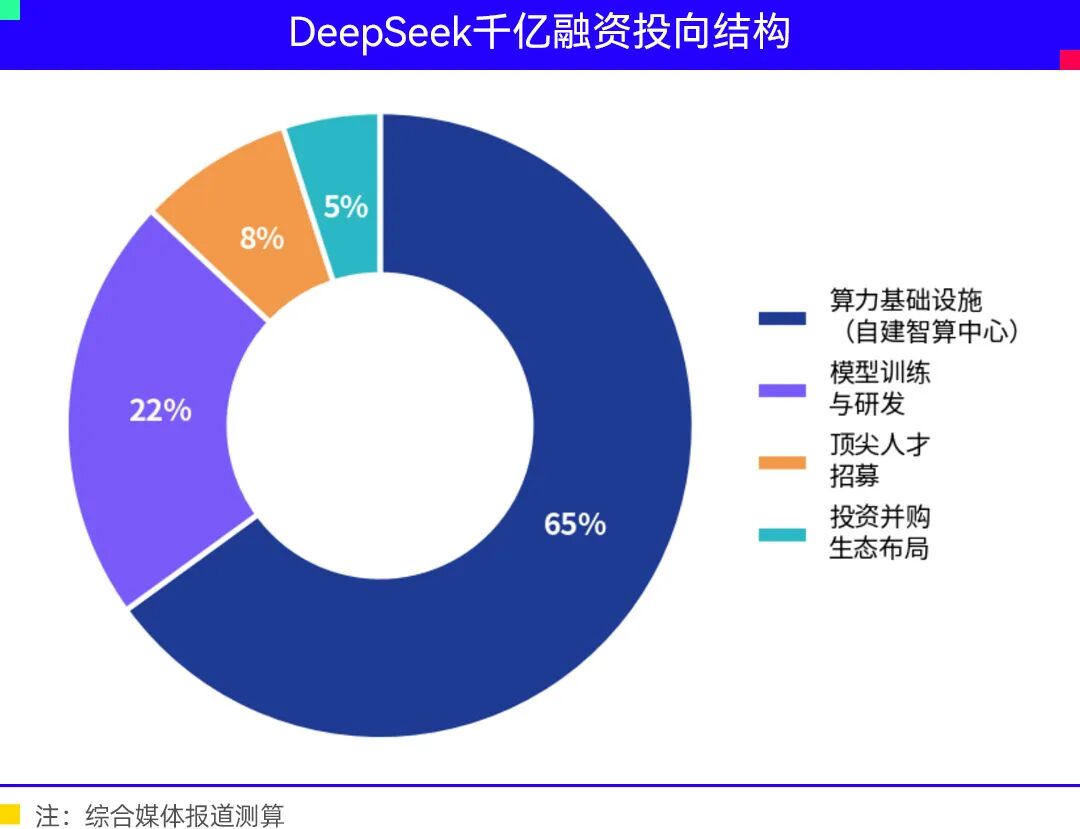
If the shareholder relationship has additional value, it should be reflected in the actual ability to solve industrial problems. Both parties' willingness to carry out in-depth cooperation, willingness to jointly bear the cost of trial and error, and ability to arrange long-term development around actual demands all require a more stable relationship, which is the value of equity-level cooperation.
Model companies need operating revenue, and they will inevitably go deep into various industries, transforming from TOC-oriented companies to institutions with higher TOB premium. When technology is implemented into engineering, equity-level partners are obviously more reliable.
Revenue Sharing
If industrial cooperation is gradually launched, the returns that DeepSeek shareholders may obtain have multiple components.
The first is investment income. It depends on comprehensive conditions such as the entry price, subsequent dilution, enterprise operation and the capital market sentiment at the time of exit. Even if DeepSeek is the well-deserved top AI player in China, it is difficult to make a direct judgment.
Large model enterprises were once very popular in the capital market, but the situation has changed significantly now: the global AI valuation market has plummeted, and the decline of Hong Kong-listed benchmark enterprises such as Zhipu AI and MINIMAX has reached about 90%.
The enthusiastic investment from these big capital owners will definitely generate profits, but it is really hard to say how much excess profits there will be.
The second is the revenue at the main business level. For example, car companies can improve services through models, and battery companies can shorten engineering collaboration time through tools. The revenue from achievements may be reflected in customer experience, R&D efficiency and operating costs.
However, these two types of returns cannot be simply calculated, and capital investment is only the starting point. The money saved by using the model needs to deduct deployment, call, maintenance and manual review, while equity returns need to deduct investment costs, expenses and related risk pricing.
The capabilities formed within industrial enterprises may be productized and sold to other enterprises. Car companies, manufacturing enterprises or service providers transform from customers to solution providers, so that model companies can increase call and service revenue, and investors can collect comprehensive revenue such as software, integration or operation fees.
The role of talents in large enterprises will also change after the large model collaboration mode becomes more mature. Talents responsible for model research, engineers who understand the industry, and leaders who can turn user demands into products all need to cooperate in depth in the same project.
If the project is only led by the investment department, and the business department has no budget and acceptance responsibility, the cooperation will easily stay at the demonstration stage. Whether shareholder status can bring organizational commitment also needs to be continuously confirmed in long-term communication and cooperation.
Another situation may also arise: general models are getting cheaper and cheaper, and more profits remain in the hands of enterprises with customers and delivery capabilities. The main business of industrial shareholders benefits from this, while the model enterprises they hold are facing price competition.
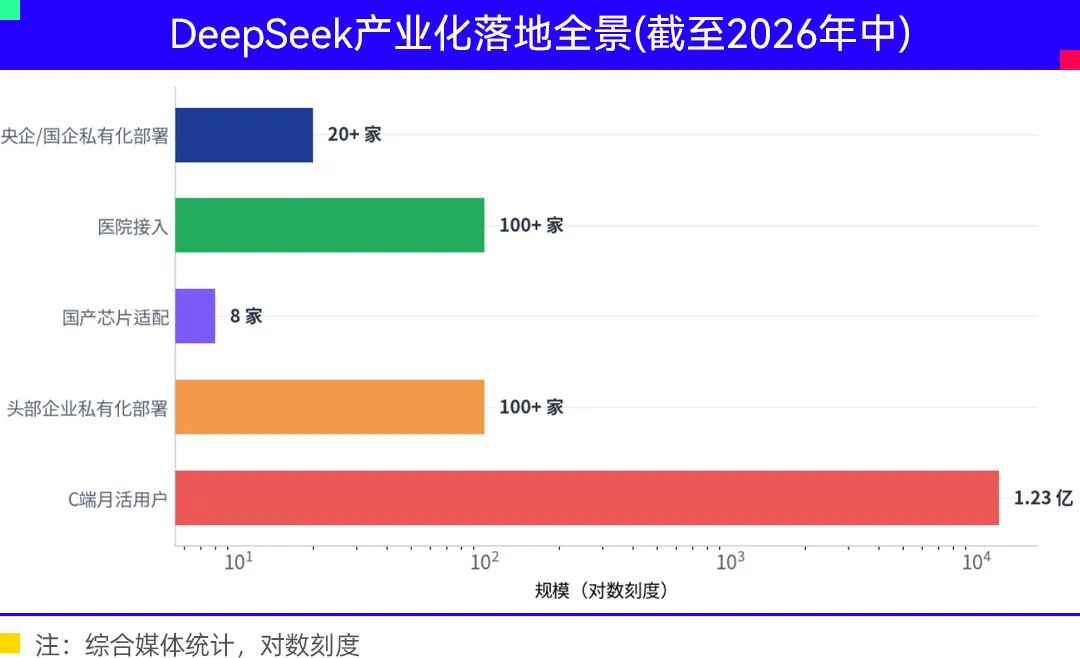
In order to prevent this situation, DeepSeek will also continuously break through the industrial boundary of large models, go deeper into all walks of life, and implement its technical capabilities at the industrial level.
In this process, DeepSeek also needs to take care of non-shareholder customers and partners, but in any case, partners with in-depth equity relations will become the first choice in the process of AI technology industrialization.
Final Notes
People tend to believe that becoming an investor of DeepSeek means that enterprises can achieve deeper cooperation with DeepSeek beyond investment.
But from another perspective, it is these enterprises that are willing to take more investment risks under the same cooperation conditions — recognizing DeepSeek's long-term technical value, and having deeper trust in Liang Wenfeng himself.
For industrial capital, this judgment contains even greater information content: they are convinced that artificial intelligence will enter the process of product design, R&D and sales, and convinced of the great value of artificial intelligence for serving customers, improving engineering capabilities and operating returns.
However, equity, technology use and business cooperation are three relatively independent matters.
In the next stage, for DeepSeek, what is more important than confirming its list of shareholders will be to weigh what each shareholder can provide in this cooperative relationship, what they can gain, and what they can pursue together.
This article is from the WeChat official account "Giant Tide WAVE", Author: Dax, Editor: Yang Xuran, published with authorization from 36Kr.