Embodied Intelligence: What are the real challenges after the $20 billion valuation?
20 billion yuan is becoming a watershed in the embodied intelligence track.
A year ago, robot startups valued at over 100 billion yuan were still rare. By 2026, a number of enterprises have successively crossed the 200 billion yuan threshold, and discussions about the "Four Little Dragons" and "Seven Little Dragons" in the industry are becoming increasingly frequent.
However, similar valuations do not mean the same competitiveness. Some reach the 200 billion yuan mark relying on solid shipments of tens of thousands of units, some rely on model capabilities and data barriers, some focus on core components such as dexterous hands, and others are backed by industrial capital with ready-made scenarios. They occupy different positions in the industrial chain, have different business models, and face different technical challenges, so it is difficult to judge who is more leading solely based on valuation.
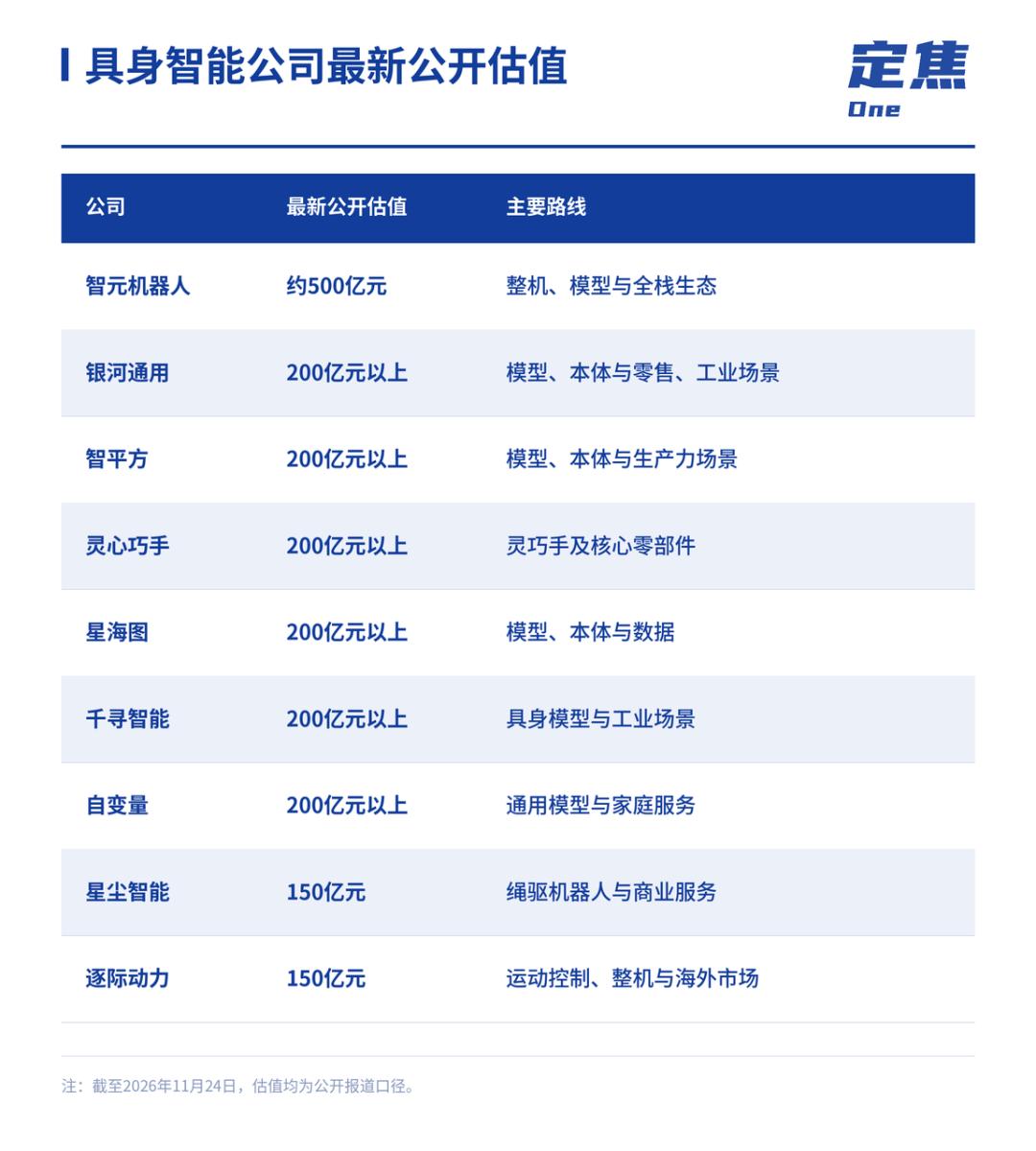
We selected four representative enterprises, namely Agibot, Galaxy Universal, ZSquare, and Dexterous Hand, for in-depth analysis. They respectively represent four mainstream models on this track: full-stack ecosystem, model and scenario collaboration, industrial delivery, and key components. Through these cases, we can not only demonstrate the different development directions of the current embodied intelligence industry, but also help us understand what exactly the capital market is paying for.
01. The "Four Little Dragons" have distinct characteristics
Agibot is often compared with Unitree, but the underlying logic of the two companies is completely different.
Unitree follows the route of ultimate single product, scales up volume through motion control and cost-effectiveness, and has become the first complete machine manufacturer that publicly announced full-year profitability. Agibot, on the other hand, aims to build a "system": it has laid out everything from operating systems, large models, and core components to complete machines. Its products are not limited to one single form, covering bipedal, small-size, and wheeled robots corresponding to different scenarios. This track has a very high ceiling. Once the system is built, other developers can build applications on it, and Agibot can collect "tolls". In October 2026, Agibot donated its self-developed "Lingqu OS" to an open source foundation, which follows the same logic as Google's open sourcing of Android back then.
However, the problem with the platformization strategy is the long return cycle. Production lines, large model training, and ecosystem operation all cost huge amounts of money. Agibot holds the cards of full-stack capabilities and mass production experience at the ten-thousand-unit level. What it most needs to prove now is which of its numerous product lines can achieve continuous self-sufficiency, and whether it can build platform-level cost and efficiency advantages.
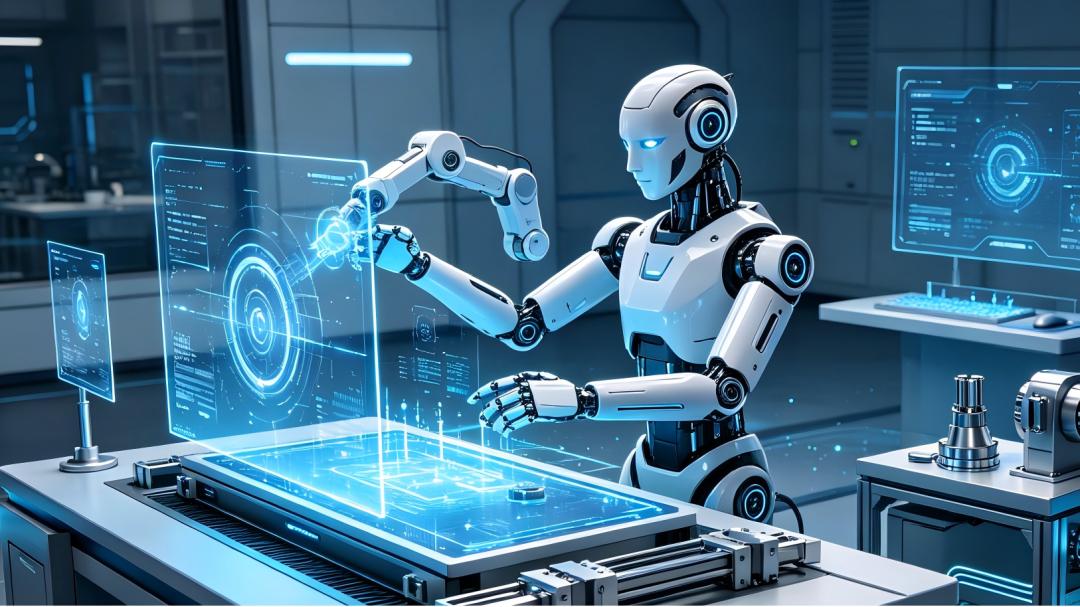
Source / Agibot official website
Both Galaxy Universal and ZSquare emphasize the integration of models and scenarios, but they differ in technical accumulation and commercialization priorities.
Galaxy Universal adopts the approach of "scenarios nurturing the AI brain". The team has deep accumulation in synthetic data and simulation training, which is used to improve the data utilization efficiency and generalization ability of the model. Its products choose wheeled dual-arm robots instead of bipedal ones, because wheeled robots are more stable and cheaper in scenarios such as pharmacies and factories.
The problem with this strategy is that although synthetic data can reduce costs and expand task coverage, it cannot exhaust all changes in the real world. For example, messy shelves, flickering lights, and new versions of product packaging may all affect the operation performance. The key for the next stage is whether the robot can still run stably when the environment changes, and whether its capabilities can be migrated to new customers at low cost.
ZSquare is more of an "industrial delivery" school, which derives the design of models and hardware from the real pain points of the industry. Its AlphaBrain large model has been iterated to the fourth generation, and the NeuroVLA released in June 2026 is claimed to be the world's first VLA model adopting a brain-inspired architecture, which bionically simulates the three-layer system of "cerebral cortex, cerebellum, and spinal cord".
Compared with Galaxy Universal, ZSquare puts more emphasis on product design, solution adaptation and large-scale deployment around the operation needs of industrial customers, which helps build customer relationships in the early stage, but the risk is that if a new solution needs to be redeveloped every time it enters a new industry, the larger the revenue scale, the more likely the cost of the delivery team and service will grow accordingly.
Dexterous Hand is a completely different type of enterprise, which only produces dexterous hands. Among all core robot components, dexterous hands are the most special, with the highest unit price and highest technical barriers, and the gross profit margin in the industry generally reaches 50% to 70%. It is a product that "looks small but is extremely difficult to develop". Its mechanical structure, drive, sensors, and control algorithms all require in-depth cross-domain integration, and the technical routes have not converged so far.
At present, there are three mainstream technical routes: the cable-driven route uses cables for traction and has good compliance; the direct-drive route embeds the motor directly into the joint and has the strongest fine control; the connecting rod route is the most durable. However, the service life of cable-driven and direct-drive dexterous hands at this stage is generally only about 100,000 cycles, while industrial scenarios often require more than 100,000 or even millions of cycles. The connecting rod route has natural advantages in this dimension, but its compliance and precision are not as good as the former two.
The strategies of different enterprises are clearly differentiated: DeepBrain, Paxini, and InTime all follow a single route, while Starlight Era and Sinoo Future focus on one main route while keeping a backup. Dexterous Hand is widely recognized in the industry as the only manufacturer covering all three routes, producing both high-degree-of-freedom and low-degree-of-freedom products. An industry practitioner in embodied intelligence said that in the next two to three years, the industry will not quickly converge to a single technical route.
02. Industrial capital changes the valuation logic
The four companies follow different routes, and the capital structure behind them also profoundly affects their business rhythm.
Every wave of AI has its own capital portfolio. When the last generation of "AI Four Little Dragons" rose to prominence, the main players were VCs and PEs such as HSG, GL Ventures, and SoftBank, and their investment logic mainly centered on technological breakthroughs, commercial growth and capital market exit. In the large model startup boom, the participation of large internet enterprises increased significantly. ByteDance, Alibaba, and Tencent are no longer satisfied with being purely financial investors. They develop large models on their own on one hand, and invest in startups on the other hand, to bind computing power and cloud ecosystems. A subtle coopetition relationship has emerged between investors and investees.
In this wave of embodied intelligence, the participation of manufacturing industrial capital, national-level funds and local state-owned assets has gone deeper. The shareholder lists of leading companies include institutions and enterprises such as the National Artificial Intelligence Industry Investment Fund, the National Manufacturing Transformation and Upgrading Fund, Sinopec, CRRC, SAIC, and CATL. In the first half of 2026 alone, the total financing amount of China's embodied intelligence track reached about 935 billion yuan, and the top five companies absorbed more than one-third of the total capital.
Industrial capital is particularly important in this round, because the development of embodied intelligence companies not only requires models, talents and computing power, but also requires manufacturing hardware, building production lines, and completing customer delivery. For industrial parties such as SAIC and CATL, investing in Agibot and Galaxy Universal is not only for financial returns, but also for industrial synergy considerations. Robots have the opportunity to enter their own production systems, and participating in the industrial chain layout in advance also helps them master future technology and supply chain resources.
However, the goals of different types of capital are not completely consistent. Financial investors calculate IRR and DPI, industrial capital pays more attention to the promotion of existing businesses, and state-owned assets may take into account both industrial development and local economic driving effects. When multiple types of capital enter a project at the same time, valuation becomes a hybrid: it includes judgments on the company's value, strategic premium for industrial synergy, FOMO (fear of missing out) anxiety, and pure premium for snatching shares in leading projects.

Source / pexels
The financing history of ZSquare can reflect this change. In February 2026, ZSquare's valuation exceeded 100 billion yuan. A few months later, it completed nearly 50 billion yuan of new financing, and its valuation directly crossed the 200 billion yuan mark, doubling in a short period of time. This not only reflects the market's recognition of its technology and commercialization prospects, but is also related to the intensive participation of national-level funds, local state-owned assets, industrial capital and market-oriented institutions.
Against this background, listing is becoming the next battlefield for leading embodied intelligence companies.
Among the previous generation of AI Four Little Dragons, SenseTime and CloudWalk took about seven years to get listed respectively, while Megvii and Yitu failed to complete their IPOs. For this round of embodied intelligence enterprises, the pace from share reform to IPO application is much faster. At present, at least 28 companies across the country are simultaneously promoting or planning to go public.
There are three reasons behind the rush to go public. First, the track is extremely capital-intensive: large model training, hardware iteration, and production line construction all require continuous capital supply. Second, industrial capital and state-owned assets have clear assessment cycles. Third, the window for first-mover advantage is very short. Whoever gets listing financing first can take the lead in investing in production lines, seizing scenarios and accumulating data.
However, the stock price trend of Unitree has also made the market re-examine the pricing of robot companies. On the first day of listing, its stock price peaked at 1100 yuan, and its market value once approached 4450 billion yuan, then plummeted with a maximum drop of more than 60%. After that, it rebounded for a while, but the roller-coaster fluctuation shows that although the secondary market is willing to give embodied intelligence a valuation premium far exceeding that of traditional manufacturing enterprises, it will also reassess the profitability and growth rate of enterprises.
At the same time, in the second half of 2026, news began to emerge that the listing review for humanoid robot enterprises was tightened, targeting projects that "have not yet entered a reasonable commercialization cycle". Soon, Huan Dong Technology withdrew its STAR Market listing application, Leju Intelligent suspended its queuing, and even Agibot launched a new round of financing, whose original listing pace may be delayed as a result.
The primary market also responded quickly. According to data from IT Juzi, there were only 33 financing events in the embodied intelligence track in October, with a total amount of 101.05 billion yuan, while the figures for September were 60 events and 110.28 billion yuan. The number of financings was halved, but large-scale financings are still continuing. For companies that can truly deliver products and achieve repeat purchases, this is actually a good thing.
03. Is the position of the "Four Little Dragons" stable?
Valuation is a game of capital pricing, but the commercialization test is fair to all companies. These four companies are all facing their own problems to solve.
Agibot's revenue scale is relatively clear: it achieved a revenue of 10.5 billion yuan in 2025, with revenue close to 20 billion yuan and 9,700 units shipped in the first half of 2026. As of September, it has rolled off a total of 20,000 units, leading the industry in delivery scale. But its challenge is that for a company that develops complete machines, models and platforms at the same time, expansion of scale does not necessarily bring profits. If different product lines can share technologies and components, costs can be diluted; on the contrary, if each scenario requires a large amount of separate development, revenue growth may not be synchronously translated into improved profits.
At present, the revenue of ZSquare and Galaxy Universal relies more on benchmark customers.
One of ZSquare's key advantages is the 3-year long-term cooperation signed with panel giant HKC, covering more than 1,000 units with a total amount of nearly 500 million yuan. Morgan Stanley recognized this as the largest single order for productive robots in the world, and ZSquare has achieved repeat purchases from multiple customers in a single scenario in 2026.
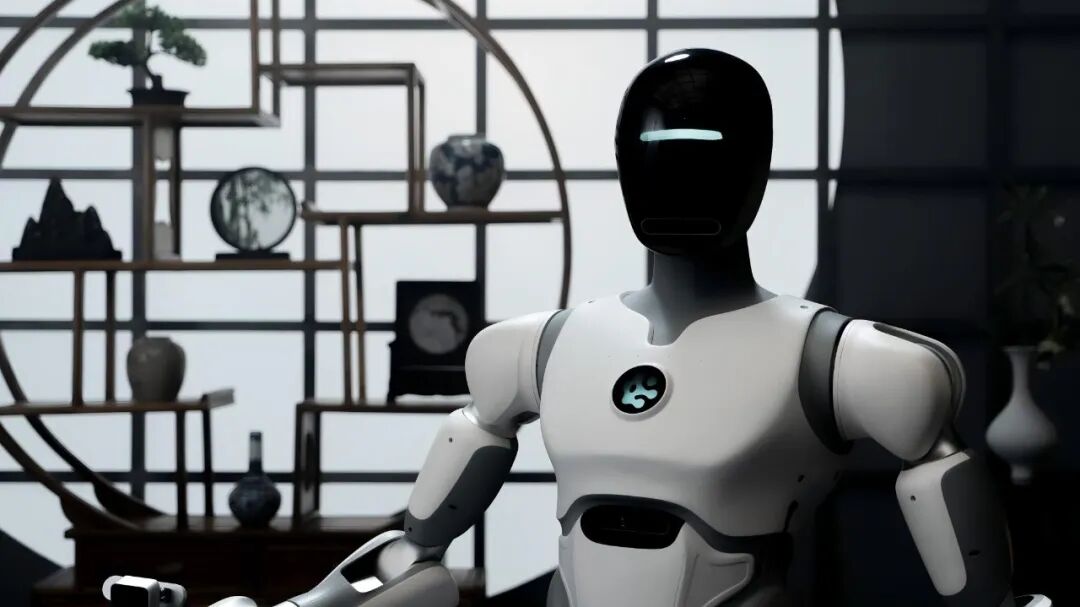
Source / ZSquare official website
Galaxy Universal's robots have entered CATL's battery factories and pharmacies that require pharmaceutical business licenses. However, an investor focusing on embodied intelligence said: Apart from strategic underwriting or related-party orders from industrial shareholders, real market validation is achieved only when independent manufacturing customers make continuous repeat purchases based on cost-effectiveness and stability.
The challenge for Dexterous Hand lies in how large the independent dexterous hand market can grow.
In the view of the above-mentioned practitioner, this largely depends on the future industrial pattern. If robot forms are diversified and the complete machine pattern does not converge for a long time, dexterous hands will have the opportunity to become cross-platform standardized components, just like Intel in the PC era. But once the market concentrates rapidly, and several complete machine giants take all the profits, independent dexterous hand manufacturers will be squeezed into an increasingly narrow market. Therefore, Dexterous Hand must prove that it can deliver products in batches across customers and industries, and adapt to different complete machine products.
The larger variable is that the pattern of the entire track is far from settled.
The first layer of variable is that even within the 200 billion yuan club, the pursuers are catching up closely.
StarSea Diagram has orders of thousands of units. Once its delivery model is verified, the gap between it and ZSquare on the "industrial delivery" route will need to be re-evaluated. Qianxun Intelligence's Moz robot performs flexible wire harness insertion on CATL's production lines, and its success rate and cycle time have reached the level of skilled workers. If this kind of high-difficulty work can be replicated to more factories, its competitiveness will improve rapidly.
Zili Hanshu directly targets the household scenario, and cooperated with 58 Home to launch household cleaning services involving robots, which has covered hundreds of households in Shenzhen and Beijing. Analysts from JPMorgan Chase pointed out in a report that the household environment is an order of magnitude more difficult than the semi-structured production environment, but if it can be stably implemented and the cost can be reduced to a level acceptable to consumers, this market will become an important growth direction.
The second layer of variables comes from enterprises whose valuation has not reached 200 billion yuan, and the actual gap is not as large as the numbers suggest.
Stardust Intelligence and ExDynamics, with valuations of about 150 billion yuan, the former also holds orders of thousands of units, while the latter has obtained a total of thousands of orders, more than half of which are from overseas. Once it gains a firm foothold overseas and verifies localized operation and maintenance, it can form differentiated advantages.
The third layer of variables comes from new entrants.
Octopus Dynamics, founded in early 2