BBA charges into the core home turf of NIO, XPeng and Li Auto.
In November 2026, the three German luxury brands have had a very tough time in the Chinese market. Following a significant decline in 2025, the three brands once again recorded a drop of at least 20% in the first three quarters of this year. Such a severe situation is not only driven by the pressure of the continuous strong rise of domestic independent brands, but also greatly affected by the huge uncertainty of oil prices since March this year.
Under this combined effect, domestic new energy vehicles are embarking on a second round of large-scale expansion. The momentum is so strong that it is no longer limited to the 50% penetration rate seen last year. Over the past ten months, the market penetration rate of new energy vehicles has climbed to nearly 60%, among which the penetration rate of pure electric models reached 39.2%, accounting for almost 40%. In contrast, retail sales of fuel vehicles fell by 45% year-on-year, and retail sales of luxury brands also dropped by nearly 40% year-on-year.
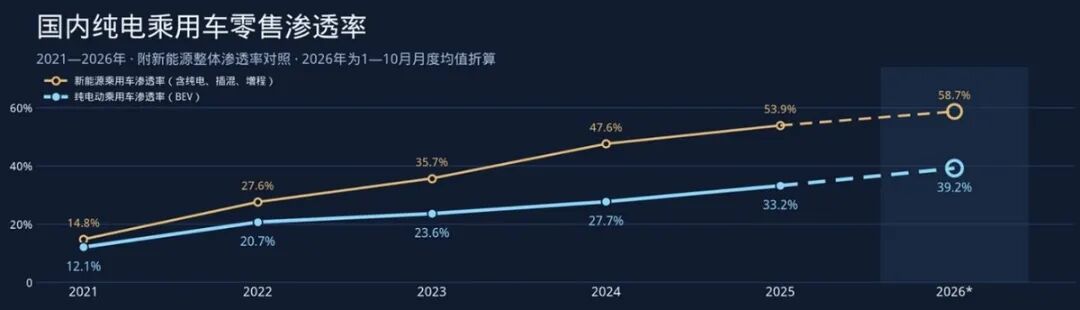
At present, independent brands have basically dominated the 250,000 to 400,000 RMB price range, and the 400,000 to 600,000 RMB range is also being continuously eroded and divided by high-end models of several brands. In this earth-shaking era, the three BBA brands that once dominated China's high-end market have not yet launched a high-end new energy product recognized by the market...
The Audi e-tron imported in 2019 was once priced extremely high. Mercedes-Benz's EQ series adopted the previous-generation EVA architecture, retained the engineering framework of fuel vehicles, and created a separate EQ naming system. As a result, salespeople had to explain for a long time to clarify which fuel vehicle class the EQE should be compared with.
Similarly, BMW developed the iX3 as a pure electric derivative based on the CLAR platform, with the guide price once set higher than that of its fuel-powered counterpart. It was not until the brand was educated by the market later that the terminal price began to drop all the way.
For nearly 20 years, BBA's conventional practice for models dominating the Chinese market was to first determine the platform overseas, then introduce it to China for extended wheelbase modification, with an interval of often one year from release to launch. This path no longer works now.
On the one hand, fuel models are currently facing life-or-death challenges, and on the other hand, domestic vehicles at the same price point already have better alternatives in terms of size and intelligent features. For BBA, the current vicious cycle is that prices are set high first and then adjusted downward, new customers wait for discounts, while old car owners are resentful of being "backstabbed". As for in-vehicle infotainment systems, voice assistants, and even urban-level assisted driving, without local teams to follow up and having to wait for overseas updates, the experience is usually very unreliable.
Where are BBA's core new energy models that can match the performance of their fuel-powered counterparts? This has been a common question from all sectors since the 19th Shanghai International Automobile Industry Exhibition issued the "Embrace Change" declaration to the world in April 2021.
Nowadays, the 24th Guangzhou Auto Show is about to open on November 27. As the closing exhibition of China's market every year, we will specifically take stock of the pure electric vehicles that the three brands will display at their booths this time, as well as the differences from their previous-generation products.
They are also about to break into the core market of Li Auto, NIO, Xpeng and a host of domestic high-end new energy vehicle brands, trying to recapture the lost say in the high-end new energy vehicle market with a brand new product matrix and localized technology routes. The head-to-head confrontation at this auto show will also become a real systematic strength competition between foreign luxury brands and China's local high-end new energy forces, directly determining their market position in the high-end new energy vehicle track in 2027.
BBA's New Energy 2.0 Era
In April this year, FAW Audi launched the new generation of mid-to-large pure electric sedan A6L e-tron. This model is roughly positioned on par with the fuel-powered A6 series, and together with the pure electric SUV Q6L e-tron, it forms the core official product matrix of Audi's current New Energy 2.0 plan.
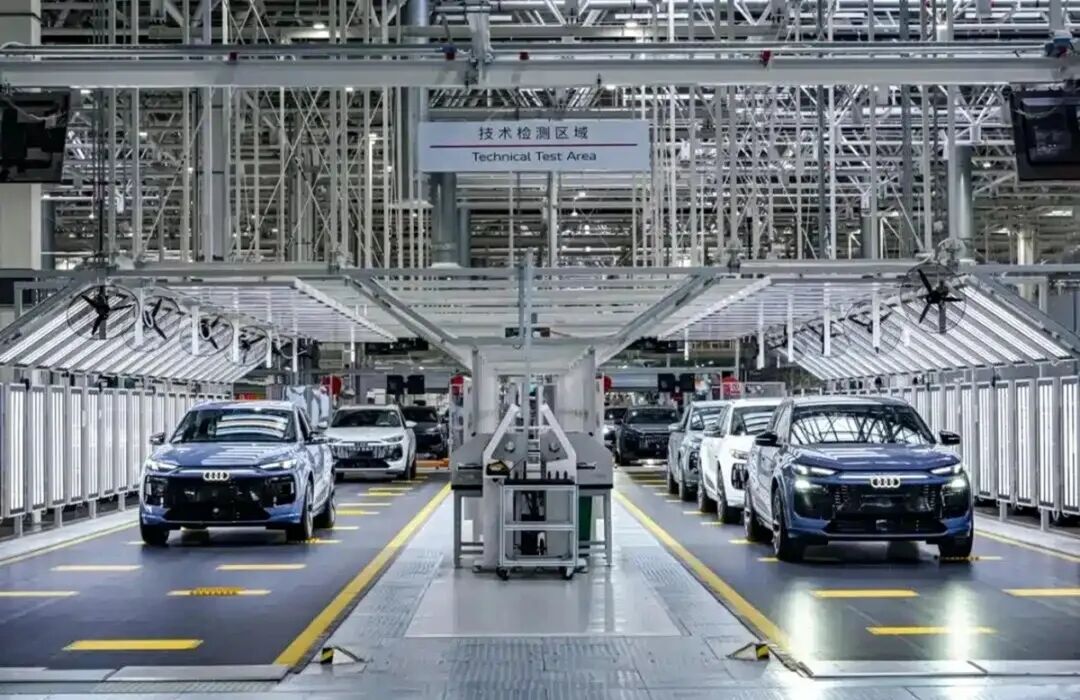
Figure丨In 2022, Audi invested 20.93 billion RMB to build the Audi FAW Super Intelligent Eco-Plant in Changchun, Jilin Province, which was completed and put into operation at the end of 2024.
Different from the 1.0 era's model of modifying based on fuel platforms or directly using the MEB platform (the Volkswagen Group's previous-generation global pure electric architecture), Audi's new energy products in the 2.0 era are based on a specially developed high-end pure electric platform (PPE, jointly developed by Audi and Porsche, dedicated exclusively to pure electric vehicles). At the same time, to solve the problem of assisted driving, a China-exclusive Qiankun Intelligent Driving version was specially developed, which cooperates with Huawei to carry the Qiankun ADS solution with a specially designed two-sided jaw-type lidar layout developed exclusively for Audi.
However, outside the official product line, the AUDI E7X launched at the end of May follows a different route. It adopts the Advanced Digitized Platform (ADP for short, exclusive to China) jointly developed by Audi and SAIC, with Momenta and local large model teams responsible for the assisted driving and cockpit systems respectively.
This is actually the second product of SAIC Audi. Back in October last year, this solution was first implemented on the AUDI E5 Sportback pure electric station wagon. Compared with the official products that are aligned with global models and have undergone large-scale localized adjustments, the Audi models with letter badging adopt a model led by local partners.
Mercedes-Benz did not create a separate brand identity, and the 2.0 changes are focused on the platform and naming.
The pure electric CLA launched in November 2025 is the first mass-produced vehicle on the MMA platform, positioned roughly on par with the fuel-powered CLA in the product line. MMA is Mercedes-Benz's new generation fuel-electric shared platform, developed with pure electric priority, while reserving space for fuel and hybrid models. The intelligent hybrid CLA to be launched during this Guangzhou Auto Show is built on this architecture. The pure electric GLC launched in July this year uses the MB.EA architecture, Mercedes-Benz's new generation pure electric platform that does not develop fuel or hybrid versions. The two models support the compact sedan and mid-size SUV segments respectively, forming Mercedes-Benz's core official product matrix for this round.
During this Guangzhou Auto Show, Mercedes-Benz will launch two new versions of the GLC in addition to the gilded edition that went on sale in July. At the same time, the VLE, which is at the same level as the fuel-powered V-Class and built on a dedicated pure electric architecture for vans, will make its China debut.
The EQ series in the 1.0 era adopted the previous-generation EVA architecture, with the body and engineering framework mainly retained from fuel vehicles, and a separate EQ naming system was created. Salespeople had to explain from scratch which class in the fuel vehicle camp an EQE should be compared with. In September 2025, Mercedes-Benz CTO Markus Schäfer said in an interview that the electric series will no longer use the EQ naming, but will adopt the method of adding the model name directly to the pure electric version. In June this year, some media got the statement that the EQ series will be discontinued when visiting dealers, but there is no official information to support this for the time being.
The pure electric E-Class, which is still under development, is planned to replace the EQE in the future. In addition, Mercedes-Benz's high-performance pure electric models have their own dedicated architectures, including VAN.EA for building pure electric MPVs or commercial vehicles, and AMG.EA specially designed for high-performance pure electric SUVs.
As for who to assign the localized development work to, Mercedes-Benz's choice is full cooperation with reservations. MB.OS is Mercedes-Benz's self-developed operating system, which manages software and in-vehicle infotainment systems. Urban and high-speed assisted driving adopts a solution jointly developed with Momenta, the cockpit is connected to the Doubao large model, and the Chinese R&D team has led the software upgrades on this side. However, the overall vehicle engineering and platform definition rights are still firmly held by Mercedes-Benz itself.
Among the three brands, BMW is worth mentioning separately at the end, because the current news about its Neue Klasse models and some of their technical performances can be described as very impressive.
It should be said that BBA has a head start in the electrification field: the MegaCity i3 under the BMW i series launched in 2014 was one of the first batch of practical pure electric vehicles in the world. However, a large number of its subsequent electrified products were rather makeshift. The old iX3 was modified from the fuel-powered X3, and the i3 was derived from the 3 Series.
The Neue Klasse is finally a dedicated pure electric architecture developed with full dedication, with the entire set of electric drive, large cylindrical cells and electrical and electronic architecture completely redesigned. The sixth-generation power battery was mass-produced and rolled off the production line in Shenyang in October this year, and both models appeared in the MIIT declaration in September.
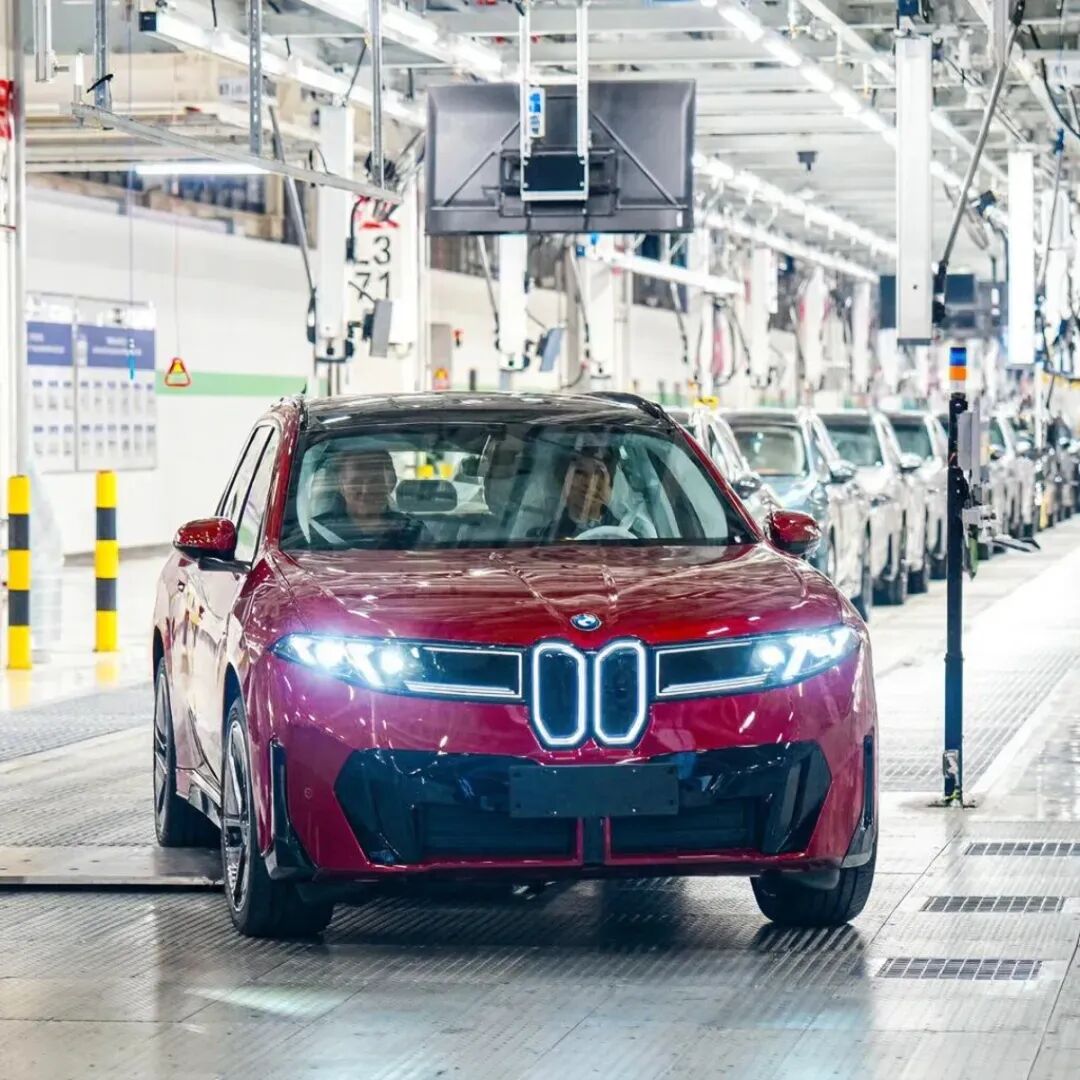
Figure丨The domestically produced new generation long-wheelbase iX3 started production last Monday (November 16) at BMW Brilliance's plant in Shenyang, and deliveries are scheduled to begin on November 25.
The domestic long-wheelbase version of BMW's Neue Klasse iX3 is scheduled to officially start domestic deliveries on the day this article is published. At the same time, the sedan version long-wheelbase i3 built on the same Neue Klasse platform will also be displayed on BMW's booth during the auto show. It is worth mentioning in passing that the literal Chinese translation of BMW's dedicated pure electric architecture Neue Klasse is "new class".
Success or Failure, the Market Has the Final Say
It can be seen from the above introduction that BBA's three New Energy 2.0 plans are all on track now. Audi took the lead in laying out two product systems and has launched the basic product matrix for each. BMW and Mercedes-Benz's Neue Klasse electric products have been planned and are gradually being launched on the market.
The basic routine of the three brands is to fully integrate Chinese technologies into the intelligent system, while retaining the definition rights of core products to varying degrees. Relatively speaking, Mercedes-Benz and BMW's approach is closer to the fuel vehicle era, without creating separate brands and model names. Audi, on the basis of insisting on independent definition for its official product line, has adopted the concept of letter badging, which is similar to a sub-brand, to allow local teams to give full play to their strengths.
Judging from the current situation, BMW's strategy seems to be more methodical. It first finalized the platform and batteries, then handed over the intelligent driving and cockpit systems to Chinese partners, and finally adjusted the pricing. The delivery of the iX3 on the 25th and the announcement of the i3's price at the auto show two days later can be said to be a carefully arranged rhythm.
At present, the all-new generation iX3 has received high acclaim in Europe. Since its official release and pre-order launch last year, total orders have exceeded 100,000 units in one year, accounting for about one-third of BMW's total pure electric orders in the same period. At BMW's Debrecen plant in Hungary, the brand has started working around the clock and recruited a large number of "temporary workers" to catch up with deliveries early next year.
In the domestic market, although there is no official clear statement for the time being, the overall situation is quite good according to information from various channels and the author's own field visits to dealerships. However, there are various statements about the reservation numbers from media and channels, with the highest one being "some media statistics show that the cumulative number of small pre-orders has reached tens of thousands in nearly a week", and the more conservative one is "foreign media broke the news that the number of reservations for the new generation iX3 in China has exceeded 20,000 units".
On this issue, BMW has been tight-lipped and has not released any official data on large or small orders, with an overall attitude of being cautious.
Therefore, in the final analysis, the real thing to focus on is delivery, and whether the brand can maintain stable sales for more than half a year after the first batch of scheduled deliveries. The new generation iX3 can only be said to have got off to a good start for now.
Compared with BMW's optimistic situation, Audi is facing much greater resistance. In particular, the official global models are the first to encounter difficulties.
The total sales of the Q6L e-tron and Sportback versions in the first 9 months of 2026 were more than 6,000 units, and FAW Audi has not separately announced the delivery volume of this model. Its price range highly overlaps with that of its own fuel-powered Q5L. Even if customers show interest in pure electric models after entering the store, they often compare the two power options back and forth.
The author believes that the first reason for this unfavorable situation is the delay in the development of the pure electric platform. According to the original plan, the PPE platform was supposed to be launched in 2023, and the new generation of pure electric models based on this platform could be launched in 2024. However, a series of delays caused by various reasons including the pandemic eventually led to the Q6L e-tron being officially launched in the second half of 2025. At that time, the 800V architecture and driving assistance systems in the domestic market had already been popularized on various self-developed mid-to-high-end models.
The letter badging models are a different case. As a solution led by the technical strength of domestic partners, it has made rapid progress since its release, and the AUDI E7X achieved certain results at the beginning of deliveries in June and July this year. However, the two currently on-sale products of the brand basically maintain a monthly sales volume of less than 2,000 units, indicating that the market has not fully accepted the letter badging brand. This problem goes beyond the vehicles themselves: in addition to whether the letter badging brand is widely recognized, there are also issues such as how used car dealers price the new badging models, and how to divide the customer groups of the two types of dealerships. These problems cannot be solved overnight.
The situation Mercedes-Benz is facing is relatively straightforward. The pure electric CLA sold more than 1,000 units when it was launched in November 2025, and its sales this year are almost negligible. The pure electric GLC was launched in July this year, with monthly sales remaining at the level of more than 1,000 units and less than 2,000 units, while the fuel-powered GLC sold about 6,000 units in the same period. Although the data may vary due to different statistical calibers, the order of magnitude is there. Mercedes-Benz's return from the EQ naming system and the launch of a native pure electric platform is a kind of correction, but the market's recognition of this change still takes time.
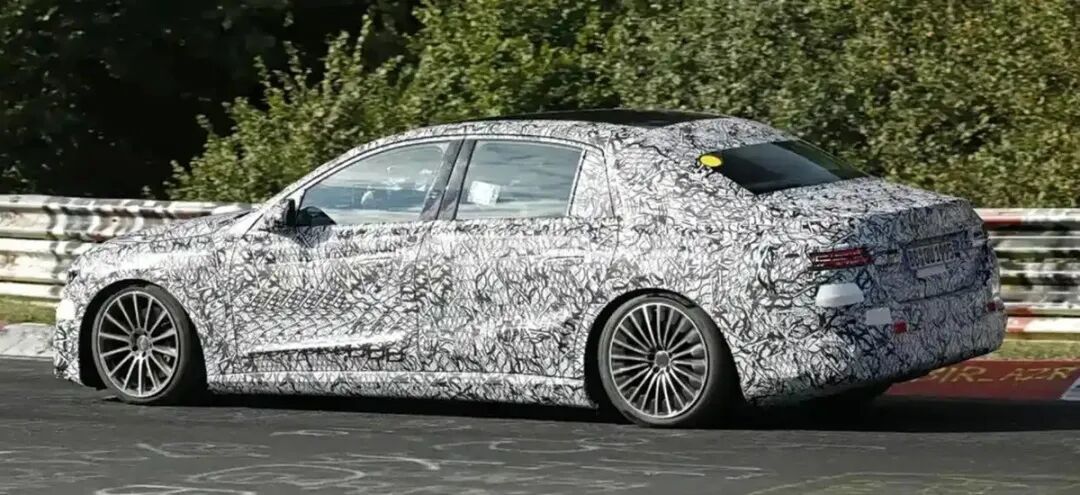
Figure丨Since a year ago, the road test prototypes of Mercedes-Benz's new E-Class pure electric version have been running all over Germany. Although the official has not announced the final appearance of the production car, and the road test prototypes are completely covered by camou