How many more GTA 6s does the gaming industry need?
Before the launch of GTA6, Take-Two, the parent company of developer Rockstar, rolled out a series of ruthless capitalist operations:
In June, GTA6 opened pre-orders for the digital version, with a one-month GTA+ membership as a bonus. This membership does not grant access to GTA6, but allows players to play old games such as GTA5. Players need to redeem it actively, and it will auto-renew after the first month ends. Players who activated GTA+ but forgot to cancel it are "lucky".
In July, Sony announced that it would stop producing physical discs starting from 2028. Take-Two, which naturally actively responded to and strictly implemented this player-unfriendly policy that hurts second-hand transactions and benefits capitalists, took the lead with GTA6: the physical version contains no disc, only a redemption code.
Strauss Zelnick, CEO of Take-Two, explained that "physical" refers to the box instead of the disc, and the game requires online registration. "Since you are already online, who cares if you downloaded it?"
In August, Rockstar premiered the 27-minute GTA6 trailer on Netflix, so that even advertisements can now be accessed via premium on-demand. Strauss Zelnick said: "If you don't have a Netflix subscription yet, you definitely should get one."
Players took it very seriously. According to estimates from research firm Ampere, on the day the trailer was released, Netflix added more than 100,000 new subscribers in the US, marking the third-highest single-day peak this year.
On November 9, ten days before the game's launch, an analyst asked during the earnings call: The standard edition of GTA6 costs 80 US dollars, and the ultimate edition costs 100 US dollars. Is the extra 20 US dollars counted as "recurrent consumer spending"? The CFO said of course it is, because this part of the content can be purchased separately.
As for the real reason, it must be all for the good of players, and definitely not because in June this year, Take-Two granted Strauss Zelnick a stock incentive, 25% of which is directly linked to recurrent spending.
Why are the board of directors and analysts of Take-Two so concerned about recurrent consumer spending? This leads to another question: What kind of game is GTA6 exactly?
Game as a Service
GTA6 is widely regarded as a buy-to-play blockbuster that crushes low-quality mobile games, the brightest pearl on the crown of 3A games. But in fact, GTA6 is a typical Game as a Service.
The traditional buy-to-play game is a one-time transaction: users purchase the game, the company recognizes revenue, and the two parties go their separate ways. Game as a Service means continuously developing new content for the game, extending its life cycle, and keeping players spending continuously.
The previous installment of GTA6, GTA5, was launched in 2013. Two weeks later, Rockstar launched the online mode (GTAOL). After players finish the game's storyline, they can continue playing in GTAOL, and incidentally buy shark cards, paying real money to grab in-game cash.
According to research firm MoffettNathanson, more than half of GTA5's revenue comes from players' in-game spending in GTAOL. Relying on this revenue, GTA5 is still receiving content updates 12 years after its launch.
In the financial report of parent company Take-Two, revenue from players purchasing the game is categorized as Full game and other, and secondary in-game consumption is Recurrent consumer spending.
In the third quarter of this year, recurrent spending accounted for more than 80% of Take-Two's total revenue. The money spent by players who claimed GTA+ but forgot to cancel is also counted as recurrent spending.
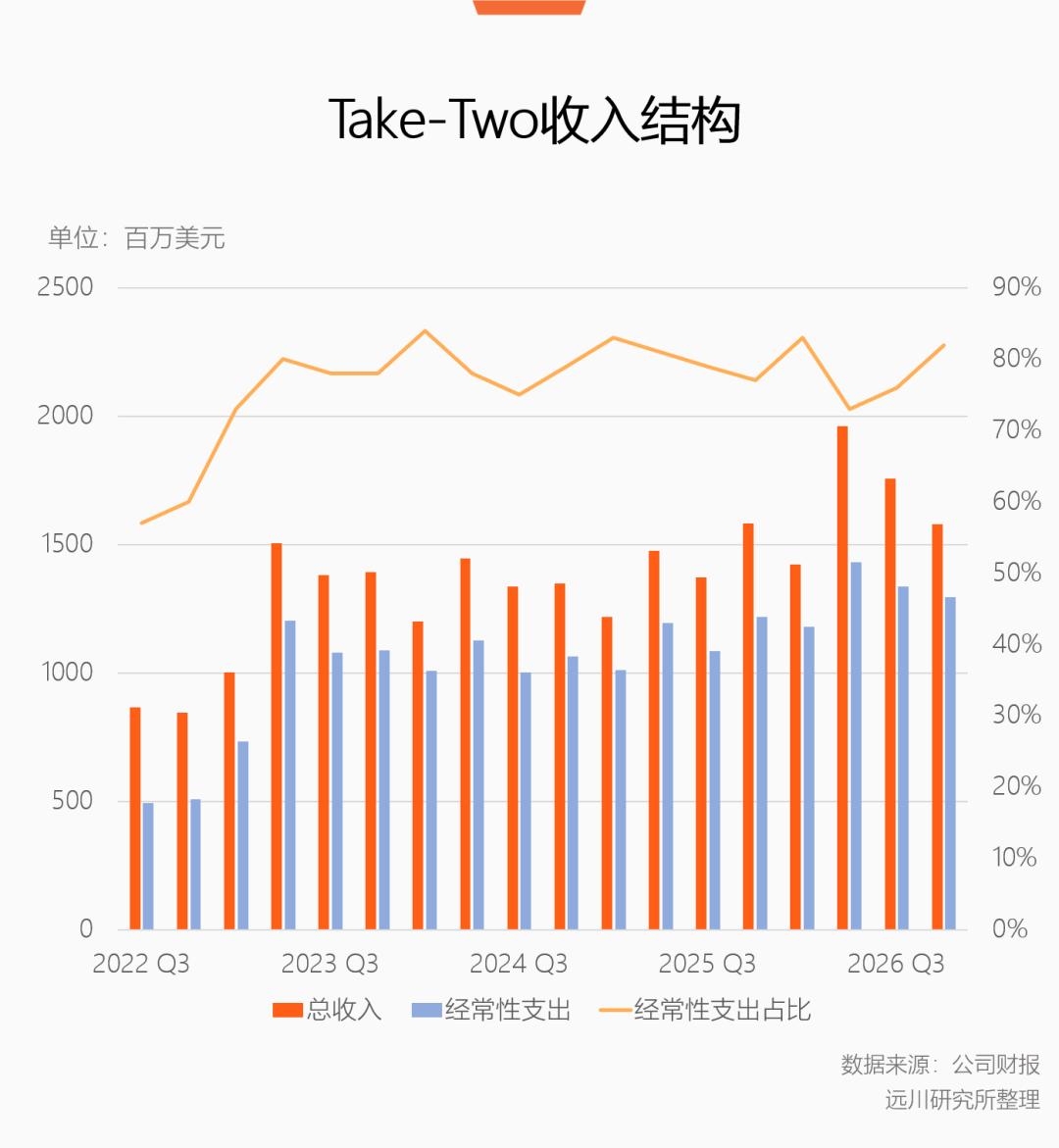
This is the benefit of Game as a Service: after players buy the game once, they can make a lot of secondary consumption in the game, further expanding the revenue ceiling of the large-scale game.
Rockstar's Red Dead Redemption 2 follows exactly this path:
One month after the game's launch, Red Dead Online went live. In fiscal year 2020, the buy-to-play revenue of Red Dead Redemption 2 fell by 400 million US dollars year-on-year, but the revenue of the online mode increased by 46.6 million US dollars year-on-year.
GTA6 currently only has a single-player campaign, but the launch of the online mode is only a matter of time. With such huge costs invested, it is impossible to only make money once.
In 2018, game company Ubisoft fully introduced the concept of Game as a Service (GAAS) during the earnings call:
The revenue of traditional 3A games in the second year is only 13% of that in the launch year. It is advisable to refer to the ideas of mobile games, develop paid in-game content to induce users to keep spending, so that this figure can be raised to 52% and generate long-term stable revenue.
Since then, the trend of Game as a Service has swept the entire industry.
Don't You Have Phones?
Game as a Service was not created by Ubisoft, and the term was not invented by Ubisoft either. But Ubisoft's influence plus the special year of 2018 made Game as a Service arouse the excitement of the entire industry.
Around 2018, 3A game developers like Ubisoft generally faced a thorny problem: The growth of market size cannot cover the game development costs.
According to research firm Epyllion:
Mortal Kombat, released in 1992, was priced at 69.99 US dollars, which is equivalent to about 157 US dollars today. But the current price of 3A games is only around 70 US dollars. In the past 30 years, development costs have increased dozens of times, and game companies have maintained unchanged pricing by expanding the market size to offset rising development costs.
In the past ten years, game development costs have continued to rise, but the market has been difficult to expand, because potential 3A game users have been intercepted by two forces.
The first is casual games represented by Nintendo Switch. The total sales of Switch in its entire life cycle exceeded 155 million units, and the cumulative software sales exceeded 1.4 billion, making it the most successful product in Nintendo's history. The Switch has absorbed a large number of "casual players" who play games like Stardew Valley, diverting the audience of 3A games.
Thanks to the huge success of the Switch, Nintendo calmly installed 2021 inventory chips on the Switch 2, which will be launched in 2025, acting as if it was sanctioned by the United States.
The second is mobile games. Mobile games have low access thresholds, high consumption ceilings, and a much larger market size, which has greatly squeezed the market of traditional 3A games.
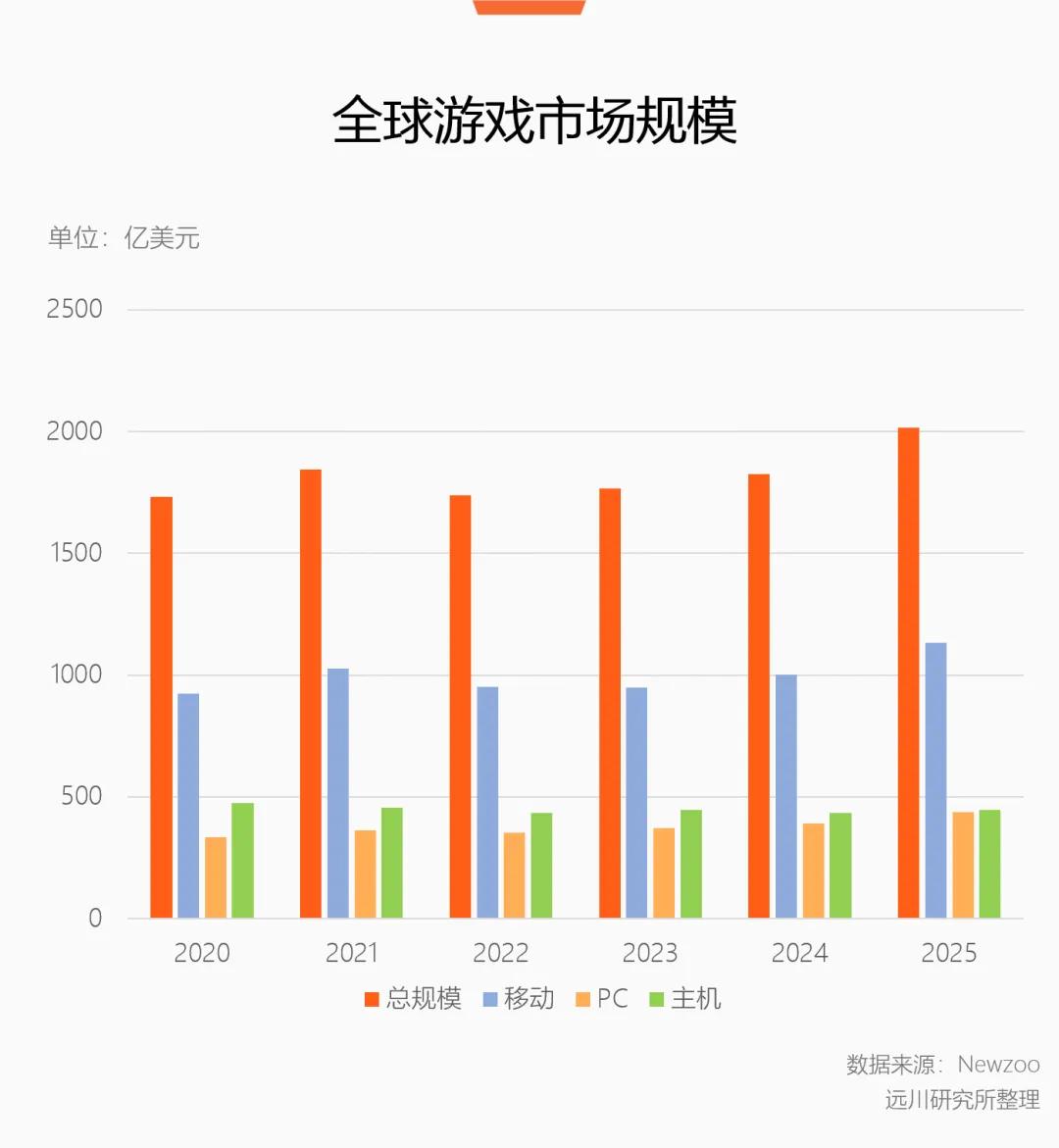
Nowadays, almost all well-known game companies make money from mobile games.
For example, Activision Blizzard, which owns IPs such as Call of Duty and World of Warcraft, actually makes the most money from the match-3 game Candy Crush. The developer King was acquired by Activision Blizzard for a bargain price of 5.9 billion US dollars in 2015, and quickly became the most profitable department of the company.
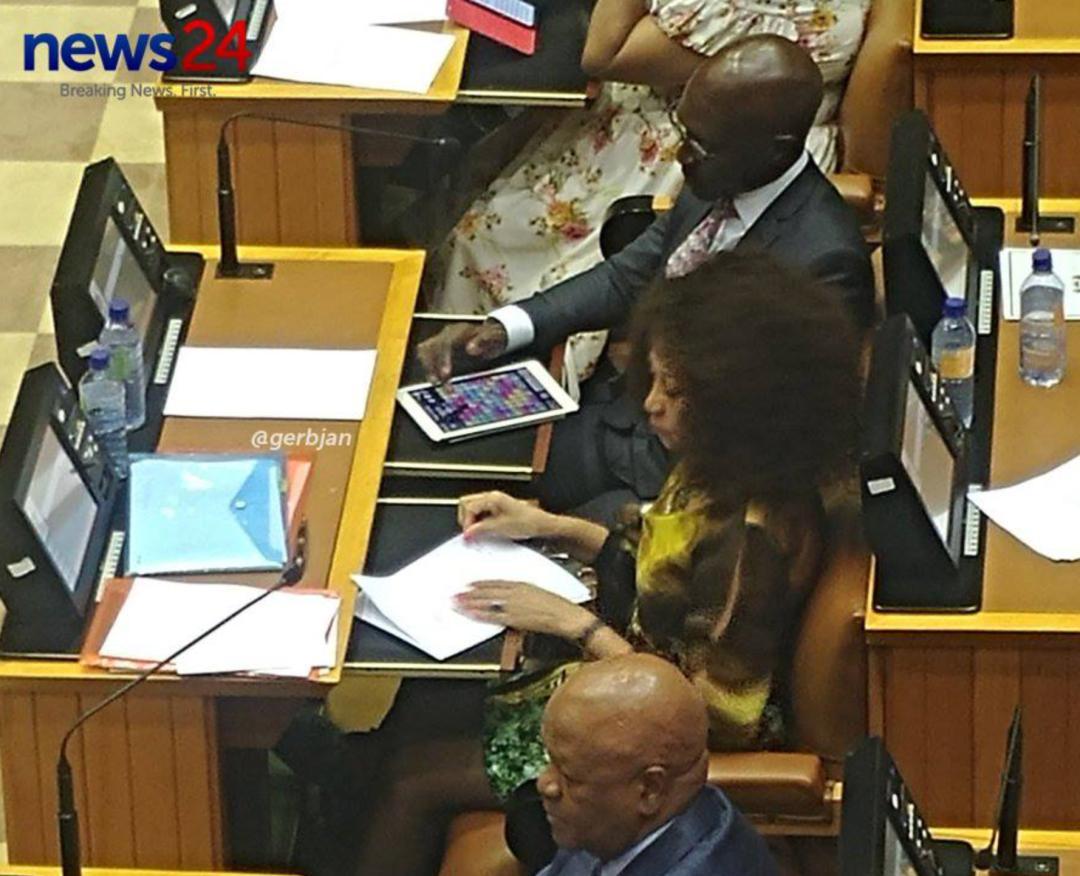
Candy Crush has a low presence in China, but it is extremely popular overseas. The picture shows former South African Finance Minister Malusi Gigaba indulging in Candy Crush and unable to extricate himself during a leadership speech:
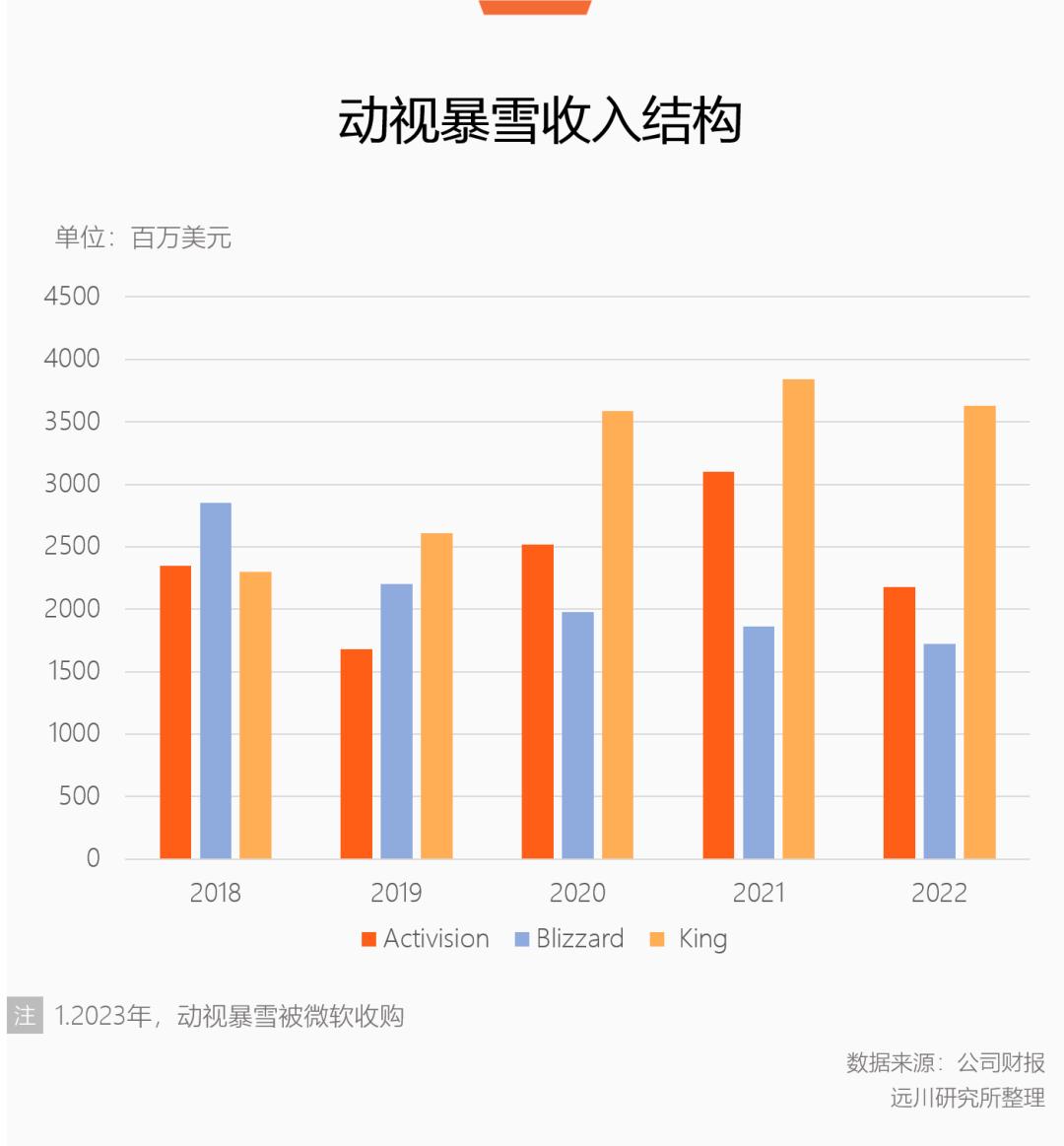
Another example is Take-Two mentioned above. It has well-known IPs such as GTA and NBA2K, but the core pillar of the group is actually the mobile game developer Zynga, which contributes half of the total revenue.
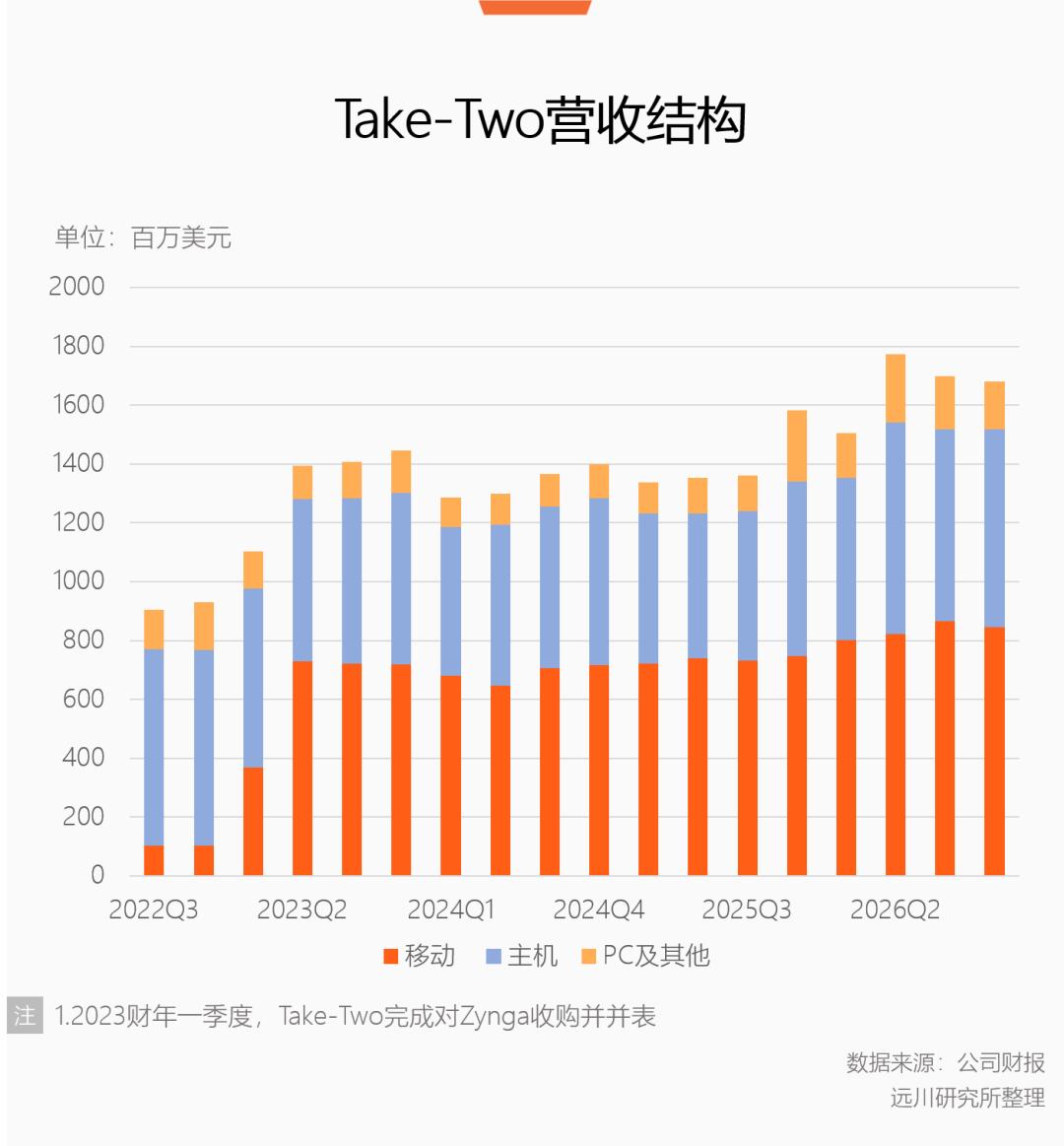
High-end 3A game players may not look up to mobile games, but the attractive business model of mobile games has deeply attracted 3A game developers, and the illusion that "I can do better" has begun to spread.
The World Is a Subscription Package
The core concept of Game as a Service can be summed up in one sentence: Shift from one-time purchase to subscription.
The buy-to-play model means cash on delivery. Game companies use the money earned from the previous game to develop the next one. No cash flow is generated during the development process. If sales meet expectations, they can move on to the next project. If sales collapse, they will face layoffs at best and dissolution at worst.
If you can split the 5-year development cycle into 3 years of development plus 4 years of operation, turning a one-time transaction into a continuous "service" where users pay in stages, the cash flow risk can be smoothed out.
If you continue to expand secondary in-game consumption and guide players to make in-game purchases, the revenue ceiling of the game can be further raised, and the "annualized revenue" will be very considerable.
Swedish company Paradox does exactly this. Its work Crusader Kings 3 was released in September 2020, priced at 198 RMB. In the following six years, Paradox intermittently developed paid content totaling about 1000 RMB.
Assuming a loyal Paradox player bought all the paid content without missing any, he is actually "subscribing" to this game at a price of 180 RMB per year or 15 RMB per month, which is very close to the pricing logic of video streaming platforms.
Activision Blizzard releases a new Call of Duty every year. Users seem to "buy" a new game every year, but they are actually "subscribing" to a service with an annual fee of 60 US dollars.
If the total amount of players' in-game spending is converted into monthly/annual subscription fees, the revenue will be incredibly high.
Assuming a Genshin Impact player spent 7 sets of 648 RMB top-ups in 5 years of playing, his "monthly fee" for playing Genshin Impact is as high as 75.6 RMB, a number that makes iQiyi salivate.
Wall Street capital giants may not understand games, but when they hear attractive terms like subscribers, XaaS, and recurring revenue, their eyes will definitely light up. High-risk game companies have transformed themselves, changing from New Oriental to Duolingo, and from Huayi Brothers to Netflix.
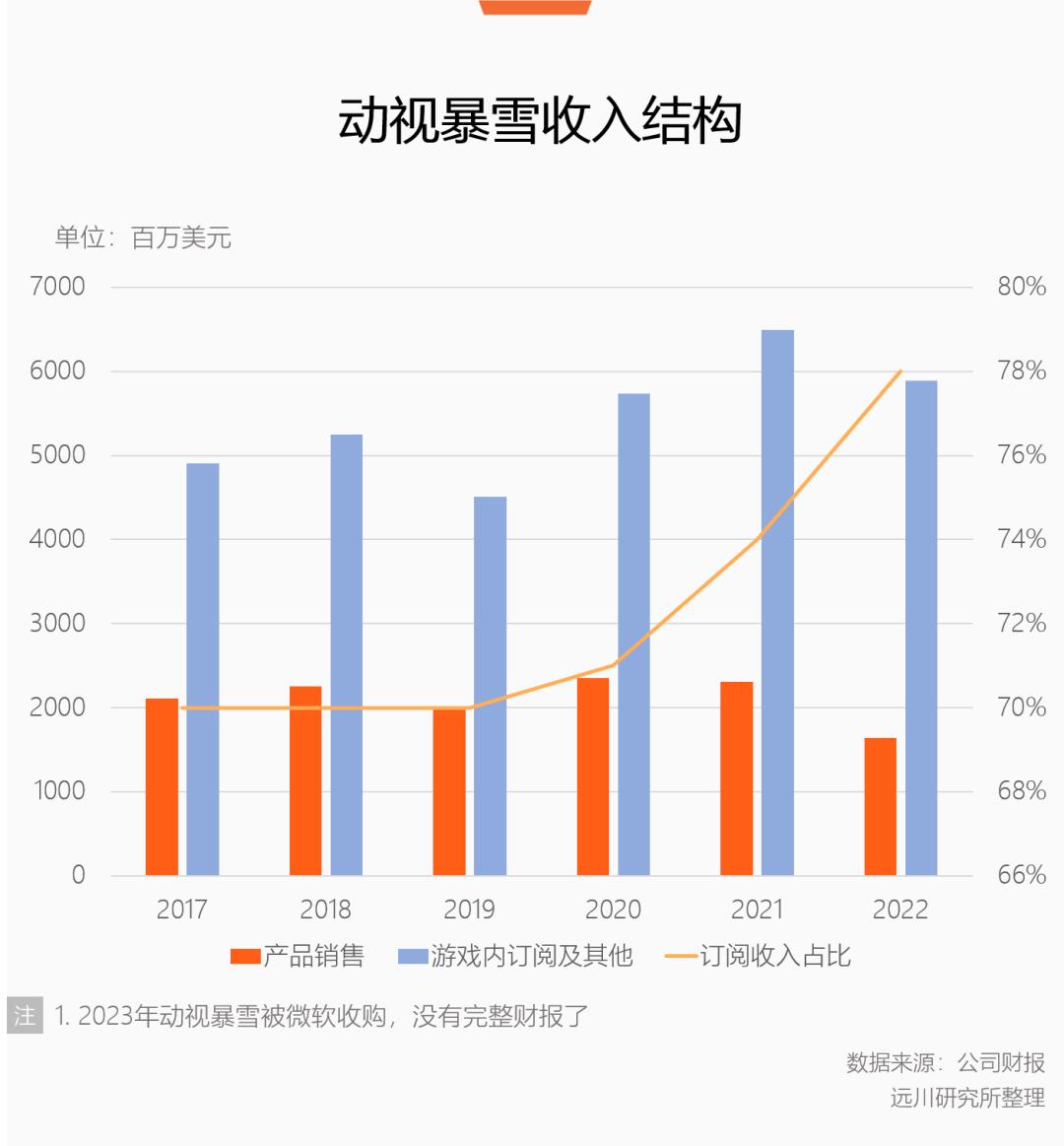
In the revenue structure of Activision Blizzard and Take-Two, recurring revenue representing in-game purchases and subscriptions accounts for about 80%. Apart from the contribution of mobile games, it comes from loot boxes in Call of Duty and shark cards in GTA.
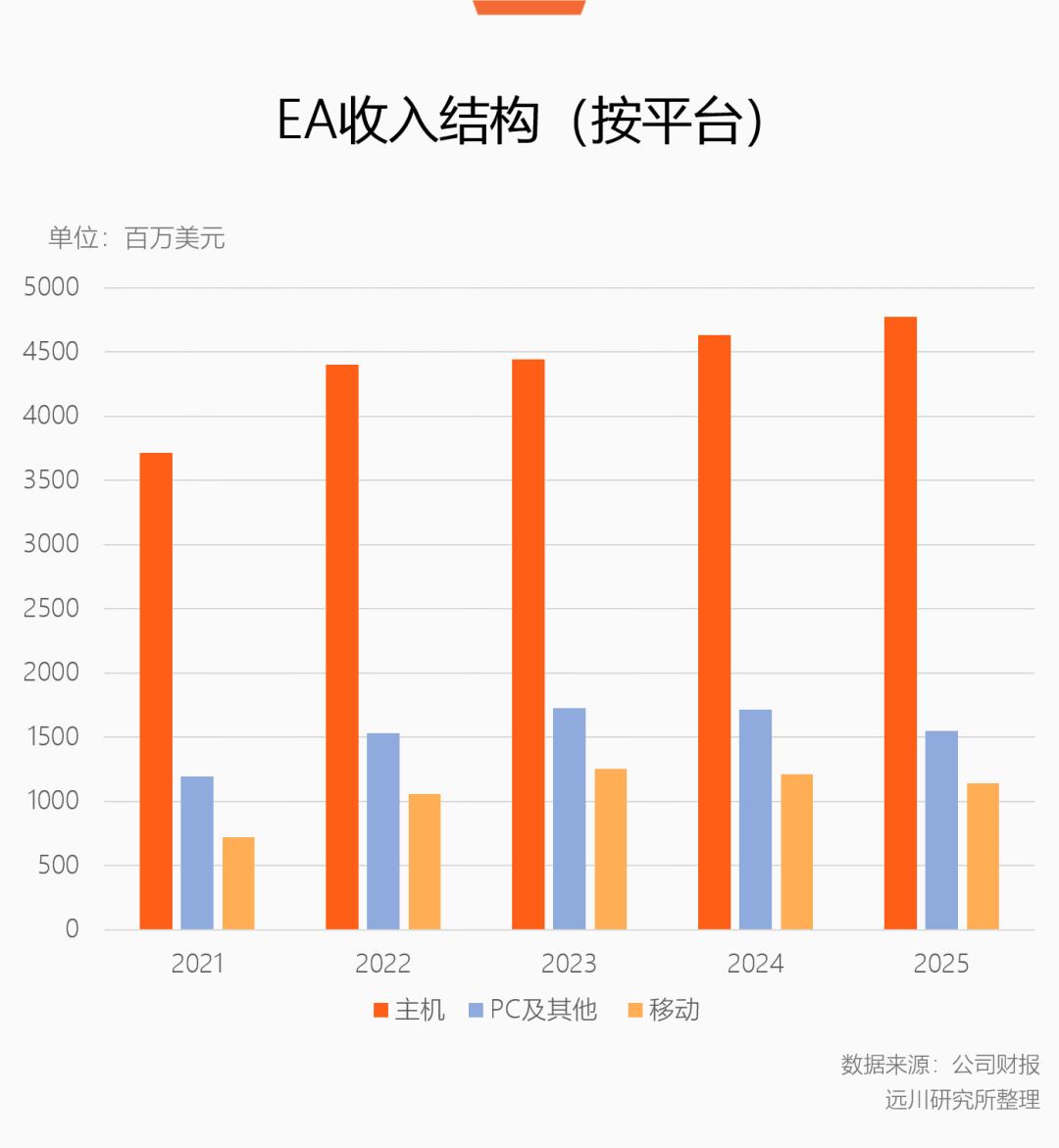
EA's mobile game revenue accounts for a low proportion, but its in-game purchase revenue still accounts for more than 70%, such as FIFA's card drawing and Apex's loot boxes. Therefore, high-end console players should not laugh at mobile game players' 648 RMB top-ups, as they spend even more fiercely themselves.
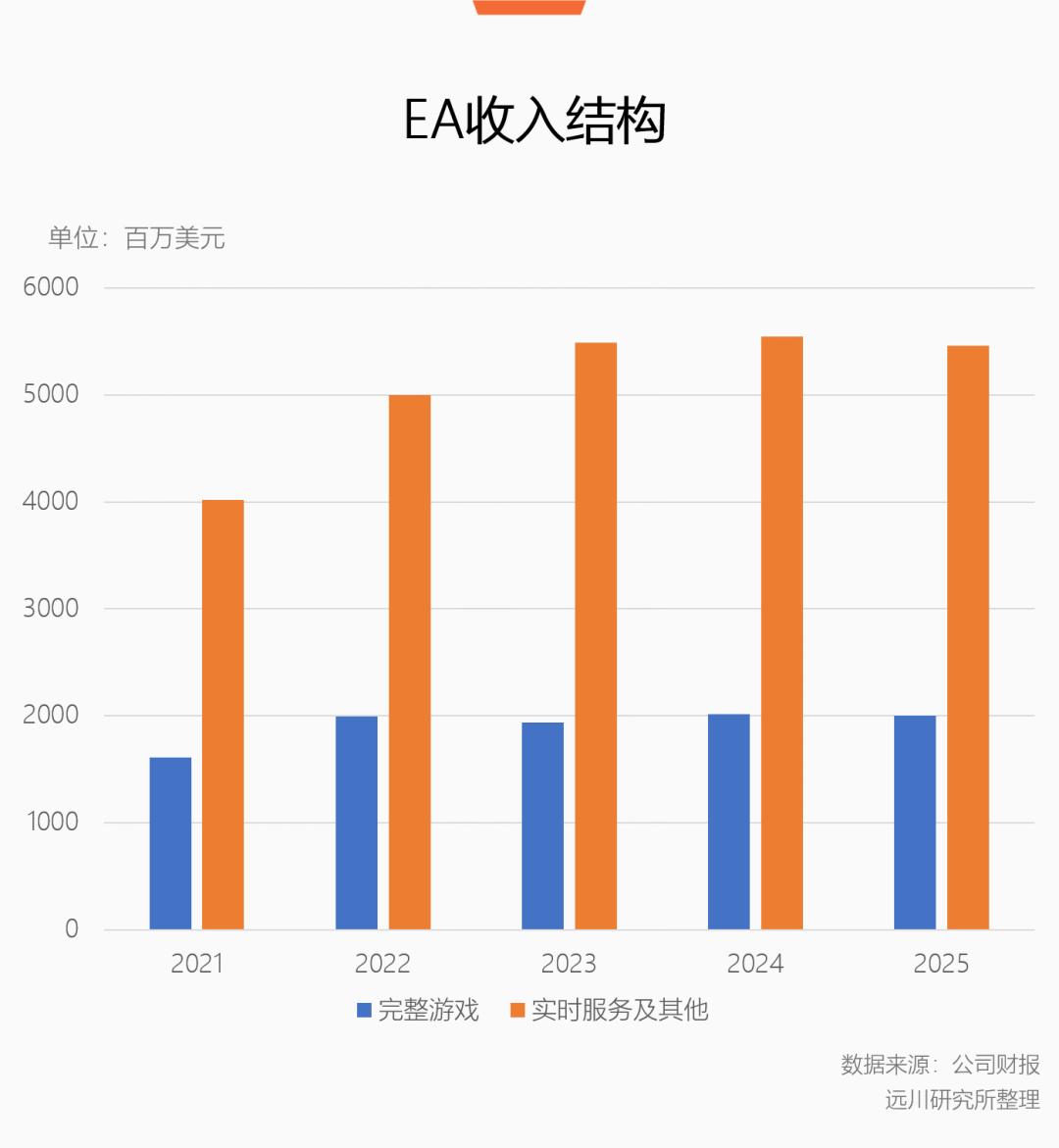
From 2021 to 2025, EA's "buy-to-play game" revenue only increased by 400 million US dollars, but its recurring revenue increased by 1.4 billion US dollars. From 2017 to 2022, Activision Blizzard's buy-to-play game revenue shrank by 600 million US dollars, while its recurring revenue increased by nearly 2 billion US dollars.
This comparison has deeply stung the entire industry, and major manufacturers have inevitably followed this trend one after another.
So Gul'dan, what is the cost?
The Netflix Trap
In 2022, Jim Ryan, who was in charge of Sony's game division, proposed the All in GaaS strategy, acquiring 8 game developers at once, including Bungie which developed the Halo series, while pushing internal developers to transform, setting a goal of launching 10 to 12 Game as a Service games by 2026.
What was the result? It completely failed. 8 out of the 12 large projects were failed or terminated. Among them, Concord was a total fiasco, with a total budget of 400 million US dollars and widespread controversy after launch. Sony quickly removed the game from shelves and disbanded the developer on the spot.
Considering that Concord only sold a total of 25,000 copies, Sony basically lost as much as it spent. Jim Ryan, who was in charge of the GaaS strategy, stepped down and announced his retirement in March 2024.
Microsoft is bold and resolute.