One person, 100% of the code is written by AI: the new work has generated nearly 8 million in revenue.
One man is an army.
Last month during the Steam Next Fest, a flood of low-quality AI-generated games threw the gaming community into a state of unrest. Players showed no interest in the crudely made AI-generated visuals, and many independent developers also grew worried, fearing that their works' exposure would be siphoned off by these low-effort titles.
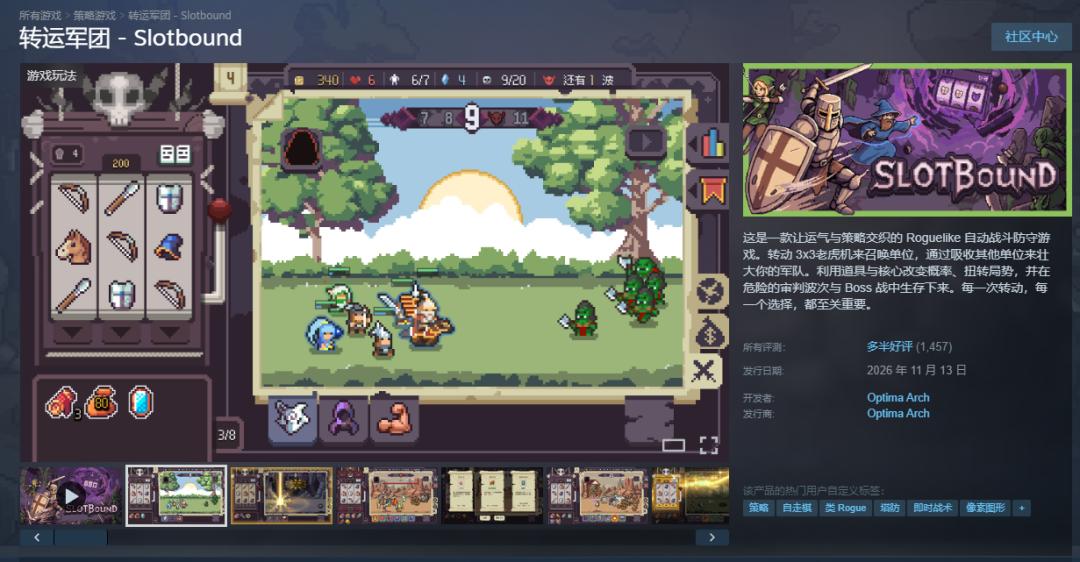
Yet amid the widespread criticism of AI-powered games, *Slotbound*, a roguelike indie game that makes extensive use of AI technology, has steadily built up a solid reputation and growing popularity.
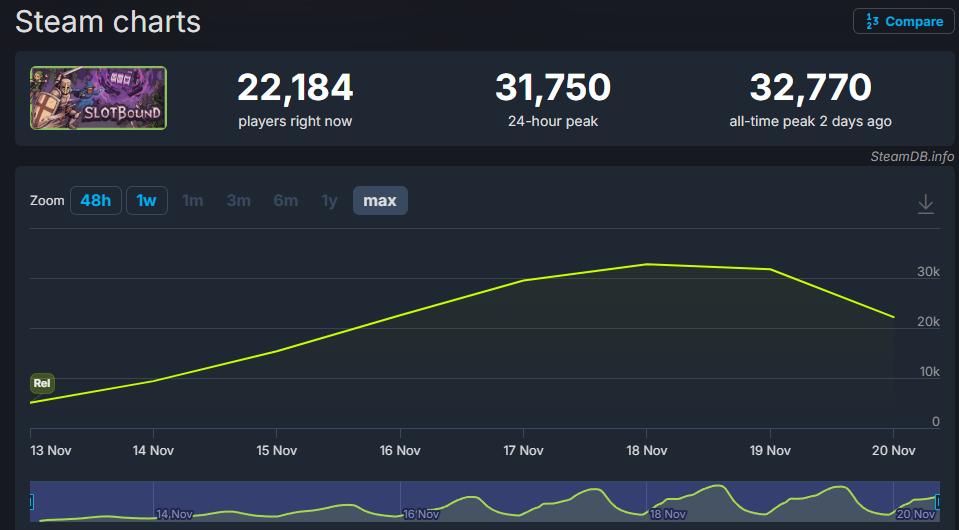
After the game launched on November 13, its concurrent player count kept climbing, with the peak exceeding 32,000.
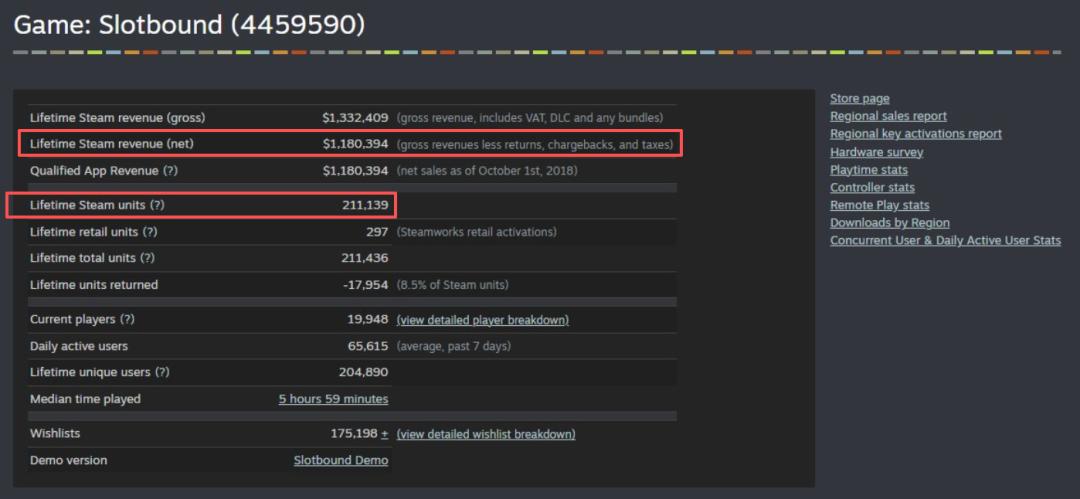
*Slotbound* sold 100,000 copies in its first three days of release, and as of press time, the developer has announced that total sales have reached 210,000. After deducting refunds, taxes and other expenses, the game's net revenue hit 1.18 million US dollars, equivalent to about 7.88 million RMB, making it a standout hit indie game in recent times.
At first glance, *Slotbound* barely shows obvious traces of AI, standing out sharply from those rough, rushed AI games flooding the market.
Its core gameplay is not particularly innovative at its core: to put it plainly, it combines slot machine gacha mechanics with tower defense. But it is exactly the uncertainty brought by gacha that makes the hero training process full of variables, and the sense of satisfaction when you build a proper team is the core reason why players find it hard to put down the game.
While the gameplay framework does not have a high entry barrier, it also brought trouble. Long before the official launch of the game, some people used AI to decompile it, reproduced it as a mini-game and spread it on other platforms.
Fortunately, these pirated reproduced versions were taken down one after another after reports, preventing *Slotbound* from facing a worse situation right after its release.
All Heroes Come From Spins
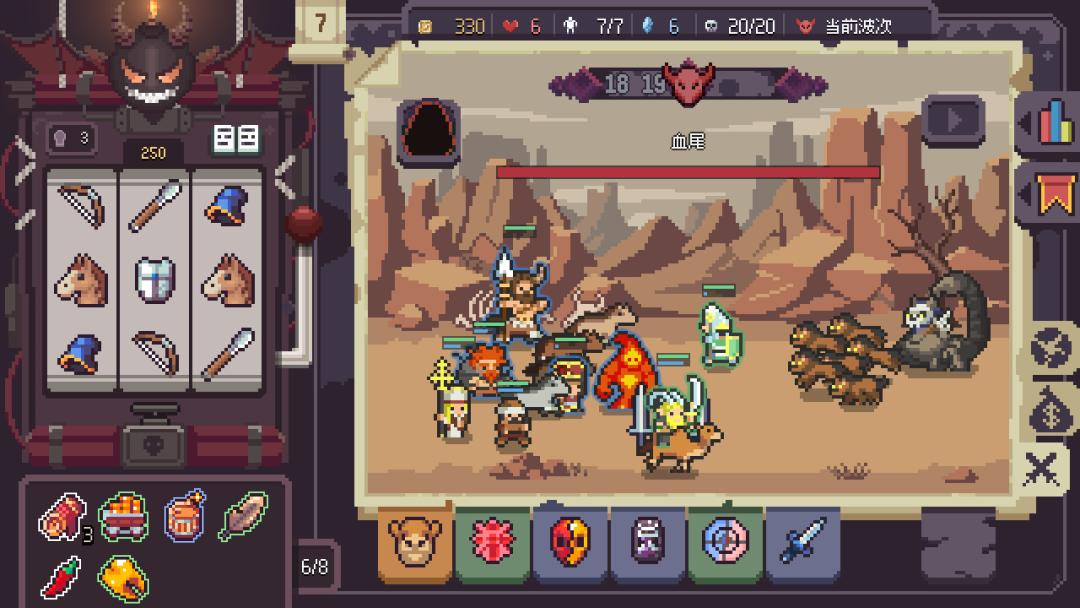
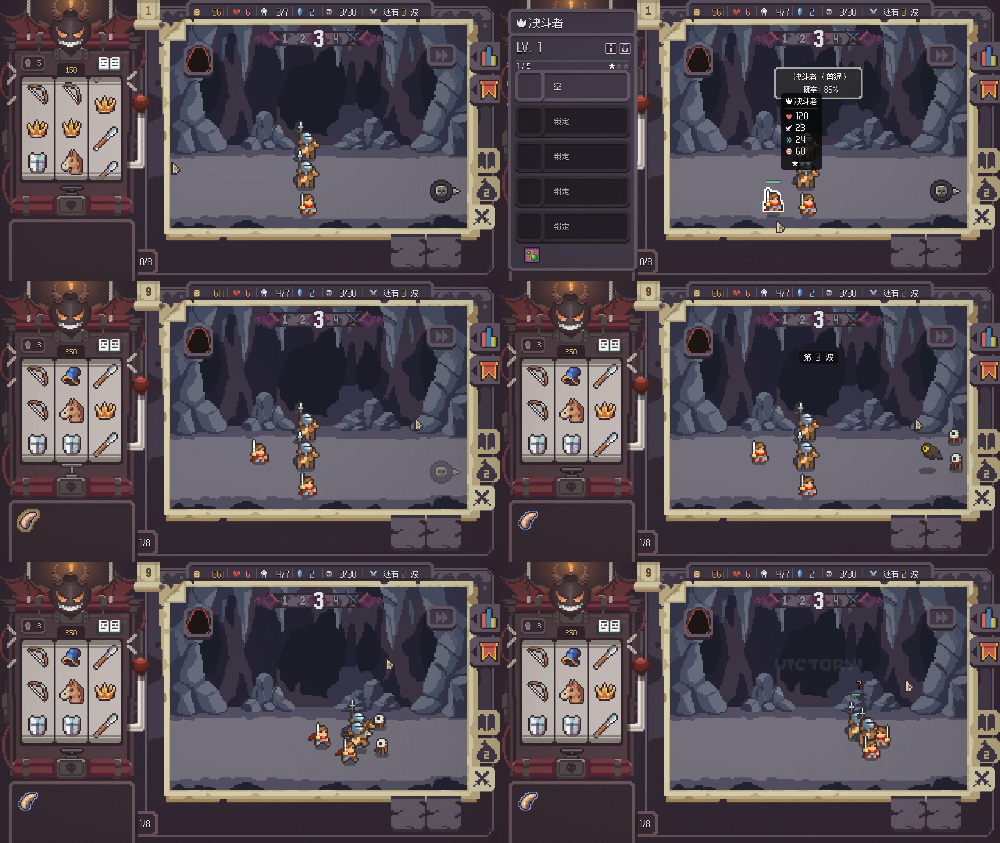
The interface logic of *Slotbound* is not complicated: the slot wheel is on the left, and the battlefield is on the right. Players need to spin the wheel to draw heroes, then place them on the field to fend off waves of enemy attacks.
Let's start with the slot wheel itself. The board of *Slotbound* is not large, fixed in a 3×3 grid. The top of the board shows the coins to be consumed for the current spin, and the cost increases by 50 each time you spin; there is also a number at the top left of the board, counting down from 6, which represents how many spins you can still make in this wave. That means to use up all spins in one wave, you need up to 1350 coins.
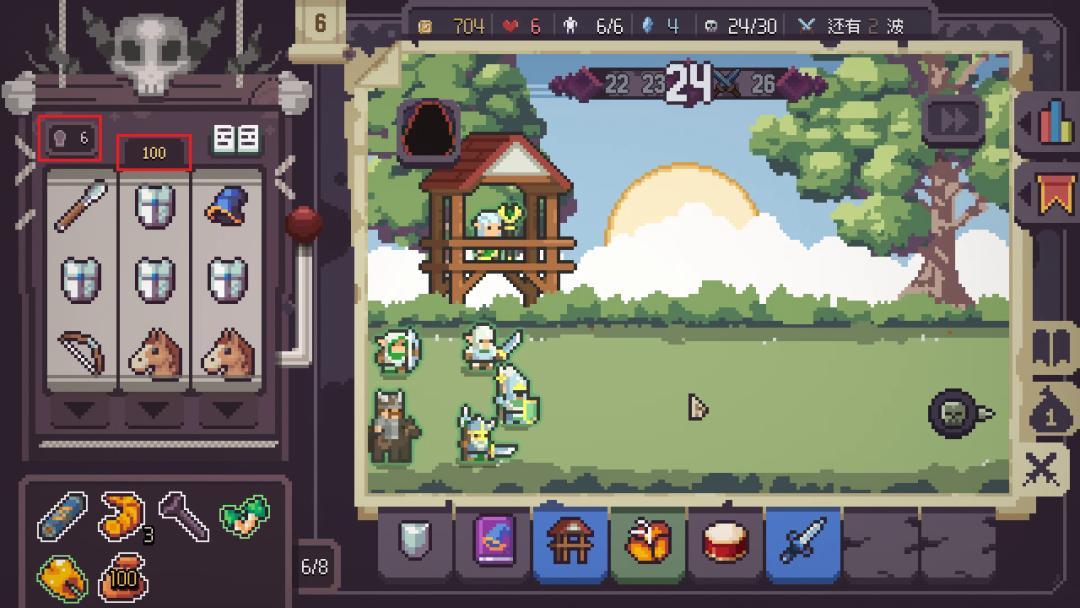
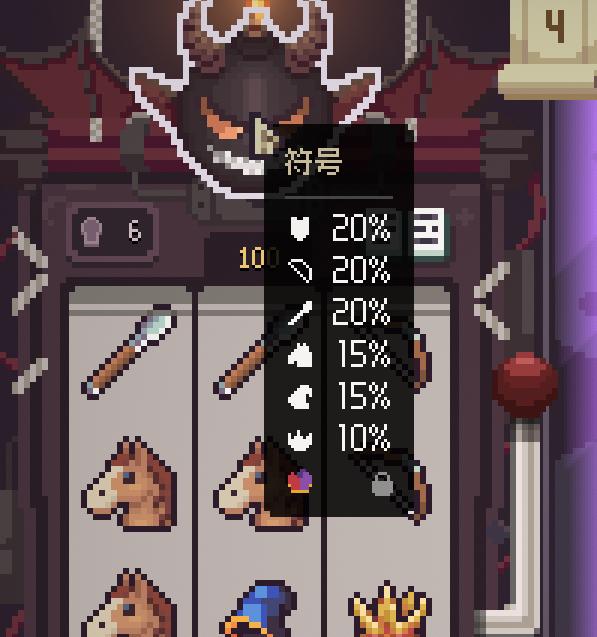
The winning rules are similar to common slot machines: you get a reward as long as the same pattern appears on any straight line. There are a total of seven patterns on the board: besides the versatile joker wild pattern, there are easily spawned patterns like shield, spear and bow, while mages and cavalry have medium spawn probability, and duelists are rare low-probability patterns.
A little thought will tell you that lining up three identical patterns in the nine-grid board relies heavily on luck. When I played the game, I encountered many situations where all six spins yielded no wins at all.
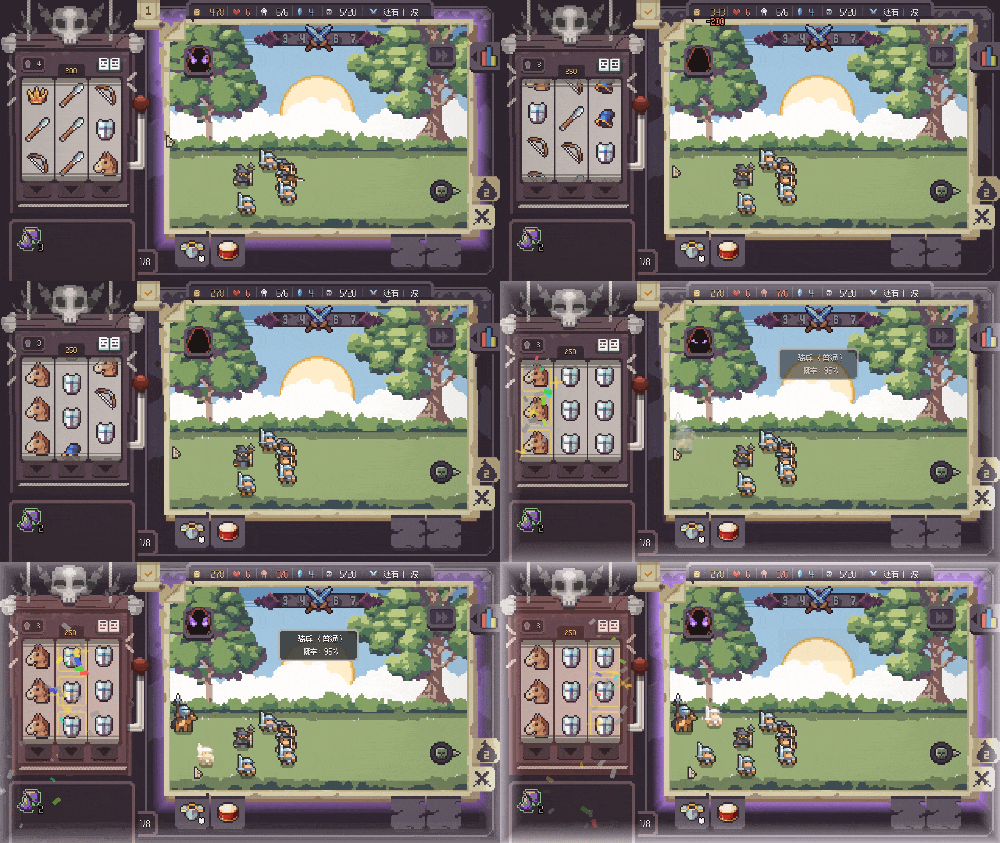
But there is always a way out, and the game has set some fallback mechanisms: for example, the initial slot machine allows you to spin a single reel to change the position of patterns. In addition, there is a scroll with a numerical counter at the top right of the slot wheel, the number decreases by one every time you spin, and when it counts down to zero, you get a slot core.
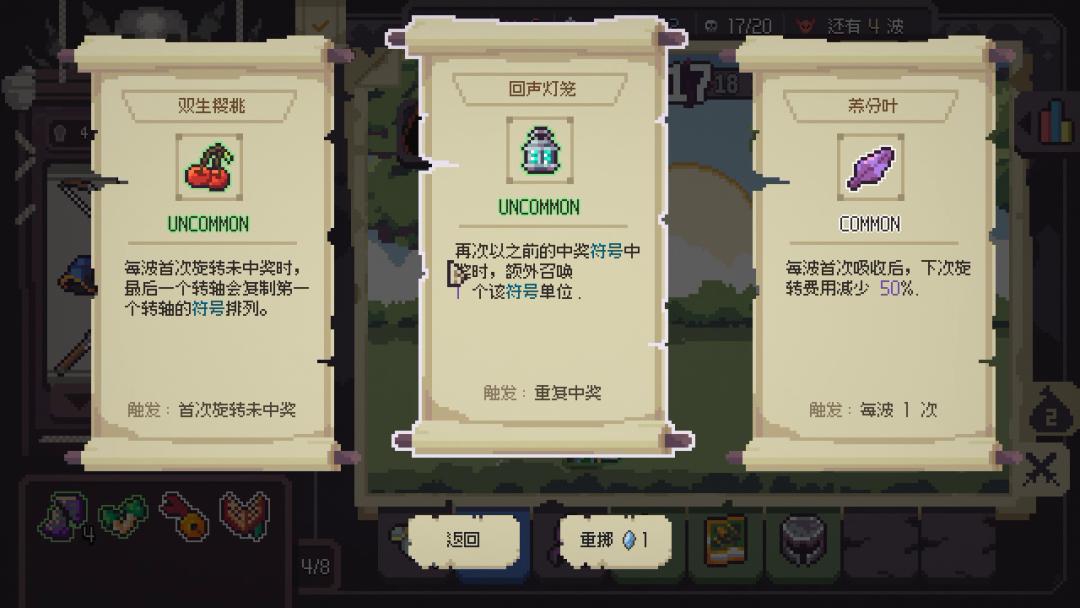
These cores have various functions: there is the Echo Lantern that can summon extra units during consecutive wins, the Gold Tooth that gives you a free spin after your first win, and the Reverse Clock that reduces the cost of the next spin when you get no win. These core effects basically cover all situations after each spin, making players keep taking more gambles.
Turning to the battlefield, the combat in *Slotbound* follows an auto-battler mode: after you click to start the battle, your units and enemy units will attack each other automatically.
Players need to arrange hero positions in advance according to the enemy's attack characteristics and lineup composition. But for now, in the same level, the configuration of enemies in the same wave is fixed, and the game does not give hints of the enemy lineup in advance, so you can only judge based on personal experience.
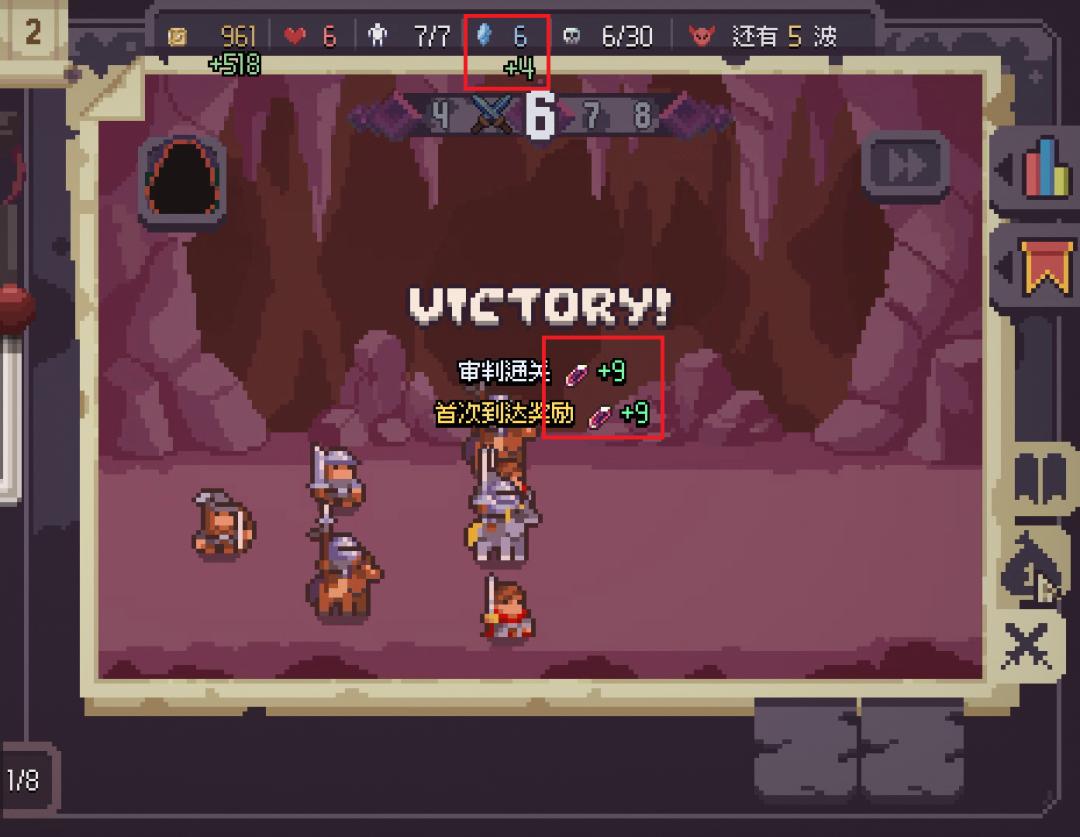
After successfully fending off the enemy's offensive, you usually get around 500 coins, plus some blue crystals. The large wave that appears every five rounds offers much richer rewards: besides more blue crystals, you will also get a fixed number of red crystals.
Blue crystals are the currency in the in-run shop. You can enter the shop to buy equipment during the preparation phase, and the effects of the purchased equipment will be directly attached to the corresponding hero. Getting the same piece of equipment repeatedly can upgrade it, further enhancing the buff it brings.
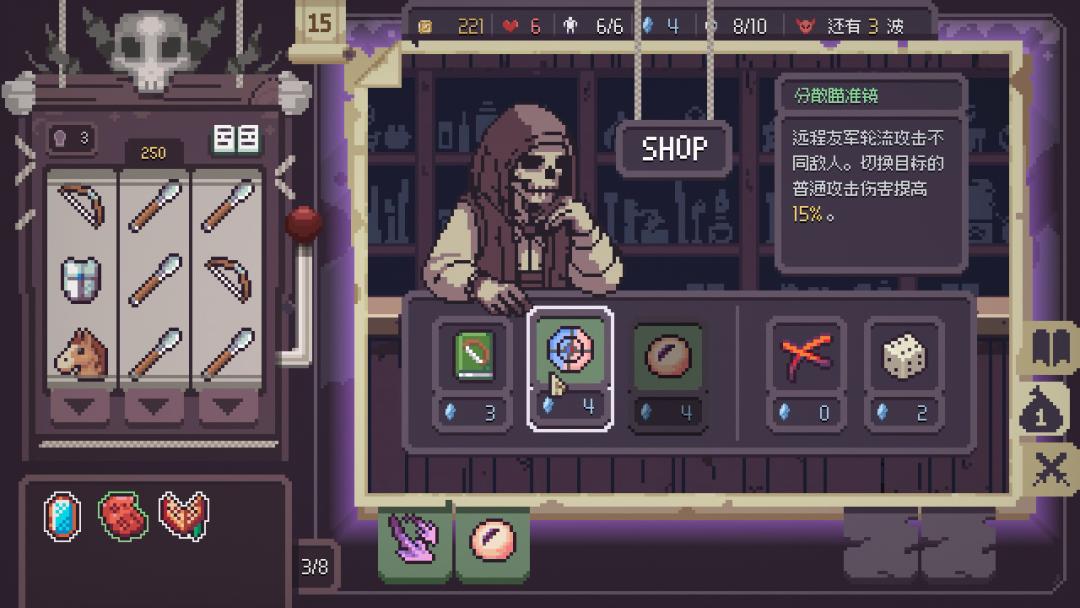
To my surprise, besides a set of general equipment, the equipment refreshed in the shop will also adjust according to the monster characteristics of the current map. This not only narrows down the equipment pool, but also makes equipment effects more suitable for the needs of the current battle. However, the side effect is also obvious: when you manually refresh the shop, the probability of getting the same piece of equipment repeatedly also increases.
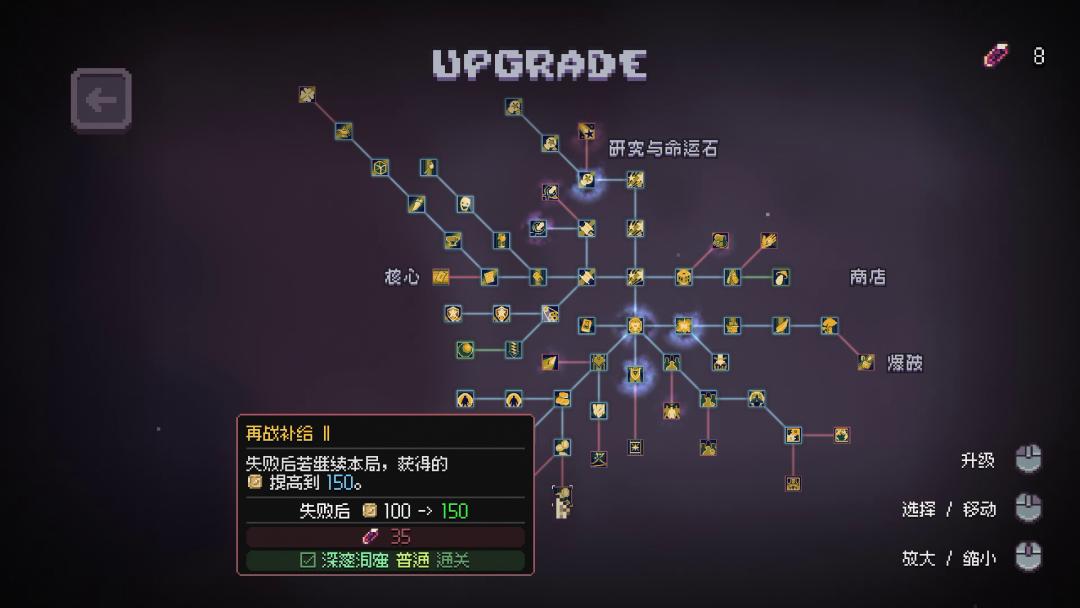
Red crystals are used for long-term out-of-run progression. Part of *Slotbound*'s progression tree is used to raise players' base attributes, some are fallback compensation after defeat, and most of the remaining branches are used to unlock new content, many of which require you to clear a specific map first.
After sorting out the gameplay, you will find that the core gameplay of *Slotbound* is to continuously make risk trade-offs based on the slot machine gacha results and the battlefield situation. The overall process is not cumbersome, and its underlying framework does not have particularly big differences from many roguelike mini-games on the market.
Feed Minions To Power Up Your Main Hero
But what makes *Slotbound* most addictive, in my opinion, is the heroes themselves. They can be matched into all kinds of combinations, which largely determines how players operate in the rest of the run.
Every time you draw a unit from the slot wheel, its base stats such as attack and HP are fixed, but it will come with a random trait. The effects range from simple numerical buffs like increased attack and HP, to special effects like reviving with 1 HP after death, or infinite growth traits that keep increasing your attack as you kill enemies. These random traits are the first judgment for players to select their lineup.
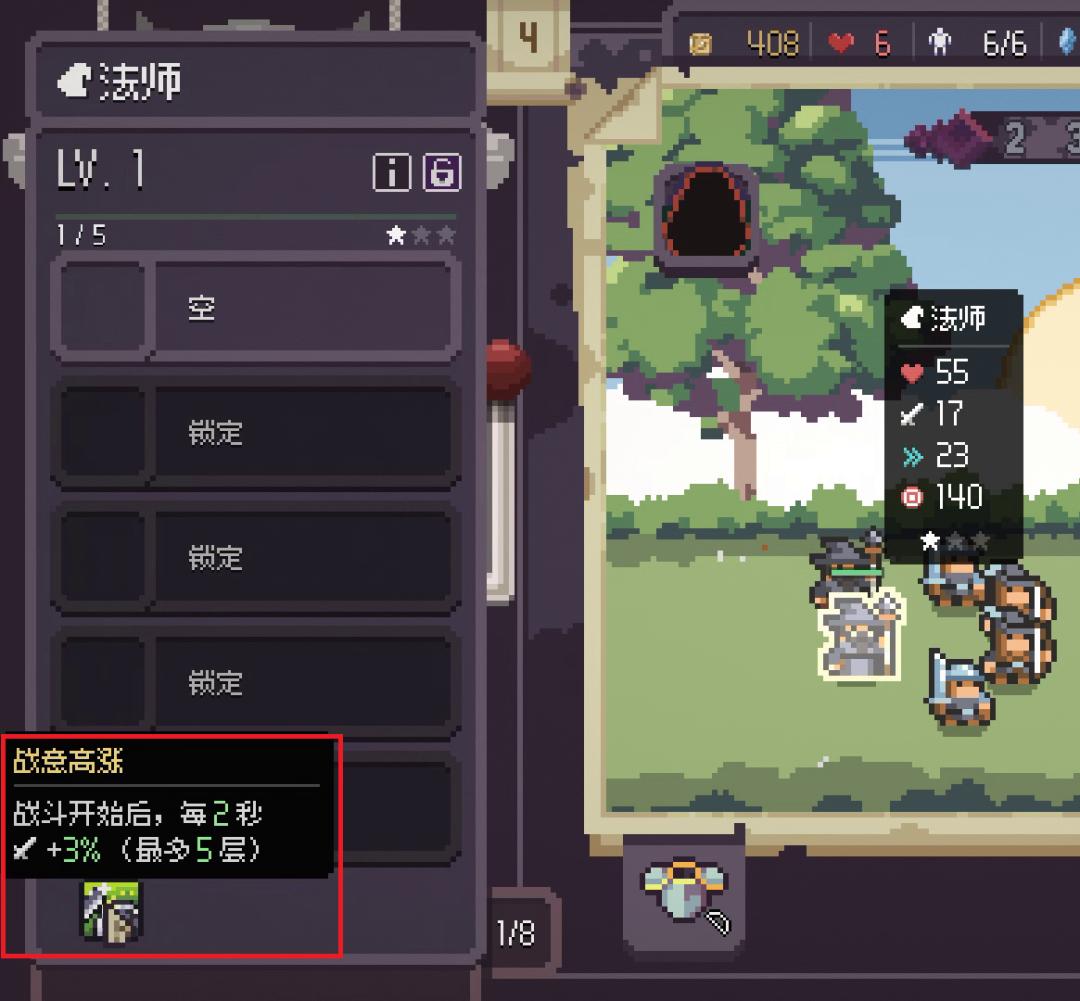
Apart from attributes, another very key mechanic is Engraving. Since there is an upper limit for the number of heroes that can exist on the battlefield at the same time, this introduces the unit fusion gameplay.
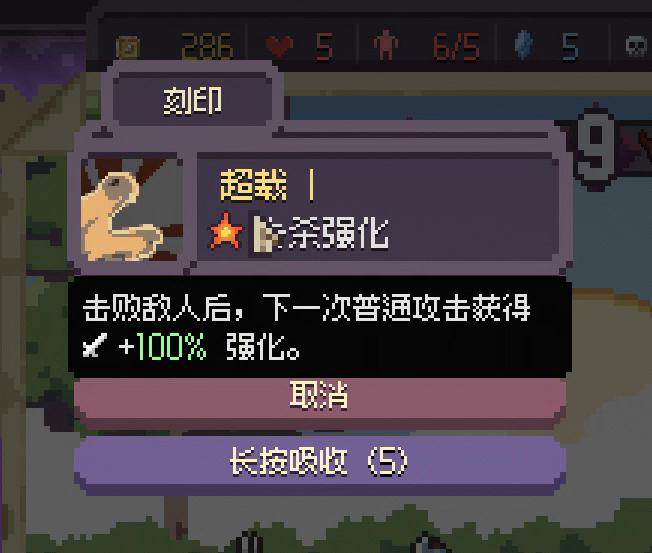
That's right, *Slotbound* does not adopt the familiar 3 same cards to upgrade star rule, but allows players to freely choose to feed one character to another. To better distinguish the relationship between them, we will call the sacrificed character the sub-character, and the retained, enhanced character the main character below.
Essentially, Engravings are heroes' passive skills, but the Engraving carried by a hero does not take effect on itself. You need to sacrifice the sub-character to transfer the Engraving on it to the main character.
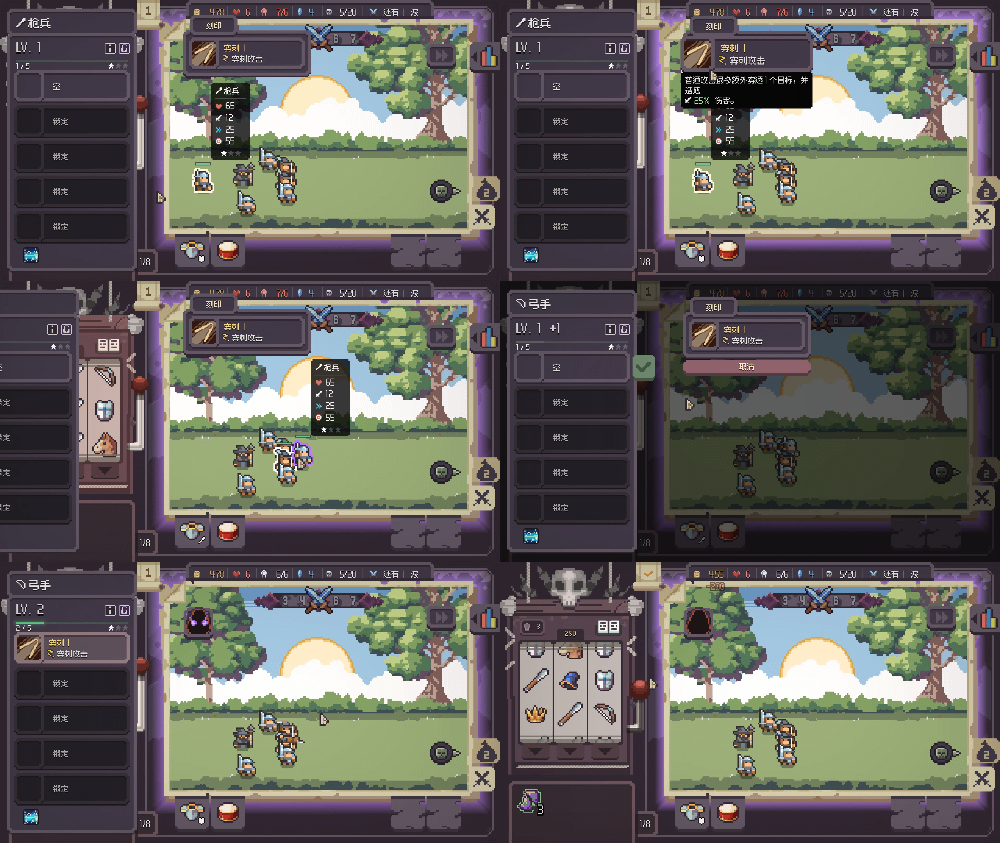
During the fusion process, if the main character still has empty Engraving slots, it will directly learn the passive from the sub-character, and gain a little experience at the same time. Absorbing units carrying the same Engraving repeatedly can raise the skill level up to the maximum level 5. If the Engraving slots of the main character are already full, continuing to fuse other sub-characters will let you choose to convert the Engraving into more experience, or replace the already equipped Engraving.
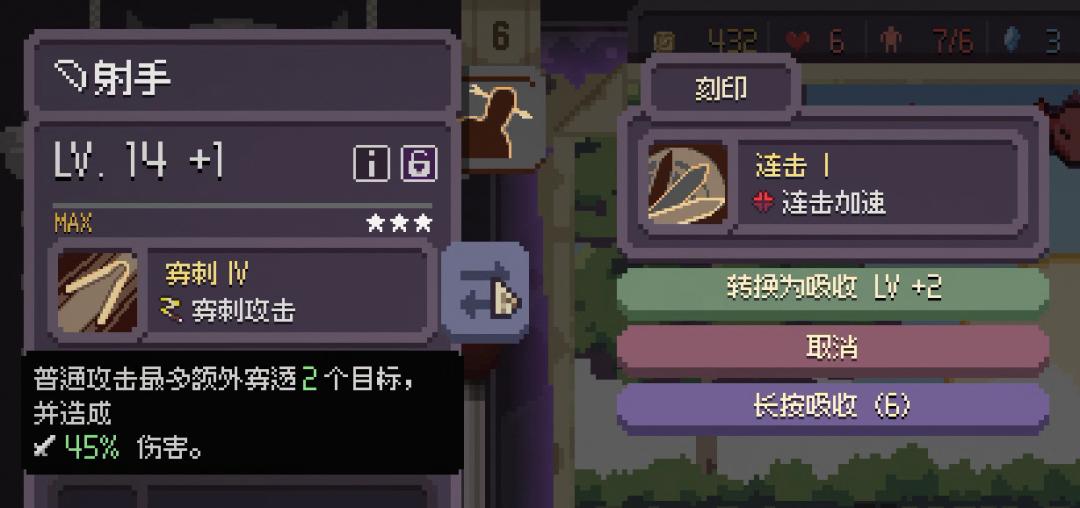
When the main character accumulates enough experience required for upgrading, it can star up, and star up allows the character to choose a class change. Class change brings significant changes: not only will base attributes and attack patterns change drastically, you will also unlock an active skill and a brand new trait.
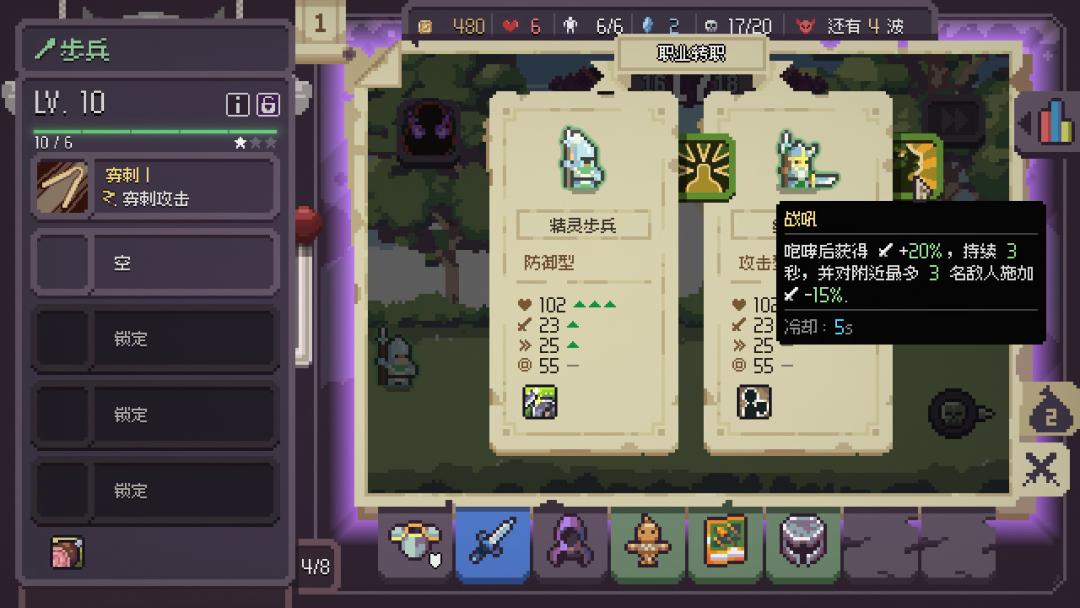
What's more interesting is that when the main character reaches level 30, level 60 and level 100, it can trigger Awakening, and each Awakening lets you pick one from three alternative effects. So from this perspective, even raising a single character to level 30 requires consuming a large number of sub-characters; even in the hard mode run with a total of