Integrate Personal Agent into portable hardware, OneSay is seeking seed round financing
In the autumn of 2026, with the intensive launch of overseas products such as Meta Muse, the industry consensus that Personal Agent serves as the next-generation interaction entry has been fully ignited. However, while the pure cloud-based general Agent demonstrates powerful task takeover capabilities, it has also begun to expose its structural tension. Recently, overseas media have frequently exposed that Muse is facing privacy disputes such as cross-account context leakage and uncontrollable authorized operations, which makes the industry re-examine the security cost of "entrusting all execution and memory to the cloud".
In China, many manufacturers have tried to replicate the general route of the "Chinese version of Muse", but are generally squeezed by the ecology and free strategies of large tech groups. Faced with this situation, the startup company OneSay has chosen a differentiated asymmetric path: instead of competing on general large models in the cloud, it converges the execution of Agent to the end side, builds trust on role relationships, and tries to create a truly personal digital companion for users through "hardware-software integrated" cross-device continuous memory. At present, OneSay is seeking seed round financing, and the funds will be mainly used to accelerate the mass production and implementation of the hardware-software integrated architecture and the construction of the developer ecosystem.
Reconstructing from the underlying protocol: three "bodies" and a set of long-term memory
The starting point of OneSay is a very specific usage scenario: in fragmented moments such as walking, exercising, and business conversations, users have a large amount of information that needs to be recorded and sorted out, but taking out the mobile phone to type will interrupt the current process, and opening the general AI dialog box cannot remember the context of the previous sentence. Han, the founder, has 15 years of overseas working experience in the fields of data analysis and platform engineering, and his initial judgment is not complicated — it is not that users do not need voice recording, but that existing tools do not turn "speaking out" into "the task gets done".
After the project was launched in September 2026, the team has gradually completed the full configuration from data model, full-stack deployment to hardware mass production and market growth. The director of hardware design and supply chain graduated from Domus Academy in Italy, and has full delivery experience from R&D to mass production; the head of marketing and user growth has 12 years of Internet operation background, and is good at promoting technical products to real users.
The current product structure of OneSay can be summarized in one sentence: The same digital identity, the same long-term memory, and the same authorization system flow seamlessly across desktops, portable hardware and developer bases.
At present, OneSay has verified the underlying architecture of "one Agent with three bodies". On the desktop side, users can complete dictation, translation and rewriting through shortcut keys, and there are more than 200 internal test users; on the portable side, the hardware prototype named "Xibao" has realized real-time listening and call based on the Waveshare ESP32-S3 solution, and is about to enter mass production; on the cloud side, OneSay Cloud base and Platform have completed pre-release.
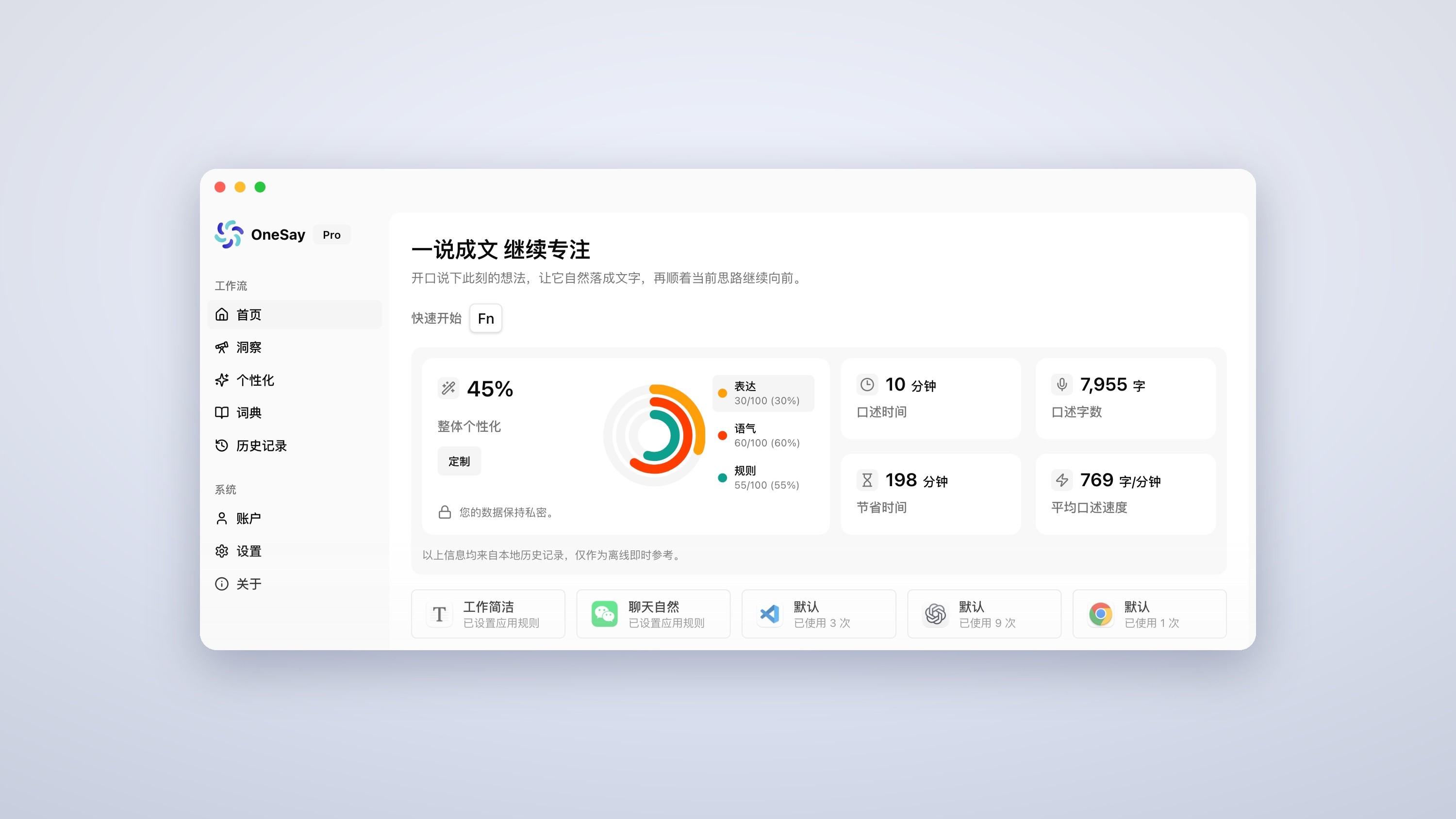
Desktop Interface
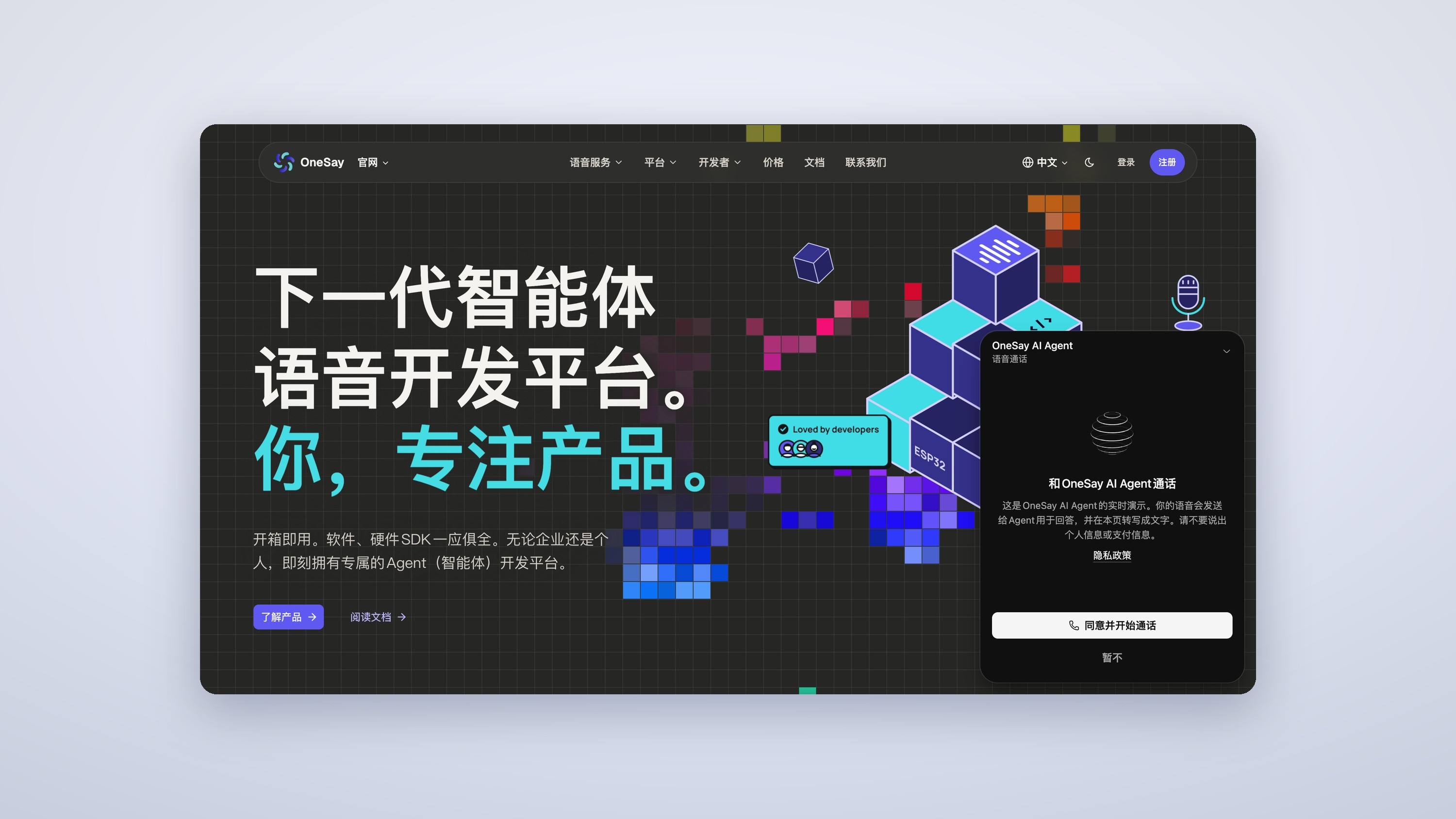
OneSay Platform
The core technology that supports the seamless flow of these three forms is the OneSay self-developed cross-device long-term memory system. Different from the "goldfish memory" of single conversation, OneSay endows the Agent with a unified digital identity. The personalized preferences and historical context accumulated by users on the desktop can be synchronized to the portable hardware, allowing the Agent to get rid of the simple tool attribute and establish a real long-term companionship experience.
Hardcore voice base: full-duplex conversation and multimodal MCP protocol
In the deep water area of voice interaction, OneSay has realized natural interaction closer to real people. Its voice engine not only supports full-duplex natural language conversation (users can interrupt the Agent at any time and reply in their own language), but also supports real-time voice rooms for 3 to 4 people. Under this architecture, the Agent can even join the meeting as an independent individual, process the specified audio track in real time, and cooperate with the long meeting transcription capability of "resuming transmission from breakpoints" to cover complex collaboration scenarios.
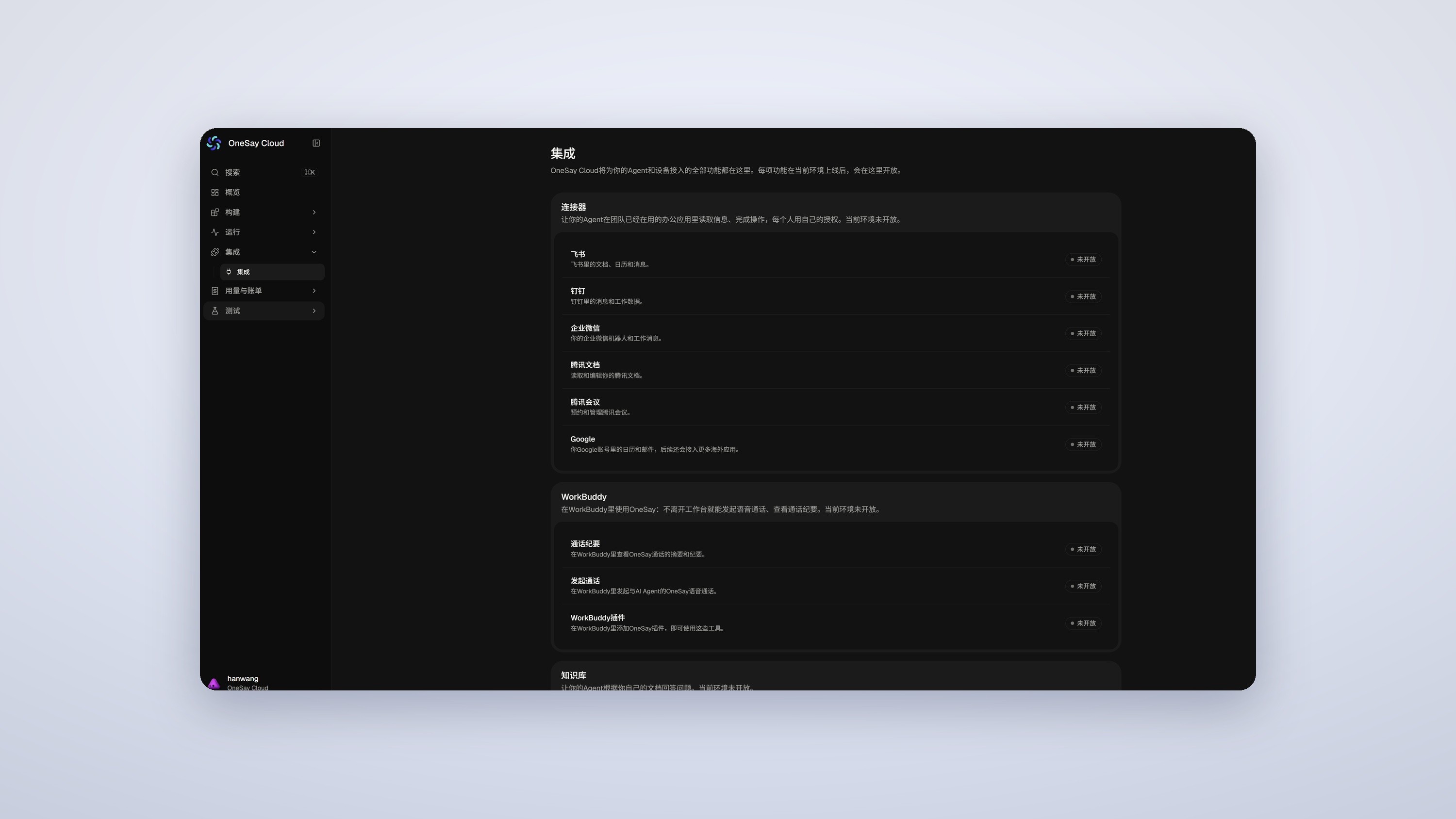
Cloud Integration Connector
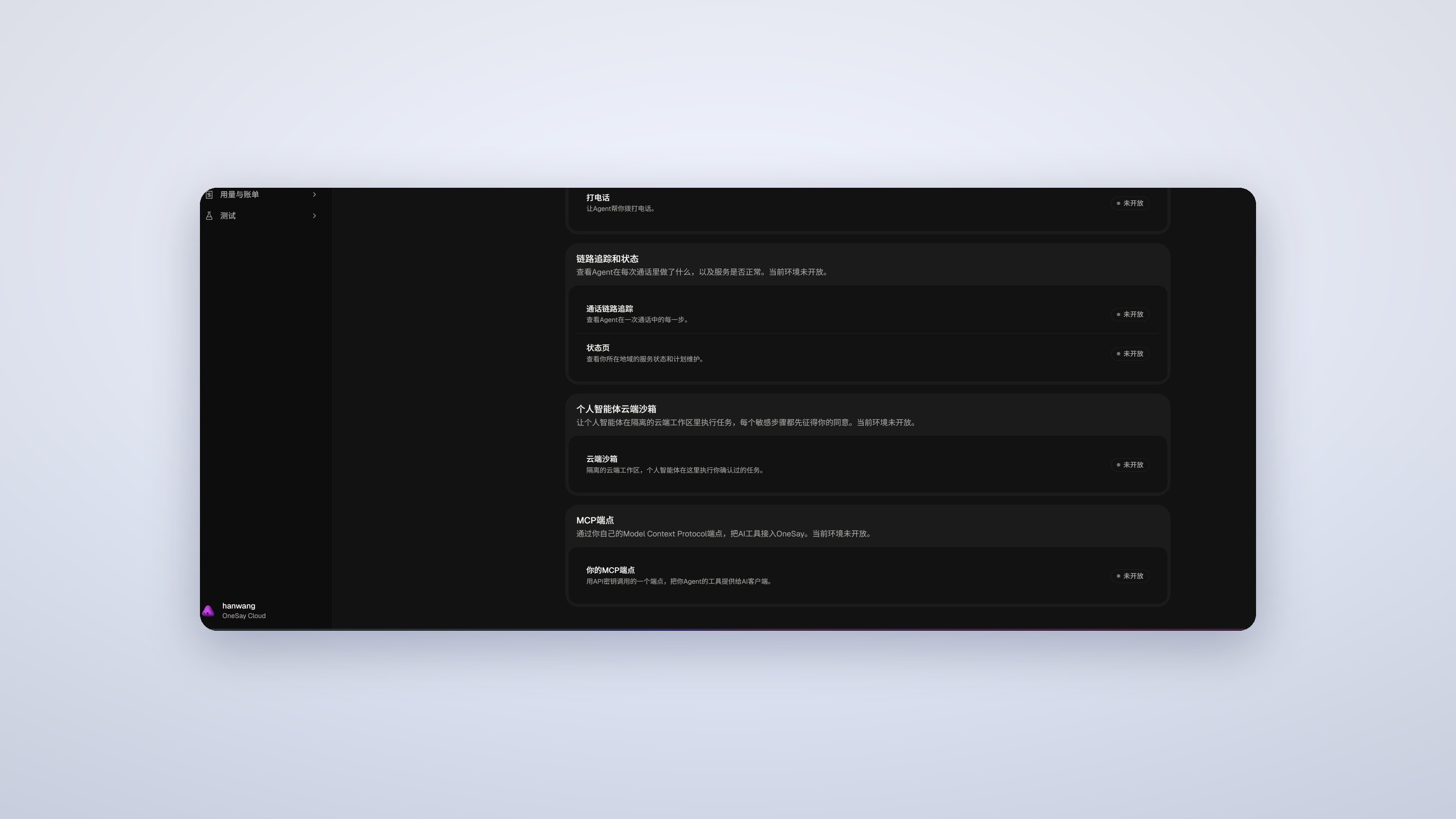
Cloud Integration Sandbox and MCP
For B-end hardware manufacturers and developers, OneSay has built an access system with extremely low threshold. Through the unified central API (integrating AI Agent, RTC, voice tasks) and JavaScript and ESP32 SDK, hardware manufacturers do not need to rewrite the underlying code, and can burn the firmware into the development board with one click only through the browser. In addition, the platform has launched the MCP (Model Context Protocol) service, allowing external AI assistants to directly read device status and logs and perform controlled operations after user confirmation, truly enabling the Agent to have the scheduling capability to connect everything.
Closing the business loop: B-end priority and global developer ecosystem
On the commercialization path, OneSay has adopted a pragmatic B2B2C strategy. For the B-end, it provides hardware manufacturers with device minute pool billing, one-time authorization and customization fees; for the C-end, it plans subscription packages starting from 19 yuan. According to estimates, the product demand of the first batch of cooperative hardware manufacturers next year is estimated to be 20,000 to 50,000 units, corresponding to an annualized revenue of 2.4 million to 10.68 million yuan.
However, when promoting B-end cooperation, the team experienced a difficult choice. A hardware manufacturer once proposed an order of up to 10,000 units, hoping to integrate OneSay's AI conversation capability into children's plush toys. Faced with the tempting cash flow, founder Han finally chose to reject it. "AI toys involve AIGC content generation, minor protection and violence filtering, and the compliance is extremely complex. If the customer has not done the basic compliance work, we would rather give up this order." Han said.

Xibao IP series samples, entries for subscriptions, skins and peripherals
While refusing to make quick money, the OneSay team is very seriously building compliance barriers. In order to support global collection, the team spent a lot of time sorting out the legal terms of the website, disclosing the large model models in detail, and formulating standardized processes for child protection. In Han's view, with the gradual tightening of national regulation, AI education and toy products will most likely require unified government certification in the future. "Taking the initiative to do compliance during the current wild growth period is not only to protect users, but also the core competitiveness for OneSay to obtain orders from large hardware manufacturers in the future."
The turning point for turning technology into a business flywheel is coming — OneSay's official website has supported global collection, and plans to officially open self-service top-up functions to global developers next week. This means that developers and hardware teams around the world do not need long business approval, and can complete the whole process from registration, trial, project development to quota top-up on the cloud by themselves, completely opening up the closed loop from technical access to commercial billing.
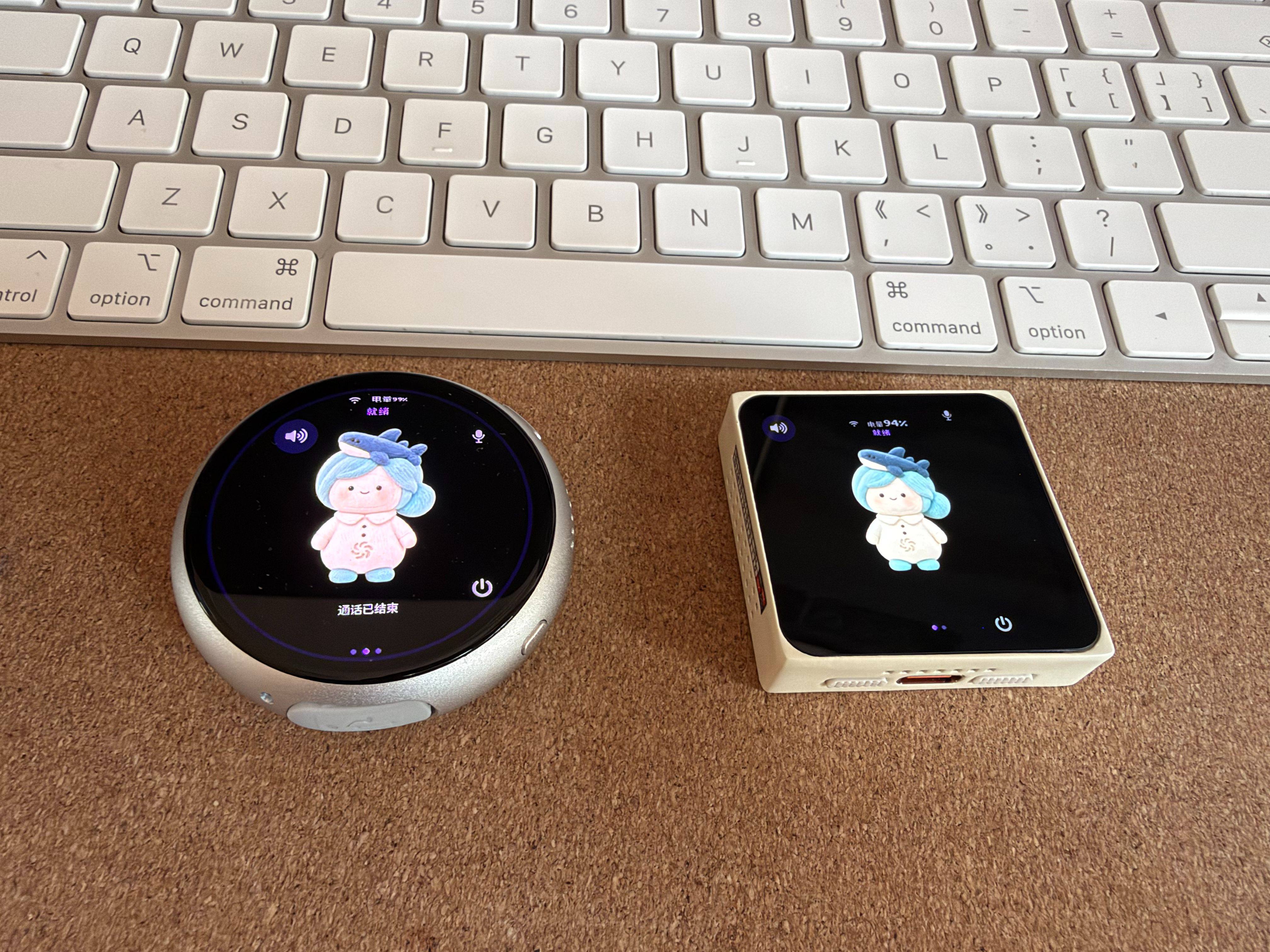
Real shot of OneSay prototype
At present, OneSay's ICP, server and algorithm filings are all ready, and the weekly active paid conversion signal of more than 200 internal test users is clear. According to the plan, the project will launch the first batch of 500 Xibao hardware for commercial use on December 16 this year, and complete the capacity expansion to 10,000 units in early 2027.
In the crowded track where giants compete for computing power and parameters, OneSay has chosen a very pragmatic path: hide the complex underlying protocol in the cloud, and put the most natural voice interaction and long-term memory into a small portable hardware. This is exactly the asymmetric war that startups are most likely to win in the AI hardware wave.