Latest October Global AI Education Product List: Overseas Giants Defend Their Position While Chinese Learning Products Are Accelerating to Catch Up
AI product competition has extended from general large models to more specific learning scenarios.
Recently, the AI product rankings for October 2026 have been released one after another, covering indicators such as global and domestic AI website traffic, monthly active users, mobile application downloads, monthly active users, and in-app purchase revenue in app stores.
Based on the UniqueBase data released by Fine Industry Research, Duojing sorted out 86 educational Web products and 6 educational Apps, and found that the educational AI market shows an obvious differentiation trend: established learning platforms still occupy the high ground of traffic, AI-native learning tools are constantly catching up, and new growth opportunities have emerged in segmented tracks such as problem-solving tutoring, intelligent exam preparation, and gamified learning.
From the Web end, the 86 educational products recorded a total of about 229 million website visits in October. Among them, the two platforms Quizlet and Duolingo contributed a total of about 135 million visits, accounting for 58.7% of the total sample visits.
However, growth is not evenly distributed. Among the 86 products, 34 saw a month-on-month increase in monthly visits, while 52 recorded a decline. Some AI learning products that performed impressively before began to slow down, while others ushered in new growth in October.
PART.01 Established platforms maintain scale advantages, and AI-native products begin to compete for incremental users
Among educational Web products, Quizlet continues to rank first, with about 77.67 million website visits in October, a month-on-month increase of 7.95%, and about 22.17 million monthly unique visitors.
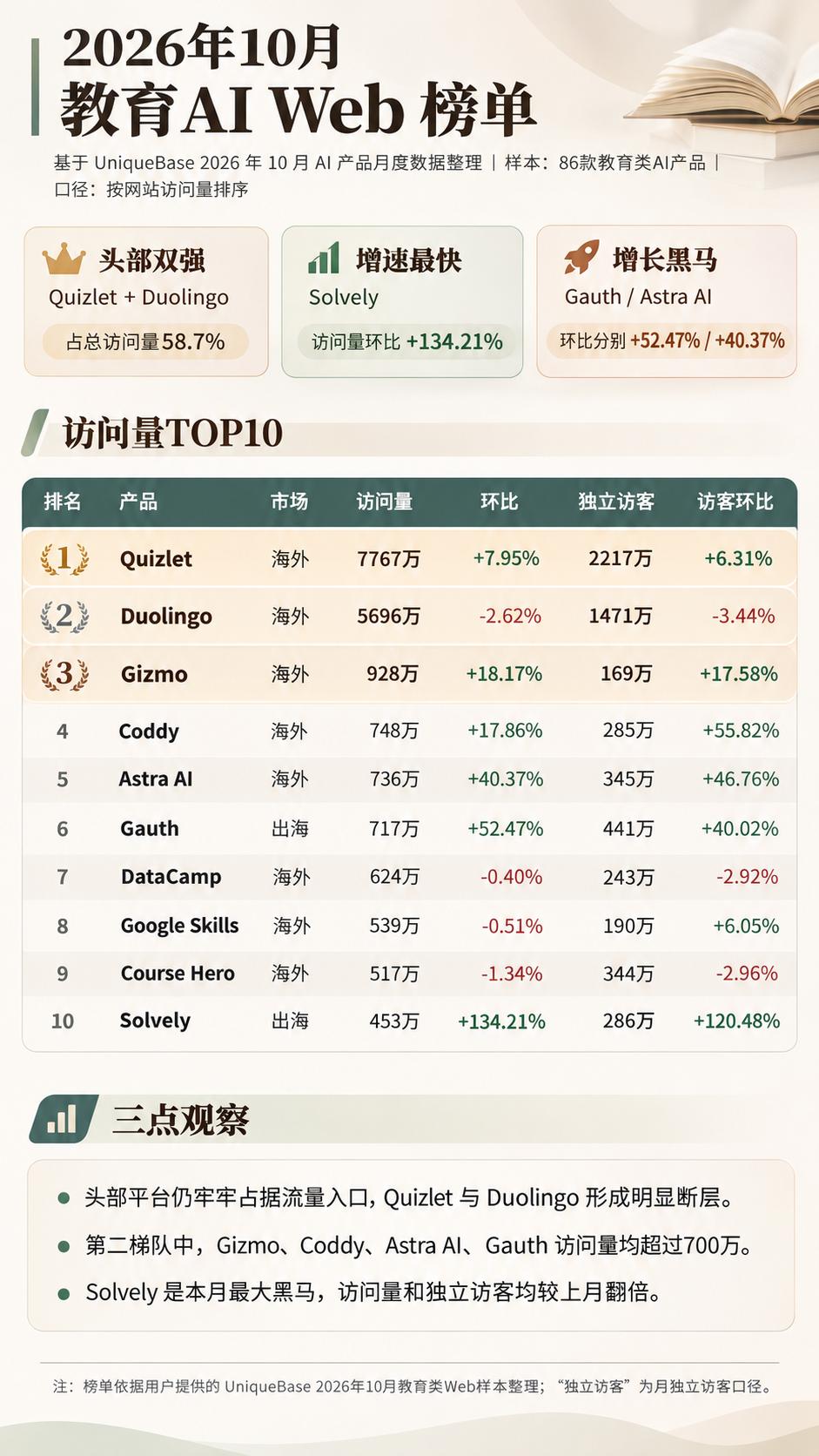
October 2026 Educational AI Web Product Traffic Ranking
Duolingo followed closely, with about 56.96 million monthly visits. Although it decreased by 2.62% month-on-month, its traffic scale is still far ahead of most AI-native educational products. The two companies represent two mature tracks: knowledge memorization and language learning respectively.
Quizlet originally started with digital flashcards and learning quizzes. In recent years, it has continuously introduced AI functions, integrating services such as learning material generation, personalized practice, and AI conversational tutoring into its products. This year, Quizlet further expanded the scenarios of classroom note-taking and learning content generation by acquiring Coconote, an AI note-taking product.
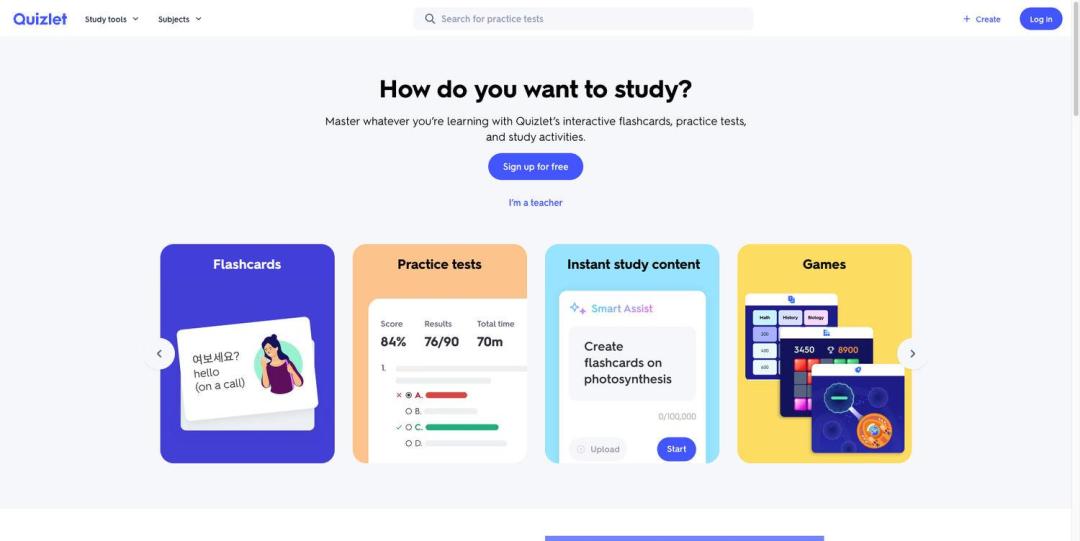
Quizlet Learning Tool Interface
Duolingo continues to integrate AI into language learning, combining the original curriculum system, gamified incentive mechanism and AI conversational practice.
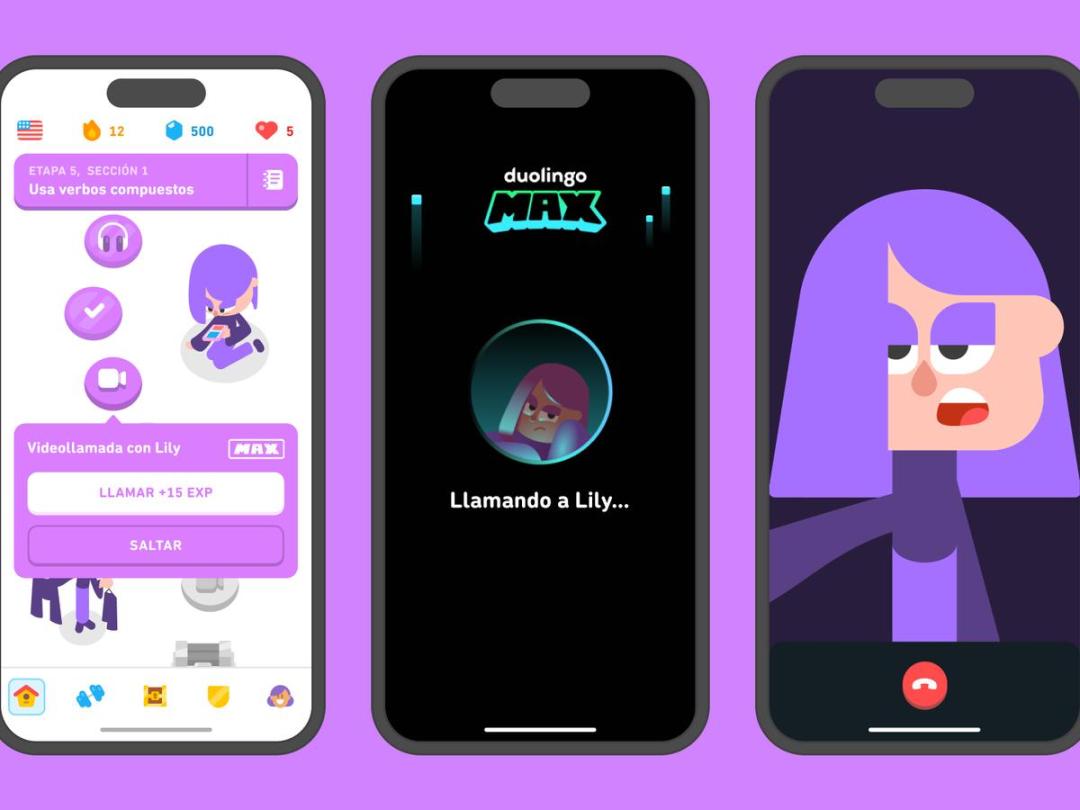
Duolingo Max AI Video Conversation
For the two platforms, AI does not build user groups from scratch, but expands services on the basis of existing learning content, user habits and brand recognition.
In contrast, emerging AI education companies are achieving growth by relying on more specific learning needs. In October, Gizmo reached about 9.28 million monthly visits, a month-on-month increase of 18.17%, ranking third in the educational Web sample. This AI learning product developed by a British entrepreneurial team automatically converts learning materials such as class notes, PDFs and videos into flashcards and test questions, and combines mechanisms such as spaced repetition and friend challenges to help students carry out memory training.
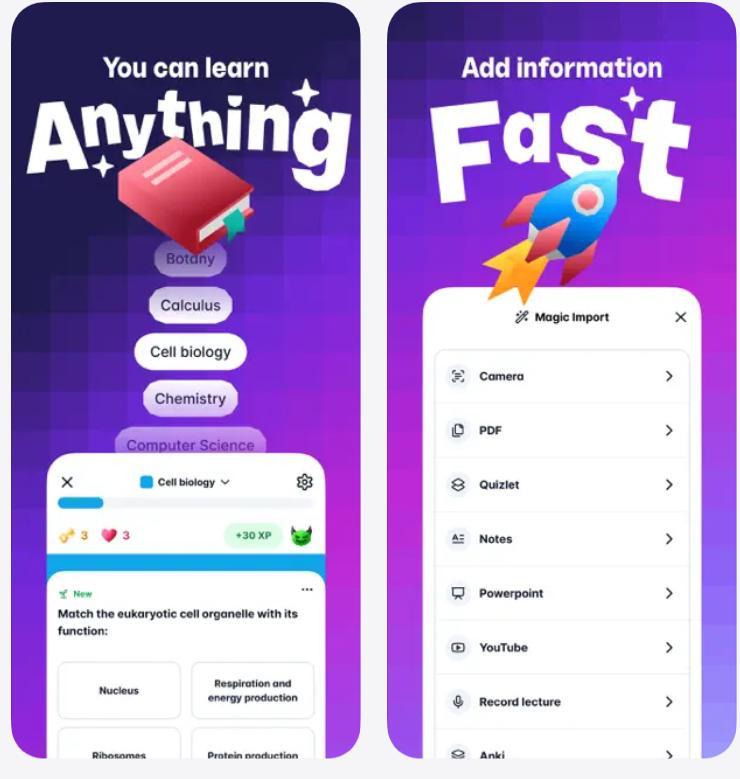
Gizmo AI Learning Function Display
Another product worthy of attention is Coddy. In October, its website visits reached about 7.48 million, up 17.86% month-on-month, and monthly unique visitors increased by 55.82%. Different from traditional programming courses, Coddy emphasizes completing programming exercises directly in the browser and provides instant prompts through AI tutoring. Its products cover multiple programming languages such as Python, JavaScript, and SQL, combining course learning with practical operation.
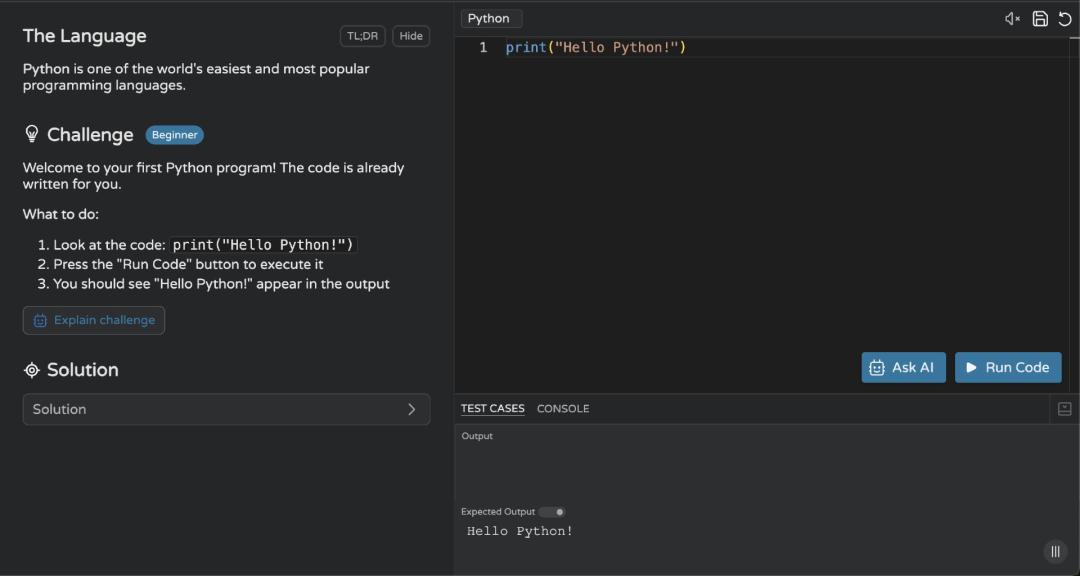
Coddy AI Programming Practice Interface
Although the two products have different positioning, they reflect a similar direction: AI no longer only provides answers, but gradually enters the learning process such as practice, feedback and ability consolidation.
PART.02 AI problem-solving products continue to grow, Solvely doubled in one month
In terms of growth rate, one of the most prominent products in October is Solvely. Data shows that Solvely recorded about 4.53 million website visits in October, a month-on-month increase of 134.21%; monthly unique visitors reached about 2.86 million, up 120.48% month-on-month. This means that both its visit scale and unique visitor scale have doubled compared with September.
Solvely initially entered the market as a photo-based problem-solving tool. Now it has gradually covered multiple learning scenarios such as AI tutoring, learning notes, flashcards, and exam training, and extended its services to the field of professional qualification exams such as the US nurse license exam and commercial driver license exam.
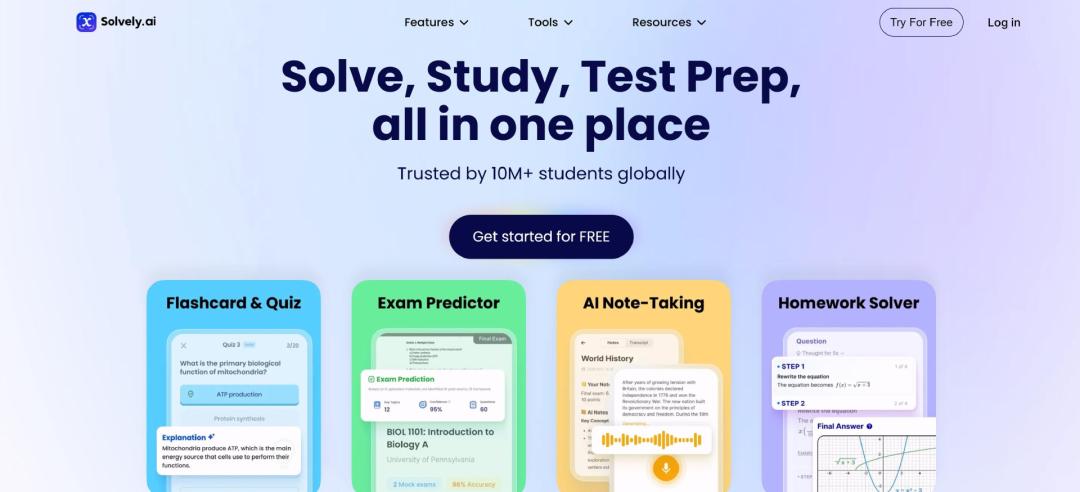
Solvely AI Learning Platform Function Display
Astra AI, which has also achieved rapid growth, is another notable example. In October, its website visits reached about 7.36 million, up 40.37% month-on-month, and monthly unique visitors increased by 46.76%. The company is positioned with AI tutoring as the core. Students can upload materials such as notes, courseware, and past exam papers, and AI will generate personalized learning plans, and cooperate with explanations, quizzes, flashcards and mock exams to complete the review.
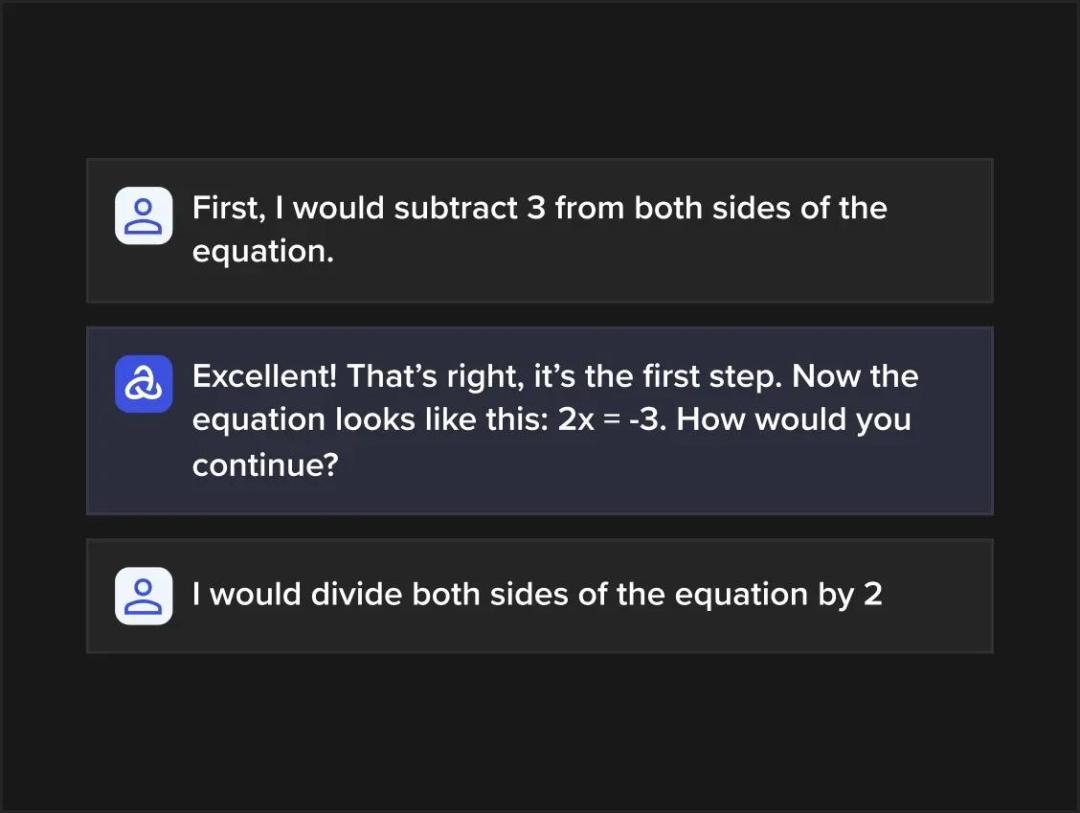
Astra AI Intelligent Tutor Interface
Among the overseas products of Chinese edtech companies, Gauth, a subsidiary of ByteDance, also performed prominently. In October, Gauth's website visits reached about 7.17 million, up 52.47% month-on-month, and monthly unique visitors increased by 40.02%, making it one of the fast-growing leading products in the educational Web sample this time.
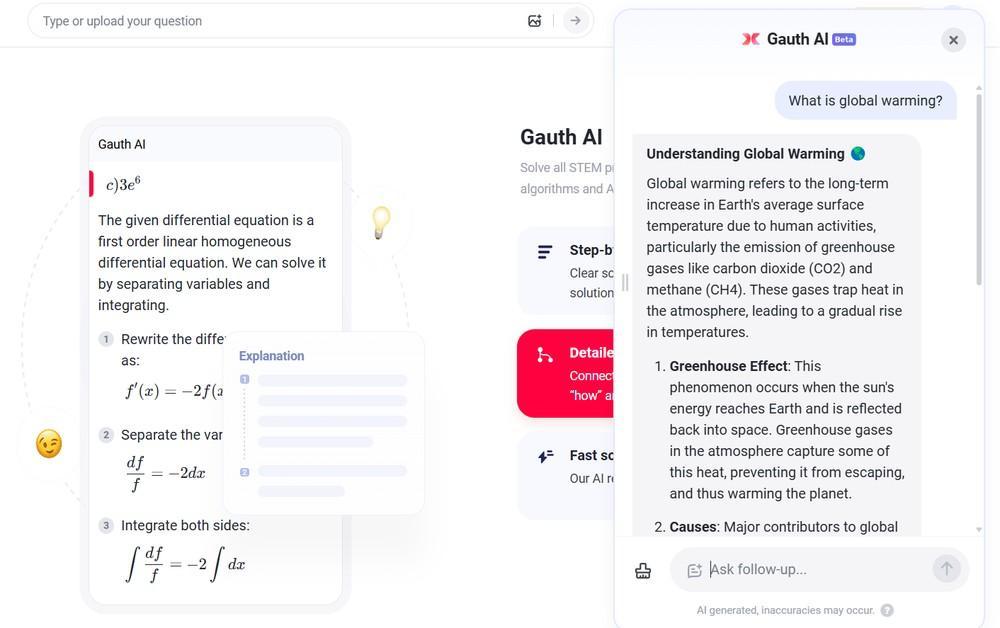
Gauth AI Problem-solving Interface
In recent years, Gauth has continued to expand from photo-based problem-solving to a complete learning tutoring process. This year, it further launched functions such as AI Course, trying to generate course explanations, exercises and personalized teaching content through AI.
The common change of the three products Solvely, Astra AI and Gauth is that they are no longer satisfied with one-time problem-solving, but continue to expand functions such as learning plans, knowledge explanations, and exam exercises, striving to cover students' longer learning cycles.
From the perspective of product competition, the single problem-solving ability is more and more easily covered by general large models. Whether it can further meet students' continuous learning needs is becoming an important differentiation direction for educational AI products.
PART.03 Domestic products are accelerating their entry into educational scenarios, but user scale and commercialization still need to be observed separately
The data on the App side provides another perspective for observation. Among the 6 educational Apps included in this statistics, Question AI, Nerd AI and Doubao Aixue rank top three in terms of monthly active user scale.
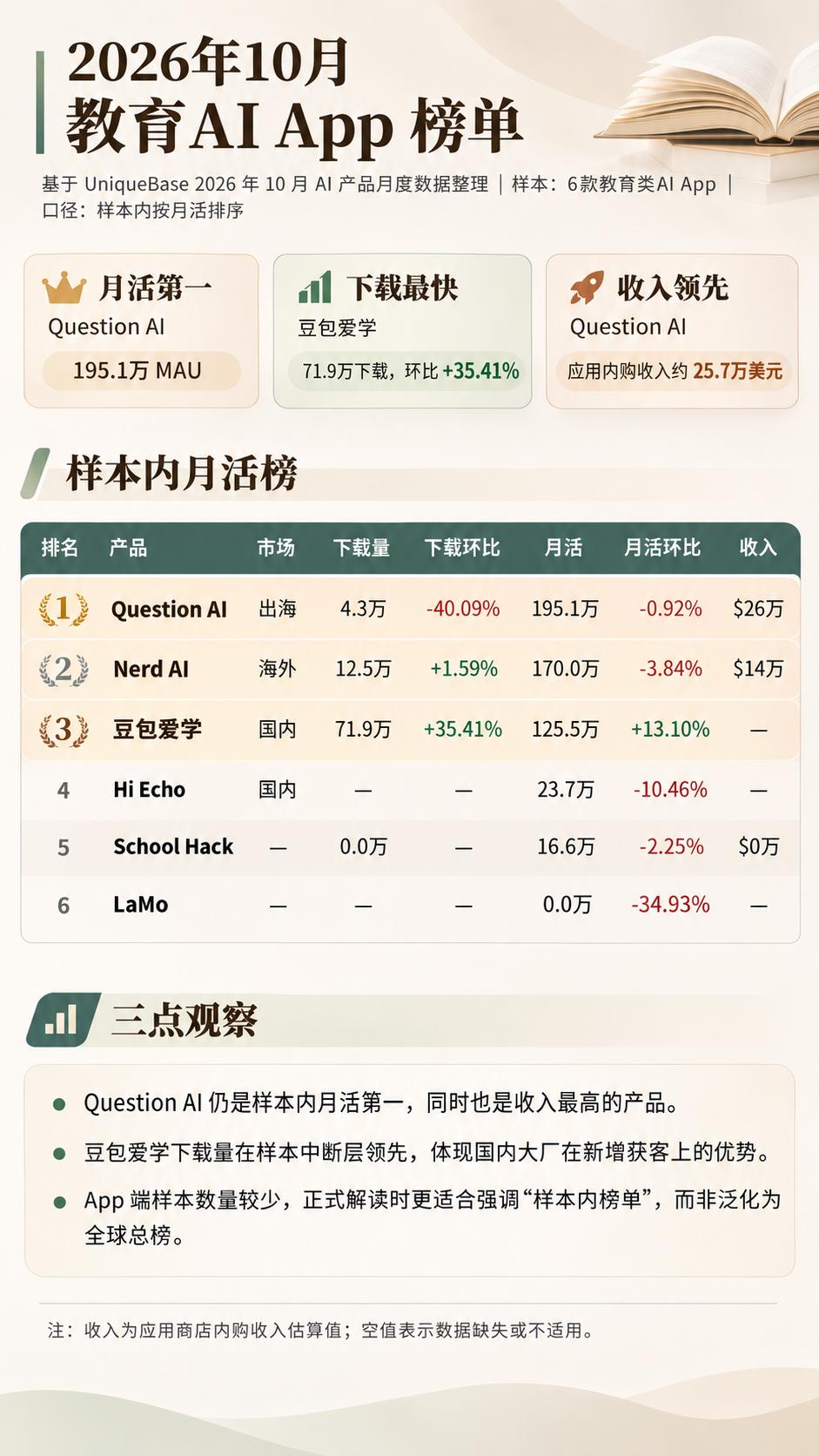
October 2026 Educational AI App Monthly Active User Ranking
Among them, Question AI, the overseas product under Zuoyebang, had about 1.95 million monthly active users in October, a month-on-month decrease of 0.92%; the number of downloads in that month was about 43,000, down 40.09%. Nerd AI had about 1.7 million monthly active users, down 3.84% month-on-month, but its in-app purchase revenue in the app store was about 139,800 US dollars, up 7.71% month-on-month.
Domestic product Doubao Aixue shows a different growth trend. Data shows that in October, Doubao Aixue recorded about 719,000 downloads, a month-on-month increase of 35.41%; monthly active users reached about 1.255 million, up 13.10% month-on-month.

Doubao Aixue AI Learning Interface
Although its monthly active scale is still lower than Question AI and Nerd AI in this App sample, both downloads and monthly active users maintain positive growth. This change indicates that independent AI learning applications under large manufacturers are still striving for new users. However, the growth of downloads, the growth of active users and the growth of paid revenue are not the same thing.
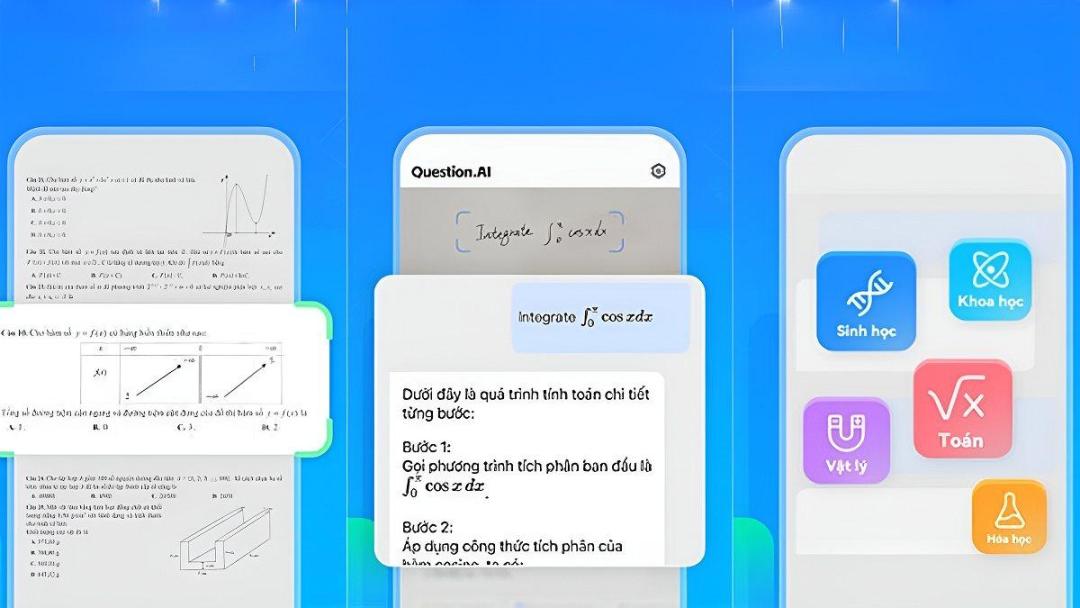
Question AI Product Interface
For educational AI applications, whether the product can continue to attract users and whether these users are willing to pay for specific learning services still needs to be observed in combination with data over a longer cycle.
PART.04 From AI tools to learning platforms, educational AI is entering a new round of competition
In addition to the several largest products, differentiation has also emerged in other segmented fields in the ranking. MagicSchool for teachers recorded about 2.88 million website visits in October, up 4.59% month-on-month; Class Companion recorded about 498,000 website visits, up 2.43%. Although the growth rate is not as good as some student-end products, scenarios such as teachers' lesson preparation, homework correction and teaching feedback are still continuously gaining user visits.
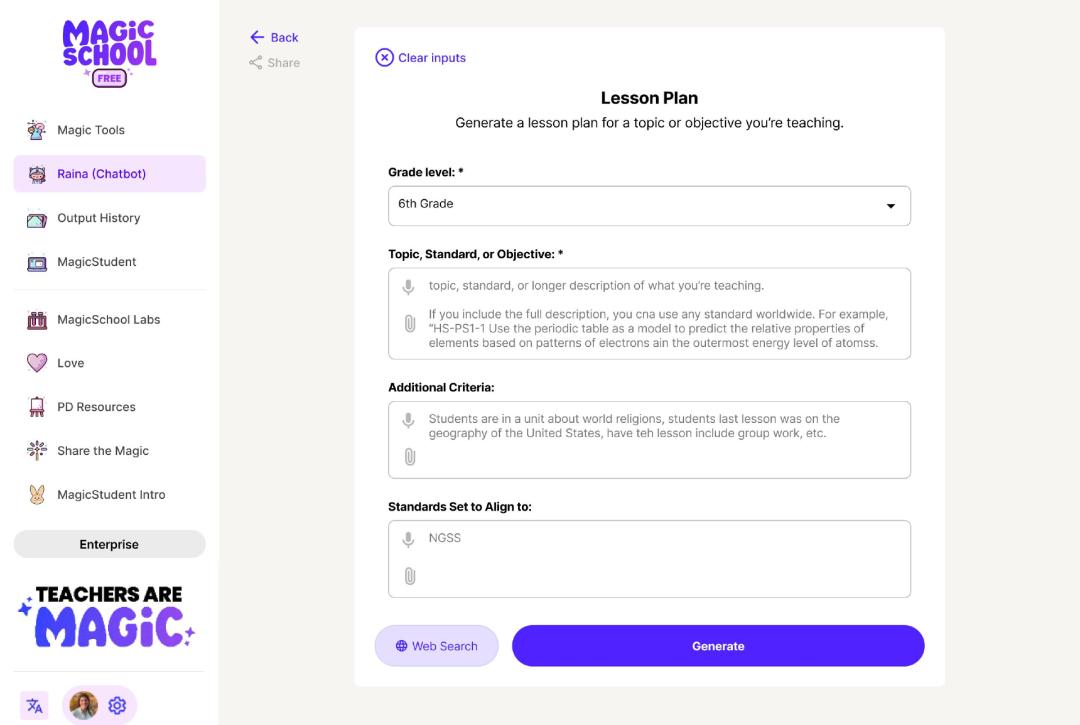
MagicSchool Lesson Preparation Interface
The performance of the language learning track is not consistent. ELSA Speak's monthly visits decreased by 21.70%, Speak decreased by 8.65%, while Praktika, which focuses on AI virtual foreign teachers, increased by 8.65%.
Instead of simply comparing whether products use AI, users are more likely to make choices based on learning goals, interactive experience, price and long-term use value.
Judging from the October ranking, there is no situation where all products grow simultaneously in the global educational AI market. Mature platforms such as Quizlet and Duolingo continue to maintain their traffic advantages, while products such as Solvely, Gauth and Astra AI achieve rapid expansion by relying on more specific learning needs; at the same time, the visits of some products begin to decline, and the growth performance of different learning scenarios is also differentiated.
For edtech companies, whether AI can generate answers is no longer the core competitive issue. How to keep students using continuously, improve learning engagement, and finally form a sustainable business model is becoming the key to the next stage of competition.
Data source: UniqueBase October 2026 AI product data and educational Web & App sample collation