Completed three rounds of financing, the post-1999 generation entrepreneur redefines investment transactions with AI | 36Kr Exclusive
When you first meet Li Bubai, it's hard to immediately associate him with the founder of an AI startup that has completed three rounds of financing.
He wears his company's work uniform all year round: short sleeves and hoodies in spring and summer, and when he finds there are not enough clothes for autumn and winter, he asks the company to produce a new batch of jackets. He also carries an old backpack that he has been using since high school. For him, it is not just an old item he has used for many years, but also carries the memories of those tough days in the past. Every time he sees it, it reminds him to keep thinking prudently, making independent judgments, doing a good job in risk control, and daring to seize opportunities when they arise.
Li Bubai is from Chongqing. He loves pandas, and like many young people in their twenties, he is a big fan of superheroes, especially Iron Man. The logo of PandaAI was designed by himself, which combines a panda with the Iron Man helmet. This name and image also embody his vision for the product — to create an AI intelligent butler for traders, just like Jarvis beside Iron Man. Now users can ask an investment research question in natural language in PandaAI. The model embedded in the platform can call data, codes and backtesting tools to assist in data analysis, indicator research and strategy verification. But the final judgment and trading decision are still made by the users themselves.
01 From Trading to Popular Science: Make Quantification Accessible to More People
Li Bubai, born in 1999, entered the quantitative private equity industry at the age of 20, and once participated in the management of funds with a scale of over 1 billion yuan. His initial choice to engage in trading was not entirely out of career planning for the financial industry. Practical factors such as family situation made him think about how to make money at a very early age.
When asked why he loves trading, his answer is: "Another name for trading should be decision-making." In the real market, people need to make judgments constantly, and the results will be fed back very quickly. You don't have to guess repeatedly whether a choice is valid, because the market will give the response. This process of making quick judgments and getting quick feedback is exactly what attracts him.
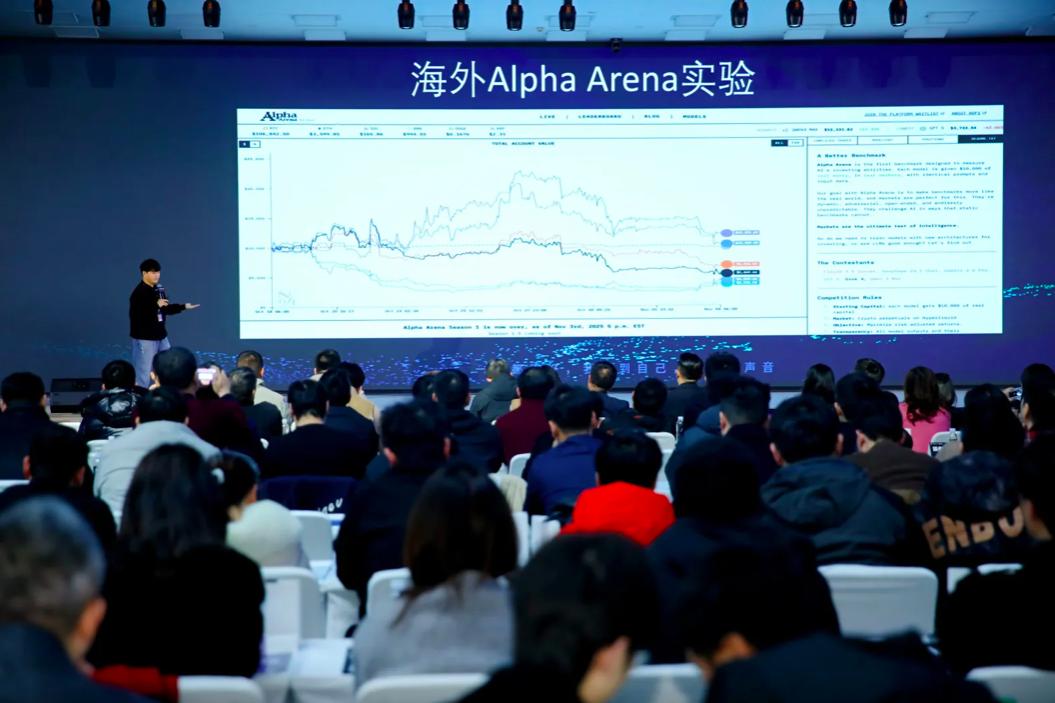
Photo of Li Bubai at an event
During his work in the private equity business, Li Bubai started to run the self-media account "Quantitative Li Bubai". His original idea was very simple: he found that there was a huge information gap between the public and quantitative investment. Quantification is often described as a mysterious, complex force that is even opposed to ordinary investors. Li Bubai does not agree with this statement. In his view, quantification is first and foremost a research method with specific logic and technology behind it. It should not become a black box that only a few professionals can understand just because it involves mathematics, statistics and programming.
He hopes to explain these knowledge clearly and let more people know what quantification is actually doing. For Li Bubai, the significance of popular science is not only to eliminate misunderstandings, but also to enable the flow of knowledge and technology. Professional capabilities should not be mastered only by a small number of people who have resources and access thresholds. So he started to update content continuously, talking about quantitative strategies, research methods and related technologies. The account gradually accumulated more than 200,000 fans, but doubts also came along: since he was running a private equity business, why did he spend energy on self-media? Even some shareholders and customers thought this deviated from the original business direction.
Li Bubai still kept doing it. What he saw was the long-standing information gap in the quantitative field, and the real demand for knowledge behind the information gap. As the content spread, the questions raised by fans began to change: after understanding the methods, can they actually put them into use? Are there any tools to help them do factor research, write strategies and analyze data? These feedbacks made him realize that what users need is not just knowledge, but also tools to turn knowledge into practice.
This became the starting point of his entrepreneurship. Early fans and the open source community also became the first batch of users of PandaAI. From quantitative private equity to self-media, and then to AI product entrepreneurship, Li Bubai did not aim to establish a technology company from the very beginning. His path is more like being pushed forward by one specific problem after another: he entered the quantitative field because of trading at first, then found that many people did not understand quantification, so he started to do popular science; later, fans were not satisfied with just understanding the knowledge, but hoped to have tools that they could use by themselves. PandaAI emerged step by step in this way.
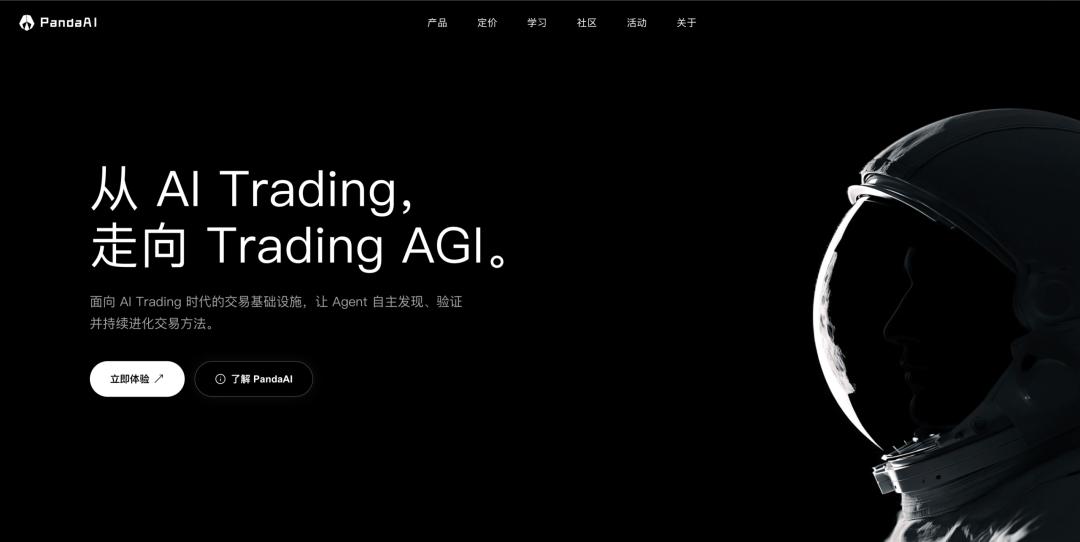
PandaAI official website interface
02 From a Single Tool to an Agent Team
After the emergence of large language models, Li Bubai began to think about whether AI can further lower the threshold of quantitative research. The team initially tried to use Coding Agent to help users write codes, develop strategies and do backtesting, but soon found that being able to write codes does not mean being good at trading. The research tasks that a trader actually needs to complete usually involve data collection, factor mining, strategy construction, backtesting verification and risk analysis. Only solving the code generation problem is far from enough.
PandaAI therefore gradually shifted from a single-point tool to a complete AI investment research workflow. Users can describe their research ideas in natural language, and the AI will call data, models, codes and backtesting tools to assist in completing investment research tasks. Quantitative users can use it for factor research and strategy development, while subjective investors can use it to analyze research reports, collect data and sort out information. The team aims to help users complete research instead of directly giving trading suggestions, and the final investment judgment and trading decision still remain in the hands of the users themselves. PandaAI expanded its business scope from code writing to the whole investment research process, in order to help users connect all these links and apply the methods they have learned to their own research.
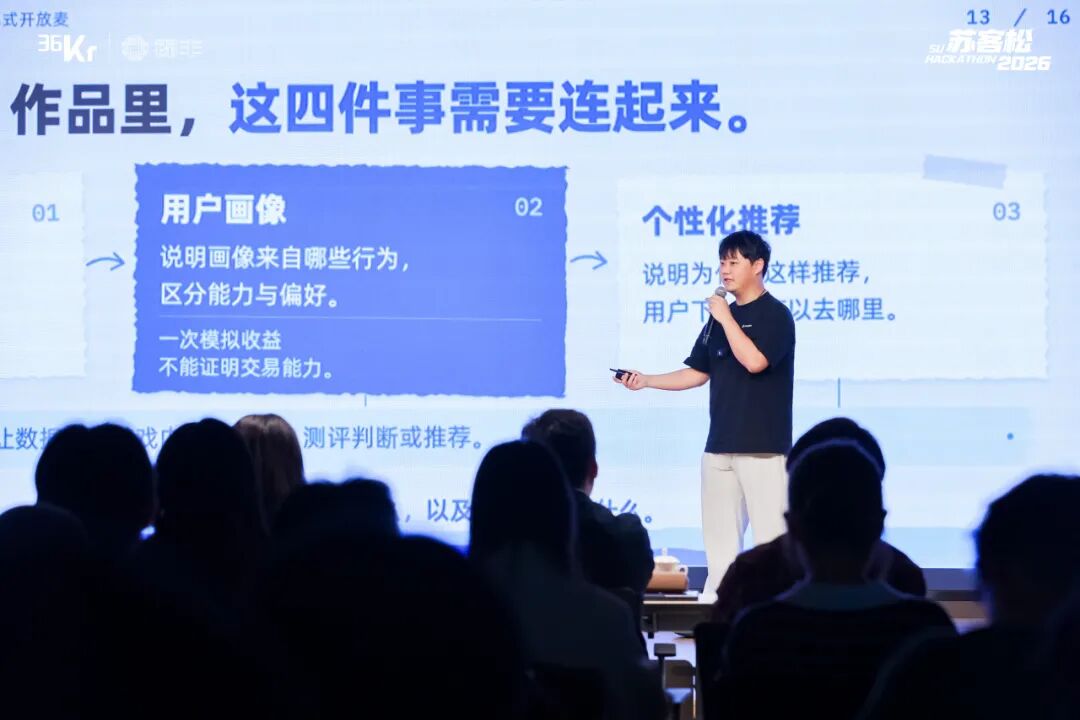
Photo of Li Bubai at an event
However, natural language interaction is not the end point he envisioned. Li Bubai expects the next-generation product to move towards A2A, that is, the Agent-to-Agent collaboration mode. He imagines it as an "A2A office": Users can select Agents with different capabilities according to their own investment concepts and research habits, and form their own Agent teams. Different Agents are responsible for data processing, factor research, strategy analysis and other work respectively, and collaborate with each other to complete an investment research task.
This means that AI is no longer just a tool waiting for instructions to complete a single task, but gradually participates in the research process. Different Agents can adjust methods according to users' feedback and new research results, forming a continuously iterative working system.
This vision for the product form is also related to Li Bubai's expectations for the company. He does not want PandaAI to become a company that follows the traditional expression pattern of the financial industry. The financial industry used to give people the impression of being serious, professional, and even somewhat distant. He hopes that PandaAI will represent a different temperament from the very beginning: young, technology-driven, and willing to re-enter this ancient industry with a new technology paradigm.
03 After Three Rounds of Financing, He Is Still Learning How to Start a Business
After PandaAI officially launched external financing, it completed the seed round, angel round and angel+ round of financing in two consecutive months, with a total financing of tens of millions of RMB, led by Lighthouse Founders' Fund. The funds will be used for the development of AI trading large models, professional QuantSkills, multi-agent collaboration infrastructure and trading Agent development environment, to further promote the construction of PandaAI OS, EVO and A2A technology systems.
Compared with the founder of a startup that has completed three rounds of financing, the more prominent trait of Li Bubai is his boundless curiosity and the ability to keep learning. The accumulated knowledge of finance, statistics and programming in the past has laid a foundation for him to enter the quantitative industry. Whether it was trading in the early days or later engaging in AI entrepreneurship, Li Bubai has always maintained a strong desire to learn. From AI technology, models and Agents to company management, business and operation, he is constantly expanding the boundary of his knowledge. For him, whenever he encounters a problem in the process of starting a business, he will learn what is needed to solve that problem.
He is reluctant to set limits for himself by relying on past experience, and he does not think that people who have worked in finance can only follow the old path of the financial industry. Team members comment that he has strong executive power: once he thinks of a direction, he usually does not stay at the discussion stage, but starts to do research and try to implement it. As for the result, he will adjust according to the actual feedback. This mode of taking action first, then learning, and then iterating runs through all his experiences from trading, self-media operation to AI entrepreneurship.
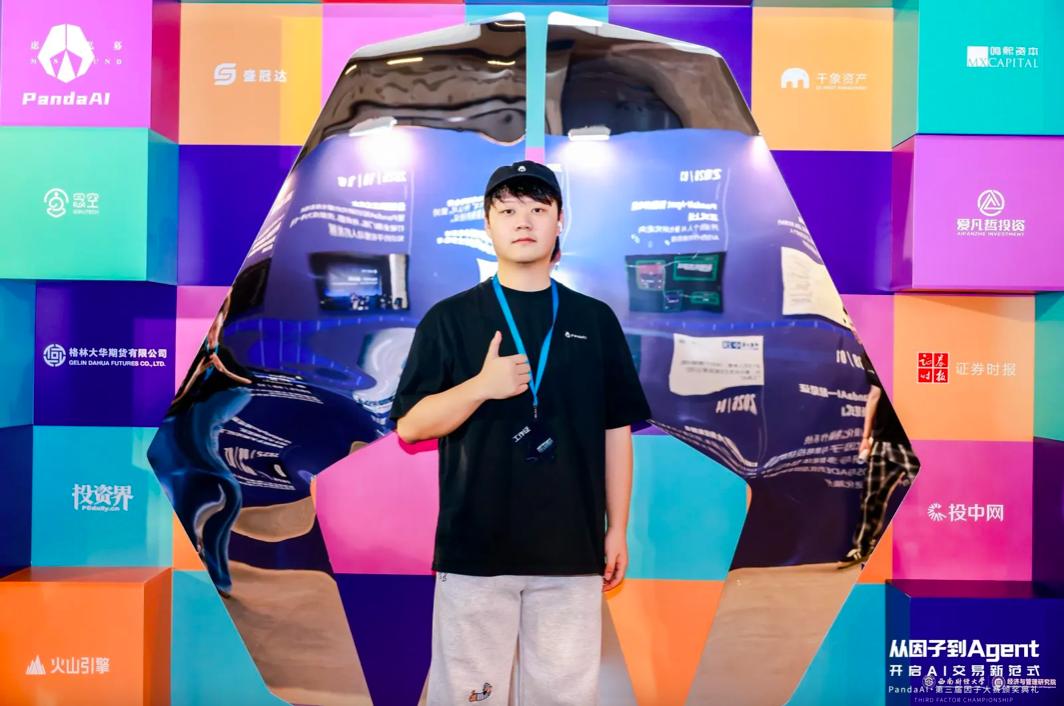
Photo of Li Bubai at an event
Li Bubai believes that in the past two decades, excellent traders created Alpha relying on experience and research. In the next two decades, Agents will also participate in this process. Competition between people will still exist, and new competition will also unfold between different Agents and different research systems. What PandaAI wants to do is to connect credible data, financial tools, Skills, Agents and the investment research workflow, so that AI can not only perform tasks, but also discover rules, verify results, and constantly adjust research methods.
From the initial popularization of quantitative knowledge to the establishment of PandaAI today, the problem Li Bubai has always wanted to solve is the same: how to enable more people to obtain the professional capabilities of scientific investment. In the past, he made more people understand quantification through content. Now he hopes to use AI to turn the capabilities that once belonged only to a few professional institutions into tools that more people can access and use.

Li Bubai and his backpack
This young man who often wears company work uniform, carries an old backpack from high school, loves playing games, listening to music, and keeps three cats and one dog, once looked at Iron Man and was full of imagination for AI assistants like Jarvis. Now he is trying to turn this imagination into reality.
Let AI learn how to do research, and make professional investment research capabilities no longer exclusive to a few people.
This is the vision that PandaAI wants to achieve, and it is also the superhero dream written in code by Li Bubai himself.
About PandaAI:
PandaAI is the first AI financial investment research infrastructure platform in China, providing one-stop AI quantitative investment research solutions for individuals or institutions. It connects trading ideas to the whole process of strategy, backtesting and execution through natural language and visual workflow, so that people who cannot write codes can also go through the whole process from research to verification with their own market judgment. At present, it has more than 150,000 users at home and abroad, and has completed three consecutive rounds of financing including seed round, angel round and angel+ round in two months, led by Lighthouse Founders' Fund, with a valuation of over 10 million RMB.