The Yunnan-Guizhou barbecue boom is on the rise, and another high-stakes gamble for franchisees has begun.
Yunnan-Guizhou Barbecue Gains Nationwide Popularity in Relay
If 2023 was the "peak traffic year" for Zibo barbecue and Northeast China barbecue, in the past two years, as the catering industry has entered the stage of "deepening local characteristic flavors" and "extreme competition for cost-effectiveness", Yunnan-Guizhou barbecue, as a highly impactful emerging force in the barbecue track, has broken through the tight encirclement. It has stepped out of regional preference filters and truly become a "nationwide business".
Yunnan-Guizhou barbecue is actually a general term. Specifically, it is mainly represented by Guizhou iron griddle hot pot, Bijie barbecue, Yunnan Yiliang barbecue, Dai-style barbecue, Jianshui barbecue and other categories. Every branch has made a certain splash in the market.
In catering trend-setting cities such as Shanghai, Chengdu, Shenzhen, Beijing and Qingdao, several Guizhou iron griddle hot pot or Yunnan Dai-style/Jianshui barbecue brands regularly appear in the top 10 of the "Popular Barbecue Ranking" on Dianping. Most of these brands operate in the self-service form, with keywords like Wild Season, Litsea cubeba, Yunnan-Guizhou Fresh Cut standing out prominently, breaking the long-standing tripartite pattern dominated by Northeast Chinese barbecue, Japanese barbecue and Korean barbecue.
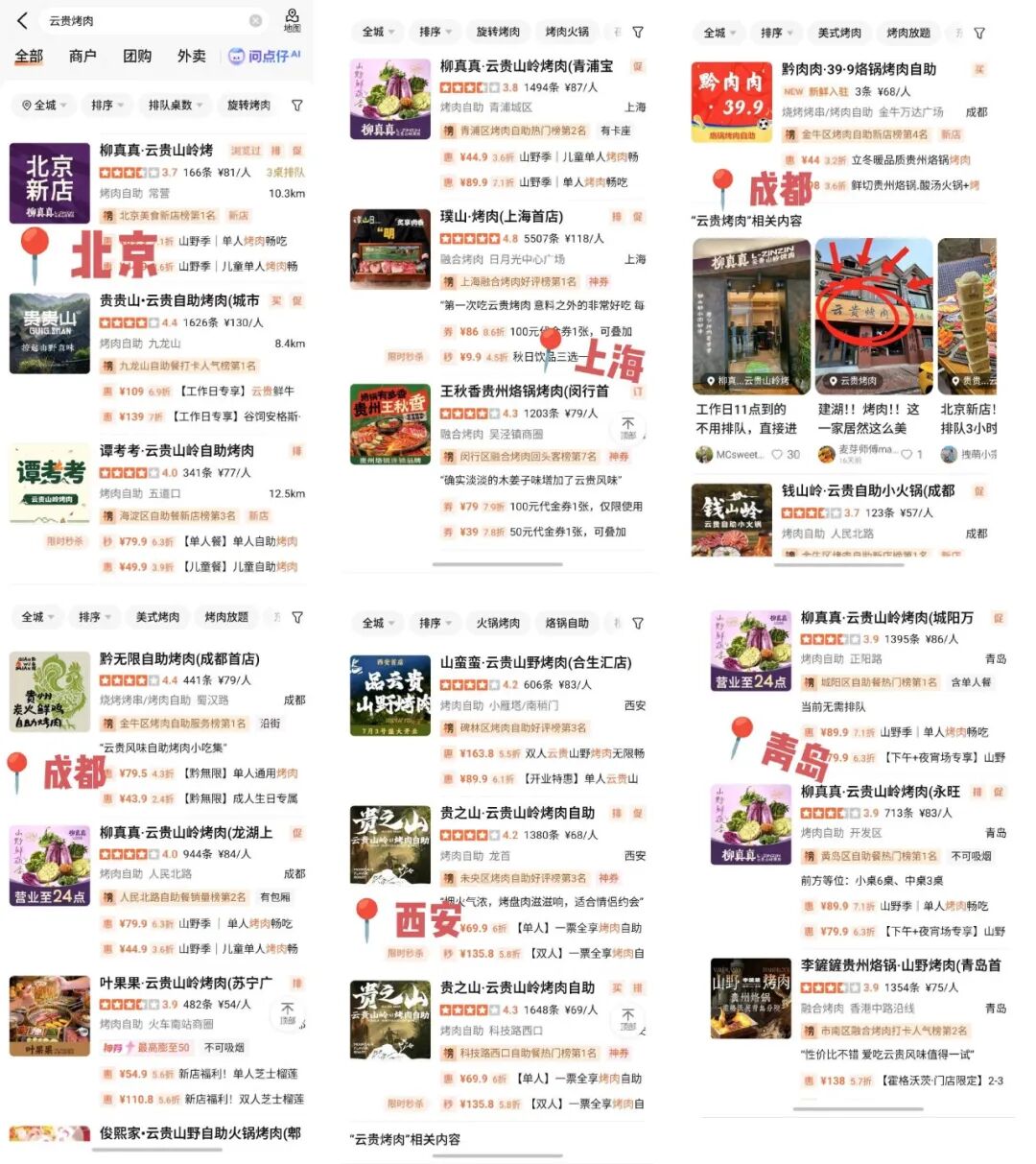
Earlier this year, Xinhua News Agency Guizhou Channel released an article: data from Qcc shows that the current number of enterprises and stores related to "Guizhou iron griddle hot pot" across the country has reached more than 16,000, with over 1,200 new stores added in the past year alone. Now nearly a year has passed, "expanding into first- and second-tier cities" has become the most distinct "annual label" for Guizhou iron griddle hot pot. From the streets and alleys of Guiyang to the mainstream business districts in Beijing, Shanghai, Guangzhou and Shenzhen, Guizhou iron griddle hot pot has strong market penetration and occupies an important position in the barbecue category.
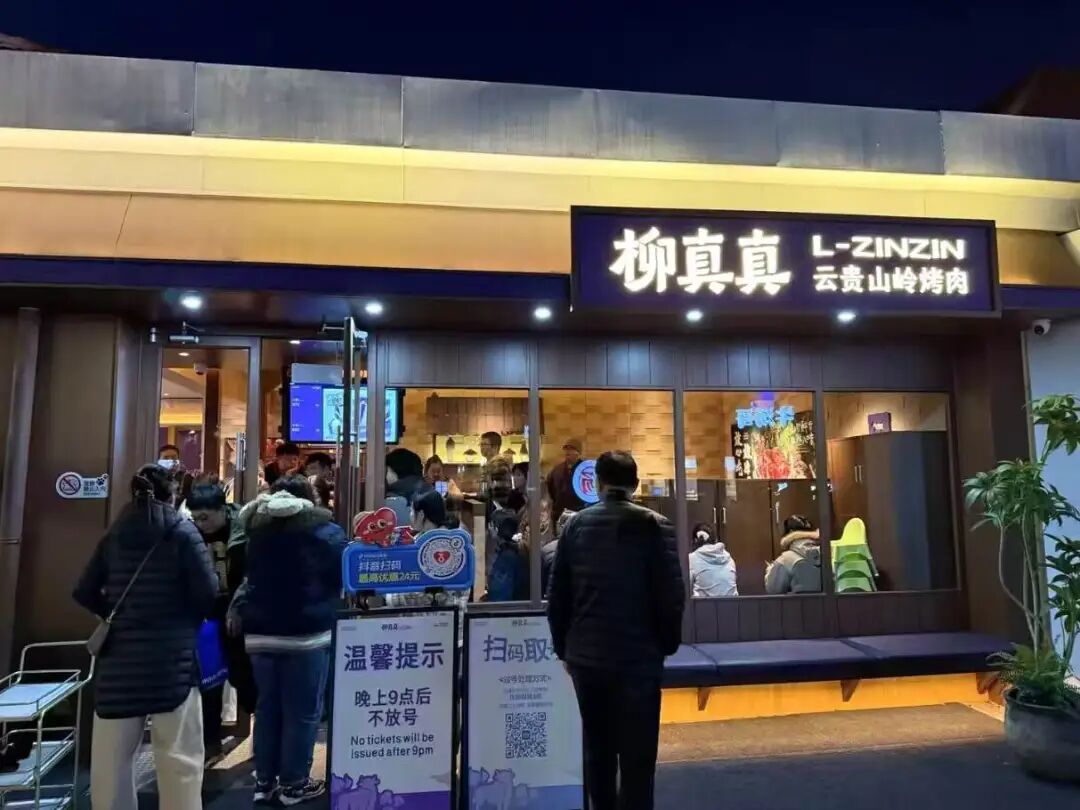
Overall, according to verifiable data, Yunnan-Guizhou barbecue has crossed the stage of "viral single stores" and entered the stage of "category-wide diffusion": a strong brand camp has emerged across the country including Potan (over 200 stores), Liu Zhenzhen (nearly 150 stores), Liangdu Qingwa (over 60 stores), Yelang (46 stores), Yunshang, Yilaozhe, Li Chanchuan and others;
In terms of media popularity, the public voice of Yunnan-Guizhou barbecue is now comparable to that of mature local barbecue categories such as Qiqihar barbecue, Shenzhen mud furnace barbecue and Yanji barbecue. The hashtag #GuizhouIronGriddleHotPot alone has accumulated 2.72 billion views on Douyin, and the single brand hashtag #LiuZhenzhen has 280 million views, attracting a large number of content creators and industry insiders to visit stores and conduct analysis.
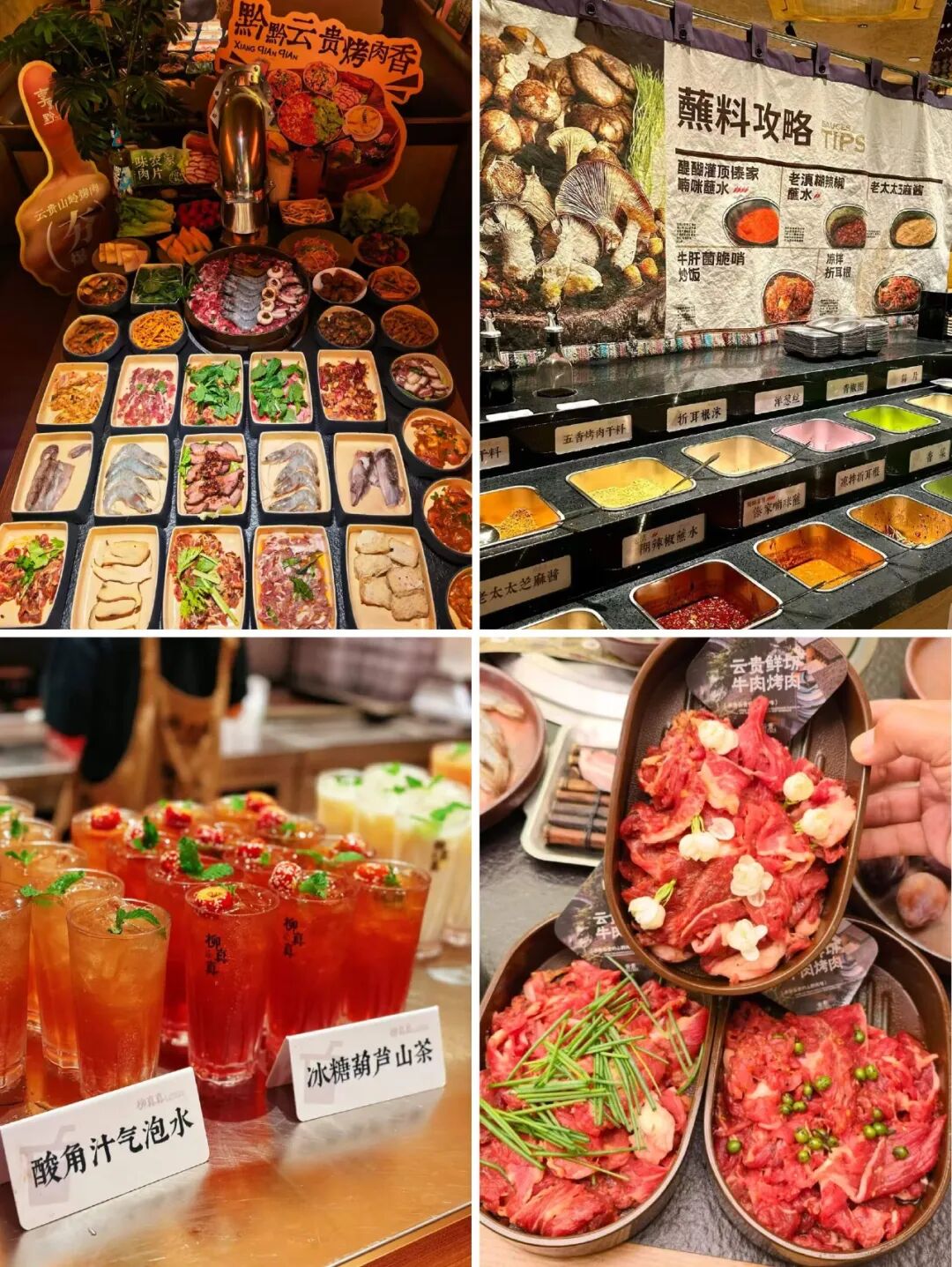
In terms of product innovation, the biggest differentiation of Yunnan-Guizhou barbecue is that it uses "Yunnan-Guizhou wild mountain spices" to transform traditional barbecue, and combines the self-service + waiter-assisted grilling mode to maximize the dining experience. For example, it introduces wild mountain ingredients such as boletus edulis, panax notoginseng greens and colorful potatoes to make the menu more recognizable, and adds spices such as lemongrass and Dai-style fermented dips to the barbecue. Many brands have also added wild mountain snacks, viral desserts, and interactive links such as on-site pounded dipping sauce, making the whole dining process highly participatory.
Stepping Out of Hot Pot and Entering Barbecue: Yunnan-Guizhou Flavor Triggers a "Hit Product Chain Effect"
In the wave of "nationalization of local flavors", Yunnan-Guizhou barbecue can be regarded as the successor of Yunnan-Guizhou sour soup hot pot, seizing the critical window period.
A few years ago, Yunnan-Guizhou sour soup hot pot, Yunnan cross-bridge rice noodles, and wild mushroom soup rose across the country, and wild mountain bistro also continuously improved flavor recognition, jointly completing the "taste bud enlightenment" for consumers nationwide. Their rapid spread across the market proves a commercially viable fact to the market: herbal spices (litsea cubeba, lemongrass, Houttuynia cordata), fermented acid (red sour soup), and complex spicy flavors (chili paste, fermented soybean) are "national-level flavor types" that can break regional barriers and create consumer addiction.
In the past two years, when "Yunnan-Guizhou flavor" is integrated into the "barbecue operation model", it has derived Yunnan-Guizhou iron griddle hot pot, juicy tofu barbecue, and integrated sour soup boiling and grilling modes. This is not a completely new species invented out of thin air, but a "blood transfusion" for traditional large categories with high-potential, market-proven regional flavors.
The succession and rise of Yunnan-Guizhou barbecue is reminiscent of the path of "Sichuan-Hunan flavors sweeping the country", and the underlying logic is relatively consistent: flavor breaks through first, then the category follows up.
After the Yunnan-Guizhou flavor trend started, it never stopped, but was constantly disassembled, reshaped, and integrated into different catering categories.
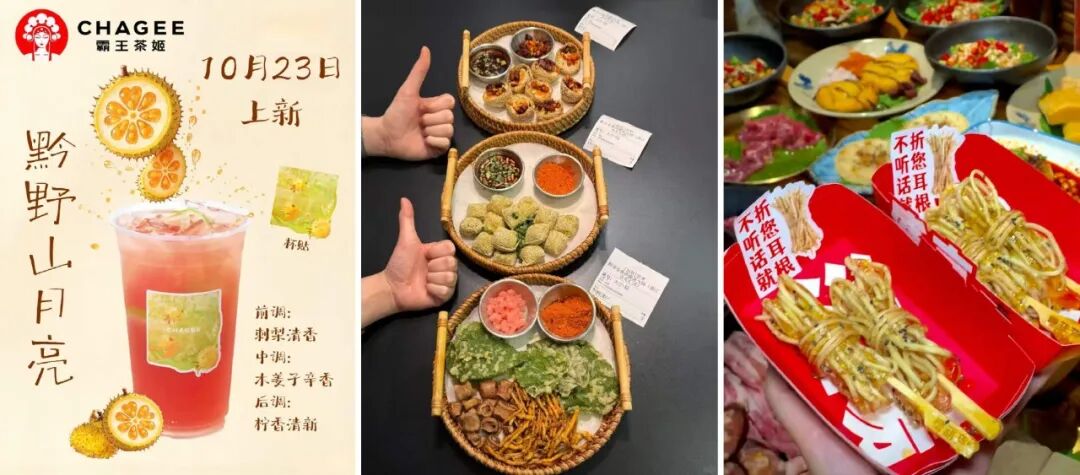
From the hot pot form a few years ago to the current iron griddle form, looking at the entire catering track, this flavor continues to penetrate into different categories. For example, in the fast food category, Guizhou mutton rice noodles, Huaxi beef rice noodles, and Yunnan small pot rice noodle brands are intensively raising funds and expanding their chain stores; in the beverage category, litsea cubeba lemon tea, prickly pear Americano, and even Houttuynia cordata flavored special drinks have frequently become seasonal limited products of leading tea brands; Guizhou juicy small tofu and Bijie grilled pork belly have also become "traffic-attracting signature dishes" for many ordinary barbecue restaurants.
From this perspective, Yunnan-Guizhou barbecue is not the end point. It is another market territory captured by Yunnan-Guizhou flavor after "conquering the hot pot track". We have every reason to believe that the Yunnan-Guizhou flavor trend will soon "transform" the next new category.
Restructuring the "New Pattern" of the Barbecue Track?
Behind the spreading trend of Yunnan-Guizhou barbecue, part of the driving force comes from the upward development of Yunnan-Guizhou flavor, but this is not the main reason; the other part of the driving force comes from the barbecue track's demand for new growth stories.
Here we have to mention a "reverse background" in the industry:
From 2025 to 2026, the Korean barbecue track experienced concentrated clearance: Street Iron Bucket closed all its stores, Jiang Hudong Baiding shrank from more than 100 stores to only 20, and old brands including Han Lu Yuan, Hanyang Guan, Xin Shiqi, and Han Na Shan gradually withdrew from the market. The consumer demand released by these once top brands needs to be undertaken by new players.
In the cycle of high homogeneity and fierce internal competition between Korean and Japanese barbecue, regional flavor is the lowest-cost differentiation method, because consumers perceive various "spices" as scarce and fresh. In addition, the affordable catering price range needs a "super value" narrative, shopping mall investment promotion needs new stories, and the franchise model needs new concepts.
With the joint force of all parties, Yunnan-Guizhou barbecue stands at the "most prominent position" at the crossroads of the market.
The "evolution" of Yunnan-Guizhou barbecue lies in that it no longer relies on imported cultural IP, but takes local regional culture as the core of the brand. Ingredients from the Yunnan-Guizhou Plateau, wild mountain-style decoration, and ethnic flavors form a more original and barrier-rich brand narrative. Compared with Korean barbecue elements that may face aesthetic fatigue and cultural cyclical risks, brand stories rooted in China's local food culture have deeper moats and longer brand cycles.
At the same time, the underlying logic of traditional Japanese barbecue, Korean barbecue and Northeast Chinese barbecue is all "meat-centered logic". They compete for meat cuts, grades, cutting methods, and marinating techniques, and their core assets are supply chain and meat quality. For this reason, traditional Japanese and Korean barbecue is extremely dependent on high-priced beef (such as Wagyu, Angus, snowflake beef), with per capita consumption often reaching 150~300 yuan, but in recent years it has been trapped in the quagmire of "supply chain premium being exposed, consumers being unwilling to spend freely".
In contrast, Yunnan-Guizhou barbecue is "flavor-centered logic". It competes for spice ratio, fermentation, dipping sauce, and compound aroma, and its core assets are formulas and origin-specific ingredients. The ingredients of Yunnan-Guizhou barbecue are also very down-to-earth, such as extremely popular pork belly and juicy tofu. It uses unique flavor to make up for the low cost of ingredients, and controls the per capita consumption at 60-80 yuan.
This price range is also the most popular "social catering price range" in this market cycle.
The breakout of Yunnan-Guizhou barbecue has brought considerable positive stimulation to the quiet barbecue track — pushing the industry's focus from "what to grill" to "how to express unique flavors".
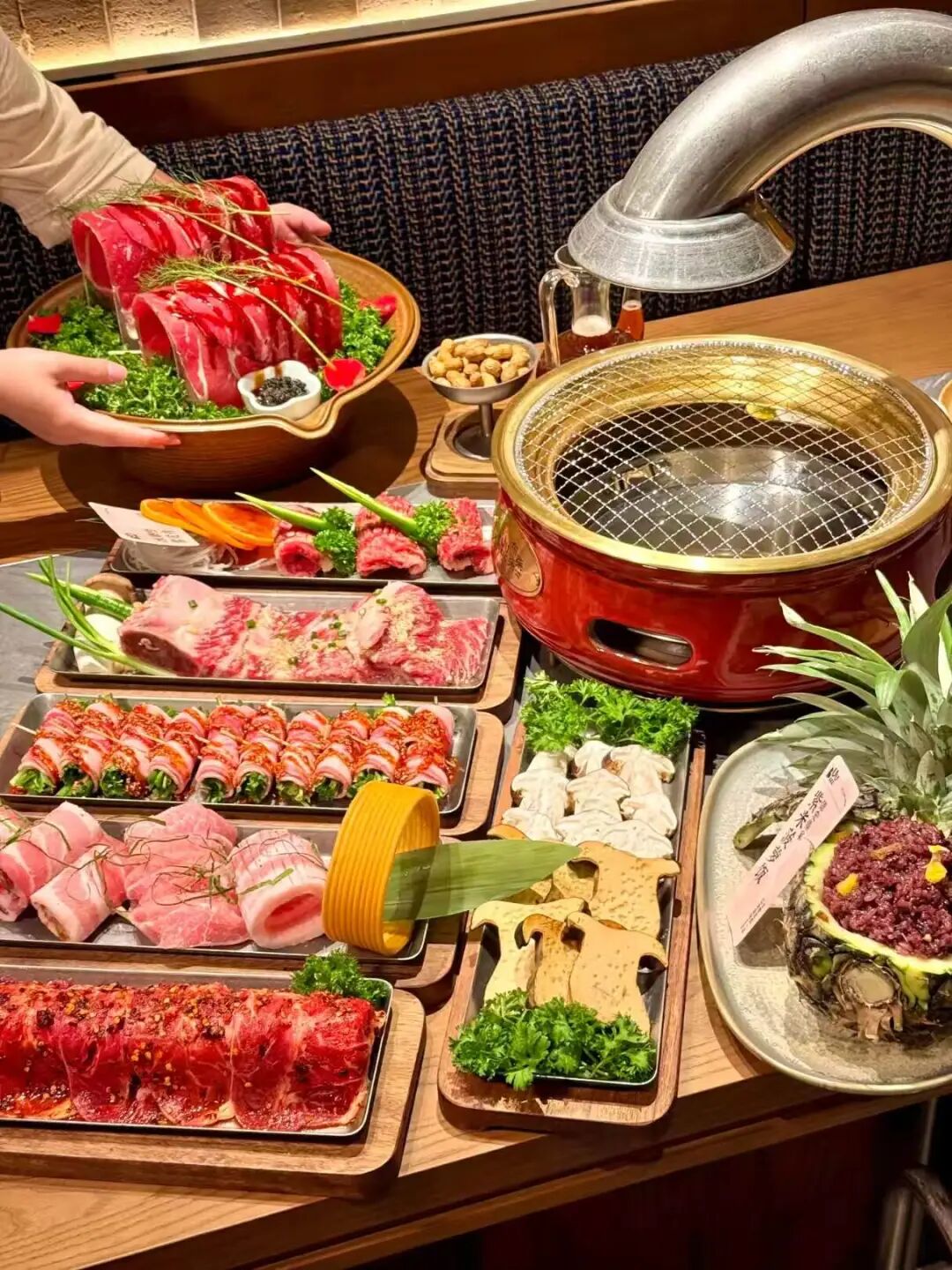
An industry insider said bluntly: "The biggest stimulus brought by the popularity of Yunnan-Guizhou barbecue to the traditional barbecue track is not as simple as category substitution or market reshuffling, but the expansion of competition dimensions — besides the product and experience of Japanese and Korean barbecue, the boldness and affordability of Northeast Chinese barbecue, regional flavor has become a new source of differentiation. It promotes track innovation, but also brings pressure such as blind following, homogenization and rising operation complexity."
Of course, although it is in the "rising period", the internal development of Yunnan-Guizhou barbecue also faces extremely unbalanced situations. For example, Guizhou iron griddle hot pot and Yunnan-Guizhou wild mountain self-service barbecue have data support, but branches such as Yunnan Dai-style, Jianshui, Yiliang and Bijie barbecue are still in the stage of "strong local recognition, few national stores", and the entire category presents a typical pattern of "large track, small brands".
A commercial complex investment promotion director revealed that a few years ago, after the Korean barbecue trend receded, the proportion of barbecue stores in shopping malls once dropped, squeezed out by hot pot, bistro and other formats, and even once returned to street stores. But after Yunnan-Guizhou barbecue gradually became popular, it re-obtained store spaces in Wanda, Longfor and MixC malls relying on "wild mountain decoration + table-side fresh grilling + photogenic dining experience + flavor differentiation".
"For a category, channel access in shopping malls is more valuable than product advantages. This step is equivalent to re-opening the shopping mall entrance for the entire barbecue track — leading brands are building market momentum, and subsequent following brands can enjoy the spillover benefits of this trend."
A Topic Worth Thinking About: Life Cycle
From the peak popularity to market contraction, sour soup hot pot only took less than two years.
In 2025, sour soup hot pot brands began to withdraw from core business districts. This is also the result of multiple combined forces: for example, the flavor barrier that was once proud of was shattered by the "fast franchise" expansion. With the intervention of fast franchise brands, the combination of "frozen low-quality meat + OEM chili powder + industrial litsea cubeba oil" quickly overdraws consumers' favor; in addition, major catering giants intercept the market share by "copying ready-made flavors", and the cost for leading brands to "add one new dish" is extremely low, which greatly dilutes the advantages of "pure Yunnan-Guizhou barbecue specialty stores".
If we use sour soup hot pot as a reference, we can foresee many challenges in the second half of Yunnan-Guizhou barbecue's development.
An industry insider said bluntly that this category will soon enter the same clearance period. The judgment signal is — the density of similar stores in the same area, the queuing time of a single store, and the payback period of franchisees all deteriorate at the same time.
Liu Zhenzhen has strong market momentum. What is really worth paying attention to about this brand is not how fast it opens stores or how popular its queues are, but that it is backed by the supply chain of the Ban Tian Yao system and the operation model of self-service small hot pot — it uses the "Yunnan-Guizhou style" as a brand symbol, but delivers mature chain operation capabilities.
Potan has the largest scale with more than 200 stores, and its real core asset is that it has run through a complete iron griddle hot pot store operation model in two years; Liangdu Qingwa has strong city recognition in Liupanshui, naturally bound to Guizhou iron griddle hot pot / Liupanshui flavor, with strong origin label, and it firmly grasps intangible cultural heritage, origin certification and standard discourse power in its own hands.
In short, Potan's strength lies in its scale, Liangdu's strength lies in its origin recognition, and Liu Zhenzhen's strength lies in its systematic operation capability. They all have their own strengths. However, behind the booming market, "Yunnan-Guizhou flavor" and "wild mountain" are by no means the only highlights. On the contrary, those brands that only hang the "wild mountain" signboard without backend capabilities will most likely be the first to be eliminated during the market clearance period.
Looking at the longer-term future, in terms of scale, due to the supply chain radius limitation of core raw materials such as Houttuynia cordata and wrinkled peel chili, as well as the natural screening of consumer groups by heavy flavors, although Yunnan-Guizhou barbecue will capture part of the market share of the overall barbecue track, it may be difficult to develop a national giant with thousands of stores like Northeast Chinese barbecue.
Another point of view holds that the next stage of Yunnan-Guizhou barbecue will most likely not be universal expansion, but to "wait" for Yunnan-Guizhou flavor to precipitate into more stable products and repurchase reasons. At that time, Yunnan-Guizhou barbecue will have the opportunity to evolve from a phased hot spot to a characteristic segmented branch in the entire barbecue track.
This article is from WeChat official account "Restaurant Owner Internal Reference", author: