When a group of Chinese brands have been targeting the global market since the very first day they were founded
In December 2024, the strength training device named AEKE K1 was launched on Kickstarter. Its first batch of backers came from the United States, Canada, Australia and the European Union. In just 30 days, the crowdfunding amount exceeded 1 million US dollars.
Two years later, another new product S1 Pro set a new record with 5.86 million US dollars, topping the fundraising list of Kickstarter's home fitness category, and ranking sixth among global hardware products in 2026.
AEKE co-founder Jack does not define this as "going global from China". "We are building a global brand from the very beginning, not engaging in simple trade, nor just moving the supply chain overseas."
Among the cutting-edge brands supported by Amazon Global Selling's "Benchmark New Seller Incubation Program", AEKE's performance is also very outstanding. After K1 was officially launched on Amazon US site, it achieved 2 million US dollars in GMS in the first year.
Amazon later reviewed and found that AEKE's explosive growth is no longer an isolated case. Comu, which develops AI recording hardware, and LiberNovo, which makes dynamic ergonomic chairs, both completed demand verification in a relatively short time, and found a path to large-scale growth on Amazon.
What they tell is not the story of "Chinese brands going global", but the story of how a new global brand grows from scratch and stands out from fierce competition.
Meeting old demands with innovation, a number of cutting-edge brands have achieved outstanding development
In 2022, the AEKE team had to shut down its previous project due to an accident, and dozens of team members needed to find a new direction.
Due to their shared hobbies, they finally decided to enter the fitness industry. The founding team first screened all categories and directly crossed out the aerobic fitness category. "The aerobic fitness track was already a red ocean at that time." Among the remaining options, strength training had more potential: the demand was rising, while the supply was very scarce, and the customer unit price was also sustainable.
At the end of 2024, K1, a strength mirror for light and medium intensity training, was launched overseas, priced at the 3000 US dollar tier, and finally raised more than 15 million RMB on Kickstarter. A year and a half later, S1 Pro was officially launched, targeting people with regular training habits, with the price further rising to the 4000 US dollar tier.
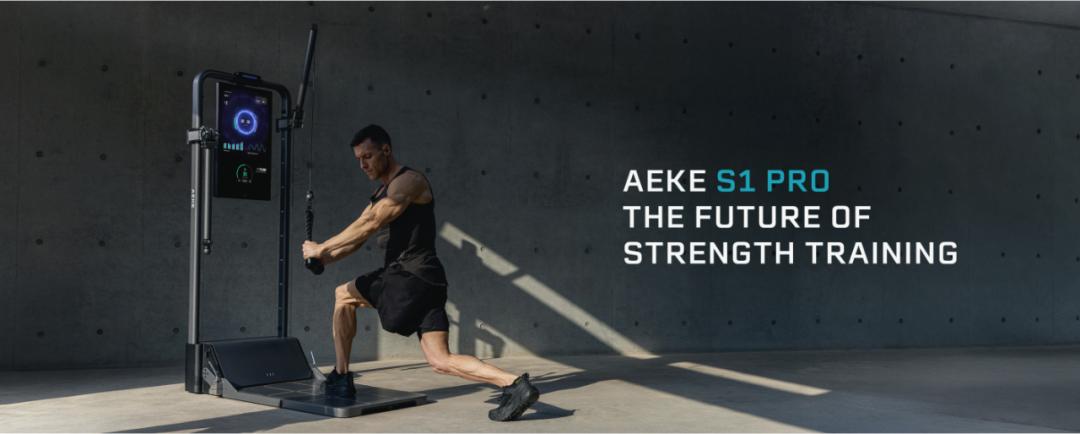
The S1 Pro looks like a large standing mirror, but it is actually a motor-driven dual-cable strength training station. One device can replace 23 pieces of equipment including Smith machine, cable crossover, dumbbell bench and cable pulley, while covering an area of less than two square meters.
The long-ignored demand for strength training is thus met by a product that can be placed in the living room, and S1 Pro has aroused enthusiastic responses overseas.
Jack, co-founder of AEKE, told 36Kr that the team found that smart devices are the fastest growing segment in home fitness equipment, with a compound annual growth rate of more than 10%. Behind this is an alternative process: smart devices are eating into the market share of traditional equipment, while the business of simple equipment such as kettlebells, dumbbells and yoga mats is declining every year.
After selecting the category, the team pursued two extremes in product definition. The first is to do a good job of product subtraction. Jack told 36Kr that the company had been researching and developing for nearly two years, and many people suggested adding entertainment functions such as screen casting in the middle, but the team finally decided to only retain the two core pillars: "professionalism of strength training" and "closed loop of private coaching via camera + AI".
The second is to accurately match different groups of people. K1 targets relatively novice users, has its own product aesthetics, can match the sofa and carpet in the living room, and also saves space. In contrast, S1 Pro pursues more professionalism, providing customized courses, customized action libraries, real-time feedback, data recording and training summaries.
Only the S1 Pro product has been iterated for 10 versions. 60% to 70% of AEKE's internal staff are R&D personnel; in addition to software and hardware development, there is also a special sports science team responsible for shooting each course one by one. After users bring the product home, they first complete the assessment of 6 dimensions including body composition, muscle strength, muscle endurance and flexibility, and the system will automatically generate a training plan based on the data. If the user manually fills in "shoulder pain" or "old knee injury" during the assessment, the plan will automatically exclude actions that are likely to cause pain.
In addition, Jack said that in the field of large strength equipment, AEKE is also one of the earlier brands to realize action recognition and AI private coaching closed loop.
This finally constitutes the product differentiation and gives AEKE its own moat.
In contrast, Comu took a different path. In July 2025, Comu was founded in Silicon Valley. Its team members come from Harvard, MIT and Tsinghua University, and some of them have working experience at Google and Microsoft. The outstanding background of the founding team soon attracted additional investment from IDG Capital and Hopu Investment.
The first-generation product Note Pro was launched in only two months: a card with a thickness of 3 mm, a weight of 27 grams, and a price of 129 US dollars.

Comu did not do crowdfunding at first, but built an independent website first, but the result was not satisfactory. "In the first month after launch, we probably got zero to one order a day." Gong Chen, the relevant person in charge of Comu recalled, "After a month of operation, we could sell two or three orders a day." The team once thought that the product was wrong, and later realized that it was difficult to sell a new product with no reputation at all just by putting the link online.
The turning point came on Amazon. With the same product and the same price, it quickly reached dozens or even hundreds of orders a day after launch.
"Even if it is a no-name white label brand, as long as the product is good enough, it can quickly achieve large sales volume." Gong Chen said.
It is reported that after Note Pro was launched in January 2026, it won the second place in the category of Japan site on the first day, and ranked seventh on the US site, with a stable user rating of 4.4 to 4.5 points. The product also won the Red Dot Award and iF Design Award in 2026, which further confirmed the product value.
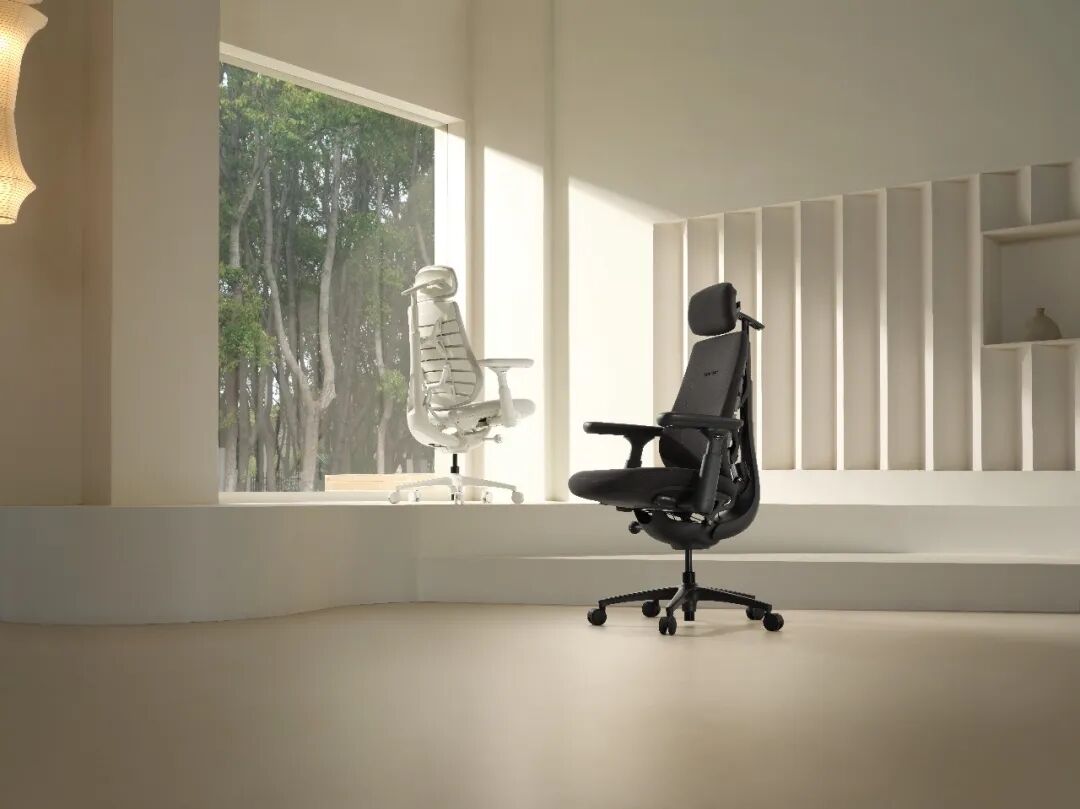
Good products deserve to be seen. In June 2025, LiberNovo's dynamic ergonomic chair was launched on Kickstarter, the crowdfunding amount exceeded 6.75 million RMB within 24 hours, and finally exceeded 10 million US dollars, becoming a phenomenal project on the platform. It is understood that most of the team members come from the fields of robotics and smart hardware. What they make is not a traditional ergonomic chair, but a dynamic ergonomic chair that adapts to the office habits of the new era. Equipped with a holographic follow-up system, the headrest, backrest, seat cushion and armrest can respond synchronously, continuously adapt to the body and working state, and provide users with dynamic support.
Whether it is AEKE, Comu or LiberNovo, they have positioned themselves globally from the very beginning, and taken product innovation and technology-driven as their core competitiveness, achieving explosive growth in the global market.
From Kickstarter to Amazon, the two-stage rocket for global brands
From crowdfunding to Amazon, the outside world generally describes it as "moving from niche to mass". In AEKE's experience, this statement is not entirely correct. They observed that the user profile has not changed drastically in essence, and they are still people with fitness habits and willing to pay for technology.
What has changed is the composition of trust. Crowdfunding backers are technology early adopters with extremely high tolerance. "Even if it is not successful in the end, as long as you explain it clearly to them, they will accept it." Amazon buyers are stable consumers who care about a different set of things: how many years the brand has been established, where the after-sales service is, what to do if the product is out of stock, and whether the company is still in operation.
In this process, Amazon category specialists have played an important role. Every one to two months, brands will review the detail page, main image and video with the category specialists.
"Category specialists will give us a lot of suggestions, such as how to distribute traffic and how to optimize the listing." Jack said.
This is also one of the core supports provided by the "Benchmark New Seller Incubation Program" for sellers: each seller is assigned a dedicated category specialist.
For example, the product detail page is a very critical and easily overlooked step before launch. "For new products, when doing crowdfunding, you need to make clear what breakthroughs can be achieved and what guarantees can be provided; when launching on Amazon, you need to stand from the perspective of consumers' daily needs and make clear what they care about."
Amazon's user base is an order of magnitude larger than that of crowdfunding. When the same product faces more users, the number of questions that need to be answered multiplies, and everyone comes with their own concerns.
Jack told 36Kr: "In the early stage of launching on Amazon, AEKE faced the problem of category education. Users did not know how to use a strength machine with a camera, nor what to do on the first day after taking it home." AEKE's initial solution was to hold a fixed live broadcast every week. The company built its own studio, chose Thursday evening US time, users entered the live room after making an appointment, and the operation staff explained item by item: how to unbox, how to adjust the arm, and how to start the first training.
Later, as users became more familiar with the product, the frequency of live broadcasts decreased, and the clips were permanently retained on Amazon's detail page.
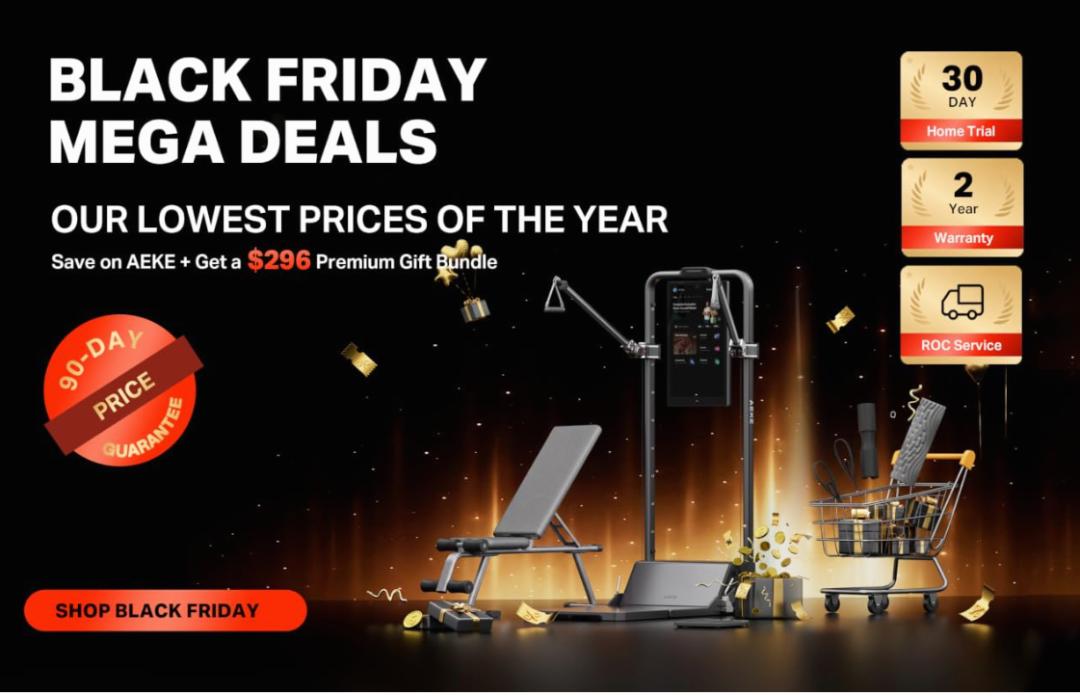
Jack found that a large number of overseas users are used to shopping on Amazon, which enables products to achieve sales conversion quickly after being listed; superimposed with activities such as Black Friday, the effect is even more significant.
But traffic reception is only the first step, and the more critical part is continuous conversion. When AEKE's second product was launched, its category specialist gave a key judgment: for home smart fitness devices focusing on strength training, the target group is wider than imagined, but new brands with ultra-high customer unit prices often have insufficient investment in brand building. The category specialist also provided references based on the growth path of previous high-unit-price hardware brands, which made AEKE more determined to invest in brand building.
In addition, Amazon has a more practical significance for this company. For super-large products weighing more than 100 kilograms, which involve a whole set of asset-heavy logistics systems such as ocean shipping, overseas warehouses and forklifts, it is almost impossible for small companies to build their own, and the platform finally undertakes this part of the work.
Comu's category specialist will provide certain support at the product definition level.
"For this type of AI hardware, bad reviews often do not come from the hardware itself, but from the software experience." Amazon category specialists suggested the team to polish the software side before launch, and arrange a software team on standby. Later, the software problems encountered by Comu were basically solved within two days.
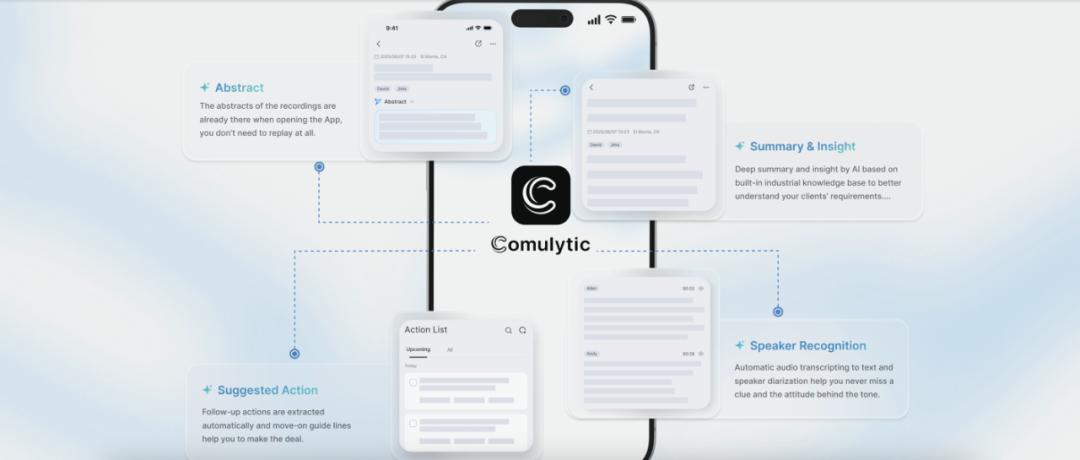
This category specialist also helped Comu analyze market opportunities. They found that there was a gap in the output end of leading AI transcription hardware products, so Comu cut into this track, shifting from recording to action, generating emails, plans and PPTs through Agent, and finally forming stronger differentiated selling points.
In Gong Chen's division, Amazon has three stages of significance for a new company: verification field, large-scale engine, and profit pool.
To expand, in the first stage, the shopping guarantee and evaluation system familiar to consumers help unfamiliar brands complete the public verification of "whether the product is good or not"; in the second stage, the same product power is quickly amplified; in the third stage, off-platform influencers, content and communities build up the brand reputation, and natural traffic flows back to Amazon from the outside, so that the profit will become thicker.
Although these cutting-edge brands have different categories and team backgrounds, their "ignition methods" have something in common: first prove that the product is feasible with a very small group of people, and then use a very large platform to meet the demand. The difference lies in the difficulty of the second stage. Crowdfunding is a one-time explosion, while Amazon is long-term operation: the former relies on a good story, while the latter relies on a thousand error-free operations. Doing a good job in the latter is the beginning of brand growth.
After the cross-border dividend, how big can the business be and how far can the brand go
What impresses people about this batch of cutting-edge brands is that almost all of them broke into the track from other industries. LiberNovo recreated a "moving" chair with the idea of robotics to respond to unmet user needs. AEKE originally worked in other fields, and although the team had experience in marketing and product R&D, it boldly crossed into the smart fitness track. Comu also did not have a hardware background, and entered the new track without hesitation.
The advantage of cross-border is that you can become a brand new leader, without having to submit to the narrative and pricing logic of existing categories.
For example, traditional fitness equipment is priced by equipment, while smart fitness equipment is priced by service. AEKE directly canceled the subscription fee and took it as a marketing point. This is a decision against common sense of the industry: almost all mainstream players in Europe and the United States make money from subscriptions, and in the financial reports of some brands, membership fees have long been regarded as the core of valuation.
"No subscription fee is also one of our major selling points." Jack admitted that this path gave up an income curve favored by capital, "We still hope to help every user make changes in sports and accumulate word of mouth. Of course, this is more difficult, it is a long-cycle business."
Comu has taken similar actions. Traditional competitors sell hardware, providing 300 minutes of free transcription per month, and the excess part needs to be subscribed monthly. The unlimited transcription package costs more than 200 US dollars a year; Comu directly provides unlimited transcription, and deeper delivery is charged separately. In short, "recording" is free, and "action" is charged.
The reason why they dare to do this is that the cost is decreasing. "In the past year, our unit transcription cost has dropped by more than 50%." Gong Chen told 36Kr. The model has stronger capabilities, higher efficiency, and cheaper computing power, and this curve will continue. At the same time, another curve is rising: the more memories and context users accumulate, the more valuable the services the Agent can provide.
However, cutting-edge brands that position themselves globally from the very beginning