With C-class sedans available at just 50,000 yuan, is the battery swapping policy intended to spur consumption?
In the past few years, the price war and involution in China's automobile market have made "cross-class positioning" of automobile products a common phenomenon. In the past, for just over 100,000 yuan, people could only choose standard A-class sedans such as Lavida and Corolla. But later, it was found that more and more B-class cars could be purchased for less than 100,000 yuan.
The impact on vehicle size is more or less one of the reasons for the rapid rise of domestic auto brands to a certain extent. But before many people realized this problem, in the past two months, many domestic brands officially announced their entry into the battery swapping track, making the "cross-class" trend increasingly prominent.
Taking the recently launched Arcfox Alpha S3 battery-swapping version as an example, this sedan with a length of more than 4.9 meters and a wheelbase of more than 2.8 meters, which is close to the size of a C-class car, adopts the vehicle-battery separation and battery rental mode, and the price of the bare car is as low as just over 50,000 yuan. It should be noted that in the past, a budget of 50,000 yuan could only buy a small A0-class car.
Although at present, NIO is the only well-known battery-swapping carmaker, and there are not many battery-swapping models targeted at C-end users. But from this perspective, since some carmakers have set this precedent, all carmakers that launch battery-swapping models later will surely push the price even lower. At that time, crossing two classes at the same price will become the default starting line for the battery swapping track.
From another perspective, will this become one of the new means to boost the automobile market? After all, Geely Holding and NIO Group have reached a cooperation, under which Geely will develop C-end battery-swapping models and NIO Power will provide related services. Later, Huawei Harmony Intelligent Mobility announced a cooperation with CATL to promote the interconnection between Qiankun Intelligent Driving and the Chocolate Battery Swapping Network.
The former proves the feasibility of battery swapping, while the latter is driven by leading industry players. Battery swapping is very likely to become a new wave, which lowers the down payment threshold for consumers.
A disguised form of low down payment
It should be noted that from the perspective of expenditure, the advantage of battery swapping is clear: it reduces the car purchase budget. In the past, carmakers used zero down payment and low-interest installment to lower the threshold, which is also a commonly used promotion method. Its essence is to let consumers exchange their future income for current purchasing power, and the car price itself does not drop.
Therefore, the core reason why low down payment promotion has been effective for a long time is that it accurately hits the pain points of young consumers when buying cars. This group is generally in the early stage of their career, with limited cash flow but rigid travel demand. The extremely low down payment threshold greatly reduces the pressure of car purchase decision-making, allowing them to own a private car in advance without draining all their savings at one time.
Correspondingly, the addition of battery-swapping models is an upgraded version of the low down payment car purchase logic, which builds the low down payment on the basis of the real decline of car prices. It directly reduces the car purchase budget, rather than only changing the payment rhythm like financial interest discounts. Of course, if low down payment is superimposed with installment payment, zero down payment is even possible.
It is reported that during the pre-sale period of Arcfox Alpha S3, 76% of the orders went to the battery-swapping version, and this proportion remained stable at around 70% nearly half a year after its launch. On a model where the charging version and the battery-swapping version are sold together, consumers vote with their orders, and the battery-swapping version wins by an overwhelming advantage, which speaks louder than any doubts.
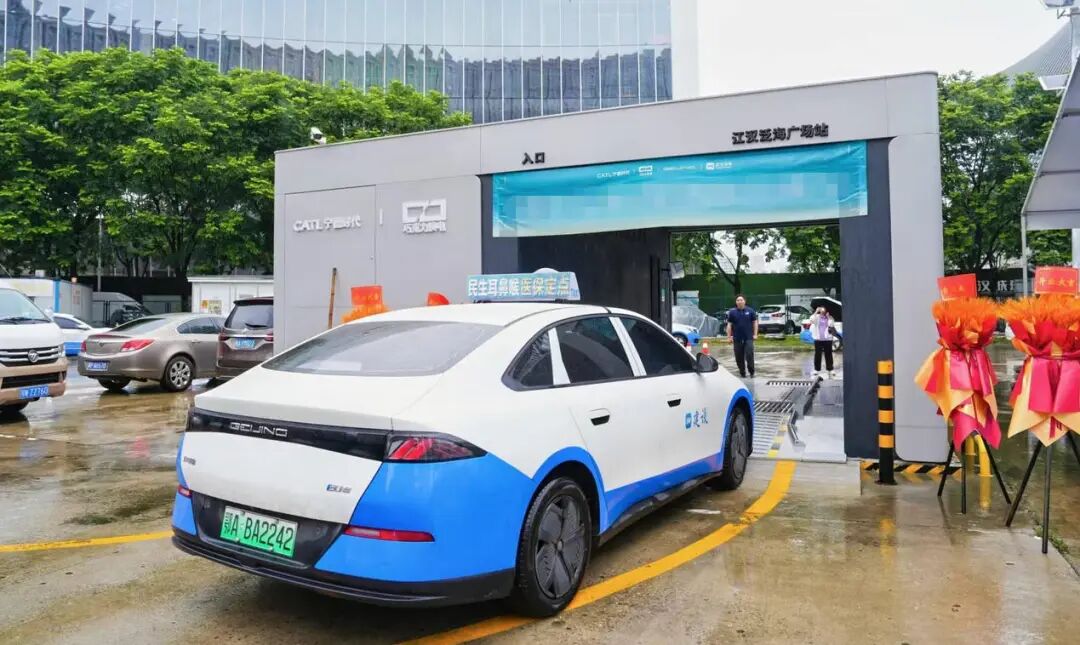
In fact, such effect is also a kind of success for NIO. The BaaS solution of NIO ES8 lowered the threshold from 406,800 yuan to 298,800 yuan, with a one-time price difference of 108,000 yuan. This car is currently the sales champion in the 400,000-yuan large SUV market. From January to October 2026, its cumulative retail sales ranked first in both the large SUV segment and the 400,000-yuan vehicle segment.
In fact, the half vehicle purchase tax reduction policy in 2026 further amplifies the advantages of battery swapping: the tax base of battery-swapping models is the body price excluding the battery. NIO's models have already reaped the benefits. After the cooperative models of Huawei Harmony Intelligent Mobility are launched in the future, they will all be large battery-swapping models, which can save a considerable amount of money for many people.
In addition to the car purchase budget, theoretically, battery-swapping models still have a practical advantage over charging models, that is, the energy replenishment efficiency. This is also a core key point in the past debate between battery swapping and supercharging. No matter how strong the supercharging is, the charging speed is still restricted by objective conditions, such as peak power, low temperature, charging pile end power, and the number of queuing vehicles, which will make the so-called fast charging return to the actual situation.
What about the data of battery swapping? The standard battery swapping duration of Beta S3 is 99 seconds, with an actual average of 90 seconds for users, and 99.9% of the orders can complete battery swapping immediately after arrival with zero queuing. NIO's user survey shows that the battery swapping satisfaction score is 9.29, the satisfaction rate is 90.9%, and 57.3% of the car owners said they will definitely buy a battery-swappable car when they buy a car next time.
Going deeper, battery swapping redistributes the risk ownership of the battery, which is the most uncertain asset. Buying out the battery means that the user bears the fate of battery attenuation by themselves, while renting the battery transfers this uncertainty to the operator. A battery health check is carried out synchronously every time the battery is swapped, and the battery health is centrally managed by the platform, so users do not need to bear the depreciation of an aging battery when selling the car.
Around 2018 was the first obvious period of volume growth for new energy vehicles. According to the calculation of the China Passenger Car Association, by the end of 2026, the number of new energy vehicles with a vehicle age of more than 8 years will be about 2.6 million. By 2032, nearly 20 million new energy vehicles will gradually cross the battery warranty line, facing the reality that the quotation for battery replacement starts at 80,000 yuan while the residual value of the vehicle is only 30,000 yuan.
Although there are many advantages, it cannot be denied that the attractiveness of battery swapping also has obvious boundaries. The total number of built battery swapping stations in China is about 6,862, but the total number of electric vehicle charging infrastructure (guns) in China reaches 25.391 million, and there is a huge gap in the density of outlets. Moreover, battery swapping stations are heavy asset investments. A single station needs 60 to 70 battery swaps per day to break even. At present, only about 20% of the stations meet the standard, and most of them are still maintained by continuous investment.
A part of solving energy replenishment anxiety
However, there is another problem that cannot be avoided. Today, when the penetration rate of new energy exceeds 70%, both battery swapping and supercharging essentially aim to solve the problem of energy replenishment anxiety. Different from fuel vehicles, many consumers can use home charging piles to replenish energy in daily car use, but once they travel long distances, they have to rely on battery swapping and supercharging with higher efficiency.
Therefore, the focus of industry discussion has long shifted from whether to buy an electric car to whether electric cars can be used as conveniently as fuel cars. This is why even with such a high penetration rate of new energy, the situation of queuing for charging in expressway service areas is not uncommon during holidays. From this perspective, the stimulating effect of battery swapping on consumption is hidden in this gap.
This is also a basic market reality that many people ignore: the current penetration rate of new energy consumption is highly differentiated in different usage scenarios. Users who have fixed parking spaces and can install home charging piles do not touch the public energy replenishment network at all during daily commuting, their car usage cost is more than half lower than that of fuel cars, and there is almost no reason to choose fuel cars when changing cars.
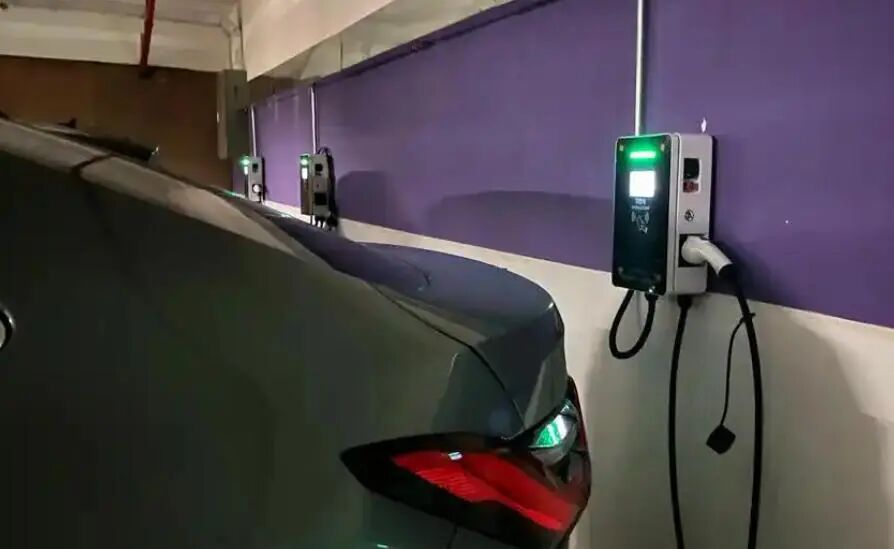
However, this group of users who have changed their awareness and consumption concepts is no longer the main incremental force in the market. What is restricting the next round of sales growth are two types of people who have never been convinced. One type is young urban users who do not have fixed parking spaces and rely entirely on public energy replenishment. The other type is operating car owners and long-distance high-frequency users who often travel across cities and have zero tolerance for energy replenishment efficiency.
The pain points of these two groups cannot be covered by home charging, nor can they be met by ordinary public slow charging. For them, the value of the battery swapping model is to fill the experience gap that even ordinary supercharging is difficult to cover in this gap.
From the perspective of user perception, the 3-minute energy replenishment process of battery swapping is almost no different from that of a fuel car entering a gas station. A set of data from NIO is worth referencing: during this year's National Day holiday, the battery swapping service was used 1.192 million times, with a single-day peak of 183,700 orders, a car completed battery swapping every 0.47 seconds on average, and 203,600 users finished their long-distance trips entirely through battery swapping.
It is not difficult to find that after the whole process, consumers do not need to queue up in front of the charging piles, nor do they need to wander around the service area for dozens of minutes to kill time. This energy replenishment experience that is completely no different from that of fuel cars can arouse the car purchase willingness of many potential users.
More importantly, the battery swapping model has another advantage, which is mentioned earlier: in the past, the biggest concern of many consumers when buying electric cars was the risk of battery attenuation. A power battery that often costs tens of thousands of yuan will have its range reduced after being used for five or six years, and the residual value of the whole car will plummet directly.
After the separation of vehicle and battery, users can rent the battery directly, which not only lowers the car purchase threshold by tens of thousands of yuan, but also completely transfers the risks of battery attenuation and subsequent upgrading away from consumers. This improvement of consumer security is more effective for potential consumers who are waiting and seeing than simply reducing prices.
Of course, the premise for battery swapping to continuously play the role of stimulating consumption is that the network density can keep up. Whether it is CATL or NIO's plan for the implementation of battery swapping stations, if they can be implemented on schedule, the driving force of battery swapping on consumption will not be just a selling point, but an improvement of infrastructure.
Therefore, at the current market node, the consumption growth of new energy vehicles has long passed the stage of relying on policy subsidies and low prices to boost sales. The next growth space depends entirely on penetrating the scenarios that were not covered in the past one by one. Battery swapping will not replace home charging, nor will it replace supercharging, but it provides the market with a brand new choice.
This article is from the WeChat official account "Auto Community" (ID: iAUTO2010), written by Yang Jing, and authorized for release by 36Kr.