Ginlong Technologies invested 544 million yuan in the transition from photovoltaic power curtailment to energy storage investment, tearing up the old account books of photovoltaic power plants. Is energy storage the answer to everything?
New energy capital flows between the photovoltaic and energy storage tracks following the revenue model.
According to Energy Insight, on the evening of November 20, Ginlong Technologies announced that its board of directors has terminated the "Distributed Photovoltaic Power Station Project", which was originally planned to invest 354 million yuan, and not a single penny had been invested as of November 13; the company reallocated 189 million yuan from two inverter projects, pooling 544 million yuan to shift the investment to an annual 8GWh energy storage system production line.
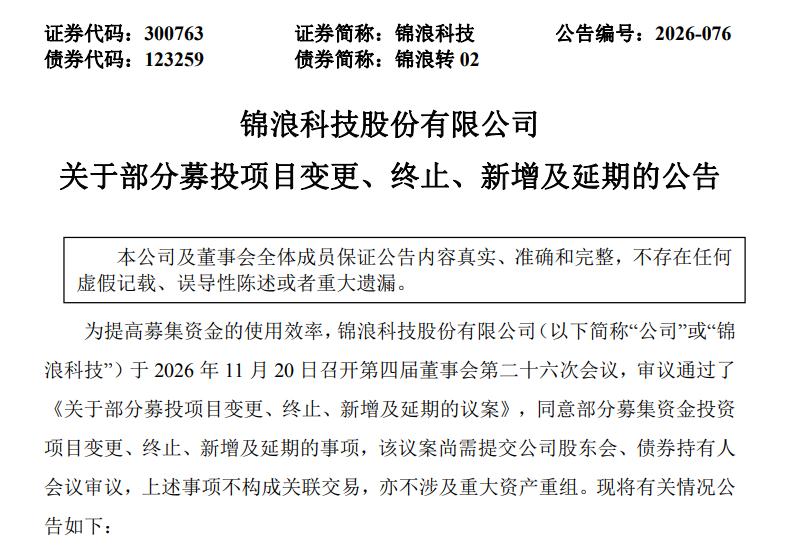
Prior to this, Zoomlion Energy also carried out similar capital reallocation, while other enterprises transferred the remaining funds from energy storage back to the photovoltaic sector.
The back-and-forth flow of capital between the two tracks is far more complicated than just the rotation of industry trends: the electricity pricing mechanism, grid connection rules and revenue models have all been rewritten at the same time. The rooftop remains the same, but the checkout counter has adopted a completely new settlement method.
The rooftop project accounts no longer add up at first
When the Document No.136 was implemented on February 9, 2025, what was truly rewritten was not the subsidy figure, but the most valuable part of the revenue of new energy power stations — certainty.
The National Development and Reform Commission and the National Energy Administration divided new energy projects into two categories: existing projects and new projects, based on the cutoff date of June 1 of that year. The former will follow the current policy for benchmark electricity prices, which will not be higher than the local coal-fired power benchmark price, while the latter will enter provincial bidding, and the electricity included in the mechanism will be adjusted up or down according to the difference between the market price and the benchmark mechanism price.
The mechanism electricity price is not a fixed purchase price, but a contract for difference. In the past, the "electricity sales revenue" line in the calculation sheet was a fixed figure, but now it is split into two parts: electricity under the mechanism and market revenue outside the mechanism. The monthly rent-like certainty in the past has been broken down into hourly prices.
The inflection point of the installed capacity curve appeared in the data earlier than in the announcements, and the statistics from the National Energy Administration clearly depict this trend.
In 2024, China's new installed photovoltaic capacity reached 278 million kilowatts, which rose to 317 million kilowatts in 2025, while the figure for the first three quarters of 2026 was 110.33 million kilowatts, down 53.9% year on year. The new photovoltaic mechanism electricity price in Shanghai is 0.4155 yuan per kWh, 0.225 yuan per kWh in Shandong, and the 2026 figure in Xinjiang falls at the lower limit of 0.15 yuan per kWh, meaning different provinces no longer follow the same accounting standard.
BloombergNEF estimates that the actual market electricity price for photovoltaic power is on average 0.127 yuan per kWh lower than the mechanism electricity price. In Shandong, the average spot trading price of photovoltaic power in February 2025 once dropped to only 0.057 yuan per kWh, and there were about 1330 hours of negative electricity prices in the spot market for the whole year, nearly half of which were concentrated in spring. The stronger the sun shines, the lower the price goes.
The decline in yield is not an abstract curve in research reports, it soon fell on specific people and projects. According to media reports, the internal rate of return of distributed industrial and commercial projects was originally about 13% to 14%, which dropped to 8% to 9% after the issuance of Document No.136. A person in charge of a distributed photovoltaic project in Shandong said that he has suspended investing in new projects since May 31.
The aforementioned project of Ginlong Technologies was originally planned to be connected to the grid by the end of 2026, which already belongs to the category of new projects. The zero investment does not mean capital shortage, but a halt after the accounts no longer add up. The suspended fundraising project is equivalent to the financial model casting a vote of no confidence first.
With no mandatory supporting orders, the energy storage sector has to seek business on its own
The fundraising change plan of Zoomlion Energy in February 2025 is most easily interpreted by the outside world as a simple track switching story.
It reduced the fundraising for the distributed photovoltaic power station project from 700 million yuan to 450 million yuan, with 250 million yuan returned to the capital pool. In the same plan, the renamed and expanded energy storage project is proposed to invest 690 million yuan, which is even lower than the original 800 million yuan.
The so-called "abandoning photovoltaic for energy storage" in most cases does not mean taking one yuan from the photovoltaic sector and putting it directly into the energy storage sector, but reordering the capital in the overall plate. The reason why capital shifts to the battery sector is not that the battery sector is better at telling stories, but that it has begun to have independent and accountable cash flow.
Document No.136 clearly stipulates that allocating energy storage shall not be taken as a precondition for the approval and grid connection of new energy projects, so energy storage power stations that used to make a living by leasing capacity once had no buyers.
The draft for comments released by Ningxia in September 2025 proposed that the capacity electricity price for new grid-side energy storage will be implemented at 165 yuan per kW per year starting from 2026, which has covered part of the fixed costs.
The capacity electricity price is a standby fee: as long as the battery is kept in a callable state, even if it only discharges for two hours a day, it can first obtain a fixed income per kilowatt. Independent energy storage has transformed from an assigned supporting indicator to an asset that can quote on its own, and this step is more critical than the installed capacity figure.
The cost accounting on the manufacturing side has also turned a new page in the months when energy storage was pushed to the forefront, and price signals are more honest than slogans. The 314Ah LFP energy storage cell once dropped to around 0.26 yuan/Wh at the end of 2025, and the average price returned to 0.365 yuan/Wh in August 2026; in the first half of 2026, the average winning bid price for 2-hour energy storage systems was 599.3 yuan/kWh, up 8.3% year on year, and the figure for 4-hour systems was 541.3 yuan/kWh, up 21.1%.
Low cost used to be almost the only competitiveness, but now the ability to deliver on schedule and be dispatched by the grid has begun to determine who can get orders.
On April 28 this year, China's first inter-institutional REITs based on energy storage power stations as underlying assets was launched. Zhang Shu, partner of Yellow River Capital, called 2026 the first year of energy storage asset capitalization. Capital relocation is not just filling out a form, as the special account is backed by contracts, construction schedules and piles of signatures.
Capital does not endorse any track, it flows to wherever the accounts can add up
Capital will not stay in any track for a long time. Once the rate of return changes, the names of projects in the announcements will change accordingly. In April this year, Zhongtian Technology reallocated 200 million yuan from the industrial and commercial energy storage power station to energy storage intelligent manufacturing, on the grounds that the peak-valley price difference of time-of-use electricity price in Jiangsu narrowed, making the original project calculation no longer valid.
When the rate of return changes, capital should flow accordingly. Interpreting such actions as "photovoltaic loses and energy storage wins" is equivalent to treating an accounting problem as a team-choosing problem.
Overseas accounts will not automatically add up just because the order figures look good. Since 2026, 66 enterprises have disclosed 458GWh of overseas energy storage orders, but only 8.17GWh have actually entered delivery and operation; there are certification, financing closure and local grid access between orders and revenue, and any stuck link will make the order nothing more than a figure on paper.
In 2025, the average global price of turnkey energy storage systems was 117 USD/kWh, while the average price of 4-hour systems in China was 62 USD/kWh. The price difference is not only profit space, but also access threshold.
The comprehensive tariff on Chinese energy storage batteries in the US is about 48.4%, the FEOC rule takes 55% of the technical cost proportion as the threshold, which will rise to 75% by 2030, and project certification in Europe generally takes 3 to 6 months. Going overseas is not just loading containers onto ships, but finishing reading all the rules before making a quotation.
Energy storage power stations themselves also need to pass an assessment, which is increasingly unlike an engineering acceptance, but more like a pre-job evaluation. In the fourth quarter, a number of projects are queuing up for grid-related tests to verify whether the equipment can understand dispatch instructions and accurately report the remaining power; customers' inquiries have also shifted from capacity, price and delivery date to frequency modulation response speed and one-time pass rate of grid-related tests. The number of installed batteries is an old question, but whether the batteries can be dispatched as required is the new core issue.
Whether the 544 million yuan of Ginlong Technologies will eventually be turned into an 8GWh production line, or change direction again, will not be known until the voting at the shareholders' meeting and the "Ginlong Convertible Bond 02" bondholders' meeting on December 7. Before that, the terminated zero-investment project, the 189 million yuan reallocated amount, and the production reaching date of December 31, 2028 in the announcement — all explain the current choices far better than any track narrative.