700 million yuan spent on hair transplants, 50 billion yuan on fishing tackle: Men's purchasing power has finally "woken up"
The S16 Grand Finals of the famous game League of Legends concluded not long ago, where the Chinese team BLG defeated the South Korean team to win the championship in the end.
Interestingly, amid the championship craze, the strong purchasing power of male players (over 85% of the player base are male) was unexpectedly demonstrated.
Not only was the 699-yuan Li-Ning × BLG co-branded trench coat sold out on the official website before the final kicked off, but various commemorative apparel priced at around 249 yuan also ran out of most sizes during the pre-sale stage.
In addition, watching the game at home could no longer satisfy the excitement of this group of men, and cinemas also benefited a lot. On the day of the final, more than 300 cinemas set up viewing sessions starting at 3:00 a.m., with ticket prices starting at 69 yuan, and core IMAX sessions were sold out within seconds after tickets were released.
Various consumer tracks around esports peripherals, esports chairs, internet cafes and other related sectors are all booming.
Some people may marvel at the charm of the game, which makes Chinese men, who have always been "stingy" with themselves, bravely take out their wallets to please themselves in real life.
This statement sounds reasonable at first glance. After all, everyone knows how low the consumption power of Chinese men used to be......
However, it is already 2026, and holding this view now may seem a bit "outdated".
Because when it comes to "self-pleasing" consumption, Chinese men have already shown a trend of "catching on" before BLG won the championship.
Self-taught Chinese Men: The New "Growth Pole" of Consumption
The fact that men of all age groups are collectively working hard to "please" themselves is not only reflected in the gaming sector, but also in all aspects of daily life.
Take the most accessible "image management" for example, the consumption of men's cosmetics surged sharply in 2026.
Let's first look at the young generation of men.
According to the 618 data released by Taobao official, the total transaction volume of men's tinted moisturizer, the core product for men under 25, increased by 269% year-on-year, and the transaction volume of men's lip essence increased by 234%. In the same period, the sales growth rate of men's tinted moisturizer, oil control essence, antiperspirant, sunscreen and other products all exceeded 150% year-on-year.
Then look at the middle-aged and older generation of men.
It is well known that women are very concerned about whether they are aging, but in fact, men will also ask the "magic mirror" if there are more wrinkles on their faces.
Data from Zhixing Strategic Consulting shows that in the first half of this year, the growth rate of men's firming products reached as high as 96%, and anti-wrinkle products grew by 45%, with the average unit price of these products exceeding 200 yuan.
This shows that middle-aged men who have the elderly to support and the young to raise and are usually the most frugal are really paying a premium to maintain their appearance. At the same time, the medical aesthetics sector is also becoming a new incremental market. Data shows that during the "618" shopping festival in 2026, the proportion of men's consumption in skincare, grooming and hair transplant projects has exceeded 18%.
Especially for hair transplant related products, taking the data of leading industry player Yonghe Medical in the first half of 2026 as an example, its hair transplant business revenue in the same period was 743 million yuan, a year-on-year increase of 12.3%. The number of patients who received hair transplant surgery reached 40,793, a significant year-on-year increase of 21.75%.
Speaking of hair, I believe everyone has heard that not long ago, many middle-aged "rebellious" old boys went to dye their hair blonde in groups.
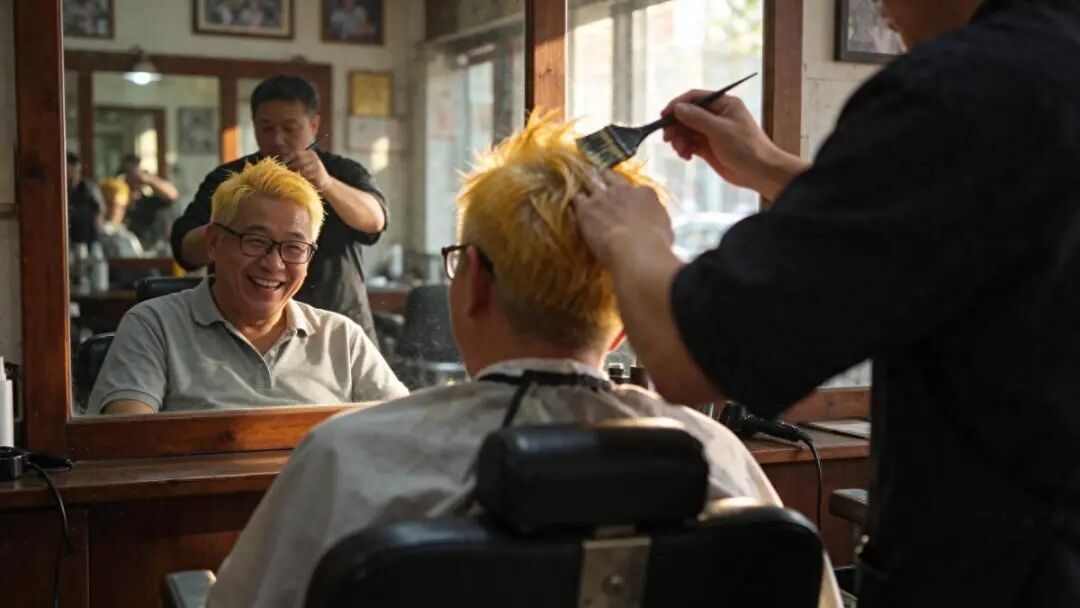
If you ask them what they are pursuing, they just want to make themselves happy and experience the "sense of control" over themselves that they never had when they were young.
After completing the most basic "self-pleasing", the next step is to gain "control" over their own time.
This is the domain of fishing enthusiasts.
According to the statistics of China Fishing Association, there are about 140 million active anglers across the country, and the market size of fishing tackle tracks including fishing rods, baits and other equipment exceeds 50 billion yuan.
Industry institutions predict that the overall fishing tackle track will maintain an expansion rate of nearly 10% in 2026, and the growth focus is completely tilted to the categories preferred by young people: light-weight fishing has a long-term compound growth rate of 17.3%, lure equipment continues to maintain double-digit growth, and the growth rate of intelligent fishing equipment exceeds 30%.
Moreover, the fishing population is getting significantly younger: association data shows that young and middle-aged people aged 25-44 have become the main force, accounting for 46%; further industry surveys show that anglers under 40 account for nearly 70%, and the scale of young anglers aged 20-29 has doubled compared with five years ago.
In addition, various leisure scenarios such as cycling, hiking, and camping have also achieved good growth.
Essentially, all these are ways for men to continuously extend their time outside of work and family, so as to get rid of their identity as the primary responsible person in life and make themselves happy.
The enrichment of consumption scenarios has also extended more consumer categories.
For example, in the men's clothing track, industry institutional data shows that the men's clothing track is beginning to diverge. The complete sets of formal business wear that once defined men continue to shrink, with the growth rate hovering in the negative range.
While men's functional wear, urban light functional outdoor wear and other men's wear with entertainment attributes have achieved independent growth. For example, the golf apparel sector is expected to grow by 12%-18% for the whole year, and light functional outdoor men's wear maintains double-digit growth of 10%-16%.
This batch of men's clothing no longer has the sense of work uniform, but is designed for personal hobbies such as cycling, hiking, golf and fishing. People buy it for decency and comfort in their hobby scenarios, and the decision-making power is firmly in the hands of men themselves.
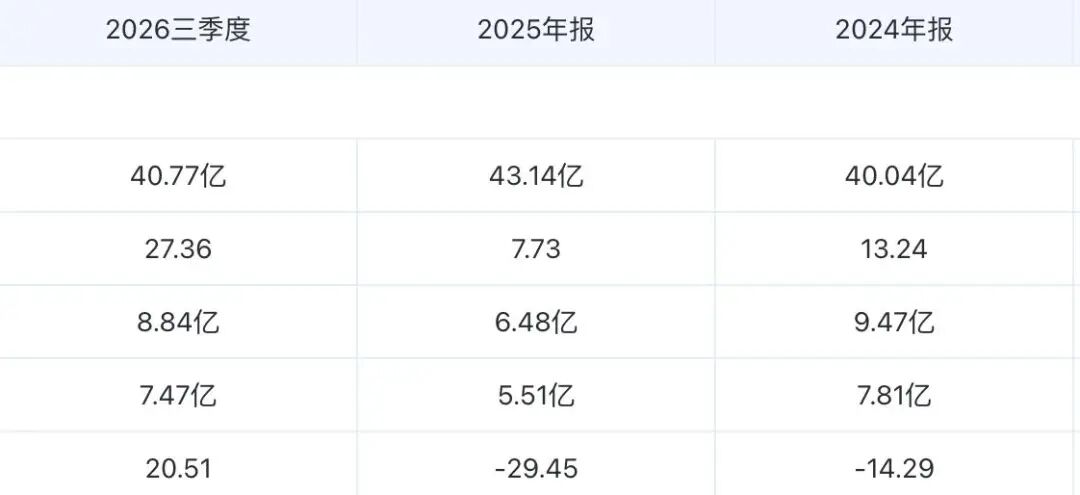
Specifically for enterprises, Tianyancha App shows that Biemlfdlkk's revenue in the first three quarters was 4.077 billion yuan, with a growth rate of 27.36%, and its net profit was 747 million yuan, a year-on-year surge of 20.51%.
In addition, RC remote control cars, Tamiya models, Gundam assembly kits... these so-called "adult toys" often cost hundreds or thousands of yuan, which is an order of magnitude more expensive than children's toys, but most of the buyers are men in their thirties.
According to the "2025 Q1-Q3 Gundam Model Market Insight Report" from Champlain Consulting, men account for as high as 78% of Gundam model consumers, and the total proportion of people aged 18-35 accounts for 62%; in terms of motivation, 65% of purchases are completely independent personal decisions.
All in all, money that Chinese men were embarrassed to spend, reluctant to spend, and had no time to spend on themselves in the past, is now being spent on themselves without reservation.
Chinese men are becoming the newly emerging growth pole in China's overall consumer market.
Then the question arises, just like the mischievous nursery rhymes that were popular all over the country when we were young, without any publicity, why did Chinese men change their old image of hardworking ox and show a trend of consumption awakening?
In addition, if this consumption trend can continue, how should brands seize the opportunity?
Brand Transformation: How to Cater to the New "Growth Pole"?
Many people may think that men's consumption awakening is because the previous survival, education and public opinion environment was too oppressive for them, which led to a sudden rebound now.
To put it bluntly, this means seeking psychological compensation after things go to the extreme, just as the psychologist Alfred Adler said, "The fortunate one is healed by childhood all his life, while the unfortunate one spends his whole life healing his childhood."
Moreover, the current main consumer force grew up in the Z era, with relatively rich material conditions when they were young, and their self-awareness is much stronger than that of the post-70s and post-80s generations. In addition, the supply of goods is sufficient, and there are various categories targeting men......
From a psychological point of view, all this makes sense, but this is not the world of *The Three-Body Problem*. Physics still exists, and the leap of thinking is unlikely to break the shackles of people's wallets.
Therefore, part of the reason may be that women, who can hold up half the sky, have completed their own consumption awakening, thus "liberating" the consumption power of many men.
How to understand this?
On the one hand, women have begun to take more family responsibilities.
In traditional cognition, when it comes to dedication to the family, we have always been talking about how much men have paid, and that they are the pillar of the family and so on.
But it is undeniable that the income of Chinese women born in the 80s, 90s and 00s has been increasing year by year, and they spend a lot of energy dealing with various trivial matters, so their dedication to the family is no less than that of men.
Research from Huatai Securities shows that from 2019 to 2024, the annualized growth rate of Chinese women's income reached 4%-7%, higher than the 1.7%-6% growth rate of men in the same period, and the income gap between men and women has narrowed to the range of 15%-25%.
By 2026, the income gap has been maintained in the range of 12%-13%.
This has largely liberated part of men's time and money. Otherwise, if middle-aged fishing enthusiasts stay out all night, who will take care of the children? If all the money is spent on themselves, how will the family expenditure be covered?

On the other hand, women's economic awakening has driven the awakening of psychological needs, which has changed people's perception of marriage and love, making marriage no longer a necessity in life.
Conversely, the threshold for men to enter a relationship has also increased to a certain extent. Facing these women, men need to have empathy and financial strength.
In this case, many men's minds have begun to turn to pleasing themselves.
To put it bluntly, the "simp" economy is gradually failing on both the supply and demand sides.
The data also verifies this phenomenon. According to public reports, this year's sales of Qixi gift boxes fell by nearly 30% year-on-year, flower sales fell by more than 40%, and the box office of Qixi movies was only 364 million yuan, down more than 60% year-on-year, hitting a new low in nearly ten years; even jewelry counters have begun to talk to customers about "value preservation" instead of "romance".
As early as 2024's 520, the proportion of men who said they would not give gifts exceeded 30% for the first time. Men collectively withdrew from the role of paying players in festivals, and turned around to put this money into their own shopping carts.
All in all, the awakening of women in economy and ideology has changed the family income structure and the consumption and marriage concepts of the whole young generation, which has created the soil for men's consumption awakening.
From this perspective, men's consumption is very likely to become a major trend for a long period of time. Then how should all kinds of players cater to these potential stocks who are willing to pay real money?
Let's see how excellent brands do it:
First of all, create emotional resonance with men.
How to understand this? Let's take the marketing example of Zhenjiu Liudu in the Baijiu industry.
Traditional Baijiu marketing has long relied on the "godfather-style" authoritative narrative: success, vicissitudes, passion, and pointing out the country. But Wu Xiangdong, the chairman of Zhenjiu Liudu, took a completely different path with his personal IP — he transformed himself from a revered "Baijiu godfather" into a real 57-year-old individual who is afraid of his wife, loves bragging, urges his subordinates to lose weight, and claims to be "delayed by delicious food".
At the same time, there are no carefully written scripts and no chicken soup stories. His first hit video was even just a half-joking sentence at the wine table, "Lose 20 jin, and you will have a chance to be my secretary", and remarks like "Wine is men's Labubu".
The reason why this kind of "disenchantment" can resonate with men is that it embodies the logic of "anti-suffering preaching", and is more down-to-earth to resonate with men.
Secondly, translate men's hobbies into "legitimate" business.
Men used to feel a little "embarrassed" when they wanted to buy something they liked — playing with models was called childish, and taking care of their appearance was called sissy.
Smart brands are doing the work of tearing off this sense of shame.
For example, Bandai launched a brand new sub-brand exclusively for Chinese players, moving Gundam models from the study room to trendy toy stores; grooming brands packaged "makeup" as "grooming", and men's cosmetics grew by 35.1% in one year; barbershops even added blonde hair dyeing to their price lists.
When hobbies no longer need to be hidden, consumption will naturally surface.
Last but not least: don't play tricks on men.
Men's consumption is trust-driven. They usually check the parameters first, compare the prices, and finally glance at the advertisements. For example, when buying a fishing rod, they first ask about the carbon cloth tonnage, and 90% of Gundam players only recognize Bandai.
Therefore, the optimal solution to cater to this group of people is never marketing bombing, but making the product impeccable. Once trust is established, there is no need to question men's repurchase rate and loyalty.
In short, men's consumption is a standard potential stock, which has just opened up its mentality, and has a large base. There are 286 million urban men aged 25-40 alone.
Moreover, women and children, who used to be the main force of consumption, seem to be unable to spend as much as before. Star enterprises whose main consumers are women, such as Laopu Gold, Pop Mart, and milk tea brands, have seen a significant decline in their performance growth this year.
So in the future, will men's consumption become the key target that enterprises need to focus on?
So you