Facing mounting pressure on its core business growth, Dongpeng has ventured into the liquor sales sector: can its 16-yuan "Haolihai" product unlock new growth momentum?
Dongpeng Beverage, the energy drink manufacturer, has surprisingly stepped into the alcohol business. What exactly is happening here?
A 150ml small liquor priced at 16 yuan is now placed on the shelves of catering terminals side by side with red-label Jinjiu. Named "Haolihai", this 33-degree blended liquor is launched by an energy drink enterprise — Dongpeng Beverage.
On the evening of November 10, 2026, Dongpeng confirmed the launch of this new product on the SSE e-Interaction platform: the 150ml version has a retail price of 16 yuan, supported by a promotional activity of "4-yuan exclusive enjoyment". This product is directly positioned against red-label Jinjiu, and currently focuses on the catering channel.
Why would a soft drink company cross the border to sell alcohol? The answer is simple: to find new growth drivers. In the third quarter of this year, the attributable net profit of Dongpeng Beverage fell by 7.80% year-on-year, marking its first single-quarter negative growth since listing; the non-recurring profit and loss net profit reached 1.253 billion yuan, down 1.26% year-on-year.
What surprises the market even more is that the two core single products stalled at the same time in the third quarter: the revenue of energy drinks represented by Dongpeng Special Drink was about 3.843 billion yuan in a single quarter, down by about 8.56% year-on-year, which was the first single-quarter negative growth since listing; the revenue of the second growth curve "Hydration Up" electrolyte drink was about 1.361 billion yuan, with a growth rate of only 0.49%. In the third quarter of 2025, the revenue of Hydration Up was 1.354 billion yuan, with a year-on-year growth rate of 83.81%. The capital market reacted even earlier. In June 2025, the total market value of Dongpeng once exceeded 170 billion yuan; as of the close of trading on November 17, 2026, the total market value stood at 85.901 billion yuan, eroding more than 80 billion yuan in about a year and a half. The "high growth" narrative that supported its high valuation is being replaced by "single-digit growth".
Against the backdrop of pressure on its main business growth, can Dongpeng Beverage open up new growth space with the layout of alcohol products?
Second cross-border attempt in alcohol products, "Haolihai" targets the most popular liquor track
In November 2026, "Haolihai" 33-degree blended liquor was launched quietly. The 150ml version has a retail price of 16 yuan, which is authorized by Dongpeng Beverage and commissioned to Hainan Yedao Wine Industry Development Co., Ltd. for production. This product uses both Baijiu and vodka as dual bases, adds raw materials that are both food and medicine such as sealwort and angelica, marks "17 selected raw materials" on the package, and is supported by the "4-yuan exclusive enjoyment" promotion activity.
From the perspective of product design, the intention of "Haolihai" blended liquor to benchmark against the star industry product "red-label Jinjiu" is very clear: not only the appearance is similar, the alcohol content is close, the price is the same, but also the capacity is 25ml more.
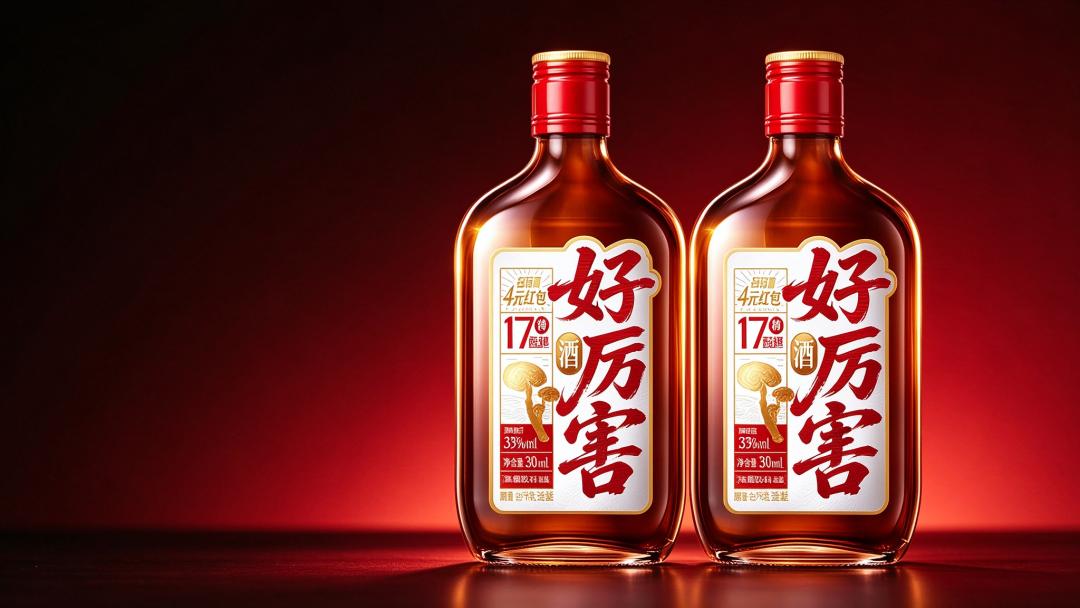
The difference is that Jinjiu is a health food with the "Blue Hat" logo, while "Haolihai" is only a blended liquor added with raw materials that are both food and medicine.
Strictly speaking, "Haolihai" blended liquor and Jinjiu do not belong to the same category. The liqueur category that Jinjiu belongs to only allows Baijiu and rice wine as bases. "Haolihai" blended liquor uses both Baijiu and vodka as dual bases, so it does not belong to liqueur, but is classified as blended liquor.
Liqueur originally belonged to the category of blended liquor, but it has been independent since the new national standard in 2021, becoming the fourth major category of alcoholic beverages alongside fermented wine, distilled wine and blended liquor. However, in the terminal consumption scenario, consumers have a vague distinction between liqueur and blended liquor, and the two are often regarded as the same category, which is the basis for "Haolihai" blended liquor to benchmark against Jinjiu.
Dongpeng Beverage's choice to benchmark against Jinjiu has realistic industrial basis. In recent years, the alcohol industry has generally been under pressure, but the liqueur track has broken through against the trend with amazing growth. In 2025, the market size exceeded 80 billion yuan, sales volume increased by 40% year-on-year, and profits increased by nearly 200% compared with five years ago, officially surpassing wine to become the third largest liquor category in China.
More importantly, the liqueur track presents a pattern of "one leading player with multiple small participants", which leaves more development opportunities for latecomers. Jinjiu is the industry leader, with revenue of 13.7 billion yuan in 2025, occupying about 17% of the market share based on the 80-billion-yuan industry scale. The 125ml red-label Jinjiu is the iconic super single product in the liqueur industry.
In addition, the liqueur industry also has participants including famous Baijiu enterprises represented by Moutai, Wuliangye and Fenjiu, pharmaceutical enterprises represented by Tongrentang and Dong-E-E-Jiao, and emerging alcohol enterprises represented by Meijian, but the overall sales scale of products of these enterprises is relatively small.
The launch of "Haolihai" blended liquor this time is not Dongpeng Beverage's first cross-border attempt to enter the alcohol industry.
As early as the beginning of 2024, Dongpeng Beverage launched the "VIVI Cocktail" series, with two versions of 5-degree 330ml and 8-degree 500ml, three flavors of white peach, citrus and green grape, positioned as "selling cocktails as drinks".
In actual sales, the 8-degree 500ml canned product is the main promotion. This product directly benchmarks against the "Qiangshuang" series of RIO brand under Bairun Co., Ltd. in terms of alcohol content, product specification, product taste and formula base. The product of the same specification is priced relatively low, and is supported by promotional activities of "2-yuan exclusive enjoyment" and "scan code to win red envelopes".
But the result was not ideal, and this product gradually faded out of Dongpeng Beverage's product system later.
The launch of "Haolihai" blended liquor this time is Dongpeng Beverage's second cross-border attempt in alcohol products, and this exploration is more prominent. Instead of producing independently, it adopts the light asset OEM mode, which has lower trial and error cost.
On the interaction platform, Dongpeng Beverage stated that "Haolihai" focuses on the catering channel. At this stage, the company adopts a strategy of small-step testing and prudent investment for this category, and the resource focus is still on the main beverage business.
However, cross-border entry from the beverage industry to the alcohol industry with higher gross profit margin, to a certain extent, reflects Dongpeng Beverage's eagerness to seek breakthroughs under the pressure of main business growth.
First quarterly negative growth in energy drink main business, the second growth curve also slows down
As a leading energy drink enterprise, Dongpeng Beverage has maintained high performance growth since its listing in May 2021, and has become a popular consumer "white horse stock" in the market. But in the third quarter of this year, Dongpeng Beverage rarely saw a decline in profits.
The financial report shows that in the first three quarters of this year, the revenue of Dongpeng Beverage was 18.596 billion yuan, a year-on-year increase of 10.40%. The attributable net profit was 4.145 billion yuan, a year-on-year increase of 10.21%. The non-recurring profit and loss net profit was 3.851 billion yuan, a year-on-year increase of 8.79%. Compared with the performance of all first three quarters since listing, except for 2022 affected by the epidemic, the year-on-year growth rates of these three financial indicators have never been lower than 30%.
From the perspective of a single quarter, the pressure on growth is more obvious. In the third quarter of this year, Dongpeng Beverage's revenue increased slightly by 0.75% year-on-year to 6.153 billion yuan, while the attributable net profit fell by 7.80% year-on-year to 1.278 billion yuan, and the non-recurring profit and loss net profit was 1.253 billion yuan, down 1.26% year-on-year. This is also the first time that Dongpeng Beverage has seen a net profit decline since its listing.
The decline in Dongpeng Beverage's performance is, to a certain extent, affected by macro factors and weather factors. Soochow Securities stated in its research report that overall consumption at the macro level was generally weak in the third quarter, and the growth of total retail sales of consumer goods from July to August was at a low level, only slightly improved in September due to the dislocation of two festivals. The revenue growth of multiple categories including beverages, snacks, condiments and Baijiu was under pressure in the third quarter.
Secondly, there was more rainfall in some regions from July to August this year, which affected the beverage consumption scenarios. According to data from Mai Shangying, the year-on-year decline in the sales of beverage categories in the third quarter of this year exceeded 12%.
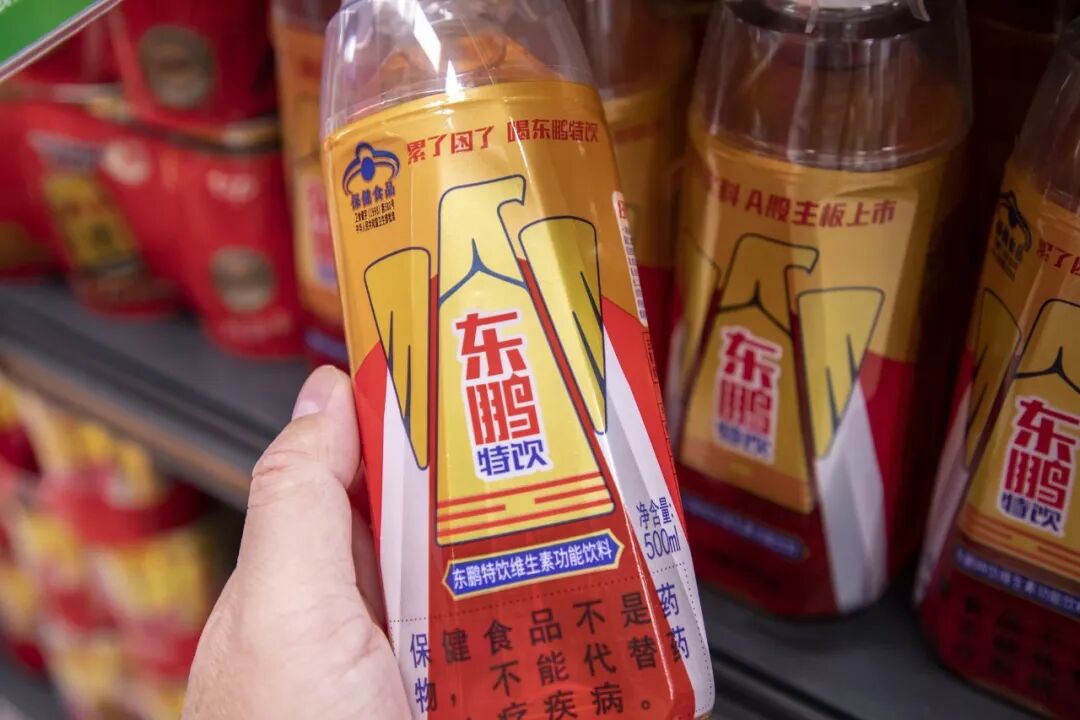
Specifically for Dongpeng Beverage's products, the revenue of energy drinks represented by Dongpeng Special Drink was 3.843 billion yuan, down 8.56% year-on-year, which was the first single-quarter negative growth since listing. This decline did not come without warning: the growth rate of energy drinks in the second quarter has dropped sharply from 13.11% in the first quarter to 1.45%.
The slowdown in growth rate is affected by weather disturbance on the one hand, and is also the result of Dongpeng Beverage's active destocking on the other hand. The research report of Wanlian Securities pointed out that one of the reasons for the slowdown in Dongpeng Beverage's revenue growth is that the company actively controls goods, taking actual terminal sales rather than channel stocking as the assessment benchmark.
At the same time, the second growth curve "Hydration Up" electrolyte drink cultivated by Dongpeng in recent years is also facing fierce market competition. Since the beginning of this year, leading enterprises in the food and beverage industry such as PepsiCo, Coca-Cola, Wanglaoji, Nongfu Spring, Panpan, Liziyuan and Mengniu have successively launched new electrolyte drink products, leading to fierce market competition.
At the same time, manufacturers such as Nongfu Spring, Genki Forest and C'estbon have increased channel investment through forms such as "1-yuan exclusive enjoyment", "1-yuan free drinking" and "win a prize when opening the cap", which has affected the growth rate of "Hydration Up". In addition, electrolyte drink consumption is more sensitive to weather factors. In the third quarter of 2026, the revenue of "Hydration Up" was only 1.361 billion yuan, with a growth rate of only 0.49%.
With the growth of the two core products under pressure, Dongpeng's tea beverage has become one of the few bright spots in the three quarterly reports: the single-quarter revenue reached 580 million yuan, a year-on-year increase of 145.34%. Guozhicha continues to penetrate in the low-sugar tea track, and Haobucha has entered the sugar-free tea market.
However, the volume of tea beverage is not enough to hedge the decline of the basic disk: the cumulative revenue of tea beverage in the first three quarters was 1.638 billion yuan, accounting for about 8.8% of the total revenue, less than 10%, which is difficult to offset the slowdown impact of main products.
In this case, Dongpeng Beverage needs to explore more growth points. In recent years, it has continuously expanded products such as ready-to-drink coffee and coconut milk, and blended liquor is exactly one of the new tracks it targets.
Combination punch of channel and marketing, can Dongpeng's alcohol business open up new growth space?
According to media reports, in the promotion of "Haolihai" blended liquor, Dongpeng Beverage adopts its good "channel + promotion" combination punch strategy.
The channel system is the lifeblood of beverage manufacturers. As of the end of June 2026, Dongpeng Beverage has more than 3,700 distributors and more than 4.6 million effective active terminal outlets. Among them, the number of terminal outlets in the accompanying meal and catering channels has increased rapidly, and the penetration of township terminals continues to deepen.
The strong channel system and the increasing number of catering channel terminal outlets have greatly facilitated the promotion of "Haolihai" blended liquor. According to media reports, only half a month after its launch, "Haolihai" blended liquor has been placed on shelves at terminals in many provinces including Henan, Hainan, Guangdong, Shandong, Jiangxi and Anhui.
At the same time, "Haolihai" blended liquor also adopts the original "X-yuan exclusive enjoyment" promotion method created by Dongpeng Beverage. However, since the selling price of "Haolihai" blended liquor is 16 yuan, which is significantly higher than Dongpeng Beverage's existing beverage products, it does not adopt the previous "1-yuan exclusive enjoyment" or "free exclusive enjoyment", but "4-yuan exclusive enjoyment", and the overall discount is still large.
The power of this "channel + promotion" combination punch has been clearly reflected in Dongpeng Beverage's new products such as "Hydration Up" and Guozhicha. These new products reuse the Dongpeng Special Drink channel system and quickly spread across the country. At the consumer end, consumers can redeem products at a very low threshold through cap winning, and the winning probability of "1-yuan exclusive enjoyment" can reach more than 30% in some regions. At the channel end, through box code red envelopes, verification rebates and display subsidies, terminal stores can get direct incentives in every prize redemption and restocking, forming a closed loop of "consumers are willing to try, shop owners are willing to promote", thus achieving explosive growth of new products in a short period of time.
However, this model also has obvious boundaries. Hydration Up achieved a full-year growth of 118.99% in 2025, and the growth rate dropped to only 0.49% in the third quarter of 2026. While the weather factor plays a part, it should not be ignored that the incremental contribution of channel reuse is mainly concentrated in the first round of intensive stocking. Whether first-time buyers can be retained after the promotion recedes depends on whether the product itself can drive repurchase, which is a problem that channels and promotions cannot solve.
More importantly, this set of combination punches is also being adopted by other beverage manufacturers. One of the reasons for the decline of "Hydration Up" in the third quarter of 2026 is that other beverage manufacturers have successively adopted the "exclusive enjoyment" method to promote new electrolyte drink products, leading to intensified market competition.
Back to "Haolihai" blended liquor, the effectiveness of this combination punch model remains to be verified. The consumption decision of soft drinks is relatively lightweight, and taste, price and shelf visibility are enough to drive high-frequency repurchase. But alcohol consumers have more prominent perception of taste, after-drinking experience and flavor stability. The establishment of product stickiness relies more on the competitiveness of the liquor itself rather than channel thrust.
"Haolihai" blended liquor adopts the light asset OEM mode, which reduces the trial and error cost in the early stage, but also weakens Dongpeng Beverage's direct control over product definition, liquor body design and quality consistency, which may affect the product competitiveness of "Haolihai" blended liquor.
Jinjiu has spent decades, with the endorsement of the "Blue Hat" logo and stable quality to complete the occupation of consumer minds in the 16-yuan price range. Whether "Haolihai" blended liquor can break through this barrier through the "4-yuan exclusive enjoyment" promotion, get consumers to try and repurchase, and finally form product stickiness remains to be verified