250,000 pages of proof: Has the Riemann Hypothesis been "solved" by AI?
In November 2026, Levent Alpöge, a mathematician at Anthropic, claimed to have found a proof of the Riemann Hypothesis in collaboration with Claude. This claim has drawn widespread attention from the mathematics community, and relevant verification is still ongoing 丨 vectorfusionart / Shutterstock
On November 20, 2026, Levent Alpöge, a mathematician working at artificial intelligence company Anthropic, posted a short note on his personal website.
He stated that with the help of the AI model Claude, he had found a proof of the Riemann Hypothesis.
When the news broke, the mathematics community was thrown into an uproar. This proof does not come with a traditional academic paper in the conventional sense, nor has it been submitted to any academic journal. What it directly attaches is a set of AI-generated machine code. The scale of the code is extremely staggering: if it is printed into human-readable mathematical text, it will take up more than 250,000 pages in total; when converted into code that can be rigorously verified by computers, it is as long as 17 million lines, which is divided into 14 separate volumes after compression.
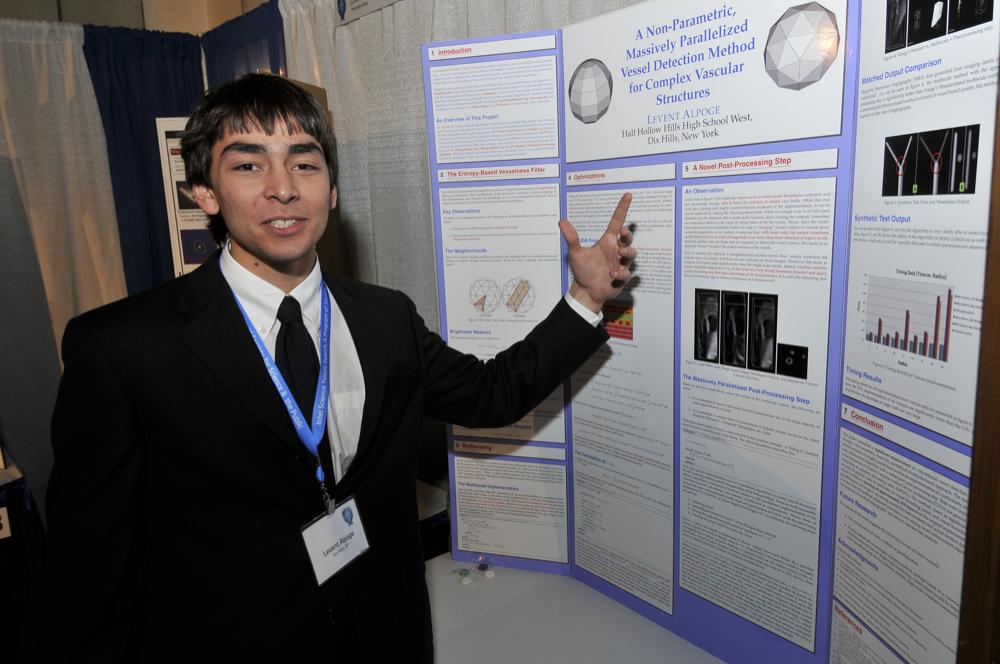
Alpöge, the mathematician who claimed to have found the proof of the Riemann Hypothesis in collaboration with Claude 丨 Alpöge's personal homepage
The most challenging problem in mathematics may have an answer, but for the time being, human beings cannot understand this answer.
However, on the very day the statement was released, number theorist Andrew Sutherland from the Massachusetts Institute of Technology (MIT) and his colleagues completed the code compilation on their own computers. Sutherland confirmed that the entire proof has passed the underlying logic check, with only 3 most basic standard axioms called, and the possibility of any trickery involved is close to zero.
At the moment, this is only a claim. A key check has not yet produced results, and the mathematics community has not formally accepted the proof. But once it is confirmed to be valid, it will be the most groundbreaking breakthrough in the history of mathematics.
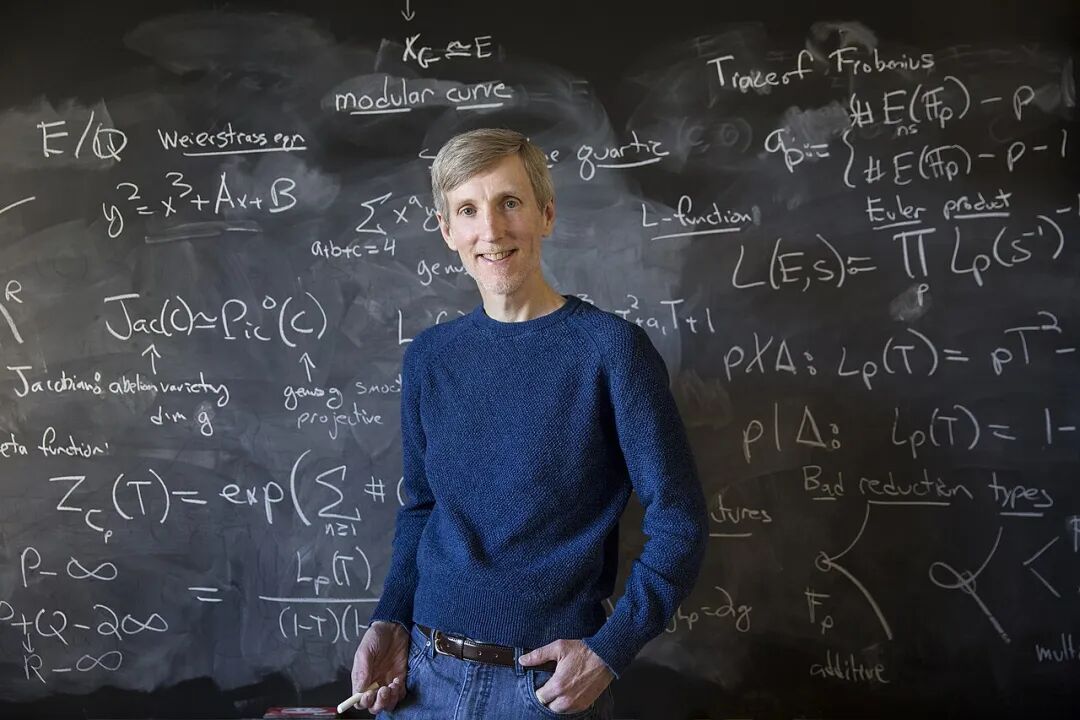
Mathematician Sutherland from MIT conducted independent compilation and inspection of the Lean code that claims to prove the Riemann Hypothesis 丨 Ken Richardson
The Riemann Hypothesis, the "Moby Dick" of the mathematics community
Steven Strogatz, a mathematician at Cornell University in the United States, calls the Riemann Hypothesis the "Moby-Dick" of the mathematics community, referring to the deep-sea behemoth that has wandered for more than a hundred years and no one has ever been able to catch.
The core of the entire problem is actually very simple: prime numbers. Those numbers that can only be divided by 1 and themselves, such as 2, 3, 5, 7, 11, are the cornerstone of all integers, just like atoms that make up matter. Any integer greater than 1 can be uniquely decomposed into the product of prime numbers. But the way prime numbers appear is very strange: sometimes two of them are very close to each other, sometimes they do not show up after dozens or even hundreds of numbers, looking like dice thrown randomly.
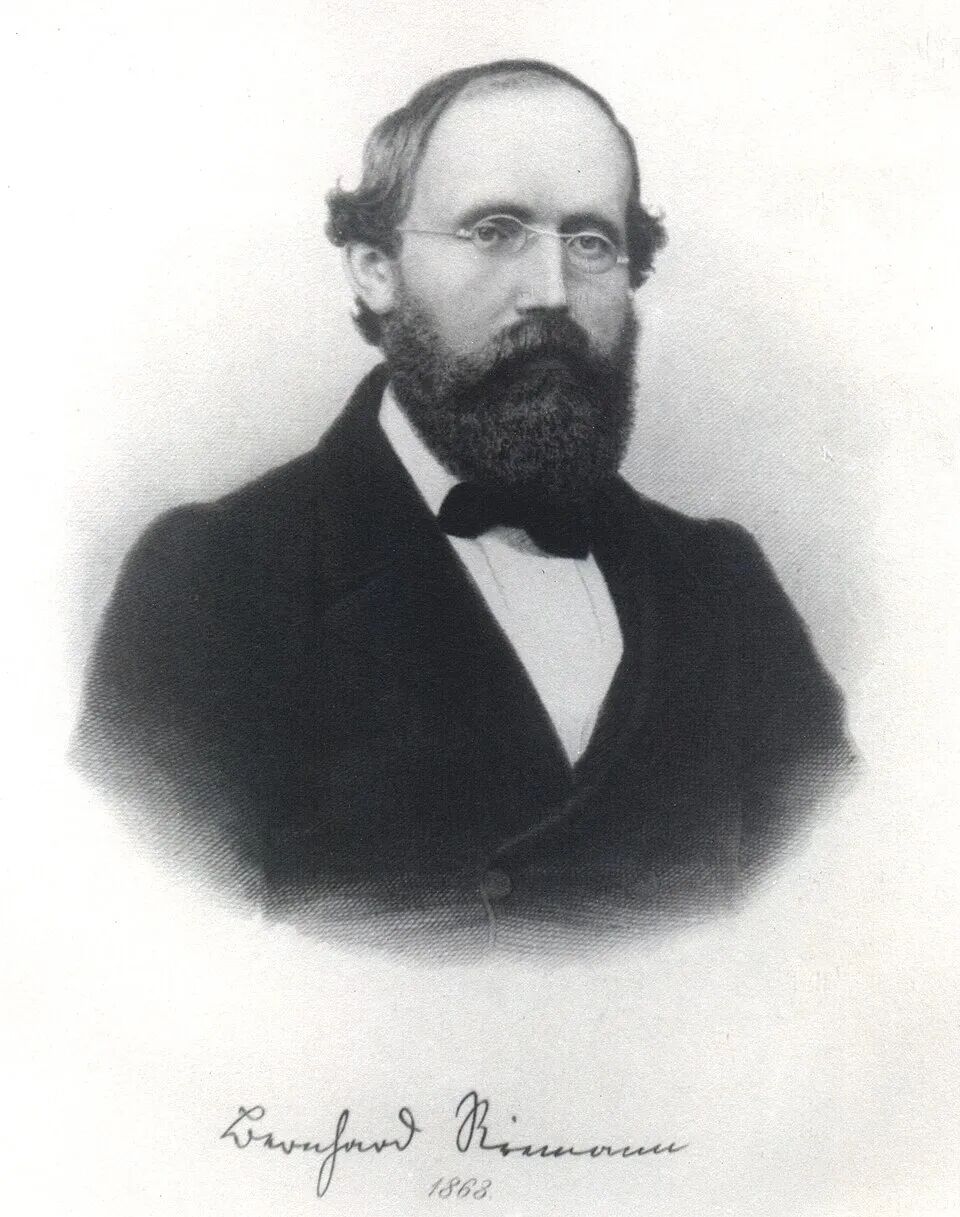
In 1859, German mathematician Bernhard Riemann put forward the proposition later known as the "Riemann Hypothesis" in his paper studying the distribution of prime numbers 丨 Collection of the Smithsonian Institution Libraries
In 1859, German mathematician Bernhard Riemann discovered a deeply hidden clue. He extended a special infinite summation function to the complex number space, and found that this function equals 0 at specific positions, and these points are called zeros. Riemann boldly proposed that all the key zeros that determine the distribution of prime numbers are actually arranged perfectly on a vertical straight line.
If this hypothesis holds, it means that under the seemingly disordered surface of prime numbers, there is an extremely precise rhythm. The amplitude of their deviation from the average rule is strictly limited to a very small range by an ultimate order.
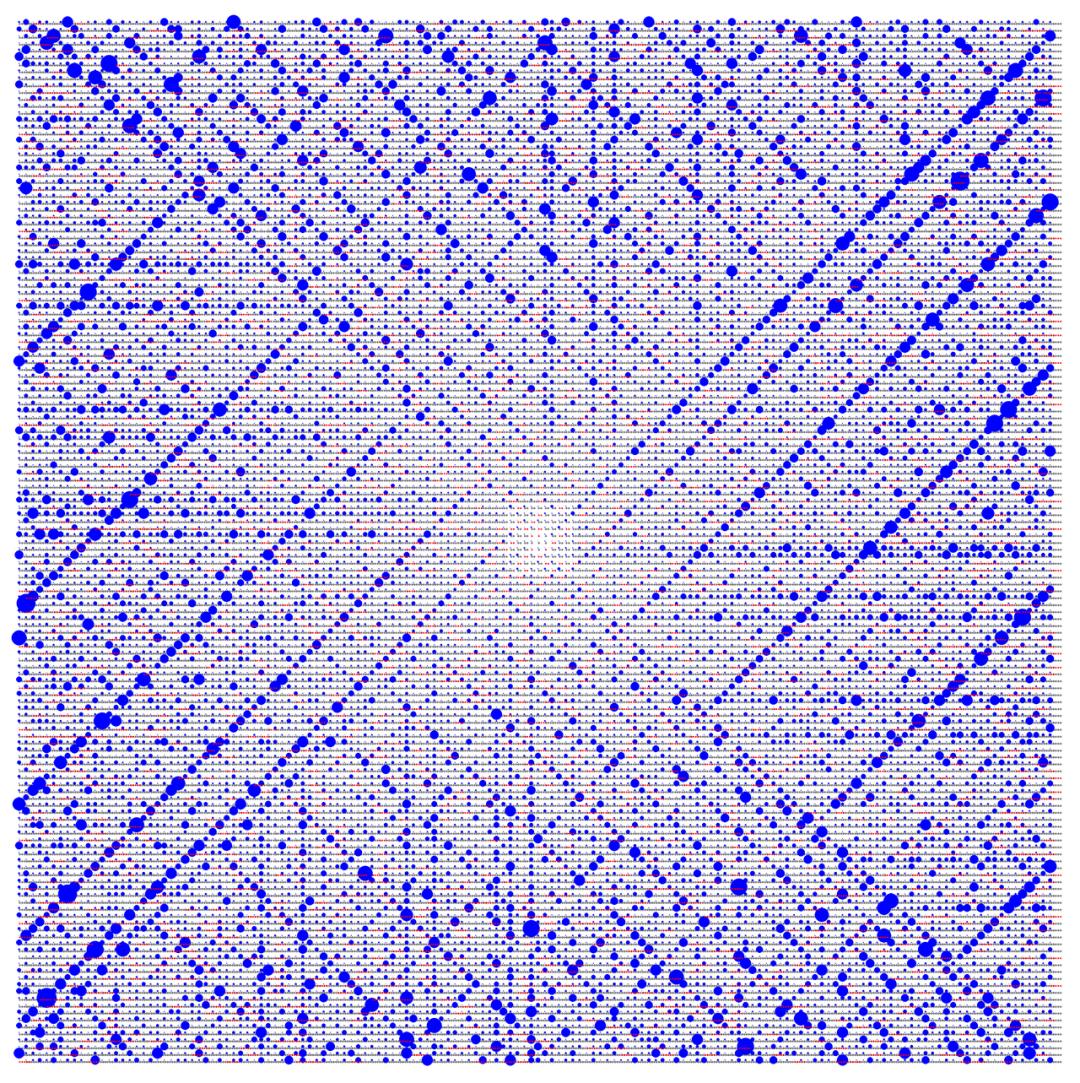
The Ulam spiral arranges integers in a spiral and highlights the prime numbers among them. The diagonal structure appearing in the figure shows some striking local patterns in the distribution of prime numbers; it itself is not a proof of the Riemann Hypothesis Aydolen / Wikimedia Commons 丨 Image source
In the following 167 years, generations of talented mathematicians tried to conquer it. In 1900, German mathematician David Hilbert included it in the list of cross-century difficult problems; in 2000, the Clay Mathematics Institute in the United States set up 7 Millennium Prize Problems, and the Riemann Hypothesis was prominently on the list, with a reward of 1 million US dollars.
Supercomputers have checked the first 10 trillion zeros, and all of them fall on this line without exception. But as long as a general formula derivation that rigorously covers all situations cannot be found, it will still be an insurmountable peak.
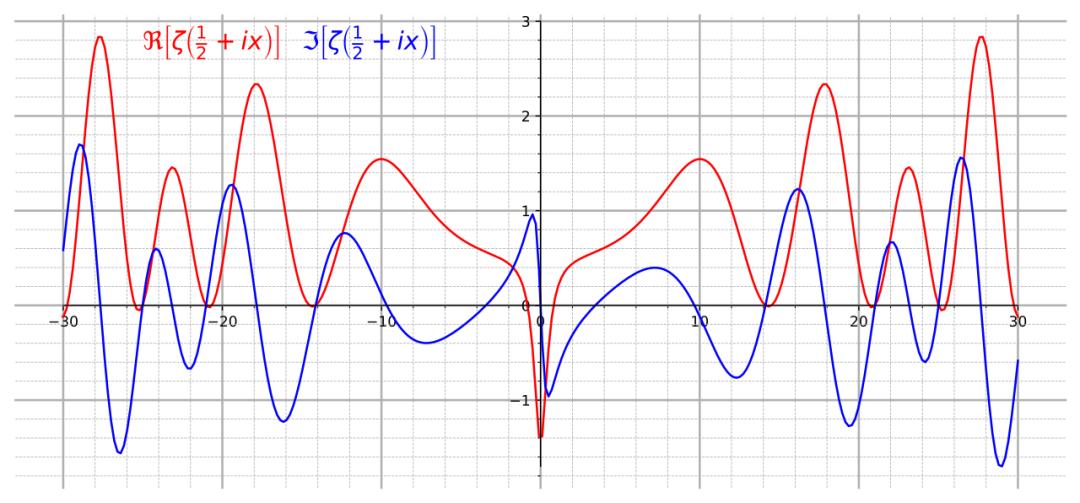
The real and imaginary part curves of the Riemann zeta function when taking values along the critical line are shown in red and blue respectively. The positions where the two curves reach zero at the same time correspond to the zeros on the critical line. The figure shows the situation in a limited range and cannot prove the hypothesis alone 丨 Slonzor, Wikimedia Commons
Human as guide, AI reaching the peak
Alpöge did not climb this mountain alone, he acted as a guide for the AI. He claimed that he had also conquered the stronger Generalized Riemann Hypothesis, extending the same assertion to a whole family of functions related to prime numbers.
The entire exploration process took about more than a month. Alpöge was responsible for providing mathematical intuition for the general direction and building bridges between different number theory tools, while Claude undertook a large amount of high-intensity derivation. Alpöge said that in the final sprint stage, Claude left him far behind.
One of the key choices was proposed by Claude: to set the length of a key mathematical chain as the square root of the summation length. Alpöge said that this single suggestion alone is enough to make his colleagues fall off their chairs.
Alpöge collaborated with Claude and claimed to have obtained the proof of the Riemann Hypothesis 丨 Dustin Mudry/Shutterstock
Since the derivation is too complicated for human eyes to review, they chose to write the proof directly into Lean code.
Lean is a mathematical proof assistant software. It is like an ultimate marker that recognizes no relatives and has no emotional bias. Mathematicians must disassemble every step of the proof into the purest logical symbols. If there is any skipped step, ambiguity or circular argument in the middle, the code cannot pass compilation.
Being able to pass Lean compilation usually means that these 17 million lines of code are logically self-consistent and rigorous in formal logic.
Don't rush to open the champagne
But this breakthrough did not bring unreserved cheers.
In Sutherland's view, this is a historic moment worth celebrating, a victory for mankind, behind which are the developers of Lean and large language models, as well as thousands of years of mathematical accumulation. James Maynard, a Fields Medal winner from the University of Oxford in the UK, also believes that as long as it is verified to be correct, this will be a milestone in the history of mathematics.
Then came prudence and doubts.
Kevin Buzzard from Imperial College London reminded everyone not to rush. The fact that the code can be compiled only means that every step of reasoning is valid in Lean, but it is also necessary to confirm that what is proved is indeed the Riemann Hypothesis itself.
At present, experts are still conducting a comparative inspection, focusing on confirming two things: whether the code has quietly changed the definition of the original mathematical symbols of the Riemann Hypothesis, and whether it has accidentally taken advantage of an unknown bug in the underlying kernel of Lean. This inspection still takes time.
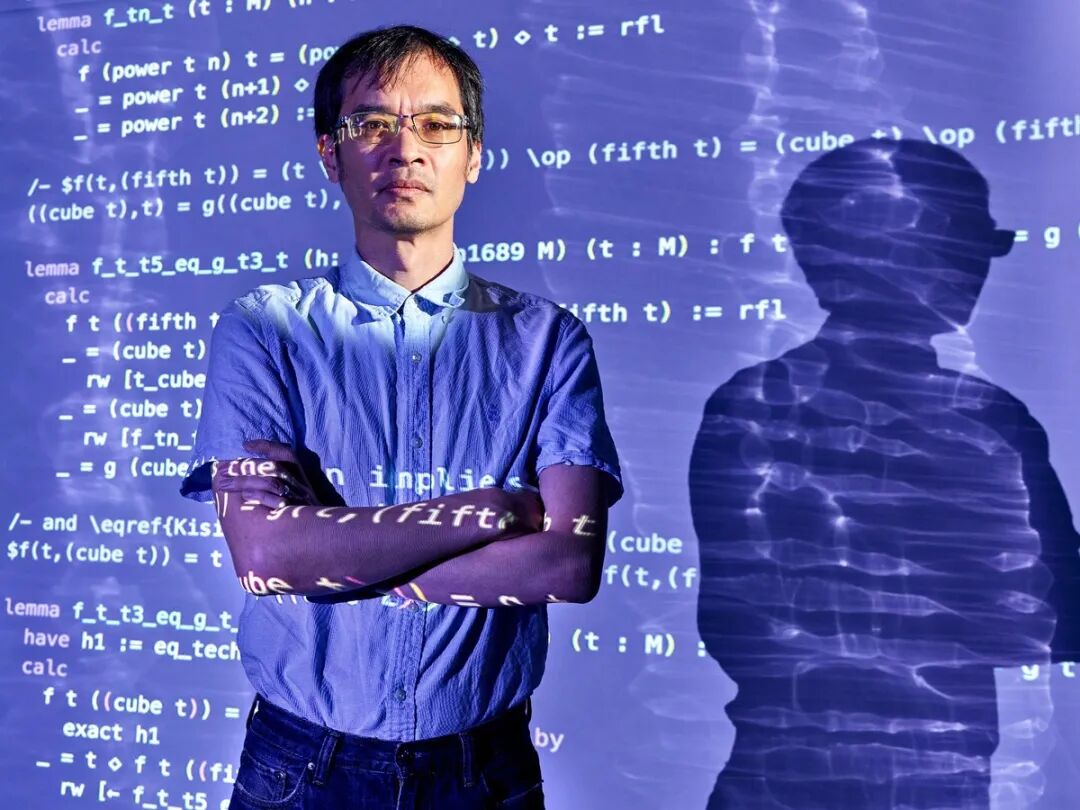
Fields Medal winner Terence Tao 丨 Peter Adams
Terence Tao, also a Fields Medal winner, also behaved extremely restrained. He only said on his blog that it would take some time to digest this proof. As early as September, he reminded that the speed of AI output results may be faster than the speed at which human mathematicians can understand the ideas in them.
Many mathematicians also feel anxious and exhausted.
The person in the eye of the storm
This anxiety did not accumulate in a single day. In the past few months, there has been a fierce tug-of-war between AI and the mathematics community, and Alpöge has almost always stood in the eye of the storm every time.
In July, it was he who used Claude to overthrow the long-unbreakable Jacobian conjecture, kicking off this restless summer in the mathematics community.
In September, OpenAI claimed to have conquered the Navier-Stokes equation, one of the Millennium Prize Problems, and was immediately caught in a credit-grabbing dispute: a mathematician from New York University accused OpenAI of stealing his unpublished progress, and the collaborator of this mathematician was also Alpöge.
Shortly after that, 25 Fields Medal winners sent a joint letter, publicly condemning that there was a serious misalignment between the exploration goals of cutting-edge technology companies and pure mathematics.
In October, OpenAI poured 372 mathematical achievements into the academic circle at one go. Terence Tao even publicly described this industrialized forced output rhythm as "crazy".
At the end of the month, OpenAI took the lead in publishing another "million-dollar" quantum mathematics problem, and Alpöge was among those who were preempted.
In the past few months, there has been a fierce tug-of-war between AI and the mathematics community 丨 Lonvero/Shutterstock
This time it was finally his turn to make a move, but the timing was extremely sensitive: it was the second day after Anthropic was listed on the NASDAQ. Alpöge himself admitted that this timing was terrible, which would inevitably make the outside world associate it with commercial hype.
Is there a human counterattack?
A more dramatic scene happened a few hours after the news was released.
Ravi Vakil, president of the American Mathematical Society and a mathematician at Stanford University, suddenly disclosed on his blog that Alessandro Masullo, a young scholar at Stanford, may have independently made a similar proof several months ago, and the entire process was completely manually derived by humans without the help of any AI.
This human draft that was urgently brought to the forefront is currently undergoing substantial revisions, and not even any peer has fully reviewed it. Under the relentless pressure of the industrial-level power of AI, human scholars have to abandon their original habit of careful polishing and show their cards in a hurry.
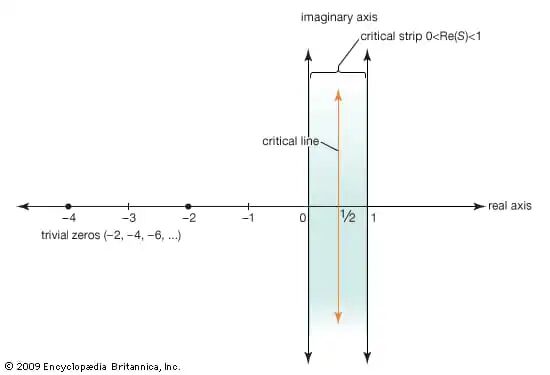
Schematic diagram of the region where the zeros of the Riemann zeta function are located: the negative even numbers are trivial zeros; the green area is the critical strip, and the orange vertical line is the critical line with a real part of 1/2. The Riemann Hypothesis asserts that all non-trivial zeros lie on this line 丨 Encyclopaedia Britannica
An end, or a dawn
What has really been shaken is the very paradigm of scientific exploration itself.
A huge proof provided by human intuition and bridged by machines may rewrite the connections between various branches of number theory, and also push human scholars to a brand new cognitive zone. Facing the precise labyrinth of 250,000 pages, human beings can no longer rely on their personal minds to fully understand all the details of a proposition in front of a blackboard as they did in the past.
Alpöge has taken the Riemann Hypothesis as his lifelong goal since he was a student. He wrote in the note that it is natural to feel that this is an end. For him, the light that has guided the way for many years has gone out. But what he saw in this more than a month made him believe that this is the dawn of something greater in science.
Sutherland once lamented that he never wanted to meet an AI that could prove the Riemann Hypothesis, because when that day comes, mathematicians losing their jobs would be the least of the problems.
After he manually compiled and passed the code, Sutherland left another sentence: "In this proof, perhaps the most important step is to create a thinking machine."
References
[1] Levent Alpöge. Note on the proof of the Riemann Hypothesis (remark.pdf). 2026-11-20. https://alpo.ge/remark.pdf
[2] Scientific American. Anthropic mathematician