Are domestic flagship cars the final gambit of traditional luxury brands?
"Suppose BBA introduces its high-end models, even flagship products such as the Audi A8, for domestic production in China, could it immediately 'switch from defensive to offensive'?"
At a brand event around the end of 2023, when I was exchanging views with a group of media peers, I put forward such a "wild idea" at that time in response to the emerging problem that self-developed mid-to-high-end models were squeezing traditional German luxury brands.
The moment this "whimsical idea" was uttered, several people present all burst into laughter. "It will definitely turn the tables", that was the unanimous view at that time.
However, everyone including the author who put forward the idea immediately denied this possibility: "How is that possible? German luxury brands still value their 'face' very much, high-end models must be produced in Europe!"
But the answer to the above question is not absolute even from the perspective of 2023. After all, the domestically-produced BMW X5 with extended wheelbase was introduced to China as early as two years before, and the first batch of domestically produced versions was delivered as early as April 2022. The introduction plan for Mercedes-Benz GLE should also have been launched in the preliminary stage at that time.
If someone says that the X5 and GLE can be regarded as high-end models, but they are not symbolic brand flagships after all. Then the recent news that the Audi A8 may be introduced for domestic production in China should be weighty enough.
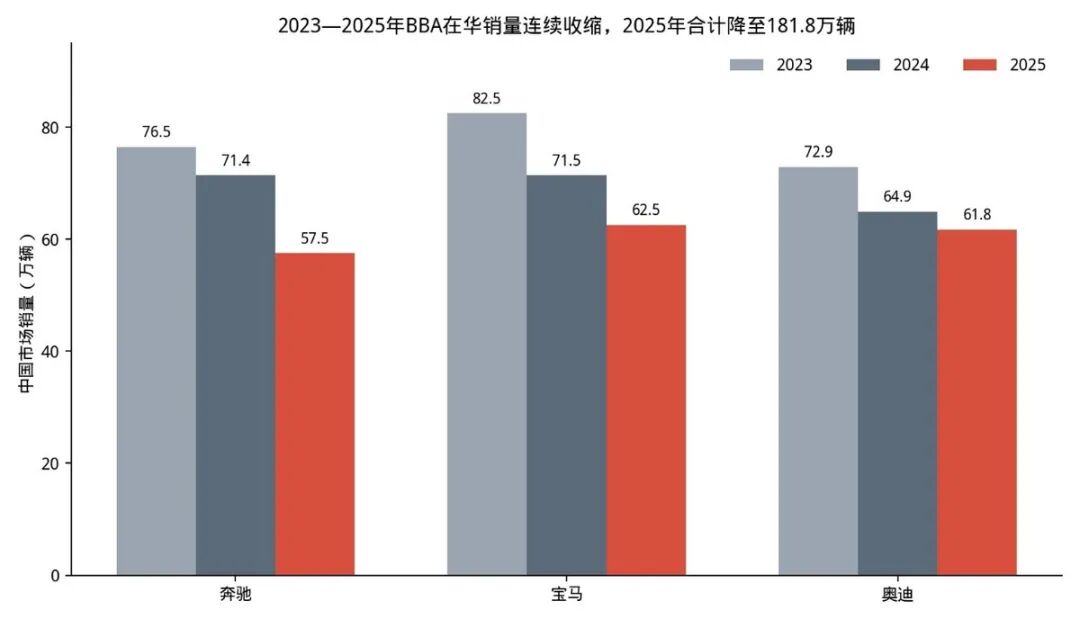
Figure 丨 The data for this year has not yet covered the whole year, and it is believed that there will be a greater decline than that in 2025
Standing at the end of 2026, the situation of overseas luxury cars including German luxury brands facing in the Chinese market does not need further explanation from me.
Therefore, when the BMW 7 Series may also be domestically produced and Lexus' future flagship SUV rolls off the production line in Shanghai, the question raised three years ago still has practical significance.
It can buy time, but cannot solve the problem
The first point to clarify is that the phrase "high-end models, even flagship products" three years ago actually mixed two different things together.
According to each brand's own product sequence, the long-wheelbase X5 and long-wheelbase GLE are high-end models, but not flagships. After all, Mercedes-Benz has the S-Class, Maybach S-Class and GLS above them, BMW has the 7 Series, i7 and X7, and Audi has the A8 plus the full-size SUV Q9 that was not long ago released.
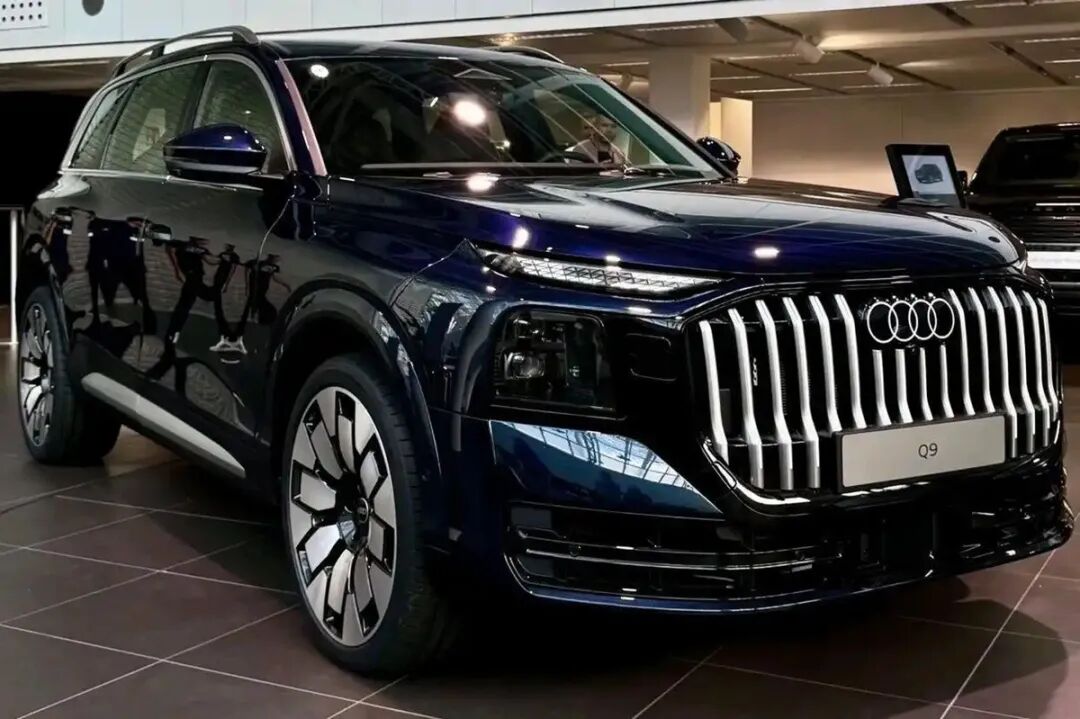
Figure 丨 If the three German luxury brands bring their flagships to China for production, it would have caused a huge sensation in the automotive industry two years ago. But now, it can only be called a major news, not enough to trigger industry-wide shock
If we only talk about high-end models, in fact, BBA has been taking continuous actions.
On March 31, 2022, the long-wheelbase X5 was launched on the market. The 130 mm extended wheelbase was all allocated to the rear row, and deliveries started in April that year. It is produced at the Shenyang Dadao Plant, sharing the production line with the long-wheelbase 5 Series, and the later i5 also uses this line without building a separate production line.
Before localization, the X5 had always been imported, and it sold more than 50,000 units in China in the whole year of 2021, making it the best-selling imported SUV among luxury brands that year. After localization, the starting price of the X5 is nearly 100,000 yuan lower than that of the imported version.
The localization of Mercedes-Benz GLE has been delayed for quite a long time, and it was not officially launched until September 16, 2026, two months ago, with pricing roughly in line with the domestically produced BMW X5. However, compared with the original introduction mode that mainly extended the wheelbase, the domestically produced GLE is equipped with the new MB.OS and Doubao large model, and the urban and high-speed navigation assisted driving is jointly developed by Mercedes-Benz and Momenta, and it is said that the R7 world model can be upgraded later.
A 3.0T fuel vehicle can be equipped with all these features, no wonder both Mercedes-Benz China and Beijing Mercedes-Benz are quite satisfied with it.
However, there has always been a saying in the industry that as early as when the domestically produced X5 was launched in April 2022, Beijing Benz had already considered introducing the GLE domestically, and Mercedes-Benz China had formed a project team for the domestically produced extended-wheelbase GLE. At the same time, Daimler renegotiated the shareholding ratio with BAIC, and the localization of GLE was once put on the table.
But for various reasons, the plan was finally put on hold. It was not until April 2024 that the development and reform filing was completed. In September of the same year, it was officially announced that more than 14 billion yuan would be invested in China, and the Chinese team would lead the localization modification and upgrading work.
The truly weighty plan is the localization scheme of the A8, although there is no definite information about it for the time being.
Of course, there is another background to explain regarding the localization of the A8: the Neckarsulm plant responsible for producing the A8 model is included in the Volkswagen Group's closure plan.
In fact, the current fourth-generation A8 was discontinued at this plant last month, and the vacated production line was transferred to the A5 sedan, Avant, S and RS versions, and the brand's flagship model is temporarily supported by the Q9.
At the same time, it is rumored that the next-generation global version of the A8 will use the MSB platform of the Porsche Panamera, which means it will be moved to the Porsche Leipzig plant to share the production line.
With the original production base no longer guaranteed and the new production line not yet confirmed, Gernot Döllner himself launched this Chinese version of the plan. All in all, this is a matter that clearly exists but has not yet been finalized. It is symbolic, but there are still considerable variables.
It is obvious that even from today's perspective, not only Audi needs to think carefully about moving A8 production capacity to China, but Mercedes-Benz moving the S-Class and GLS, and BMW relocating the 7 Series and X7 are the same.
The benefit of moving flagship models to China to reduce the actual car purchase price by avoiding various taxes and fees is very substantial.
The 15% tariff on imported complete vehicles, the 13% value-added tax levied on the increased tax base, plus the additional 10% retail tax on ultra-luxury cars with a tax-exclusive selling price of more than 1.3 million yuan, can be directly exempted for some models. In addition, the costs of sea transportation and related insurance can be saved, and the uncertainty caused by exchange rate fluctuations can also be avoided.
However, the costs that can be saved do not necessarily mean they will definitely be passed on to consumers. After all, how to set the guide price and how much profit the channels will give up are matters between manufacturers and dealers. No enterprise has publicly stated how much money can be saved by producing a car domestically, even if the detailed accounts can be calculated, it is not an inevitable equivalent relationship.
In the first half of 2026, Mercedes-Benz GLS sold 3,168 units in China, and BMW X7 sold 1,832 units, with a total of just over 800 units per month for the two models. One of the prerequisites for promoting the localization of the BMW X5 was the sales base of more than 50,000 units in 2021, which the flagships do not have.
One quite critical point is that the overall market size of imported cars is shrinking now.
According to data from the China Passenger Car Association, a total of 290,000 cars were imported from January to September 2026, a year-on-year decrease of 20%, and 21,000 units in September alone, a year-on-year decline of as high as 49%. Dealers across the country are carrying out promotional price cuts, with discounts of 200,000 to 300,000 yuan at every turn. In October, media in Beijing found that the bare car price of the Audi A8L 55 TFSI had been reported at 783,000 yuan, and the entry-level version had been pressed below 550,000 yuan.
What is certain is that at the end of 2026, BBA collectively introducing its own flagship cars for domestic production in China will definitely be effective in maintaining sales in the domestic market, but at most it will lower the price range that many people cannot reach, so that people who are currently considering BBA and also looking at self-developed luxury models priced above 300,000 yuan or even 500,000 to 600,000 yuan will be willing to visit the stores several more times and negotiate with consultants in the VIP room for several rounds.
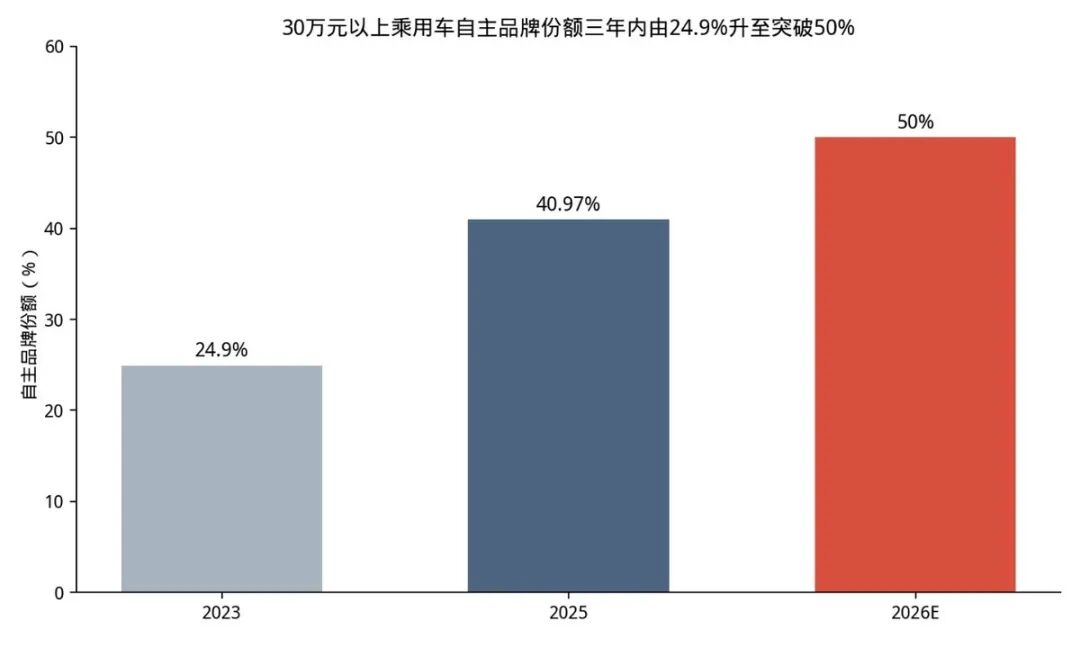
Figure 丨 From the worst perspective, imported luxury cars have lost half of their market share in three years. But from the best perspective, there is still half of the market left. What's more, China is a country with a huge north-south latitude span, and fuel vehicles, especially luxury fuel vehicles, cannot be completely driven out of the market
Among the people who still choose fuel vehicles at present, the mechanical texture, after-sales network and second-hand circulation system that BBA has accumulated for many years have not failed, but the premium that consumers are willing to pay is thinner than that three years ago.
Win the time window for the second new energy transformation
In the final analysis, the full localization of BBA's flagships is not simply to sell a few more units. After all, the total monthly sales of GLS and X7 are just over 800 units. Even if all of them are moved to China and the price is reduced, what difference can it make even if the volume is temporarily pulled to 4,000 to 5,000 units per month?
The real positive effect it can play is to try to "retain" consumers, so that those who are still considering BBA will not rush to turn to other brands, and support the store traffic until 2027. In the final analysis, it is to ensure that in the coming period of time, enterprises and brands can still stay at this increasingly fierce and harsh "card table".
Introducing flagship and high-end vehicles is essentially to win back the time wasted in the last round of new energy transformation for BBA, and even partially repair the damaged brand image.
Since 2024, many domestic car owners have labeled the new energy products of joint-venture brands including BBA as "no-brand electric vehicles".
Although this statement is harsh, it is not groundless. Mercedes-Benz's EQ series, the early BMW iX3, and Audi's previous generation e-tron series have their own independent naming systems, and their shapes are deliberately distanced from fuel vehicles, but there is no substantial improvement in performance and driving experience. Not only the cockpit cannot keep up with the domestic mid-to-high-end models of the same period, but the assisted driving is barely usable, so they rely on discounts to boost sales soon after launch.
The retail data from the China Passenger Car Association shows that in 2025, the new energy sales of the three brands in China were 14,340 units, 49,497 units and 16,855 units respectively. The scale itself shows that although these cars carry the BBA logo, almost no one regards them as proper luxury cars to buy anymore.
To turn the page on these past issues, the integration of Chinese technology is the key.
Huawei Qiankun's official website currently lists six Audi models, including the all-new A6L, Q5L, Q6L e-tron, Q6L Sportback e-tron, A5L and SAIC A5L Sportback. Audi has been doing in-depth adaptation to integrate assisted driving into the E3 electronic architecture since 2019, instead of adding an external module. This path was taken a little late, but after all, it is the right direction.
Among the cars of the same generation, BMW's new generation iX3 is the most worth mentioning. It is not the same as the old iX3, it is the first domestically produced model of the new generation, manufactured in Shenyang, equipped with an 800V high-voltage platform, the 6th generation eDrive electric drive, the intelligent driving control brain and panoramic iDrive, and its assisted driving is also jointly developed with Momenta.
Since the new generation iX3 opened for reservation at the Chengdu Auto Show this year, although there have been constant rumors that "reservations are enthusiastic", it is too early to say that any joint-venture brand car is a success before the delivery is stable for more than half a year. However, its response in the European market is really good, which is almost beyond doubt.
According to a report by the German newspaper Die Welt on September 16, since its debut at the International Motor Show Germany and IAA Mobility held in Munich in September 2025, the European orders for this car have exceeded 100,000 units in one year, and it has been praised by BMW as "the most successful model debut in the history of the group". A BMW with forward development, a price in the mainstream range and up-to-date intelligence is still recognized by European users as a "BMW". Therefore, for BMW, the future is still full of hope.
Mercedes-Benz has bet its next step on the new all-electric E-Class. Ola Källenius mentioned when talking about the third-quarter performance at the end of last month that this car was launched about three years ago, developed almost from scratch with a dedicated pure electric architecture. Mercedes-Benz positions it as a successor to the EQE, and plans to launch it in the Chinese market in the second half of 2027, with the supply chain of the domestically produced version basically relying entirely on local procurement.
The controversial exterior design of the EQ era, where the bow-shaped body competed with the three-pointed star logo for recognition, will be completely abandoned. As for whether this new car can eventually get the same positive evaluation as BMW's new iX3, all this remains to be seen.
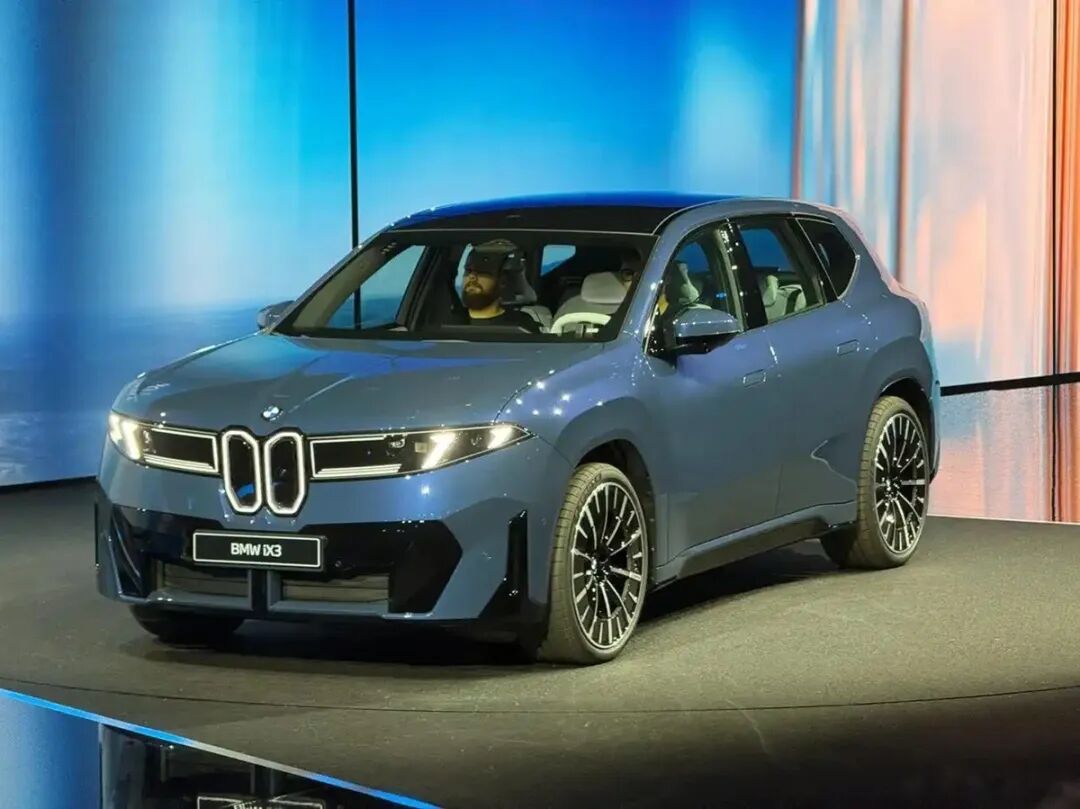
Figure 丨 BMW's new generation iX3 has received enthusiastic response in Europe and good feedback in China. But after all, the cars have not been delivered yet. We have to look at the data after delivery, and judge whether it can achieve five-digit sales or at least thousands of sales for more than half a month to confirm its success
Among the three BBA brands, I think the Audi Q6L e-tron is a pity. Its name looks similar to the old e-tron models on the MEB platform, but it is actually a PPE platform product manufactured in Changchun, with an optional dual-lidar version of Huawei Qiankun intelligent driving, and the maximum CLTC range is more than 700 kilometers, so its hardware is not weak.
However,