What exactly does it take to compete in the Chinese market?
The full text takes about 10 minutes to read
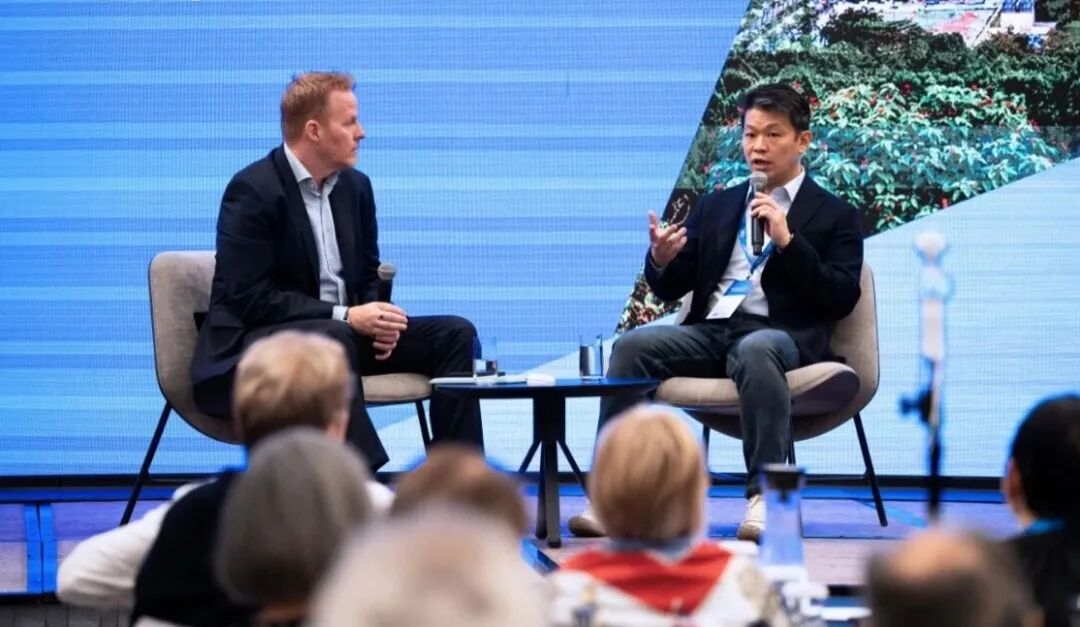
What insights can China's fiercely competitive automotive industry bring to global enterprises? David Bach, Dean of IMD International Institute for Management Development in Switzerland, had a conversation with Brian YinJen Chen, Founder and CEO of VOYISL, to share competitive experiences and insights from the Chinese market.
Key Takeaways at a Glance
Competitive advantage comes from continuous innovation, not technology alone. When technological breakthroughs can be replicated within a few months, the success of an enterprise depends on its ability to anticipate customer needs and mobilize partners to jointly develop the next innovation.
Industrial planning and fierce competition coexist in the Chinese market. Government policy priorities shape investment opportunities, while enterprises and local governments compete fiercely for resources and growth space. Understanding the interaction between the two is a prerequisite for winning in the Chinese market.
Some competitive advantages take decades to build. Established enterprises possess hard-to-replicate customer relationships, industry expertise and business networks. If these advantages are combined with the speed and innovation capabilities of Chinese partners, both sides will have the opportunity to achieve results that cannot be attained by acting alone.
In an industry where technological breakthroughs can be caught up by rivals in just three months, what exactly can enterprises rely on to maintain their competitive advantages?
For Brian Chen, Founder, Chairman and CEO of VOYISL, the essence of competitiveness lies in the combination of proprietary technology and continuous innovation. While protecting existing inventions is certainly important, faster technology iteration and commercialization capabilities are equally indispensable.
At the International Alumni Summit hosted by IMD Business School in Shenzhen, Brian stated in a fireside chat: "Our current competitiveness in the Chinese market lies crucially in speed."
After 13 years of deep engagement in the automotive technology industry in China, Brian has deeply realized that to always stay ahead of competitors, developing new technologies alone is not enough. Enterprises must also know how to integrate talents, partners and various resources to quickly bring the next innovation to the market.
When cars can park automatically, identify obstacles, or assist drivers in coping with busy road conditions, the technologies developed by enterprises like VOYISL are behind these capabilities. The company focuses on intelligent driving, intelligent cockpit and low-altitude economy, providing integrated hardware and software solutions. Since 2023, the cumulative sales of its various solutions and products have exceeded 2 million units.
Brian's practice reveals the distinctive features of the competition mechanism in China's automotive industry, and also provides new ideas for global enterprises.
Why choose China instead of Silicon Valley?
In 2011, only two years after Brian completed his MBA at IMD Business School, he co-founded VOYISL with several former colleagues from Fujitsu. At that time, the team had developed advanced image processing algorithms, but had long struggled to find suitable commercial applications.
In the early days of starting the business, they once considered developing in Silicon Valley, but finally chose China. At that time, China's automotive market was expanding rapidly, and government policies also encouraged manufacturers to increase the proportion of local procurement of auto parts. According to Brian's research at that time, none of the world's top 100 automotive parts suppliers came from China.
"We saw where the opportunities lay, so we chose to enter this market," he said.
However, the market at that time was not fully ready to accept VOYISL's technology. Automobile manufacturers were accustomed to purchasing mechanical parts rather than software; the existing procurement system was also difficult to accommodate a small technology startup.
When competitors become partners
Brian recalled that an initial client meeting lasted only 30 seconds, and he was asked to leave because his presentation was in English. Since he had lived most of his life outside mainland China, he went through a period of groping to adapt to local business practices and customer expectations.
Later, when an automobile manufacturer invited him to a second meeting, Brian thought he had finally made progress. "I was very happy at that time," he recalled.
He originally thought he was going to present to engineers and procurement directors, but when everyone exchanged business cards after the meeting, he found that he was not the only invited supplier, and many peer enterprises were also present.
Brian was very frustrated, but the client thought this was perfectly normal. At that time, VOYISL had only six employees and lacked the manufacturing capabilities required to deliver complete solutions. Since other suppliers could provide help, why not cooperate with them to bring the technology to the market together?
Chinese automobile manufacturers have quite high requirements for suppliers. They want suppliers to deliver complete, ready-to-install solutions rather than individual parts. Brian explained: "They want ready-to-use products that can be used directly."
To meet these requirements, VOYISL must cooperate with other suppliers and peers to jointly develop complete products. For engineering teams that attach great importance to intellectual property protection, cross-enterprise ecological cooperation is not a compromise, but a carefully considered strategic choice.
At present, VOYISL has 121 registered patents, 30 registered trademarks and 49 software copyrights in China, covering fields such as visual perception, automatic parking, intelligent lighting, cockpit interaction, domain controllers and calibration technology.
The company cooperates with suppliers with complementary capabilities to jointly deliver end-to-end integrated solutions. In the process of cooperation, VOYISL selectively integrates its own proprietary intellectual property rights for cameras, sensors and software, while continuing to independently control full ownership and internal R&D of core underlying technologies.
As Brian said: "If you want to sell products to customers, you must integrate into their ecosystem."
Why is "one step ahead" still not enough?
In the rapidly developing automotive technology industry, it is difficult to maintain long-term competitive advantages solely by relying on proprietary technology. VOYISL combines patents, software copyrights and continuous innovation to maintain its own competitive advantages. Intellectual property rights lay an important foundation for enterprises, while rapid iteration can transform initial technological advantages into continuous market leadership.
The real test is: can enterprises continuously launch new technologies and products? Do they have other new things in hand?
The speed pressure faced by enterprises begins long before contracts are signed. When car manufacturers issue tenders, they usually expect suppliers to present a working proof-of-concept prototype, with product development progress reaching about 70%. VOYISL adopts a platform-based development model to reduce redundant R&D investment. By continuously developing on the basis of existing technologies, the company does not have to start from scratch for each new project.
When industrial policies affect the competitive landscape
The intensity of competition in China's automotive industry is only one aspect. The role played by the government in guiding the direction of enterprise competition and investment layout is equally important.
Brian shared his observations of participating in government-led entrepreneurship projects. The national "Five-Year Plan" clarifies the priorities of industrial development, while local governments formulate supporting strategies according to their own conditions to attract investment and support enterprises in key fields. Policy orientation is a background variable that enterprises must grasp in their operations, but there are obvious differences in the specific implementation methods in different regions.
Brian said: "As long as you develop in accordance with the direction of the plan, the policy will give you the green light. If your business meets these key directions, the development path will be smoother."
However, this mechanism does not mean that the government replaces the business decision-making power of enterprises. Enterprises still independently decide investment directions, allocate resources, and compete for customers in the market. But whether an enterprise can obtain capital and policy support depends to a certain extent on the degree of alignment between its business and policy orientation.
"In China, competition is everywhere." Brian said.
This competition also takes place among local governments. Local governments are competing to attract enterprises with development potential to settle in, and attract enterprise investment by providing capital, policy support and customer resources.
For entrepreneurs, this is both an opportunity and a requirement to understand the industrial priorities of different regions and their changes. A certain industry may receive a lot of policy support within one Five-Year Plan cycle, but after entering the next plan cycle, the government's focus may also adjust accordingly.
China's hard-to-replicate competitive advantages
For European automotive suppliers, the speed and intensity of competition in the Chinese market may seem daunting, but in Brian's view, there are still plenty of opportunities in the market.
VOYISL has established a joint venture with a century-old German family enterprise that has focused on manufacturing automotive rearview mirrors for nearly a hundred years. Brian believes that the customer relationships and industry expertise accumulated by its German partner over generations are of great value. He admits that if he wanted to rebuild these resources, "it would probably take a very long time".
VOYISL brings technologies, speed and cost competitiveness polished in the Chinese market; the German partner provides decades of accumulated industry experience and mature cooperative relationships with automobile manufacturers. "I am not trying to replace them," Brian said.
This cooperation is also transforming the business form of this German enterprise. The company's original sales channels are gradually being transformed into VOYISL's distribution and after-sales service network, enabling it to provide customers with more products beyond traditional automotive rearview mirrors.
Brian said: "They are not just selling rearview mirrors now, but the full range of VOYISL products."
What business are you really running?
A manufacturer that has focused on producing rearview mirrors for nearly a hundred years may worry about where its business will go when cars no longer need traditional rearview mirrors in the future. But what if its core business has never been "manufacturing rearview mirrors", but "protecting driving safety"?
This cooperation precisely shows that established enterprises can make good use of their existing advantages to expand new business territories. For Chinese technology enterprises that are going global, the advantages brought by these long-standing cooperative relationships and local resources cannot be easily replicated by speed and innovation alone.
The more important insight is not that global enterprises must participate in competition in the Chinese way, but that enterprises need to re-recognize and make good use of the advantages they already have. In an era when technology can be caught up by competitors within a few months, the cooperative relationships, professional capabilities and trust built over decades may be the truly irreplaceable competitive advantages.
About the Expert
Brian YinJen Chen
Founder and CEO of VOYISL
Brian YinJen Chen is the founder and CEO of Voyager Intelligent Systems and Voyager Technology. In 2026, he was selected as an "Industrial Development Pioneer Innovator" by Forbes China in recognition of his contributions to industry innovation.
About the Author
David Bach
Dean of IMD, Professor of Strategy and Political Economy at Nestlé
David Bach is the Dean of IMD International Institute for Management Development in Switzerland, Professor of Strategy and Political Economy at Nestlé, and officially took office as Dean on September 1, 2024. He is committed to further expanding and deepening IMD's global influence through innovative learning models, excellent degree education and executive education, and practical thought leadership. As a world-renowned innovator in management education, David Bach previously served as IMD's Dean of Innovation and Program Development.
About IMD International Institute for Management Development, Switzerland
IMD International Institute for Management Development (IMD) in Switzerland has been at the forefront of leadership development for nearly 80 years. Founded by enterprises and committed to serving enterprise development, IMD is an independent educational institution rooted in Switzerland and radiating to the whole world. IMD is headquartered in Lausanne, with strategic centers in Singapore, Shenzhen and Cape Town, providing training for more than 20,000 senior executives from over 120 countries every year. We have more than 145,000 alumni, forming a far-reaching global elite network.
As an educational institution that consistently ranks among the world's top business schools, IMD is committed to integrating cutting-edge research with business practices, helping leaders address complex challenges, expand solutions and achieve sustainable practical impact. We always uphold the concept of "Real Learning, Real Impact", promoting the application of knowledge and enhancing effectiveness through practice.
This article is from the WeChat official account "I by IMD Insights", author: I by IMD, published with authorization from 36Kr.