During the APEC meeting, robots have covered all the work shifts.
At this APEC, the busiest attendees are probably not the participating guests, but a group of robots.
From November 18 to 19, the 2026 APEC Informal Leaders' Meeting was held in Shenzhen.
The world's attention is focused on Shenzhen, international dignitaries are busy attending meetings, media reporters are busy covering events, and at the press center of the venue, a group of special "workers" have quietly started their jobs.
Some make coffee, some make ice cream, some serve tea and water, and others are responsible for cleaning the tables.
What is even more remarkable is that they not only never slack off at work, but their "skills" are getting better and better.
That's right, all these new employees are robots.
In the past, robots only appeared at tech exhibitions, but now robots are directly participating in APEC. This generation of Chinese robots is truly impressive.
Robots Join APEC, Starting Their Careers as Baristas
Around 8:30 every morning, as reporters walk into the APEC press center one after another, a group of robots also start their work of the day.
In the smart tea break area of the "Reporters' Home", 7 humanoid robots named "Aibao" from Shenzhen-based enterprise Zhisquare have already started their coffee, ice cream and beverage services.
Despite their high-tech appearance, they are very down-to-earth when working.
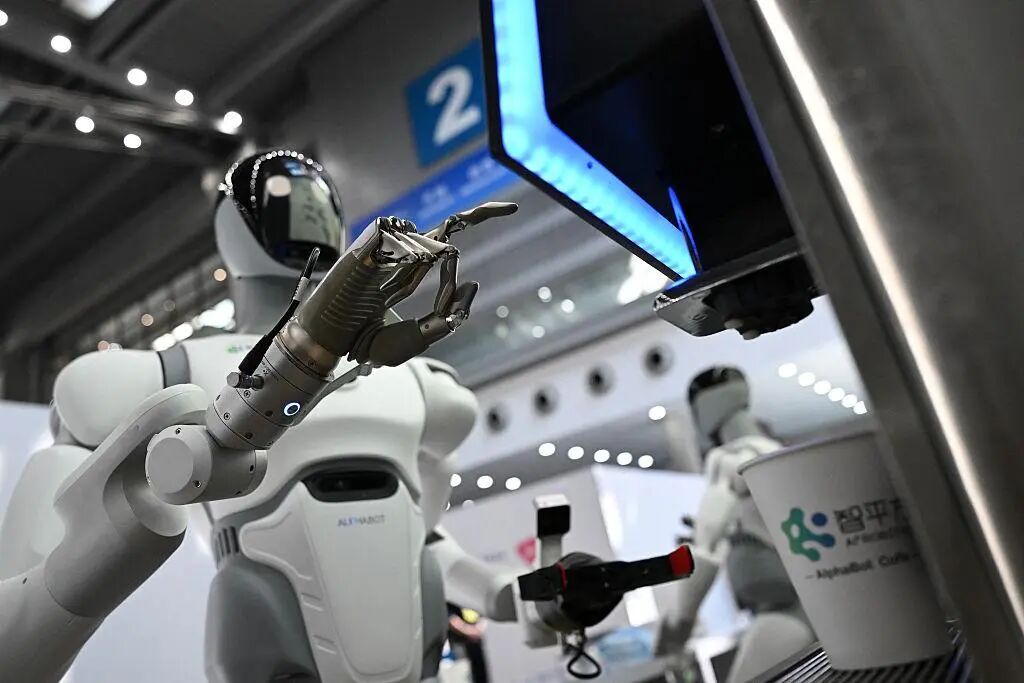
Grabbing the cup, operating the coffee machine, making the drink, and handing it to the guest, the whole process is done in a manner comparable to a professional barista.
The most interesting part is that these robots are not limited to using special customized equipment, but can operate common commercial coffee machines.
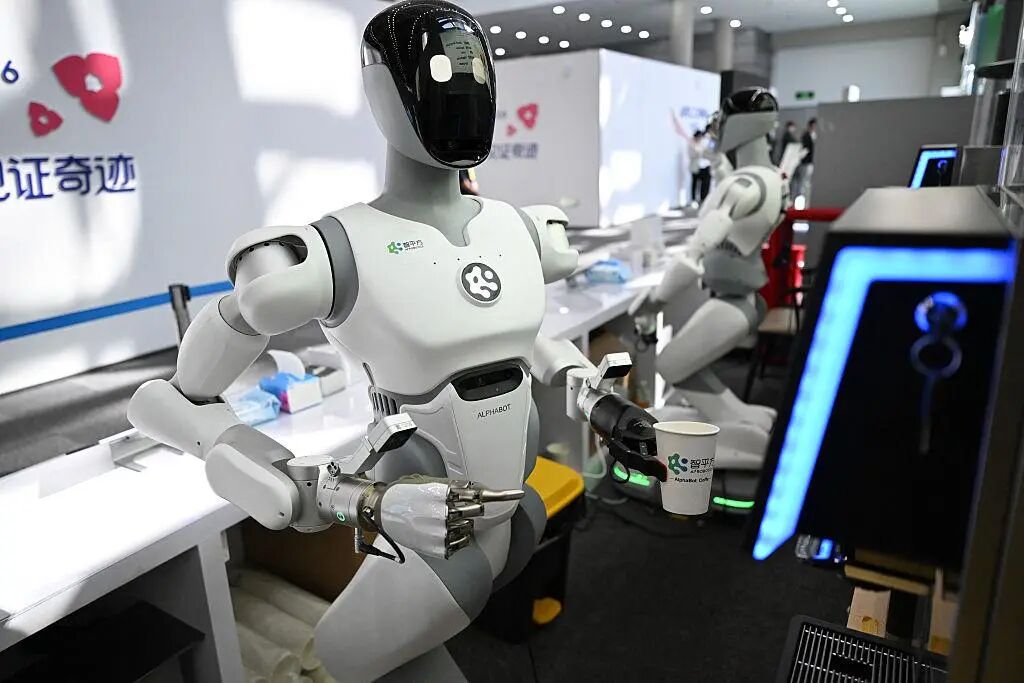
This means that they need to complete a series of real operations with their robotic arms, instead of just standing next to the machine and demonstrating a few pre-set movements.
According to media reports, these 7 robots have served more than 5,000 Chinese and foreign media reporters and guests.
In the past, if you wanted to drink coffee made by a robot, you might have to make a special trip to a tech exhibition. Now when you attend an international conference, you can easily get a cup.
Some netizens may ask "Is coffee made by a robot considered real hand-brewed coffee?"
We are not sure if it counts as hand-brewed, but at least this generation of robots has learned to "make a living" with their own two hands.
While Other Robots Make Coffee, This One Has Already Taken on Administrative Work
If robot baristas are still a common sight, then another special employee at the APEC site has a much wider scope of work.
Its name is "Ye Zai", which comes from Shenzhen-based embodied intelligence enterprise Independent Variable Robotics.
Different from those humanoid robots that focus on cool and fancy movements, the work content of "Ye Zai" is so simple that it is a little amusing: handing candies and drinking water to guests, and cleaning the tables at the same time.
When it sees that guests need something, it can stretch out its robotic arm and hand over the candies and water.
After the guests leave, it can also identify items such as wrapping paper, bottles and cups on the table, pick them up one by one, and put them into the trash can.
Do you think it is just a waiter?
No, it may have unlocked the full skill set of a pantry manager, administrative assistant and cleaning expert all at once.
But what is really worth paying attention to is not that the robot can hand over a bottle of water, but that it can identify different objects in a relatively open environment, judge how to grasp them, and complete a series of consecutive movements.
You know, the cups on the table are not always placed in fixed positions, and the wrapping paper does not appear at the same angle every time.
For robots, moving from "repeating a single action according to instructions" to "completing tasks based on the actual environment in front of them" is actually a very important leap.
In the past, the biggest skill of robots was being able to understand instructions; now, they are learning to perceive and understand the world.
From Baristas to Patrol Officers, Chinese Robots Start to Operate in Groups
During this APEC event, robots are certainly not only responsible for food and beverage related services.
Robots can also be seen in service support scenarios such as greeting and receiving guests, and urban patrol.
In the robot block in Longgang, Shenzhen, overseas media who came to visit also saw a different scene.
Unitree's humanoid robots performed martial arts collectively, Neolithic unmanned delivery vehicles traveled through the streets, and the robot 6S store displayed services including sales, leasing and after-sales support.
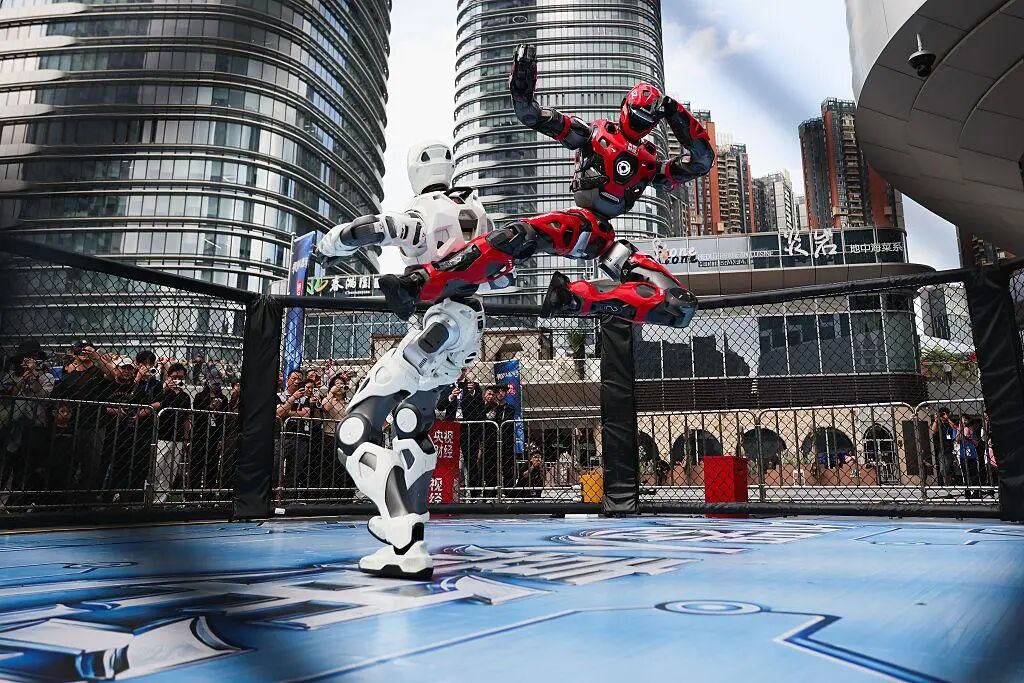
This scene looks a bit like a film set of a science fiction movie.
Except that there is no director shouting "Action" behind the camera, these technologies are being tested in real cities.
What is more interesting is that different robots have started to have different "professional specialties".
Some are suitable for reception services, some are good at logistics and distribution, some can enter industrial inspection scenarios, and others can perform more complex operation tasks.
A saying seems to be popular in the robot world now: "Specialization makes excellence."
From being able to do somersaults, to being able to serve tea and water, to exploring real scenarios such as factories, households, and urban public services, robots are gradually stepping out of the laboratory.
Of course, there are still many technical hurdles to overcome before robots can handle various complex tasks as freely as humans.
But at least this APEC has shown people a change: robots are no longer just performers waiting for applause on the exhibition booth, they have begun to try to become real service providers in real scenarios.
China's Embodied Intelligence Is Turning Sci-Fi Films Into Documentaries
Why are these robots becoming more and more flexible?
Behind this is a very popular technology concept in recent years: embodied intelligence.
In simple terms, it means that artificial intelligence no longer only exists in computers and mobile phones, but has a "body" that can perceive the environment, make judgments and execute actions.
In the past, our interactions with AI were mostly typing, speaking and asking questions.
Now, AI is starting to try to stretch out its robotic arm, pick up a cup, walk to the designated position, and hand the item to you.
What seems to be just a small action of handing over water requires the coordinated work of multiple capabilities including visual recognition, motion control, path planning and mechanical operation.
The reason why this APEC is so exciting is precisely that we have seen the process of these technologies gradually moving towards real-world applications.
Shenzhen, as a representative of China's technology innovation cities, is forming an industrial ecosystem covering robot bodies, key components, artificial intelligence algorithms, manufacturing and practical applications.
This is also the most imaginative part of China's embodied intelligence industry.
Not only are people researching how to make robots smarter, but people are also researching how to actually manufacture and use robots, and gradually bring them to the commercial market.
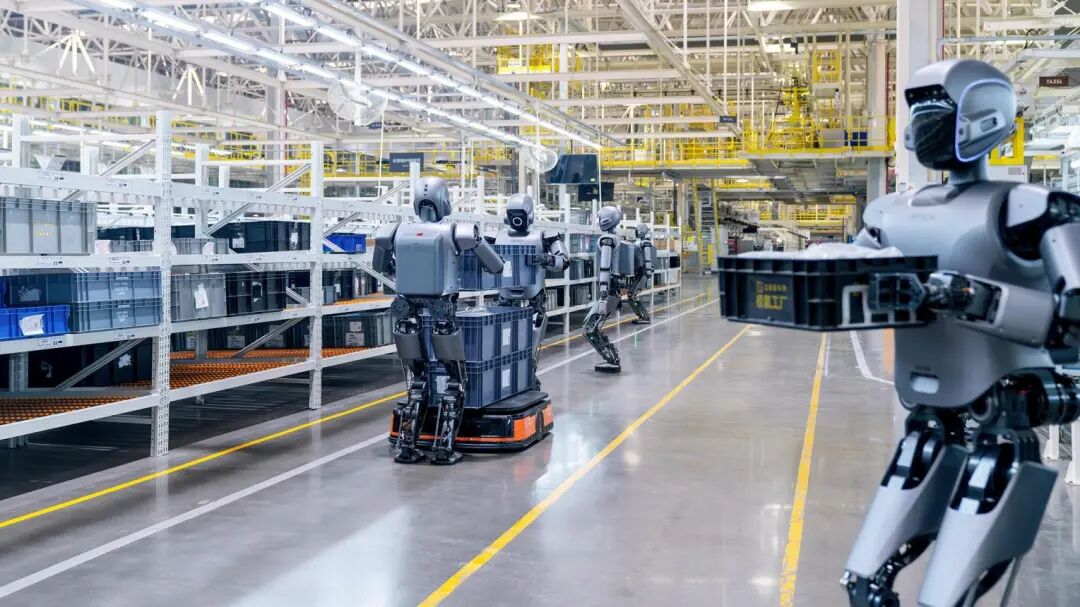
During this APEC, Zhisquare also disclosed that the company has carried out commercial communication and cooperation of varying degrees with multiple APEC member economies.
These robots from China are not only making appearances at international conferences, but also starting to receive wider international attention.
In the past, we often imagined the future in sci-fi movies:
Robots bring morning coffee, automatically clean the room, travel through the city, and help people complete all kinds of complex tasks.
Now, these scenes are gradually becoming a reality.
Although robots are not yet omnipotent, every attempt, from moving out of the laboratory to entering international conferences, from technology demonstrations to actual services, is making the future more tangible.
In the past, we watched robots perform somersaults. Now, we watch robots start to work seriously.
At this APEC, Chinese robots not only showed up, but also demonstrated their real capabilities.
What new skills will they unlock next time? It is really something to look forward to.
After all, the story of China's embodied intelligence has only just begun.
This article is from the WeChat Official Account "Liepin" (ID: liepinwang), author: Li Mao, published with authorization from 36Kr.