Does Foshan still lack a MixC?
Foshan is the most "unfathomable" city in the commercial real estate sector in recent years.
From a macro perspective, Foshan's economic growth rate in the first quarter of 2026 was -2.4%, making it the only city with negative growth among cities with a GDP of over one trillion yuan, and it even lost its title as the "third largest city in Guangdong". Paradoxically, the commercial real estate sector in Foshan is extremely prosperous — it is not only the city with the largest number of listed or applied consumer REITs projects across China, but also its per capita shopping mall area is nearly twice that of Dongguan.
Contradictory data hides hidden contrasts. This city, nicknamed the "Bermuda Triangle of Shopping Malls", has attracted numerous commercial giants to spare no effort to secure a foothold here. For a city that already has hundreds of commercial projects, is there still a lack of a new shopping mall?
The impressive first-month operating report of Foshan MixC World, which has made its peers jealous, gives a rather contrasting answer. Foshan does not lack shopping malls, but it lacks high-quality shopping malls. The arrival of a high-caliber player can still quickly reshape the city's passenger flow distribution.
When we break down the total volume across Foshan into business districts, streets and specific projects, we will find that behind the rhetorical question of "why do we still need another MixC World", there lies a more thought-provoking issue for the stock commercial market: there are already enough shopping malls, why are consumers still waiting for the next one? After MixC World, does Foshan still need a MixC?
01.
Chan-Gui,
The core of Foshan's commercial geography
Asking the right question is equivalent to finding half of the answer —
1. Why has Foshan become the city with the highest concentration of REITs at present?
2. Given the sluggish macroeconomic data, why are commercial operators still willing to vote with their feet?
3. With similar GDP and population conditions, why is Foshan's per capita shopping mall area nearly twice that of Dongguan? Is the commercial supply truly in surplus, or is the structural mismatch masked by the total volume?
An enlightening perspective is to find answers from commercial geography — ignore administrative divisions, and focus on consumption flows, business districts and asset distribution.
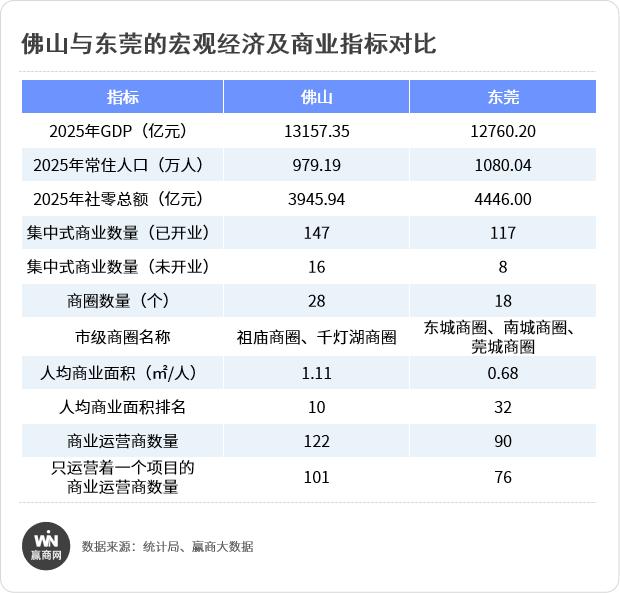
As can be seen from the figure above, under similar macro data, Foshan has 163 centralized commercial projects in total, covering 28 business districts, while Dongguan has 125 centralized commercial projects, covering 18 business districts. Foshan has 38 more centralized commercial projects and 10 more business districts than Dongguan. Foshan's per capita commercial area is as high as 1.11 square meters, nearly twice that of Dongguan.
However, behind this huge supply is extreme fragmentation. Among the 122 commercial operators in Foshan, 101 have only one single project, and there is a lack of giants that can integrate resources across regions. In contrast, the three municipal-level business districts in Dongguan form a strong centripetal force, while Foshan only has two municipal-level business districts, Zumiao and Qiandeng Lake, and a large number of commercial complexes are scattered in more than 20 district-level or town-street-level business districts.
Behind the different fundamentals of urban commerce, we cannot only look at the macro total volume, but break it down into three core variables:
The real regional consumption power is jointly determined by "urban population superimposed on consumption level";
The saturation of the market directly depends on the density of "area supply";
In this dynamic game, high-quality supply will squeeze out inefficient supply.
Although Dongguan and Foshan have similar macro data, their urban forms are completely different.
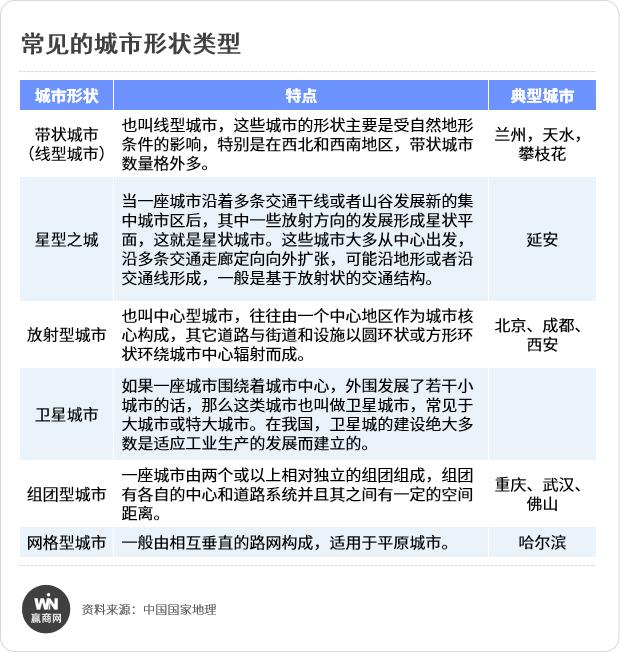
Dongguan is a non-compact linear city, while Foshan is a cluster-type city. This cluster structure determines that Foshan's population and business districts are relatively scattered, and a single commercial project is difficult to form long-distance radiation, which ultimately leads to Foshan's total number of commercial projects being significantly higher than that of Dongguan.
Most cluster-type cities are formed by geographical environment. For example, Chongqing, a mountain city, has formed different clusters separated by mountains, and the confluence of the Yangtze River and the Han River has laid out the distribution pattern of the three towns of Wuhan (Wuchang, Hanyang and Hankou).
But the special feature of Foshan is that it is a cluster-type city created by administrative region adjustment. In 2002, the State Council approved the revocation of the original Foshan Urban District and Shiwan District, and at the same time revoked the county-level cities of Nanhai, Shunde, Sanshui and Gaoming, and set them as five municipal districts of Foshan. Li Yiwei, then Secretary of the Foshan Municipal Party Committee, gave a direct description of this: "In addition to Chancheng District, where the Municipal Party Committee and Municipal Government are located, the other 4 districts under Foshan's jurisdiction were integrated from the originally managed county-level cities during the administrative division adjustment at the end of 2002, thus forming a clustered and scattered urban structure. The specific manifestation is that the built-up areas of the city center are distributed in a scattered manner, and the built-up areas are interlaced with urban and rural areas. From one built-up area to another, you often have to pass through a long distance of rural and urban-rural fringe areas. This special urban composition is very rare across the country."
This cluster structure has directly shaped Foshan's commercial geography. Nanhai, Shunde and Chancheng districts gather more than 90% of the city's commercial complexes, but the commercial complexes are highly scattered in various towns and streets, with limited radiation radius, and it is difficult to form a synergistic effect with each other. As the administrative center, Chancheng is surrounded by two strong districts, Nanhai and Shunde. Its "gathering, radiation and driving capacity is obviously insufficient", and mid-to-high-end consumption has long flowed out.
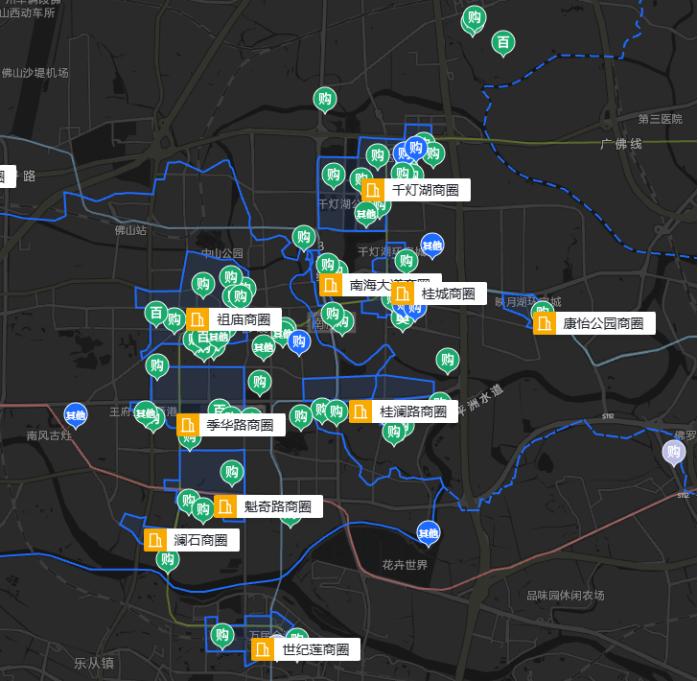
The total population of Nanhai and Shunde is about 7.04 million, accounting for about 71.9% of the city's total. However, when sorted by population density, the top four of the 32 towns and streets are Zumiao Sub-district (Chancheng District), Shiwan Town Sub-district (Chancheng District), Zhangcha Sub-district (Chancheng District), and Guicheng Sub-district (Nanhai District). These four towns and streets are closely connected geographically, with a highly concentrated population, forming the most compact and mature core urban area in the whole of Foshan.
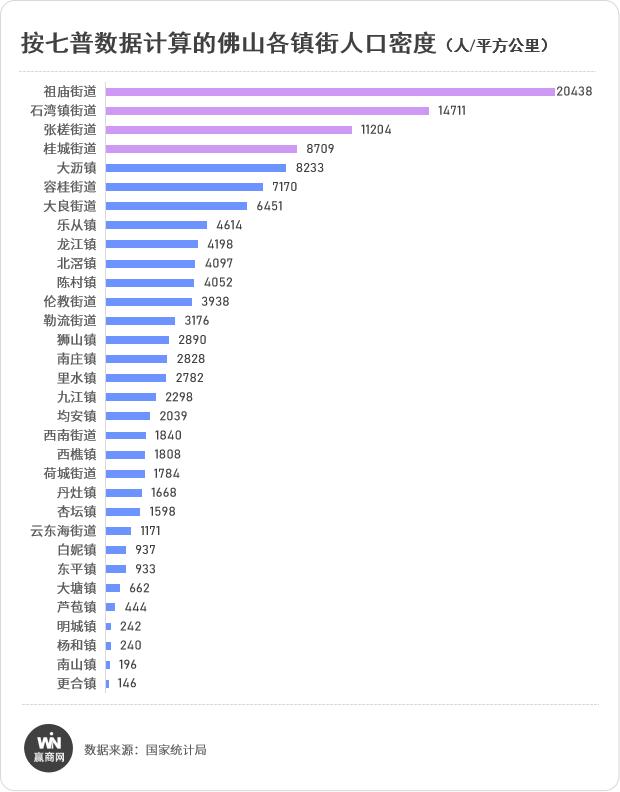
Compared with public facilities such as schools and parks, commercial complexes are more market-oriented supplies. In the above core area, according to the statistics of centralized commercial projects including those not yet opened, the three towns and streets in Chancheng (excluding Nanzhuang) have 36 projects, and Guicheng Sub-district in Nanhai District has 30 projects, totaling 66 projects, accounting for 40.49% of the city's total.
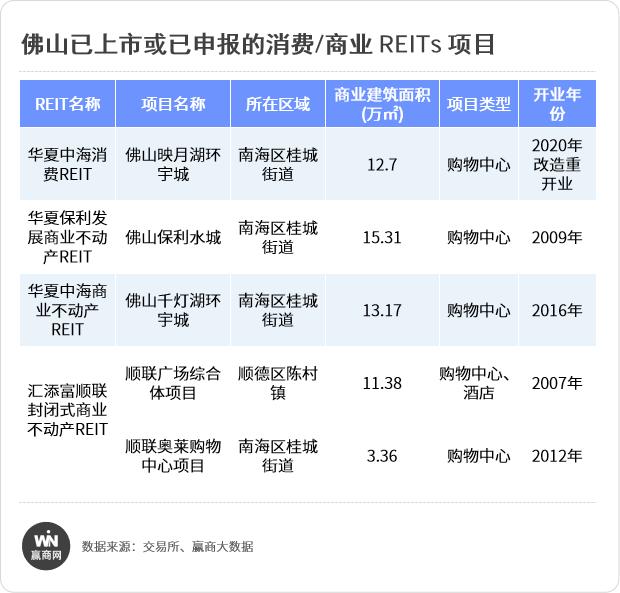
At present, Foshan is the city with the largest number of listed or applied consumer/commercial REITs projects in China (see the table above), and almost all of these high-quality asset targets are anchored in the above core commercial areas.
This trend is even more significant in incremental growth. Led by the phenomenal Foshan MixC World, nearly half of the projects with an area of more than 100,000 square meters that have been opened or are to be opened in Foshan from 2026 to 2027 are concentrated in the core commercial areas of Nanhai and Chancheng.
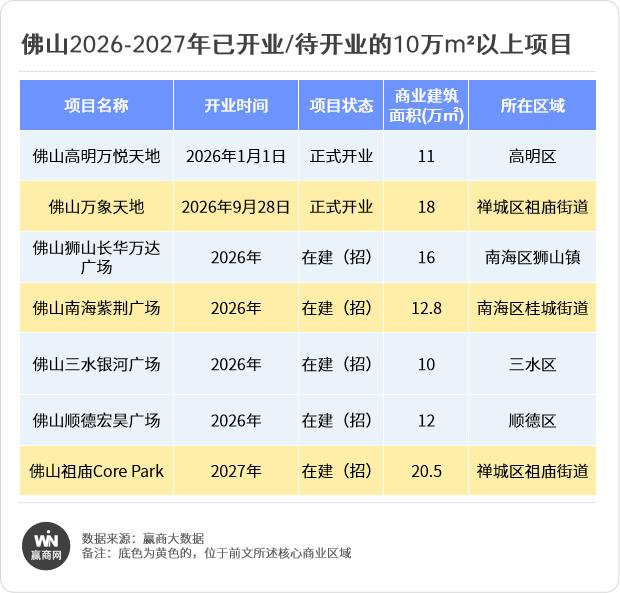
This set of data and charts confirms our underlying logic for evaluating the fundamentals of urban commerce: the real regional consumption power is jointly determined by "urban population superimposed on consumption level"; and the saturation of the market directly depends on the density of "area supply".
After redefining the "most core urban area", we will find that Foshan's commerce is "structurally concentrated". More than 40% of the city's centralized commerce, almost all core REITs assets and future flagship projects are highly condensed in this very small core area of Chan-Gui.
02.
The competitive highland of Foshan's commerce,
Who has been eliminated?
The more core the area is, the fiercer the competition will be. In the dynamic game, the new generation of high-quality supply will squeeze out the previous inefficient supply.
The core area of Chan-Gui in Foshan is crowded with high-caliber players, and representative projects are mainly distributed along two main commercial lines: one is along the Guangfo Rail Transit Line, and the other is the main road Jihua Road.
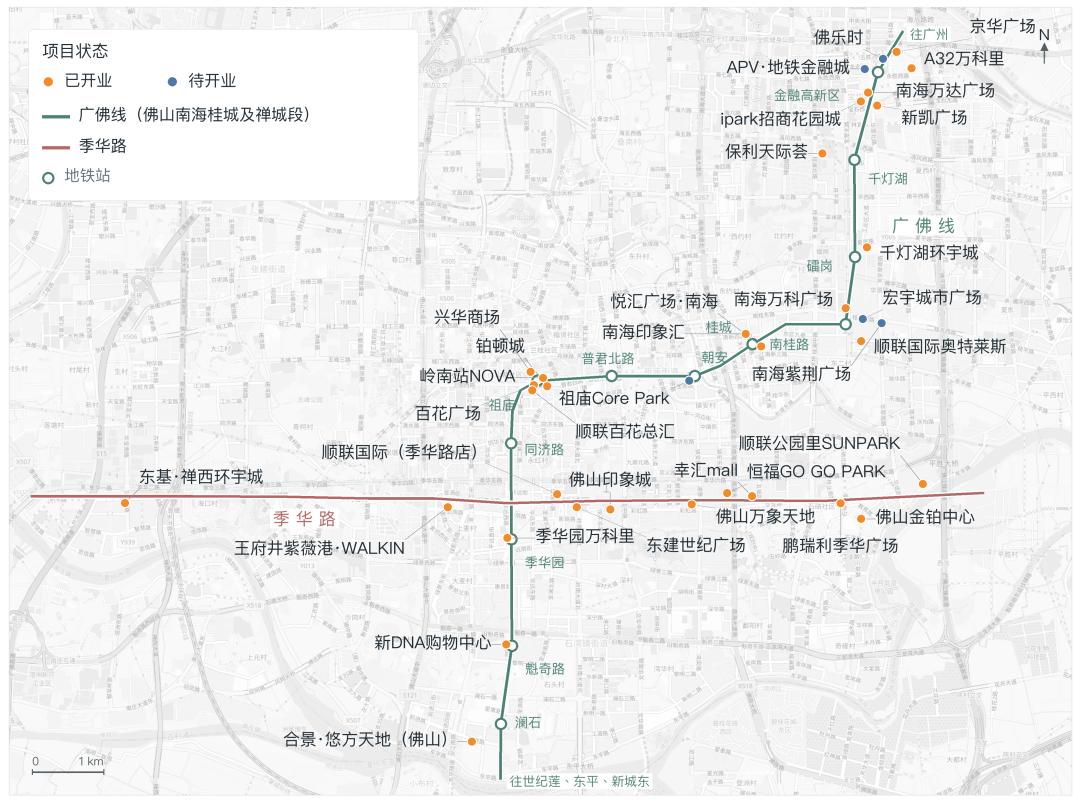
Guangfo Line, Jinbo's entry stirs up the situation
The Guangfo Line (Guangzhou-Foshan) is the first truly cross-city subway in China. It was opened on November 3, 2010, connecting Liwan District of Guangzhou and Shunde District of Foshan, realizing the seamless connection of subways between the two cities. After the line was opened, the average daily passenger flow has long been stable at about 500,000 person-times. A large number of residents "work in Guangzhou and live in Foshan", and the dual-city life has become normalized, becoming a model of the integration of the Pearl River Delta metropolitan area. It can be said that the Guangfo Line has profoundly changed the passenger flow distribution in this area.
The Guangfo Line has a total of 25 stations, including 10 in Guangzhou and 15 in Foshan, and there are 11 stations in the core commercial area of Chan-Gui.
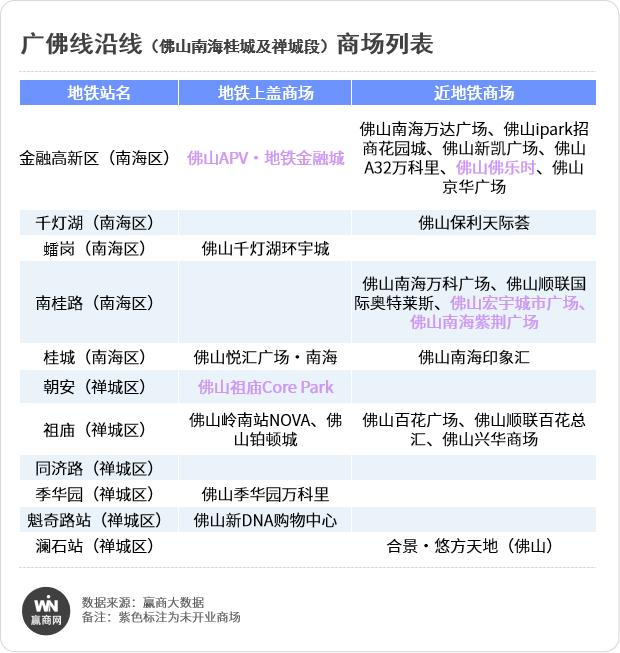
However, there are only 8 shopping malls directly above the subway stations. Although the passenger flow is sufficient, their fates are different.
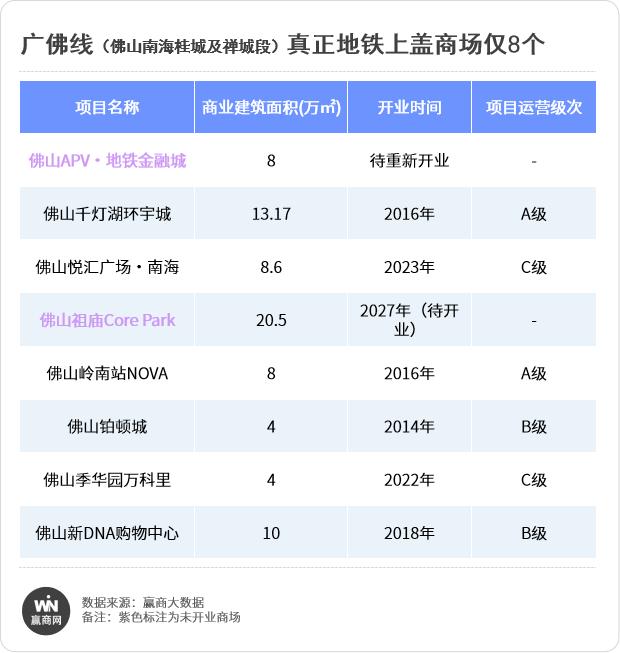
Foshan APV·Metro Financial City, even though it occupies the excellent location of "the first station of the Guangfo Line entering Foshan" with high-quality customers, has long performed sluggishly due to the shortcomings of building hardware and successive changes of operators. According to the data, Metro Financial City opened on August 9, 2015, and it has been 9 years so far. It was once operated by Tianhe City in the middle of the period and renamed "Nanhai Tianhe City". But the good times did not last long, Tianhe City announced its withdrawal after less than 3 years of operation. At the end of 2024, Metro Financial City introduced a new operator — APV, whose full English name is A PLEASANT VENUE, with the slogan "a pleasant place".
Only UNI MALL Qiandeng Lake and Lingnan South Road NOVA are rated as Class A operation. In particular, UNI MALL Qiandeng Lake, with the growth of the entire Qiandeng Lake area, received more than 20 million passengers in 2025, with sales exceeding 2.1 billion yuan. It has maintained a compound annual growth rate of 7% since its opening, ranking steadily among the top commercial complexes in Foshan. As the advantageous track of the project, the catering sector, which has long ranked first in Foshan's food popularity list, has further developed the segmented catering fields of "must-eat list + popular check-in list + petty bourgeoisie style", and increased its investment in high-end beauty products from 2022, successively introducing Dior Beauty, CHANEL pop up, and SEPHORA brands, becoming the first shopping mall with a high-end beauty cluster of China Overseas UNI Commerce in South China.
Next, Zumiao Core Park will open in 2027. As Jinbo Commerce's first benchmark project in the Guangfo region that is self-built with land acquired and fully self-owned, the total construction area of the project is about 200,000 square meters, of which the shopping mall is about 150,000 square meters. The characteristic sky street on its top floor has now started negotiations for the first batch of shops, with flat-floor shops of 80-300 ㎡ suitable for coffee, desserts, cultural and creative products, and light meals; single-family shops of