Why on earth is he the one who represents NVIDIA to reject Jensen Huang's return?
It is widely believed that top business leaders are all people with extraordinary energy. Elon Musk, who just landed in China, managed to take a connected interview for the DealBook Summit during his break from attending APEC in Shenzhen, and once again stood up for his old friend Jensen Huang.
"It's equivalent to kicking Michael Jordan out of the team while the team is on a winning streak," he said, expressing that he found this totally incomprehensible. He had previously stated that if NVIDIA didn't want Jensen Huang, he would be more than willing to recruit his old friend to his own company. Elon Musk, together with Tim Sweeney, CEO of Epic Games, also signed an open petition calling on NVIDIA to bring Jensen Huang back, and the number of signatories of this petition has quickly exceeded 190,000.
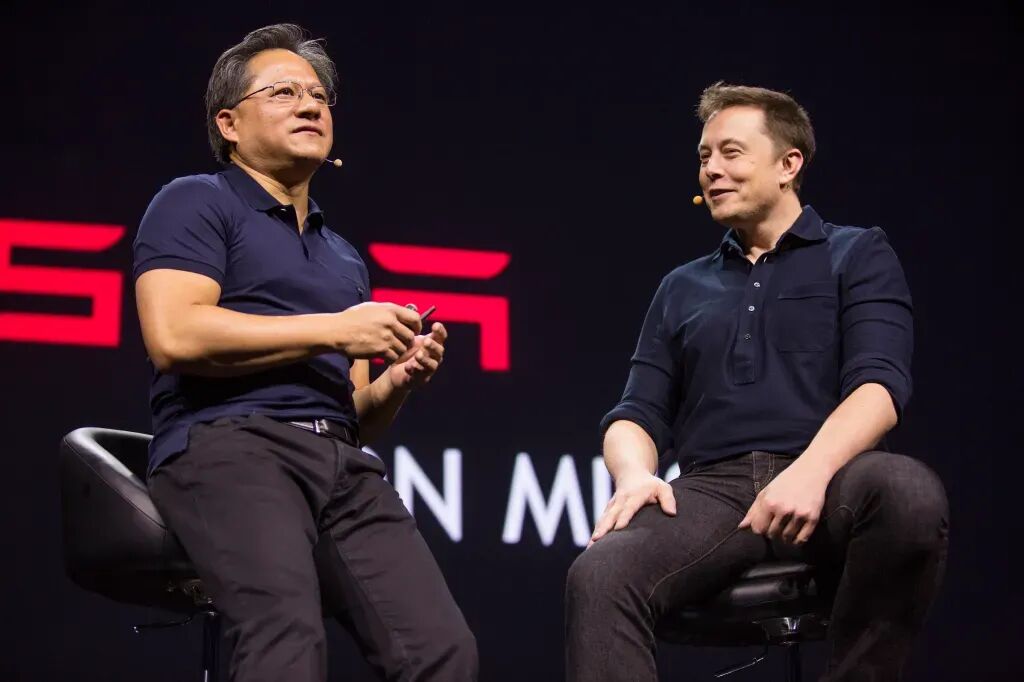
Elon Musk and Jensen Huang. Source: Kim Kulish / Corbis / Getty Images, reposted from TechCrunch
The entire Silicon Valley is speaking up for Jensen Huang. At the "Silicon Valley and the World" conference held in Menlo Park, Jeff Bezos, founder of Amazon, also delivered a highly influential comment. Although Bezos cautiously stated that he did not know the details of the behind-the-scenes investigation and could not directly take sides on whether Jensen Huang should return, he highly praised Jensen Huang as "an extraordinary person who founded and built an extraordinary company with extreme effort and foresight, who deserves admiration and respect no matter what happens." Then he changed his tone and directly issued a warning to the NVIDIA board of directors: "If you don't bring Jensen Huang back, I will never hire an external CEO brought in from outside — NVIDIA is far too complex."
However, the complex NVIDIA only made a simple statement: It has no intention of reappointing Jensen Huang.
The person who made the statement on behalf of the board of directors had a clear, crisp voice. In the live audio of the conference call, he even sounded a little young, making people mistakenly think that some professional manager was pulled up to the stage to say these words as a host.
In fact, the person who rejected Jensen Huang on behalf of the board of directors is Harvey C. Jones, the independent director with the deepest ties to NVIDIA and the newly appointed chairman of the NVIDIA board of directors. He is already 73 years old this year, and has witnessed NVIDIA's entire 33-year growth history.
A chip industry veteran born for "power transition"
Before this month, for the vast majority of ordinary investors who only know "Jensen Huang in leather jacket", Harvey Jones was a name that almost hid behind the scenes. As early as 1993, when Jensen Huang and his two partners drew the blueprint for NVIDIA at a Denny's restaurant in California, they received investment from HSG and Sutter Hill. However, the investors believed that the founding team composed of several engineers needed an "operating guy" with corporate management experience to join the board of directors, so the founders invited Harvey Jones.
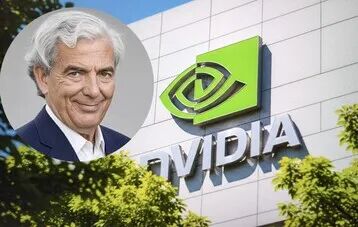
Harvey C. Jones. Source: Nantucket Current / Brian Sager
He graduated from Georgetown University in his early years, majoring in Mathematics and Computer Science, and later obtained a Master of Science in Management from MIT. This combined training of "fundamental mathematical and engineering knowledge + modern enterprise management" laid the foundation for his career trajectory over the next 40 years.
In 1981, Jones, who was less than 30 years old, co-founded Daisy Systems, a pioneer company in the field of Computer Aided Engineering (CAE) and one of the first batch of CAE companies. Jones was mainly responsible for sales and marketing in the early stage, and later was promoted to president and CEO. During the tenure of the entire founding team, the company's revenue grew from almost zero to about 122.5 million US dollars in fiscal year 1985, and it went public in 1983.
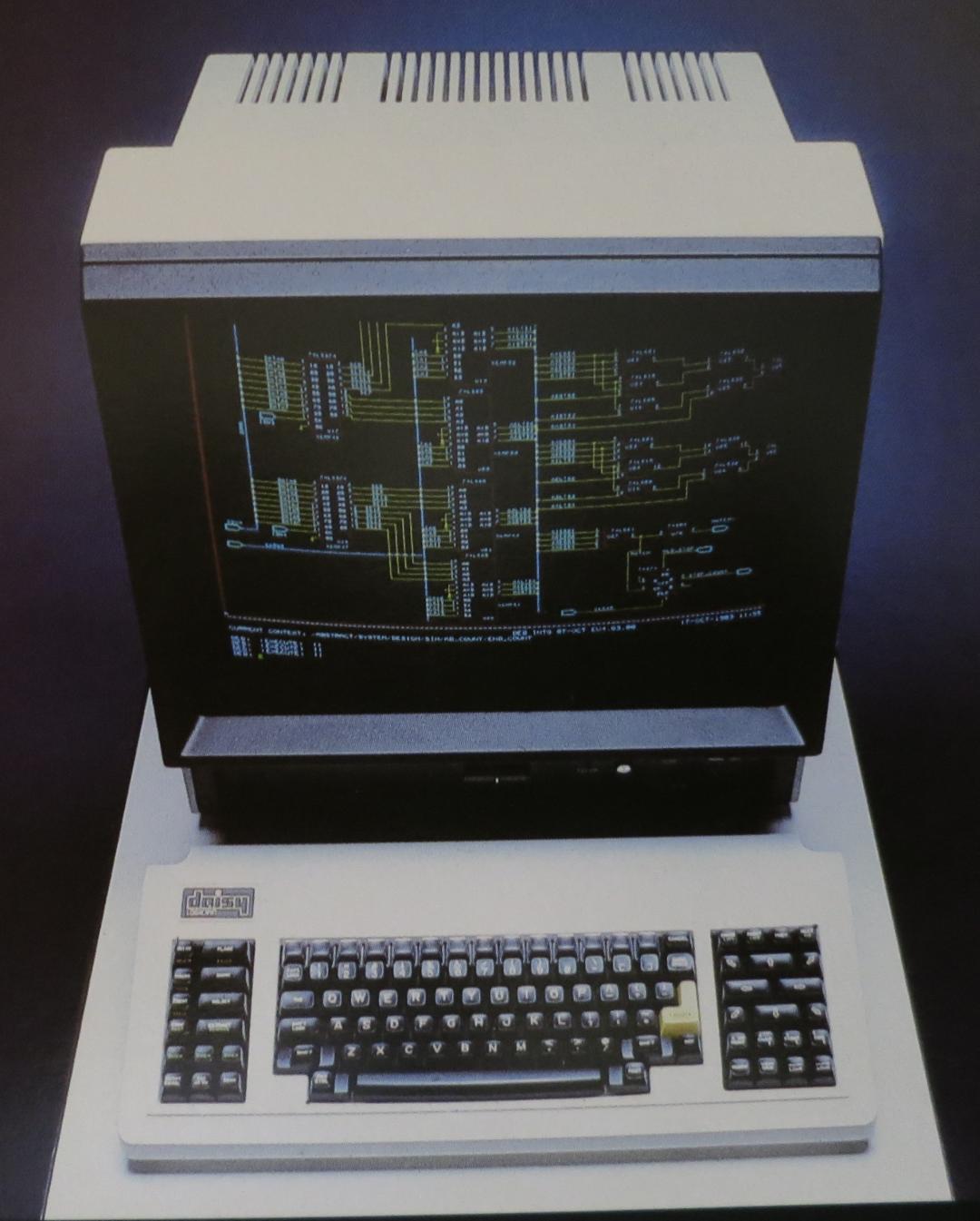
The Logician CAE workstation launched by Daisy Systems in the 1980s. Source: Steve Elliott / Wikimedia Commons, CC BY-SA 2.0
But Daisy bet on a closed route integrating self-developed workstations, self-developed operating systems and software. When general-purpose workstations gradually matured and competitors could develop software on standard hardware, Daisy, burdened with a huge hardware system and a large base of existing customers, turned slower and slower. Jones left in 1987, taking away a crucial lesson: you cannot overindulge in existing customers and installed base, if you fail to phase out your own products proactively, your competitors will phase you out.
After leaving the company he founded, he embarked on the most substantial practical experience in his career: from 1987 to 1998, he led Synopsys, the global giant in the field of Electronic Design Automation (EDA).
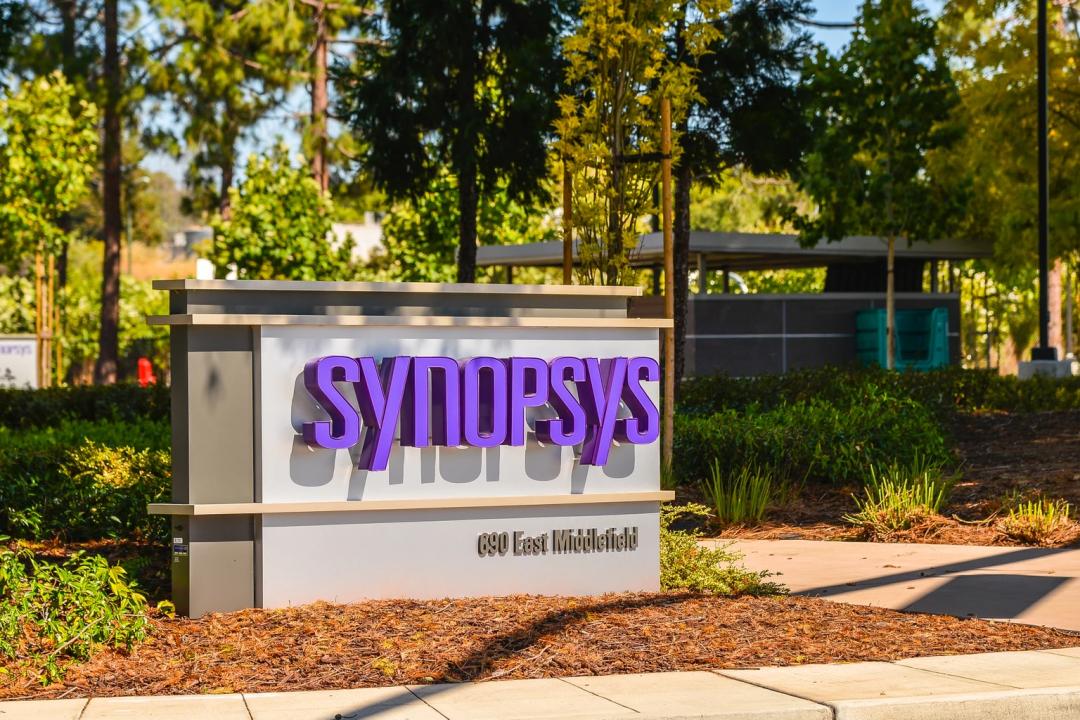
Synopsys campus. Source: Getty Images
It is precisely with EDA software like that from Synopsys that global semiconductor companies can design increasingly sophisticated chips. After he joined, he established sales, marketing, operation and international channels, and was personally responsible for early sales recruitment. Synopsys' revenue grew from about 130,000 US dollars in 1987 to 148.2 million US dollars in fiscal year 1993; the company went public in 1992, and once occupied about 70% of the market share of logic synthesis tools.
There are countless successful veteran entrepreneurs in Silicon Valley, but what makes Harvey Jones special is that he personally managed the handover between founder and CEO of a top chip company.
After serving as CEO of Synopsys for seven years, in 1994, Harvey Jones voluntarily stepped down to the position of executive chairman, and smoothly passed the CEO scepter to Aart de Geus, co-founder of the company. During his tenure as executive chairman to escort the transition, Synopsys completed the critical leadership transition, and Aart de Geus then steadily led Synopsys for about 30 years.
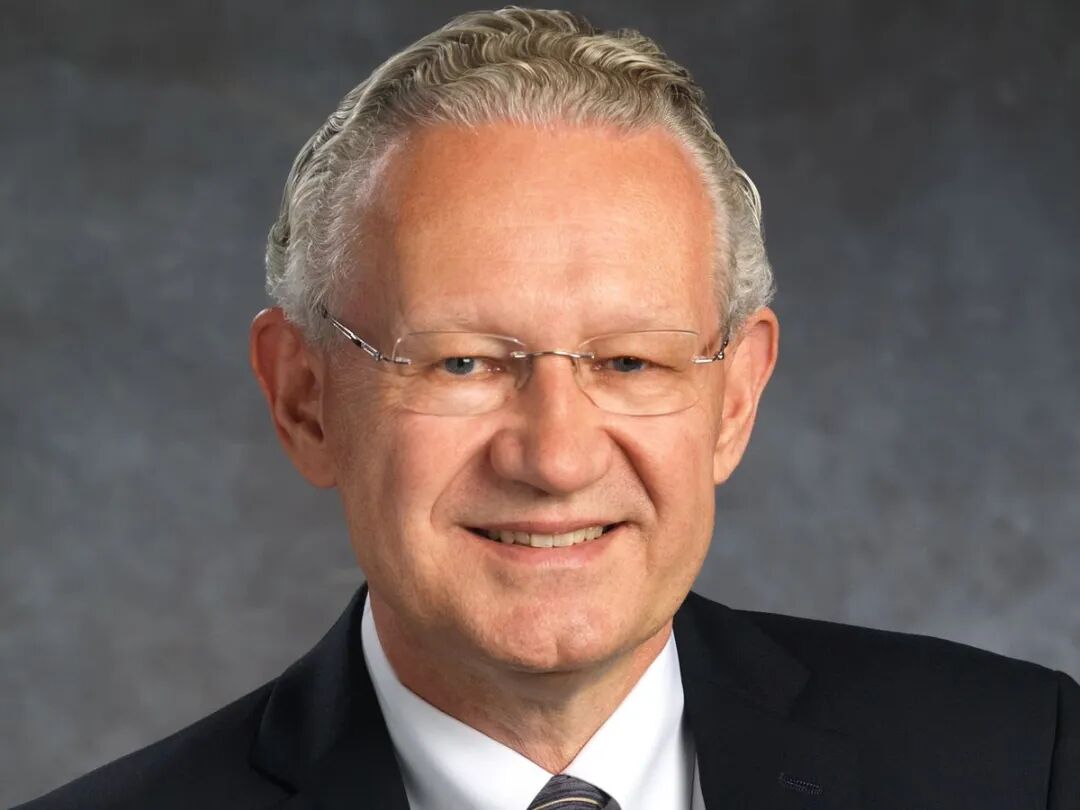
Aart de Geus, co-founder of Synopsys, took over as CEO from Harvey Jones in 1994. Source: IEEE Spectrum
Although it was a professional CEO handing over power to the founder back then, while today at NVIDIA the founder suddenly left and the board of directors is looking for a successor, having personally experienced the top power transition of a core chip enterprise under the leadership of the chairman, he knows very well where the transition is most likely to stall, and also knows when the board of directors should make a decisive decision.
What is more special is that he has sat in NVIDIA's power center for a full 33 years, and is exactly in charge of the governance and succession defense line.
Over the past 30 years, NVIDIA has never set up an independent chairman of the board. Jensen Huang served as president, CEO and core director at the same time. In the division of responsibilities of the board's professional committees, Jones has long been in charge of the Audit Committee and the Nominating and Corporate Governance Committee. The latter, in the US stock corporate governance structure, is exactly the core department responsible for supervising the composition of the board of directors, compliance review of senior executives and the succession plan of the top leadership.
He happens to stand at the only intersection of the two: he has witnessed the entire process of NVIDIA growing from a small graphics chip factory in 1993 to a 4-trillion-US-dollar behemoth, is familiar with every core executive and chip architecture cycle, and also has sufficient industrial seniority and governance prestige.
The person who stands out at this time to stabilize the situation on behalf of the board of directors, if he is an external professional director who does not understand chips, cannot suppress more than 40,000 engineers inside NVIDIA; if he is a close follower who only obeys the founder's orders, he cannot prove to regulators and institutional shareholders that the corporate governance has achieved independent correction.
He not only understands the R&D law of the semiconductor industry, but also does not depend on the personal aura of a single founder, and has witnessed and participated in NVIDIA's 33 years of near-death experiences, IPO, GPU transformation, CUDA and AI boom — there is no more suitable candidate than him.
One reference is his identity as "chairman". Before that, NVIDIA never had a chairman. On the day Jensen Huang resigned, the board of directors did not follow the original simple arrangement, but formally created the position of chairman for the first time, and appointed Jones to this position.
In other words, this position was largely created for "NVIDIA after Jensen Huang". Jones did not come forward to speak because he originally had a status above other directors, but because the board of directors was prepared to switch the company from the "CEO and founder-centric system" to the "board-led, management-executed" system, and then selected him as the representative of this new order.
At the same time, he will not become the next CEO. At the age of 73, with his own family investment institution and achieved financial independence, and having long stayed behind the scenes before, he is suitable to be a transitional authority with no obvious suspicion of seizing power. He can preside over the CEO selection and restrict the interim management, but it is very unlikely that he will take the company for his own benefit by taking advantage of the crisis.
A leadership transition without power division, and NVIDIA's "founder paradox"
After making a clear statement at the earnings call, Harvey Jones, together with interim CEO Colette Kress, held an all-hands internal meeting for 49,000 employees.
Just a few minutes after the meeting started, Colette Kress not only responded to the most concerning issue of employees about compensation, but also announced on the spot that NVIDIA will advance the annual salary raise and additional equity grants that were originally scheduled to be implemented next year to December this year. She said, "The top thing we want to do is take good care of every employee here, make sure everyone feels secure about this company, and doesn't have to worry about compensation."

Colette Kress, interim CEO and Chief Financial Officer of NVIDIA. Source: NVIDIA Newsroom
And Harvey Jones once again faced the employees' question of "why can't we bring Jensen Huang back". He reiterated that the unanimous reason for the board of directors to accept the resignation is Jensen Huang's personal behavior and the "lack of candor" exposed during the investigation. More clearly than what he said on the conference call, he expressed that NVIDIA will not, and it is impossible to find a "Jensen clone"; the board of directors has hired top headhunting firm Heidrick & Struggles to evaluate internal executives (such as Colette Kress, CUDA veteran Ian Buck) and external candidates (such as Rene Haas, CEO of Arm who once worked at NVIDIA for seven years) at the same time, and clearly stated that "we will never compromise on standards just to meet a tight timeline."
Even if Elon Musk is shouting outside that "it's like kicking Jordan out", the NVIDIA board of directors is basically ready to open the door to the "post-Jensen Huang era".
Seeing this, many people will habitually compare this scene with the history of the Apple board of directors driving out Steve Jobs in 1985, and even expect that NVIDIA will stage a "king's return" drama in the future.
But today's NVIDIA is not following the same script as Apple in 1985.
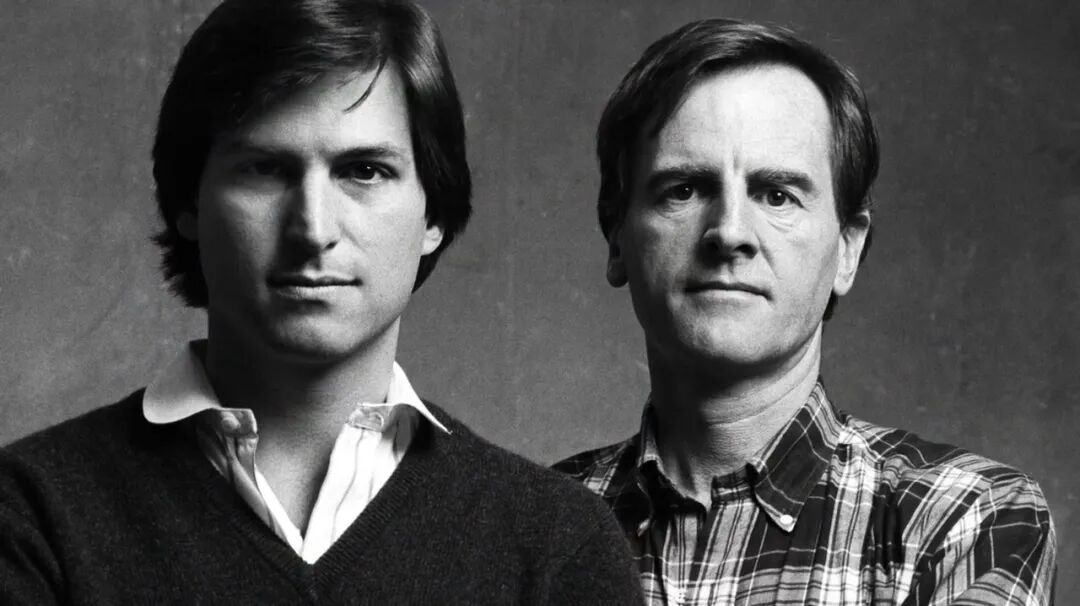
Steve Jobs and John Sculley, photographed in 1985. Source: all about Steve Jobs
The turmoil of Apple in 1985 was essentially a fight between two completely opposing powers and routes: on one side was the founder Steve Jobs, who was in charge of the Macintosh division and advocated product supremacy, on the other side was the airborne CEO John Sculley, who represented traditional marketing and financial discipline. The two sides completely broke up over corporate strategy, product pricing and power ownership, and when the board of directors took sides, they chose the latter.
Moreover, the Apple board of directors did not initially plan to drive Steve Jobs out completely. He still retained the position of chairman of the board, and was arranged to think about long-term products and new technologies; a few months later, because he could not accept the state of having no real power, he planned to take several core employees to found NeXT, so he resigned from the positions of chairman and director.
In fact, after Steve Jobs left, Apple still operated for 11 years, and also had good performance during that period. In 1990, its profit even set a record of about 474 million US dollars; the Macintosh, LaserWriter and desktop publishing markets all entered a real commercial growth period after Steve Jobs left.
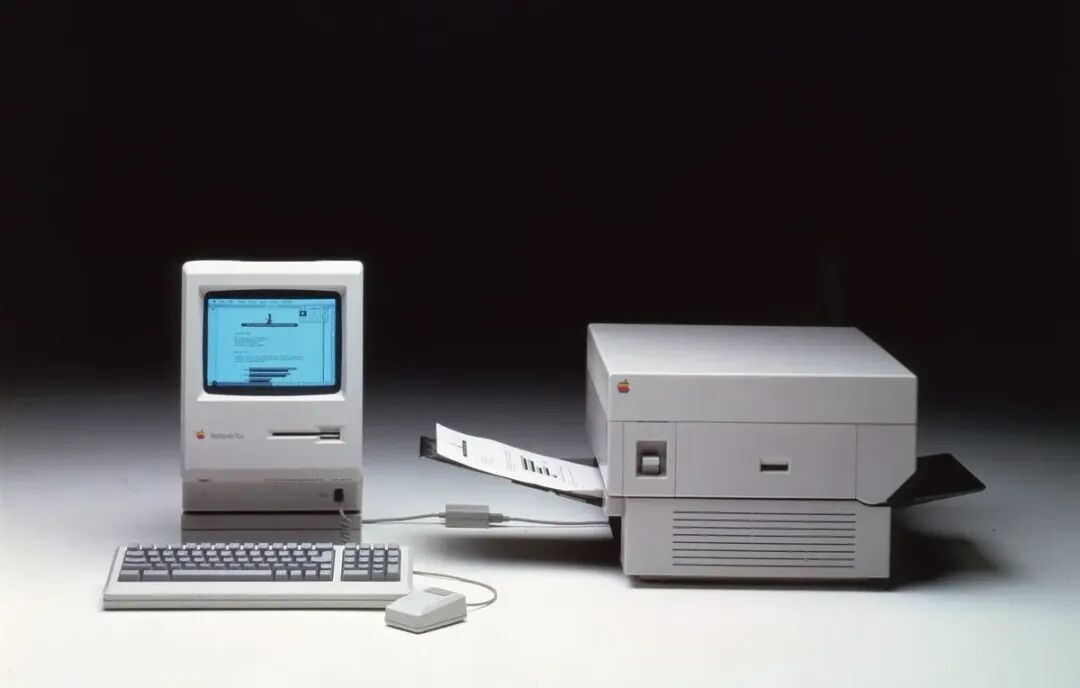
The desktop publishing system composed of Macintosh and LaserWriter was an important business that continued to drive Apple's growth after Steve Jobs left. Source: Sultramedia
However, Sculley used the operational inertia to keep Apple growing for seven or eight years. The real problem was that the company later could not figure out where the next-generation operating system, low-cost