A Chinese embroidery machine is sold for 16,000, yet Americans are still scrambling to buy it?
On the crowdfunding platform Kickstarter, more than 2,000 overseas buyers are snapping up a Chinese embroidery machine that has not yet been shipped.
This machine, named HALO-5, has a minimum selling price of 2299 US dollars, which is nearly 16,000 RMB.
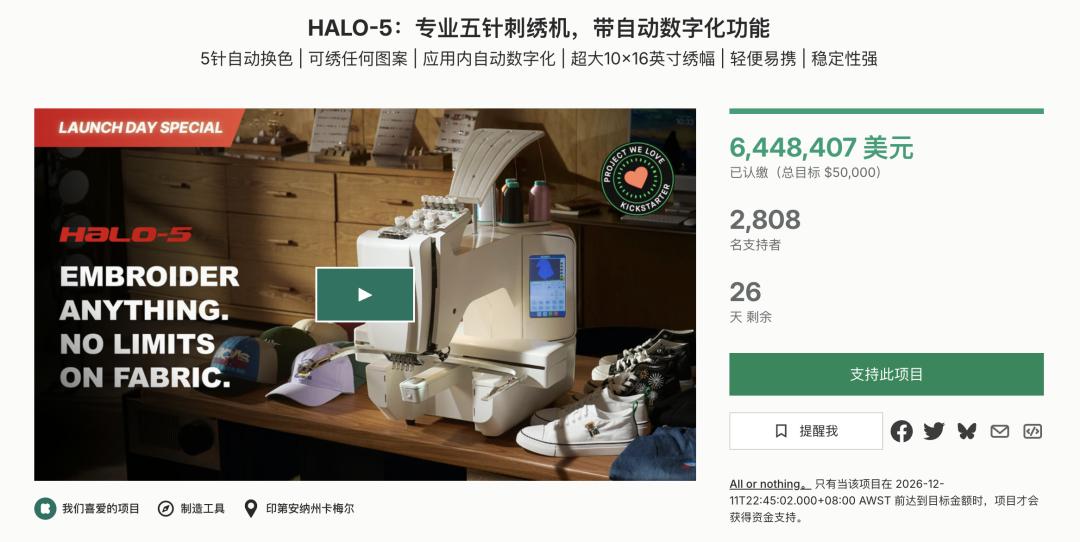
The price is not cheap, but it has not stopped the enthusiasm of overseas consumers at all. As of mid-November, HALO-5 has received more than 6 million US dollars in crowdfunding support, equivalent to more than 40 million RMB, and nearly 80% of the supporters are from the United States.
Spending more than 2,000 US dollars on an embroidery machine, do Americans love embroidery that much?
They really do.
01. Americans who love embroidery all their lives
How to sell an ordinary baseball cap to Americans at a high price? It's simple, just embroider his name on it!
The American brand Stoney Clover Lane knows this "name tax" business logic very well. Its small nylon storage bag sells for 68 US dollars. The product looks unremarkable: square, with a zipper, there is nothing special except for more color options.
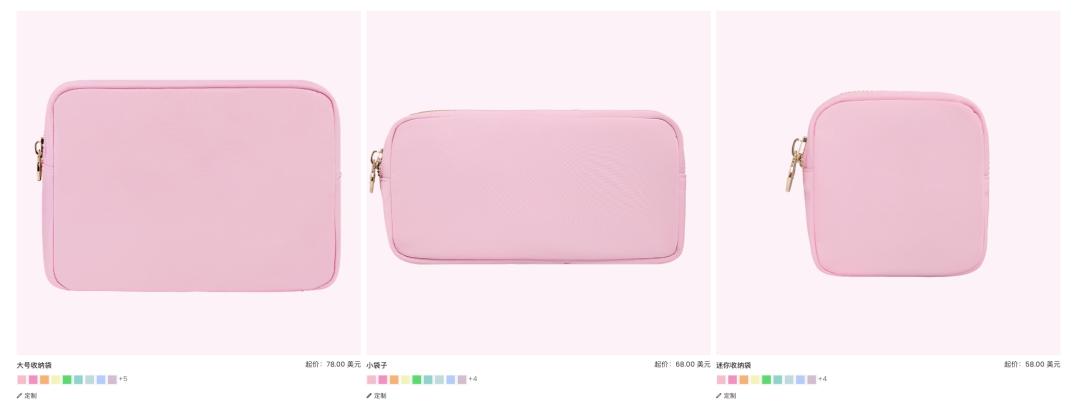
What is really expensive is the letter patch on the bag. The price of letter patches varies by style, and a common one sells for 12 US dollars each. If you want to sew them on the bag, you have to pay an extra 15 US dollars for the sewing service.
Assuming the customer's name is EMILY, the five letters will cost 60 US dollars. Including the sewing fee, a storage bag with an original price of 68 US dollars will soon rise to 143 US dollars, equivalent to more than 1,000 RMB.
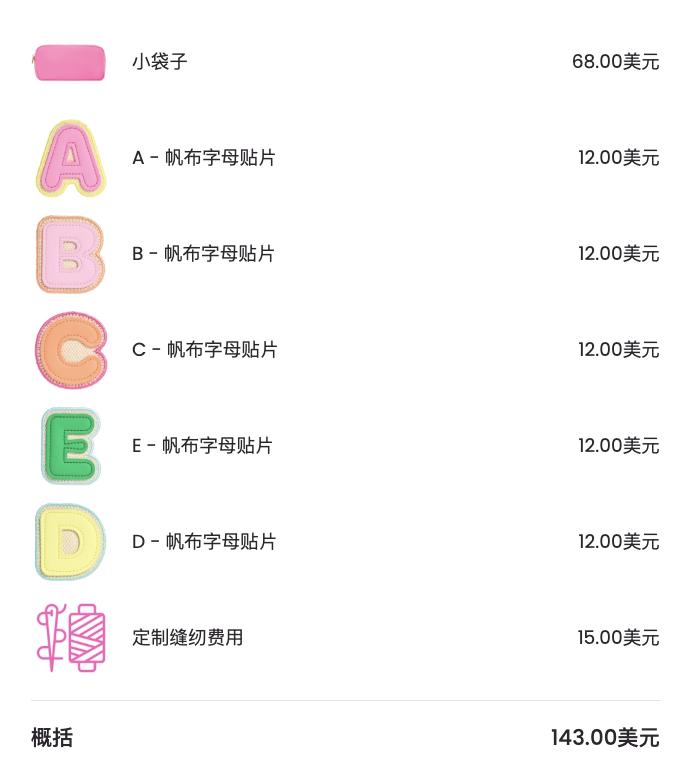
Just adding the name costs 75 US dollars, which is more expensive than the bag itself. The longer the name, the more money you spend. According to this calculation, a name like Niohuru Zhenhuan is far less cost-effective than a name like Zhang San.
Relying on these colorful letter bags, Stoney Clover Lane has successively opened many stores, entered the high-end American department store Nordstrom, and even launched more than 300 co-branded products with retail giant Target. As early as 2019, more than half of the brand's sales came from customized online products.
In fact, Americans have loved adding names to their belongings for almost a hundred years.
As early as 1933, the American home magazine American Home called the initials of names a kind of "quiet and decent showing off". At first, people liked to leave their initials on towels, bed sheets and silverware, and later even baby diapers and cigarettes were not spared.
The southern United States is particularly keen on this. From pajamas, suitcases, baby blankets, wedding invitations, and even the rear windows of cars, you can see initials everywhere.
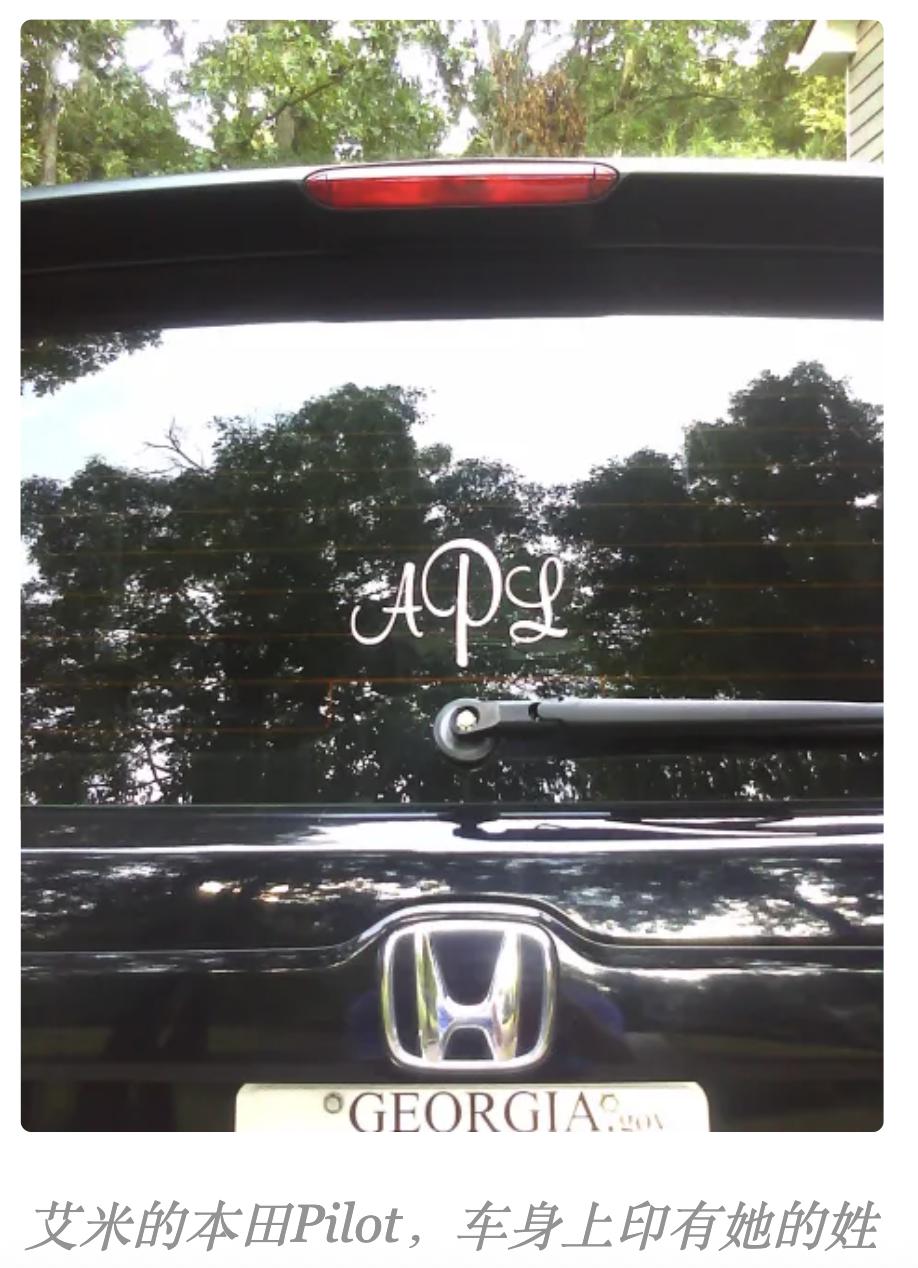
People love adding names so much that the American southern life magazine Southern Living even wrote a special article to advise readers to stop at the right time: If the pillowcase already has initials, leave the tissue box on the bedside table alone.
Nowadays, for young people, simply embroidering names is no longer enough.
The American outdoor brand L.L.Bean has a Boat and Tote canvas bag launched in 1944, which was originally used to carry ice. For decades, customers have always been able to embroider their initials on it.
In 2021, a New York girl named Gracie Wiener began to collect all kinds of canvas bags embroidered with weird phrases and post them on social media. By the next year, this trend became completely popular.
Some people embroidered "FAT & HOT" on their bags, some wrote "DUMP HIM", some gave themselves the title of "CULT LEADER", and some even embroidered "Prada" and "Birkin" on canvas bags worth dozens of dollars, pretending to carry a luxury item.
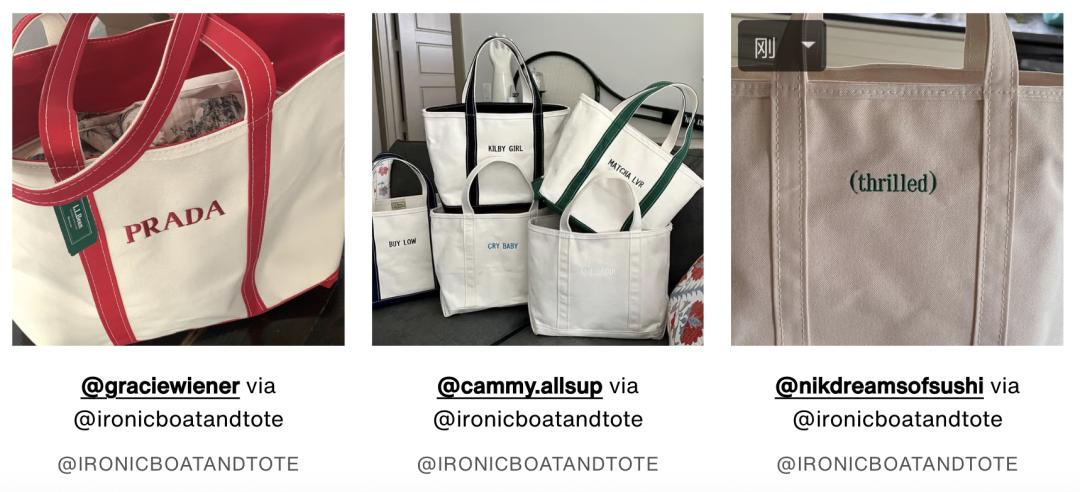
These playful embroideries made the 80-year-old classic canvas bag popular again. From 2021 to 2023, the sales volume of Boat and Tote increased by 64%, and it once became the best-performing product of L.L.Bean in attracting new customers.
By 2026, Americans are still coming up with new ideas. A girl who just graduated from law school embroidered "Sue me!" on her work bag; a netizen embroidered "ASPIRING RETIREE" on her bag.
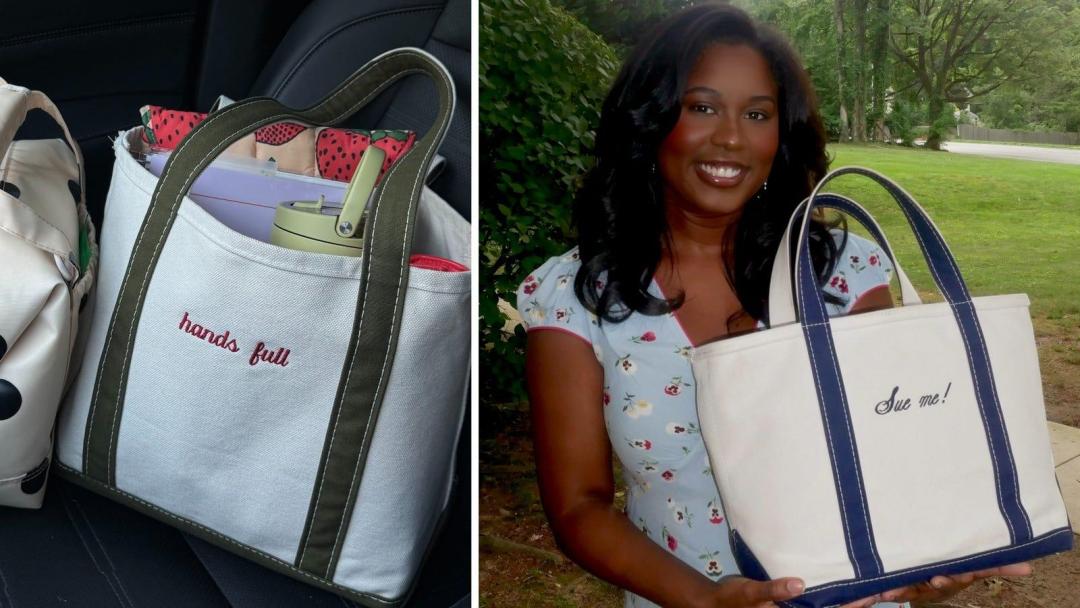
The brand revealed that more than 80% of Boat and Tote orders come with custom embroidery. Americans' canvas bags have almost become walking personal signatures.
Of course, canvas bags are just the tip of the iceberg. In the United States, embroidery has business opportunities from daily wear to various anniversaries.
Baseball caps, hoodies, and T-shirts are the most common customized products. Companies will embroider logos on their employees' work clothes, sports teams will customize team emblems, and cafes and restaurants will also embroider their own signs on aprons; embroidery is also indispensable for gift giving. Embroider names on newborn blankets, embroider the names and dates of the newlyweds on wedding handkerchiefs, and at Christmas, even the gift socks hanging by the fireplace have to be embroidered with names for the whole family respectively.
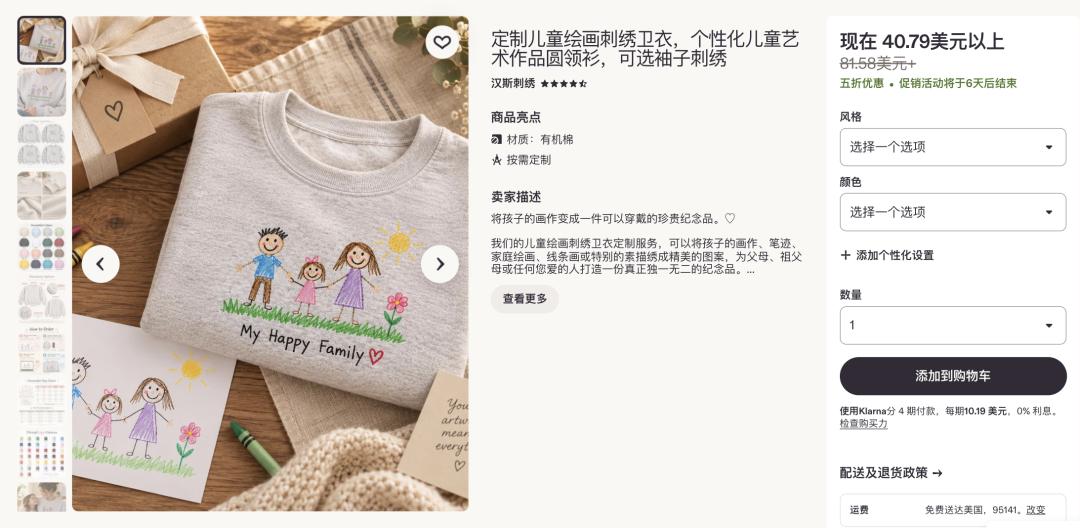
On the American handmade e-commerce platform Etsy, such products are varied. Some merchants specialize in embroidery of children's drawings: children draw a few random strokes on paper, parents take a photo and upload it, and the merchant can embroider these wobbly patterns on the hoodie, with a price starting from about 41 US dollars.
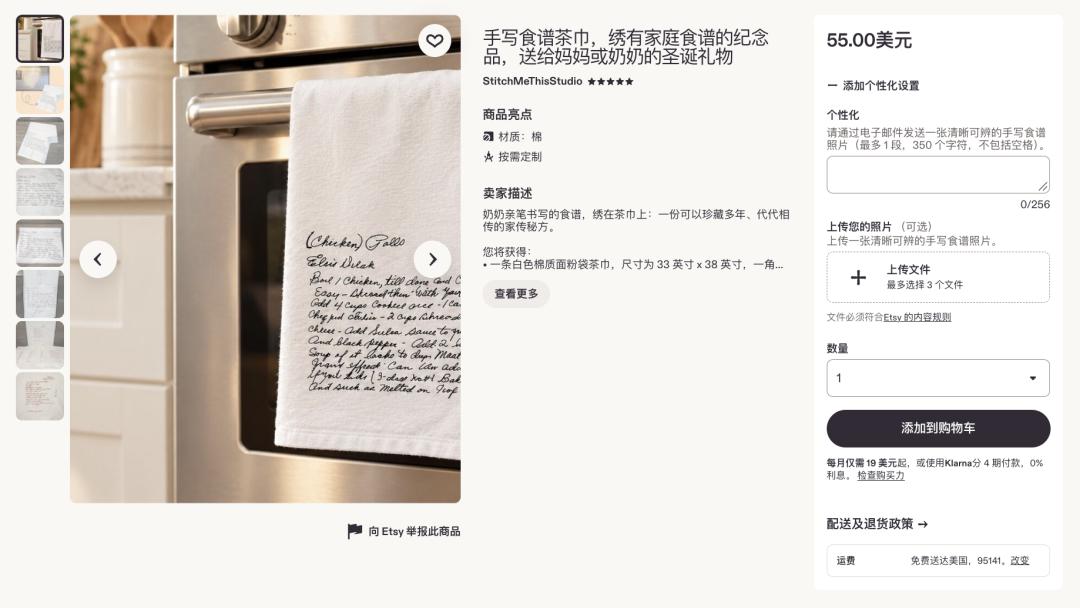
Some merchants provide a special custom kitchen towel service: customers upload a handwritten recipe, and the merchant will embroider the dish name, ingredients and practice on the towel according to the original handwriting.
Such a towel sells for 50 US dollars. The thing that was originally used to wipe hands has suddenly become a family heirloom souvenir that can be hung in the kitchen.
02. It's too expensive, let's embroider by ourselves
Americans love custom embroidery, and merchants charge very high prices.
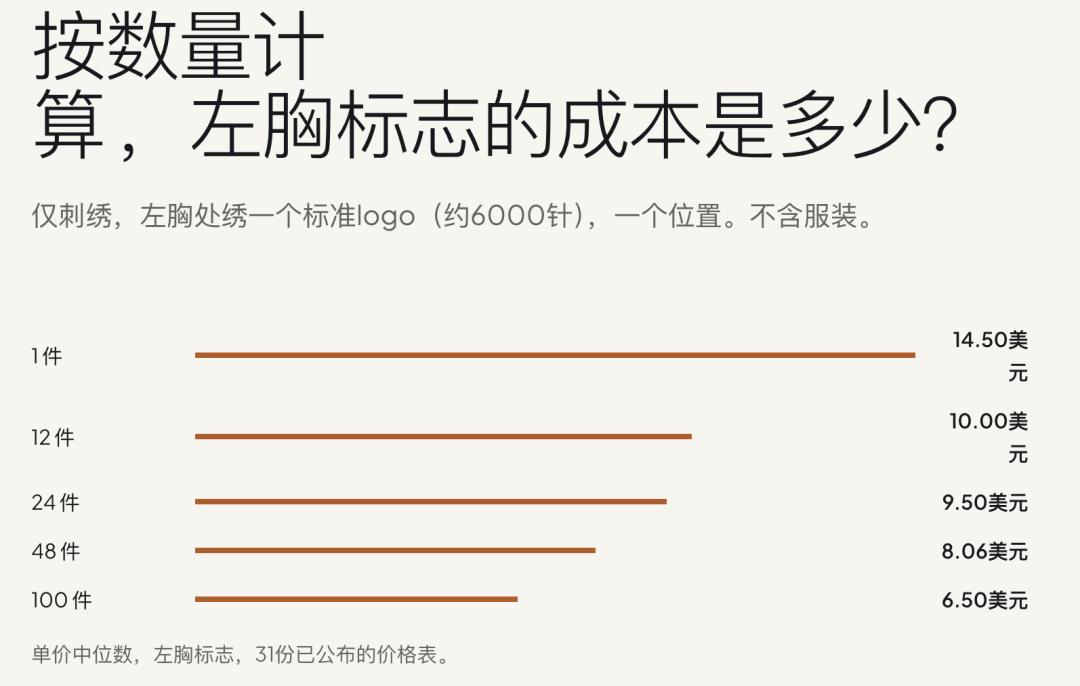
This year, an American embroidery studio surveyed 31 public quotation sheets and found that the median processing fee for embroidering a small pattern on the chest of a single garment is about 14.5 US dollars, not including the garment itself. If a brand new pattern needs to be created, an additional plate-making fee is usually required, with a median of about 35 US dollars.
What is plate-making? It is to convert ordinary pictures into stitch files that embroidery machines can recognize, telling the machine where to insert the needle, how dense to embroider, and when to change colors. The same picture can be used repeatedly, but every time you want to embroider a new pattern, you need to re-make the plate.
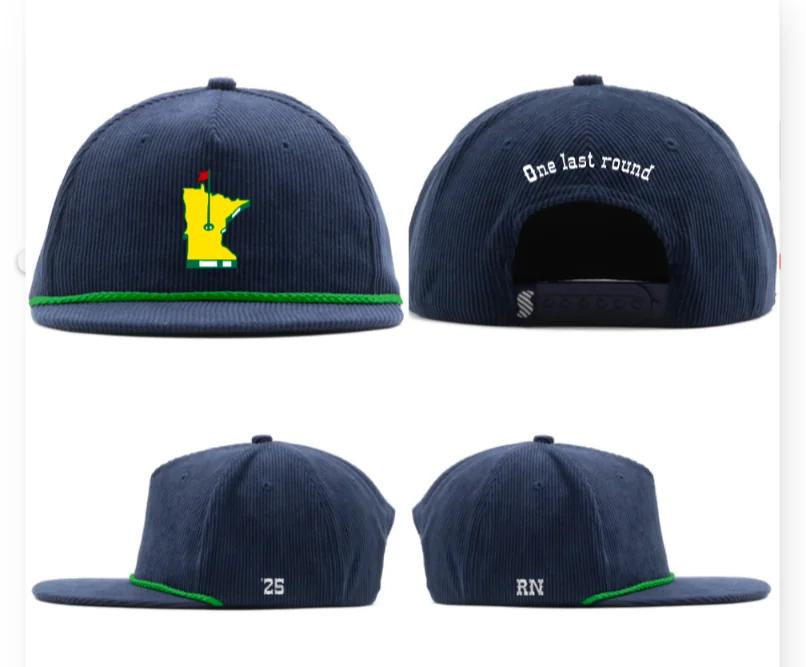
When the pattern is complicated, the price is even more scary. In 2025, an American netizen wanted to customize six hats, and the merchant quoted 420 US dollars, an average of 70 US dollars per hat. He posted the picture and price on Reddit to ask everyone to help see if it was reasonable.
So some people began to wonder, since embroidering for others is so expensive, can we just buy a machine by ourselves?
In 2021, an American netizen asked about embroidery machines on Reddit for his girlfriend. He said that his girlfriend thought the price of custom embroidery on the market was too expensive, so she wanted to buy a machine by herself, and then provide cheaper services to friends later.
The idea is good, but it is not so easy to achieve.
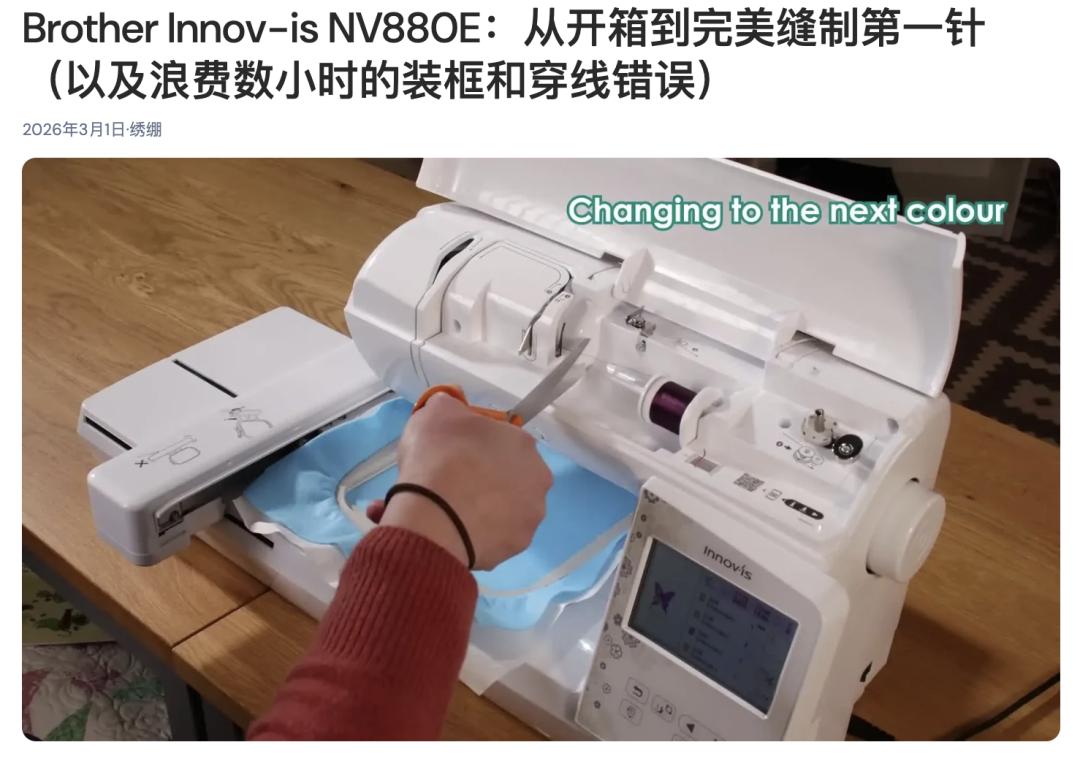
In the US market, entry-level household embroidery machines can be bought for hundreds of dollars, but most of them only have one needle. For example, if you want to embroider a small flower with five colors, every time the machine finishes one color, you have to go over to cut the thread and re-thread. It's okay to embroider one or two pieces occasionally, but if you often make complex patterns, changing threads alone is enough to make you tired.
What's more troublesome is plate-making. Embroidery machines are not like printers, which can work by just throwing a picture in. If you want to embroider your child's drawing or pet photo on clothes, you have to learn professional software, or pay someone to convert the pattern into stitches.
Of course, there are more convenient multi-needle embroidery machines. For example, a four-needle embroidery machine from the Japanese sewing machine brand Janome is still priced at 4999 US dollars even on promotion. Higher-end commercial machines even sell for tens of thousands of dollars.
By comparison, it is easy to see why HALO-5 has attracted so much attention.
A four-needle machine sells for 4999 US dollars, but HALO-5 has five needles, and its starting crowdfunding price is only 2299 US dollars.
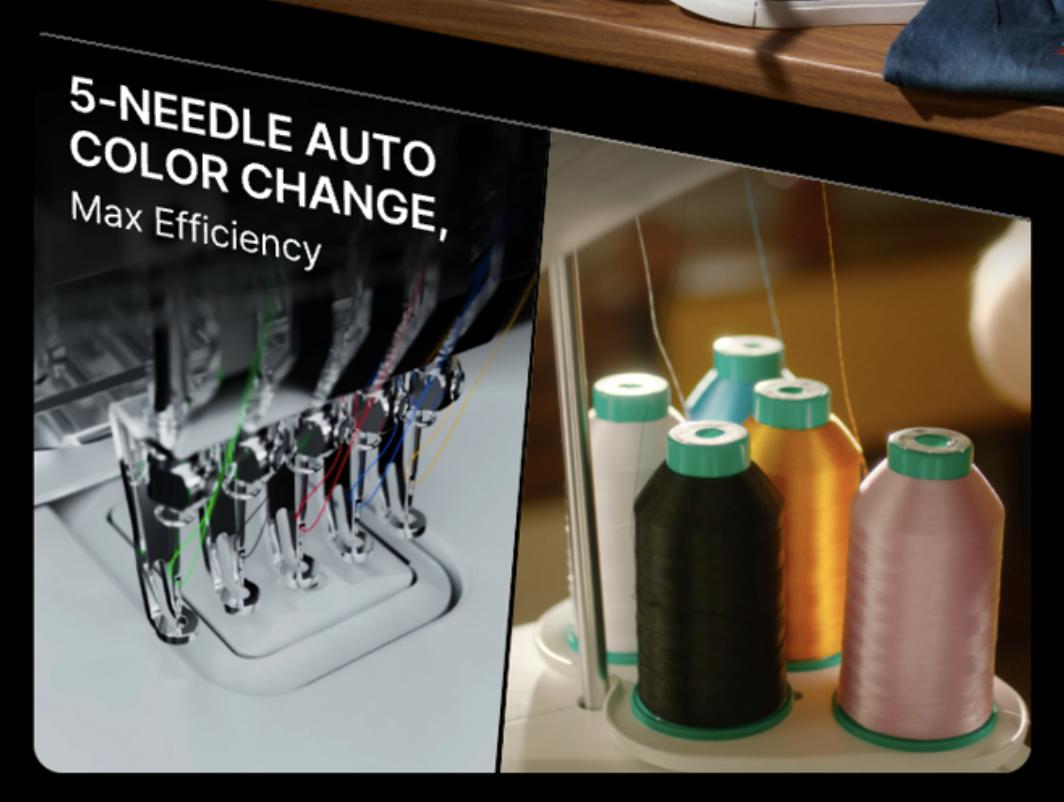
Of course, the number of needles cannot fully represent the performance of the machine, and the selling points of the two are not the same. But for ordinary consumers, five needles mean a very practical change: they finally don't have to get up every few minutes to change threads.
For example, to embroider a small flower with red petals, yellow stamen and green leaves, the user can pre-install the three colors of threads. After the machine finishes embroidering the red petals, it will automatically switch to the yellow thread to embroider the stamen, and then switch to the green thread to embroider the leaves. Even if you need to use red thread later, you don't have to re-thread it manually.
HALO-5 also has a lazy function that makes overseas consumers crazy about it — automatic plate making.
Users can upload pictures in the supporting App, and the software will convert the patterns into embroidery stitches. That means, if you want to embroider the photo of your dog on the hoodie later, you don't have to learn professional plate-making software first. Just upload whatever you want to embroider, as convenient as using a printer.