Anthropic fell below its opening price, Claude experienced sudden performance degradation on the day of its launch, and the trillion-dollar valuation propped up by unemployment anxiety should hit the brakes now.
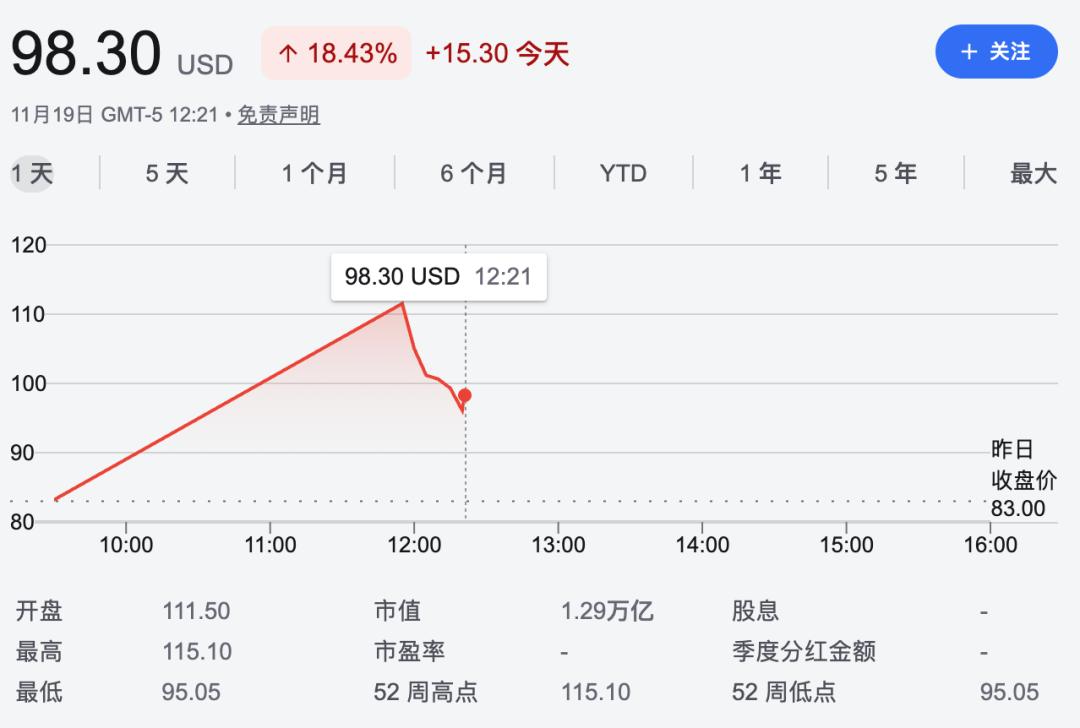
Anthropic officially listed on the NASDAQ on November 19, 2026 local time. Its offering price was $83, and the actual opening price was $111.50, about 34.3% higher than the offering price.
"Before trading even started, people in the grey market had already taken 20% of the profit first," a netizen commented with emotion. But after the market opened, the stock price once surged rapidly before pulling back later. It hit an intraday high of $115.1, and once fell below the opening price to $95.05.
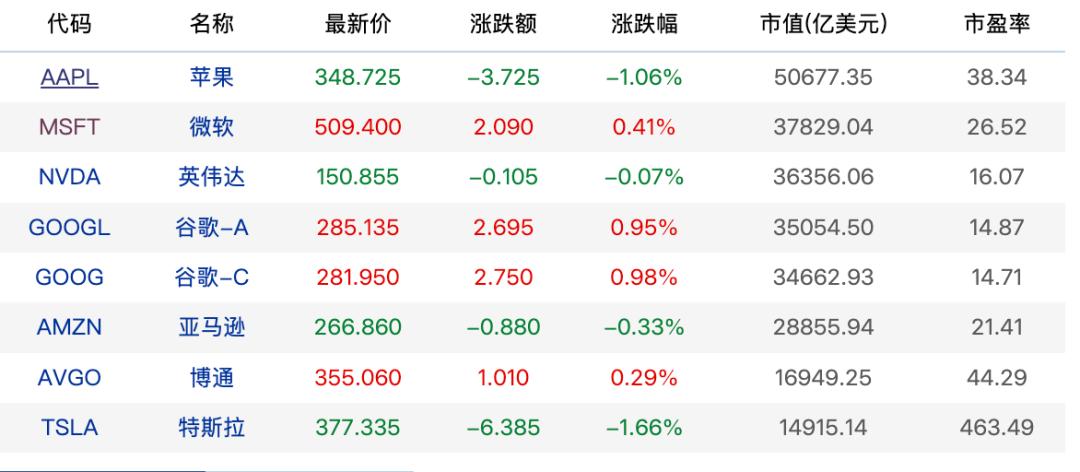
For a period after the listing, the Nasdaq, Dow Jones, and S&P 500 indexes all fell by varying margins, and the stock prices of well-known technology companies also fluctuated repeatedly.

Coincidentally, Claude experienced performance degradation on the day of listing. The status page marked Claude as "degraded performance", while Claude API and Claude Code operated normally. As of the release of this article, the official has not explained the specific reason.
This IPO took place at a rather contradictory point in time. AI-related stocks have undergone adjustments, and investors have begun to re-examine how much return data center construction, computing power procurement and model training can actually bring. While Anthropic has received high attention from the capital market, it is also being strictly scrutinized by all sectors at the same time.
"Going public will only make us more determined to do the right thing, and we will never bow to commercial interests or political pressure!" Amodei's speech before ringing the bell was a disguised response to the doubters, and also showed his determination to the outside world:
"We will control the pace of training and deployment of AI systems, and if necessary, we will take longer until we are confident that they are safe and will remain under human control. We will not yield to commercial pressure, nor will we yield to political pressure. Today, we have put the company in a stronger financial position, and this will only strengthen our resolve to do the right thing. If we can prove that we can still build an extremely successful company while making the right choices on safety, then others in the industry will be inspired to follow our example."
However, some netizens are not optimistic about Anthropic's future trend, and the change in stock price may also illustrate this point.

The size of Anthropic's IPO exceeded SpaceX's previous $75 billion base offering, making it the largest IPO in the global capital market. According to reports, Anthropic's record-breaking IPO attracted about 1,200 institutional investors to submit subscription orders, but share allocation was clearly skewed towards U.S. local investors, and more than 50% of institutional investors failed to get share allotment.
Anthropic issued 980 million shares this time, which is expected to raise about $813.4 billion. Among these 980 million shares, Anthropic itself sold 956.35 million shares, corresponding to raised funds of about $793.8 billion; the remaining 23.649 million shares were sold by some existing shareholders, corresponding to about $19.6 billion, and the company will not receive this part of the funds. In addition, Anthropic also plans to raise $260 billion through private placement. If the public offering and private placement are combined, the scale of this capital transaction is about $1.073 trillion.
What makes Anthropic special is that it is turning the expectation of AI replacing human labor into a fast-growing business. From Claude Code to enterprise Agent, AI is starting to take over more and more jobs that originally required professionals to complete. As a result, the market space for model companies has extended from software procurement budgets to the huge labor cost budgets of enterprises.
However, the computing power shortcoming at the commercial level and the over-emphasis on the "safety" narrative have cast a shadow over the impressive stock price performance. Compared with the stock price on the first day of listing, Anthropic's performance in the quarters after listing may be more important.
1
How did unemployment anxiety turn into business?
Dario Amodei's warning about AI unemployment has become an unavoidable topic when the technology industry discusses employment issues. But behind these predictions, there is a judgment directly related to Anthropic's business model: if more and more jobs that originally required professionals to complete can be handed over to models, AI companies will no longer only face the software market, but also the huge labor cost expenditure of enterprises.
In May 2025, Amodei put forward a widely discussed prediction in an interview with Axios: in the next 1 to 5 years, AI may replace about 50% of junior white-collar jobs in the United States, and may push the unemployment rate to 10%-20%. He specifically mentioned industries such as technology, finance, law and consulting, believing that entry-level positions in these fields may be the first to be impacted.
In June 2026, Amodei further discussed the impact of AI on employment and income distribution in the article "Policy on the AI Exponential". He worried that while AI drives rapid economic growth, it may also cause continuous labor substitution and income inequality. To this end, he proposed policy measures such as wage insurance, employee retention incentives, and vocational training, and even discussed taxing AI enterprises or raising capital gains tax to provide funds for a universal income mechanism.
These warnings touch on the public's most realistic anxiety about AI: when machines begin to have the ability to undertake professional work, will technological progress benefit themselves or make them lose their jobs?
This anxiety is changing the way people use AI. Employees are beginning to actively learn new tools and try to introduce models into their daily work, hoping to maintain competitiveness by improving efficiency. Subscribing to models, using Agents, and exploring automated workflows have gradually become a choice for active adaptation and even self-protection. People are worried about being replaced by AI, but they dare not fall behind AI.
And this enthusiasm for use at the individual level is becoming an important entry point for Anthropic to open up the enterprise market.
Anthropic disclosed in its prospectus that the diffusion of Claude in enterprises largely relies on bottom-up organic growth: software developers and individual users first use Claude in their own work, and then become internal promoters in their organizations, bringing the tool into teams and departments to promote wider deployment. Anthropic even regards this group of individual users as an important customer acquisition entry for its enterprise business.
This path is quite worthy of attention. When enterprises purchase AI, it does not necessarily start with top-down technology selection, but may also start from an employee's daily work. When individual users first verify the value of Claude, and then promote the team to expand its use, tools originally for individuals will have the opportunity to enter the core work processes of enterprises. What Anthropic obtains is not just individual subscription revenue, but also a growth channel leading to enterprise customers.
Employees use it first, then the team spreads it, and finally the enterprise pays for larger-scale deployment. This bottom-up penetration method allows Anthropic to bypass the long sales and procurement process of traditional enterprise software, and directly find customers from real work demands.
The reasons why enterprises purchase AI are also changing. In the past, software mainly helped employees improve efficiency; now, products such as Coding Agent and office Agent are beginning to try to complete part of the work independently, and enterprises see the possibility of reducing repetitive human input, slowing down new recruitment, reducing outsourcing costs, and completing more business with fewer people. At the same time, the pressure of competitors taking the lead in completing AI transformation is also driving enterprises to speed up deployment.
Anthropic is right at the center of this round of demand expansion. The company's revenue grew from $41 million in 2023 and $386 million in 2024 to $45.85 billion in 2025; in the first 9 months of 2026, it has reached $332.42 billion, a year-on-year increase of about 1206%. As of September 30, 2026, there were more than 11,900 customers that contributed at least $100,000 in revenue to the company in the past 12 months, more than 12 times that of a year ago.
From individual users to enterprise customers, from developer tools to business process deployment, Anthropic is turning the expected impact of AI on the labor market into business growth. Employees hope to use AI to maintain competitiveness, enterprises hope to use AI to reduce costs and expand output, and model companies are beginning to get more and more revenue from this change.
The problem is that the more work enterprises are willing to hand over to AI, the more Anthropic needs to prepare in advance for the computing power required to undertake these jobs.
2
AI takes over work, and computing power expenditure increases operating pressure
The continuous increase in the workload undertaken by AI means that model invocation and reasoning demand will also grow synchronously. But computing power is not an ordinary resource that can be bought on demand. In order to keep its models leading and meet future demand, Anthropic must lock in a large amount of computing resources in advance; and whether these investments can be recovered depends on whether enterprises will really hand over more work to AI.
Amodei is quite optimistic about his judgment of the future market. He believes that today's AI market is only the starting point. With the improvement of model capabilities, the application scope of AI may continue to expand from software development to scientific research, biotechnology, cybersecurity, robotics and other fields. These new scenarios mean that AI has the opportunity to undertake more professional work, and also let Anthropic see a larger market than current programming and enterprise knowledge work.
But the market has not yet fully opened, and infrastructure investment has already taken the lead. According to the prospectus, as of September 30, 2026, the total of Anthropic's signed computing power procurement commitments and lease agreements is about $9.009 trillion. Of this amount, about $4.516 trillion is expected to be incurred by the end of 2030, and most of the rest is expected to be incurred between 2031 and 2045.
This is a resource commitment spanning decades, which also closely binds Anthropic's operating performance for many years in the future to computing power supply, utilization efficiency and customer demand.
Amodei calls computing power the deepest commercial dilemma facing Anthropic. Model companies usually need to lock in computing resources one to two years in advance, but AI capabilities and market demand change extremely fast, making it difficult to accurately judge how much computing power will be needed in the future and how much economic value the pre-locked resources can ultimately create.
In other words, enterprises start purchasing AI services today, but model companies may need to pay for future demand several years in advance. Once the demand for enterprise automation does not grow as expected, the long-term resource commitments already signed may become operating pressure.
Anthropic's response is to arrange long-term computing power procurement based on relatively cautious demand forecasts, and then make up for the part that exceeds expectations through short-term resources, trying to find a balance between insufficient computing power and over-investment. As of the end of September 2026, the company has about $95.6 billion in cash and cash equivalents, $36.3 billion in short-term investments, and additional credit lines, which provide a large capital buffer for continuous investment.
There is already a set of noteworthy data on whether computing power investment can generate sufficient returns.
The prospectus shows that Anthropic's revenue per dollar of computing power input increased from $0.40 in the first quarter of 2025 to $2.08 in the second quarter of 2026, but fell back to $1.72 in the third quarter. The company explained that one of the important reasons was that about $5 billion of additional short-term computing power procurement was added in the quarter, and the price of this part of resources was significantly higher than that of multi-year procurement.
This means that the continuous expansion of model usage and revenue scale does not mean that the unit computing power cost will keep falling. Especially when the company needs to deal with the surge in demand through short-term procurement, higher resource prices may directly affect operating efficiency.
The profit data also presents a similar contradiction. In the first 9 months of 2026, Anthropic achieved an adjusted operating profit of about $40.81 billion, with an adjusted operating profit margin of about 12%, but still had an operating loss of about $12.6 billion. The difference between adjusted profit and the operating loss under the accounting standard indicates that the company is still in a stage where rapid expansion and large-scale investment are proceeding in parallel.
Anthropic has proved that enterprises are willing to pay huge fees for model services, and has initially demonstrated operating efficiency, but it still needs to answer a more difficult question: how to make the ever-increasing AI workload continuously generate commercial returns sufficient to cover computing power investment?
If the growth of enterprise automation demand slows down, long-term computing power commitments may become heavy fixed costs; if demand continues to grow at a high speed, expensive short-term computing power may erode profit margins. The capital brought by the IPO can enhance the company's affordability, but it cannot eliminate the time gap between computing power investment and commercial returns.
Foreign media estimates that Anthropic needs to achieve annual revenue of about $6.02 trillion to get a 20% return on investment on its approximately $1 trillion computing power commitment.
Specifically, based on a $1 trillion capital investment, 40% operating profit margin and 17% tax rate, to achieve a 20% return on investment, Anthropic needs to generate about $6.02 trillion in revenue per year. This revenue scale will exceed Alphabet's current annual revenue of about $471 billion and Apple's about $478 billion, which is equivalent to about two-thirds of the total revenue ($908 billion) of all 76 software and IT service companies in the S&P 1500 Index.
Amodei is betting that with the improvement of model capabilities, the computing power built today will eventually support an AI industry far larger than the current market. But whether fields such as scientific research, biotechnology, cybersecurity and robotics can form sustainable customer demand still needs time to verify.
3
Models are getting cheaper, how long can Anthropic's premium last?
Even if AI can enter more and more enterprise work processes, Anthropic may not be able to enjoy this new market exclusively.
As model capabilities become gradually popularized, enterprises have more and more suppliers to choose from, and it will become more and more difficult to obtain high premiums solely by relying on leading model performance.
The competition of cutting-edge models is forming a new contradiction: training stronger models requires more investment in computing power and R&D resources, but once model capabilities are caught up by competitors, enterprise customers may not be willing to pay higher prices for performance improvements.
Enterprises do not need to buy the strongest models for all work. For simple information sorting, text processing and basic code generation, lower-cost models can already meet many needs; but in complex programming, financial analysis, professional research and high-risk businesses, accuracy, reliability and task completion ability still determine whether enterprises are willing to pay higher prices.
This means that what Anthropic must hold on to are the markets that have higher requirements for model capabilities and task reliability and are more willing to pay premiums.
With the continuous progress of open-weight models, manufacturers such as DeepSeek are also promoting the rebalancing between model capabilities and usage costs, and the technical and price advantages of cutting-edge closed-source models are facing challenges. Anthropic also acknowledges that competitors may achieve similar model capabilities at lower costs, and enterprise customers may purchase multiple model services at the same time,