AI short dramas are taking the world by storm: the Chinese are incredibly advanced.
The competition of short dramas is essentially a game between platforms, and part of the commercial war among major internet giants.
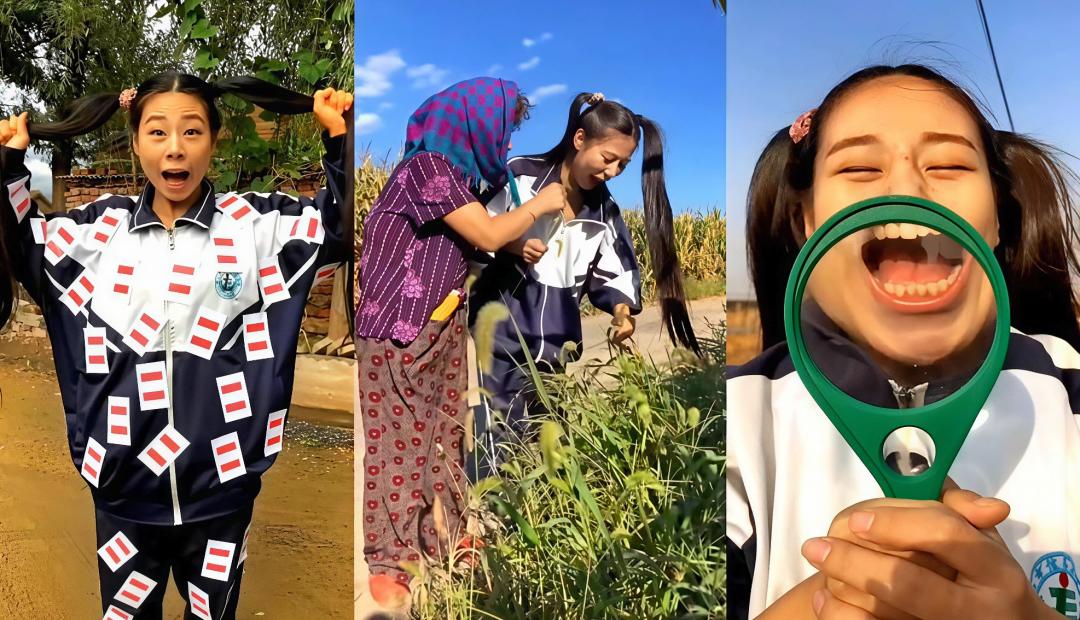
This is the short drama 8 years ago, with rough production and tacky content.
This is the top-tier short drama 3 years ago, with exquisite production and dramatic plots.

This is the most popular AI short drama this year, with no real actors in the whole film, but it has gained 6.6 billion views across the internet.
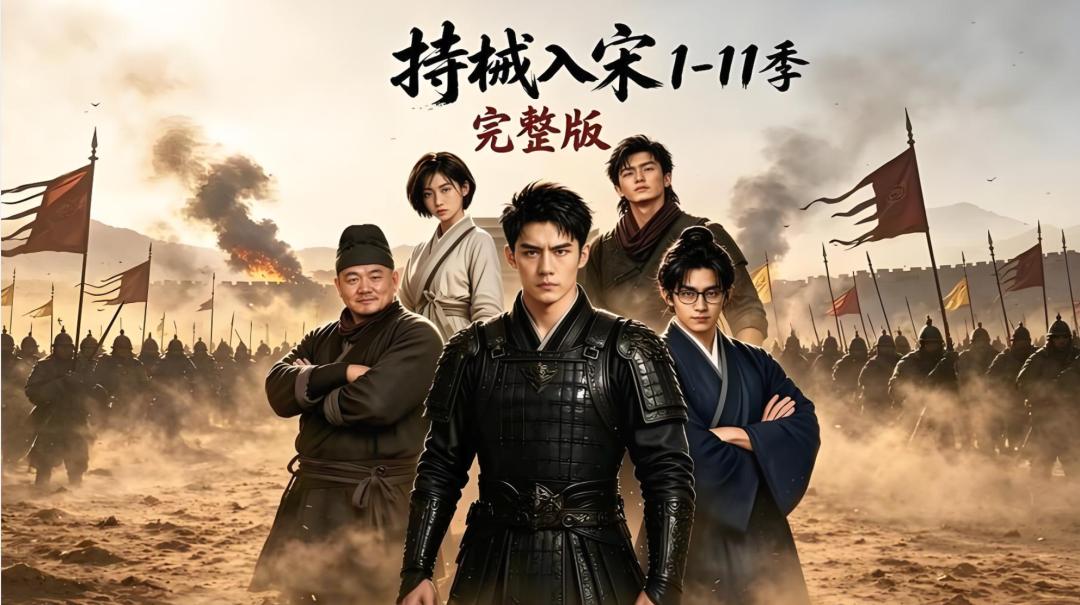
From being hand-made by individual small workshops to reaching the production level of the film industry, and then to cyber ascension empowered by AI, short dramas have spent 8 years to complete the path that the film and television industry took more than a hundred years to finish.
In 2024, the market size of China's short drama sector exceeded 50 billion yuan, surpassing the total box office of Chinese films.
In 2025, the total number of short drama viewers across the country exceeded 600 million, and more than half of Chinese internet users watched short dramas.
2026 is not over yet, the market size of short dramas has exceeded 100 billion yuan, the number of viewers has exceeded 800 million, and the daily active users of the Hongguo App has surpassed the sum of the four major platforms iQiyi, Youku, Tencent Video and Mango TV.
Today's short dramas are no longer an unknown grassroots business format. They have completed their counterattack against the film and television industry and dominated Chinese people's leisure time.
I dare say that the meme of "eating it won't cause heartburn" from this short drama will definitely appear in next year's Spring Festival Gala.
Behind the explosive popularity of short dramas, how this business format has gradually completed the recruitment of talents, capital, technology and traffic, and how all parties have conspired to seize the attention of Chinese audiences, and finally pushed short dramas to the throne of entertainment overlord.
In this issue, we will clarify the power structure of China's short drama industry and the context behind this structure.
01
In 2020, the "Crooked Mouth Dragon King" emerged out of nowhere.

The unremarkable useless son-in-law was submissive and suffered all kinds of humiliation. When his identity was revealed, he turned out to be the Dragon King with a hidden identity. And at the end of each episode of the short drama, the lead actor will definitely show an evil charming smile with a crooked mouth,
When the Dragon King smiles, life and death are unpredictable. The crooked mouth emoji quickly became a popular meme and spread all over the internet.
But the interesting thing is that this "Dragon King Son-in-law" series is not a short drama, but an advertisement.
In 2018, a number of brand new online novel platforms emerged in China, represented by Qimao, Fanqie and Midu. Different from the previous paid reading platforms, their business model is to provide free online novel content to readers and realize monetization through advertisements.
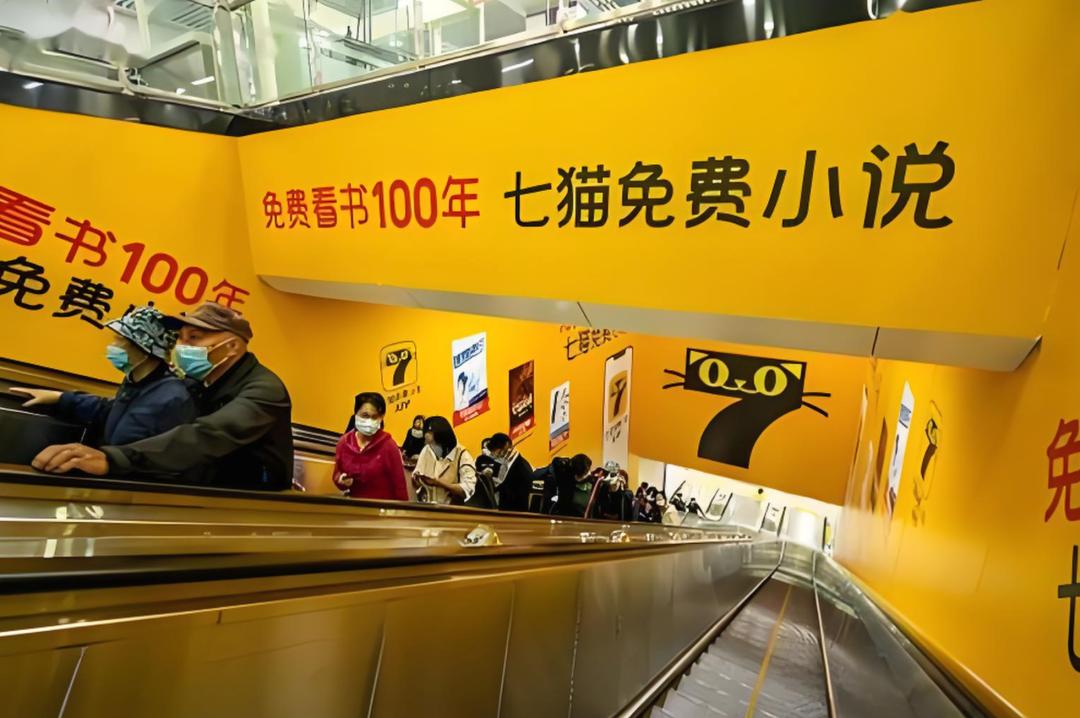
But in order to attract users, these platforms also need to invest a lot in traffic acquisition on other content platforms. So they produced a large number of advertisements similar to the "Crooked Mouth Dragon King" on short video platforms such as Douyin and Kuaishou.
The routine of these advertisements is very simple, which is to use real people to perform the most exciting and satisfying plots in online novels.
Of course, the duration of the advertisement is limited, and it can never be as verbose as online novels. So we can see that within just one minute, the background setting, the contrast of identities, the arrogance of the villain, the forbearance of the protagonist, and the reversal of suspense are all told to you in the most direct, crisp and straightforward way.
The short plot often comes to an abrupt end at the climax of the drama, popping up a download button for the novel app for users, telling users to read the original book if they want to know what happens next, so as to complete the conversion when users' curiosity is at its highest.
Since these users come for the content in the first place, such advertisements have very high conversion rate and retention rate. Even many viewers will say, I'll pay, can you finish filming the story for me?
You see, business opportunities emerged just like this.
So right after the "Crooked Mouth Dragon King" became a hit, a large number of entrepreneurs flooded into the short drama market, which was still a marginal field at that time. Most of these people used to be engaged in information flow placement and advertising distribution.
They may not understand what good content is, but they know best what a good advertisement is.
How to set hooks to retain audiences? How to establish a character setting with one sentence? How many seconds should there be between each emotional push? How to set the ending suspense? How to jump to the platform? From which episode should the paid checkpoint be set?
People in the film and television industry will not understand these problems, but they are basic skills for people engaged in advertising.
The timing unit of one episode of short drama should be accurate to the second. Characters and scenes must appear within 2 seconds of the opening, and some results must be presented within 5 seconds. In terms of narrative rhythm, there should be a reversal every 3 seconds, and new information must appear every 10 seconds.
For short dramas with 80 to 100 episodes, there should be an emotional climax at 8 to 12 episodes, with a corresponding paid checkpoint. The second checkpoint is at 26 to 30 episodes, and getting users to pay here can make the production cost back. After that, set a plot anchor point every 20 episodes or so to attract users to pay again, with a total of about four payment points.
With extremely quantified advertising indicators combined with the themes of online novels, we have seen a series of low-cost, formulaic but highly addictive short dramas such as rebirth and time travel, overbearing presidents, family infighting and palace schemes, and the counterattack of the son-in-law, which were produced in batches.
However, being able to make people addicted is only the most superficial thing in the capital game of online short dramas.
02
When advertising practitioners switched careers on a large scale to produce online short dramas, what changed was not only the content itself, but also the entire rules of the game.
There are four links in the industrial chain of short dramas:
Short drama companies that own the copyright and are responsible for production.
Distribution companies responsible for traffic placement and drama sales.
Traffic platforms.
Finally, the video websites where short dramas are watched.
Among them, the key link that determines the life and death of a short drama and whether the producer can make money is traffic placement.
You may say, traffic placement is just buying traffic with money, isn't that something that can be done as long as you have money?
This is definitely not the case. In fact, traffic placement itself is a very professional technology, and short drama traffic placement is even more complex. It can be said that the traffic placement work starts the moment the short drama is finished filming.
First of all, they need to set a strategy for a drama: how many episodes can viewers watch for free? How to price paid viewing? Which platforms should the drama be placed on?
After the strategy is determined, they also need to make advertising materials, and edit the plot clips into promotion versions for traffic placement.
You may ask again, short dramas are shot according to the advertising logic, isn't this a ready-made advertisement? That's true, but the traffic placement operators still need to further edit and optimize, and select different clips.
For example, for a drama, the clip where the male and female protagonists fall in love at first sight can be placed to young female audiences. The clip where the male protagonist sees through the villain's trap and prepares to fight back can be placed to young male audiences. The clip of scheming counterattack in the harem can be placed to audiences who love to watch clips of *Empresses in the Palace*. The clip of outwitting the tyrannical village party secretary can be placed to agricultural video lovers.
Of course, the above is just an example, and there will be more precise strategies in practice, but making materials based on audience portraits is also part of the traffic placement work.
Then comes the placement link. The placement staff, commonly known as "placement operators" in the industry, will not place ads blindly, but will create different placement plans. For example, what is the budget for one round of placement, which material to use, what is the target price for one conversion, what kind of users the platform is expected to prioritize, and at what time point to place. All these need to be done based on the experience of the placement operators.
The placement will not spend all the budget at once, but test multiple combinations on a small scale. See which materials, matched with which channels, perform best among which users. Data such as click rate, paid conversion rate, and customer acquisition cost need to be monitored to find the optimal placement combination.
If the ROI (Return on Investment) exceeds 100, the investment will be increased, that is, expand the placement scale. If the ROI is lower than 90%, the placement will generally be suspended. If it really can't get good results and the ROI is lower than 70%, the traffic placement company will no longer pay for traffic purchase for this loss-making drama.
This drama is basically finished. It may change to another traffic placement company, switch platforms, and try its luck again, or hundreds of thousands of investment may go down the drain.
Therefore, for a short drama, the role played by the traffic placement institution may be more critical than the producer. It is not necessarily important whether the content of the short drama is good or not, but it is very important whether the materials are edited well, whether the traffic placement strategy is accurate, and whether the customer acquisition cost is low enough.
Precisely because traffic placement companies are too critical, top short drama companies in this industry chain often bind top traffic placement institutions, and even one company both shoots short dramas and does traffic placement, integrating upstream and downstream to realize the integration of production and placement.
03
But the cruel reality is that even if production and traffic placement are combined, they can only take 10% of the revenue in the entire short drama market.
No matter how many skills traffic placement has, the platforms that hold the power of traffic distribution are the ones that make steady profits. The platform gives you traffic and you survive, if it doesn't give you traffic, you will die silently.
All the money earned by a short drama is generally spent on traffic placement and paid to the platform, accounting for 90% of the total revenue. The remaining 10% is divided between the short drama company and the traffic placement company.
Therefore, the prosperity of short dramas is essentially the prosperity of platforms.
The competition of short dramas is essentially a game between platforms, and part of the commercial war among major internet giants.
Throughout the history of short drama development, there have been four waves in total.
The first wave was from 2018 to 2019, when iQiyi, Youku, Tencent, Mango and Kuaishou successively entered the short drama track. Their purpose was to use the content advantage of short dramas to fight against Douyin, which rose suddenly and quickly became a traffic black hole at that time.
However, short dramas in this stage were not mature in both content and business model, so this wave passed quickly.
The second wave started with the popularity of the "Crooked Mouth Dragon King" and the participation of advertising traffic placement institutions. There are two key words in this stage: one is payment, and the other is mini-program. That is, traffic placement institutions put advertising materials on Douyin and Kuaishou, and after users click the advertisement, they will jump to the WeChat mini-program, and they need to pay to unlock the subsequent episodes.
At this stage, the four links of the short drama industrial chain I mentioned earlier were basically formed, and the content routines of short dramas were basically finalized. The market size of Chinese short dramas achieved an unprecedented leap, growing rapidly from about 4 billion yuan in 2020 to 30 billion yuan in 2023.
In this 30 billion yuan market pool, major long video platforms have gradually been marginalized. Kuaishou and Douyin, as the traffic entrances, have considerable discourse power, and WeChat mini-programs, as the final traffic destination and payment channel, also enjoyed the dividends of short dramas from 2021 to 2023.
But it didn't last long, because the third wave came.
The third wave has only one protagonist, which is ByteDance, specifically Hongguo. It brought an era of free short dramas.

In May 2023, "Hongguo Free Short Dramas" was launched on Douyin, and in August, the independent Hongguo App was launched. As the core product of ByteDance, it has built a closed traffic loop from the first day.
Tomato Novels provides IP for the content, short drama production companies get the IP to make content, obtain traffic through traffic placement on Douyin, and directly guide users to Hongguo to watch for free. During the viewing process, ByteDance's algorithm will match appropriate advertisements for users, and advertisers will pay for each exposure and conversion through ByteDance's Ocean Engine, and this money will flow back to the authors of Tomato Novels and short drama production companies.
In this closed loop, most of the links are completed within the ByteDance system.
It only took one year for the Hongguo App to achieve a breakthrough of 30 million DAU, with monthly revenue sharing exceeding 100 million yuan. In October 2024,