Three post-2000s people sold their company for 30 billion yuan.
Founded for just one year, the company was sold for 30 billion yuan — the wealth creation speed of AI is more staggering than any era before.
Pedaily has learned that Palo Alto Networks, the US cybersecurity giant, announced that it has signed a definitive acquisition agreement with AI startup Applied Compute, planning to acquire the latter in an all-stock transaction valued at 4.5 billion US dollars (approximately 30 billion yuan).
As the protagonist of this deal, Applied Compute has been established for no more than a year and a half. Behind it are three post-2000s founders, the youngest being 23 years old and the oldest 25, among whom there is a Chinese face.
This scene is no accident. It is just a new spray in the AI wealth creation wave, and beneath the spray lies the surging deep sea.
1 Year Ago, Three Post-2000s Founders Started a Business and Now Sold It for 30 Billion Yuan
This story starts with three post-2000s alumni.
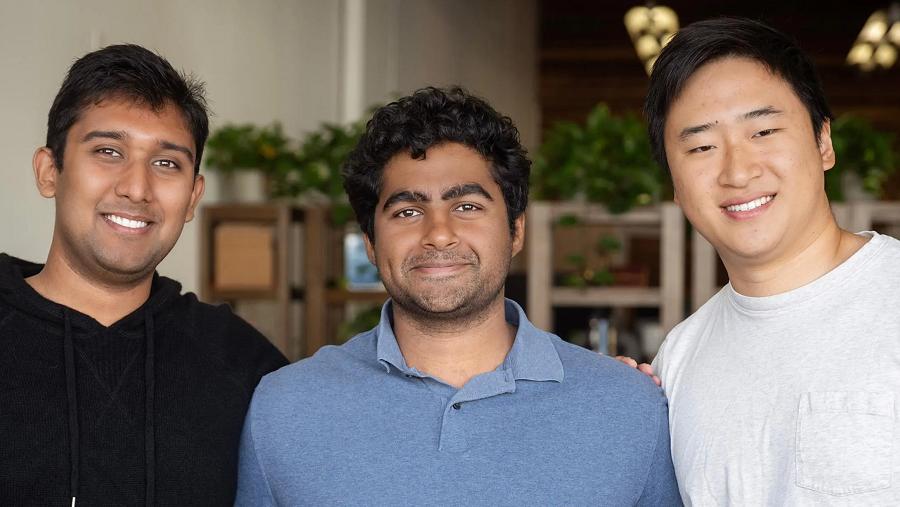
The youngest one, Yash Patil, is a 23-year-old Indian-origin guy. He entered Stanford University to study computer science in his early years, and once met the head of OpenAI at a family dinner hosted by Sam Altman for engineering students. A few months later, ChatGPT was launched, he was deeply attracted by this technology, directly wrote an email to Altman, and then joined the company when he was only 20 years old.
After joining OpenAI, Yash Patil recommended his Stanford alumnus Rhythm Garg, who is also a post-2000s geek. Shortly after, Rhythm Garg invited Linden Li, who also came from Stanford, to join the company. Linden Li, 25 years old this year, spent his middle school years in Shanghai, later went to Stanford for study, and did research under Li Feifei during both his undergraduate and master's periods.
The three like-minded partners got to know each other. But what really inspired them to start a business was a Chinese company on the other side of the ocean.
In January 2025, DeepSeek released the R1 open-source model, shocking the entire Silicon Valley overnight. Inside OpenAI, these three post-2000s researchers were also greatly shocked, and they began to realize the potential of open-source models. Yash Patil once said bluntly in an interview with *Forbes*, "Our philosophy is completely different from many colleagues at OpenAI."
So four months later, the three chose to leave OpenAI and co-founded Applied Compute, a developer of customized open-source AI models for enterprises. Yash Patil serves as CEO, Rhythm Garg as Chief Technology Officer, and Linden Li as Chief Architect.
According to its official website, in less than 18 months since its establishment, Applied Compute's annualized revenue growth has risen from 0 to 100 million US dollars, with customers covering life sciences, cybersecurity, hardware design, law, financial services, logistics and many other industries.
Investors also noticed this team very early. As early as June 2025, Applied Compute announced the completion of a seed round of financing of about 20 million US dollars led by Benchmark, with a valuation of about 100 million US dollars; in October of the same year, it disclosed another 80 million US dollars financing led by Benchmark, with participation from HSG, Lux Capital, Hanabi Capital, Neo and Elad Gil, with a valuation of about 500 million US dollars.
Entering this year, Applied Compute first completed a Series B financing of 80 million US dollars in April; in early November, it officially announced the closing of a new round of 350 million US dollars financing led by Elad Gil, and its valuation jumped to 3.25 billion US dollars at once.
Less than half a month later, Applied Compute was acquired by Palo Alto Networks. Talking about this acquisition, Palo Alto Networks believes that in the future, enterprises will use both open-weight models and closed-source cutting-edge models at the same time, and a large number of enterprises will adopt customized open-weight models according to their own data, cost and control needs.
After the transaction is completed, Yash Patil will serve as Co-Chief AI Officer of Palo Alto Networks, and the original research team will join Palo Alto Networks. It is obvious that talent is the most valuable part in this acquisition.
Those Figures
From this scene, we can see that more and more Chinese faces are coming to the forefront in this AI wave.
Not long ago, AMD officially announced that it has completed the acquisition of World Labs through an all-stock transaction of about 8.2 billion US dollars (approximately 54.7 billion yuan). The latter was co-founded by the well-known Chinese scientist, "Godmother of AI" Li Feifei, who will also join AMD as Executive Vice President and Chief Scientist, reporting directly to Lisa Su, Chairwoman and CEO of AMD.
Another impressive case is Cognition, an AI programming company jointly founded by three Chinese people. In September this year, Cognition announced that its Series E financing exceeded 2 billion US dollars, with a valuation of 48 billion US dollars. As the founder holding the most shares, 30-year-old Steven Hao's net worth reached 5.8 billion US dollars by virtue of this.
Earlier in May, Tian Yuandong, a well-known Chinese AI scientist and former research director of Meta FAIR, posted a tweet to officially announce the co-founding of the new company Recursive, which secured 650 million US dollars in the first round of financing, with a post-investment valuation of 4.65 billion US dollars.
Moving further back along the timeline, AI startup Axiom announced the completion of 200 million US dollars Series A financing, bringing the company's valuation to 1.6 billion US dollars (approximately 11 billion yuan). The founder behind it, Hong Letong, 25 years old this year, was born in Guangzhou and once studied at the High School Affiliated to South China Normal University. Her academic journey spans the Massachusetts Institute of Technology and the University of Oxford, until she chose to join the entrepreneurship wave during her PhD study at Stanford University.
Such cases are too numerous to list, which reminds people of the data previously released by the Carnegie Endowment for International Peace: among the world's top AI talents in 2025, 57% of researchers graduated from Chinese universities with bachelor's degrees. If we extend the timeline further, this change is even more obvious — from 2019 to 2025, the proportion of top AI researchers from China rose from about 29% to about 57%.
When putting these individual cases together, a relatively clear chain also emerges: most of these Chinese faces have participated in top academic competitions and received training in prestigious universities, experienced the tempering of cutting-edge large model laboratories, and then started their own businesses. Perhaps most of them are not standing in the center of the press conference stage, but it is certain that they often appear in the most critical part of the technology stack.
The AI Wealth Creation Era Above the Bubble
At this moment, the global attention is focused on the upcoming super IPO — Anthropic will officially land on Nasdaq tonight, and the total fundraising is expected to exceed 100 billion US dollars, which will also bring its issued market value to 1.5 trillion US dollars.
Calculated on this basis, the net worth of shares held by the 7 co-founders of Anthropic will reach nearly 20 billion US dollars respectively.
At the same time, the second round of financing of DeepSeek has also been officially closed, and the industrial and commercial information was updated today. According to previous media reports, the scale of this round of financing is as high as an astonishing 100 billion yuan, with a valuation of about 600 billion yuan, and the company is simultaneously preparing for an IPO on the Sci-Tech Innovation Board. Liang Wenfeng, as the founder and largest single shareholder of DeepSeek, his net worth is bound to rise with the increasing valuation.
There is no doubt that AI has officially become the largest source of new wealth creation. In the *Forbes* Global Billionaires List released this year, 45 AI practitioners made their debut on the list; in addition, there are at least 86 AI billionaires in the world, with a total net worth of 2.9 trillion US dollars.
Looking around, these AI companies standing at the center of the stage have often been established for only a few years, but their value has soared because they caught the trend. Cases of "post-90s or even post-2000s founders, a few people, with a valuation of one billion US dollars" are everywhere in the AI era. Sam Altman, CEO of OpenAI, even predicted that we will soon see AI unicorn companies with only one employee.
Looking back at the past, wealth creation in the Internet era was often concentrated at the application layer; but today the script has changed — wealth creation in the AI era is happening simultaneously at the computing power layer, model layer and infrastructure layer. Although these fields are not directly oriented to consumers, their valuation and exit speed have exceeded the path that most Internet companies took ten years to complete.
As conspicuous as the wealth figures is the age of the founders. In previous technology cycles, people in their early 20s were usually still in the stage of accumulating qualifications; but this round of AI allows young people to start creating their own careers and wealth at the same point in time.
Nothing is sexy without AI, this is an unprecedented crazy era.
This article is from the WeChat Official Account "Pedaily" (ID: pedaily2012), written by Liu Bo, and published with authorization from 36Kr.