Three post-2000s generation individuals conducted outsourcing services using Chinese models, and secured a "major result" of 32 billion yuan within 18 months.
The listing of Anthropic is spawning a new round of wealth myths in Silicon Valley. On the other side of this carnival, three post-2000s employees who left OpenAI have also reaped their huge gains in advance — less than 18 months after starting their business, they sold their company for 4.5 billion US dollars (about 32 billion RMB).
On November 18 Eastern Time, US cybersecurity giant Palo Alto Networks announced that it has reached a definitive agreement to acquire AI infrastructure startup Applied Compute for $4.5 billion in an all-stock transaction. After the transaction is completed, the team of about 70 people will be fully integrated into Palo Alto Networks, and Yash Patil, the 23-year-old co-founder and CEO, will serve as the Co-Chief AI Officer of Palo Alto Networks.
This company has achieved extremely rapid development recently. About half a month ago (November 2), Applied Compute just announced the completion of a $350 million financing round with a post-money valuation of $3.25 billion. In just over two weeks, the acquisition price offered by Palo Alto Networks was $1.25 billion higher than the valuation at that time, with a premium of about 38%.
Their core business is "AI outsourcing", helping enterprises train proprietary AI. Microsoft, NVIDIA, food delivery platform DoorDash and legal AI company Harvey are all their customers, spanning multiple industries.
Theoretically, to run such enterprise-facing business, one needs to have a solid understanding of both models and the workflow of clients, so entrepreneurs in this field are usually veterans with years of experience in the industry. However, the three founders of Applied Compute, Yash Patil, Rhythm Garg and Linden Li, are only 23, 24 and 25 years old respectively.
They met at Stanford, then left OpenAI together, and in less than a year and a half of entrepreneurship, they have made this huge business a success in Silicon Valley where tech giants gather.
From potential client to buyer, all because of one security assessment
Palo Alto Networks initially contacted Applied Compute not for acquisition, but to see if it could purchase their services.
Nikesh Arora, Chairman and CEO of Palo Alto Networks, revealed in the acquisition statement that they initially contacted Applied Compute as a "potential customer" to evaluate the latter's post-training and inference platform.
Out of the professional habit of a cybersecurity company, Palo Alto Networks specially dispatched its ace threat intelligence team Unit 42 to conduct a "cutting-edge AI security assessment" on Applied Compute.
According to Arora, after this thorough assessment, they believed that Applied Compute had built the best post-training and inference platform they had ever seen, and its research team was also extremely outstanding. Therefore, Palo Alto Networks directly shifted from procurement negotiations to M&A negotiations and bought the entire company outright.
As one of the world's largest cybersecurity companies, Palo Alto Networks currently has a market capitalization of nearly $280 billion, and its latest quarterly revenue reached $3.45 billion, a year-on-year increase of 39%. Over the past year, this giant has made frequent moves in the M&A market, completing two acquisitions worth $21 billion and $3.35 billion respectively. This $4.5 billion acquisition of Applied Compute is also a considerable deal in Palo Alto Networks' M&A portfolio.
According to documents submitted to the U.S. Securities and Exchange Commission (SEC), the total $4.5 billion transaction will be paid in Palo Alto Networks shares, with the reference share price being the average price of the past 15 trading days (US$337.16 per share).
For Palo Alto Networks, this deal is a cost-effective one. Since Applied Compute just completed a $350 million financing round half a month ago, the transaction also includes approximately $500 million in cash it holds and committed prepaid computing power, while Palo Alto Networks pays for the entire acquisition consideration entirely by issuing new shares. After the acquisition news was released along with the better-than-expected financial report, Palo Alto Networks' after-hours share price surged by about 10%.
A startup established for less than a year and a half can make a Silicon Valley giant make a snap decision to acquire it after assessment, largely because the giant values the technical background and entrepreneurial experience of the three young founders.
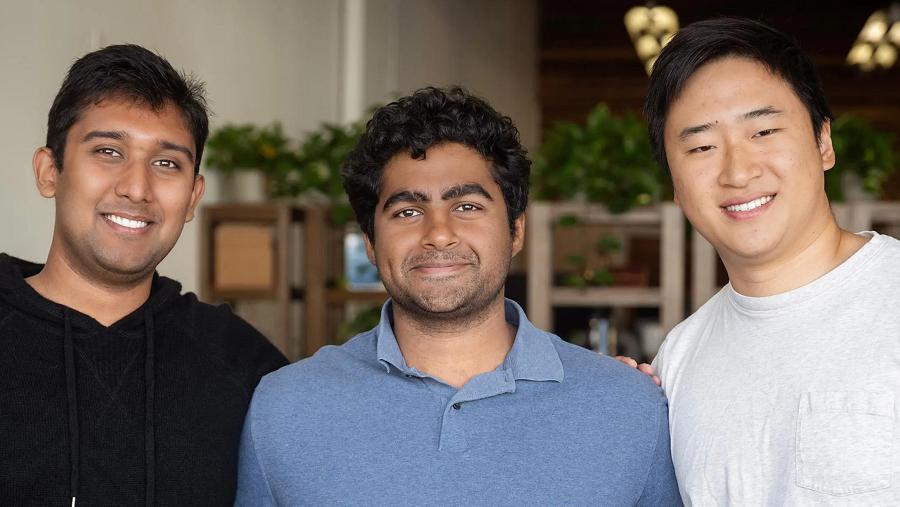
The three founders are Stanford alumni and former colleagues at OpenAI. Patil was the first to join OpenAI: during college, he took the initiative to email Sam Altman to fight for the opportunity to participate in ChatGPT R&D, and later joined the team through the researcher residency program. Then he introduced Garg, who in turn introduced Li.
During their tenure at OpenAI, Patil worked on post-training infrastructure and Codex-related projects, Garg researched inference models, and Li was responsible for machine learning systems. The three of them together covered multiple links of model training and operation, forming the technical foundation for their subsequent entrepreneurship.
The rise of China's open-source models also provided them with an important opportunity to start their own business.
In January 2025, DeepSeek-R1 was released. In those days, the three young researchers were skiing at Lake Tahoe. According to their later recollections, between skiing sessions, the three kept discussing this newly released Chinese model and the future of open models.
With their experience at OpenAI, they realized that since open models already had solid basic capabilities, enterprises could fully build on them for further training to make AI more familiar with their own business processes. A few months later, the three left OpenAI and founded Applied Compute.
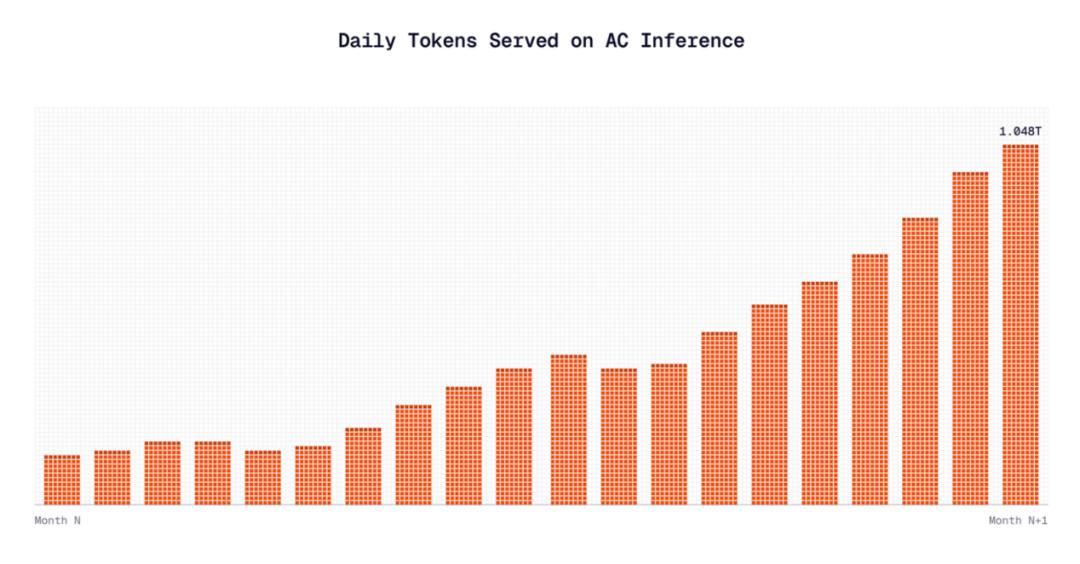
The progress of their business was quickly recognized by capital. In June 2025, before the company was even publicly unveiled, it secured a $20 million financing round led by Benchmark; after completing an $80 million financing round this April, its valuation reached $1.3 billion; in August, it launched its core AC2 platform. By the beginning of November when the latest financing was closed, customers had completed more than 1,700 training runs on the AC2 platform since July, and its inference service processed more than 1 trillion Tokens per day.
Talking about this integration into Palo Alto Networks, 23-year-old CEO Patil said in the statement that they founded the company to enable any enterprise to easily train, run and improve proprietary models, and joining Palo Alto Networks will put security at the core of all products and accelerate their access to the world's largest group of enterprise customers.
Using Chinese models to help large US companies save costs and improve efficiency
The core reason why Palo Alto Networks offered a high price of $4.5 billion is that Applied Compute accurately addresses the pain points of large enterprises when using AI.
On Applied Compute's official website, it summarizes its business as "Specific Intelligence": instead of letting enterprises directly use general large models, it trains exclusive models that belong only to the enterprise using the enterprise's own business data.
For many large companies, directly calling the top closed-source models from OpenAI or Anthropic will not only be slow and expensive when used frequently, but the general models also do not understand the specific internal standards of the enterprise. After all, banks have their own risk control requirements, and food delivery platforms have their own review rules.
Nowadays, more and more enterprises are starting to pay for the "post-training" of models. A recent survey by Menlo Ventures shows that among the surveyed AI builders, the proportion of those who have done post-training has risen from 6% to 10% within a year, and 91% of them have hired external partners.
Applied Compute acts as the "intermediary" between large models and enterprises: on one side are ready-made open models, and on the other side are enterprises with demands. It is responsible for selecting models, continuing to train according to the tasks of customers, and then helping customers run the models.
Although positioned as an intermediary, their working method is more like an on-site team. In Silicon Valley, engineers who go deep into client sites are called FDE (Field Deployment Engineer), a concept first popularized by Palantir, which has become a clear trend in the AI circle this year. Engineers of Applied Compute have to enter the client's company, understand how their work is done, so that they know how to adjust the model; the trained models eventually run on the self-developed AC2 platform.
In the process of helping large US companies further reduce costs, Chinese open-source models have given Applied Compute a huge boost. According to the estimate of Menlo Ventures, among the open-source model-related expenditures counted, Chinese models account for 89%.
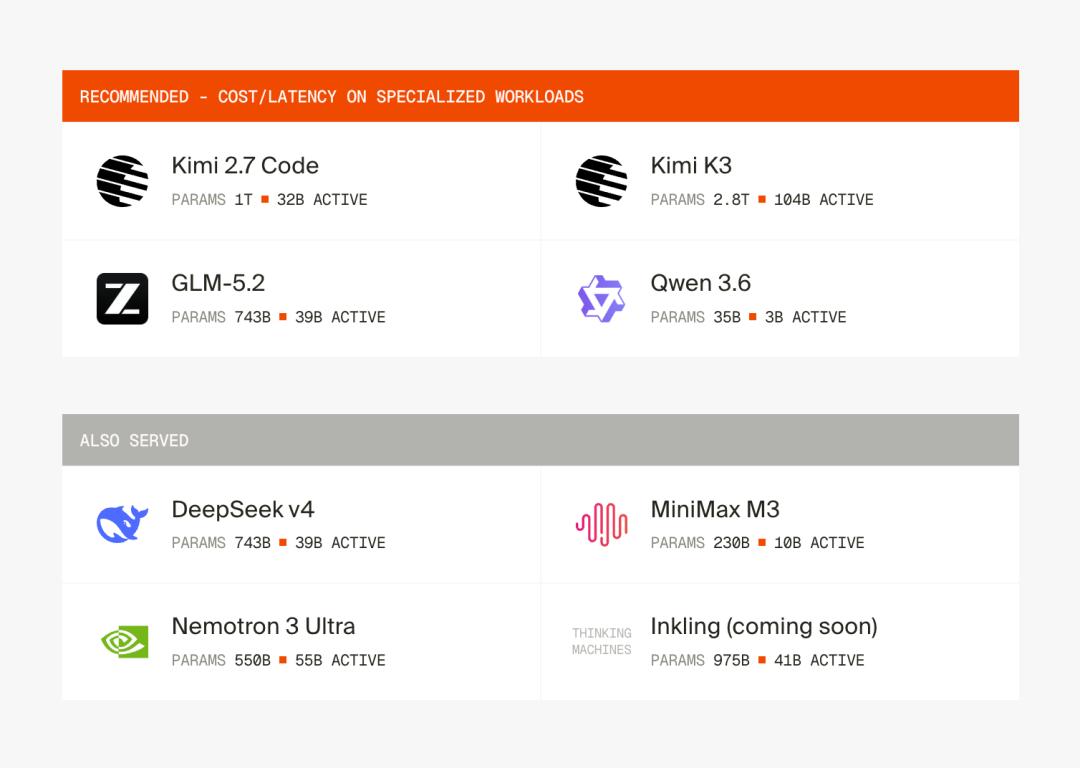
On the one hand, enterprise customers urgently need cheap and easy-to-use open-source models to control the cost of massive tasks, and Chinese models such as Qwen, Kimi and GLM have open-sourced their weights, whose use cost is generally much lower than that of top US closed-source models. On the other hand, the open-source models are only basic base models when obtained, and enterprises lack training talents and systems, so they exactly need Applied Compute to help them transform Chinese open-source models into practical tools.
Judging from the cases disclosed on Applied Compute's official website, Chinese open-source models have played a core role in multiple projects.
The cooperation with US marketing software company Clay is targeted at reducing AI usage costs. Clay's AI products need to help users collect a large amount of enterprise information every day, and the difficulty of the whole batch of questions varies. If the most expensive model is called for every question, the cost will be too high.
Applied Compute used Alibaba's Qwen to train an AI scheduler responsible for "task allocation". It will first judge the difficulty of the question, and then select the most cost-effective model to process it. A/B tests in the production environment show that this routing scheme reduces the inference cost by up to 47%, while key quality indicators remain stable.
When it comes to Harvey, the legal AI unicorn, Zhipu's GLM has been put to good use.
Legal documents cannot tolerate errors. When AI finds answers from a large number of documents, it also needs to accurately point out the clause basis for lawyers. The two sides used public legal materials and synthetic tasks to train and score GLM-5.2. The evaluation shows that in specific legal document tasks, the answer quality of the trained model has improved; compared with Claude Sonnet 5, the inference cost per cell has decreased by 54.8% on average.
Relying on the high cost-performance base of Chinese open-source models and the ability of engineers to debug models on site, Applied Compute achieved an annualized revenue of 100 million US dollars within a year and a half, thus entering the acquisition vision of Palo Alto Networks.
Being acquired by the cybersecurity giant, the outsourcing controversy and potential security risks are expected to be resolved together
The annualized revenue has rushed to 100 million US dollars, and the company just completed a $350 million financing round half a month ago, with its valuation in a soaring upward period.
At this node, the three young people chose to sell the company to Palo Alto Networks at a 38% premium. Will this be a good destination?
This may be directly related to the bottleneck faced by the independent development of the "AI outsourcing" model, and the emergence of Palo Alto Networks just helps them solve several problems at the same time.
The first is the controversy over the business model and the problem of expanding large customers. Until it was acquired, the outside world has been discussing: Is Applied Compute an AI platform, or an outsourcing service company that takes projects by relying on its engineers?
In the eyes of investors, these are two completely different prospects. If it is the latter, then for every new customer, a lot of engineers need to be invested to explore the business and build the training process from scratch. Once the number of customers increases, the manpower investment will also expand accordingly, making this business much less attractive.
On the other hand, after training the model for customers, it is still uncertain whether it can continue to sell profitable inference operation services. The company previously disclosed that only 40% of its customers use both its training and inference services.
After being integrated into Palo Alto Networks, at least their channels have been expanded. According to the plan, Applied Compute will be directly connected to Palo Alto Networks' global customer network of more than 70,000 enterprises. As for subsequent continuous subscriptions, Palo Alto Networks has set a clear goal for them: by fiscal year 2029, this business will generate 1 billion US dollars in new annual recurring revenue (ARR), which is equivalent to ten times the current annualized revenue scale of 100 million US dollars.
Secondly, the capital-burning computing power investment will be covered by the large company. Palo Alto Networks plans to build more than 100 megawatts of global inference computing power infrastructure in the next three to five years, and invest less than 3 billion US dollars in capital expenditures (CapEx) for this purpose from fiscal year 2027 to 2030.
In return, in addition to continuing to sell the platform externally, this team of young people will also act as the "AI R&D engine" for Palo Alto Networks internally. Although Palo Alto Networks does not build general large models, its firewalls and security software process massive amounts of attacks every day. After 23-year-old Patil takes office as Co-Chief AI Officer, this team, which is planned to expand to 100 researchers by the end of fiscal year 2027, will train proprietary large and small models for all security products of Palo Alto Networks.
Finally, backed by the cybersecurity giant, it is also expected to help them ease the security concerns of enterprise customers when using open-source models, especially Chinese open-source models.
Since the second half of this year, relevant US authorities have successively expressed concerns about US enterprises using Chinese AI models, and required federal civil agencies to stop using DeepSeek products. Due to the sensitive source of the open-source model base, many traditional multinational enterprises and financial institutions are attracted by its low cost, but their Chief Information Security Officers (CISOs) often dare not sign off, worrying that training open-source models with core data will lead to data leakage or compliance risks.
This threshold that is most difficult for a startup to cross on its own is exactly the core competence of Palo Alto Networks, the cybersecurity giant.
In the view of Arora, CEO of Palo Alto Networks, every enterprise will run a mix of open-source and closed-source models in the future. By directly acquiring the training platform, security protection can be embedded in the first step of model customization, allowing enterprises to safely train open-source models in their own environments.
Arora even said at the earnings call that the business opportunities brought by this acquisition may eventually be "larger than the business we are doing today".
While Silicon Valley is still debating whether "AI outsourcing" is a good business, these three post-2000s entrepreneurs who use Chinese open-source models as the base have already landed safely in advance with a $4.5 billion acquisition agreement.
This article is from WeChat Official Account "Letter AI", written by Si Bo, and published by 36Kr with authorization.