Why haven't Chinese washing machines captured the African market with a population of 1.5 billion?
In China, people have long stopped washing clothes by hand.
Whether in urban apartment buildings or rural self-built houses, almost every household has a washing machine. You just throw the dirty clothes in and wait for the machine to finish the job.
This is a life habit shared by nearly all people.
When it comes to washing machine manufacturing, China has outstanding strengths.
Chinese washing machines are displayed in appliance stores across Europe, America, and even Japan and South Korea, and many local families are willing to purchase them.
Africa has a population of over 1.5 billion, and many home appliance enterprises regard it as a blue ocean market.
Yet Africans still carry buckets to fetch water outside their homes, squat on the ground and scrub clothes over and over. Washing machines are clearly available in local stores, but why are they so hard to enter these ordinary households?
Poverty is not the only reason.
Blue Ocean?
In the first half of this year, China exported a total of 19.54 million washing machines, accounting for 34% of the total global sales volume.
In 2025, China's cumulative export volume of washing machines reached 48.2 million units, with an export value of 6.16 billion US dollars.
But how many of them are sold to Africa?
A mere 310 million US dollars, less than 1/20 of the total.
In European and American home appliance stores, washing machines of Haier, Midea and Hisense are placed side by side with other international brands, and there are always consumers buying them.
But in Africa, buying a washing machine is never an easy task in the first place.
Previous reports have pointed out a phenomenon.
In Lagos, Nigeria, there is a distributor selling Chinese home appliances, whose store keeps more than ten washing machines of different models all year round. Many people who enter the store will stop to ask about the price, but few ordinary families place orders.
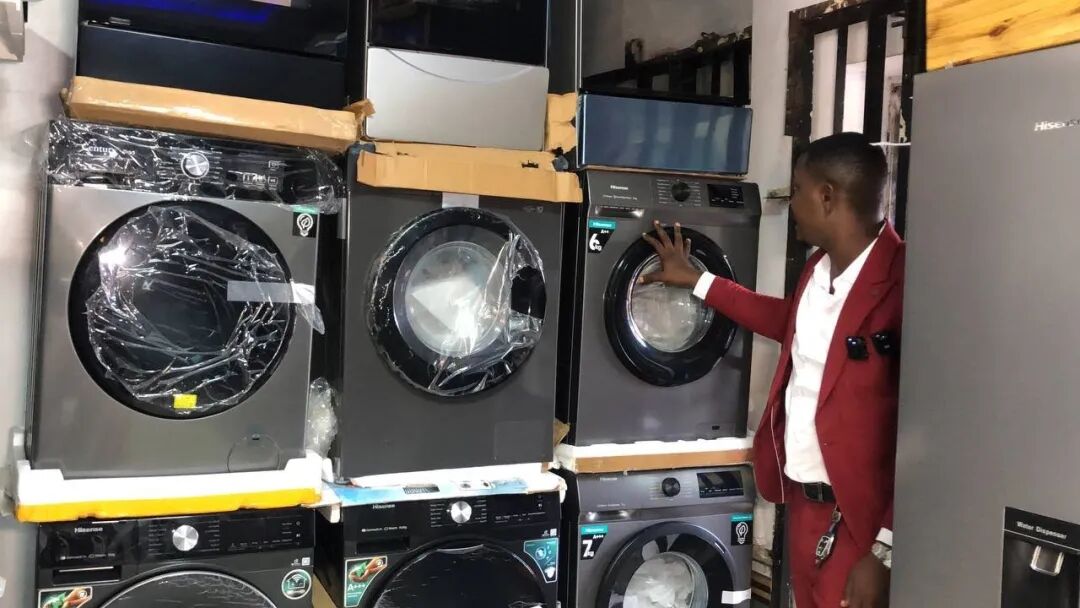
A Chinese journalist's on-site visit found that hand-washing is still the mainstream way of doing laundry in Africa.
A very important reason is that for ordinary African families, sticking to hand-washing is a pragmatic choice after repeated consideration: it saves money, and many places do not have abundant water resources.
Take Nigeria, the most populous country in Africa, as an example. With a population of more than 230 million, it is the market with the strongest purchasing power in Africa and a must-win place for Chinese home appliance manufacturers.
In the home appliance market of Lagos, the largest city in Nigeria, an 8kg fully automatic front-loading washing machine of Midea is priced at 600,000 Naira, equivalent to about 3,000 RMB.
This price is not much different from that of online malls in China, but the total annual income of ordinary local casual-worker households is usually only about 15,000 RMB.
Take a real family as an example: there is a family of five in the suburbs of Lagos, where the husband takes day-paid odd jobs at a building materials market with unstable income, and the wife stays at home full-time to take care of the children. The total annual disposable income of the whole family is about 1,600 US dollars. Spending 2,800 RMB on a washing machine is equivalent to taking nearly a quarter of the family's annual income directly.
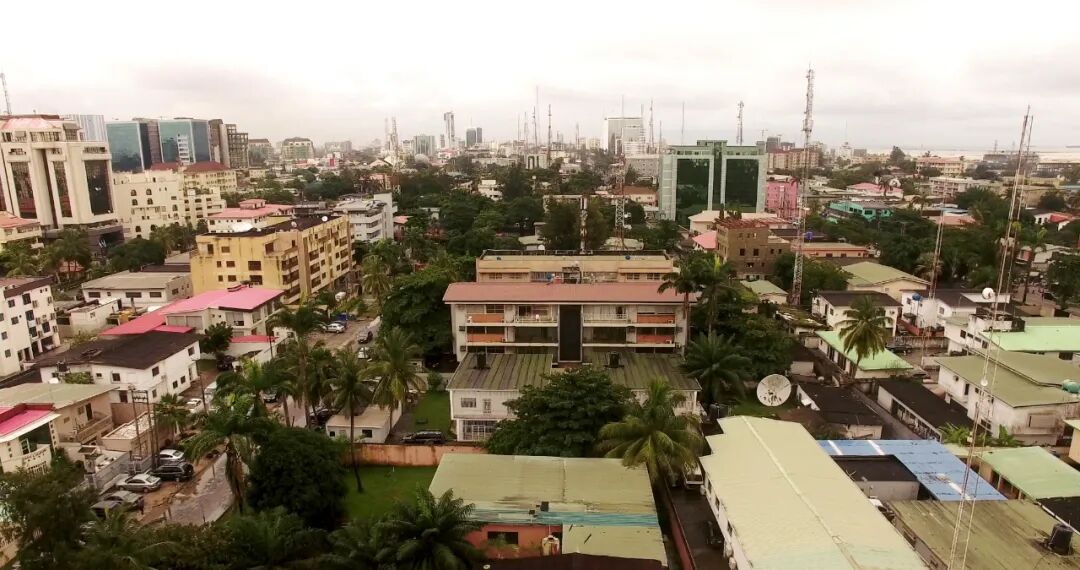
Street view of Lagos, Nigeria
Purchasing the machine is only a one-time expense, and there are continuous costs after owning a washing machine. Every use generates water and electricity bills, parts need to be paid for repair when broken, and if you borrow money to buy it, you also have to bear the interest. Families who are already struggling financially can hardly afford this continuous burden for a long time.
In contrast, hand-washing perfectly adapts to the local people's living conditions. A local livelihood survey in Kenya visited ordinary families, and many housewives living in the suburbs of Nairobi spend 3 to 10 hours a week washing clothes by hand; in villages and towns in the Democratic Republic of the Congo, residents spend more than two and a half hours on the whole process of fetching water, scrubbing, rinsing and drying to wash all the family's clothes at a time.
A large number of ordinary local people do not have stable jobs, and their free time cannot be converted into income, so time itself has no monetizable value. Using their own labor time instead of spending money to buy a machine is a pragmatic choice that fits the family's income and expenditure.
A more intractable problem than income shortage is water resource scarcity.
Most villages in sub-Saharan Africa do not have running water piped into homes.
Therefore, even if people grit their teeth and buy a washing machine to reduce the burden of housework, they will find after the machine is delivered home that the water stored at home is not even enough for a single wash.
It is not that local people do not want to free their hands, but that the current income level, water resource conditions and lifestyle do not match the usage scenarios of washing machines.
The seemingly huge rigid demand from the population is just a visible but unreachable consumption illusion.
Not Just Poverty and Water Shortage
The realistic trade-offs at the household level mentioned earlier make many people think that as long as local people's income rises, the market will naturally open up.
But the far greater obstacles come from the external environment: unstable power supply, high taxes and fees, scattered sales channels, and inconvenient access to loans. The superposition of multiple thresholds directly restricts the popularization of home appliances.
Africa lacks a complete and mature local home appliance industrial chain, and most of the washing machines on the market rely on overseas imports. The entire circulation chain from overseas factories to ordinary consumers is full of obstacles, which makes this livelihood home appliance lose its cost performance.
The first threshold is the extremely unstable power infrastructure.
Data from the African Development Bank shows that the electrification rate across Africa is only 40%.
Even if a household has access to electricity, the voltage fluctuates sharply and power outages happen frequently. In sub-Saharan Africa, excluding South Africa, the annual electricity consumption per ordinary person is only 124 kWh, which is only enough to keep a 50-watt light bulb lit all year round, and cannot support high-power electrical appliances such as washing machines at all.
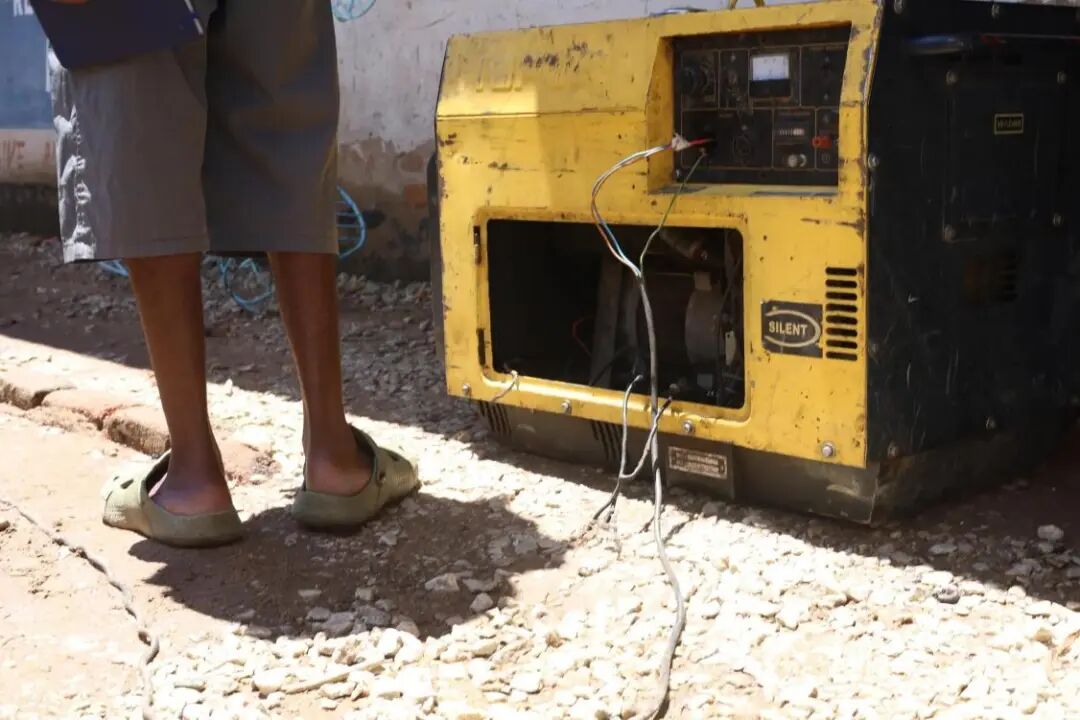
A diesel generator is running on the street of Mutare, Zimbabwe
Statistics from local small and medium-sized processing plants in Nigeria show that there are an average of 56 days of power outages a year. Sometimes power is supplied in the daytime and cut off at night, with a very wide voltage fluctuation range. Washing machines are equipped with motors and circuit boards, which are most vulnerable to unstable voltage.
After-sales personnel of Haier stationed in Nigeria shared a common case: many newly bought washing machines in households only worked for 3 months before a voltage surge burned out the main board directly. A washing machine that can be used for 8 or 9 years in China has its average service life directly cut in half in some areas of Africa.
The high failure rate has spawned special market rules. Local home appliance stores basically do not provide long-term warranty, and all repair costs are borne by the buyer after the machine is sold. With the repair risk hanging over their heads, even families with sufficient budget will hesitate to make a purchase. Unstable power supply becomes an invisible continuous cost that is ultimately paid by consumers.
The second threshold is the high trade taxes and fees.
To protect local industries, many African countries, in order to promote the development of local home appliance industries, have set high tariffs on imported home appliances.
More than 90% of home appliances in Africa rely on imports. Take South Africa as an example, the conventional tariff on finished home appliances is 15%~25%. In April 2026, South Africa also introduced anti-dumping policies to impose tariffs on pulsator washing machines from China and Thailand: 9.39% for Midea and Little Swan, 7.67% for Hisense, 13.42% for other Chinese exporters, and up to 47.23% for some Thai manufacturers. This policy will remain in effect for five years.
The ex-factory price of a washing machine in a Chinese factory is 100 US dollars, and the sea freight plus insurance costs 15 US dollars. When it enters South Africa, it first pays 20% tariff, plus value-added tax. If it is an ordinary brand exported from China, an additional 13.42% anti-dumping tax will be added. Superimposed with exchange rate losses and successive markup by local distributors, the final price sold to consumers directly rises to 200 to 300 US dollars.
The third threshold is scattered channels.
There are no large national chain stores in Africa, most of which are scattered small shops and regional small wholesalers, with independent pricing and independent sales. The online sales proportion of home appliances is only 5%.
Take the Kenyan market as an example, there are dozens of home appliance wholesalers in Nairobi, each covering a range of small towns.
A washing machine has to go through three layers of markup: national general agent, regional wholesaler, and small town retailer after leaving the port. Moreover, there are only 1 to 2 small home appliance shops in each small town, and there is no special maintenance outlet. Once the machine breaks down, you can only wait for the wholesaler to send someone over every few months. In many cases, parts are out of stock and the machine is left unused directly. The cost of stocking, storing goods and building maintenance outlets is very high, and these costs are finally added to the product price.
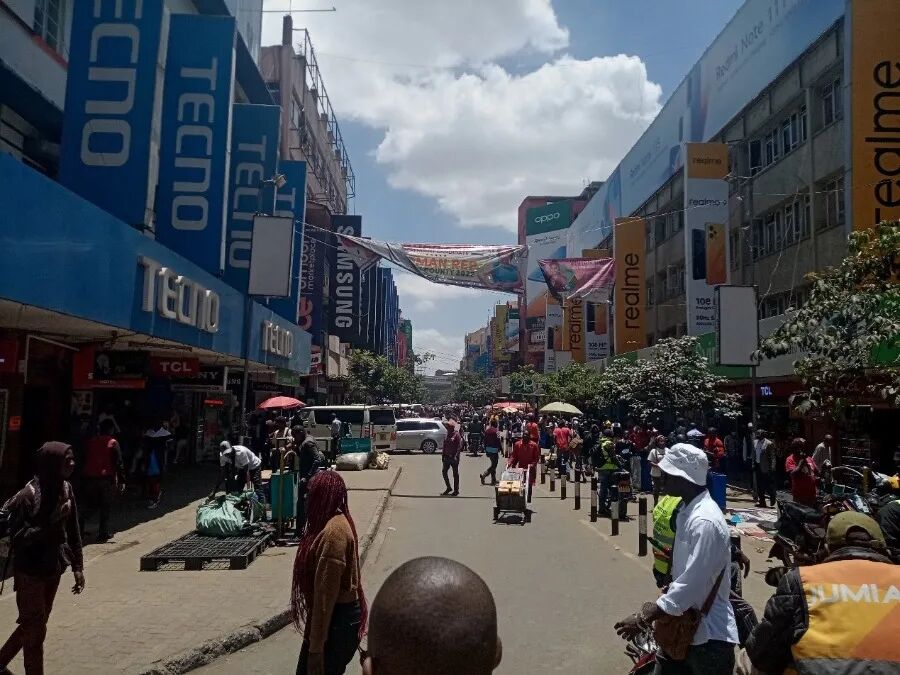
Luthuli Avenue, known as the "Huaqiang North of East Africa", is full of Chinese brands
The fourth threshold is the lack of consumer finance.
Africa lacks a sound personal credit investigation system, and ordinary people can hardly apply for bank consumer loans, so they can only pay in full when buying large home appliances. One-time large expenditure stops the vast majority of ordinary families.
In the first 7 months of 2025 in Egypt, the loans used by people to buy home appliances and electronic products in installments accounted for 17.1% of the total consumer finance. Many Egyptian working-class families dare to buy refrigerators and washing machines only through 24-month installment plans.
The superposition of four barriers: unstable power supply, high taxes and fees, scattered channels and lack of finance, makes it difficult to expand the washing machine market even with a large population.
How Chinese Washing Machines Go to Africa
The core lies in abandoning the traditional goods-selling thinking.
Brands that have deeply cultivated the local market, such as Haier, Midea and LG, have long jumped out of the simple foreign trade idea of "selling machines". The industry has reached a consensus: doing home appliance business in Africa is not only a competition of product quality, but also a competition of localized adaptation capabilities.
Since importing finished products will be subject to heavy tariffs and anti-dumping duties, the best way is to directly build factories in Africa for assembly.
Haier's Egyptian Industrial Park is the most typical case. The first phase of the factory can produce 1 million home appliances a year. After the second phase is completed, the production capacity will exceed 1.5 million units, with complete production lines for washing machines, refrigerators and air conditioners. 70% of the products are supplied to the local Egyptian market, and the remaining 30% are sold to nearly 20 countries in the Middle East and North Africa.
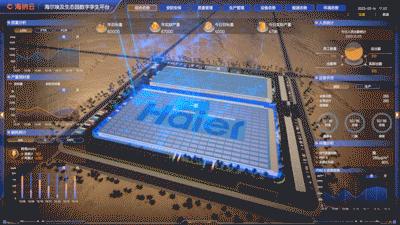
Digital Twin Platform of Haier Egyptian Eco-Industrial Park
With local production, there is no need to pay taxes as imported finished products, so the price is directly reduced.
Haier has obtained a 14% share in Nigeria's washing machine market.
Midea established its South African subsidiary in July 2026, and built a new washing machine factory, which is planned to be put into operation in the same year, shifting from pure import to local manufacturing. In the Suez Economic Zone of Egypt, Midea has also built production lines for washing machines, refrigerators and air conditioners. Local production directly avoids high taxes and fees, reduces selling prices, and at the same time builds maintenance outlets nearby to solve the after-sales difficulty.
Many households lack water and electricity, so they cannot place washing machines at home. Brands simply change their ideas, instead of selling washing machines to individual households, they build community shared laundry stations.
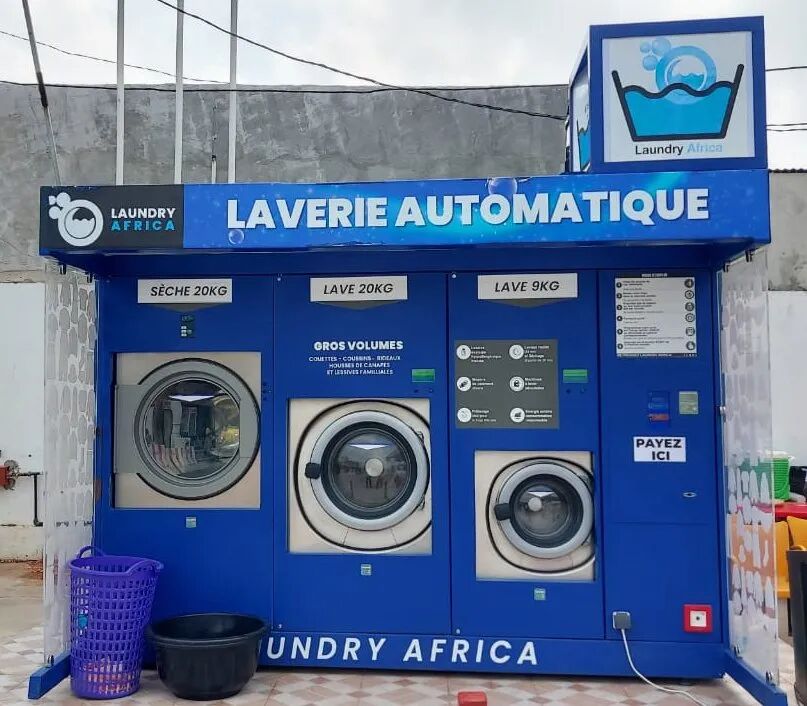
Self-service laundry station in Africa
The whole set of laundry equipment is powered by solar energy, completely independent of the unstable national grid, and comes with energy-saving washing and drying equipment, which is free for community residents to use.
Residents do not need to have electricity and water at home, they can bring their clothes directly to the station to wash.
In water-scarce towns, the laundry station is powered by photovoltaic power. The waste water generated by washing clothes is filtered and purified for recycling, and rainwater is used for supplement when water is scarce. Most residents in the town do not have running water piped into their homes. This laundry station directly bypasses the two major problems of power shortage and water shortage in households, and directly meets the laundry demand.
Washing machines sold to Africa cannot directly use the domestic version. Brands carry out special modifications to produce models that are resistant to voltage fluctuations, low power consumption, water-saving, and compatible with solar energy.
The customized washing machine that Haier mainly promotes in Nigeria comes with a built-in voltage protection module, which automatically cuts off power for protection when the voltage fluctuates up and down, reducing the probability of burning out the main board.
At the same time, installment plans are provided. For example, in cooperation with local banks, washing machines, refrigerators and TVs can all be purchased in installments.
In the long run, the improvement of Africa's power grid, water supply, urbanization and people's income is a very slow process.
Washing machines will not suddenly sell in large volumes, but will penetrate steadily little by little along with the improvement of people's livelihood infrastructure.
